

 Download PDF
 Download PDF
Market Overview
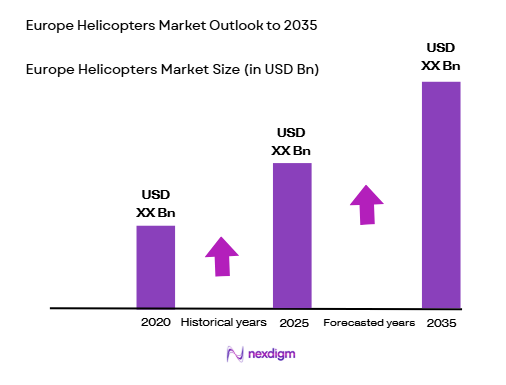
The European helicopter market is driven by a strong demand for both civilian and military applications. The market size has been estimated to reach USD ~ billion based on recent historical assessments. Key growth drivers include the rising need for emergency medical services, expanding offshore oil and gas exploration, and increasing demand for private aviation. The industry continues to evolve with advancements in helicopter technology, enhancing both safety and operational efficiency.
Countries such as the United Kingdom, France, and Germany dominate the European helicopter market due to their established aviation infrastructure and strong military presence. The United Kingdom’s extensive fleet of civilian and military helicopters plays a crucial role in transportation and defense. France is a major player with its advanced rotorcraft manufacturing capabilities, while Germany is home to a growing demand for civilian helicopters, driven by the leisure and tourism industries. These countries have established themselves as global hubs for helicopter operations, contributing significantly to the market’s development.
Market Segmentation
By Helicopter Type
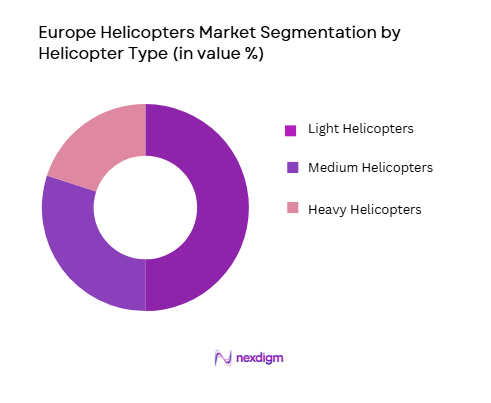
The European helicopter market is segmented by helicopter type into light helicopters, medium helicopters, and heavy helicopters. Light helicopters dominate the market due to their versatility and affordability. They are increasingly used for emergency medical services, law enforcement, and corporate transport. This sub-segment benefits from advancements in helicopter design that prioritize efficiency, lower operating costs, and enhanced safety features. Additionally, the ease of maintenance and availability of spare parts make light helicopters an attractive choice for many operators across Europe.
By End-User Segment
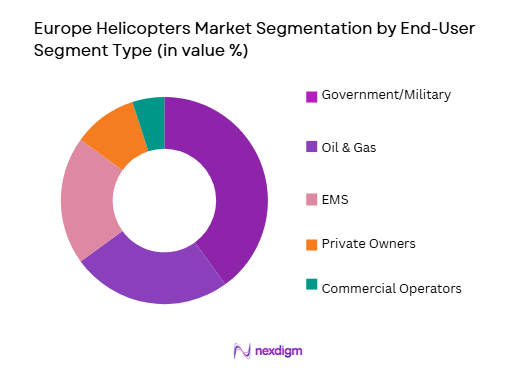
The market is segmented by end-user into government and military, oil and gas, emergency medical services (EMS), private owners, and commercial operators. The government and military segment holds the largest market share, driven by the need for helicopters in defense, surveillance, and rescue operations. Military applications for helicopters, including search and rescue, transport, and reconnaissance, continue to fuel the demand in this segment. The oil and gas industry also makes up a significant portion of the market due to the requirement for helicopters in offshore operations and exploration activities.
Competitive Landscape
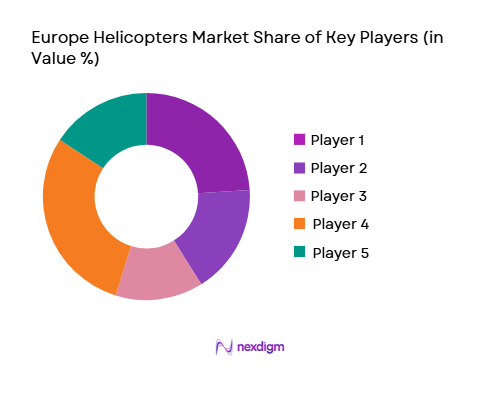
The European helicopter market is highly competitive, with consolidation among large, established players. The market is dominated by major helicopter manufacturers such as Airbus Helicopters, Leonardo, and Sikorsky. These companies have extensive product portfolios, including military and civilian helicopters, and are supported by strong after-sales services and maintenance networks. Smaller firms focus on niche segments such as lightweight or specialized helicopters, competing with the larger players on technological innovations and cost-effectiveness.
| Company Name | Establishment Year | Headquarters | Technology Focus | Market Reach | Key Products | Revenue (USD) | Additional Parameter |
| Airbus Helicopters | 1992 | France | ~ | ~ | ~ | ~ | ~ |
| Leonardo | 1948 | Italy | ~ | ~ | ~ | ~ | ~ |
| Sikorsky Aircraft | 1923 | USA | ~ | ~ | ~ | ~ | ~ |
| Bell Helicopter | 1935 | USA | ~ | ~ | ~ | ~ | ~ |
| Russian Helicopters | 2007 | Russia | ~ | ~ | ~ | ~ | ~ |
Europe Helicopters Market Analysis
Growth Drivers
Increased Demand for Emergency Medical Services (EMS):
The rising demand for emergency medical services across Europe is a major growth driver for the helicopter market. Helicopters are the most efficient way to deliver timely medical care in remote or congested areas, where ground transportation is impractical. EMS helicopters offer critical capabilities in transporting patients, including trauma victims and those in need of urgent medical attention, from accident sites to hospitals. As Europe continues to prioritize healthcare accessibility, the demand for helicopters in the EMS sector is expected to grow, particularly in regions with challenging terrain or dense urban environments. Additionally, advancements in helicopter design, including improved medical equipment integration and faster response times, contribute to the continued expansion of this segment. Increased government funding and public-private partnerships are further propelling the growth of this sector, ensuring a robust demand for helicopters in the emergency services market.
Advancements in Offshore Oil and Gas Exploration:
Another growth driver for the European helicopter market is the increasing demand for helicopters in offshore oil and gas exploration. Offshore platforms, particularly in the North Sea, rely heavily on helicopters for transporting personnel, equipment, and supplies. The global energy shift toward renewable resources, combined with ongoing oil exploration activities, continues to drive the need for safe and efficient transportation to offshore rigs. Helicopters are essential for connecting remote platforms to onshore facilities, enabling companies to maintain a steady workflow while ensuring employee safety. Technological advancements in helicopter design, such as the development of heavy-lift helicopters and those capable of operating in harsh weather conditions, enhance the appeal of helicopters for this sector. As the oil and gas industry expands, the demand for specialized helicopters in these environments is expected to increase.
Market Challenges
High Operational and Maintenance Costs:
One of the major challenges in the European helicopter market is the high operational and maintenance costs associated with helicopters. Helicopters are complex machines requiring regular maintenance and skilled technicians, which can result in significant operating expenses. The cost of fuel, spare parts, insurance, and routine maintenance adds to the total cost of ownership, making helicopters a costly investment for operators. Small and medium-sized companies, in particular, find it difficult to justify the expense, and this financial barrier can restrict market growth. The challenge is exacerbated by rising fuel costs and stringent maintenance regulations, which further increase the financial burden. While technological advancements aim to reduce fuel consumption and improve efficiency, the high cost of operation remains a significant challenge for the broader adoption of helicopters, especially in cost-sensitive industries.
Regulatory and Certification Hurdles:
Regulatory and certification requirements represent another challenge facing the European helicopter market. Helicopter manufacturers and operators must comply with strict regulations set by European aviation authorities such as the European Union Aviation Safety Agency (EASA). These regulations cover areas such as airworthiness, safety standards, noise levels, and environmental compliance, which can be time-consuming and expensive to meet. Additionally, the certification process for new helicopter models and technologies can take several years, delaying product launches and adding costs to the development process. As the helicopter market evolves with new technologies such as electric and autonomous flight, regulatory bodies must adapt, which can lead to uncertainty and increased costs for manufacturers. The slow pace of regulatory updates for emerging technologies, such as urban air mobility, further complicates market expansion.
Opportunities
Development of Electric and Hybrid Helicopters:
The growing demand for environmentally friendly transportation solutions presents a significant opportunity for the European helicopter market. Electric and hybrid helicopters are being developed to reduce carbon emissions, lower operating costs, and increase fuel efficiency. These green alternatives are gaining traction as governments and businesses aim to meet sustainability goals. The push for cleaner aviation technologies is supported by government incentives and private sector investment in research and development. While still in the early stages, electric and hybrid helicopters have the potential to transform the market, particularly in the civil and private aviation sectors. As battery technology improves and charging infrastructure expands, the adoption of electric helicopters is expected to increase, offering a more cost-effective and environmentally friendly solution for operators.
Growth of Urban Air Mobility (UAM):
Urban air mobility, including air taxis and autonomous flight solutions, represents a significant opportunity for the helicopter market. UAM solutions aim to address urban congestion and provide fast, efficient transportation within and between cities. The development of electric vertical take-off and landing (eVTOL) aircraft is a major part of this transformation, with several companies working on prototypes for passenger and cargo transport. Helicopter manufacturers are leveraging their existing expertise in rotorcraft design and operations to enter the UAM space. The European market, with its advanced infrastructure and regulatory framework, is well-positioned to support the growth of UAM. As the technology matures and regulatory frameworks are established, UAM is expected to drive significant growth in the European helicopter market, especially in large urban areas with dense populations.
Future Outlook
The future of the European helicopter market looks promising, with continued demand for both civilian and military applications. Technological advancements, particularly in the development of electric and hybrid helicopters, are expected to drive market growth in the coming years. As governments increasingly focus on sustainability and reducing carbon emissions, the shift toward green aviation technologies will gain momentum. Additionally, the expanding use of helicopters in urban air mobility and offshore operations will open new opportunities. Regulatory support and advancements in air traffic management will further enhance the sector’s growth prospects. Over the next five years, these factors will contribute to a dynamic and evolving helicopter market in Europe.
Major Players
- Airbus Helicopters
- Leonardo
- Sikorsky Aircraft
- Bell Helicopter
- Russian Helicopters
- MD Helicopters
- Lockheed Martin
- AgustaWestland
- Hindustan Aeronautics
- Kawasaki Heavy Industries
- Chinook Helicopters
- Bell Textron
- Boeing
- Enstrom Helicopter Corporation
- Piaggio Aerospace
Key Target Audience
- Investments and venture capitalist firms
- Government and regulatory bodies
- Helicopter manufacturers
- Aviation service providers
- Airlines
- Aircraft operators
- Corporate jet owners
- High-net-worth individuals
Research Methodology
Step 1: Identification of Key Variables
The first step involves understanding key market drivers, challenges, and opportunities, including technology trends and regulatory changes.
Step 2: Market Analysis and Construction
Comprehensive data collection and analysis from primary and secondary sources help estimate market size, forecast trends, and identify key players.
Step 3: Hypothesis Validation and Expert Consultation
Expert consultations are conducted to validate the hypotheses, ensuring that the market dynamics are accurately captured.
Step 4: Research Synthesis and Final Output
The final report synthesizes findings into actionable insights, providing a detailed market overview, segmentation analysis, and strategic recommendations.

- Executive Summary
- Research Methodology (Definitions, Scope, Industry Assumptions, Market Sizing Approach, Primary & Secondary Research Framework, Data Collection & Verification Protocol, Analytic Models & Forecast Methodology, Limitations & Research Validity Checks)

- Market Definition and Scope
- Value Chain & Stakeholder Ecosystem
- Regulatory / Certification Landscape
- Sector Dynamics Affecting Demand
- Strategic Initiatives & Infrastructure Growth

- Growth Drivers
Increased demand for emergency medical services
Rising adoption of helicopters for offshore oil & gas operations
Advances in helicopter technology improving operational efficiency - Market Challenges
High operational and maintenance costs
Regulatory and certification hurdles
Limited availability of qualified pilots and maintenance professionals - Market Opportunities
Emerging demand for electric and hybrid helicopters
Increasing use of drones in the civil helicopter sector
Opportunities in the development of autonomous flight systems - Trends
Rising adoption of helicopters in urban air mobility
Development of quieter and more environmentally friendly helicopters
Increased integration of advanced avionics in helicopters - Government regulations
Noise and emissions regulations for helicopter operations
Safety standards and certification requirements for new models
Regulations surrounding rotorcraft operation in urban environments - SWOT analysis
- Porters 5 forces

- By Market Value 2020-2025
- By Installed Units 2020-2025
- By Average System Price 2020-2025
- By System Complexity Tier 2020-2025

- By System Type (In Value%)
Utility Helicopters
Attack Helicopters
Transport Helicopters
Medical Evacuation Helicopters
Search and Rescue Helicopters - By Platform Type (In Value%)
Military Helicopters
Civilian Helicopters
Emergency Medical Service Helicopters
Search and Rescue Helicopters
Cargo Helicopters - By Fitment Type (In Value%)
OEM Fitment
Aftermarket Fitment
Custom Fitment
Integrated Solutions
Modular Solutions - By EndUser Segment (In Value%)
Government/Military
Aviation Operators
Oil & Gas Companies
Emergency Medical Services
Search and Rescue Organizations - By Procurement Channel (In Value%)
Direct Procurement
Government Tenders
Private Sector Procurement
Leasing
Third-party Distributors

- Market Share Analysis
CrossComparison Parameters (Operational Role, Lifecycle Cost, Technology Integration, Service Infrastructure, Regulatory Compliance, Supplier Ecosystem, Market Value, Installed Units, Average System Price, Maintenance & Support Demand, Training Requirements, Certification Standards) - SWOT Analysis of Key Competitors
- Pricing & Procurement Analysis
- Key Players
Airbus Helicopters
Bell Helicopter
Sikorsky Aircraft
Leonardo Helicopters
Russian Helicopters
Kawasaki Heavy Industries
MD Helicopters
Lockheed Martin
AgustaWestland
Hindustan Aeronautics
NH Industries
Boeing
TurboMecca
Enstrom Helicopter Corporation
China Helicopter Corporation

- Government/military sectors pushing demand for advanced attack and transport helicopters
- Civilian helicopter operators expanding into new regions
- Oil & gas companies requiring helicopters for offshore operations
- EMS and SAR organizations expanding helicopter fleets for critical services

- Forecast Market Value 2026-2035
- Forecast Installed Units 2026-2035
- Price Forecast by System Tier 2026-2035
- Future Demand by Platform 2026-2035


 Request a Sample
 Ask for Customization
 Get a Quote
 Enquire Now