

 Download PDF
 Download PDF
Market Overview
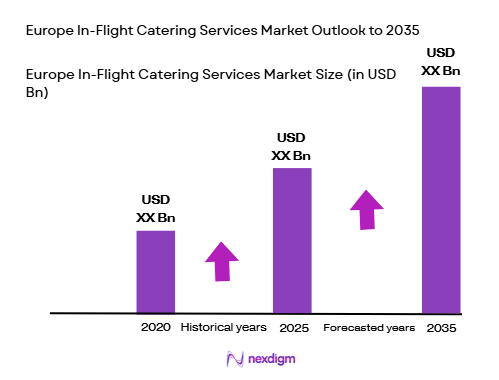
The Europe in-flight catering services market is valued at approximately USD ~ billion, with significant growth driven by the recovery of air travel and increasing demand for premium services. The market is experiencing an uptick due to post-pandemic travel normalization, and a growing inclination for enhanced in-flight dining experiences. Catering companies are leveraging innovations in food delivery systems and offering specialized menus, thereby expanding their service scope to meet consumer demands.
Air travel hubs such as London, Frankfurt, and Paris are pivotal in driving the demand for in-flight catering services due to their role as major international travel hubs. These cities’ dominance is driven by their large passenger traffic, established airline networks, and airport infrastructure. The high number of international flights departing from these locations demands diverse catering options, ranging from luxury services for business travelers to more economical meal solutions for economy passengers.
Market Segmentation
By Product Type
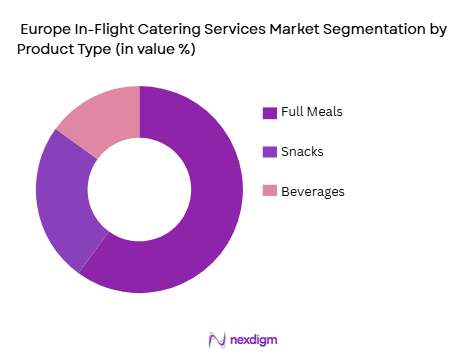
Europe’s in-flight catering services market is segmented by product type into full meals, snacks, and beverages. Recently, full meal services have dominated the market share due to increasing demand for high-quality, nutritious, and varied meals offered on long-haul flights. The expansion of airline partnerships with premium chefs and catering companies has driven the demand for innovative meals, further enhancing passenger satisfaction. Airlines are increasingly offering dietary-specific meals, which has led to a surge in the demand for custom-made meals that align with different passenger preferences.
By Service Type
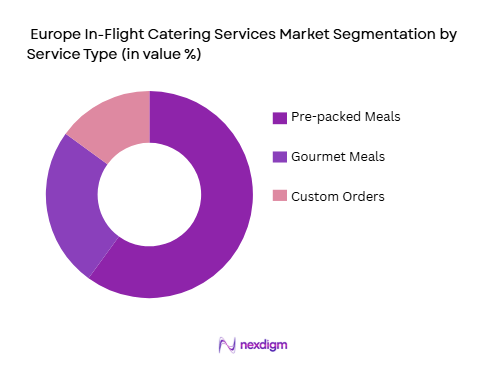
The market is also segmented by service type into pre-packed meals, gourmet meals, and custom orders. Pre-packed meals have a dominant market share as they provide an efficient solution for airlines to maintain consistency in their offerings while ensuring cost-effectiveness. The widespread adoption of pre-packed meals stems from their convenience and ease of storage, enabling airlines to serve meals without compromising on quality. This has made pre-packed meals the preferred choice, especially for short to medium-haul flights.
Competitive Landscape
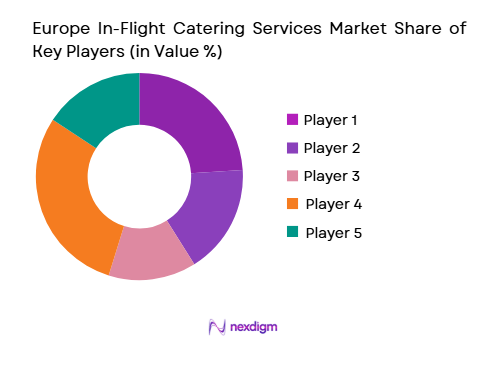
The competitive landscape in Europe’s in-flight catering market is defined by high consolidation and the influence of key industry players who dominate the supply chain. Market leaders focus on forming long-term partnerships with airlines, providing integrated solutions that encompass meal preparation, logistics, and in-flight delivery services. The industry’s major players are investing in technology-driven innovations such as meal customization, AI-powered delivery systems, and eco-friendly packaging solutions to differentiate themselves.
| Company Name | Establishment Year | Headquarters | Technology Focus | Market Reach | Key Products | Revenue (USD) | Sustainability Focus |
| LSG Sky Chefs | 1970 | Frankfurt, DE | ~ | ~ | ~ | ~ | ~ |
| Gate Gourmet | 1992 | Zurich, CH | ~ | ~ | ~ | ~ | ~ |
| DO & CO | 1981 | Vienna, AT | ~ | ~ | ~ | ~ | ~ |
| Satys | 1997 | Paris, FR | ~ | ~ | ~ | ~ | ~ |
| Air Culinaire | 2003 | London, UK | ~ | ~ | ~ | ~ | ~ |
Europe In-Flight Catering Services Market Analysis
Growth Drivers
Recovery of Air Travel Demand:
The resurgence of air travel following the pandemic has significantly boosted the in-flight catering market in Europe. With the growing number of international passengers, airlines are seeing an uptick in demand for meal services, especially for long-haul flights. Airlines are capitalizing on this growth by enhancing their catering offerings to attract business and premium-class travelers. Enhanced customer expectations and rising disposable incomes have resulted in higher demand for quality meals during flights. Airlines are now more committed than ever to delivering exceptional in-flight dining experiences as part of their customer service strategy. This shift aligns with broader trends in the travel industry, where passengers increasingly seek value-added services, including better food options, which are seen as a critical differentiator in the competitive airline industry. Furthermore, evolving consumer preferences for healthier and more sustainable meal options are driving catering services to introduce more plant-based and eco-friendly options to cater to changing dietary needs.
Technological Advancements in Catering Operations:
Technology has played a critical role in reshaping the in-flight catering sector, especially in improving efficiency, meal customization, and logistics management. AI-powered meal tracking and delivery systems have enabled catering companies to optimize their supply chain and minimize food waste. Airlines are increasingly investing in digital solutions to allow passengers to pre-order meals based on individual preferences, enhancing the overall in-flight experience. These advancements are helping airlines manage meal inventories more efficiently, reduce operational costs, and maintain consistent meal quality. Innovations in food packaging and preservation technologies, such as vacuum-sealing, have extended the shelf life of meals while preserving taste and nutritional content. Additionally, catering companies are increasingly adopting sustainable packaging materials, responding to the growing concern over environmental impact. As these technological solutions are incorporated into daily operations, they allow companies to scale their services while providing a more personalized and environmentally responsible product offering.
Market Challenges
Operational Complexity and Supply Chain Constraints:
Managing the complex logistics involved in in-flight catering poses significant challenges for companies operating in this market. With airlines operating a wide variety of routes and schedules, ensuring timely and consistent meal delivery requires efficient coordination between catering companies, airlines, and airport terminals. The need for just-in-time meal delivery, combined with tight security measures at airports, complicates the process. Furthermore, catering companies often have to contend with fluctuating demand based on seasonal travel trends, leading to difficulties in meal planning and inventory management. The strict regulatory requirements governing food safety and hygiene, particularly when transporting meals across borders, add another layer of complexity to the process. To maintain customer satisfaction, catering companies must constantly optimize their supply chains, reduce lead times, and ensure that food preparation meets the highest safety standards. This involves dealing with external factors such as airport congestion, labor shortages, and unpredictable flight schedules, all of which can disrupt catering operations.
Rising Environmental and Sustainability Pressures:
Sustainability has become a major concern for both airlines and catering services, as environmental consciousness among consumers and regulators increases. Airlines are under pressure to reduce their carbon footprints, including through greener catering options. However, the environmental impact of food packaging, food waste, and transportation logistics in the catering supply chain remains significant. Many airlines have been criticized for using plastic and other non-recyclable materials in their meal packaging, prompting regulatory bodies to impose stricter packaging standards. In addition, catering services must grapple with waste management issues, as a considerable amount of food is discarded due to passenger preferences, especially on short-haul flights where in-flight meals are less in demand. The need for catering companies to balance eco-friendly initiatives with operational efficiency poses a major challenge. Incorporating sustainable practices while maintaining the quality and cost-effectiveness of services is one of the primary hurdles for companies in the European market.
Opportunities
Expansion of Sustainable and Health-Conscious Offerings:
One of the most promising opportunities in the European in-flight catering market lies in the growing consumer demand for healthier and more sustainable food options. As more passengers prioritize plant-based and organic meals, catering companies have the chance to expand their offerings to include meals that meet these demands. Airlines are beginning to offer more varied menus, including vegan, gluten-free, and other dietary-specific options that appeal to a broader audience. There is also increasing interest in local and regionally sourced ingredients, which not only support sustainable farming practices but also offer travelers unique culinary experiences. Catering services that focus on sustainability by sourcing food locally, using recyclable packaging, and reducing food waste are likely to resonate with consumers who are more environmentally conscious. This shift towards healthier, sustainable meals aligns with broader trends in the food industry and represents a long-term growth avenue for in-flight catering services.
Technological Integration for Personalized Dining Experiences:
The rise of digitalization in the airline industry presents a major opportunity for in-flight catering companies to enhance their services through personalized meal offerings. By integrating artificial intelligence and data analytics, catering providers can offer pre-order meal options tailored to individual passenger preferences, dietary restrictions, and previous consumption habits. This level of customization improves customer satisfaction and allows airlines to more effectively manage inventory and meal preparation. Additionally, partnerships between catering companies and tech firms could lead to the development of smart meal systems that cater to evolving passenger demands in real-time. This innovation would not only enhance the travel experience but also streamline operations, reduce food waste, and provide airlines with valuable data to further personalize their services. Catering companies that embrace such technological innovations can set themselves apart in a competitive market while meeting the growing demand for bespoke services.
Future Outlook
The in-flight catering services market in Europe is expected to experience continued growth in the next five years, driven by the recovery of air travel, increased passenger expectations, and the evolution of sustainable practices. Technological advancements, particularly in meal customization and delivery efficiency, will play a crucial role in shaping the market. The growing emphasis on environmentally friendly solutions will drive both catering companies and airlines to implement more sustainable practices, from sourcing to packaging. As demand for personalized and premium dining experiences grows, the market will increasingly focus on catering to health-conscious and eco-aware passengers. Regulatory support for sustainable aviation practices will further facilitate the adoption of greener and more efficient catering solutions, making the market increasingly dynamic.
Major Players
- LSG Sky Chefs
- Gate Gourmet
- DO & CO
- Satys
- Air Culinaire
- Flying Food Group
- Hermolis
- Newrest
- Dnata Catering
- Servair
- Aloha Air Cargo
- SATS Ltd.
- Cargill Food Distribution
- CHS Inc.
- Turkish Do & Co
Key Target Audience
- Airlines
- Aircraft Operators
- In-flight Catering Companies
- Airline Catering Service Providers
- Investments and Venture Capitalist Firms
- Government and Regulatory Bodies
- Hospitality Service Providers
- Meal Delivery Companies
Research Methodology
Step 1: Identification of Key Variables
This step involves defining the market’s critical variables, including the key factors influencing in-flight catering services such as market size, growth trends, and technological advancements.
Step 2: Market Analysis and Construction
Data from primary and secondary sources are analyzed to build a comprehensive understanding of market trends, consumer behavior, and competitive dynamics.
Step 3: Hypothesis Validation and Expert Consultation
Market hypotheses are tested by consulting with industry experts, airlines, and catering providers to validate the insights gathered during research.
Step 4: Research Synthesis and Final Output
All research findings are synthesized to produce a final report with actionable insights, forecasts, and strategic recommendations for stakeholders in the in-flight catering industry.

- Executive Summary
- Research Methodology (Definitions, Scope, Industry Assumptions, Market Sizing Approach, Primary & Secondary Research Framework, Data Collection & Verification Protocol, Analytic Models & Forecast Methodology, Limitations & Research Validity Checks)

- Market Definition and Scope
- Value Chain & Stakeholder Ecosystem
- Regulatory / Certification Landscape
- Sector Dynamics Affecting Demand
- Strategic Initiatives & Infrastructure Growth

- Growth Drivers
Growing demand for premium in-flight services
Increase in air travel and tourism
Technological advancements in food safety and logistics - Market Challenges
High operational costs for catering services
Regulatory challenges regarding food safety
Logistical complexity in multi-location catering operations - Market Opportunities
Introduction of eco-friendly and sustainable catering solutions
Rising demand for customized and dietary-specific meals
Expansion of in-flight catering services in emerging markets - Trends
Increased use of automated catering technology
Shift towards healthier and organic food options
Rising preference for gourmet and locally sourced meals - Government regulations
Food safety regulations for in-flight meals
Waste management and sustainability regulations
Airline-specific in-flight service standards - SWOT analysis
- Porters 5 forces

- By Market Value 2020-2025
- By Installed Units 2020-2025
- By Average System Price 2020-2025
- By System Complexity Tier 2020-2025

- By Service Type (In Value%)
Meal Catering
Beverage Catering
Snacks and Refreshments
Special Dietary Catering
In-flight Equipment Rental - By Platform Type (In Value%)
Commercial Airlines
Private Jets
Charter Services
Cargo and Freight Airlines
Helicopter Services - By Catering Model (In Value%)
Full-service Catering
Self-catering
Third-party Catering
Hybrid Catering
Pre-packed Meal Services - By End-User Segment (In Value%)
Airlines
Private Jet Operators
Catering Service Providers
Travel Agencies
Freight and Cargo Companies - By Procurement Channel (In Value%)
Direct Procurement
Contracting with Airlines
Third-party Distribution
Online Bidding
Corporate/Leisure Travel Agencies

- Market Share Analysis
- Cross Comparison Parameters (Service Type, Platform Type, Catering Model, End-User Segment, Procurement Channel, Food Quality Standards, Meal Customization, Sustainability Initiatives, Packaging Innovation, Delivery Time Efficiency, Cost per Meal, Technology Integration)
- SWOT Analysis of Key Competitors
- Pricing & Procurement Analysis
- Key Players
LSG Sky Chefs
Gate Gourmet
SATS Ltd
Do & Co AG
Servair
Flying Food Group
Air Culinaire Worldwide
Royal Inflight Catering
Air India Catering
TLC Group
Food & More
Airbus Catering Services
Cathay Pacific Catering Services
Cargo Food Catering
TAP Catering Services


 Request a Sample
 Ask for Customization
 Get a Quote
 Enquire Now