

 Download PDF
 Download PDF
Market Overview
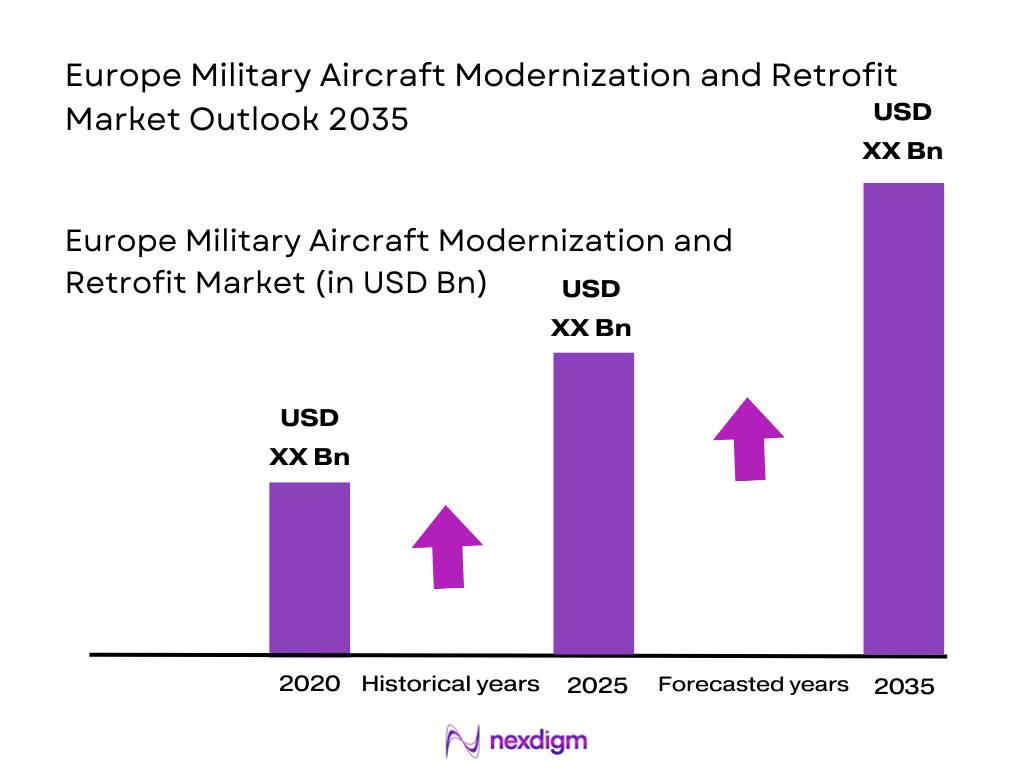
The Europe Military Aircraft Modernization and Retrofit Market has seen significant growth due to increasing defense budgets and the urgent need to upgrade aging aircraft fleets. The market size is primarily driven by the demand for enhanced capabilities, such as advanced avionics, communication systems, and weaponry integration. By 2025, the market is estimated to reach USD ~, with modernization efforts accounting for the largest share. This growth is primarily fueled by ongoing military programs and international defense collaborations, with Europe’s defense contractors leading the charge.
The dominant countries in this market include the United Kingdom, France, Germany, and Italy, as these nations are investing heavily in defense infrastructure. The UK, with its long-standing defense programs, has a strategic focus on modernizing its fleet of combat and transport aircraft. France and Germany are also significant players, owing to their strong aerospace industries and military alliances, which have resulted in a steady demand for retrofitting older systems with new technology to enhance mission readiness and operational efficiency.
Market Segmentation
By System Type
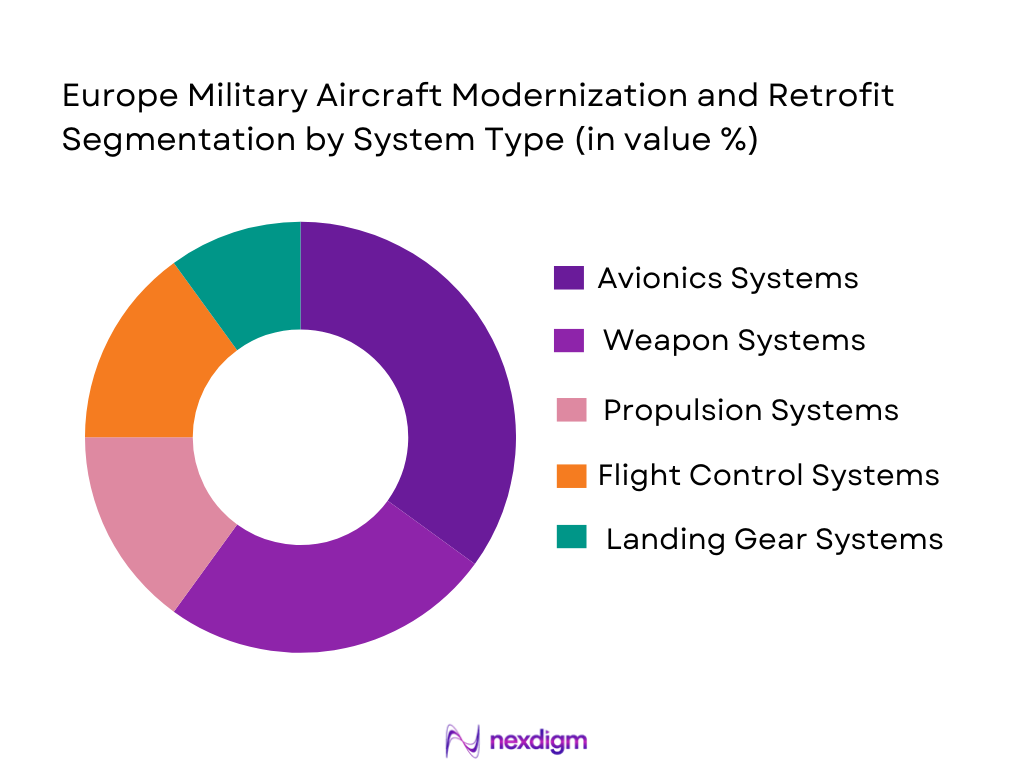
The Europe Military Aircraft Modernization and Retrofit Market is segmented by system type into avionics, weapon systems, propulsion systems, flight control systems, and landing gear systems. Recently, the avionics sub-segment has dominated the market share due to the increasing demand for upgraded communication, navigation, and surveillance systems in modernized aircraft. This is driven by the need for better situational awareness, improved connectivity, and integration with emerging defense technologies, such as AI and machine learning. As avionics systems provide crucial upgrades to a wide range of aircraft, including fighters, transport planes, and helicopters, they remain the leading sub-segment in the market.
By Platform Type
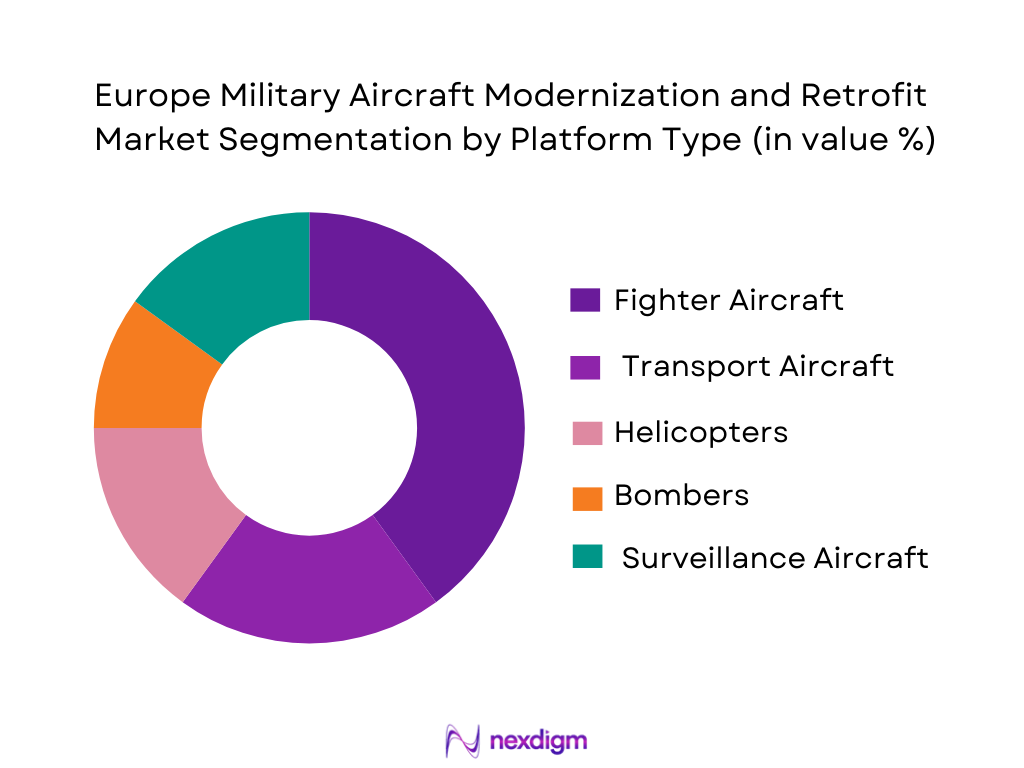
The market is further segmented by platform type into fighter aircraft, transport aircraft, helicopters, bombers, and surveillance aircraft. The fighter aircraft sub-segment holds the dominant market share due to the high demand for upgrades and retrofitting of existing fleets. Modernization programs for fighter jets, especially for NATO countries, include enhanced avionics, precision weapons systems, and improved propulsion. These factors make the fighter aircraft sub-segment the largest contributor to the market, as defense forces aim to maintain air superiority and enhance combat capabilities amid evolving threats.
Competitive Landscape
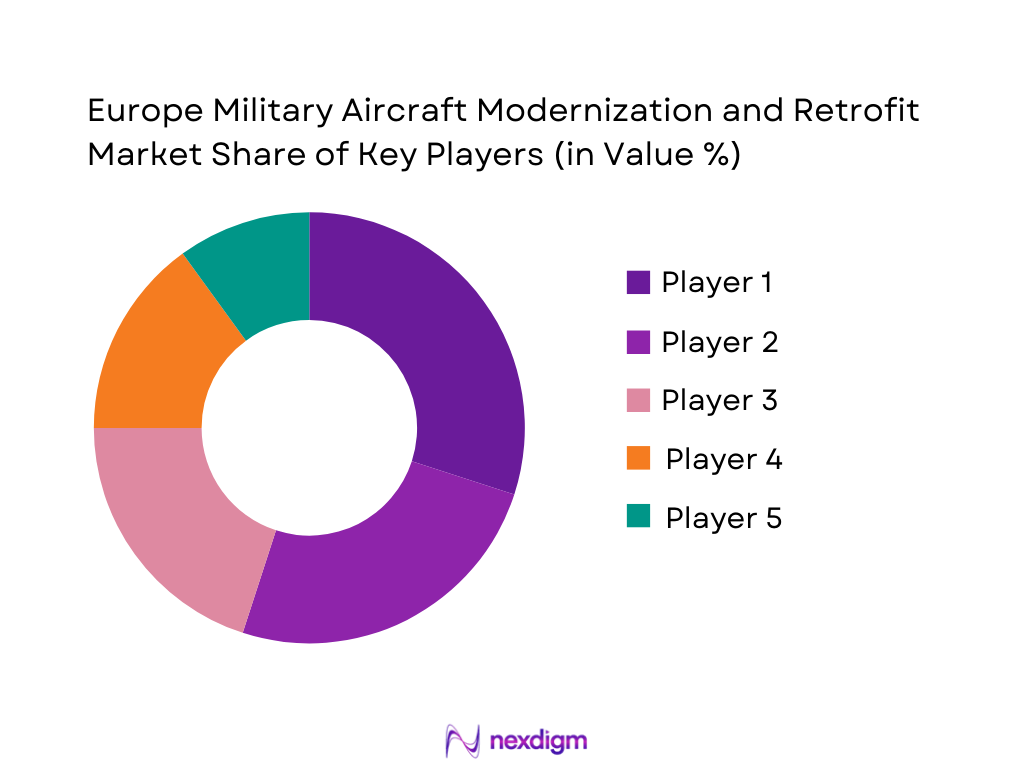
The Europe Military Aircraft Modernization and Retrofit Market is highly competitive, with several large players contributing to consolidation. Major defense contractors such as Airbus, Lockheed Martin, and BAE Systems dominate the market. Their strong foothold in the defense sector, extensive experience, and ongoing partnerships with European governments give them a significant advantage in securing contracts for modernization and retrofit programs. The influence of these players has spurred technological advancements and led to more collaborations between public and private sectors, ensuring the continued development and deployment of upgraded military aircraft systems.
| Company Name | Establishment Year | Headquarters | Technology Focus | Market Reach | Key Products | Revenue (USD) | Additional Parameter |
| Airbus | 1970 | Toulouse, France | ~ | ~ | ~ | ~ | ~ |
| Lockheed Martin | 1912 | Bethesda, USA | ~ | ~ | ~ | ~ | ~ |
| BAE Systems | 1999 | Farnborough, UK | ~ | ~ | ~ | ~ | ~ |
| Leonardo | 1948 | Rome, Italy | ~ | ~ | ~ | ~ | ~ |
| Northrop Grumman | 1939 | Falls Church, USA | ~ | ~ | ~ | ~ | ~ |
Europe Military Aircraft Modernization and Retrofit Market Analysis
Growth Drivers
Increasing Defense Budgets
The significant rise in defense budgets across European countries, particularly in response to geopolitical tensions, is one of the primary drivers of the Europe Military Aircraft Modernization and Retrofit Market. European nations are prioritizing defense expenditure to ensure their air forces remain operationally relevant and technologically advanced. With the growing complexity of modern warfare and the need to counter emerging threats, such as cyber warfare and advanced missile systems, there is an increasing focus on modernizing existing fleets to enhance operational capabilities. This has spurred demand for retrofitting older aircraft with next-generation technologies, such as advanced radar systems, communication devices, and propulsion systems. Additionally, as European countries continue to increase their defense budgets, the market for military aircraft modernization and retrofit is expected to continue to grow, ensuring that fleets can meet current and future operational requirements.
Technological Advancements in Military Aircraft Systems
Technological advancements are a significant growth driver for the Europe Military Aircraft Modernization and Retrofit Market. Innovations in avionics, propulsion systems, and weapon systems have led to substantial improvements in aircraft performance, reliability, and cost-effectiveness. The integration of AI and machine learning technologies in modern aircraft enables enhanced mission planning, real-time decision-making, and predictive maintenance. These technological developments provide significant advantages in terms of operational efficiency and mission readiness, encouraging military forces to invest in modernizing their existing aircraft fleets rather than purchasing new systems. Furthermore, the adoption of advanced composite materials and lightweight structures has improved fuel efficiency and reduced the environmental impact of military operations. With continued advancements in technology, including the development of autonomous systems and unmanned aircraft, the modernization and retrofit of military aircraft will remain a key focus for defense forces in Europe.
Market Challenges
High Maintenance and Retrofit Costs
The high costs associated with aircraft modernization and retrofitting pose a significant challenge for many European defense forces. The process of upgrading older military aircraft with new technologies, such as avionics, weapons systems, and propulsion units, involves substantial financial investment. Additionally, these upgrades often require long-term maintenance and support contracts, which add to the overall cost. Many European nations are facing budgetary constraints and are forced to balance modernization efforts with other defense priorities. For countries with large fleets of aging aircraft, the cost of retrofitting can be prohibitively expensive, especially when compared to purchasing new aircraft. These financial challenges may limit the number of aircraft that can be upgraded, thus slowing the growth of the market in the short term. Furthermore, the availability of skilled labor and the required infrastructure for retrofitting also adds to the overall cost burden, making it a significant challenge for many players in the market.
Technological Integration Issues
Another significant challenge facing the Europe Military Aircraft Modernization and Retrofit Market is the complexity of integrating new technologies into older aircraft platforms. As modern avionics, weaponry, and propulsion systems are developed, they often require new configurations and interfaces that older aircraft were not designed to accommodate. This necessitates extensive modifications and redesigns, which can be both time-consuming and costly. The integration of cutting-edge technologies with legacy systems can also lead to compatibility issues, requiring additional software and hardware solutions to ensure that the upgraded aircraft operate seamlessly. Furthermore, integrating advanced systems, such as AI and autonomous capabilities, into older aircraft platforms can be a complex process, requiring specialized expertise and testing to ensure that the systems work as intended. These integration challenges can delay modernization programs and increase the overall cost of retrofitting, thus impacting market growth.
Opportunities
Rise in Public-Private Partnerships
One of the most promising opportunities in the Europe Military Aircraft Modernization and Retrofit Market is the increasing trend of public-private partnerships (PPPs). Many European governments are partnering with private sector companies to fund and manage the modernization of their military fleets. These collaborations allow for the sharing of costs, risks, and resources, enabling governments to modernize their aircraft more cost-effectively. Private companies benefit from government contracts and access to defense innovation programs, while governments gain access to cutting-edge technologies and expertise. This model is particularly beneficial for countries with limited defense budgets, as it provides a more affordable pathway to modernizing their fleets. Furthermore, PPPs can facilitate the development and integration of new technologies, such as AI-driven systems and advanced materials, which will be essential for the future of military aviation.
Growing Demand for Autonomous Systems
Another significant opportunity for growth in the Europe Military Aircraft Modernization and Retrofit Market is the increasing demand for autonomous systems. European defense forces are increasingly interested in integrating unmanned aerial vehicles (UAVs) and autonomous systems into their aircraft fleets. These systems can enhance mission capabilities, such as surveillance, reconnaissance, and precision strikes, without putting pilots at risk. As autonomous technologies become more advanced, there is growing interest in retrofitting older aircraft with autonomous capabilities, such as AI-based navigation, real-time decision-making systems, and automated flight controls. This demand for autonomy in military aircraft is expected to drive growth in the retrofit market, as defense forces seek to improve operational efficiency and reduce human error in critical missions. With continued advancements in autonomous systems, including drones and AI-driven aircraft, the retrofit market is poised for significant growth in the coming years.
Future Outlook
Over the next five years, the Europe Military Aircraft Modernization and Retrofit Market is expected to continue its growth trajectory, driven by advancements in defense technologies, increasing military budgets, and the demand for upgraded aircraft systems. Technological developments, such as the integration of AI, machine learning, and autonomous systems, will play a crucial role in shaping the future of military aircraft fleets. Regulatory support and ongoing government initiatives to modernize aging aircraft will also contribute to the growth of the market. As European nations face new and evolving security threats, the demand for modernized aircraft with enhanced capabilities is expected to rise, ensuring continued market expansion.
Major Players
- Airbus
- Lockheed Martin
- BAE Systems
- Leonardo
- Northrop Grumman
- Boeing
- Thales Group
- Raytheon Technologies
- Rolls-Royce
- Saab Group
- General Dynamics
- Dassault Aviation
- L3 Technologies
- Honeywell Aerospace
- Rockwell Collins
Key Target Audience
- Investments and venture capitalist firms
- Government and regulatory bodies
- Defense contractors
- Military forces
- Aerospace manufacturers
- Aircraft operators
- Aviation technology developers
- Defense equipment suppliers
Research Methodology
Step 1: Identification of Key Variables
The first step involves identifying the key market variables, such as aircraft types, system requirements, technological trends, and economic factors that influence the demand for military aircraft modernization.
Step 2: Market Analysis and Construction
This step focuses on gathering and analyzing data from credible sources, including market reports, government publications, and expert opinions, to build a comprehensive view of the market.
Step 3: Hypothesis Validation and Expert Consultation
Validation of initial findings is conducted through consultations with industry experts, including defense contractors, government officials, and technology providers, to refine the research assumptions and conclusions.
Step 4: Research Synthesis and Final Output
The final step synthesizes the research findings, integrating them into a cohesive market report with actionable insights and recommendations for stakeholders in the military aircraft modernization and retrofit market.

- Executive Summary
- Research Methodology (Definitions, Scope, Industry Assumptions, Market Sizing Approach, Primary & Secondary Research Framework, Data Collection & Verification Protocol, Analytic Models & Forecast Methodology, Limitations & Research Validity Checks)

- Market Definition and Scope
- Value Chain & Stakeholder Ecosystem
- Regulatory / Certification Landscape
- Sector Dynamics Affecting Demand
- Strategic Initiatives & Infrastructure Growth

- Growth Drivers
Increasing Defense Budgets
Advancements in Aircraft Technology
Modernization of Aging Aircraft Fleets - Market Challenges
High Maintenance and Retrofit Costs
Technological Integration Issues
Compliance with New Regulations - Market Opportunities
Rise in Public-Private Partnerships
Adoption of Artificial Intelligence in Aircraft Systems
Growing Demand for Drone Integration in Aircraft - Trends
Increasing Automation in Aircraft Systems
Shift Toward Hybrid and Electric Propulsion - Government Regulations
- SWOT Analysis
- Porter’s Five Forces

- By Market Value, 2020-2025
- By Installed Units, 2020-2025
- By Average System Price, 2020-2025
- By System Complexity Tier, 2020-2025

- By System Type (In Value%)
Avionics Systems
Weapon Systems
Propulsion Systems
Flight Control Systems
Landing Gear Systems - By Platform Type (In Value%)
Fighter Aircraft
Transport Aircraft
Helicopters
Bombers
Surveillance Aircraft - By Fitment Type (In Value%)
Retrofit Solutions
Modernization Solutions
Upgrades for Specific Components
Complete Aircraft Overhaul - By End User Segment (In Value%)
Air Forces
Naval Forces
Defense Contractors
Government Agencies - By Procurement Channel (In Value%)
Direct Procurement
Government Contracts
OEM Partnerships

- Market Share Analysis
- Cross Comparison Parameters (System Type, Platform Type, End User Segment, Procurement Channel, Fitment Type)
- SWOT Analysis of Key Competitors
- Pricing & Procurement Analysis
- Key Players
Airbus
Boeing
Lockheed Martin
Northrop Grumman
BAE Systems
Raytheon Technologies
Leonardo
General Dynamics
Saab Group
Rheinmetall
Dassault Aviation
Rolls-Royce
Honeywell Aerospace
L3 Technologies
Thales Group

- Air Forces’ Focus on Fleet Modernization
- Naval Forces’ Integration of Advanced Systems
- Defense Contractors’ Role in Technology Upgrades
- Government Agencies’ Regulatory Oversight

- Forecast Market Value, 2026-2035
- Forecast Installed Units, 2026-2035
- Price Forecast by System Tier, 2026-2035
- Future Demand by Platform, 2026-2035


 Request a Sample
 Ask for Customization
 Get a Quote
 Enquire Now