
 Download PDF
 Download PDF
Market Overview
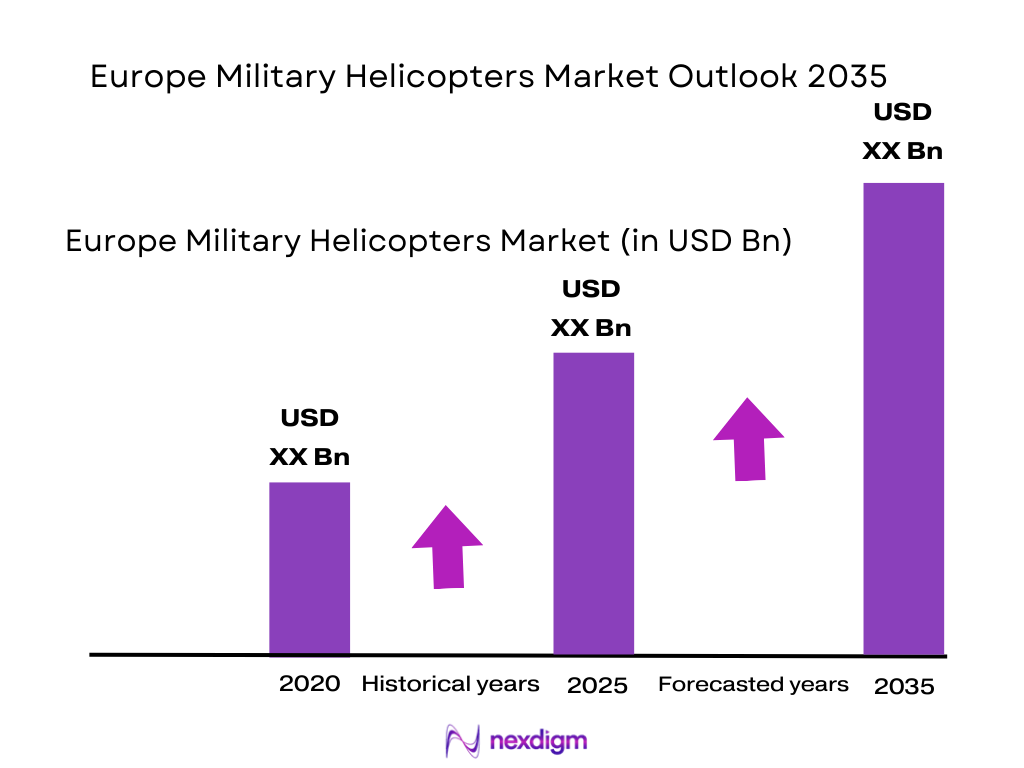
The Europe Military Helicopters market size is expected to reach USD ~ , driven by increasing defense budgets and the modernization of military forces across Europe. The demand for versatile, multi-role helicopters, including attack and transport helicopters, is pushing the market growth. As geopolitical tensions rise, European governments are investing heavily in military modernization programs, boosting demand for advanced helicopter systems. Technological advancements, such as automation and advanced weapon systems, are also driving market expansion, positioning helicopters as a crucial element of military strategy.
The dominant countries in the European military helicopter market are France, Germany, the United Kingdom, and Italy, each with strong defense sectors and high procurement budgets. France has a history of investing in advanced helicopter systems like the Tiger attack helicopters, while the UK focuses on multi-role helicopters for various operational needs. Germany’s defense spending is growing, with an emphasis on modernizing its fleet to meet NATO standards. Italy also plays a significant role with investments in both civil and military helicopter segments, strengthening its position as a key player in the region.
Market Segmentation
By Product Type
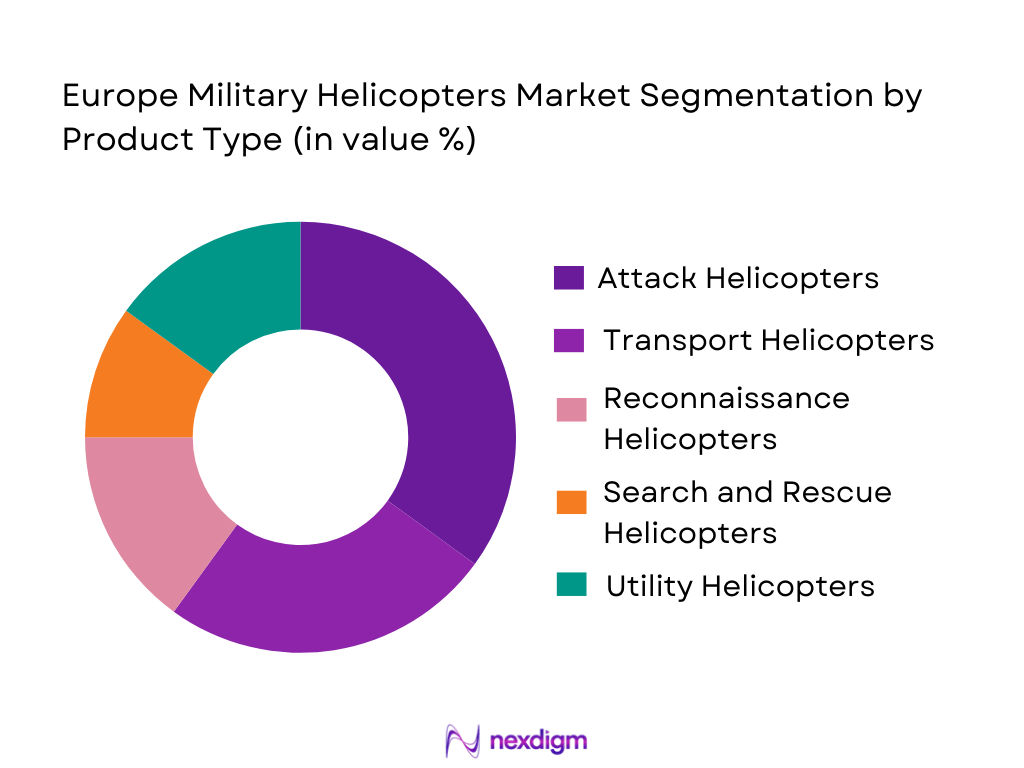
The Europe Military Helicopters market is segmented by product type into attack helicopters, transport helicopters, reconnaissance helicopters, search and rescue helicopters, and utility helicopters. Recently, attack helicopters have gained a dominant market share due to increasing defense budgets, the need for more precise military operations, and heightened demand for tactical attack and reconnaissance capabilities in conflict zones. The growing focus on modernization and the development of multi-role helicopters further strengthens the demand for attack helicopters in Europe.
By Platform Type
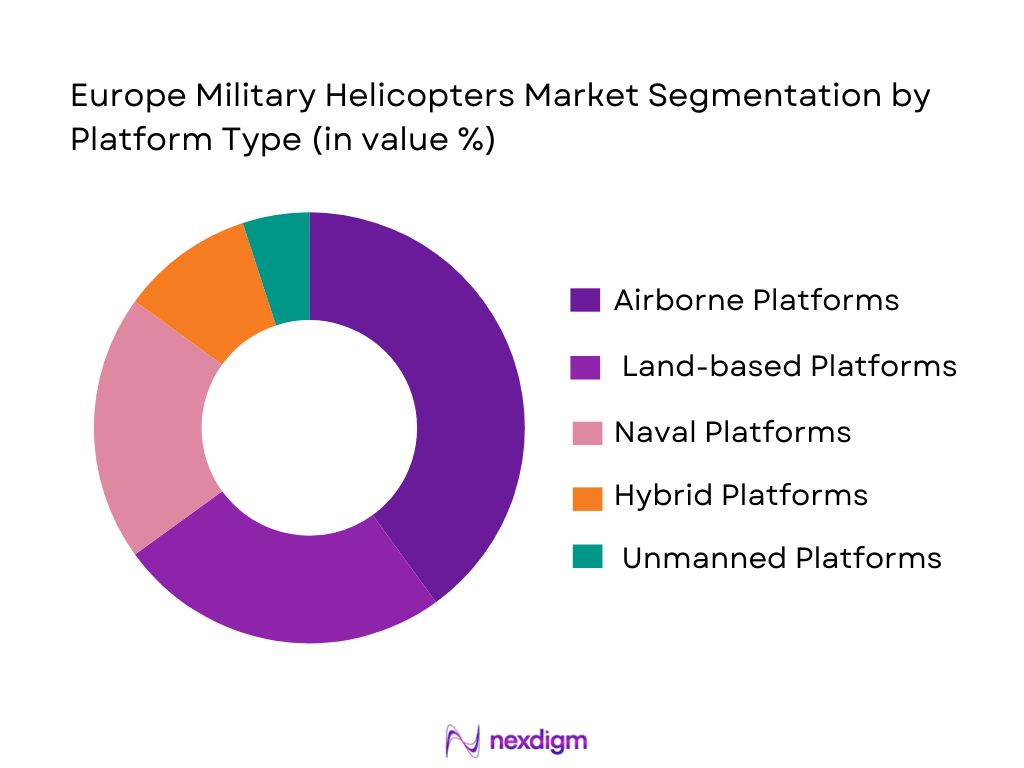
The Europe Military Helicopters market is also segmented by platform type into land-based platforms, naval platforms, airborne platforms, hybrid platforms, and unmanned platforms. Airborne platforms dominate this segment due to the strategic importance of air mobility in modern military operations. Airborne platforms provide superior operational efficiency, flexibility, and tactical advantage, making them highly sought after by European armed forces. Furthermore, technological advancements have made airborne platforms increasingly capable, allowing for greater adaptability in combat scenarios.
Competitive Landscape
The competitive landscape of the Europe Military Helicopters market is shaped by consolidation and the presence of major players, including global manufacturers and regional specialists. Key players focus on advanced technological developments, offering versatile multi-role helicopters capable of performing various military tasks. The increasing trend of defense collaborations and partnerships between manufacturers and government agencies plays a vital role in shaping the competitive dynamics of this market.
| Company Name | Establishment Year | Headquarters | Technology Focus | Market Reach | Key Products | Revenue (USD billion) | Additional Parameter |
| Airbus Helicopters | 2000 | Marignane, France | ~ | ~ | ~ | ~ | ~ |
| Boeing | 1916 | Chicago, USA | ~ | ~ | ~ | ~ | ~ |
| Leonardo | 1948 | Rome, Italy | ~ | ~ | ~ | ~ | ~ |
| Sikorsky Aircraft | 1923 | Stratford, USA | ~ | ~ | ~ | ~ | ~ |
| Russian Helicopters | 2007 | Moscow, Russia | ~ | ~ | ~ | ~ | ~ |
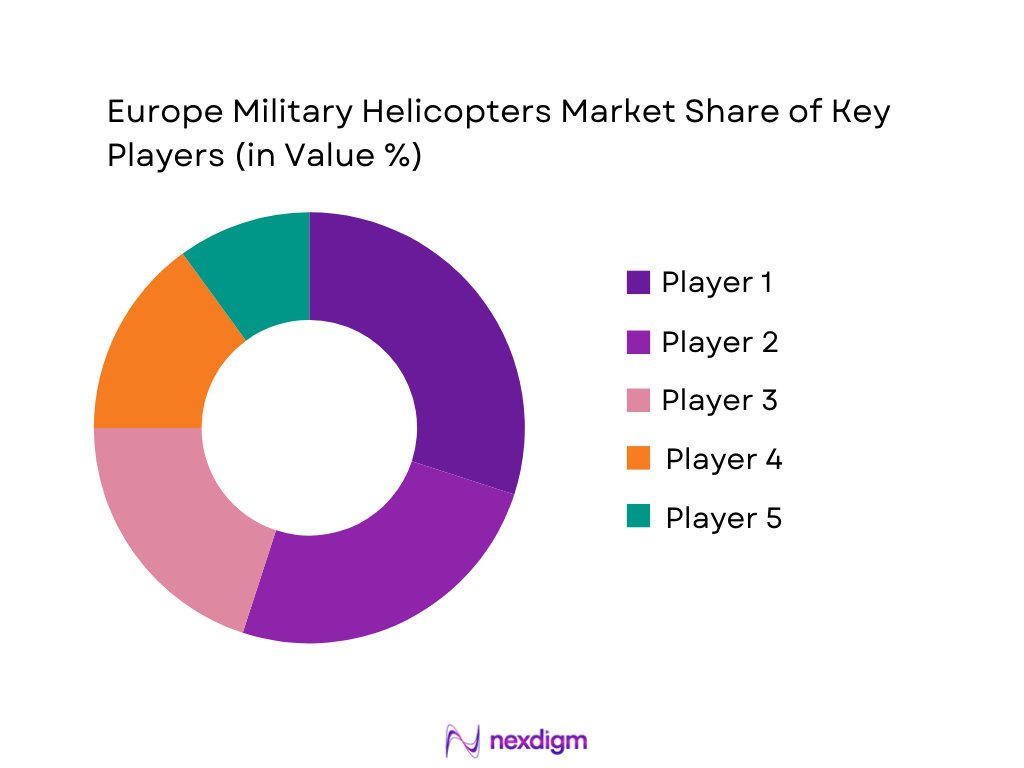
Europe Military Helicopters Market Analysis
Growth Drivers
Increasing Military Spending
European nations have been significantly increasing their defense budgets in response to rising geopolitical tensions and the need to modernize military equipment. Countries like France, Germany, and the UK are prioritizing investments in advanced military technologies, including helicopters, to maintain operational superiority. The growing importance of military mobility and versatility in combat scenarios has led to a strong demand for military helicopters. Helicopters offer unparalleled capabilities for rapid deployment, reconnaissance, air support, and disaster relief. The investment in both new aircraft and upgrades to existing fleets is further fueling the growth of the military helicopter market. Additionally, NATO’s defense commitment and the need for interoperability among European forces are driving the adoption of advanced helicopter systems across the region. The consistent increase in defense budgets is expected to continue driving market growth in the coming years, particularly with a focus on next-generation multi-role helicopters.
Technological Advancements
The evolution of military helicopter technology has played a pivotal role in shaping the market. Advancements such as improved avionics, enhanced rotorcraft designs, and automation are enabling helicopters to perform more sophisticated tasks with greater precision and reliability. The integration of advanced weaponry systems, improved radar and communications technology, and autonomy in certain platforms are also driving growth. Furthermore, developments in hybrid and electric propulsion systems are expected to revolutionize the market in the near future. These technological advancements allow military helicopters to operate in more diverse and challenging environments, increasing their strategic value. The continuous improvement of rotorcraft systems and the development of more energy-efficient and cost-effective helicopters are key factors influencing the growth of the market in Europe.
Market Challenges
High Maintenance Costs
One of the primary challenges faced by the Europe Military Helicopters market is the high operational and maintenance costs associated with military helicopters. These costs include regular maintenance, parts replacement, and the training of pilots and ground personnel, all of which require significant financial resources. The complex nature of helicopter systems and the need for specialized components contribute to these high costs. This presents a challenge for military budgets, especially for smaller European nations with limited financial resources for defense. Additionally, the cost of upgrading and retrofitting older helicopter fleets with the latest technologies can be a major barrier to market growth. With defense budgets often stretched, many countries are faced with the dilemma of balancing the need for modernized equipment while managing operational expenditures effectively.
Regulatory and Compliance Hurdles
Another significant challenge in the Europe Military Helicopters market is the stringent regulatory and compliance requirements that manufacturers and defense contractors must adhere to. The complex process of obtaining certification for military-grade helicopters involves multiple layers of approval, testing, and inspections by national and international regulatory bodies. These regulations ensure the safety, reliability, and operational capabilities of the helicopters, but they can also lead to delays in production and deployment. Compliance with NATO standards and other international defense agreements further complicates the process for manufacturers. Moreover, the evolving nature of airworthiness regulations, especially with the integration of new technologies such as autonomous flight systems, may present challenges in terms of certification. These regulatory challenges can impede the swift delivery of new helicopters, slowing the overall market growth.
Opportunities
Integration of Autonomous Technology
One of the most promising opportunities in the Europe Military Helicopters market is the integration of autonomous and semi-autonomous systems into helicopter operations. Autonomous helicopters offer significant advantages in terms of reducing the need for pilot intervention, lowering operational costs, and increasing mission efficiency. These systems are expected to be used for surveillance, reconnaissance, and logistics missions, where human intervention is minimal or unnecessary. The European military’s growing interest in autonomous systems presents an opportunity for manufacturers to develop next-generation helicopters that can operate with higher precision and flexibility. Furthermore, autonomous systems are poised to reduce the risk to human life in high-risk operations, enhancing the overall effectiveness of military missions. European defense agencies are actively investing in research and development of autonomous aviation technologies, making this a lucrative opportunity for helicopter manufacturers.
Rise in Multi-Role Helicopter Demand
Another significant opportunity lies in the increasing demand for multi-role helicopters capable of performing a wide range of operations. These helicopters offer flexibility by providing different capabilities, such as attack, transport, search and rescue, and reconnaissance in a single platform. The European defense sector is increasingly adopting these versatile systems to address the evolving nature of modern warfare, where rapid deployment and adaptability are critical. Multi-role helicopters reduce the need for multiple specialized aircraft, making them more cost-effective for military forces. As European nations modernize their fleets, the demand for multi-role helicopters is expected to rise, presenting a strong growth opportunity for manufacturers that can meet the need for high-performance, multi-functional systems. This trend is expected to continue as defense budgets increase and military operations become more complex.
Future Outlook
The future outlook for the Europe Military Helicopters market is expected to show sustained growth over the next five years, driven by increased defense budgets and the ongoing modernization of military forces. The integration of advanced technologies such as autonomous systems, hybrid propulsion, and multi-role capabilities will be pivotal in shaping the market. Additionally, regulatory support and collaboration among European defense agencies will contribute to the acceleration of military helicopter advancements. Technological innovation, coupled with rising demand for versatile and efficient helicopters, is expected to fuel growth and transform the market landscape.
Major Players
- Airbus Helicopters
- Boeing
- Leonardo
- Sikorsky Aircraft
- Russian Helicopters
- Bell Helicopter
- MD Helicopters
- Lockheed Martin
- Turbomeca
- AgustaWestland
- Kawasaki Heavy Industries
- Hindustan Aeronautics Limited
- Kamov
- Robinson Helicopter Company
- Northrop Grumman
Key Target Audience
- Investments and venture capitalist firms
- Government and regulatory bodies
- Military procurement agencies
- Aerospace and defense manufacturers
- Helicopter system integrators
- OEMs and helicopter operators
- Military aviation services providers
- Defense contractors
Research Methodology
Step 1: Identification of Key Variables
We identify and define the key variables that influence the military helicopter market, such as product type, platform type, and technology trends.
Step 2: Market Analysis and Construction
We analyze historical data, current market trends, and future projections to build a comprehensive market model.
Step 3: Hypothesis Validation and Expert Consultation
We validate hypotheses through expert consultations with industry specialists, government officials, and key stakeholders.
Step 4: Research Synthesis and Final Output
We synthesize the findings from our market analysis and expert insights to create the final market report.

- Executive Summary
- Research Methodology (Definitions, Scope, Industry Assumptions, Market Sizing Approach, Primary & Secondary Research Framework, Data Collection & Verification Protocol, Analytic Models & Forecast Methodology, Limitations & Research Validity Checks)

- Market Definition and Scope
- Value Chain & Stakeholder Ecosystem
- Regulatory / Certification Landscape
- Sector Dynamics Affecting Demand
- Strategic Initiatives & Infrastructure Growth

- Growth Drivers
Increased Defense Budgets in Europe
Technological Advancements in Helicopter Systems
Geopolitical Instability Driving Demand - Market Challenges
High Operational and Maintenance Costs
Regulatory Challenges
Technological Integration Issues - Market Opportunities
Development of Hybrid and Electric Helicopters
Expansion of UAV Helicopter Integration
Rising Demand for SAR Helicopters - Trends
Increase in Autonomous Helicopter Technology
Enhanced Multi-Role Capabilities in Helicopter Designs - Government Regulations
- SWOT Analysis
- Porter’s Five Forces

- By Market Value, 2020-2025
- By Installed Units, 2020-2025
- By Average System Price, 2020-2025
- By System Complexity Tier, 2020-2025

- By System Type (In Value%)
Attack Helicopters
Transport Helicopters
Reconnaissance Helicopters
Search and Rescue Helicopters
Utility Helicopters - By Platform Type (In Value%)
Land-Based Platforms
Naval Platforms
Airborne Platforms
Hybrid Platforms
Unmanned Platforms - By Fitment Type (In Value%)
On-Premise Solutions
Integrated Solutions
Modular Solutions
Upgraded Solutions - By End User Segment (In Value%)
Defense Forces
Government Security Agencies
Private Contractors
OEMs - By Procurement Channel (In Value%)
Direct Procurement
Government Tenders
Private Sector Procurement

- Market Share Analysis
- Cross Comparison Parameters (System Type, Platform Type, Procurement Channel, End User Segment, Fitment Type)
- SWOT Analysis of Key Competitors
- Pricing & Procurement Analysis
- Key Players
Airbus Helicopters
Boeing
Leonardo
Sikorsky Aircraft
NHIndustries
Bell Helicopter
Russian Helicopters
Kawasaki Heavy Industries
MD Helicopters
Lockheed Martin
Turkish Aerospace Industries
Hindustan Aeronautics Limited
Embraer
Schiebel Aircraft
Safran Helicopter Engines

- Increasing Focus on Advanced Combat Capabilities
- Growing Use of Helicopters in Emergency and Rescue Operations
- Private Sector Demand for Multi-Role Helicopters
- Rising Investment in Military Modernization Programs

- Forecast Market Value, 2026-2035
- Forecast Installed Units, 2026-2035
- Price Forecast by System Tier, 2026-2035
- Future Demand by Platform, 2026-2035


 Request a Sample
 Ask for Customization
 Get a Quote
 Enquire Now