
 Download PDF
 Download PDF
Market Overview
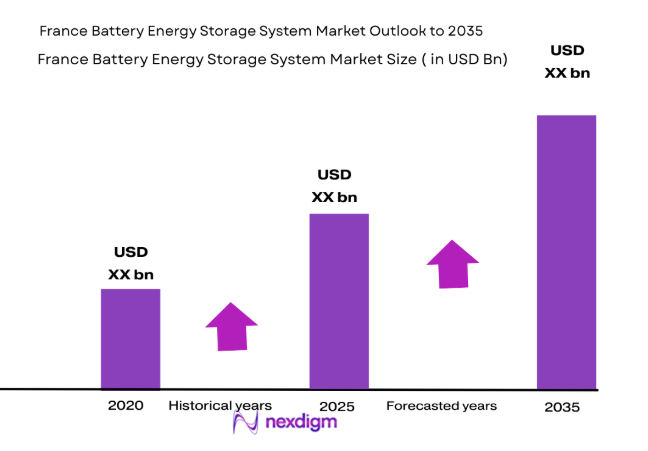
France Battery Energy Storage System market reached approximately USD ~ billion based on a recent historical assessment supported by analysis from the International Energy Agency and national energy data repositories. Market expansion is driven by rapid integration of renewable power generation across the national grid and increasing requirements for grid balancing infrastructure. Battery storage systems are increasingly deployed to stabilize electricity networks and manage intermittent energy supply from renewable sources. Large scale solar and wind projects across France require flexible storage technologies that allow surplus electricity to be stored and distributed when demand increases. National energy transition initiatives are also encouraging utility operators and energy developers to invest in large grid scale storage installations. Growing investments from independent power producers and renewable developers continue to accelerate battery energy storage deployment across multiple energy infrastructure projects.
Paris and surrounding Île-de-France region remain major centers for energy technology deployment because of their advanced grid infrastructure, dense electricity consumption networks, and strong government backed energy transition initiatives. Industrial regions such as Auvergne-Rhône-Alpes and Nouvelle-Aquitaine are also emerging as major locations for battery energy storage installations due to increasing renewable power generation and industrial electricity demand. Energy companies and infrastructure developers prefer these regions because grid modernization programs and renewable energy clusters support efficient integration of storage systems. Several large renewable energy projects across southern France increasingly incorporate battery storage solutions to ensure grid reliability and improve energy distribution efficiency. Government-backed energy transition programs and local energy management initiatives further strengthen the adoption of battery energy storage technologies across major economic and industrial regions.
Market Segmentation
By Product Type
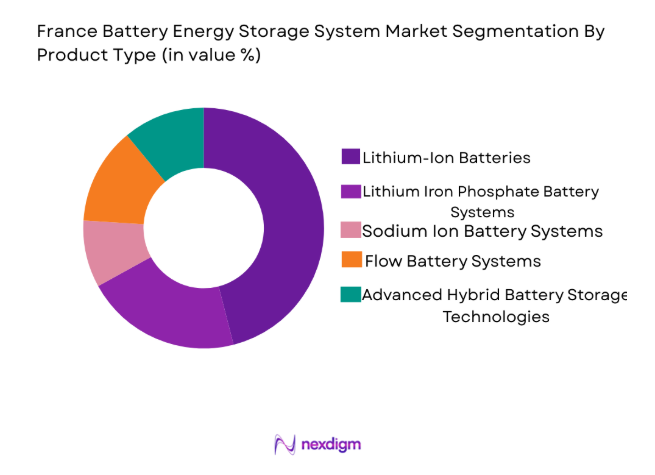
France Battery Energy Storage System market is segmented by product type into lithium ion battery systems, lithium iron phosphate battery systems, sodium ion battery systems, flow battery systems, and advanced hybrid battery storage technologies. Recently, lithium ion battery systems have a dominant market share due to factors such as widespread commercial deployment, strong technology maturity, advanced energy density, and compatibility with renewable energy integration projects. Energy developers prefer lithium ion storage systems because of their reliable performance, scalable deployment capability, and cost efficiency in grid level installations. Continuous technological innovation, improved lifecycle performance, and growing supply chain availability further strengthen the position of lithium ion batteries within energy storage infrastructure projects across France. Renewable energy developers also prefer lithium ion storage because these systems integrate effectively with solar and wind power plants while enabling rapid response for grid stabilization services and frequency regulation across electricity networks.
By Platform Type
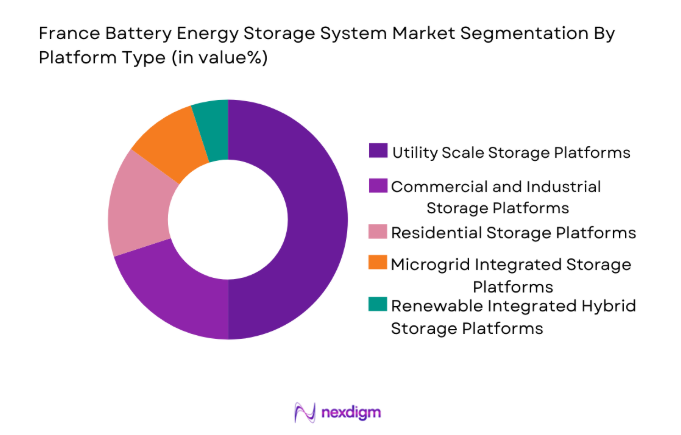
France Battery Energy Storage System market is segmented by platform type into utility scale storage platforms, commercial and industrial storage platforms, residential storage platforms, microgrid integrated storage platforms, and renewable integrated hybrid storage platforms. Recently, utility scale storage platforms have a dominant market share due to factors such as large grid modernization programs, rapid renewable energy deployment, and strong support from national electricity operators. Utility companies deploy large battery storage facilities to maintain grid stability and improve electricity distribution efficiency during periods of variable renewable generation. These systems enable energy operators to balance electricity supply and demand while providing frequency control and peak load management services. Government supported renewable energy expansion programs also encourage the installation of grid scale storage facilities that support large solar and wind generation clusters, strengthening the dominance of utility scale battery energy storage systems across national electricity infrastructure projects.
Competitive Landscape
France Battery Energy Storage System market is characterized by the presence of several international technology manufacturers and domestic energy companies that actively participate in storage system deployment and grid integration projects. The competitive landscape remains moderately consolidated as a few large energy infrastructure firms control major storage projects while technology suppliers compete through advanced battery chemistries, system integration capabilities, and grid service technologies. Strategic partnerships between energy utilities, technology developers, and renewable energy project developers further strengthen market competition and encourage large scale energy storage deployments across the national electricity network.
| Company Name | Establishment Year | Headquarters | Technology Focus | Market Reach | Key Products | Revenue | Energy Storage Capacity |
| TotalEnergies | 1924 | Paris, France | ~ | ~ | ~ | ~ | ~ |
| EDF Renewables | 2004 | Paris, France | ~ | ~ | ~ | ~ | ~ |
| ENGIE | 1880 | Courbevoie, France | ~ | ~ | ~ | ~ | ~ |
| Saft Groupe | 1918 | Levallois-Perret, France | ~ | ~ | ~ | ~ | ~ |
| Schneider Electric | 1836 | Rueil-Malmaison, France |
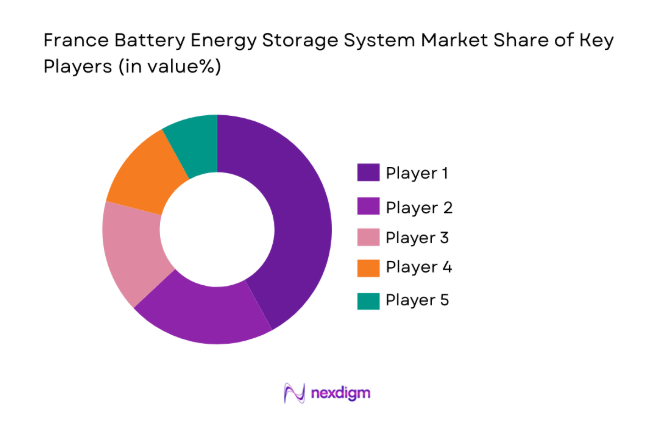
France Battery Energy Storage Systems Market Analysis
Growth Drivers
Expansion of Renewable Energy Integration Across National Grid Infrastructure:
France is undergoing a significant transformation in its electricity generation landscape as renewable energy sources such as solar and wind power increasingly contribute to the national electricity supply. Renewable energy expansion has created a strong requirement for flexible energy storage systems capable of balancing variable electricity generation and maintaining grid stability during fluctuating supply conditions. Utility operators and energy developers are investing in large scale battery energy storage installations that allow excess renewable electricity to be stored during periods of high generation and released during peak demand periods when renewable output declines. Grid scale battery systems also help electricity network operators maintain frequency stability and manage voltage fluctuations across transmission networks that experience irregular renewable power injection. Energy storage infrastructure plays a central role in supporting France’s national energy transition strategies which aim to reduce dependence on conventional fossil fuel power generation while expanding renewable energy capacity. Renewable energy developers frequently integrate battery storage into solar and wind projects to enhance operational reliability and improve electricity delivery to the national grid. Battery energy storage also enables improved energy arbitrage opportunities by allowing operators to store electricity during periods of low demand and release it when market electricity prices increase. Government policy frameworks supporting decarbonization and clean energy development further strengthen investment in grid scale battery storage infrastructure across several regions. The continuous deployment of renewable generation facilities across the national electricity system ensures that battery energy storage solutions remain essential for maintaining stable electricity supply while supporting the long term transition toward low carbon energy infrastructure.
Rising Demand for Grid Stability and Energy Infrastructure Modernization:
The increasing complexity of electricity distribution networks across France is driving strong demand for advanced battery energy storage technologies that can support grid modernization initiatives and improve overall electricity reliability. As electricity consumption patterns evolve with increasing electrification of transportation, industrial systems, and residential energy applications, grid operators require more sophisticated infrastructure capable of managing dynamic energy flows across multiple distribution networks. Battery energy storage systems provide grid operators with flexible tools that help manage peak electricity demand, stabilize voltage fluctuations, and support frequency regulation across interconnected electricity networks. Modern electricity grids must accommodate increasing renewable power generation alongside traditional power plants, which creates operational challenges that require advanced storage technologies to ensure balanced electricity supply and demand conditions. Battery storage installations allow energy operators to quickly respond to sudden electricity demand spikes and unexpected fluctuations in renewable energy generation. National electricity infrastructure programs focusing on smart grid deployment and digital energy management platforms further support the integration of battery storage systems into modern electricity networks. Advanced monitoring technologies allow energy storage operators to optimize system performance while maintaining efficient energy distribution across the grid. Continuous modernization of electricity infrastructure combined with increasing electrification across transportation and industrial sectors further accelerates the need for large scale battery energy storage installations throughout the national electricity network.
Market Challenges
High Capital Investment Requirements for Large Scale Energy Storage Infrastructure:
The deployment of battery energy storage systems requires substantial capital investment due to the high cost of advanced battery technologies, system integration equipment, and supporting electrical infrastructure required for grid connectivity. Utility scale energy storage projects typically require large financial commitments from energy developers and electricity operators before installations can become operational. Battery systems must be integrated with advanced power electronics, monitoring technologies, and safety systems that ensure reliable performance within electricity distribution networks. These technological requirements significantly increase the total cost of energy storage infrastructure development compared with conventional electricity generation technologies. Financial investors often require clear long term revenue mechanisms and regulatory support before committing capital to large energy storage installations. Electricity markets must also establish pricing frameworks that reward energy storage operators for providing grid services such as frequency regulation, load balancing, and reserve capacity. In some cases the financial returns from energy storage projects remain uncertain due to evolving electricity market structures and regulatory frameworks governing energy storage participation. Project developers must also allocate resources for site preparation, grid connection infrastructure, and regulatory compliance before construction of battery storage facilities can begin. Large scale battery installations require specialized engineering expertise and advanced safety systems that ensure operational reliability across electricity distribution networks. Despite growing interest in energy storage technologies, the high capital cost associated with battery energy storage infrastructure continues to represent a major barrier for widespread deployment across certain energy markets.
Supply Chain Dependency on Critical Battery Materials and Global Manufacturing Networks:
Battery energy storage technologies rely heavily on critical raw materials such as lithium, cobalt, nickel, and graphite that are sourced from global mining operations and processed through complex international supply chains. The availability and pricing of these materials significantly influence the overall cost structure of battery energy storage systems used in grid infrastructure projects. Fluctuations in raw material prices can increase manufacturing costs for battery technology providers and affect the economic feasibility of large scale energy storage installations. Many battery materials are concentrated within limited geographic regions, which creates potential supply chain vulnerabilities for energy storage developers operating in different global markets. Energy storage manufacturers must manage complex logistics networks that transport raw materials to battery production facilities before finished storage systems are delivered to project developers and energy utilities. Geopolitical developments, trade policies, and transportation disruptions can influence the availability of critical battery components required for large energy storage projects. Battery manufacturers also face growing regulatory expectations regarding responsible sourcing of raw materials and environmental sustainability standards for battery production. Recycling infrastructure for end of life batteries remains under development in many regions, which creates additional challenges related to long term material supply and environmental compliance. Energy companies and battery manufacturers are increasingly exploring alternative battery chemistries and recycling technologies that may reduce dependence on critical raw materials while strengthening supply chain resilience for energy storage systems.
Opportunities
Expansion of Hybrid Renewable Energy and Battery Storage Infrastructure Projects:
Hybrid energy infrastructure projects that combine renewable power generation with integrated battery storage systems are creating major opportunities for energy developers and technology providers operating in the battery energy storage ecosystem. Renewable power plants increasingly incorporate battery storage systems that allow electricity generated from solar and wind facilities to be stored and delivered during periods when generation declines or electricity demand increases. Hybrid renewable storage projects enable energy developers to maximize electricity output from renewable installations while ensuring consistent energy delivery to electricity distribution networks. Battery energy storage systems also allow renewable energy facilities to participate more effectively in electricity markets by storing excess generation during low demand periods and releasing stored electricity when market prices increase. Hybrid energy infrastructure improves overall energy system efficiency while reducing curtailment of renewable electricity generation during periods of surplus production. Governments supporting energy transition strategies frequently encourage the development of integrated renewable and storage infrastructure through supportive policy frameworks and infrastructure investment programs. Hybrid renewable storage projects can also strengthen grid resilience by providing backup electricity supply during unexpected power disruptions or extreme weather events that affect traditional electricity generation infrastructure. Continued expansion of renewable power generation across several regions ensures that hybrid renewable energy storage projects will remain a major opportunity within the battery energy storage industry.
Development of Smart Grid Technologies and Digital Energy Management Systems:
Advanced digital technologies and smart grid infrastructure are creating significant opportunities for battery energy storage systems to become central components of modern electricity management networks. Smart grids incorporate digital monitoring technologies, automated control systems, and advanced data analytics platforms that allow electricity operators to monitor energy flows across transmission and distribution networks in real time. Battery energy storage systems integrated into smart grid platforms can automatically respond to fluctuations in electricity demand and generation conditions while supporting efficient energy distribution across electricity networks. Digital energy management systems allow electricity operators to optimize battery charging and discharging cycles in order to maximize system efficiency and extend battery lifecycle performance. Smart grid technologies also enable distributed energy resources such as rooftop solar systems, microgrids, and community energy projects to interact more effectively with centralized electricity infrastructure. Battery storage systems play a critical role in enabling these distributed energy networks by providing flexible energy balancing capabilities that support stable electricity supply. As digital energy infrastructure continues to expand across modern electricity systems, battery energy storage technologies will increasingly serve as essential components that enhance grid flexibility, improve operational efficiency, and strengthen overall electricity network reliability.
Future Outlook
France Battery Energy Storage System market is expected to experience strong expansion over the coming years as renewable energy integration continues to increase across the national electricity grid. Technological advancements in battery chemistries, grid management software, and energy storage system integration will significantly enhance storage performance and reliability. Government energy transition strategies supporting decarbonization and clean electricity generation will further encourage investment in grid scale battery infrastructure. Increasing electrification of transportation and industrial sectors will also contribute to rising electricity demand, strengthening the need for large scale energy storage systems that maintain grid stability.
Major Players
- ABB Ltd.
- Schneider Electric
- LG Energy Solution
- Samsung SDI
- BYD Co. Ltd.
- Tesla, Inc.
- Sungrow Power Supply Co., Ltd.
- Fluence Energy
- Eos Energy Enterprises
- VARTA AG
- Exide Technologies
- EDF Renewables
- Enel Green Power
- Saft Groupe S.A.
Key Target Audience
- Government and regulatory bodies
- Renewable energy project developers
- Energy storage system manufacturers
- Electric utility companies
- Infrastructure development firms
- Large-scale commercial and industrial users
- System integrators
Research Methodology
Step 1: Identification of Key Variables
The research process begins with identification of major variables that influence battery energy storage demand including renewable energy capacity expansion, electricity infrastructure modernization, and policy frameworks supporting energy storage deployment. These variables help establish the analytical boundaries for the market assessment.
Step 2: Market Analysis and Construction
Data is collected from industry databases, government energy statistics, company financial reports, and international energy organizations to construct the overall market framework. The analysis evaluates production capacity, technology adoption trends, and infrastructure deployment across the energy sector.
Step 3: Hypothesis Validation and Expert Consultation
Industry experts including energy infrastructure specialists, grid operators, battery manufacturers, and renewable energy developers provide validation for the research findings. Their insights help refine market assumptions and confirm technological and investment trends within the battery energy storage industry.
Step 4: Research Synthesis and Final Output
All collected information is synthesized through analytical modeling and cross verification with credible energy sector sources. The final report integrates quantitative data and qualitative insights to provide a comprehensive assessment of the France Battery Energy Storage System market.

- Executive Summary
- Research Methodology
(Definitions, Scope, Industry Assumptions, Market Sizing Approach, Primary & Secondary Research Framework, Data Collection & Verification Protocol, Analytic Models & Forecast Methodology, Limitations & Research Validity Checks)

- Market Definition and Scope
- Value Chain & Stakeholder Ecosystem
- Regulatory / Certification Landscape
- Sector Dynamics Affecting Demand
- Strategic Initiatives & Infrastructure Growth

- Growth Drivers
Rapid expansion of renewable energy generation capacity in France
Government incentives supporting grid scale energy storage deployment
Growing need for grid balancing and frequency regulation services - Market Challenges
High capital costs associated with large scale battery installations
Complex regulatory approval processes for grid connected storage projects
Supply chain dependency on imported battery raw materials - Market Opportunities
- Integration of battery storage with large scale solar and wind farms
Development of decentralized energy systems and microgrids
Expansion of smart grid infrastructure across France - Trends
Increasing adoption of lithium iron phosphate battery technologies
Deployment of large scale grid stabilization storage projects
Growth of hybrid renewable energy plus storage systems - Government Regulations & Defense Policy
National energy transition policies promoting energy storage systems
Grid interconnection regulations for battery energy storage projects
Environmental compliance standards for battery recycling and disposal - SWOT Analysis
Stakeholder and Ecosystem Analysis - Porter’s Five Forces Analysis
Competition Intensity and Ecosystem Mapping

- By Market Value, 2020-2025
- By Installed Units, 2020-2025
- By Average System Price, 2020-2025
- By System Complexity Tier, 2020-2025

- By System Type (In Value%)
Utility Scale Battery Storage Systems
Commercial and Industrial Energy Storage Systems
Residential Battery Energy Storage Systems
Grid Stabilization and Frequency Regulation Systems
Renewable Integration Energy Storage Systems - By Platform Type (In Value%)
On Grid Storage Platforms
Off Grid Storage Platforms
Hybrid Renewable Storage Platforms
Microgrid Integrated Storage Platforms
Virtual Power Plant Enabled Storage Platforms - By Fitment Type (In Value%)
Containerized Battery Energy Storage Systems
Modular Rack Mounted Storage Systems
Integrated Energy Storage Cabinets
Stationary Utility Scale Installations
Portable and Mobile Energy Storage Units - By EndUser Segment (In Value%)
Electric Utilities and Grid Operators
Renewable Energy Project Developers
Commercial and Industrial Facilities
Residential Energy Consumers
Government and Public Infrastructure Operators - By Procurement Channel (In Value%)
Direct Utility Procurement
Energy Project EPC Contractors
Government Energy Tenders
Private Renewable Energy Developers
Energy Storage Solution Integrators - By Material / Technology (in Value %)
Lithium Ion Battery Energy Storage Systems
Lithium Iron Phosphate Battery Storage Systems
Nickel Manganese Cobalt Battery Systems
Sodium Ion Battery Storage Systems
Flow Battery Energy Storage Technologies

- Market structure and competitive positioning
Market share snapshot of major players
CrossComparison Parameters (Battery Capacity Range, System Integration Capability, Grid Services Functionality, Technology Type, Installation Scale, Safety Certification Standards, Lifecycle Performance, Pricing Strategy)
SWOT Analysis of Key Competitors
Pricing & Procurement Analysis - Key Players
TotalEnergies
EDF Renewables
ENGIE
Saft Groupe
Schneider Electric
Nidec Industrial Solutions
Fluence Energy
Tesla Energy
BYD Energy Storage
LG Energy Solution
Samsung SDI
Envision Energy
Hitachi Energy
Siemens Energy
CATL

- Utilities increasingly deploying storage to stabilize renewable power supply
- Commercial facilities adopting batteries to reduce peak electricity costs
- Residential consumers installing batteries alongside rooftop solar systems
- Government infrastructure projects integrating storage for energy resilience

- Forecast Market Value, 2026-2035
- Forecast Installed Units, 2026-2035
- Price Forecast by System Tier, 2026-2035
- Future Demand by Platform, 2026-2035


 Request a Sample
 Ask for Customization
 Get a Quote
 Enquire Now