
 Download PDF
 Download PDF
Market Overview
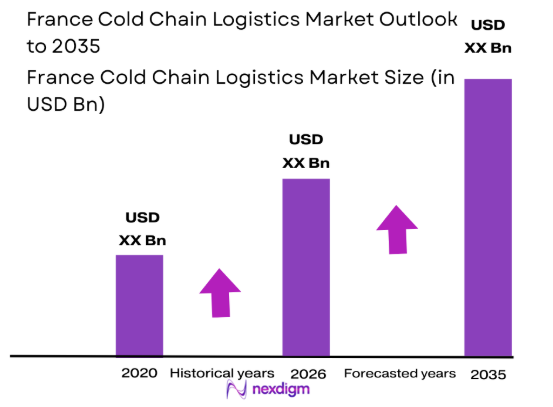
France Cold Chain Logistics market is valued at USD ~ billion based on a recent historical assessment, supported by expanding pharmaceutical distribution, frozen food consumption, and strict temperature controlled transportation requirements across national supply chains. Growth in biologic medicines, vaccines, dairy products, seafood, and frozen foods requires reliable refrigerated storage and transportation infrastructure. Data from the French Ministry of Agriculture and European Food Safety Authority highlights increasing demand for temperature controlled logistics networks ensuring product quality and regulatory compliance across food and healthcare distribution systems.
Paris, Lyon, and Marseille represent the most significant logistics hubs supporting France Cold Chain Logistics market due to strong transportation infrastructure, dense consumer populations, and proximity to major food processing and pharmaceutical production centers. Paris hosts extensive pharmaceutical distribution facilities and medical logistics networks, while Lyon functions as a central hub connecting northern and southern distribution corridors. Marseille strengthens international refrigerated trade through major seaport infrastructure supporting temperature controlled imports and exports of seafood, agricultural produce, and pharmaceutical products.
Market Segmentation
By Product Type
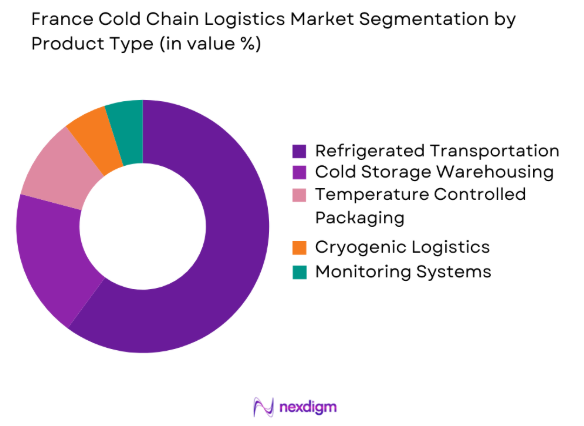
France Cold Chain Logistics market is segmented by product type into refrigerated transportation, cold storage warehousing, temperature-controlled packaging, cryogenic logistics, and monitoring systems. Recently, refrigerated transportation has a dominant market share due to rising demand for nationwide distribution of frozen foods, dairy products, and pharmaceutical supplies requiring continuous temperature control during transit. Increasing consumption of frozen ready meals and seafood products across retail chains drives frequent refrigerated shipments between food processing plants, distribution centers, and supermarkets. Pharmaceutical supply chains also depend heavily on refrigerated transportation to maintain stable temperature ranges for biologics, vaccines, and specialty drugs during delivery. Expansion of organized retail and e-commerce grocery platforms further increases demand for refrigerated delivery networks connecting warehouses and consumers. Logistics providers therefore continue expanding fleets of temperature controlled trucks and trailers equipped with advanced monitoring technologies ensuring product integrity across long distance transportation routes.
By End User
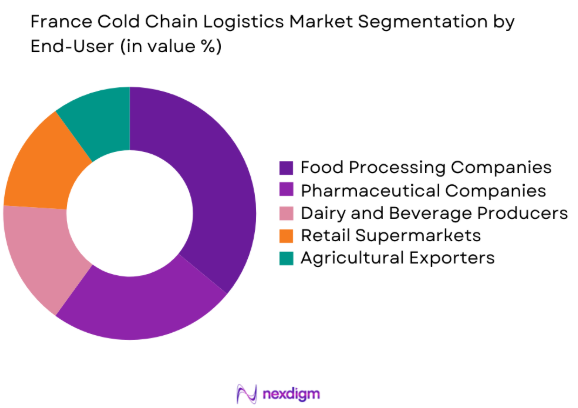
France Cold Chain Logistics market is segmented by end user into pharmaceutical companies, food processing companies, dairy and beverage producers, retail supermarkets, and agricultural exporters. Recently, food processing companies hold the dominant market share due to high distribution volumes of frozen foods, seafood, meat products, and ready to eat meals requiring reliable temperature controlled logistics. France maintains one of the largest processed food industries in Europe with major manufacturing facilities distributing products across domestic and international markets. Frozen food consumption continues expanding through supermarket chains and online grocery platforms requiring reliable refrigerated storage and transportation networks. Food processors also depend on temperature controlled warehousing to maintain product quality before distribution. Expansion of export oriented food supply chains including seafood, dairy products, and specialty foods further strengthens the role of cold chain logistics providers supporting national food distribution networks.
Competitive Landscape
France Cold Chain Logistics market is moderately consolidated with a combination of global logistics companies and regional refrigerated transport specialists competing across pharmaceutical and food supply chains. Major companies invest heavily in temperature monitoring technology, automated refrigerated warehouses, and specialized pharmaceutical distribution services. Strategic partnerships with food retailers and pharmaceutical manufacturers strengthen long term logistics contracts. Market competition focuses on network coverage, storage capacity, regulatory compliance, and technological innovation supporting efficient temperature controlled supply chain management.
| Company Name | Establishment Year | Headquarters | Technology Focus | Market Reach | Key Products | Revenue | Cold Storage Capacity |
| STEF Group | 1920 | France | ~ | ~ | ~ | ~ | ~ |
| DHL Supply Chain | 1969 | Germany | ~ | ~ | ~ | ~ | ~ |
| Kuehne+Nagel | 1890 | Switzerland | ~ | ~ | ~ | ~ | ~ |
| Lineage Logistics | 2008 | USA | ~ | ~ | ~ | ~ | ~ |
| GEODIS | 1904 | France | ~ | ~ | ~ | ~ | ~ |
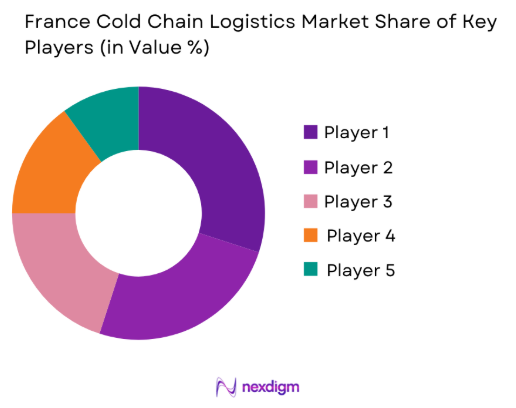
France Cold Chain Logistics Market Analysis
Growth Drivers
Expansion of Pharmaceutical and Biologics Distribution Networks
Rapid expansion of pharmaceutical manufacturing and biologic medicine distribution increases demand for advanced cold chain logistics infrastructure capable of maintaining precise temperature conditions across healthcare supply chains. Biologic medicines including vaccines, insulin products, monoclonal antibodies, and specialty therapies require strict temperature control to preserve stability and effectiveness during distribution from manufacturers to hospitals and pharmacies. Pharmaceutical companies rely on certified cold chain providers operating refrigerated warehouses, monitored transportation systems, and validated packaging technologies ensuring product safety during long distance shipments. Healthcare regulators also require continuous temperature monitoring, data logging systems, and validated transport procedures across pharmaceutical distribution networks. Logistics providers therefore invest heavily in pharmaceutical grade storage facilities, automated refrigeration technologies, and real time monitoring systems.
Growth of Frozen Food Consumption and Modern Food Distribution Networks
Rapid expansion of frozen food consumption across France significantly increases demand for temperature controlled logistics systems capable of maintaining stable cold storage conditions throughout national food supply chains. Frozen ready meals, seafood, dairy products, and processed meat items require reliable refrigerated transportation and warehouse storage to preserve product quality and safety during distribution. Large supermarket chains, hypermarkets, and online grocery platforms generate substantial shipment volumes requiring extensive cold storage infrastructure and dependable refrigerated transport fleets connecting food processing facilities with retail outlets. Food manufacturers rely heavily on cold chain logistics providers to maintain continuous supply across nationwide distribution networks. Growing urban populations and fast paced lifestyles also encourage demand for convenient frozen food products distributed through organized retail channels.
Market Challenges
High Energy Consumption and Operating Costs of Refrigerated Infrastructure
Cold chain logistics operations depend on energy intensive refrigeration systems operating continuously across warehouses, transportation fleets, and distribution facilities, creating significant operational costs for logistics providers. Refrigerated warehouses require advanced insulation, compressors, temperature monitoring equipment, and backup power systems to maintain stable cooling conditions for sensitive goods. Refrigerated vehicles also consume substantial fuel and electricity while transporting food and pharmaceutical products over long distances. Rising electricity prices and energy market volatility increase operational expenditure and pressure logistics companies’ profitability. Expanding cold storage capacity or upgrading refrigeration technology therefore requires substantial investment. Additionally, environmental concerns and stricter emissions regulations encourage companies to adopt energy efficient refrigeration systems and renewable energy solutions.
Complex Regulatory Compliance for Pharmaceutical and Food Safety Standards
Cold chain logistics providers serving pharmaceutical and food industries must comply with strict regulatory frameworks governing temperature control, product safety, and transportation procedures, creating operational complexity for logistics companies. Pharmaceutical shipments must follow Good Distribution Practice standards ensuring biologic medicines, vaccines, and specialty drugs remain within validated temperature ranges during storage and transportation. Regulatory authorities require continuous temperature monitoring, traceability systems, and validated packaging solutions to maintain product stability across supply chains. Food logistics operations must also comply with hygiene standards, contamination prevention rules, and refrigerated storage regulations. Logistics providers therefore maintain advanced monitoring sensors, data logging systems, and documentation processes. Failure to maintain temperature stability can result in product spoilage, regulatory penalties, and financial losses.
Opportunities
Adoption of Smart Cold Chain Monitoring and Internet of Things Technologies
Growing adoption of digital monitoring technologies creates significant opportunities for innovation across France Cold Chain Logistics market as logistics providers deploy Internet of Things sensors, real time tracking platforms, and predictive analytics systems throughout refrigerated supply chains. Smart temperature sensors installed in warehouses, transport vehicles, and packaging continuously monitor environmental conditions including temperature, humidity, and shipment location. These systems ensure that temperature sensitive products remain within validated storage ranges during distribution. Advanced data analytics platforms analyze monitoring information and quickly detect temperature deviations, allowing logistics operators to implement corrective actions and prevent product spoilage. Pharmaceutical companies and food distributors increasingly require digital supply chain transparency, enabling remote monitoring of shipment conditions while ensuring regulatory compliance across refrigerated logistics operations.
Expansion of Pharmaceutical Export Logistics Across European Healthcare Markets
France hosts one of Europe’s largest pharmaceutical manufacturing industries producing vaccines, biologic medicines, and specialty therapies that require reliable cold chain logistics for international healthcare distribution. Pharmaceutical exporters depend on temperature controlled air freight, validated packaging systems, and specialized refrigerated warehouses to maintain strict storage conditions during transportation. Growing pharmaceutical trade strengthens demand for certified logistics providers capable of complying with healthcare regulations across global supply chains. Logistics companies increasingly invest in pharmaceutical grade storage infrastructure, advanced packaging technologies, and monitored transport systems supporting biologic medicine distribution. Rising global healthcare demand for vaccines and biologic therapies continues creating long term opportunities for specialized pharmaceutical cold chain logistics services.
Future Outlook
France Cold Chain Logistics market is expected to experience steady expansion driven by increasing demand for temperature controlled pharmaceutical distribution and frozen food supply chains. Logistics providers are investing heavily in automated refrigerated warehouses digital monitoring technologies and energy efficient refrigeration systems improving operational reliability. Government regulations on pharmaceutical distribution and food safety will continue strengthening demand for certified cold chain infrastructure. Growing export activity and international pharmaceutical trade will further expand refrigerated logistics networks across Europe.
Major Players
- STEF Group
- DHL Supply Chain
- Kuehne+Nagel
- Lineage Logistics
- GEODIS
- XPO Logistics
- DB Schenker
- DSV A/S
- Bolloré Logistics
- Maersk Logistics
- Agility Logistics
- FM Logistic
- Dachser
- Nippon Express
- Norbert Dentressangle Logistics
Key Target Audience
- Pharmaceutical manufacturers
- Food processing companies
- Cold storage infrastructure operators
- Refrigerated transportation providers
- Retail supermarket chains
- Investments and venture capitalist firms
- Government and regulatory bodies
- Healthcare distribution companies
Research Methodology
Step 1: Identification of Key Variables
Key industry variables including cold storage capacity refrigerated fleet size pharmaceutical logistics demand and frozen food distribution networks were identified. Supply chain infrastructure regulatory standards and energy consumption factors were also analyzed to understand operational dynamics influencing cold chain logistics services.
Step 2: Market Analysis and Construction
Extensive secondary research was conducted using government reports industry databases trade statistics and logistics company financial disclosures. Data regarding pharmaceutical distribution food processing logistics and refrigerated transportation infrastructure was consolidated to construct the market framework.
Step 3: Hypothesis Validation and Expert Consultation
Industry experts logistics operators pharmaceutical distributors and cold storage facility managers were consulted to validate data assumptions. Expert insights helped refine market segmentation supply chain dynamics and operational challenges affecting cold chain logistics services.
Step 4: Research Synthesis and Final Output
Collected data and expert insights were synthesized using analytical frameworks to develop the final market assessment. Market structure demand drivers regulatory environment and technological developments were integrated into the final research findings.

- Executive Summary
- Research Methodology (Definitions, Scope, Industry Assumptions, Market Sizing Approach, Primary & Secondary Research Framework, Data Collection & Verification Protocol, Analytic Models & Forecast Methodology, Limitations & Research Validity Checks)

- Market Definition and Scope
- Value Chain & Stakeholder Ecosystem
- Regulatory / Certification Landscape
- Sector Dynamics Affecting Demand
- Strategic Initiatives & Infrastructure Growth

- Growth Drivers
Expansion of Pharmaceutical and Vaccine Distribution Infrastructure
Rising Demand for Frozen and Processed Food Distribution
Growth of Temperature Controlled Export Supply Chains - Market Challenges
High Operational Costs of Refrigerated Transportation Systems
Energy Intensive Cold Storage Infrastructure Requirements
Regulatory Compliance for Pharmaceutical Cold Chain Standards - Market Opportunities
Deployment of IoT Based Temperature Monitoring Systems
Expansion of Automated Cold Storage Warehousing
Growth of Cross Border Refrigerated Food Trade - Trends
Integration of Artificial Intelligence in Cold Chain Monitoring
Adoption of Energy Efficient Refrigeration Technologies
Expansion of Urban Micro Cold Storage Facilities - Government Regulations
- SWOT Analysis of Key Competitors
- Porter’s Five Forces

- By Market Value, 2020-2025
- By Installed Units, 2020-2025
- By Average System Price, 2020-2025
- By System Complexity Tier, 2020-2025

- By System Type (In Value%)
Refrigerated Transportation Systems
Cold Storage Warehousing Systems
Temperature Controlled Packaging Solutions
Integrated Cold Chain Monitoring Systems
Cryogenic Logistics Systems - By Platform Type (In Value%)
Road Based Refrigerated Logistics
Rail Based Cold Chain Transportation
Air Freight Temperature Controlled Logistics
Sea Freight Refrigerated Container Logistics
Multimodal Cold Chain Logistics Networks - By Fitment Type (In Value%)
Standalone Cold Storage Facilities
Integrated Distribution Center Cold Rooms
Mobile Refrigeration Units
Refrigerated Container Systems
Smart Temperature Controlled Warehousing - By End User Segment (In Value%)
Pharmaceutical and Biotech Companies
Food Processing and Frozen Food Producers
Dairy and Beverage Manufacturers
Retail and Supermarket Chains
Agricultural Exporters - By Procurement Channel (In Value%)
Direct Logistics Service Contracts
Government Healthcare Logistics Procurement
Food Retail Supply Agreements
Pharmaceutical Distribution Contracts
Third Party Logistics Outsourcing

- Market Share Analysis
- Cross Comparison Parameters (Cold Storage Capacity, Refrigerated Fleet Size, Temperature Monitoring Technology, Geographic Coverage, Pharmaceutical Logistics Certification)
- SWOT Analysis of Key Competitors
- Pricing & Procurement Analysis
- Key Players
DHL Supply Chain
Kuehne+Nagel
DB Schenker
GEODIS
XPO Logistics
STEF Group
Lineage Logistics
DSV A/S
Maersk Logistics
Agility Logistics
Nippon Express
Bolloré Logistics
FM Logistic
Dachser
Norbert Dentressangle Logistics

- Growing pharmaceutical distribution networks requiring strict temperature control
- Expansion of frozen food retail supply chains across supermarket networks
- Increasing export demand for temperature sensitive agricultural products
- Rising healthcare logistics demand for biologics and specialty medicines

- Forecast Market Value, 2026-2035
- Forecast Installed Units, 2026-2035
- Price Forecast by System Tier, 2026-2035
- Future Demand by Platform, 2026-2035


 Request a Sample
 Ask for Customization
 Get a Quote
 Enquire Now