

 Download PDF
 Download PDF
Market Overview
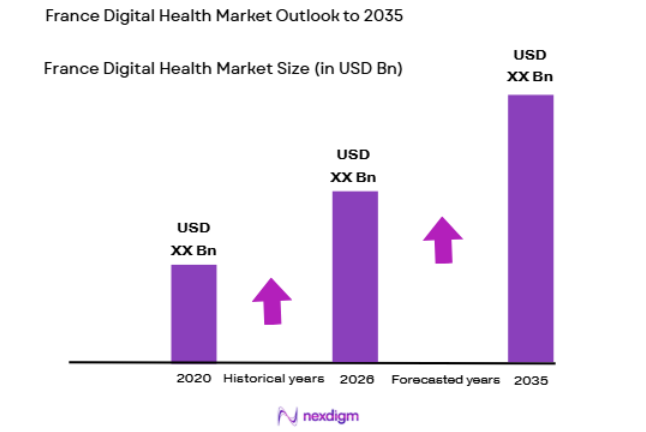
The France digital health market is valued at approximately USD ~ billion, driven by advancements in telemedicine, wearable health technologies, and electronic health records (EHR). Factors such as increasing healthcare costs, government initiatives to promote digital health, and rising demand for remote monitoring solutions are fueling market growth. France’s strong healthcare infrastructure and a high rate of digital adoption among healthcare professionals are expected to maintain the market’s growth trajectory, providing ample opportunities for digital health solutions.
Paris, Lyon, and Marseille are dominant cities in the French digital health landscape, owing to their robust healthcare infrastructure and technological advancements. Paris leads with its concentration of healthcare providers, research institutions, and startups focused on healthcare innovations. Lyon is a hub for biotech and medical research, driving digital health advancements, while Marseille benefits from its proximity to Mediterranean healthcare networks, making it a key player in regional healthcare digitization. These cities remain central to France’s digital health sector due to their strong ecosystems and innovation capacity.
Market Segmentation
By Product Type
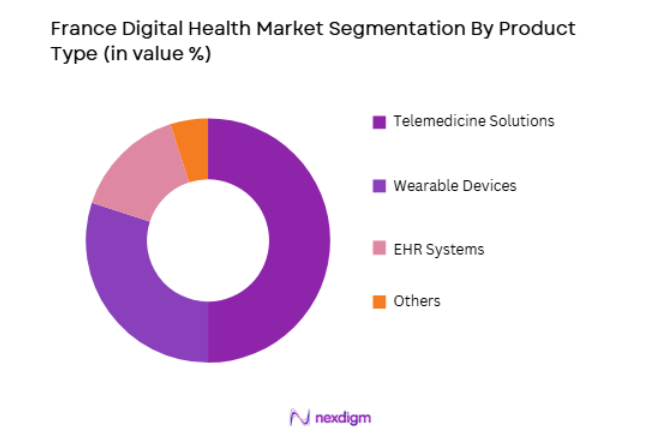
The France digital health market is segmented by product type into telemedicine solutions, wearable devices, and EHR systems. Telemedicine solutions have recently dominated the market due to the growing need for remote consultations and healthcare services, particularly in rural and underserved areas. The COVID-19 pandemic accelerated the adoption of telemedicine, making it a mainstream healthcare delivery model. France’s digital health policies and incentives further support the integration of telemedicine into the national healthcare system, contributing to its dominant market share. Additionally, ongoing improvements in telecommunication infrastructure and increasing patient acceptance are driving the continued expansion of telemedicine.
By Application
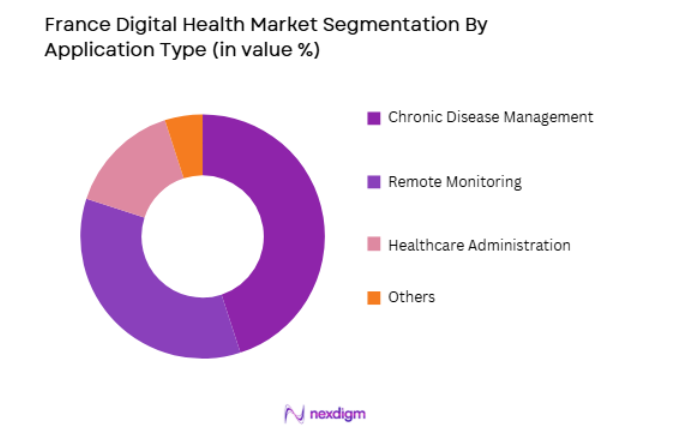
The France digital health market is segmented by application into chronic disease management, remote monitoring, healthcare administration, and others. Chronic disease management solutions have a dominant market share due to the growing prevalence of chronic conditions such as diabetes, hypertension, and cardiovascular diseases. Digital health technologies, particularly remote monitoring devices and mobile health apps, help patients manage their conditions effectively. The increasing shift towards preventive healthcare and cost-effective management of chronic diseases is contributing significantly to the growth of this sub-segment in the French market.
Competitive Landscape
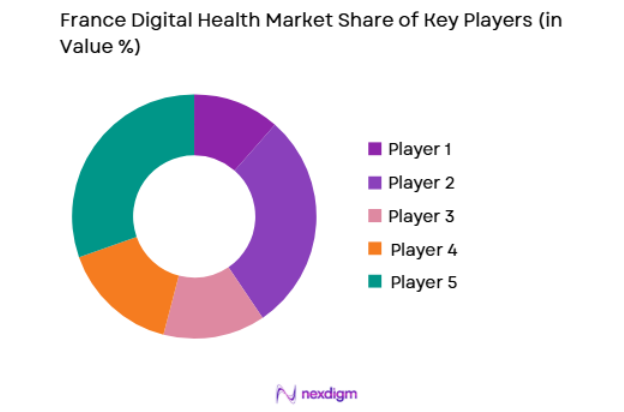
The French digital health market is highly competitive, with both domestic and international players operating in the space. Key players in the market include established technology companies, health-tech startups, and healthcare providers that are investing in innovative digital health solutions. The market is characterized by rapid technological advancements, particularly in telemedicine, remote monitoring devices, and EHR systems. Consolidation in the industry is evident, with major players acquiring smaller firms to expand their digital health portfolios. France’s regulatory environment, which supports digital health adoption, creates a conducive atmosphere for innovation and collaboration between healthcare providers and technology companies.
| Company Name | Establishment Year | Headquarters | Technology Focus | Market Reach | Key Products | Revenue | Additional Parameter |
| Philips Healthcare | 1891 | Amsterdam, Netherlands | ~ | ~ | ~ | ~ | ~ |
| Medtronic | 1949 | Dublin, Ireland | ~ | ~ | ~ | ~ | ~ |
| Siemens Healthineers | 1847 | Erlangen, Germany | ~ | ~ | ~ | ~ | ~ |
| Cerner Corporation | 1979 | North Kansas City, USA | ~ | ~ | ~ | ~ | ~ |
| IBM Watson Health | 2015 | Armonk, USA | ~ | ~ | ~ | ~ | ~ |
France Digital Health Market Analysis
Growth Drivers
Government Support and Investment in Digital Health
One of the major growth drivers for the French digital health market is the strong government support and investment in digital health solutions. The French government has introduced various initiatives to promote the integration of digital technologies into healthcare, including the “Ma Santé 2022” plan, which aims to digitalize the healthcare system and improve patient access to care. Additionally, France’s national health insurance system reimburses telemedicine consultations, which has significantly contributed to the widespread adoption of telemedicine in the country. The government’s push for digital health infrastructure, including the implementation of EHR systems and telemedicine platforms, supports the market’s expansion. Furthermore, France is investing in AI and big data analytics to improve healthcare outcomes, making it an attractive market for technology providers. As the government continues to prioritize healthcare digitization, the demand for digital health technologies will continue to grow.
Advancements in Telemedicine and Remote Monitoring
Another key growth driver for the French digital health market is the advancement in telemedicine and remote monitoring technologies. Telemedicine adoption skyrocketed during the COVID-19 pandemic, and its use continues to be high due to its convenience and accessibility. With telemedicine, patients can access medical care remotely, which is particularly valuable for those living in rural areas or with mobility issues. The French healthcare system has made significant investments in telemedicine infrastructure, and the use of remote monitoring devices for chronic disease management is gaining traction. Wearable devices, mobile health apps, and connected diagnostic tools are increasingly being used for real-time health monitoring. These technologies enable healthcare providers to offer personalized care and improve patient outcomes, driving the demand for digital health solutions in France. With ongoing technological advancements, telemedicine and remote monitoring will continue to play a key role in transforming the healthcare landscape in France.
Market Challenges
Data Security and Privacy Concerns
A significant challenge for the France digital health market is the issue of data security and patient privacy. As digital health solutions rely heavily on the collection and transmission of sensitive patient data, ensuring that this data is secure from breaches is a primary concern. France has stringent data protection regulations, including the General Data Protection Regulation (GDPR), which aims to safeguard patient information. However, as the adoption of digital health solutions such as telemedicine and EHR systems increases, there are growing concerns about cyber-attacks and unauthorized access to medical records. Healthcare providers and digital health companies must invest in robust cybersecurity measures to comply with regulations and protect patient data. The increasing complexity of digital health ecosystems, with interconnected devices and cloud-based platforms, makes it more challenging to maintain data security and privacy, creating an obstacle to market growth.
Fragmented Healthcare System and Slow Adoption of Technology
Another challenge facing the France digital health market is the fragmented healthcare system and slow adoption of new technologies by certain healthcare providers. Although France’s healthcare system is one of the best in the world, its digitalization is still in the early stages compared to some other European countries. Many hospitals and clinics in rural areas have limited access to high-speed internet and modern IT infrastructure, which hinders the implementation of digital health solutions. Additionally, some healthcare professionals remain hesitant to adopt new technologies, citing concerns about the usability of digital tools and the time required to integrate them into their practices. The lack of standardization across various healthcare providers further complicates the widespread adoption of digital health technologies. As a result, while larger hospitals in metropolitan areas are adopting digital solutions, smaller clinics and rural areas are lagging behind, limiting the overall growth of the market.
Opportunities
Expansion of Artificial Intelligence in Healthcare
The integration of Artificial Intelligence (AI) in healthcare presents a major opportunity for the French digital health market. AI technologies can enhance the efficiency and accuracy of diagnoses, improve patient outcomes, and optimize treatment plans. In particular, AI-powered tools are increasingly being used in medical imaging, drug discovery, and personalized medicine. France is investing heavily in AI and is positioning itself as a leader in AI for healthcare, with several initiatives aimed at promoting the development and adoption of AI solutions in the healthcare sector. The French government’s commitment to AI research, combined with its strong healthcare infrastructure, provides a fertile ground for the development of AI-based digital health solutions. As AI technologies continue to evolve, the demand for AI-driven healthcare applications will increase, creating new growth opportunities for the digital health market in France.
Integration of Remote Health Monitoring for Chronic Diseases
Another opportunity in the France digital health market is the increasing adoption of remote health monitoring technologies, particularly for managing chronic diseases. With the rise in chronic conditions such as diabetes, cardiovascular diseases, and obesity, the demand for remote monitoring solutions has surged. These devices, which allow patients to monitor their vital signs and health metrics from home, offer numerous benefits, including improved disease management and reduced hospital visits. The French healthcare system has recognized the value of these technologies in improving patient outcomes and reducing healthcare costs. As a result, healthcare providers are increasingly integrating remote monitoring into their services. This presents a significant opportunity for digital health companies that specialize in developing wearable devices, mobile health apps, and connected diagnostic tools. The increasing focus on preventive healthcare and the shift towards value-based care in France further support the growth of this segment.
Future Outlook
The future outlook for France’s digital health market remains optimistic, with continued growth driven by technological innovations, an aging population, and increasing demand for remote healthcare services. Advancements in telemedicine, AI-powered healthcare solutions, and wearable devices are expected to drive market expansion. The French government’s continued investment in healthcare digitalization and the growing acceptance of digital health technologies among healthcare providers and patients will further support this growth. As digital health solutions become more integrated into the healthcare system, they will improve patient outcomes, reduce healthcare costs, and create new opportunities for market players.
Major Players
- Philips Healthcare
- Siemens Healthineers
- Medtronic
- Cerner Corporation
- IBM Watson Health
- GE Healthcare
- Abbott Laboratories
- Roche Diagnostics
- Qualcomm Life
- Honeywell Life Care Solutions
- Omron Healthcare
- Biotronik
- Bayer Healthcare
- Fujifilm Healthcare
- Dexcom
Key Target Audience
- Investments and venture capitalist firms
- Government and regulatory bodies
- Healthcare providers
- Medical device manufacturers
- Pharmaceutical companies
- Hospitals and clinics
- Medical research organizations
Research Methodology
Step 1: Identification of Key Variables
The research identifies key variables such as healthcare demand, technological advancements, market challenges, and government policies that influence the growth of the digital health market.
Step 2: Market Analysis and Construction
Market data is collected from credible sources, and analytical models are used to construct a comprehensive market forecast for the digital health market in France.
Step 3: Hypothesis Validation and Expert Consultation
Hypotheses regarding market trends, growth drivers, and opportunities are validated through consultations with industry experts and key stakeholders in the digital health sector.
Step 4: Research Synthesis and Final Output
The final report synthesizes all data and insights to provide an in-depth analysis of the France digital health market, including growth drivers, challenges, and opportunities.

- Executive Summary
- Research Methodology (Definitions, Scope, Industry Assumptions, Market Sizing Approach, Primary & Secondary Research Framework, Data Collection & Verification Protocol, Analytic Models & Forecast Methodology, Limitations & Research Validity Checks)

- Market Definition and Scope
- Value Chain & Stakeholder Ecosystem
- Regulatory / Certification Landscape
- Sector Dynamics Affecting Demand

- Growth Drivers
Government Investments in Digital Health
Technological Advancements in Mobile Health
Increasing Healthcare Access in Rural Areas - Market Challenges
Data Security and Privacy Issues
Regulatory Compliance Barriers
Limited Adoption of Digital Health Solutions in Certain Regions - Market Opportunities
Expansion of Telemedicine Solutions
Integration of AI in Healthcare Management
Growing Demand for Remote Patient Monitoring - Trends
Increased Adoption of Telehealth Services
Integration of AI and Machine Learning in Healthcare - Government Regulations
- SWOT Analysis
- Porter’s Five Forces

- By Market Value, 2020-2025
- By Installed Units, 2020-2025
- By Average System Price, 2020-2025
- By System Complexity Tier, 2020-2025

- By System Type (In Value%)
Telemedicine Platforms
Electronic Health Records (EHR)
Healthcare Analytics
Wearable Health Devices
Mobile Health Apps - By Platform Type (In Value%)
Cloud-Based Platforms
On-Premise Solutions
Mobile Platforms
Web-Based Platforms - By Fitment Type (In Value%)
Integrated Solutions
Cloud Solutions
Modular Solutions
Standalone Solutions - By End User Segment (In Value%)
Hospitals
Clinics
Government Healthcare Providers

- Market Share Analysis
- Cross Comparison Parameters (System Type, Platform Type, Procurement Channel, End User Segment, Fitment Type, Technological Integration, Service Availability, Market Reach, Regulatory Compliance, Patient Engagement)
- SWOT Analysis of Key Competitors
- Pricing & Procurement Analysis
- Key Players
Teladoc Health
Amwell
Cerner Corporation
Philips Healthcare
Medtronic
GE Healthcare
IBM Watson Health
Allscripts
Accenture
HealthTap
Doctor On Demand
Siemens Healthineers
Doctor Anywhere
Maple
Lifecare

- Hospitals Expanding Digital Health Adoption
- Clinics Integrating Telehealth Solutions
- Government Entities Promoting Digital Health
- Increasing Patient Adoption of Health Apps

- Forecast Market Value, 2026-2035
- Forecast Installed Units, 2026-2035
- Price Forecast by System Tier, 2026-2035
- Future Demand by Platform, 2026-2035


 Request a Sample
 Ask for Customization
 Get a Quote
 Enquire Now