
 Download PDF
 Download PDF
Market Overview
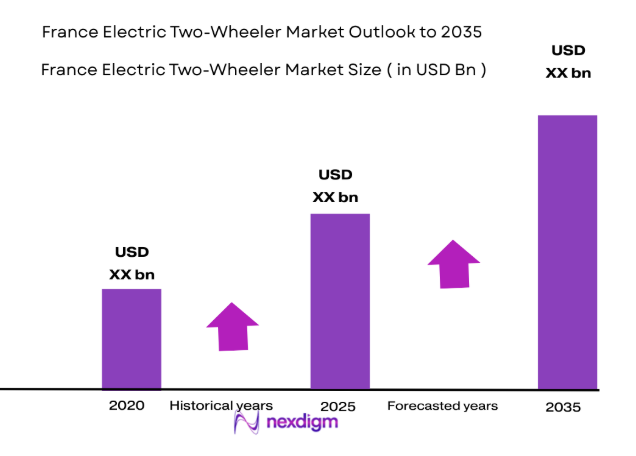
The France electric two wheeler market recorded a market value of approximately USD ~ billion based on a recent historical assessment. Market expansion is driven by strong consumer adoption of electric scooters and electric motorcycles supported by national clean mobility incentives and increasing urban transport electrification programs. Data published by the European Alternative Fuels Observatory indicates that thousands of electric two wheelers are sold annually across France as cities accelerate low emission mobility adoption. Rising fuel prices and the growth of last mile delivery services also stimulate demand for electric mobility platforms.
Paris, Lyon, Marseille, and Bordeaux represent the most dominant urban centers for electric two wheeler adoption due to high population density, urban commuting requirements, and strong municipal environmental policies. These cities have expanded low emission zones and restricted internal combustion vehicles in selected districts which encourages consumers and delivery fleets to shift toward electric mobility. Local governments have also deployed charging infrastructure and parking incentives for electric two wheelers which strengthens adoption among residents and logistics operators seeking efficient urban transportation solutions.
Market Segmentation
By Product Type
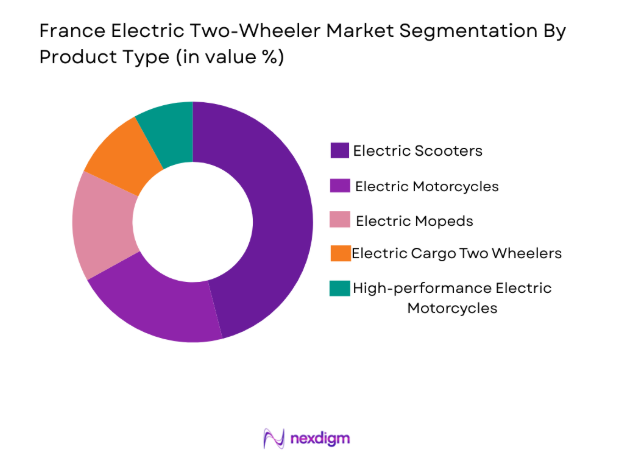
France electric two wheeler market is segmented by product type into electric scooters, electric motorcycles, electric mopeds, electric cargo two wheelers, and high performance electric motorcycles. Recently, electric scooters have a dominant market share due to strong urban commuting demand, convenient charging capability, and increasing government incentives. Consumers prefer scooters for their lightweight design and easy navigation in dense city traffic. Shared mobility operators also deploy large fleets of electric scooters in metropolitan areas which increases visibility and adoption among urban riders.
By Platform Type
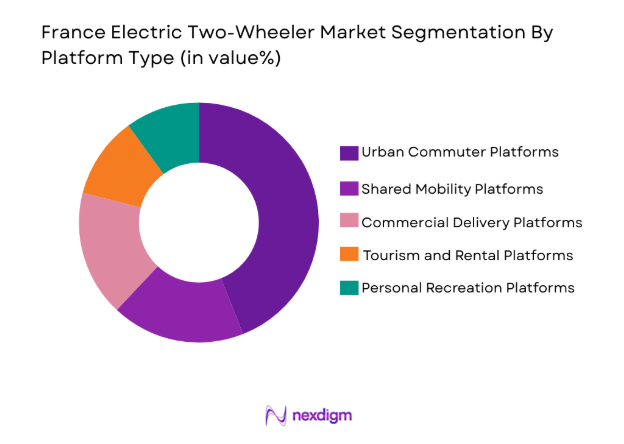
France electric two wheeler market is segmented by platform type into urban commuter platforms, shared mobility platforms, commercial delivery platforms, tourism and rental platforms, and personal recreation platforms. Recently, urban commuter platforms have a dominant market share due to rising traffic congestion and increasing urban mobility demand. Commuters prefer compact electric vehicles for convenient travel, lower operating costs, and easier navigation in city environments. Government incentives and dedicated urban mobility infrastructure further support the adoption of commuter focused electric two wheelers across major French cities.
Competitive Landscape
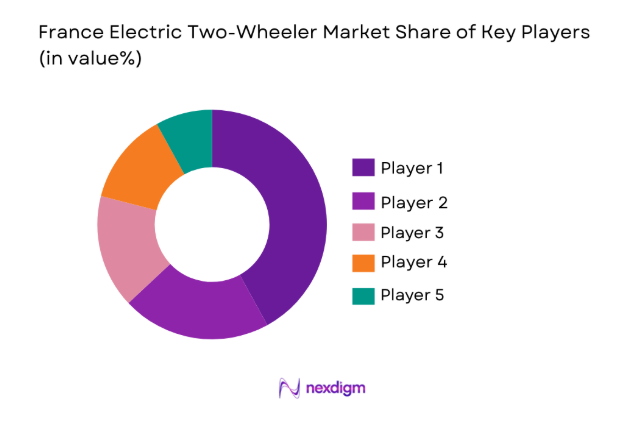
The France electric two wheeler market is moderately consolidated with several international mobility manufacturers and specialized electric vehicle startups competing for market presence. Large global brands leverage established distribution networks and advanced battery technology to maintain competitive advantages, while emerging European electric mobility firms focus on lightweight urban scooters and battery swapping ecosystems. Strategic partnerships between manufacturers and shared mobility operators also strengthen product visibility and expand customer reach across metropolitan areas.
| Company Name | Establishment Year | Headquarters | Technology Focus | Market Reach | Key Products | Revenue | Battery Range Capability |
| BMW Motorrad | 1923 | Germany | ~ | ~ | ~ | ~ | ~ |
| NIU Technologies | 2014 | China | ~ | ~ | ~ | ~ | ~ |
| Vmoto Limited | 1999 | Australia | ~ | ~ | ~ | ~ | ~ |
| Peugeot Motocycles | 1898 | France | ~ | ~ | ~ | ~ | ~ |
| Zero Motorcycles | 2006 | United States | ~ | ~ | ~ | ~ | ~ |
France Electric Two-Wheeler Market Analysis
Growth Drivers
Expansion of Urban Low Emission Zones and Clean Mobility Policies Across French Cities:
France has introduced several environmental regulations aimed at reducing urban air pollution and greenhouse gas emissions, which directly encourages the adoption of electric two wheelers as an alternative mobility solution for urban commuters and delivery operators. Municipal governments in major metropolitan regions such as Paris and Lyon have implemented low emission zones where access for internal combustion vehicles is gradually restricted, creating favorable conditions for electric mobility vehicles that produce no tailpipe emissions during operation. These policy measures are supported by financial incentives that reduce the purchase price of electric scooters and motorcycles, including national ecological bonuses and local mobility subsidies offered by city administrations. Consumers increasingly respond to these incentives because electric two wheelers provide a cost efficient mobility option compared with conventional gasoline motorcycles that require higher fuel expenditure and maintenance costs. The development of extensive bicycle lanes and dedicated micromobility infrastructure further improves accessibility and safety for riders operating electric two wheelers within urban districts. Government authorities also collaborate with mobility operators to integrate electric vehicles into sustainable transportation networks that complement metro systems, buses, and rail transport, allowing commuters to travel the last mile efficiently. Delivery companies and logistics providers benefit from electric scooters because they allow faster navigation through congested city centers where traditional vehicles experience parking limitations and restricted access. Urban residents are also becoming more environmentally conscious and prefer transportation modes that align with sustainability goals and reduced carbon emissions. Continuous public awareness campaigns highlighting air quality improvement and environmental protection further reinforce consumer interest in electric two wheeler mobility solutions across French cities.
Rapid Expansion of E Commerce Logistics and Last Mile Delivery Services:
The growth of online retail and on demand delivery services across France significantly accelerates demand for electric two wheelers because logistics companies require cost efficient vehicles capable of navigating congested urban environments quickly and reliably. E commerce platforms and food delivery companies rely on fleets of compact vehicles that can deliver packages and meals within dense city areas where conventional delivery vans often face restrictions and parking challenges. Electric scooters and cargo motorcycles provide a practical solution for these logistics requirements because they offer lower operating costs and reduced energy expenses compared with gasoline powered vehicles used in traditional delivery operations. Companies operating large delivery fleets increasingly evaluate the long term economic benefits of electrification since electricity prices are relatively stable compared with volatile fuel prices in the transportation sector. Electric two wheelers also generate minimal noise pollution which allows delivery operations to continue during early morning or late evening hours in residential districts without disturbing local communities. Several logistics providers collaborate with electric vehicle manufacturers to deploy specialized cargo scooters equipped with reinforced frames and larger battery capacities capable of supporting extended delivery routes throughout metropolitan regions. The development of digital fleet management platforms allows companies to monitor battery levels, vehicle location, and route optimization in real time which further improves operational efficiency. As consumer expectations for rapid delivery continue to increase, businesses adopt electric two wheelers to ensure faster distribution networks and improved service reliability. The combined effect of growing e commerce activity and urban logistics modernization significantly strengthens the demand for electric mobility vehicles across the French transportation ecosystem.
Market Challenges
Limited Charging Infrastructure Availability for Electric Two Wheelers in Secondary Cities:
Although France has expanded its electric vehicle charging network significantly during recent years, infrastructure specifically designed for electric two wheelers remains unevenly distributed across the country, creating challenges for consumers who live outside major metropolitan regions. Urban centers such as Paris and Lyon provide a relatively high density of charging points that allow riders to recharge electric scooters conveniently near residential districts and commercial areas. However, smaller cities and suburban regions often lack dedicated charging stations suitable for lightweight electric vehicles which restricts the practical travel range for many riders who depend on consistent battery access during daily commuting. Consumers considering electric two wheeler purchases frequently evaluate charging availability before investing in new vehicles, and limited infrastructure may discourage adoption in areas where riders cannot reliably recharge batteries near their homes or workplaces. Manufacturers attempt to mitigate this issue by introducing removable battery systems that allow riders to charge batteries indoors, but this solution may not fully address range concerns for delivery operators or long distance commuters. Logistics companies operating electric fleets must also plan routes carefully to ensure vehicles can complete delivery schedules without experiencing battery depletion before returning to charging points. Infrastructure development programs led by national and municipal authorities continue to expand charging capacity, but deployment rates vary depending on regional funding priorities and urban planning constraints. Consumer awareness regarding charging accessibility therefore remains an important factor influencing purchasing decisions in the France electric two wheeler market.
High Initial Purchase Cost Compared With Conventional Motorcycles:
Electric two wheelers often involve higher upfront acquisition costs than traditional gasoline powered motorcycles and scooters, which can discourage price sensitive consumers from adopting electric mobility solutions despite their long term operating benefits. The price difference is primarily driven by the cost of lithium ion battery technology that represents a significant portion of the overall vehicle manufacturing expense. While electric vehicles require less maintenance and benefit from lower energy costs during daily operation, many consumers evaluate purchase decisions based on initial affordability rather than lifetime ownership expenses. Government incentive programs partially offset the cost difference through subsidies and ecological bonuses, yet these incentives may vary depending on vehicle category or regional eligibility requirements. Manufacturers attempt to reduce production costs through economies of scale and technological improvements in battery manufacturing processes, but the transition toward lower prices requires sustained market expansion and increased industrial investment. Financing options offered by dealerships and mobility providers also attempt to make electric scooters more accessible through leasing programs or installment payment structures. Despite these efforts, price sensitivity remains a barrier for consumers who compare electric vehicles with lower cost gasoline alternatives available through established motorcycle brands. Addressing the affordability challenge therefore remains a critical factor for accelerating electric two wheeler adoption throughout the French mobility sector.
Opportunities
Expansion of Battery Swapping Networks for Urban Electric Mobility Ecosystems:
The development of battery swapping infrastructure presents a major opportunity for the France electric two wheeler market because it addresses one of the most common concerns among consumers regarding charging time and vehicle range limitations. Battery swapping systems allow riders to exchange depleted batteries for fully charged units at specialized stations within minutes, eliminating the need to wait for conventional charging processes that may require several hours depending on battery capacity and charger type. Mobility technology companies collaborate with electric vehicle manufacturers to create standardized battery platforms that enable compatibility across multiple scooter models and fleet vehicles operating in shared mobility services. These networks can be strategically deployed across densely populated districts where delivery fleets and commuter riders frequently operate, ensuring continuous vehicle availability for logistics companies and individual consumers. Battery swapping also improves fleet utilization rates for businesses that rely on electric scooters because vehicles can return to service immediately after exchanging batteries rather than remaining idle during charging cycles. Integration of digital platforms allows riders to locate nearby battery swapping stations and monitor battery status through mobile applications, improving the convenience and reliability of electric mobility operations. As urban populations continue to grow and transportation demand intensifies, battery swapping networks can support large scale electrification of two wheeler fleets across metropolitan areas. The expansion of this infrastructure therefore creates strong opportunities for manufacturers, mobility operators, and energy technology providers involved in the electric mobility ecosystem.
Integration of Electric Two Wheelers Into Smart City Transportation Systems:
Smart city development initiatives across France create new opportunities for electric two wheelers to become an essential component of integrated urban transportation networks designed to reduce congestion and improve environmental sustainability. Municipal governments increasingly deploy digital traffic management systems and connected mobility platforms that coordinate public transit services with emerging micromobility options including electric scooters and motorcycles. These systems enable residents to combine multiple transportation modes such as metro rail, buses, bicycles, and electric scooters within a single journey using mobile applications that provide route planning and real time mobility information. Electric two wheelers are particularly suitable for last mile transportation segments where commuters require flexible mobility solutions between transit stations and final destinations such as workplaces or residential neighborhoods. Smart parking infrastructure and digital payment platforms further simplify vehicle access and parking management for riders operating electric vehicles in busy urban districts. Integration with shared mobility services allows residents to rent electric scooters on demand without owning vehicles, which expands accessibility and encourages broader public adoption of electric mobility solutions. Urban planners recognize the environmental benefits associated with electrified micromobility because it reduces air pollution, noise levels, and traffic congestion in densely populated areas. As smart city infrastructure continues to expand across French municipalities, electric two wheelers are expected to play a central role in the future mobility ecosystem.
Future Outlook
The France electric two wheeler market is expected to expand steadily as urban mobility policies increasingly prioritize electrification and environmental sustainability. Growing investments in charging infrastructure, battery technology, and connected mobility services will support wider adoption across metropolitan areas. Government incentives and emission reduction policies will continue encouraging consumers and logistics companies to transition toward electric mobility platforms. Increasing integration with smart city transportation systems and shared mobility services will further strengthen demand for electric two wheelers across the country.
Major Players
- Vmoto Limited
- BMW Motorrad
- Zero Motorcycles
- Peugeot Motocycles
- Silence Urban Ecomobility
- Super Soco
- Askoll EVA
- Gogoro Inc
- Yamaha Motor
- Honda Motor
- Piaggio Group
- Easy Watts
- Kymco
- Horwin Global
Key Target Audience
- Battery manufacturers
- Charging infrastructure developers
- Logistics and fleet operators
- Automotive component suppliers
- Investments and venture capitalist firms
- Government and regulatory bodies
- Energy utilities and grid operators
Research Methodology
Step 1: Identification of Key Variables
Researchers identify major market variables including vehicle demand, battery technology adoption, urban mobility trends, and regulatory frameworks influencing electric two wheeler deployment across France. These variables form the foundation for market modeling and data evaluation.
Step 2: Market Analysis and Construction
Comprehensive analysis is conducted using secondary data from government transport agencies, mobility associations, and industry databases combined with manufacturer shipment statistics and mobility infrastructure reports to estimate overall market performance.
Step 3: Hypothesis Validation and Expert Consultation
Industry experts including electric vehicle engineers, mobility planners, and transportation analysts validate preliminary findings to ensure data accuracy and confirm emerging technology and policy trends shaping the electric mobility ecosystem.
Step 4: Research Synthesis and Final Output
Validated insights are synthesized into structured market intelligence covering segmentation, competitive landscape, technology trends, and policy frameworks, enabling stakeholders to understand market opportunities and strategic developments.

- Executive Summary
- Research Methodology
(Definitions, Scope, Industry Assumptions, Market Sizing Approach, Primary & Secondary Research Framework, Data Collection & Verification Protocol, Analytic Models & Forecast Methodology, Limitations & Research Validity Checks)

- Market Definition and Scope
- Value Chain & Stakeholder Ecosystem
- Regulatory / Certification Landscape
- Sector Dynamics Affecting Demand
- Strategic Initiatives & Infrastructure Growth

- Growth Drivers
Expansion of urban low-emission mobility zones across French cities
Government subsidies and purchase incentives for electric two-wheelers
Rapid growth of last-mile delivery and e-commerce logistics
Increasing fuel prices encouraging transition to electric mobility
Rising adoption of shared micromobility services - Market Challenges
Limited public charging infrastructure for two-wheelers in smaller cities
High upfront purchase costs compared with conventional motorcycles
Battery replacement and lifecycle management concerns
Seasonal demand fluctuations due to weather conditions
Consumer concerns regarding range limitations for longer commutes - Market Opportunities
Expansion of battery swapping networks in metropolitan regions
Integration of electric two-wheelers into corporate delivery fleets
Growth of tourism-based electric mobility rentals - Trends
Rising popularity of lightweight electric scooters for urban commuting
Integration of connected vehicle technologies and smartphone apps
Increasing deployment of shared electric scooter fleets in major cities
Development of high-performance electric motorcycles for enthusiasts
Growth of battery swapping ecosystems supporting rapid mobility - Government Regulations & Defense Policy
National incentives supporting electric mobility adoption
Emission reduction policies restricting internal combustion vehicles in urban centers
European Union battery recycling and sustainability regulations - SWOT Analysis
Stakeholder and Ecosystem Analysis
Porter’s Five Forces Analysis
Competition Intensity and Ecosystem Mapping

- By Market Value, 2020-2025
- By Installed Units, 2020-2025
- By Average System Price, 2020-2025
- By System Complexity Tier, 2020-2025

- By System Type (In Value%)
Electric Scooters
Electric Motorcycles
Electric Mopeds
Electric Cargo Two-Wheelers
Electric Performance Motorcycles - By Platform Type (In Value%)
Urban Commuter Platforms
Shared Mobility Platforms
Commercial Delivery Platforms
Tourism and Rental Platforms
Personal Recreation Platforms - By Fitment Type (In Value%)
Fully Integrated Electric Drivetrain
Battery Swappable Systems
Fixed Battery Systems
Modular Component Architecture
Connected Smart Vehicle Systems - By EndUser Segment (In Value%)
Urban Individual Commuters
Shared Mobility Service Providers
Logistics and Delivery Companies
Tourism and Rental Operators
Government and Municipal Fleets - By Procurement Channel (In Value%)
Direct Manufacturer Sales
Dealership Networks
Online Mobility Platforms
Corporate Fleet Procurement
Government and Municipal Tenders - By Material / Technology (in Value %)
Lithium-Ion Battery Technology
Swappable Battery Platforms
Connected Telematics Systems
Lightweight Aluminum Frame Technology
Smart Battery Management Systems

- Market structure and competitive positioning
Market share snapshot of major players
CrossComparison Parameters (Vehicle Range, Battery Capacity, Charging Time, Top Speed, Vehicle Weight)
SWOT Analysis of Key Competitors
Pricing & Procurement Analysis - Key Players
NIU Technologies
Vmoto Limited
BMW Motorrad
Zero Motorcycles
Horwin Global
Peugeot Motocycles
Silence Urban Ecomobility
Super Soco
Gogoro Inc
Askoll EVA
Kymco
Yamaha Motor
Honda Motor
Piaggio Group
Easy-Watts

- Urban commuters increasingly adopting electric scooters for daily travel
- Delivery and logistics firms integrating electric two-wheelers into last-mile operations
- Municipal authorities deploying electric two-wheelers for public services
- Tourism operators offering electric scooter rentals for city exploration

- Forecast Market Value, 2026-2035
- Forecast Installed Units, 2026-2035
- Price Forecast by System Tier, 2026-2035
- Future Demand by Platform, 2026-2035


 Request a Sample
 Ask for Customization
 Get a Quote
 Enquire Now