
 Download PDF
 Download PDF
Market Overview
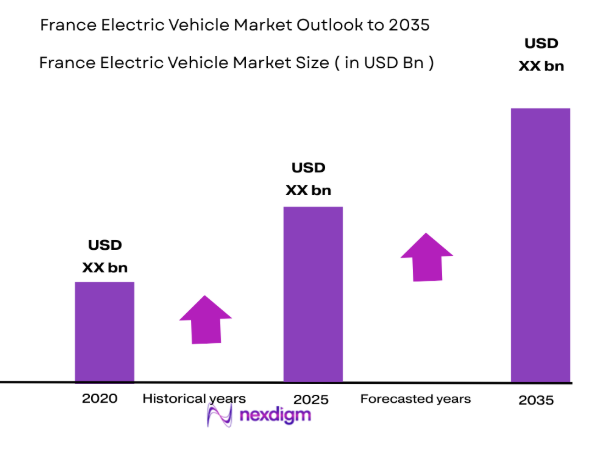
The France Electric Vehicle market is driven by robust governmental support, including subsidies and incentives, which encourage the adoption of electric vehicles. Based on a recent historical assessment, the market is valued at approximately USD ~ billion in 2024. Key drivers include an increasing demand for sustainable transportation solutions, technological innovations in battery technology, and the expansion of charging infrastructure across the country. The market’s growth is largely fueled by the French government’s commitment to environmental sustainability and the promotion of electric mobility through favorable policies.
Cities like Paris and Lyon are at the forefront of the France Electric Vehicle market due to their urbanization, strong environmental policies, and advanced infrastructure. These cities are leaders in the adoption of electric vehicles, where both the public sector and private consumers are heavily investing in electric solutions. The adoption of electric buses and shared mobility services in urban centers has become increasingly popular, as the government continues to improve the availability of EV charging stations and other supporting infrastructure, driving demand further.
Market Segmentation
By Product Type:
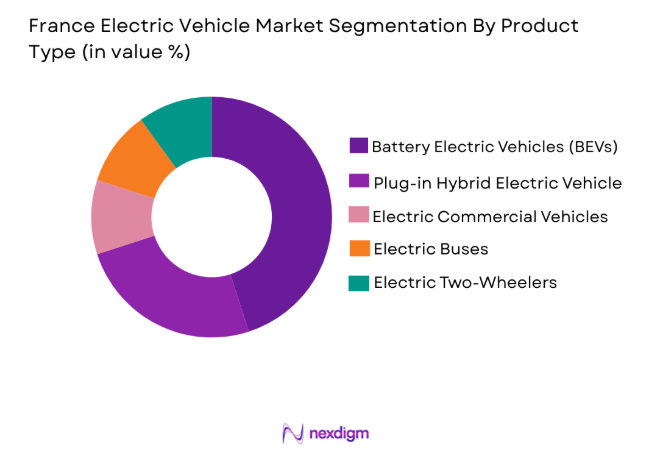
The France Electric Vehicle market is segmented by product type into Battery Electric Vehicles (BEVs), Plug-in Hybrid Electric Vehicles (PHEVs), Electric Commercial Vehicles, Electric Buses, and Electric Two-Wheelers. Recently, BEVs have dominated the market share due to their zero-emission features and advancements in battery technology, which provide a longer driving range and faster charging times. The French government’s subsidies for electric cars and increased infrastructure investment in charging stations have further propelled the demand for BEVs, making them the most popular choice for consumers looking for environmentally friendly transportation options.
By Platform Type:
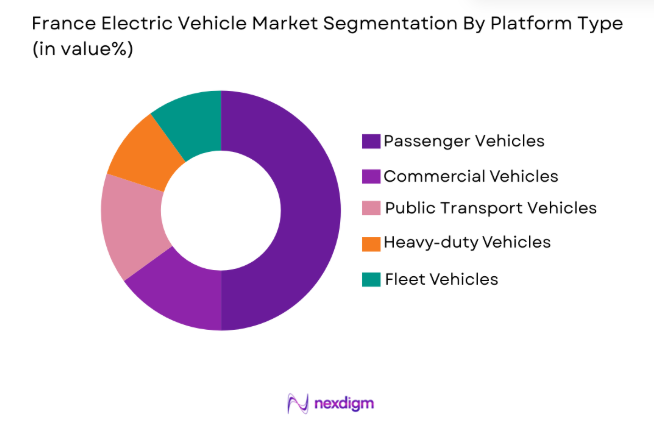
The France Electric Vehicle market is segmented by platform type into Passenger Vehicles, Commercial Vehicles, Public Transport Vehicles, Heavy-duty Vehicles, and Fleet Vehicles. Among these, Passenger Vehicles hold the dominant market share due to the growing interest in personal electric mobility solutions. The demand for passenger EVs is driven by government incentives, the increasing consumer preference for sustainable vehicles, and advancements in electric vehicle technologies that enhance driving range and charging speed. The rise in environmental awareness and the shift towards electric mobility are key factors driving the growth of this segment in France.
Competitive Landscape
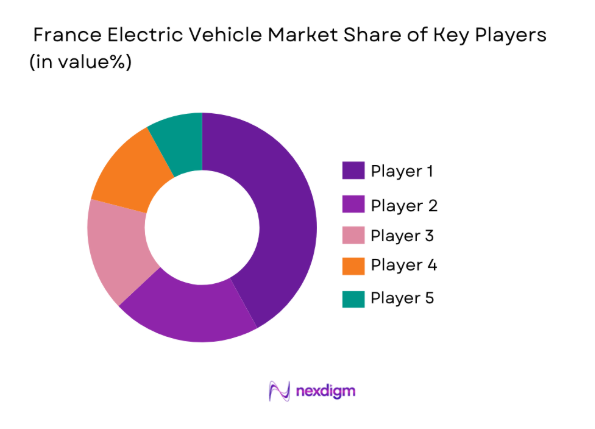
The competitive landscape of the France Electric Vehicle market is defined by major global and regional players, including automotive giants and innovative startups. These companies are engaged in technological innovation, strategic partnerships, and large-scale manufacturing to meet the increasing demand for electric vehicles in France. Industry consolidation is seen through mergers, acquisitions, and alliances aimed at strengthening technological capabilities and expanding market reach. Major players are focusing on improving EV infrastructure and enhancing battery technology to gain a competitive edge in the market.
| Company Name | Establishment Year | Headquarters | Technology Focus | Market Reach | Key Products | Revenue | Additional Parameter |
| Renault | 1899 | Boulogne-Billancourt | ~ | ~ | ~ | ~ | ~ |
| Peugeot | 1810 | Sochaux | ~ | ~ | ~ | ~ | ~ |
| Tesla | 2003 | Palo Alto, USA | ~ | ~ | ~ | ~ | ~ |
| BMW | 1916 | Munich, Germany | ~ | ~ | ~ | ~ | ~ |
| Nissan | 1933 | Yokohama, Japan | ~ | ~ | ~ | ~ | ~
|
France Electric Vehicle Market Analysis
Growth Drivers
Government Incentives for EV Adoption:
The French government’s financial incentives and subsidies have played a pivotal role in accelerating the adoption of electric vehicles across the country. With a range of policies aimed at reducing the cost of purchasing EVs and encouraging the installation of EV infrastructure, these incentives have lowered the financial barriers for consumers and businesses alike. As a result, more individuals and organizations are opting for electric vehicles, significantly expanding the market. Additionally, the government’s long-term environmental goals, such as achieving carbon neutrality by 2050, have further fueled the demand for zero-emission vehicles, contributing to the sector’s growth. These policies align with France’s broader strategy to reduce its dependence on fossil fuels and contribute to global climate change mitigation efforts. Moreover, the introduction of low-emission zones in major cities has further incentivized urban dwellers to transition to electric vehicles to avoid higher charges and penalties associated with traditional combustion engine vehicles.
Technological Advancements in EV Battery Technology:
The rapid development of electric vehicle batteries has been one of the major growth drivers in France’s electric vehicle market. Innovations in battery technology have led to significant improvements in energy density, charge time, and overall vehicle range. These advancements have addressed some of the previous limitations of electric vehicles, such as range anxiety and long charging times, making EVs more appealing to a broader consumer base. Furthermore, advancements in battery recycling technologies have made EVs more sustainable in the long run, further contributing to their growth in France. As major EV manufacturers in France continue to invest heavily in research and development, these technological advancements are expected to drive further adoption of electric vehicles, particularly in the passenger vehicle segment, where consumer demand for performance and convenience remains high.
Market Challenges
Battery Supply Chain Issues:
One of the key challenges facing the French electric vehicle market is the volatility and strain in the global battery supply chain. As the demand for electric vehicles increases, the need for lithium, cobalt, and other critical materials used in EV batteries has also surged. This has led to price fluctuations and shortages, which can affect the production rates of electric vehicles. The high dependency on foreign supply chains, coupled with geopolitical tensions, further exacerbates the situation, as it creates uncertainties regarding the availability and cost of raw materials. These supply chain issues hinder the pace of EV production and may lead to delays in meeting the growing consumer demand, slowing the overall growth of the electric vehicle market in France.
Infrastructure Development Limitations:
Another major challenge to the growth of the electric vehicle market in France is the limited availability of charging infrastructure, particularly in rural areas. While urban centers like Paris have seen substantial improvements in the number of charging stations, many regions in France still lack sufficient EV charging points. This is especially problematic for consumers who depend on home or public charging facilities to power their electric vehicles. The slow expansion of charging networks in less populated areas could discourage potential buyers from switching to electric vehicles, as concerns over range anxiety and convenience persist. The expansion of charging infrastructure remains a critical factor to ensure widespread EV adoption in France.
Opportunities
Expansion of EV Infrastructure:
The expansion of electric vehicle charging infrastructure presents a significant opportunity for growth in the French EV market. With increased investment from both public and private sectors, there is a growing network of charging stations across the country, making it easier for consumers to adopt electric vehicles. Moreover, advancements in fast-charging technology allow for reduced charging times, further improving the practicality and appeal of EVs. As France continues to prioritize green energy initiatives and commits to building a more sustainable transportation system, the growing network of charging stations will play a crucial role in supporting the mass adoption of electric vehicles.
Growing Demand for Electric Commercial Vehicles:
There is a growing demand for electric commercial vehicles in France, driven by both governmental policies and the need for businesses to reduce their carbon footprint. The French government offers incentives to businesses for transitioning to electric fleets, which has led to increased adoption of electric commercial vehicles, including vans and trucks. Additionally, advancements in battery technology and the increasing focus on green logistics solutions are expected to drive further growth in this segment. The rise of electric delivery vehicles, particularly in urban areas, presents a significant opportunity for manufacturers to tap into an expanding market, providing both environmental and economic benefits to businesses.
Future Outlook
The future of the France Electric Vehicle market looks promising, with continued growth driven by technological innovations, supportive government policies, and increasing consumer demand for sustainable transportation. Over the next five years, France is expected to see a rise in electric vehicle adoption across both private and commercial sectors. Technological advancements in battery efficiency, charging infrastructure, and autonomous driving will likely play pivotal roles in shaping the market. As the French government intensifies its green initiatives and strives for carbon neutrality, the electric vehicle sector is set to thrive, contributing to the country’s long-term sustainability goals.
Major Players
- Renault
- Peugeot
- Citroën
- BMW Group
- Tesla
- Volkswagen Group
- Fiat Chrysler Automobiles
- Nissan
- Toyota
- Hyundai
- Ford
- Mercedes-Benz
- BYD
- Volvo
- Jaguar Land Rover
Key Target Audience
- Investments and venture capitalist firms
- Government and regulatory bodies
- Private sector fleet operators
- Automotive manufacturers
- Charging infrastructure providers
- Public transportation authorities
- EV battery technology developers
- Logistics companies
Research Methodology
Step 1: Identification of Key Variables
Key variables include market size, consumer demand, infrastructure development, government policies, and technological advancements in EV battery technology.
Step 2: Market Analysis and Construction
We conduct a comprehensive market analysis by evaluating historical data, market trends, and projections to build a robust model of the France Electric Vehicle market.
Step 3: Hypothesis Validation and Expert Consultation
We validate the hypotheses through consultations with industry experts, key stakeholders, and market participants to ensure accuracy and reliability in our forecasts.
Step 4: Research Synthesis and Final Output
The final output is a synthesized report that includes market dynamics, segmentation, competitive analysis, and actionable insights for stakeholders in the EV market.

- Executive Summary
- Research Methodology
(Definitions, Scope, Industry Assumptions, Market Sizing Approach, Primary & Secondary Research Framework, Data Collection & Verification Protocol, Analytic Models & Forecast Methodology, Limitations & Research Validity Checks)

- Market Definition and Scope
- Value Chain & Stakeholder Ecosystem
- Regulatory / Certification Landscape
- Sector Dynamics Affecting Demand
- Strategic Initiatives & Infrastructure Growth

- Growth Drivers
Government Support and Incentives for EV Adoption
Technological Advancements in Battery Technologies
Rising Consumer Demand for Sustainable Transportation
Expansion of Charging Infrastructure
Increased Focus on Environmental Sustainability - Market Challenges
High Initial Purchase Price of Electric Vehicles
Limited Charging Infrastructure in Rural Areas
Battery Disposal and Recycling Concerns
Technological Integration in Traditional Vehicles
Public Perception and Consumer Skepticism - Market Opportunities
Increase in Public-Private Partnerships for EV Infrastructure
Growth in Demand for Electric Commercial Vehicles
Advancements in Energy Storage Solutions - Trends
Rise in Autonomous Electric Vehicles
Increasing Integration of EVs with Smart Grids
Shift Toward Shared Mobility Solutions
Battery Recycling and Second-Life Applications
Government-led Green Transportation Initiatives - Government Regulations & Defense Policy
Tax Incentives and Subsidies for EV Buyers
Regulatory Mandates for Zero-Emission Vehicles
Environmental Policies Promoting EV Adoption - SWOT Analysis
Stakeholder and Ecosystem Analysis
Porter’s Five Forces Analysis
Competition Intensity and Ecosystem Mapping

- By Market Value, 2020-2025
- By Installed Units, 2020-2025
- By Average System Price, 2020-2025
- By System Complexity Tier, 2020-2025

- By System Type (In Value%)
Battery Electric Vehicles (BEVs)
Plug-in Hybrid Electric Vehicles (PHEVs)
Commercial Electric Vehicles
Electric Buses
Electric Two-Wheelers - By Platform Type (In Value%)
Passenger Vehicles
Commercial Vehicles
Public Transport Vehicles
Heavy-duty Vehicles
Fleet Vehicles - By Fitment Type (In Value%)
On-premise Solutions
Cloud-based Solutions
Hybrid Solutions
Integrated Solutions
Modular Solutions - By EndUser Segment (In Value%)
Private Consumers
Government Agencies
Fleet Operators
Automobile Manufacturers
Public Transportation Authorities - By Procurement Channel (In Value%)
Direct Procurement
Private Sector Procurement
Government Tenders
Third-party Distributors
Online Bidding Platforms - By Material / Technology (in Value%)
Lithium-Ion Batteries
Solid-State Batteries
Fast Charging Solutions
Regenerative Braking Systems
Autonomous Driving Technologies

- Market structure and competitive positioning
Market share snapshot of major players
CrossComparison Parameters (System Type, Platform Type, Procurement Channel, EndUser Segment, Fitment Type) - SWOT Analysis of Key Competitors
Pricing & Procurement Analysis - Key Players
Renault
Peugeot
Citroën
BMW Group
Tesla
Volkswagen Group
Fiat Chrysler Automobiles
Nissan
Toyota
Hyundai
Ford
Mercedes-Benz
BYD
Volvo
Jaguar Land Rover

- Private Consumers’ Growing Demand for Electric Cars
- Government Agencies’ Push for Green Transportation
- Automobile Manufacturers’ Shift Toward Electrification
- Public Transportation Authorities Adopting Electric Buses

- Forecast Market Value, 2026-2035
- Forecast Installed Units, 2026-2035
- Price Forecast by System Tier, 2026-2035
- Future Demand by Platform, 2026-2035


 Request a Sample
 Ask for Customization
 Get a Quote
 Enquire Now