
 Download PDF
 Download PDF
Market Overview
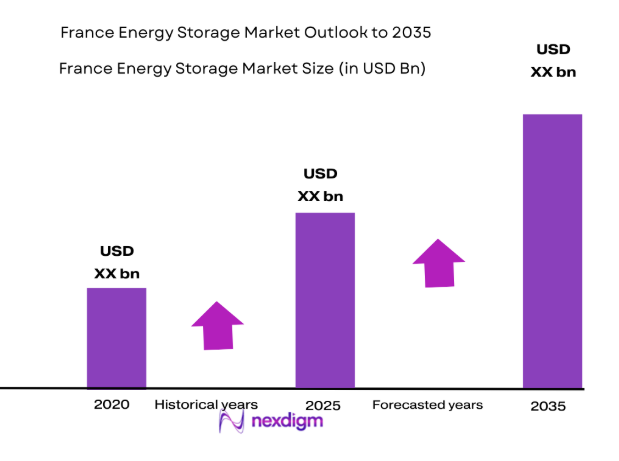
The France Energy Storage Market is valued in billions ~ USD, driven by increasing energy demand, grid modernization initiatives, and the push for renewable energy integration. Government incentives, technological advancements in energy storage systems, and growing demand for energy independence are key factors fueling market growth. The market is supported by substantial investments in infrastructure and energy transition projects. Based on recent historical assessments, the French market size is poised for expansion in the coming years, driven by regulatory support and strategic energy policies.
France, along with other European nations, dominates the energy storage market in Europe due to robust policy frameworks promoting renewable energy solutions and energy storage adoption. Major cities such as Paris, Lyon, and Marseille have significant investments in smart grids, renewable energy integration, and energy storage infrastructure. The government’s ambitious renewable energy targets and financial incentives make the country a leader in the transition to sustainable energy systems, further supporting market growth and technological advancements.
Market Segmentation
By Product Type
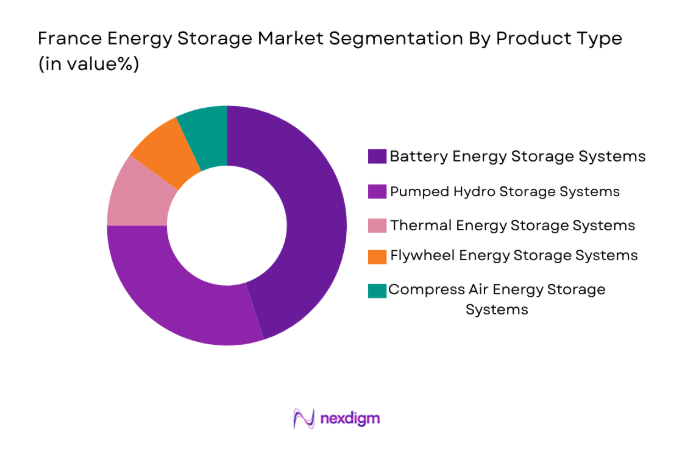
The France Energy Storage Market is segmented by product type into Battery Energy Storage Systems, Pumped Hydro Storage Systems, Thermal Energy Storage Systems, Flywheel Energy Storage Systems, and Compressed Air Energy Storage Systems. Recently, the Battery Energy Storage Systems sub-segment has a dominant market share due to factors such as the increasing demand for renewable energy, cost-efficiency, and advancements in battery technologies. This sub-segment is experiencing rapid growth due to significant cost reductions in lithium-ion batteries, widespread adoption across residential, commercial, and industrial sectors, and their ability to integrate with solar and wind energy systems.
By Platform Type
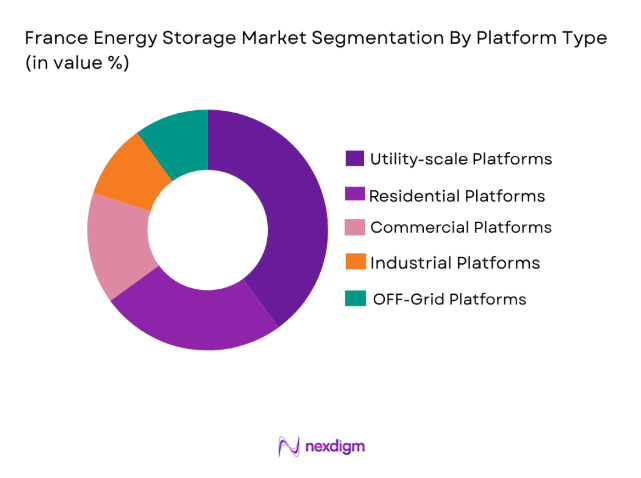
The France Energy Storage Market is segmented by platform type into Residential Platforms, Commercial Platforms, Industrial Platforms, Utility-Scale Platforms, and Off-grid Platforms. The Utility-Scale Platforms sub-segment is currently the dominant player due to its ability to support large-scale renewable energy storage, essential for balancing energy supply and demand on the grid. Government initiatives, regulatory support, and the increasing integration of renewable energy sources at scale have positioned utility-scale energy storage as a critical component of the energy transition.
Competitive Landscape
The competitive landscape of the France Energy Storage Market is shaped by a blend of well-established energy companies, startups, and technology innovators. Major players have strengthened their positions through mergers, acquisitions, and strategic partnerships. These companies are focusing on innovations in energy storage technologies, including improvements in battery storage, grid integration, and cost reduction.
| Company Name | Establishment Year | Headquarters | Technology Focus | Market Reach | Key Products | Revenue | Additional Parameter |
| EDF Energy | 1946 | Paris, France | ~ | ~ | ~ | ~ | ~ |
| Engie | 2008 | Paris, France | ~ | ~ | ~ | ~ | ~ |
| TotalEnergies | 1924 | Paris, France | ~ | ~ | ~ | ~ | ~ |
| Saft | 1918 | Paris, France | ~ | ~ | ~ | ~ | ~ |
| VARTA AG | 1887 | Germany | ~ | ~ | ~ | ~ | ~ |
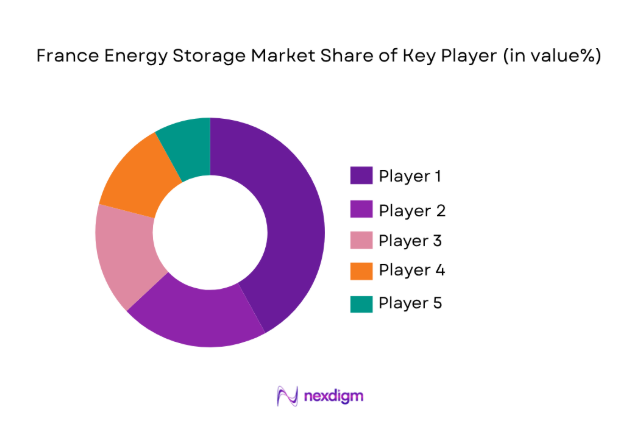
France Energy Storage Market Analysis
Growth Drivers
Government Support for Renewable Energy
The French government has demonstrated a strong commitment to renewable energy development, providing financial incentives, tax breaks, and grants for energy storage solutions. As part of its energy transition plan, the government is working to enhance the integration of renewable sources, such as solar and wind, into the national grid. This support has created a favorable regulatory environment, encouraging private investments in large-scale energy storage systems. Additionally, France’s goal of reducing its carbon footprint and achieving net-zero emissions by 2050 has made renewable energy storage a critical focus. This supportive framework not only enhances energy independence but also stimulates job creation and technological advancements in energy storage.
Technological Advancements in Battery Storage
Battery energy storage systems, particularly lithium-ion batteries, have experienced significant advancements in energy density, efficiency, and cost reductions. These improvements make energy storage systems more economically viable for both consumers and industries. The cost of lithium-ion batteries has decreased dramatically over the past decade, driven by innovations in manufacturing processes, scale economies, and raw material availability. This makes energy storage solutions more accessible to residential, commercial, and industrial sectors. Furthermore, technological improvements in grid storage integration, such as advanced battery management systems and faster charging cycles, have expanded the market’s potential and improved energy security.
Market Challenges
High Initial Capital Investment
One of the main barriers to the widespread adoption of energy storage solutions in France is the high upfront capital investment required. While the long-term benefits of energy storage, such as cost savings from reduced energy consumption, are evident, the initial investment for large-scale energy storage systems can be prohibitive. This challenge is particularly acute in the residential and commercial sectors, where businesses and homeowners may struggle to finance energy storage projects. Although government incentives can help offset some of these costs, many potential adopters are still hesitant to make such significant financial commitments without guaranteed returns.
Regulatory Complexity and Delays
Regulatory hurdles pose a significant challenge to the rapid expansion of the energy storage market in France. Despite the government’s commitment to renewable energy and energy storage, the complexity of regulations, including grid integration and approval processes, can lead to delays in project timelines. In some cases, local authorities may lack the technical expertise to assess and approve energy storage installations, further complicating the process. The lack of standardized procedures for energy storage systems may also create inconsistencies, which can discourage investment. Streamlining regulatory processes and ensuring local authorities have the necessary resources will be critical for addressing these challenges.
Opportunities
Integration with Electric Vehicle (EV) Charging Infrastructure
The growing adoption of electric vehicles (EVs) presents a significant opportunity for the France Energy Storage Market. As the number of electric vehicles increases, so does the demand for EV charging stations. By integrating energy storage systems with EV charging infrastructure, energy storage solutions can help manage peak demand and ensure a reliable power supply. This opportunity is particularly attractive as France aims to transition to a more sustainable transportation system. Energy storage will allow for faster, more efficient charging while reducing the burden on the grid. Additionally, coupling solar energy with storage solutions can help power EV charging stations sustainably, contributing to France’s overall energy goals.
Decentralized Energy Storage Solutions
The demand for decentralized energy storage systems is expected to grow as more consumers and businesses seek to enhance energy independence and reduce reliance on traditional grid systems. Solar energy paired with home battery storage solutions allows consumers to store excess energy generated during the day for use during peak hours or at night. This growing interest in off-grid solutions presents a significant opportunity for energy storage providers. Additionally, the rise of smart homes and smart grids will increase the adoption of these systems, as consumers become more conscious of energy efficiency and cost savings. This shift toward decentralization will play a key role in transforming the energy landscape.
Future Outlook
Over the next five years, the France Energy Storage Market is expected to witness significant growth, driven by advancements in battery technology, regulatory support, and rising demand for clean and reliable energy. Key trends, such as the integration of energy storage with electric vehicle charging stations and decentralized energy systems, will play a pivotal role in shaping the market’s future. Government incentives and increased investment in renewable energy infrastructure will continue to support the market’s expansion. Additionally, innovations in energy storage technologies, such as long-duration storage solutions, are expected to improve the market’s scalability and affordability, making energy storage more accessible to a wider range of consumers and industries.
Major Players
- EDF Energy
- Engie
- TotalEnergies
- Saft
- VARTA AG
- Tesla
- BYD Company
- AES Energy Storage
- Fluence
- Siemens Gamesa
- General Electric
- Panasonic
- LG Chem
- Sonnen GmbH
- Redflow
Key Target Audience
- Investments and venture capitalist firms
- Government and regulatory bodies
- Electric utilities
- Large industrial users of energy
- Renewable energy companies
- Infrastructure developers
- Technology innovators
Research Methodology
Step 1: Identification of Key Variables
We identify key variables affecting the energy storage market, such as regulatory trends, technology advancements, and market dynamics.
Step 2: Market Analysis and Construction
We conduct in-depth analysis, breaking down market segments and evaluating key growth drivers, challenges, and opportunities in the energy storage sector.
Step 3: Hypothesis Validation and Expert Consultation
Expert consultations and surveys with industry leaders validate hypotheses, ensuring accurate representation of the market landscape.
Step 4: Research Synthesis and Final Output
We synthesize findings into a comprehensive report, providing actionable insights and a detailed overview of the France Energy Storage Market.

- Executive Summary
- Research Methodology (Definitions, Scope, Industry Assumptions, Market Sizing Approach, Primary & Secondary Research Framework, Data Collection & Verification Protocol, Analytic Models & Forecast Methodology, Limitations & Research Validity Checks)

- Market Definition and Scope
- Value Chain & Stakeholder Ecosystem
- Regulatory / Certification Landscape
- Sector Dynamics Affecting Demand
- Strategic Initiatives & Infrastructure Growth

- Growth Drivers
Increased Demand for Renewable Energy Integration
Government Incentives for Clean Energy Storage Solutions
Rising Energy Prices and Demand for Energy Independence - Market Challenges
High Initial Capital Investment for Storage Solutions
Limited Energy Storage Efficiency
Regulatory Hurdles for Storage System Integration - Market Opportunities
Expansion of Off-grid Energy Solutions
Strategic Partnerships with Renewable Energy Providers
Technological Advancements in Battery Storage Systems - Trends
Growth in Hybrid Storage Systems
Shift Toward Long-duration Energy Storage - Government Regulations
- SWOT Analysis
- Porter’s Five Forces

- By Market Value, 2020-2025
- By Installed Units, 2020-2025
- By Average System Price, 2020-2025
- By System Complexity Tier, 2020-2025

- By System Type (In Value%)
Battery Energy Storage Systems
Pumped Hydro Storage Systems
Thermal Energy Storage Systems
Flywheel Energy Storage Systems
Compressed Air Energy Storage Systems - By Platform Type (In Value%)
Residential Platforms
Commercial Platforms
Industrial Platforms
Utility-Scale Platforms
Off-grid Platforms - By Fitment Type (In Value%)
On-site Storage
Grid-connected Storage
Hybrid Storage Systems
Mobile Storage Solutions - By End User Segment (In Value%)
Electric Utilities
Industrial Energy Users
Residential Consumers
Commercial Sector

- Market Share Analysis
- Cross Comparison Parameters (System Type, Platform Type, End User Segment, Fitment Type, Region, Technological Advancements, Investment in R&D)
- SWOT Analysis of Key Competitors
- Pricing & Procurement Analysis
- Key Players
EDF Energy
Engie
TotalEnergies
Saft
Schneider Electric
Neoen
VARTA AG
Fluence Energy
Siemens Gamesa
GE Renewable Energy
NextEra Energy
Sungrow Power Supply Co.
BYD Company
AES Energy Storage
LG Chem

- Growing Demand from Industrial Sector for Energy Storage
- Residential Sector’s Adoption of Storage Solutions
- Utility Companies’ Role in Energy Storage Integration
- Government Support for Residential and Commercial Storage

- Forecast Market Value, 2026-2035
- Forecast Installed Units, 2026-2035
- Price Forecast by System Tier, 2026-2035
- Future Demand by Platform, 2026-2035


 Request a Sample
 Ask for Customization
 Get a Quote
 Enquire Now