
 Download PDF
 Download PDF
Market Overview
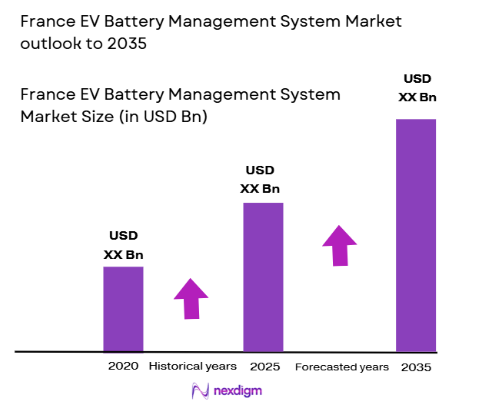
The France EV Battery Management System market is valued at approximately USD ~ billion based on a recent historical assessment. The market growth is driven by the increasing adoption of electric vehicles, technological advancements in battery management systems, and the expanding infrastructure for EV charging networks. Consumer demand for long-lasting, efficient battery systems has intensified, contributing to the market’s robust growth. The push for decarbonization and sustainability is also driving governmental and industry efforts to enhance electric vehicle technologies.
The market is largely dominated by key regions like Paris and Lyon, where government support and EV infrastructure are more developed. These cities are central to the transition towards green energy solutions due to their robust electric vehicle adoption rates and policy incentives for EV manufacturers. The strong presence of automakers, such as Renault and PSA Group, in these areas further boosts France’s dominance in the European electric vehicle market.
Market Segmentation
By Product Type:
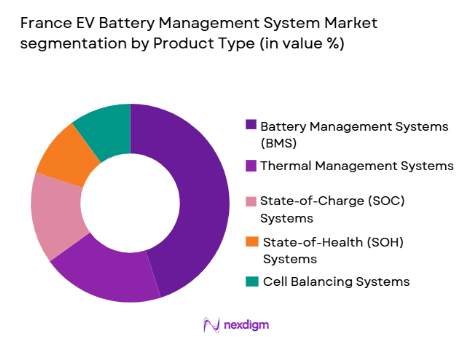
The France EV Battery Management System market is segmented by product type into battery management systems (BMS), thermal management systems, state-of-charge (SOC) systems, state-of-health (SOH) systems, and cell balancing systems. Recently, battery management systems (BMS) have dominated the market share due to increasing demand for efficient energy storage and longer battery life, which are critical in electric vehicle applications. The shift towards electric vehicles and the need for enhanced performance of lithium-ion batteries have made BMS an essential technology for controlling battery performance and health. The market is expanding as OEMs continue to integrate BMS into new vehicle models, supported by advancements in battery technology and growing consumer preference for EVs. The robust growth of electric vehicle infrastructure, particularly in urban areas, has fueled the demand for these systems.
By End-User:
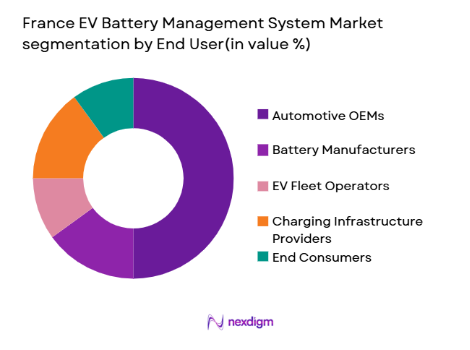
The market is segmented by end-user into automotive OEMs, battery manufacturers, EV fleet operators, charging infrastructure providers, and end consumers. Recently, automotive OEMs have captured the dominant market share as they continue to integrate EV battery management systems into their vehicle platforms. With France being a leader in the European electric vehicle industry, the demand from automotive manufacturers for efficient battery management solutions is surging. This is due to increasing consumer demand for high-performance electric vehicles with longer range and faster charging capabilities. The role of OEMs in driving advancements in EV technology and battery management systems has been central to the market’s development. Furthermore, the government’s support for manufacturers, including incentives and subsidies, has encouraged the rapid adoption of EVs across France.
Competitive Landscape
The France EV Battery Management System market is characterized by intense competition, driven by leading companies in the automotive, battery manufacturing, and energy sectors. The market is becoming more consolidated, with major players investing heavily in R&D to offer advanced solutions and gain a competitive edge. Strategic collaborations and partnerships between automotive manufacturers and battery management system providers are also becoming increasingly common. Major players such as Valeo and Bosch are dominating the market, influencing the direction of technological advancements and shaping industry standards.
| Company Name | Establishment Year | Headquarters | Technology Focus | Market Reach | Key Products | Revenue | Key Application Areas |
| Valeo | 1923 | France | ~ | ~ | ~ | ~ | ~ |
| Bosch | 1886 | Germany | ~ | ~ | ~ | ~ | ~ |
| Panasonic | 1918 | Japan | ~ | ~ | ~ | ~ | ~ |
| Continental AG | 1871 | Germany | ~ | ~ | ~ | ~ | ~ |
| BYD Company | 1995 | China | ~ | ~ | ~ | ~ | ~ |
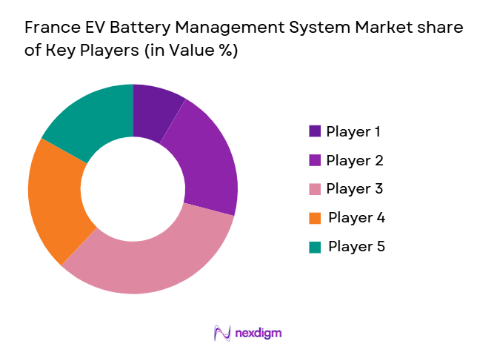
France EV Battery Management System Market Analysis
Growth Drivers
Government Incentives for Electric Vehicle Adoption:
Government incentives for electric vehicle adoption play a crucial role in accelerating the market for EV battery management systems in France. The French government has implemented various measures, including subsidies, tax rebates, and grants for both consumers and manufacturers, encouraging the transition to electric vehicles. These policies aim to reduce carbon emissions and combat climate change, with a strong emphasis on boosting electric mobility. In addition, the expansion of charging infrastructure, supported by both government and private investments, ensures that EV users can conveniently access charging stations, further driving demand for electric vehicles. As the number of EVs on the road increases, so does the demand for efficient battery management solutions, making it a key driver of market growth in France.
Technological Advancements in Battery Management Systems:
Technological advancements in battery management systems are one of the key growth drivers for the France EV battery management system market. As the electric vehicle market grows, the need for more advanced and reliable battery management systems that can increase battery life, optimize performance, and enhance safety is becoming essential. Innovations such as improved state-of-charge algorithms, enhanced thermal management systems, and better cell balancing technologies are driving the demand for more sophisticated solutions. Additionally, the increasing use of artificial intelligence and machine learning in BMS is allowing for more accurate predictions of battery health and performance, leading to better overall vehicle efficiency. These advancements contribute to the ongoing evolution of the French EV market, supporting its transition towards sustainability.
Market Challenges
High Cost of Battery Management Systems:
One of the major challenges for the France EV battery management system market is the high cost associated with advanced battery management systems. The complexity of these systems, which involves sophisticated hardware and software to monitor and control battery performance, increases their cost. This high price point can limit the widespread adoption of electric vehicles, especially for budget-conscious consumers. Although government subsidies help mitigate some of the costs, the overall expense of EVs, including the cost of battery management systems, remains a significant barrier. Furthermore, as manufacturers continue to integrate more advanced technologies into BMS, the prices of these systems are likely to remain high in the short to medium term, further restricting market growth.
Regulatory and Standardization Challenges:
Regulatory challenges and a lack of standardized protocols in the EV battery management systems market are also significant hurdles. While France is pushing for stronger environmental policies, there are still many regulatory hurdles to overcome when it comes to battery management systems. Differences in standards for charging infrastructure, battery disposal, and recycling can create inefficiencies, delaying the deployment of EVs and associated systems. Moreover, the evolving regulatory landscape across Europe, particularly regarding battery safety standards and performance regulations, poses additional challenges for manufacturers. The lack of a unified approach can create complexities in product development and testing, leading to potential delays in market penetration.
Opportunities
Integration of Battery Management Systems in Commercial Electric Vehicles:
One of the biggest opportunities for the France EV battery management system market lies in the growing integration of BMS in commercial electric vehicles (EVs). With an increasing focus on decarbonizing transportation across all sectors, the commercial vehicle market is expected to adopt electric technologies at a higher rate in the coming years. The integration of BMS in these vehicles will be essential to ensure optimal battery life, reduce operating costs, and improve overall fleet efficiency. Companies operating in the transportation and logistics sectors are increasingly looking to switch to electric fleets, driven by regulatory pressures and a need to reduce emissions. As these fleets expand, demand for advanced battery management systems will rise, presenting significant growth potential for suppliers in the market.
Advances in Energy Storage Systems for Grid Applications:
Another promising opportunity in the France EV battery management system market is the growing integration of energy storage systems (ESS) in grid applications. With the rise in renewable energy generation, particularly solar and wind, energy storage is becoming critical for balancing energy supply and demand. BMS plays a vital role in ESS by ensuring the safe and efficient management of battery packs used in grid applications. As France and the EU push towards a greener energy grid, the demand for large-scale energy storage solutions is expected to rise. This trend presents a significant opportunity for companies specializing in BMS to expand their offerings to the energy sector, providing solutions that ensure the reliability and performance of energy storage systems.
Future Outlook
The future outlook for the France EV battery management system market is positive, with continued growth expected over the next five years. Technological advancements in battery management systems, driven by innovations in AI and machine learning, are likely to make EVs more efficient and affordable. Government support, including incentives for electric vehicle adoption and increased investment in charging infrastructure, will further accelerate the market. Additionally, the rising demand for commercial electric vehicles, coupled with the growing integration of energy storage systems, will create significant opportunities for BMS providers. However, challenges such as the high cost of these systems and regulatory hurdles may temper growth in the short term. Overall, the market is set to benefit from ongoing advancements in EV technology and strong policy support.
Major Players
- Valeo
- Bosch
- Panasonic
- Continental AG
- BYD Company
- LG Chem
- SAFT
- Aptiv
- Schneider Electric
- Samsung SDI
- Johnson Controls
- Magna International
- Delphi Technologies
- Vitesco Technologies
- ZF Friedrichshafen
Key Target Audience
- Automotive Manufacturers
- Electric Vehicle Fleet Operators
- Battery Manufacturers
- Charging Infrastructure Providers
- Energy Storage Companies
- EV Component Suppliers
- Government Agencies
- Investors and Venture Capitalists
Research Methodology
Step 1: Identification of Key Variables
The first step involves identifying the key variables that impact the France EV battery management system market, such as technological advancements, regulatory influences, and consumer demand for electric vehicles.
Step 2: Market Analysis and Construction
Market analysis includes gathering data on market size, growth trends, competitive landscape, and identifying segmentation axes. This analysis is then used to build a comprehensive market model.
Step 3: Hypothesis Validation and Expert Consultation
Market hypotheses and assumptions are validated through consultations with industry experts, stakeholders, and key players in the electric vehicle and battery management system sectors.
Step 4: Research Synthesis and Final Output
Finally, the research findings are synthesized into a final market report, ensuring that all data points are accurate and aligned with current industry trends.

- Executive Summary
- Research Methodology (Definitions, Scope, Industry Assumptions, Market Sizing Approach, Primary & Secondary Research Framework, Data Collection & Verification Protocol, Analytic Models & Forecast Methodology, Limitations & Research Validity Checks)

- Market Definition and Scope
- Value Chain & Stakeholder Ecosystem
- Regulatory / Certification Landscape
- Sector Dynamics Affecting Demand
- Strategic Initiatives & Infrastructure Growth

- Growth Drivers
Government subsidies for EV adoption
Advancements in battery technology
Increasing demand for sustainable transportation
Improved battery lifecycle management
Rising fuel costs and environmental concerns - Market Challenges
High cost of battery management systems
Limited charging infrastructure
Regulatory challenges in battery disposal
Technological limitations in battery performance
Lack of standardization across EV models - Market Opportunities
Expansion of EV infrastructure in urban areas
Growth of electric commercial vehicles
Advancements in battery recycling technologies - Trends
Rise in integration of AI for battery management
Increased demand for vehicle-to-grid (V2G) technology
Focus on energy density and battery life improvements
Growing collaboration between automakers and tech firms
Adoption of blockchain for battery data security - Government Regulations & Defense Policy
Battery recycling and disposal regulations
Government EV incentives and policies
Standards for EV battery testing and certification - SWOT Analysis
- Stakeholder and Ecosystem Analysis
- Porter’s Five Forces Analysis
- Competition Intensity and Ecosystem Mapping

- By Market Value, 2020-2025
- By Installed Units, 2020-2025
- By Average System Price, 2020-2025
- By System Complexity Tier, 2020-2025

- By System Type (In Value%)
Battery Management Systems (BMS)
Cell Balancing Systems
Thermal Management Systems
State of Charge (SOC) Systems
State of Health (SOH) Systems - By Platform Type (In Value%)
Passenger Electric Vehicles
Commercial Electric Vehicles
Electric Two-Wheelers
Electric Buses
Electric Trucks - By Fitment Type (In Value%)
OEM Fitment
Aftermarket Fitment
Retrofitting Solutions
Integrated System Fitment
Modular System Fitment - By EndUser Segment (In Value%)
Automotive OEMs
Battery Manufacturers
EV Fleet Operators
Charging Infrastructure Providers
End Consumers - By Procurement Channel (In Value%)
Direct Procurement from OEMs
Distributors and Dealers
Online Platforms
Public Procurement Tenders
Third-Party Integrators - By Material / Technology (In Value%)
Lithium-Ion Batteries
Solid-State Batteries
Graphene-Based Batteries
Lead-Acid Batteries
Nickel-Cobalt-Aluminum (NCA) Batteries

- Market structure and competitive positioning
- Market share snapshot of major players
- CrossComparison Parameters (System Type, Platform Type, Procurement Channel, EndUser Segment, Fitment Type, Material, Technology, Battery Type, Charging Infrastructure, Vehicle Range)
- SWOT Analysis of Key Players
- Pricing & Procurement Analysis
- Key Players
Valeo
Bosch
Daimler AG
Schaeffler Group
Continental AG
Aptiv
LG Chem
Samsung SDI
BYD Company
Panasonic Corporation
Delphi Technologies
Vitesco Technologies
Magna International
Johnson Controls
SAFT

- Automotive OEMs’ focus on integrating advanced BMS
- Battery manufacturers exploring scalable solutions
- EV fleet operators optimizing battery health
- End consumers prioritizing vehicle range and charging speed

- Forecast Market Value, 2026-2035
- Forecast Installed Units, 2026-2035
- Price Forecast by System Tier, 2026-2035
- Future Demand by Platform, 2026-2035


 Request a Sample
 Ask for Customization
 Get a Quote
 Enquire Now