
 Download PDF
 Download PDF
Market Overview
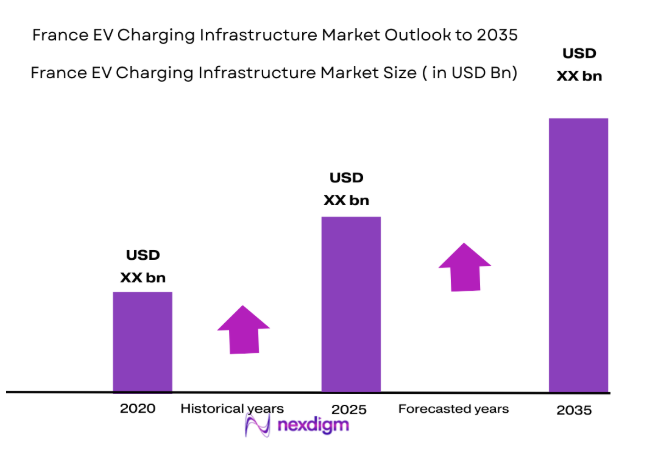
The France EV Charging Infrastructure market has shown significant growth, driven by an increase in electric vehicle (EV) adoption and the acceleration of government support for green energy solutions. Based on a recent historical assessment, the market size stands at approximately USD ~ billion, reflecting the rising demand for robust and efficient charging infrastructure. This growth is further spurred by technological advancements, such as ultra-fast charging stations, and strong investment in expanding public and private EV charging networks.
France leads the European market for EV adoption, with major cities such as Paris, Lyon, and Marseille playing a central role in driving the infrastructure demand. The government’s commitment to achieving carbon neutrality by 2050 has positioned the country as a frontrunner in EV-related projects. Additionally, the availability of EV charging stations in urban and suburban areas is increasing due to favorable regulatory policies. This trend is especially pronounced in metropolitan areas where urban mobility solutions are crucial to achieving sustainability goals.
Market Segmentation
By Product Type:
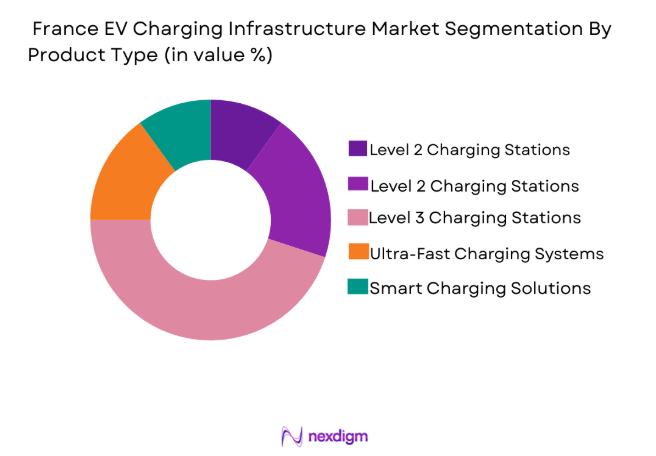
The France EV Charging Infrastructure market is segmented by product type into Level 1 Charging Stations, Level 2 Charging Stations, Level 3 Charging Stations, Ultra-Fast Charging Systems, and Smart Charging Solutions. Level 3 Charging Stations dominate the market due to their fast charging capabilities, which are essential as EV adoption grows. Ultra-Fast Charging Systems are becoming more popular, particularly for long-distance travel, while Smart Charging Solutions offer advanced features like energy optimization.
By Platform Type:
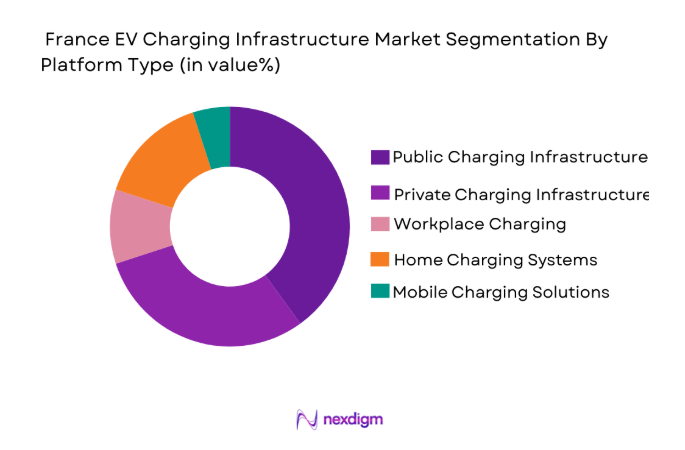
The market is segmented by platform type into Public Charging Infrastructure, Private Charging Infrastructure, Workplace Charging, Home Charging Systems, and Mobile Charging Solutions. Public Charging Infrastructure leads due to its widespread accessibility in urban and highway locations. Private Charging Infrastructure and Home Charging Systems are also popular, with Workplace Charging growing as employers install stations to support employee EV use.
Competitive Landscape
The competitive landscape in France’s EV charging infrastructure market is characterized by increasing consolidation, with major players expanding their networks to cater to the growing demand for fast and efficient charging solutions. The industry is influenced by both established energy companies and specialized startups that focus on innovation and scaling up infrastructure. This dynamic creates an environment where players constantly strive to enhance service offerings, including better technology integration and extended network coverage.
| Company Name | Establishment Year | Headquarters | Technology Focus | Market Reach | Key Products | Revenue (USD) | Charging Speed |
| ChargePoint | 2007 | California | ~ | ~ | ~ | ~ | ~ |
| Tesla | 2003 | California | ~ | ~ | ~ | ~ | ~ |
| Ionity | 2017 | Germany | ~ | ~ | ~ | ~ | ~ |
|
EVBox |
2010 | Netherlands | ~ | ~ | ~ | ~ | ~ |
| Shell Recharge | 2018 | Netherlands | ~ | ~ | ~ | ~ | ~ |
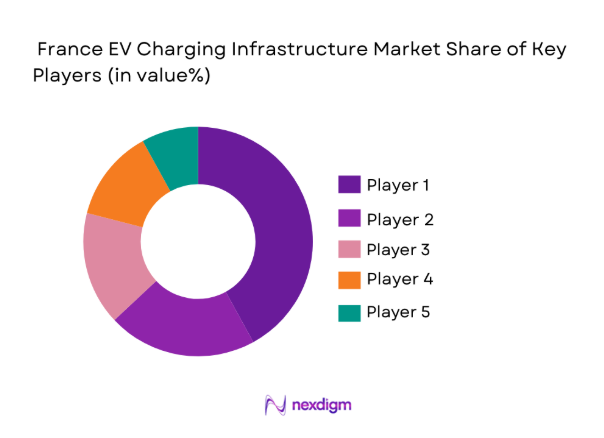
France EV Charging Infrastructure Market Analysis
Growth Drivers
Increase in Electric Vehicle Adoption:
The rise in electric vehicle adoption is a significant growth driver for the France EV Charging Infrastructure market. As government policies, incentives, and rising environmental awareness boost the popularity of EVs, more consumers and businesses are opting for electric vehicles. With this increase in EVs on the road, there is a pressing need for a robust network of charging stations. This need is further fueled by the growing availability of EV models with varying price points, making EV ownership accessible to a broader demographic. France’s commitment to carbon neutrality and the transition to a greener economy has directly contributed to this trend. Moreover, as EV sales rise, more investment in EV infrastructure is required to meet the growing demand. This creates a positive feedback loop where the demand for charging stations leads to more innovation and growth in the charging infrastructure sector. Furthermore, increasing investments from private players, as well as state-backed initiatives, continue to support the development and expansion of the EV charging ecosystem across the nation.
Government Incentives and Policies:
Another key growth driver is the implementation of government incentives and policies aimed at supporting EV infrastructure development. France’s government has been at the forefront of providing financial support and regulatory frameworks to accelerate the adoption of EVs and their associated charging infrastructure. These initiatives include tax exemptions, subsidies for installation, and grants for local governments to set up charging stations. Additionally, as part of its plan to achieve carbon neutrality by 2050, the government has set ambitious targets to increase the number of EV charging stations across the country. These policies are aligned with broader European goals to reduce carbon emissions and promote sustainable transport solutions. With the continued support from government-backed programs, companies are encouraged to invest in EV charging infrastructure, helping to further the development of an interconnected network that spans urban and rural areas alike. These policies are particularly instrumental in ensuring that consumers have convenient access to charging stations, making EV ownership more practical.
Market Challenges
High Installation and Infrastructure Costs:
A significant challenge in the France EV Charging Infrastructure market is the high cost of installation and infrastructure development. Installing charging stations, especially fast-charging ones, requires substantial upfront investment in technology, equipment, and ongoing maintenance. These costs can be a deterrent for businesses and local governments, especially in areas where the demand for charging infrastructure is still emerging. While government subsidies and incentives help mitigate some of the costs, they are not sufficient to cover the entire financial burden, particularly for small businesses or local players. Additionally, the development of a comprehensive charging network requires significant investments in power grid upgrades, which can increase the total cost of infrastructure development. For private companies, the financial uncertainty surrounding the return on investment (ROI) in less populated or rural areas poses another challenge. Despite the growth potential of the market, these high upfront costs remain a barrier for many potential investors.
Regulatory and Compliance Barriers:
Another challenge faced by the France EV Charging Infrastructure market is the complexity of regulatory and compliance requirements. The installation and operation of EV charging stations are governed by various national and regional regulations that can be cumbersome and difficult to navigate. These regulations pertain to safety standards, accessibility requirements, and the integration of charging stations with the national grid. Furthermore, local governments impose their own rules, which can vary significantly from one municipality to another. As the market grows, these regulations become more complex, and companies must ensure that they meet the standards set by different authorities. Compliance with these regulations often requires extensive documentation and time-consuming approval processes, which can delay infrastructure rollouts. For smaller players in the market, the difficulty of navigating these regulations can discourage entry and limit competition.
Opportunities
Smart Charging Solutions:
One of the key opportunities in the France EV Charging Infrastructure market lies in the development of smart charging solutions. These solutions enable charging stations to communicate with EVs and the power grid, optimizing charging times and energy use. By integrating artificial intelligence (AI) and machine learning, smart chargers can dynamically adjust charging speeds based on grid demand, helping to reduce strain on the electricity network. Additionally, smart chargers can be integrated with mobile applications that allow users to monitor their charging sessions, locate available stations, and even book a spot in advance. The growth of these smart charging networks not only improves the consumer experience but also makes the charging process more efficient, reducing waiting times and contributing to the overall expansion of the charging infrastructure. With the increasing use of renewable energy and the rise in decentralized power generation, smart charging solutions play an essential role in ensuring a stable and sustainable power supply for electric vehicles.
Expansion into Rural and Underserved Areas:
Another opportunity for growth in the France EV Charging Infrastructure market is the expansion of charging stations into rural and underserved areas. While urban areas like Paris and Lyon have seen rapid growth in charging infrastructure, rural regions often face challenges such as limited access to charging stations and insufficient grid capacity. The French government has recognized this gap and has introduced initiatives aimed at increasing the availability of EV charging in these areas. For businesses, this represents an untapped market with high potential for growth. By investing in charging stations in less populated areas, companies can meet the needs of rural EV owners and promote broader EV adoption outside major metropolitan hubs. This also presents an opportunity to create a more interconnected national EV charging network, enabling long-distance travel across the country. In the coming years, the expansion of charging infrastructure in rural areas will be essential to the success of France’s transition to a more sustainable transportation network.
Future Outlook
The future outlook for the France EV Charging Infrastructure market looks promising, driven by strong government policies, technological advancements, and increasing demand for electric vehicles. Over the next five years, the market is expected to witness substantial growth, with a significant rise in the installation of ultra-fast and smart charging stations. Regulatory support will continue to drive the expansion of EV infrastructure, especially in underserved regions. Technological innovations, such as AI-based charging management systems and increased integration of renewable energy, will also shape the market, making charging more efficient and sustainable.
Major Players
- Tesla
- Ionity
- EVBox
- Shell Recharge
- EDF
- Enel X
- TotalEnergies
- Greenway
- Blink Charging
- Siemens
- ABB
- Schneider Electric
- BP Chargemaster
- Engie
Key Target Audience
- Government and regulatory bodies
- EV fleet operators
- Automobile manufacturers
- Electric utility providers
- Infrastructure developers
- Public and private sector transportation authorities
- Charging equipment suppliers
Research Methodology
Step 1: Identification of Key Variables
Identification of key factors affecting the EV charging infrastructure market such as government policies, technology adoption rates, and consumer behavior.
Step 2: Market Analysis and Construction
Analysis of historical data and construction of a market model to estimate market size, trends, and forecasts for the EV charging infrastructure market.
Step 3: Hypothesis Validation and Expert Consultation
Consultation with industry experts, stakeholders, and market participants to validate hypotheses and ensure the accuracy of market assumptions.
Step 4: Research Synthesis and Final Output
Consolidation of research findings into a comprehensive report, including detailed market segmentation, competitive landscape, and growth projections.

- Executive Summary
- Research Methodology
(Definitions, Scope, Industry Assumptions, Market Sizing Approach, Primary & Secondary Research Framework, Data Collection & Verification Protocol, Analytic Models & Forecast Methodology, Limitations & Research Validity Checks)

- Market Definition and Scope
- Value Chain & Stakeholder Ecosystem
- Regulatory / Certification Landscape
- Sector Dynamics Affecting Demand
- Strategic Initiatives & Infrastructure Growth

- Growth Drivers
Increase in Electric Vehicle Adoption
Government Incentives and Policies
Expansion of Charging Networks
Technological Advancements in Charging Infrastructure
Rising Environmental Awareness - Market Challenges
High Installation Costs
Limited Public Charging Accessibility
Regulatory Barriers and Compliance Issues
Slow Technological Integration
Infrastructure Development Pace - Market Opportunities
Growth in Smart Charging Solutions
Increase in Public-Private Partnerships
Expansion of Charging Infrastructure in Rural Areas - Trends
Rapid Deployment of Ultra-Fast Charging Stations
Integration of AI for Charging Management
Use of Renewable Energy for EV Charging - Government Regulations & Defense Policy
EV Charging Infrastructure Subsidies
Energy Efficiency and Carbon Emission Policies
Public Infrastructure Development Regulations|
SWOT Analysis
Stakeholder and Ecosystem Analysis
Porter’s Five Forces Analysis
Competition Intensity and Ecosystem Mapping

- By Market Value, 2020-2025
- By Installed Units, 2020-2025
- By Average System Price, 2020-2025
- By System Complexity Tier, 2020-2025

- By System Type (In Value%)
Level 1 Charging Stations
Level 2 Charging Stations
Level 3 Charging Stations
Ultra-Fast Charging Systems
Smart Charging Solutions - By Platform Type (In Value%)
Public Charging Infrastructure
Private Charging Infrastructure
Workplace Charging
Home Charging Systems
Mobile Charging Solutions - By Fitment Type (In Value%)
Installed Charging Stations
Portable Charging Solutions
Charging as a Service
Networked Charging Stations
Hybrid Charging Stations - By EndUser Segment (In Value%)
Individual Consumers
Fleet Operators
Commercial Enterprises
Government & Public Sector
Transportation Companies - By Procurement Channel (In Value%)
Direct Purchase
Third-Party Distribution
Online Marketplaces
Government Tenders
Private Sector Partnerships - By Material / Technology (In Value%)
Battery Technology
Charging Equipment
Power Electronics
Software & Monitoring Solutions
Wireless Charging Technology

- Market structure and competitive positioning
Market share snapshot of major players
Cross Comparison Parameters (System Type, Platform Type, Procurement Channel, End-user Segment, Fitment Type)
SWOT Analysis of Key Competitors
Pricing & Procurement Analysis - Key Players
ChargePoint
Tesla
Ionity
EVBox
Shell Recharge
EDF
Enel X
TotalEnergies
Greenway
Blink Charging
Siemens
ABB
Schneider Electric
BP Chargemaster
Engie

- Government Policies Driving Consumer Adoption
- Fleet Operators’ Need for Scalable Charging Solutions
- Private Sector Investment in Charging Networks
- Consumer Preferences for Convenient Charging Access

- Forecast Market Value, 2026-2035
- Forecast Installed Units, 2026-2035
- Price Forecast by System Tier, 2026-2035
- Future Demand by Platform, 2026-2035


 Request a Sample
 Ask for Customization
 Get a Quote
 Enquire Now