

 Download PDF
 Download PDF
Market Overview
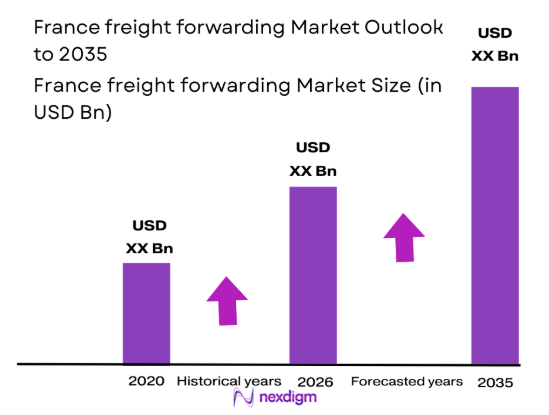
Based on a recent historical assessment, the France freight forwarding market is valued at approximately USD ~ billion, supported by strong international trade activity, advanced logistics infrastructure, and extensive connectivity with European and global supply chains. Data from Eurostat and the World Bank indicate that France manages goods trade flows exceeding USD ~ trillion, which significantly increases demand for integrated freight forwarding services. Expanding e commerce logistics networks, multimodal transportation systems, and automated logistics platforms further strengthen operational efficiency and market growth.
Paris, Marseille, Lyon, and Le Havre dominate freight forwarding activity due to their strategic positions within national and international logistics corridors. Paris functions as the primary air cargo gateway supported by Paris Charles de Gaulle Airport, which handles cargo volumes valued at more than USD ~ billion annually. Marseille serves as a major Mediterranean maritime hub connecting European trade routes with North Africa and Asia, while Le Havre operates as one of France’s largest container ports managing cargo flows valued at more than USD ~ billion.
Market Segmentation
By Product Type
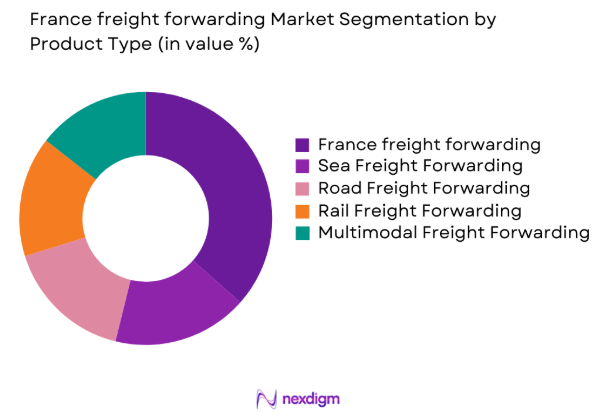
France Freight Forwarding market is segmented by product type into Air Freight Forwarding, Sea Freight Forwarding, Road Freight Forwarding, Rail Freight Forwarding, and Multimodal Freight Forwarding. Recently, Sea Freight Forwarding has a dominant market share due to factors such as demand patterns, infrastructure availability, and strong port connectivity across major maritime gateways. France’s ports including Marseille Fos and Le Havre process cargo valued at more than USD ~ billion annually according to national port authority data. These facilities enable large scale international container movement supporting industrial exports, automotive shipments, and consumer goods imports. Sea freight forwarding also offers lower transportation costs for high volume cargo compared with air transportation, which increases its adoption among manufacturing exporters and retail importers. Increasing trade flows between European markets and Asia further reinforce the importance of maritime logistics networks across national supply chains.
By End User
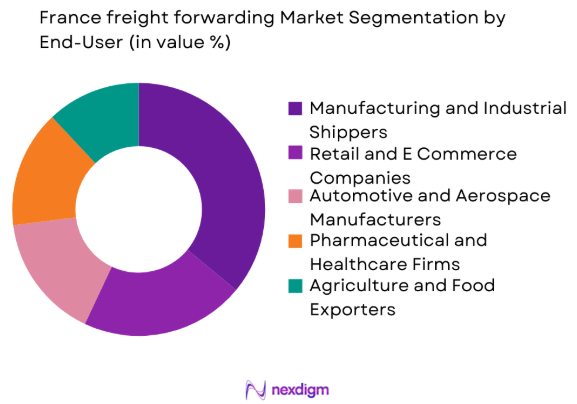
France Freight Forwarding market is segmented by end user into Manufacturing and Industrial Shippers, Retail and E Commerce Companies, Automotive and Aerospace Manufacturers, Pharmaceutical and Healthcare Firms, and Agriculture and Food Exporters. Recently, Manufacturing and Industrial Shippers have a dominant market share due to strong export driven production sectors across France. National manufacturing output exceeds USD ~ billion according to data from the French National Institute of Statistics and Economic Studies, creating substantial demand for international logistics and freight coordination. Industrial exporters depend heavily on freight forwarders to manage customs documentation, cross border transportation, and multimodal logistics integration. Automotive components, aerospace equipment, heavy machinery, and chemical products require complex international shipping networks supported by specialized forwarding providers.
Competitive Landscape
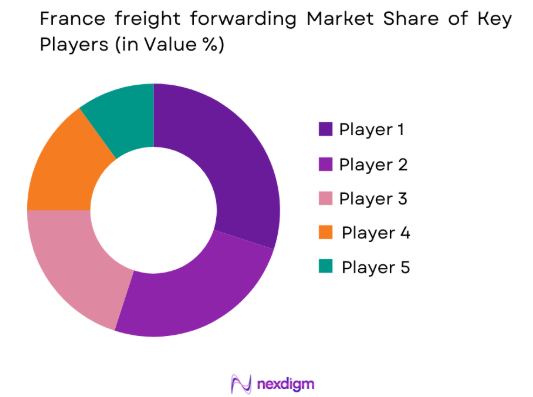
The France freight forwarding market is characterized by a moderately consolidated competitive structure where global logistics providers operate alongside strong regional freight forwarding companies. International firms benefit from extensive global transportation networks, digital logistics platforms, and integrated supply chain solutions, while domestic operators leverage deep regional expertise and strong relationships with national port authorities and transportation operators. Strategic partnerships, acquisitions, and digital freight management technologies continue strengthening competitive positioning across the logistics ecosystem.
| Company Name | Establishment Year | Headquarters | Technology Focus | Market Reach | Key Products | Revenue | Logistics Specialization |
| DHL Global Forwarding | 1969 | Bonn, Germany | ~ | ~ | ~ | ~ | ~ |
| Kuehne + Nagel | 1890 | Schindellegi, Switzerland | ~ | ~ | ~ | ~ | ~ |
| DB Schenker | 1872 | Essen, Germany | ~ | ~ | ~ | ~ | ~ |
| GEODIS | 1904 | Levallois Perret, France | ~ | ~ | ~ | ~ | ~ |
| CEVA Logistics | 2007 | Marseille, France | ~ | ~ | ~ | ~ | ~ |
France freight forwarding Market Analysis
Growth Drivers
Expansion of European Cross Border Trade and Integrated Logistics Corridors
The France freight forwarding market continues expanding as international trade across European supply chains increases and requires efficient logistics coordination for complex cross border freight movements. France holds a strategic geographic position linking Northern Europe Mediterranean trade routes and global shipping networks, strengthening its role as a logistics hub for international exporters. Major ports such as Marseille Fos and Le Havre handle large volumes of containerized cargo and bulk shipments serving European distribution networks. Freight forwarders provide services including customs brokerage cargo consolidation and multimodal transport coordination to support efficient cross border logistics. Increasing adoption of integrated road rail maritime and air transport networks further improves operational flexibility while reducing transportation costs for large scale cargo movements.
Growth of E Commerce Logistics and High Volume Parcel Distribution Networks
Rapid expansion of digital commerce across Europe significantly increases demand for freight forwarding services capable of supporting high volume parcel distribution and international product shipments. Online retail platforms generate large transaction volumes involving electronics clothing consumer appliances and packaged food requiring efficient cross border logistics. Retail companies therefore rely on freight forwarders to coordinate shipping operations linking manufacturers suppliers and distribution centers across multiple markets. Digital shipment management platforms enable real time cargo tracking automated documentation processing and logistics analytics that improve operational efficiency. E commerce fulfillment centers across France require constant inventory replenishment through air sea and road freight networks. Freight forwarders also manage reverse logistics international returns and last mile coordination across growing digital commerce supply chains.
Market Challenges
Rising Transportation Costs and Volatility in Global Fuel Prices
Freight forwarding companies operating across France face operational challenges caused by rising transportation costs and unpredictable fuel price fluctuations affecting global logistics networks. Fuel expenses represent a major share of freight transportation costs for air cargo carriers maritime shipping companies and long distance trucking fleets moving goods across international supply chains. Sudden increases in energy prices raise freight transportation charges and increase operational expenses for logistics providers coordinating shipments. Volatile fuel markets also create uncertainty in long term logistics planning and cost forecasting. Freight forwarding companies therefore negotiate complex transportation contracts with carriers to control expenses. Environmental regulations requiring cleaner fuels and emission reductions further increase compliance costs, adding pressure on logistics profitability.
Port Congestion and Infrastructure Capacity Constraints Across Major Logistics Hubs
Freight forwarding operations across France face significant logistical challenges due to congestion and capacity limitations at major transportation hubs including seaports airports and intermodal freight terminals. Increasing international trade volumes raise cargo throughput at gateways such as Le Havre and Marseille Fos creating congestion during peak shipping periods. Delays in cargo unloading container processing and customs clearance disrupt shipment schedules and complicate logistics coordination. Capacity constraints across road rail and maritime transport systems also generate bottlenecks within multimodal freight networks. Freight forwarders therefore reroute shipments through alternative corridors to reduce delays. However these adjustments increase operational costs and reduce supply chain predictability, creating ongoing efficiency challenges across national logistics networks.
Opportunities
Adoption of Digital Freight Platforms and Logistics Automation Technologies
Digital transformation across global logistics networks creates major opportunities for freight forwarding companies in France to improve operational efficiency through advanced technology adoption. Modern freight forwarders increasingly implement digital platforms that automate cargo booking documentation processing shipment tracking and route optimization across international transport networks. These platforms integrate data from shipping carriers port authorities customs agencies and logistics providers to ensure seamless information exchange throughout supply chains. Automation reduces administrative workloads associated with documentation and compliance procedures that previously relied on manual processes. Real time analytics systems enable freight companies to monitor cargo movements and respond quickly to disruptions. Artificial intelligence driven planning tools also optimize transportation routes while improving cost efficiency and operational reliability.
Expansion of Sustainable Logistics and Low Carbon Freight Transportation Solutions
Environmental sustainability initiatives across European transportation sectors create major opportunities for freight forwarding companies to expand greener logistics services aligned with regulatory and corporate sustainability goals. Governments increasingly introduce policies designed to reduce greenhouse gas emissions from freight transportation networks historically dependent on fossil fuel powered trucks ships and aircraft. Freight forwarding companies therefore adopt alternative logistics strategies including rail cargo transport electric trucking fleets and cleaner maritime shipping technologies that reduce carbon emissions across supply chains. Logistics providers also collaborate with carriers to develop carbon neutral freight services supported by renewable energy investments and emission offset programs. Digital route optimization tools further improve fuel efficiency while reducing empty cargo movements across transportation networks, strengthening sustainable logistics adoption.
Future Outlook
The France freight forwarding market is expected to experience sustained expansion driven by rising international trade volumes, growing e commerce logistics demand, and continued investment in multimodal transportation infrastructure. Technological advancements such as digital freight platforms, automated logistics management systems, and AI driven route optimization are likely to transform operational efficiency across freight networks. Increasing regulatory emphasis on sustainable transportation and carbon emission reduction will also encourage the adoption of greener logistics solutions. Strong export industries and expanding European trade corridors are anticipated to further strengthen long term demand for freight forwarding services.
Major Players
- DHL Global Forwarding
- Kuehne + Nagel
- DB Schenker
- CEVA Logistics
- GEODIS
- Bolloré Logistics
- Expeditors International
- Nippon Express
- Yusen Logistics
- Hellmann Worldwide Logistics
- DACHSER
- Sinotrans
- C.H. Robinson
- UPS Supply Chain Solutions
- Panalpina
Key Target Audience
- Freight forwarding companies
- Logistics service providers
- E commerce companies
- Manufacturing exporters
- Automotive and aerospace manufacturers
- Investments and venture capitalist firms
- Government and regulatory bodies
- International shipping companies
Research Methodology
Step 1: Identification of Key Variables
The research process begins by identifying major variables influencing the France freight forwarding market including trade volumes, transportation infrastructure, logistics demand, and regulatory frameworks. Secondary research sources such as government publications, logistics databases, and international trade reports are analyzed to establish market foundations.
Step 2: Market Analysis and Construction
Collected data is evaluated to construct a comprehensive understanding of freight forwarding activities across France including service types, transportation modes, and end user industries. Market segmentation models are developed to evaluate freight distribution patterns across industrial sectors and logistics channels.
Step 3: Hypothesis Validation and Expert Consultation
Industry experts including logistics executives, supply chain managers, and transportation specialists are consulted to validate preliminary findings. These consultations ensure that market assumptions accurately reflect real world freight forwarding operations and emerging logistics trends.
Step 4: Research Synthesis and Final Output
All validated insights are integrated into a structured research framework combining qualitative analysis with trade statistics and logistics performance indicators. The final report provides comprehensive market intelligence supporting strategic decision making for stakeholders operating within the freight forwarding ecosystem.

- Executive Summary
- Research Methodology (Definitions, Scope, Industry Assumptions, Market Sizing Approach, Primary & Secondary Research Framework, Data Collection & Verification Protocol, Analytic Models & Forecast Methodology, Limitations & Research Validity Checks)

- Market Definition and Scope
- Value Chain & Stakeholder Ecosystem
- Regulatory / Certification Landscape
- Sector Dynamics Affecting Demand
- Strategic Initiatives & Infrastructure Growth

- Growth Drivers
Expansion of Cross Border Trade within European Logistics Networks
Growth of E Commerce Driven International Parcel Shipments
Increasing Demand for Integrated Multimodal Freight Solutions - Market Challenges
Rising Transportation Costs and Fuel Price Volatility
Port Congestion and Infrastructure Capacity Limitations
Regulatory Complexity in International Freight Documentation - Market Opportunities
Adoption of Digital Freight Platforms and Logistics Automation
Expansion of Sustainable and Low Carbon Freight Transport Solutions
Growth of Cross Border E Commerce Logistics Services - Trends
Integration of Real Time Freight Tracking Technologies
Increasing Use of Multimodal Transport Networks
Expansion of Green Logistics and Carbon Neutral Freight Initiatives - Government Regulations
- SWOT Analysis of Key Competitors
- Porter’s Five Forces

- By Market Value, 2020-2025
- By Installed Units, 2020-2025
- By Average System Price, 2020-2025
- By System Complexity Tier, 2020-2025

- By System Type (In Value%)
Air Freight Forwarding
Sea Freight Forwarding
Road Freight Forwarding
Rail Freight Forwarding
Multimodal Freight Forwarding - By Platform Type (In Value%)
Port Logistics Platforms
Airport Cargo Platforms
Digital Freight Platforms
Integrated Supply Chain Platforms
Third Party Logistics Platforms - By Fitment Type (In Value%)
Standalone Freight Management Solutions
Integrated Logistics Management Systems
Cloud Based Freight Platforms
On Premise Freight Management Systems
Hybrid Logistics Platforms - By End User Segment (In Value%)
Manufacturing and Industrial Shippers
Retail and E Commerce Companies
Automotive and Aerospace Manufacturers
Pharmaceutical and Healthcare Firms
Agriculture and Food Exporters - By Procurement Channel (In Value%)
Direct Contract Freight Services
Third Party Logistics Providers
Digital Freight Marketplaces
Government Tender Based Logistics Contracts
Freight Brokerage Services

- Market Share Analysis
- Cross Comparison Parameters (Service Portfolio, Multimodal Transport Capability, Digital Logistics Integration, Geographic Network Coverage, Industry Specialization)
- SWOT Analysis of Key Competitors
- Pricing & Procurement Analysis
- Key Players
DHL Global Forwarding
Kuehne + Nagel
DB Schenker
DSV A/S
CEVA Logistics
GEODIS
Bolloré Logistics
Expeditors International
C.H. Robinson
Nippon Express
UPS Supply Chain Solutions
Sinotrans
Yusen Logistics
Hellmann Worldwide Logistics
DACHSER

- Manufacturing Exporters Increasing Dependence on International Freight Networks
- Retail and E Commerce Companies Driving High Volume Parcel Shipments
- Automotive and Aerospace Supply Chains Requiring Time Sensitive Logistics
- Pharmaceutical Distribution Networks Demanding Temperature Controlled Freight Services

- Forecast Market Value, 2026-2035
- Forecast Installed Units, 2026-2035
- Price Forecast by System Tier, 2026-2035
- Future Demand by Platform, 2026-2035


 Request a Sample
 Ask for Customization
 Get a Quote
 Enquire Now