
 Download PDF
 Download PDF
Market Overview
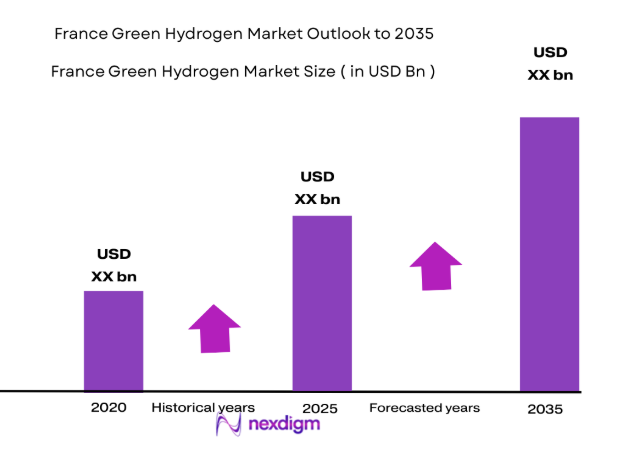
The France Green Hydrogen Market is valued at approximately USD ~ billion, with significant growth driven by increasing demand for renewable energy sources, government incentives, and technological advancements in electrolysis systems. Aided by a strong commitment to achieving carbon neutrality and reducing greenhouse gas emissions, the market is poised for expansion, particularly in the industrial and transportation sectors. The French government’s support through subsidies, grants, and infrastructure development has been a key factor in facilitating the growth of the green hydrogen industry.
The market’s dominance is primarily observed in cities such as Paris, Lyon, and Marseille, where the demand for clean energy solutions is the highest. France’s strategic location within Europe, coupled with its strong infrastructure for renewable energy, enhances its position as a leader in green hydrogen adoption. The country’s commitment to the European Union’s green energy goals and the growing focus on decarbonization initiatives have further contributed to its dominance in the market.
Market Segmentation
By Product Type
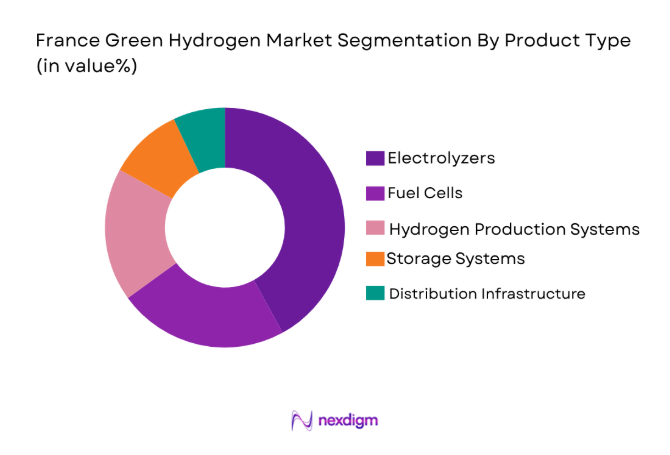
France Green Hydrogen market is segmented by product type into electrolyzers, fuel cells, hydrogen production systems, storage systems, and distribution infrastructure. Among these, electrolyzers have dominated the market share in recent years, primarily driven by advancements in electrolysis technology, which is considered a key solution for producing green hydrogen from renewable sources. The growing demand for clean energy across industrial and transportation sectors has further fueled the need for electrolyzers. With innovations in both alkaline and proton exchange membrane electrolyzers, their efficiency and cost-effectiveness have made them the preferred choice, making electrolyzers a dominant player in the green hydrogen market.
By Platform Type
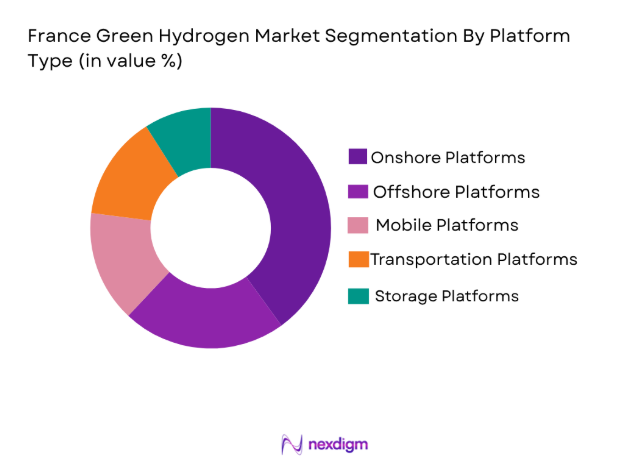
The France Green Hydrogen market is segmented by platform type into onshore platforms, offshore platforms, mobile platforms, transportation platforms, and storage platforms. Among these, onshore platforms have a dominant market share, largely due to the availability of renewable energy resources such as wind and solar power, which are the primary inputs for green hydrogen production. Onshore platforms offer the benefit of proximity to renewable energy sources and cost-effective installation and maintenance, which contribute to their growing adoption. Additionally, the ongoing development of energy storage systems onshore has facilitated further growth in this platform category.
Competitive Landscape
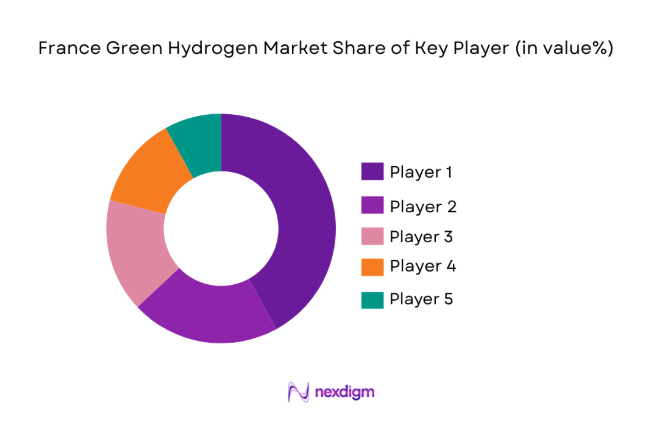
The competitive landscape of the France Green Hydrogen market is characterized by a mix of established players and new entrants. Major players are focusing on technological advancements and collaborations with the government to capitalize on the market potential. With an emphasis on green energy solutions, the competition is expected to intensify, particularly as companies strive to offer cost-efficient and scalable solutions for green hydrogen production and distribution. Strategic partnerships between industry players and governmental bodies have significantly contributed to market growth, with companies seeking to integrate their technologies into the country’s renewable energy infrastructure.
| Company Name | Establishment Year | Headquarters | Technology Focus | Market Reach | Key Products | Revenue | Technology Integration |
| Air Liquide | 1902 | Paris, France | ~ | ~ | ~ | ~ | ~ |
| ENGIE | 2008 | Paris, France | ~ | ~ | ~ | ~ | ~ |
| TotalEnergies | 1924 | Paris, France | ~ | ~ | ~ | ~ | ~ |
| Siemens Energy | 2020 | Munich, Germany | ~ | ~ | ~ | ~ | ~ |
| McPhy | 2008 | La Motte, France | ~ | ~ | ~ | ~ | ~ |
France Green Hydrogen Market Analysis
Growth Drivers
Government Policy Support
The French government has prioritized green hydrogen as a crucial element in achieving its carbon neutrality goals. With substantial financial backing, including grants, tax breaks, and funding for infrastructure development, policies encourage innovation and investments into renewable energy projects, particularly green hydrogen. These government initiatives have been critical in driving growth by providing incentives for both production and consumption of green hydrogen. The French government has also set ambitious targets to increase green hydrogen production capacity, aiming to create a sustainable energy future. These plans are in alignment with broader EU energy policies that promote renewable energy adoption and carbon reduction. As a result, a favorable regulatory environment has been established, encouraging domestic and foreign investments. With further backing expected from the EU, these governmental policies will continue to stimulate innovation and market development, fostering long-term market expansion. This supportive stance is pivotal for market players, as it significantly reduces risks associated with entering and expanding in the green hydrogen space, especially for smaller and mid-sized players.
Technological Advancements
The technological evolution in electrolyzer systems has been a significant growth driver in the France Green Hydrogen market. Advances in proton exchange membrane (PEM) and alkaline electrolyzers have increased their efficiency, enabling the production of green hydrogen at a reduced cost. These electrolyzer systems are critical for scaling up hydrogen production, offering a more affordable and sustainable method of generating hydrogen from renewable energy sources. The increased efficiency and reduced energy consumption of these electrolyzers have made green hydrogen more cost-competitive compared to traditional hydrogen production methods. Additionally, innovations in electrolyzer technology are driving the ability to deploy large-scale systems across various sectors, including transportation, power generation, and manufacturing. As hydrogen production becomes more efficient, the demand for its use in decarbonizing industries like transport, power generation, and industrial processes is rapidly increasing. Moreover, advancements in hydrogen storage technologies are further enhancing the feasibility of utilizing green hydrogen, as the stored hydrogen can be used during periods of high demand or when renewable energy production is low, driving the overall growth of the market.
Market Challenges
High Capital Investment
One of the primary challenges for the France Green Hydrogen market is the substantial capital investment required for developing the necessary green hydrogen infrastructure. The high cost of electrolysis systems, storage technologies, and hydrogen distribution networks remains a significant barrier for new market entrants and smaller companies. Setting up the infrastructure needed to produce, store, and transport green hydrogen requires a substantial initial investment, making it difficult for companies to access the market. Despite the increasing demand for green hydrogen, the high upfront costs associated with establishing production facilities, distribution pipelines, and storage systems have slowed the pace of widespread adoption. While government incentives and advancements in electrolyzer technologies are gradually reducing these costs, the level of investment required to establish large-scale green hydrogen deployment remains a challenge. The financial burden is particularly difficult for smaller businesses without the resources of large multinationals, and this disparity in financial capacity may limit the market’s overall growth potential in the short term. As the market matures and more players enter the field, it is expected that the cost of production will decrease, but substantial capital investment will continue to be a limiting factor in the early stages of market expansion.
Infrastructure Development
The need for an extensive and integrated hydrogen infrastructure presents another challenge to the growth of the France Green Hydrogen market. The current infrastructure for hydrogen production, distribution, and storage is still underdeveloped and fragmented. Scaling up this infrastructure to meet the growing demand for green hydrogen will require significant investment and time. Building a network of production facilities, storage sites, and distribution channels across the country will take years to complete, and in the meantime, companies face the challenge of limited access to essential infrastructure. Furthermore, the integration of hydrogen into existing energy networks and transportation systems poses logistical and technical challenges. Hydrogen’s low density and need for specialized pipelines for transportation create difficulties, especially when connecting remote areas or offshore platforms. The process of retrofitting existing infrastructure to accommodate hydrogen, along with the establishment of new pipelines and storage facilities, requires coordination between the government, private companies, and local municipalities. Overcoming these infrastructure hurdles will require close collaboration among all stakeholders, as well as continued investment in research and development to create cost-effective, scalable solutions that ensure the widespread adoption of green hydrogen.
Opportunities
Hydrogen-Powered Transportation
There is significant growth potential in the transportation sector, particularly in heavy-duty transport, where green hydrogen can replace diesel and significantly reduce CO2 emissions. Hydrogen-powered trucks, buses, and trains are gaining traction, especially with the advancements in fuel cell technology, which makes hydrogen a viable solution for long-haul transport. The French government has been at the forefront of promoting zero-emission transportation, and their policy initiatives, which include subsidies for hydrogen-powered vehicles and infrastructure, have played a pivotal role in stimulating demand. Hydrogen’s role in decarbonizing the transportation sector is particularly important as the country aims to meet its climate goals. With growing concerns over air quality and greenhouse gas emissions, the shift towards hydrogen-powered vehicles offers a sustainable alternative that complements France’s commitment to achieving net-zero emissions. The expansion of hydrogen refueling stations and an increase in hydrogen-powered vehicles on the road will drive the growth of the market. As demand for clean energy solutions in the transportation sector continues to rise, more manufacturers are focusing on hydrogen-powered technology, making it a promising area for market players to capitalize on.
Partnerships and Collaborations
Collaborations between private companies and governments are emerging as a key opportunity in the France Green Hydrogen market. Companies can leverage public funding, research grants, and regulatory support from both national and EU-level programs to co-develop green hydrogen technologies and scale up production. These collaborations allow players to share risks, access government incentives, and tap into funding opportunities that may not be available to them individually. Public-private partnerships, especially those focused on developing hydrogen infrastructure, are crucial for overcoming some of the market’s most significant barriers, such as high capital investment and infrastructure development. The French government’s commitment to integrating green hydrogen into its energy mix makes the country an attractive destination for partnerships. Furthermore, international collaborations, particularly with EU countries working toward carbon neutrality, present opportunities for cross-border hydrogen distribution and infrastructure development. These partnerships not only provide access to a broader market but also enable companies to share knowledge and technology, leading to faster innovation and reducing time-to-market for new solutions. As the green hydrogen market continues to mature, these collaborations will be essential for expanding the market’s reach and ensuring long-term success.
Future Outlook
The France Green Hydrogen market is expected to witness strong growth over the next five years, driven by technological advancements, increasing government support, and growing demand from the industrial and transportation sectors. The adoption of green hydrogen will continue to accelerate, particularly with improvements in electrolyzer efficiency and storage solutions. As France pushes toward its decarbonization goals, regulatory frameworks will continue to evolve to support green hydrogen deployment, creating a favorable market environment. Further collaborations between industry players and governmental bodies will be critical to expanding hydrogen infrastructure, positioning the market for long-term success.
Major Players
- Air Liquide
- ENGIE
- TotalEnergies
- Siemens Energy
- McPhy
- Hydrogenics
- Nel ASA
- Linde
- Plug Power
- Ballard Power Systems
- ITM Power
- Shell
- Siemens Gamesa
- Fronius
- Leclanché
Key Target Audience
- Investments and venture capitalist firms
- Government and regulatory bodies
- Industrial manufacturers seeking renewable energy solutions
- Energy solution providers for clean energy adoption
- Hydrogen fuel suppliers
- Clean energy advocates and environmental groups
- Transportation and logistics companies focusing on sustainability
Research Methodology
Step 1: Identification of Key Variables
The first step involves identifying the key variables impacting the green hydrogen market, including policy support, technological advancements, and infrastructure development.
Step 2: Market Analysis and Construction
This step involves analyzing the market landscape and constructing the market model by assessing demand patterns, technological capabilities, and regulatory frameworks.
Step 3: Hypothesis Validation and Expert Consultation
This step validates hypotheses through expert interviews and consultations with industry stakeholders, including regulatory bodies and market participants.
Step 4: Research Synthesis and Final Output
The final step synthesizes research findings into actionable insights and forecasts the future direction of the green hydrogen market based on reliable data.

- Executive Summary
- Research Methodology (Definitions, Scope, Industry Assumptions, Market Sizing Approach, Primary & Secondary Research Framework, Data Collection & Verification Protocol, Analytic Models & Forecast Methodology, Limitations & Research Validity Checks)

- Market Definition and Scope
- Value Chain & Stakeholder Ecosystem
- Regulatory / Certification Landscape
- Sector Dynamics Affecting Demand
- Strategic Initiatives & Infrastructure Growth

- Growth Drivers
Government Policy Support
Advancements in Electrolysis Technology
Demand for Clean Energy Solutions - Market Challenges
High Capital Investment
Infrastructure Development Costs
Technological Limitations - Market Opportunities
Expanding Hydrogen Transport Networks
Public-Private Partnerships
Emerging Demand in Industrial Sectors - Trends
Increased Focus on Green Hydrogen as a Decarbonization Tool
Integration of Green Hydrogen with Renewable Energy Systems - Government Regulations
- SWOT Analysis
- Porter’s Five Forces

- By Market Value, 2020-2025
- By Installed Units, 2020-2025
- By Average System Price, 2020-2025
- By System Complexity Tier, 2020-2025

- By System Type (In Value%)
Electrolyzers
Storage Systems
Distribution Infrastructure
Fuel Cells
Green Hydrogen Production Systems - By Platform Type (In Value%)
Onshore Platforms
Offshore Platforms
Mobile Platforms
Transportation Platforms
Storage Platforms - By Fitment Type (In Value%)
Onsite Solutions
Offsite Solutions
Integrated Solutions
Hybrid Solutions - By End User Segment (In Value%)
Industrial Applications
Transport Applications
Residential Applications

- Market Share Analysis
- Cross Comparison Parameters (System Type, Platform Type, End User Segment, Fitment Type, Procurement Channel, Technology Type, Geographical Coverage)
- SWOT Analysis of Key Competitors
- Pricing & Procurement Analysis
- Key Players
Air Liquide
ENGIE
TotalEnergies
Hydrogenics
Nel ASA
Siemens Energy
McPhy
Shell
ITM Power
Siemens Gamesa
Plug Power
Ballard Power Systems
Fronius
Linde
SABIC

- Industrial Sector’s Adoption of Green Hydrogen
- Increased Investment in Hydrogen-Powered Vehicles
- Government-Driven Initiatives in Transportation
- Growth of Green Hydrogen in Residential Energy Supply

- Forecast Market Value, 2026-2035
- Forecast Installed Units, 2026-2035
- Price Forecast by System Tier, 2026-2035
- Future Demand by Platform, 2026-2035


 Request a Sample
 Ask for Customization
 Get a Quote
 Enquire Now