

 Download PDF
Market Overview
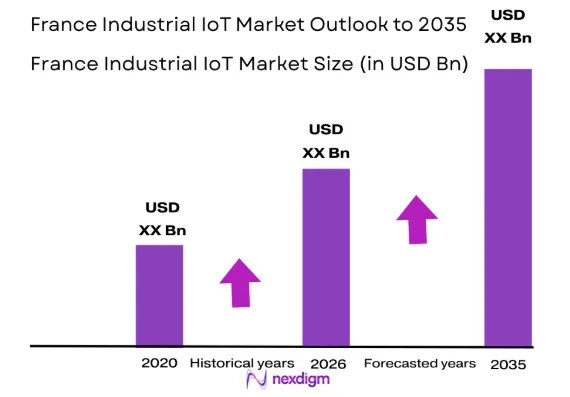
The France Industrial IoT market is driven by the increasing demand for connected devices and automation in the industrial sector. As industries seek to improve operational efficiency and reduce costs, investments in IoT solutions have significantly expanded, leading to substantial market growth. Industrial IoT’s integration into key sectors such as manufacturing, logistics, and energy drives its market size, with a rapid rise in smart factory solutions, real-time monitoring systems, and predictive maintenance. The overall market value is anticipated to reach USD ~ billion by the end of the year based on a recent historical assessment.
France’s dominance in the Industrial IoT market can be attributed to its strong technological infrastructure and government support for smart manufacturing initiatives. Major cities such as Paris, Lyon, and Toulouse are leading hubs of industrial innovation and IoT adoption, supported by their advanced connectivity infrastructure and the presence of several multinational corporations. France’s commitment to Industry 4.0 and its position as a key player in the European Union further solidify its role as a leader in this market.
Market Segmentation
By Product Type
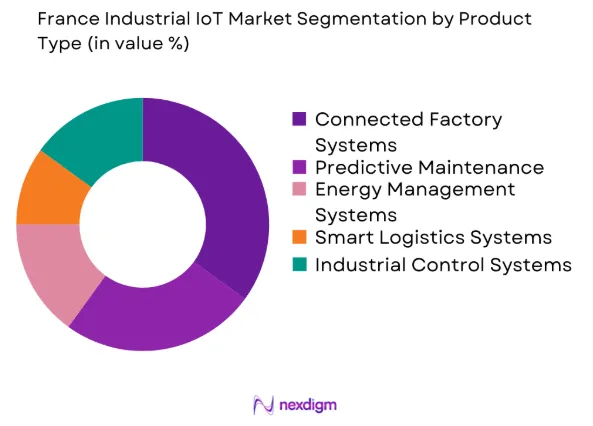
The France Industrial IoT market is segmented by product type into connected factory systems, predictive maintenance solutions, energy management systems, smart logistics systems, and industrial control systems. Recently, connected factory systems have taken the lead in market share, driven by the growing demand for automation in production lines, optimized resource management, and improved operational efficiency. This segment’s dominance is fueled by large-scale investments from both the public and private sectors and the growing trend toward smart factory solutions.
By End User Segment
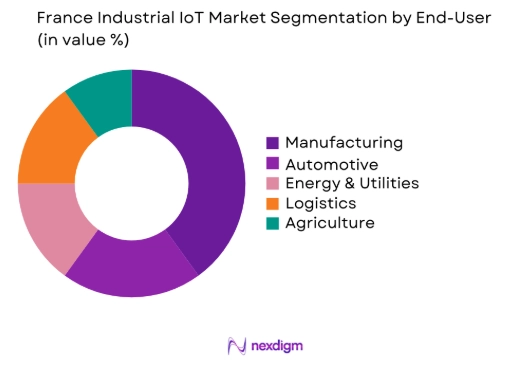
The France Industrial IoT market is segmented by end-user into manufacturing, automotive, energy and utilities, logistics, and agriculture. Manufacturing is currently the dominant sub-segment due to the high level of industrial IoT integration in factory automation and production systems. This segment’s strong performance can be attributed to France’s robust industrial base, the adoption of smart manufacturing practices, and the increasing need for cost-effective production techniques.
Competitive Landscape
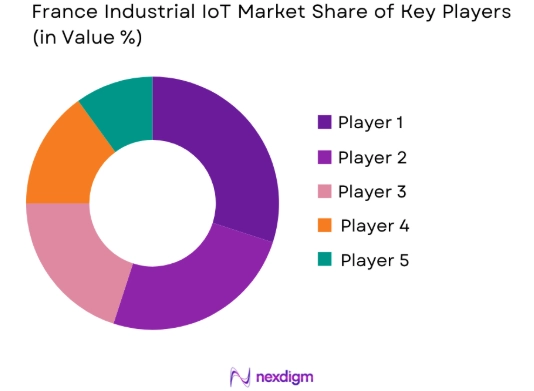
The France Industrial IoT market is highly competitive, with numerous global and local players vying for market share. These companies focus on advanced technologies, partnerships, and investments in R&D to enhance their position in the market. Major players continue to drive consolidation, forming strategic alliances and expanding their presence in France’s key industrial sectors. The competition is marked by a significant influence from global technology giants such as Siemens and Schneider Electric, alongside strong regional players that focus on specific IoT applications.
| Company Name | Establishment Year | Headquarters | Technology Focus | Market Reach | Key Products | Revenue (USD) | Additional Parameter |
| Siemens | 1847 | Munich, Germany | ~ | ~ | ~ | ~ | ~ |
| Schneider Electric | 1836 | Rueil-Malmaison, France | ~ | ~ | ~ | ~ | ~ |
| Honeywell | 1906 | Charlotte, USA | ~ | ~ | ~ | ~ | ~ |
| Bosch | 1886 | Stuttgart, Germany | ~ | ~ | ~ | ~ | ~ |
| Cisco Systems | 1984 | San Jose, USA | ~ | ~ | ~ | ~ | ~ |
France Industrial IoT Market Analysis
Growth Drivers
Technological Advancements in IoT and AI
Technological advancements in IoT and AI are crucial growth drivers for the France Industrial IoT market. With the rise of smart factories, predictive maintenance, and real-time monitoring, the demand for IoT solutions has soared. Companies in France are increasingly relying on these technologies to improve operational efficiency, reduce downtime, and enhance predictive capabilities. As the cost of sensors and connectivity continues to decrease, small and medium-sized enterprises (SMEs) are also adopting IoT solutions, further fueling market growth. The rapid evolution of AI, specifically in machine learning, has enabled smarter and and more autonomous systems, making industrial operations more flexible and responsive.
Government Support for Industry 4.0
France’s commitment to digital transformation through its Industry 4.0 initiatives is a significant growth driver for the Industrial IoT market. The government is fostering the adoption of digital technologies by offering strategic investments in smart manufacturing and providing financial incentives, subsidies, and grants to businesses integrating IoT solutions. Additionally, France’s focus on reducing carbon emissions and promoting sustainability has further bolstered this transformation. The proactive government approach, alongside the emphasis on sustainable industrial practices, has established France as a leader in the European Industrial IoT landscape. This strong governmental support is driving widespread adoption of IoT technologies across various sectors, propelling market growth in both private and public industries.
Market Challenges
High Initial Capital Investment
A major challenge facing the France Industrial IoT market is the high initial capital investment required for IoT solution implementation. Small and medium-sized enterprises (SMEs) often struggle with the significant costs involved, including purchasing sensors, building infrastructure, and integrating software. This financial burden is further exacerbated by the need for skilled workers to operate and maintain these systems effectively. While the benefits of IoT adoption, such as improved efficiency and cost reduction, are clear, the high upfront investment deters many companies from adopting these technologies. As a result, this challenge limits the pace of IoT deployment, slowing overall market growth despite its potential advantages.
Cybersecurity Risks and Data Privacy Concerns
The increased connectivity of industrial systems brings significant cybersecurity risks. As industrial IoT systems generate and store vast amounts of data, including sensitive operational information, the potential for cyberattacks, data breaches, and system vulnerabilities grows. These concerns are particularly critical for manufacturers in sectors such as energy, healthcare, and transportation, where cyberattacks could have severe consequences, including operational disruption and safety hazards. To mitigate these risks, companies are forced to invest heavily in robust cybersecurity measures, such as advanced firewalls, encryption, and threat detection systems. These added costs, along with the complexities of securing large-scale IoT networks, can slow down the adoption of IoT technologies and further hinder the overall growth of the industrial IoT market.
Opportunities
Rise of Smart Cities
The rise of smart cities presents a key opportunity for the France Industrial IoT market. As urban populations grow, the demand for IoT-based solutions to manage infrastructure, energy, and transportation systems is increasing. Smart cities leverage IoT technology to optimize traffic flow, reduce energy consumption, and improve public safety, driving greater adoption of industrial IoT solutions in urban settings. France’s continued investment in smart city projects further accelerates this trend. With increased focus on urban sustainability and operational efficiency, the market for Industrial IoT solutions in smart cities is expected to experience significant growth, providing new opportunities for technology providers in the coming years.
Integration of 5G Technology
The integration of 5G technology into industrial IoT systems presents significant growth opportunities for the France Industrial IoT market. The faster data speeds and reduced latency of 5G networks will enable real-time communication between IoT devices, unlocking more advanced industrial applications. This advancement will improve remote monitoring, predictive maintenance, and automation, making it easier to scale IoT systems and reduce operational costs. As 5G networks expand across France, they will facilitate the adoption of more complex IoT solutions, offering enhanced efficiency and reliability. The widespread implementation of 5G will create new growth avenues for the Industrial IoT market, boosting its expansion in various sectors.
Future Outlook
The France Industrial IoT market is expected to continue growing rapidly over the next five years, driven by advancements in automation, AI, and connectivity. The integration of 5G technology and government support for smart manufacturing will accelerate IoT adoption across key industrial sectors. Additionally, as businesses seek to optimize operations and improve efficiency, demand for predictive maintenance and real-time monitoring systems will rise. With the continued focus on sustainability, energy efficiency, and reducing operational costs, the market outlook remains promising, with significant technological advancements expected to shape the future.
Major Players
- Siemens
- Schneider Electric
- Honeywell
- Bosch
- Cisco Systems
- Rockwell Automation
- ABB
- General Electric
- IBM
- Microsoft
- SAP
- Oracle
- Huawei
- Dell Technologies
- Intel
Key Target Audience
- Investments and venture capitalist firms
- Government and regulatory bodies
- Industrial manufacturers
- Technology integrators
- Energy and utilities providers
- Logistics companies
- Automotive manufacturers
- Telecommunications firms
Research Methodology
Step 1: Identification of Key Variables
The key variables that impact the France Industrial IoT market, such as technological advancements, government policies, and industry-specific demand, are identified. This involves reviewing existing literature, market reports, and expert insights.
Step 2: Market Analysis and Construction
In-depth analysis is conducted using primary and secondary data to understand market trends, segmentations, and the competitive landscape. Quantitative and qualitative methodologies are applied to build the market structure.
Step 3: Hypothesis Validation and Expert Consultation
Expert consultations and discussions with industry leaders, market analysts, and professionals are conducted to validate hypotheses and refine market insights.
Step 4: Research Synthesis and Final Output
Final research findings are synthesized into a comprehensive report, with a clear presentation of market size, segmentation, growth drivers, and challenges. Data is presented with clarity, backed by credible sources.

- Executive Summary
- Research Methodology (Definitions, Scope, Industry Assumptions, Market Sizing Approach, Primary & Secondary Research Framework, Data Collection & Verification Protocol, Analytic Models & Forecast Methodology, Limitations & Research Validity Checks)

- Market Definition and Scope
- Value Chain & Stakeholder Ecosystem
- Regulatory / Certification Landscape
- Sector Dynamics Affecting Demand
- Strategic Initiatives & Infrastructure Growth

- Growth Drivers
Increase in Automation and Smart Manufacturing
Technological Advancements in IoT and AI
Government Support for Digital Transformation - Market Challenges
High Capital Expenditure for IoT Infrastructure
Data Security Concerns in Industrial IoT
Complex Integration of IoT with Existing Systems - Market Opportunities
Expansion in Predictive Maintenance Solutions
Rising Demand for Real-time Data Analytics
Growth in Smart Cities and Industrial Parks - Trends
Adoption of AI-driven IoT Solutions
Integration of 5G Technology in Industrial IoT
Focus on Sustainability and Energy Efficiency - Government Regulations
- SWOT Analysis of Key Competitors
- Porter’s Five Forces

- By Market Value, 2020-2025
- By Installed Units, 2020-2025
- By Average System Price, 2020-2025
- By System Complexity Tier, 2020-2025

- By System Type (In Value%)
Connected Factory Systems
Smart Logistics Systems
Predictive Maintenance Systems
Industrial Control Systems
Energy Management Systems - By Platform Type (In Value%)
Cloud-based Platforms
Edge Computing Platforms
On-premise Platforms
Hybrid Platforms
Integrated Platforms - By Fitment Type (In Value%)
On-premise Solutions
Cloud-based Solutions
Hybrid Solutions
Modular Solutions
Integrated Solutions - By End User Segment (In Value%)
Manufacturing
Automotive
Oil & Gas
Energy & Utilities
Logistics & Supply Chain - By Procurement Channel (In Value%)
Direct Procurement
Government Tenders
Private Sector Procurement
Online Bidding Platforms
Third-party Distributors

- Market Share Analysis
- Cross Comparison Parameters (System Type, Platform Type, Procurement Channel, End User Segment, Fitment Type, Data Security, Scalability, Integration Complexity, Pricing Strategy, Geographical Reach)
- SWOT Analysis of Key Competitors
- Pricing & Procurement Analysis
- Key Players
Siemens
Schneider Electric
General Electric
Honeywell
Bosch
Cisco Systems
Rockwell Automation
ABB
Intel
Dell Technologies
SAP
Microsoft
IBM
Huawei
Amazon Web Services

- Manufacturers Seeking Operational Efficiency
- Energy Providers Leveraging IoT for Sustainability
- Logistics Companies Integrating IoT for Real-time Tracking
- Automotive Industry Adoption of IoT for Smart Factories

- Forecast Market Value, 2026-2035
- Forecast Installed Units, 2026-2035
- Price Forecast by System Tier, 2026-2035
- Future Demand by Platform, 2026-2035


 Request a Sample
 Ask for Customization
 Get a Quote
 Enquire Now