
 Download PDF
 Download PDF
Market Overview
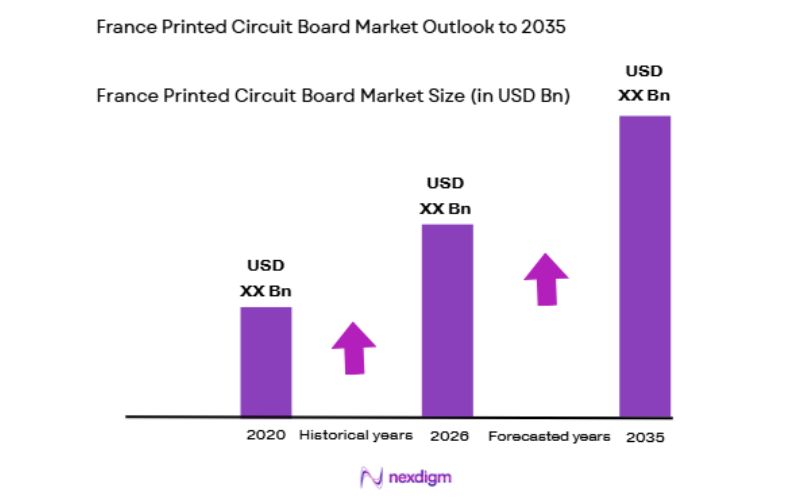
The France printed circuit board (PCB) market is expected to witness substantial growth, valued at approximately USD ~ billion based on a recent historical assessment. The increasing demand for electronic devices, the growing automotive sector, and advancements in telecommunications and consumer electronics are driving the growth of the PCB market. Furthermore, the shift towards 5G technologies and electric vehicles (EVs) has further boosted the demand for high-performance PCBs, solidifying the market’s expansion.
France, as a major player in the European electronics manufacturing industry, is home to several advanced PCB production facilities, especially in cities like Paris, Lyon, and Grenoble. The country benefits from its strong manufacturing infrastructure, skilled workforce, and active participation in research and development in electronics and communications technology. These factors help France maintain its competitive position in the PCB industry within Europe, contributing to the steady demand for high-quality PCBs.
Market Segmentation
By Product Type
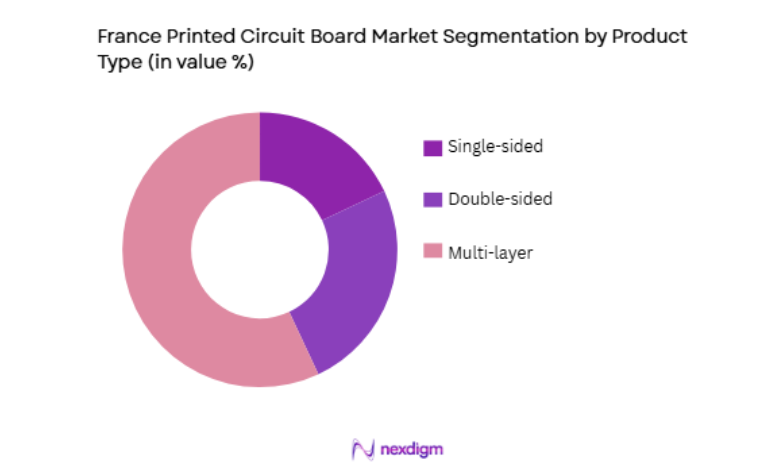
The France printed circuit board market is segmented by product type into single-sided, double-sided, and multi-layer PCBs. Recently, multi-layer PCBs have gained a dominant market share due to the increasing demand for high-performance electronics, particularly in telecommunications, automotive, and consumer electronics sectors. Multi-layer PCBs offer enhanced functionality and miniaturization, making them ideal for the growing need for compact and efficient devices. The evolution of technologies such as 5G, AI, and IoT has made multi-layer PCBs essential, as they provide the necessary capabilities for the integration of advanced systems and components in modern devices.
By End-user Industry
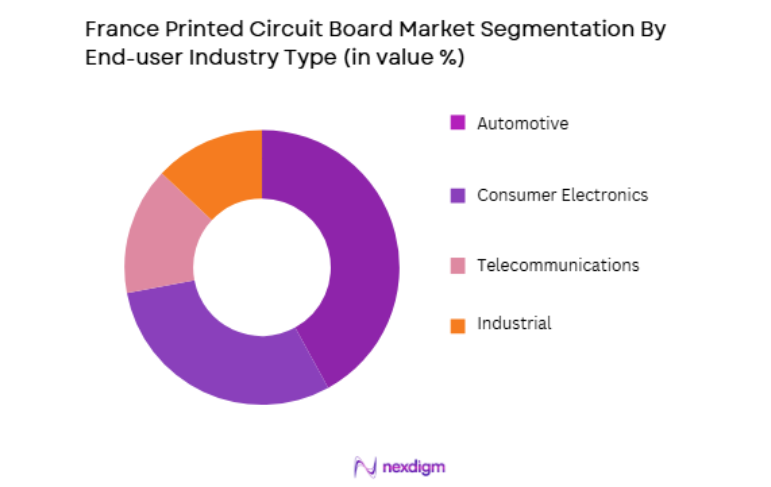
The market is segmented by end-user industry into automotive, consumer electronics, telecommunications, and industrial applications. The automotive industry has recently gained the largest market share, driven by the increased use of advanced driver-assistance systems (ADAS), electric vehicles (EVs), and autonomous driving technologies, all of which require complex and high-performance PCBs. France, with its strong automotive sector and increasing emphasis on electric mobility, continues to see substantial growth in the demand for specialized automotive PCBs. These PCBs support the functioning of various systems in modern vehicles, such as infotainment, power management, and battery management systems.
Competitive Landscape
The competitive landscape in the France printed circuit board market is characterized by a mixture of large global companies and regional manufacturers. Leading companies in this market are focusing on technological innovations, such as HDI (high-density interconnect) PCBs and flexible PCBs, to cater to the growing demand from high-tech industries. The market has seen consolidation, with major players expanding their operations to integrate advanced manufacturing capabilities. France, with its robust infrastructure and skilled workforce, continues to attract both domestic and international PCB manufacturers, creating a highly competitive environment in the sector.
| Company Name | Establishment Year | Headquarters | Technology Focus | Market Reach | Key Products | Revenue | Additional Parameter |
| Atmel Corporation | 1984 | Grenoble, France | ~ | ~ | ~ | ~ | ~ |
| LPKF Laser & Electronics | 1976 | Germany | ~ | ~ | ~ | ~ | ~ |
| Melexis | 1988 | Belgium | ~ | ~ | ~ | ~ | ~ |
| PCB Technologies Ltd | 1995 | France | ~ | ~ | ~ | ~ | ~ |
| Würth Elektronik | 1978 | Niedernhall, Germany | ~ | ~ | ~ | ~ | ~ |
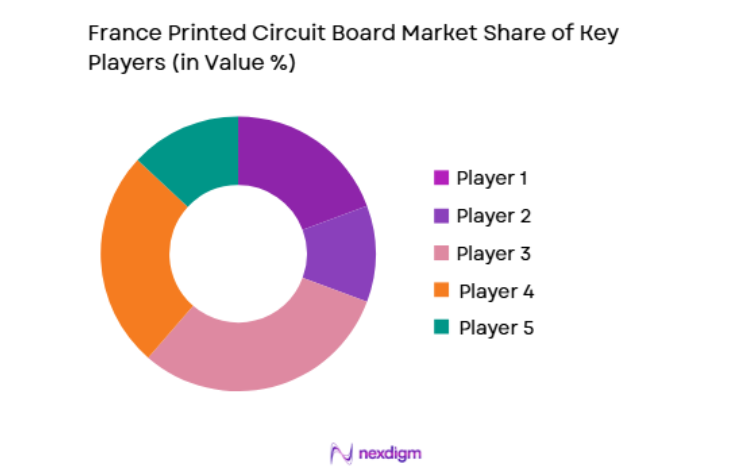
France Printed Circuit Board Market Analysis
Growth Drivers
Advancements in Automotive Electronics
The automotive industry in France has been a significant driver of the printed circuit board market. The growth of electric vehicles (EVs), advancements in autonomous driving, and the increasing adoption of advanced driver-assistance systems (ADAS) are creating a strong demand for specialized automotive PCBs. These components are integral in supporting functions such as infotainment, navigation, and power management systems in modern vehicles. Moreover, the growing emphasis on electric mobility in France, driven by both consumer demand and government regulations promoting sustainability, is pushing the demand for high-performance, compact PCBs that can integrate seamlessly into the complex electronic systems of EVs. The need for high-density interconnect (HDI) and flexible PCBs, which are crucial for the evolving automotive sector, is expected to continue growing as new vehicle models incorporate more sophisticated technology and systems.
Expansion of 5G Infrastructure
Another key growth driver in the France PCB market is the expansion of 5G networks, which has generated a significant demand for advanced PCBs. The rollout of 5G technology requires the development of high-frequency, low-latency PCBs to support the communication infrastructure and devices that will operate on these networks. The French government and private telecom operators are investing heavily in the deployment of 5G, which is expected to fuel the demand for specialized PCBs in network infrastructure, data centers, and 5G-enabled devices. This shift towards 5G, alongside the rapid growth of IoT devices, connected homes, and smart cities, is expected to drive long-term growth in the demand for PCBs that are capable of handling high-speed data transmission, while maintaining small form factors and high reliability.
Market Challenges
Rising Raw Material Costs and Supply Chain Disruptions
The rising costs of raw materials such as copper, aluminum, and precious metals, which are essential for the production of PCBs, pose a significant challenge to manufacturers in France. These cost increases are largely driven by global supply chain disruptions, particularly those related to the COVID-19 pandemic and geopolitical tensions. These disruptions have created uncertainties in the availability of raw materials and components, which in turn leads to higher production costs. This situation has led to price increases for end-products and has placed additional pressure on PCB manufacturers, particularly smaller firms that lack the financial flexibility to absorb rising costs. The ongoing volatility in material prices is expected to continue to affect the overall pricing structure and profitability of PCB producers, creating a challenge for both manufacturers and end-users.
Increased Competition and Price Sensitivity
The PCB market in France is becoming increasingly competitive as more players enter the market and existing companies strive to maintain their market position. As the demand for advanced PCBs grows, particularly in automotive, telecommunications, and consumer electronics sectors, manufacturers are under pressure to innovate while also keeping costs low. The growing emphasis on cost efficiency in end-product design, along with the increasing price sensitivity of customers, has led to more intense competition, particularly in high-volume sectors. The pressure to offer low-cost solutions without compromising on quality has intensified, and this price sensitivity is making it difficult for PCB manufacturers to maintain healthy profit margins, especially as the cost of raw materials rises and new regulatory standards are implemented.
Opportunities
Emerging Demand for Eco-friendly PCBs
The increasing demand for environmentally friendly products presents a significant opportunity for the France printed circuit board market. As environmental concerns become more prominent and stricter regulations on waste disposal and materials usage are enacted, there is growing interest in eco-friendly and sustainable PCBs. Manufacturers are responding by developing lead-free, halogen-free, and recyclable PCBs that meet international environmental standards. The rising demand for such eco-friendly PCBs is particularly pronounced in industries like automotive, consumer electronics, and telecommunications, where regulatory pressures and consumer preferences for green technologies are pushing companies to adopt more sustainable practices. Manufacturers that invest in green technologies and sustainable PCB production processes are well-positioned to capture the growing segment of environmentally conscious consumers and businesses.
Growth in Wearable Technology and IoT Devices
The proliferation of wearable technology and IoT devices presents a major opportunity for the France PCB market. As the adoption of wearable devices such as smartwatches, fitness trackers, and health monitoring devices continues to rise, the demand for small, lightweight, and efficient PCBs is also increasing. These devices require high-performance, low-power, and compact PCBs, which are ideally suited to meet the evolving needs of the market. Similarly, the growing expansion of IoT technologies, which require reliable and energy-efficient PCBs for sensors, communication modules, and data processing, offers significant growth prospects. Manufacturers that can provide custom, high-quality PCBs for wearable and IoT applications are well-positioned to capitalize on this growing demand, particularly in France, where there is strong innovation in the tech sector.
Future Outlook
The future outlook for the France printed circuit board market is favorable, with growth expected across various industries, particularly automotive, telecommunications, and consumer electronics. Technological advancements in PCB manufacturing, coupled with the adoption of eco-friendly solutions, will drive further market expansion. The demand for specialized PCBs in electric vehicles, autonomous systems, and 5G infrastructure will continue to fuel the market’s growth, supported by favorable government policies and investments in research and development. As these trends continue, the market is expected to experience steady growth, with increasing opportunities in emerging technologies like IoT and wearable devices.
Major Players
- Atmel Corporation
- LPKF Laser & Electronics
- Melexis
- PCB Technologies Ltd
- Würth Elektronik
- Flex Ltd
- Samsung Electro-Mechanics
- LG Innotek
- Unimicron Technology Corporation
- Zhen Ding Technology Holding Limited
- Nippon Mektron
- Young Poong Electronics
- DAP Corporation
- Sumitomo Electric Industries
- PCB Technologies Ltd
Key Target Audience
- Investments and venture capitalist firms
- Government and regulatory bodies
- PCB manufacturers
- Automotive companies
- Telecommunications firms
- Consumer electronics companies
- IoT solution providers
- OEMs and ODMs
Research Methodology
Step 1: Identification of Key Variables
Key market drivers, trends, and challenges are identified through extensive primary and secondary research, including expert consultations.
Step 2: Market Analysis and Construction
Data is collected from a range of sources including market surveys, government reports, and financial data, then analyzed to estimate market size and segmentation.
Step 3: Hypothesis Validation and Expert Consultation
The initial findings are validated through consultations with industry experts and stakeholders to ensure the accuracy and relevance of the data.
Step 4: Research Synthesis and Final Output
The final report synthesizes the research findings, providing a comprehensive market overview and actionable insights for decision-makers.

- Executive Summary
- Research Methodology (Definitions, Scope, Industry Assumptions, Market Sizing Approach, Primary & Secondary Research Framework, Data Collection & Verification Protocol, Analytic Models & Forecast Methodology, Limitations & Research Validity Checks]

- Market Definition and Scope
- Value Chain & Stakeholder Ecosystem
- Regulatory / Certification Landscape
- Sector Dynamics Affecting Demand

- Growth Drivers
Increasing demand for consumer electronics
Growth in automotive and electric vehicle applications
Technological advancements in PCB manufacturing processes - Market Challenges
Supply chain disruptions in PCB materials
High manufacturing costs of advanced PCBs
Environmental and sustainability regulations - Market Opportunities
Expansion in 5G and IoT technologies
Rising demand for electric vehicles
Adoption of PCBs in renewable energy sectors - Trends
Miniaturization of PCBs for compact electronics
Advancements in flexible and wearable electronics
Increased use of AI and automation in PCB design and manufacturing - Government regulations
Regulations on electronic waste disposal
Environmental compliance standards for PCB materials
Electromagnetic compatibility (EMC) regulations for PCBs - SWOT analysis
- Porters 5 forces

- By Market Value, 2020-2025
- By Installed Units, 2020-2025
- By Average System Price, 2020-2025
- By System Complexity Tier, 2020-2025

- By System Type (In Value%)
Rigid PCBs
Flexible PCBs
Rigid-Flexible PCBs
High-Frequency PCBs
Multilayer PCBs - By Platform Type (In Value%)
Consumer Electronics
Automotive
Industrial
Telecommunications
Medical Devices - By Fitment Type (In Value%)
Surface Mount Technology (SMT)
Through-Hole Technology (THT)
Hybrid Technology
Embedded Components
Flex-Rigid Integration - By End User Segment (In Value%)
Automotive Industry
Consumer Electronics Manufacturers
Telecommunications Companies
Medical Device Manufacturers

- Market Share Analysis
- Cross Comparison Parameters (System Type, Platform Type, Procurement Channel, EndUser Segment, Fitment Type, Production Method, Material Type, Environmental Impact, Customization Level, Technological Innovation, Supply Chain Resilience, Geographic Distribution, Lead Time, Cost Effectiveness, Compliance & Regulatory Standards)
- SWOT Analysis of Key Competitors
- Pricing & Procurement Analysis
- Key Players
Advanced Circuits
Unimicron Technology
TTM Technologies
Nippon Mektron
Zhen Ding Technology
AT&S
Shenzhen Kinwong Electronics
CMK Corporation
Multek
Shenzhen Fastprint
Suntak Technology
Viasystems Group
Eltek Ltd
PCBWay
Young Poong Electronics

- High demand from the automotive and electric vehicle sectors
- Increased adoption of PCBs in medical devices
- Consumer electronics driving innovation in PCB design
- Telecommunications growth driving the need for high-frequency PCBs

- Forecast Market Value, 2026-2035
- Forecast Installed Units, 2026-2035
- Price Forecast by System Tier, 2026-2035
- Future Demand by Platform, 2026-2035


 Request a Sample
 Ask for Customization
 Get a Quote
 Enquire Now