
 Download PDF
 Download PDF
Market Overview
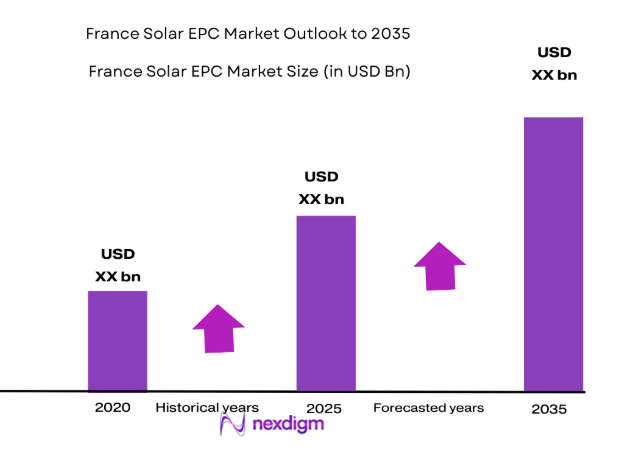
The France Renewable Energy market has experienced robust growth in recent years, driven by factors such as government support, technological advancements, and increasing consumer demand for sustainable energy solutions. The market is valued at USD ~ billions, with major growth stemming from investments in solar and wind energy infrastructure, as well as the continuous drive towards reducing carbon emissions. Market growth is further accelerated by both public and private sector collaborations in the development of renewable energy projects.
Dominant countries in this sector include France, Germany, and the UK, with France leading the European market in terms of installed renewable capacity. This dominance is attributed to its proactive government policies that promote green energy, along with its strategic location for wind and solar potential. France’s favorable regulatory framework, combined with the increasing adoption of renewable technologies, positions the country at the forefront of the renewable energy transition in Europe.
Market Segmentation
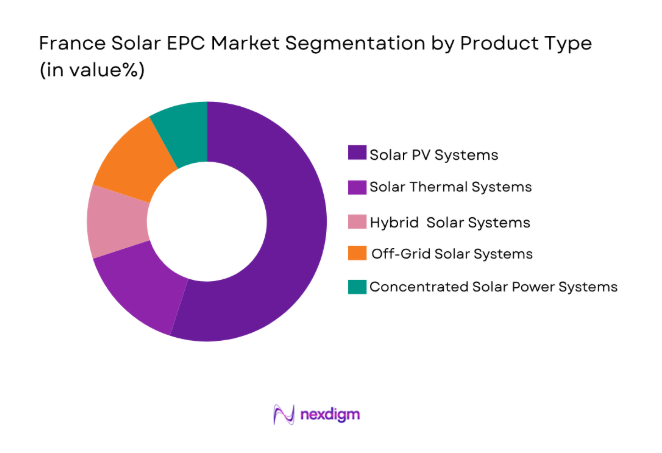
By Product Type
The France Renewable Energy market is segmented by product type into wind energy, solar energy, hydropower, geothermal energy, and bioenergy. Recently, solar energy has captured the dominant market share due to its growing adoption driven by declining costs, governmental subsidies, and the increasing emphasis on reducing fossil fuel dependence. Solar energy has emerged as the most attractive renewable energy source, particularly in residential and commercial sectors, due to its cost-effectiveness and scalability. The strong policy support and technological advancements in solar panel efficiency have further propelled its growth, making it a key player in the renewable energy landscape.
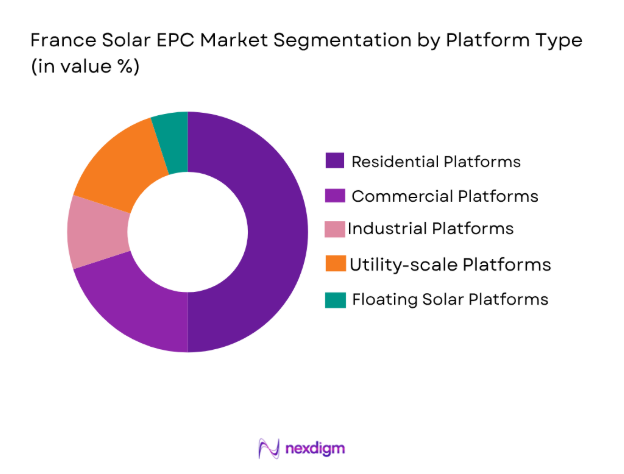
By Platform Type
The France Renewable Energy market is segmented by platform type into onshore platforms, offshore platforms, utility-scale platforms, distributed platforms, and hybrid platforms. Recently, offshore platforms have been dominating the market share due to their ability to harness higher wind speeds and provide consistent energy output. Offshore wind farms have seen significant growth, benefiting from France’s extensive coastline and government support in offshore wind projects. The higher capacity factor and fewer land-use conflicts make offshore platforms a preferred choice, thus contributing to their dominance in the market.
Competitive Landscape
The competitive landscape of the France Renewable Energy market is characterized by a mix of established energy companies and new entrants focusing on green energy solutions. Major players continue to consolidate their positions through strategic investments and partnerships, aiming to expand their renewable energy portfolios. Companies such as EDF, Engie, and TotalEnergies dominate the market, leveraging their expertise in energy infrastructure and project management.
| Company Name | Establishment Year | Headquarters | Technology Focus | Market Reach | Key Products | Revenue | Additional Parameter |
| EDF | 1946 | Paris, France | ~ | ~ | ~ | ~ | ~ |
| Engie | 2008 | Paris, France | ~ | ~ | ~ | ~ | ~ |
| TotalEnergies | 1924 | Paris, France | ~ | ~ | ~ | ~ | ~ |
| Vattenfall | 1909 | Amsterdam, NL | ~ | ~ | ~ | ~ | ~ |
| Orsted | 1972 | Fredericia, Denmark | ~ | ~ | ~ | ~ | ~ |
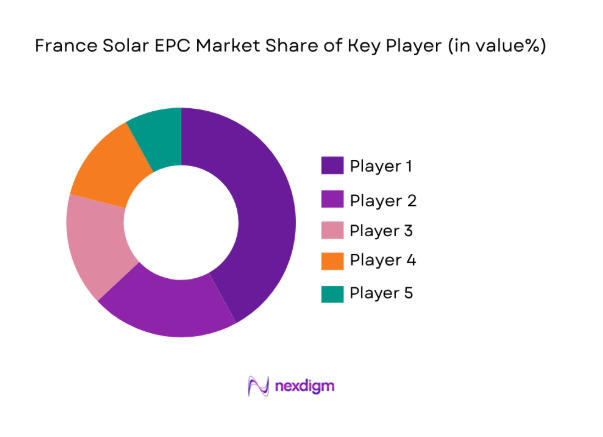
France Renewable Energy Market Analysis
Growth Drivers
Government Support for Renewable Energy
The French government has long been a driver of renewable energy growth, offering substantial subsidies, tax incentives, and favorable policies to encourage investment in green technologies. Government initiatives such as the multi-year energy programming and the commitment to reducing greenhouse gas emissions have fostered a thriving renewable energy market. These initiatives have been vital in boosting solar, wind, and hydropower projects, while simultaneously encouraging international collaboration in the energy sector. As the country progresses towards achieving its renewable energy targets, government support continues to be one of the most significant factors influencing the market.
Technological Advancements in Energy Storage and Grid Integration
As renewable energy production grows, the need for efficient energy storage solutions and grid integration has increased significantly. Technological advancements in battery storage systems, such as lithium-ion and solid-state batteries, are enabling better storage and distribution of renewable energy, ensuring that excess power generated during peak times is stored and used during low production periods. These advancements help mitigate intermittency issues that have traditionally plagued renewable energy sources. In France, innovative projects that integrate renewable energy sources with the national grid have been a key driver for continued expansion in this space, thus contributing significantly to market growth.
Market Challenges
High Initial Capital Investment
Despite the benefits of renewable energy, one of the primary challenges facing the French market is the high upfront capital investment required for renewable energy infrastructure. Although solar and wind technologies have become more cost-competitive, large-scale projects require significant financial commitments, especially in the case of offshore wind farms and energy storage systems. This capital barrier often hinders smaller players from entering the market, despite the long-term cost savings associated with renewable energy. The reliance on subsidies and public financing further complicates the financial dynamics, making it a challenge for the sector to grow independently.
Regulatory and Policy Barriers
While France has been a leader in renewable energy development, the regulatory landscape remains a challenge. The approval process for renewable energy projects can be slow, with various bureaucratic hurdles that delay project implementation. Local opposition to renewable energy installations, especially wind farms, due to aesthetic and environmental concerns, also hinders progress. Additionally, despite the commitment to reducing fossil fuel dependence, inconsistent energy policies and uncertain regulatory frameworks can create challenges for investors and companies in the renewable energy sector.
Opportunities
Expansion of Offshore Wind Energy
One of the most promising opportunities in France’s renewable energy market lies in offshore wind energy. France’s extensive coastline and favorable environmental conditions make it an ideal location for offshore wind farms. The government’s commitment to increasing offshore wind capacity as part of its energy strategy is expected to result in significant investments in offshore wind energy infrastructure over the next few years. With technological advancements in offshore wind turbine design and grid integration, France is well-positioned to take advantage of this opportunity, not only to meet its own energy needs but also to become an exporter of renewable electricity to neighboring countries.
Integration of Renewable Energy with Smart Grids
As France continues to expand its renewable energy capacity, there is a growing opportunity to integrate these energy sources with smart grid technologies. Smart grids enable better monitoring, control, and optimization of electricity distribution, facilitating the efficient use of renewable energy and reducing waste. The development of smart grid infrastructure will be crucial in managing the fluctuations in supply and demand associated with renewable energy. The French market stands to benefit greatly from the growing demand for smart grid technologies, creating significant opportunities for innovation and growth in the renewable energy sector.
Future Outlook
The future outlook for the France Renewable Energy market over the next five years is positive, with continued growth expected in the solar, wind, and energy storage sectors. Technological developments, particularly in offshore wind and energy storage systems, will drive this growth. Furthermore, the regulatory environment will continue to support the transition to renewable energy, ensuring that France meets its ambitious environmental targets. As the cost of renewable technologies continues to decrease, consumer adoption of renewable energy solutions will rise, making renewable energy a more dominant part of the French energy mix.
Major Players
- EDF
- Engie
- TotalEnergies
- Vattenfall
- Orsted
- Siemens Gamesa
- Iberdrola
- Enel Green Power
- E.ON
- Nordex
- GE Renewable Energy
- Suez
- RES Group
- Acciona
- First Solar
Key Target Audience
- Investments and venture capitalist firms
- Government and regulatory bodies
- Renewable energy companies
- Utility companies
- Renewable energy technology developers
- Industrial energy consumers
- Commercial property owners
Research Methodology
Step 1: Identification of Key Variables
This involves determining the primary factors influencing the renewable energy market in France, including technological, economic, and regulatory elements.
Step 2: Market Analysis and Construction
A comprehensive market analysis is conducted by gathering data from primary and secondary sources, focusing on the competitive landscape and growth drivers.
Step 3: Hypothesis Validation and Expert Consultation
The data is validated through expert interviews and consultations with key players in the renewable energy sector to ensure the accuracy and relevance of findings.
Step 4: Research Synthesis and Final Output
The collected data is synthesized, analyzed, and presented in a report format, providing actionable insights into the France Renewable Energy market.

- Executive Summary
- Research Methodology (Definitions, Scope, Industry Assumptions, Market Sizing Approach, Primary & Secondary Research Framework, Data Collection & Verification Protocol, Analytic Models & Forecast Methodology, Limitations & Research Validity Checks)

- Market Definition and Scope
- Value Chain & Stakeholder Ecosystem
- Regulatory / Certification Landscape
- Sector Dynamics Affecting Demand
- Strategic Initiatives & Infrastructure Growth

- Growth Drivers
Government incentives for renewable energy adoption
Technological advancements in renewable energy systems
Increased demand for sustainable energy solutions - Market Challenges
High capital investment required for renewable energy infrastructure
Regulatory and policy uncertainty
Grid integration and infrastructure limitations - Market Opportunities
Expansion of offshore wind energy
Growth in energy storage solutions
Partnerships between private and public sectors - Trends
Increase in renewable energy capacity
Growing adoption of energy storage systems - Government Regulations
- SWOT Analysis
- Porter’s Five Forces

- By Market Value, 2020-2025
- By Installed Units, 2020-2025
- By Average System Price, 2020-2025
- By System Complexity Tier, 2020-2025

- By System Type (In Value%)
Wind Energy
Solar Energy
Hydropower
Geothermal Energy
Bioenergy - By Platform Type (In Value%)
Onshore Platforms
Offshore Platforms
Utility-Scale Platforms
Distributed Platforms
Hybrid Platforms - By Fitment Type (In Value%)
On-premise Solutions
Cloud-based Solutions
Hybrid Solutions
Modular Solutions - By End User Segment (In Value%)
Residential
Commercial
Industrial

- Market Share Analysis
- Cross Comparison Parameters (System Type, Platform Type, Fitment Type, End User Segment, Market Value, Installed Units, Energy Storage Integration)
- SWOT Analysis of Key Competitors
- Pricing & Procurement Analysis
- Key Players
EDF
TotalEnergies
Engie
Iberdrola
Vattenfall
Enel Green Power
SUEZ
Orsted
Siemens Gamesa
Nordex
RES Group
Voltalia
Akuo Energy
Alstom
Schneider Electric

- Government policies promoting renewable energy
- Industrial sector’s increasing renewable energy demand
- Residential sector’s shift toward sustainable energy solutions
- Commercial sector adopting renewable energy for cost savings

- Forecast Market Value, 2026-2035
- Forecast Installed Units, 2026-2035
- Price Forecast by System Tier, 2026-2035
- Future Demand by Platform, 2026-2035


 Request a Sample
 Ask for Customization
 Get a Quote
 Enquire Now