

 Download PDF
 Download PDF
Market Overview
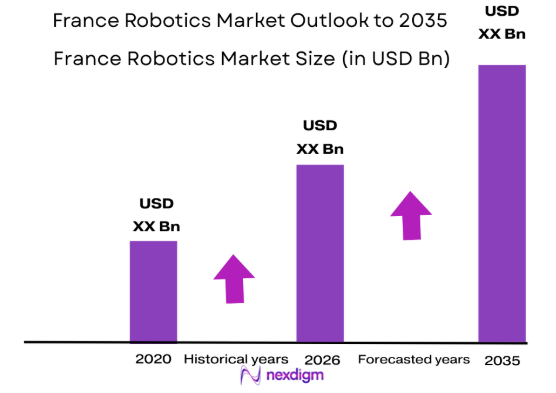
The France Robotics Market has experienced significant growth, driven by increasing automation across various industries. Based on a recent historical assessment, the market size has reached approximately USD ~ billion. Demand for industrial robots, collaborative robots, and service robots has accelerated, supported by advancements in AI, machine learning, and robotics technologies. The market is further propelled by government support for Industry 4.0 initiatives and investment in robotics for sectors like manufacturing, logistics, healthcare, and agriculture, contributing to substantial market expansion.
France is a dominant player in the European robotics market, largely due to its advanced infrastructure, technological expertise, and favorable regulatory environment. Key cities such as Paris, Lyon, and Toulouse are home to robotics companies and research institutions, establishing France as a central hub for robotics development. Government initiatives promoting smart manufacturing and the presence of major robotics firms solidify its leadership position in the sector.
Market Segmentation
By System Type
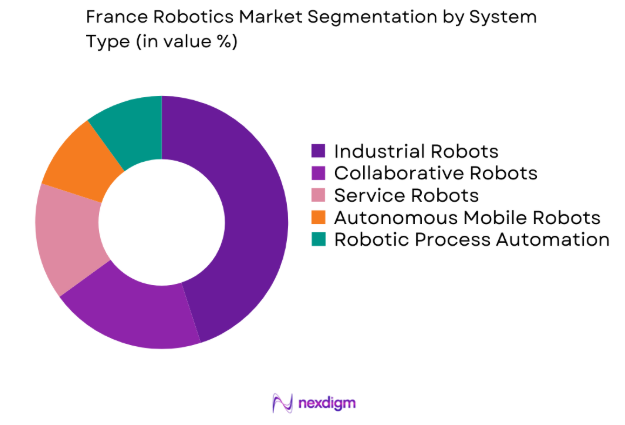
The France Robotics Market is segmented by system type into industrial robots, collaborative robots, service robots, autonomous mobile robots, and robotic process automation. Recently, industrial robots have dominated the market share due to the rapid adoption of automation in manufacturing and logistics sectors. Factors such as increased efficiency, precision, and cost savings have driven this segment’s growth, making it the primary choice for industries looking to modernize their operations.
By Platform Type
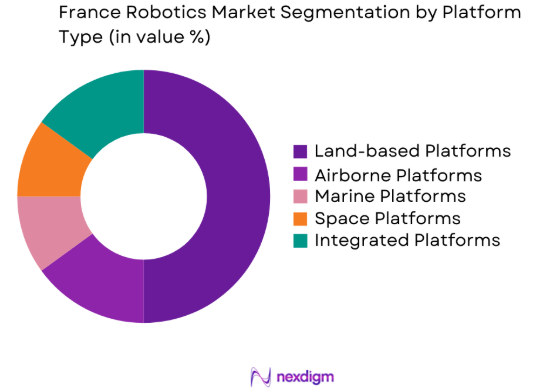
The France Robotics market is segmented by platform type into land-based platforms, airborne platforms, marine platforms, space platforms, and integrated platforms. Land-based platforms have the dominant market share, driven by their widespread use in manufacturing, logistics, and agriculture. These platforms are primarily used for automation tasks that involve heavy lifting, material handling, and sorting, making them the most sought-after solution for businesses aiming to improve operational efficiency.
Competitive Landscape
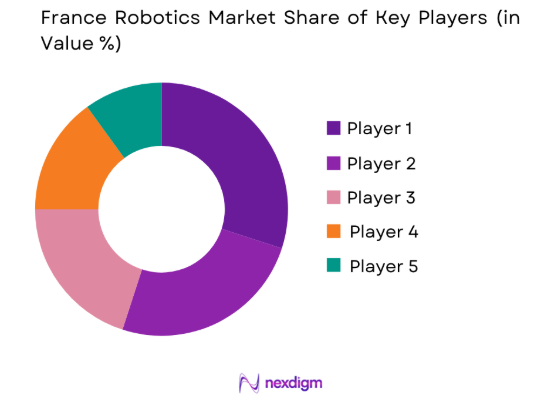
The competitive landscape in the France Robotics Market is characterized by a mix of established robotics manufacturers and emerging startups. Major players are focusing on expanding their offerings to include AI-powered robots, autonomous mobile robots, and robotic process automation solutions. Consolidation in the industry is expected as companies strive to capture a larger share of the expanding market. The growing demand across manufacturing, logistics, and healthcare sectors is creating intense competition among the key players.
| Company Name | Establishment Year | Headquarters | Technology Focus | Market Reach | Key Products | Revenue (USD) | One Additional Market-Specific Parameter |
| ABB | 1988 | Zurich, Switzerland | ~ | ~ | ~ | ~ | ~ |
| KUKA | 1898 | Augsburg, Germany | ~ | ~ | ~ | ~ | ~ |
| Fanuc | 1956 | Oshino, Japan | ~ | ~ | ~ | ~ | ~ |
| Yaskawa Electric | 1915 | Kitakyushu, Japan | ~ | ~ | ~ | ~ | ~ |
| Universal Robots | 2005 | Odense, Denmark | ~ | ~ | ~ | ~ | ~ |
France Robotics Market Analysis
Growth Drivers
Automation in Manufacturing
The growing demand for automation in the manufacturing sector is a key driver of the France Robotics Market. Industries seek greater efficiency, precision, and cost-effectiveness, leading to the integration of robotic systems into production processes. Automation optimizes production lines, minimizes human error, and enhances safety by taking over hazardous tasks. The rise in automation demand across sectors such as automotive, electronics, and pharmaceuticals is further accelerating this trend. As manufacturing processes become increasingly complex, robotics is emerging as an essential tool to meet these challenges, streamlining operations, improving quality, and increasing productivity. Robotics is now a critical element in modernizing and optimizing manufacturing processes across various industries.
Technological Advancements in Robotics
Technological advancements in AI, machine learning, and robotics have greatly driven market growth. AI-powered robots are now capable of performing complex tasks, adapting to new environments, and functioning autonomously. As AI and machine learning continue to improve, robots are becoming increasingly smarter, more efficient, and versatile, allowing them to be deployed across a wider range of industries. These innovations, combined with advancements in sensor technology and integration, are creating new opportunities for robotics applications in fields like healthcare, logistics, and customer service. The continuous evolution of these technologies is expanding the potential of robotics to enhance productivity, improve accuracy, and streamline operations across various sectors.
Market Challenges
High Initial Investment Costs
A significant challenge for the France Robotics Market is the high initial capital investment needed to implement robotic systems. Small and medium-sized enterprises (SMEs) often struggle to cover the upfront costs of purchasing and installing robotic equipment. Despite the long-term benefits, such as increased productivity and reduced operational costs, the large initial expenditure remains a major barrier for many companies. This financial challenge limits the adoption of robotics, especially among smaller firms that may not have the budget for such investments. As a result, many businesses are hesitant to adopt automation solutions, despite the clear advantages that robotics can offer in enhancing efficiency and competitiveness.
Regulatory and Safety Concerns
The deployment of robots, particularly autonomous ones, faces strict regulatory and safety standards, which can be time-consuming and costly for businesses, especially when introducing new technologies. Adhering to these regulations requires significant effort and investment, which can deter some companies from adopting robotics. Furthermore, ensuring the safety of workers interacting with robots is a critical challenge, as is addressing concerns about job displacement due to automation. As robotics technology continues to evolve, so must the regulatory framework to keep pace, ensuring that these systems are used safely and ethically across various industries. Balancing innovation with compliance remains a key obstacle for widespread adoption of robotics.
Opportunities
Robotics in Healthcare
The healthcare sector offers substantial growth potential for the France Robotics Market. As the population ages and healthcare demand rises, robotics can improve patient care, enhance surgical precision, and aid in rehabilitation. Robotic systems are already being used in surgeries, diagnostics, and drug delivery, demonstrating their value in improving outcomes and efficiency. The increasing acceptance of these technologies, combined with ongoing digital transformation within healthcare, further supports the market’s growth. Robotics can also address challenges such as labor shortages and the need for more efficient healthcare services, making it a crucial component of future healthcare delivery. The sector’s evolving needs present a major opportunity for robotic solutions.
Robotics-as-a-Service (RaaS)
Robotics-as-a-Service (RaaS) is gaining traction as a flexible business model that allows companies to access robotic technologies without hefty upfront costs. It enables businesses to scale their robotic operations according to demand, providing a cost-effective way to integrate automation. The advent of cloud computing and IoT technologies further supports RaaS by allowing remote management and monitoring of robots, which enhances operational efficiency. This model is especially appealing to small and medium-sized enterprises (SMEs) that wish to adopt automation without significant capital investment. As the demand for cost-effective automation solutions grows, RaaS is expected to drive market expansion, particularly in industries like logistics, manufacturing, and retail.
Future Outlook
The France Robotics Market is expected to continue its growth trajectory, driven by technological advancements, regulatory support, and increasing automation in various industries. In the coming years, robotics technology will become more integrated with AI and IoT, leading to more autonomous and flexible robotic systems. Government initiatives aimed at promoting Industry 4.0 and smart manufacturing will further accelerate adoption across sectors. Additionally, as the market matures, cost reductions in robotic technologies will make automation accessible to a wider range of businesses, fueling demand across various industries.
Major Players
- ABB
- KUKA
- Fanuc
- Yaskawa Electric
- Universal Robots
- ST Robotics
- Mitsubishi Electric Corporation
- Rethink Robotics
- Teradyne
- Siasun Robot & Automation
- Omron Corporation
- Denso Wave
- Epson Robots
- Schunk
- Parker Hannifin
Key Target Audience
- Investments and venture capitalist firms
- Government and regulatory bodies
- Robotics manufacturers
- Automation solution providers
- Logistics and warehousing companies
- Healthcare institutions
- Retailers and e-commerce businesses
- Aerospace and defense contractors
Research Methodology
Step 1: Identification of Key Variables
This step involves identifying key variables such as technological advancements, market drivers, and challenges that influence the robotics market. We conduct a comprehensive analysis of these factors through primary and secondary research.
Step 2: Market Analysis and Construction
After identifying the key variables, we analyze the market using various methodologies such as market sizing, segmentation, and trend analysis. We construct a comprehensive market model based on this data.
Step 3: Hypothesis Validation and Expert Consultation
In this step, we validate our hypotheses by consulting industry experts and analyzing the feedback from key stakeholders. This helps refine the market model and validate assumptions.
Step 4: Research Synthesis and Final Output
After compiling all the data and insights, we synthesize the information into a final report. The research output includes a detailed market analysis, forecasts, and actionable insights for stakeholders.

- Executive Summary
- Research Methodology (Definitions, Scope, Industry Assumptions, Market Sizing Approach, Primary & Secondary Research Framework, Data Collection & Verification Protocol, Analytic Models & Forecast Methodology, Limitations & Research Validity Checks)

- Market Definition and Scope
- Value Chain & Stakeholder Ecosystem
- Regulatory / Certification Landscape
- Sector Dynamics Affecting Demand
- Strategic Initiatives & Infrastructure Growth

- Growth Drivers
Increased Automation in Manufacturing
Technological Advancements in AI and Robotics
Growing Demand for Collaborative Robots - Market Challenges
High Initial Capital Investment
Technological Integration Issues
Regulatory Compliance and Safety Concerns - Market Opportunities
Adoption of Robotics in Healthcare
Expansion in Autonomous Mobile Robots
Integration of AI with Robotics - Trends
Rise in Industry 4.0 Adoption
Growth in Robotics-as-a-Service
Shift Toward Collaborative and Safe Robots - Government Regulations
- SWOT Analysis of Key Competitors
- Porter’s Five Forces

- By Market Value, 2020-2025
- By Installed Units, 2020-2025
- By Average System Price, 2020-2025
- By System Complexity Tier, 2020-2025

- By System Type (In Value%)
Industrial Robots
Collaborative Robots
Service Robots
Autonomous Mobile Robots
Robotic Process Automation - By Platform Type (In Value%)
Land-based Platforms
Airborne Platforms
Marine Platforms
Space Platforms
Integrated Platforms - By Fitment Type (In Value%)
On-premise Solutions
Cloud-based Solutions
Hybrid Solutions
Modular Solutions
Integrated Solutions - By End User Segment (In Value%)
Manufacturing
Logistics
Healthcare
Retail
Agriculture - By Procurement Channel (In Value%)
Direct Procurement
Government Tenders
Private Sector Procurement
Online Bidding Platforms
Third-party Distributors

- Market Share Analysis
- Cross Comparison Parameters (System Type, Platform Type, Procurement Channel, End User Segment, Fitment Type, Technology Integration, Automation Level, Regional Adoption, Investment Focus, Safety Standards)
- SWOT Analysis of Key Competitors
- Pricing & Procurement Analysis
- Key Players
ABB
KUKA Robotics
Fanuc
Yaskawa Electric Corporation
Universal Robots
ST Robotics
Mitsubishi Electric Corporation
Rethink Robotics
Teradyne
Siasun Robot & Automation
Omr,on Corporation
Denso Wave
Epson Robots
Schunk
Parker Hannifin

- Manufacturing Sector’s Demand for Automation
- Logistics Sector’s Adoption of Robotics
- Healthcare Sector’s Embrace of Robotics
- Agriculture’s Shift Toward Smart Farming

- Forecast Market Value, 2026-2035
- Forecast Installed Units, 2026-2035
- Price Forecast by System Tier, 2026-2035
- Future Demand by Platform, 2026-2035


 Request a Sample
 Ask for Customization
 Get a Quote
 Enquire Now