

 Download PDF
 Download PDF
Market Overview
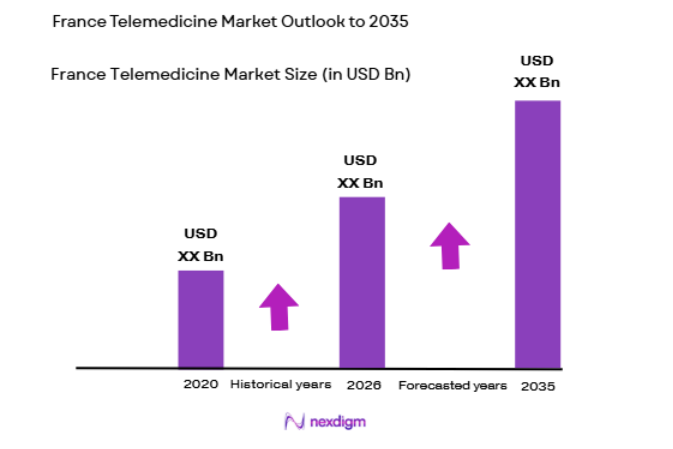
The France telemedicine market is expected to reach USD ~ billion based on a recent historical assessment, driven by increasing demand for remote consultations and healthcare delivery. Factors such as rising healthcare costs, advancements in telecommunication technology, and the growing acceptance of telemedicine among healthcare providers and patients are key drivers. The French government has also introduced several initiatives to support the integration of digital healthcare solutions, further boosting market growth.
Paris, Lyon, and Marseille are dominant cities in France’s telemedicine market, with Paris leading due to its concentration of hospitals, healthcare professionals, and research institutions focused on digital health. Lyon, with its strong biotech and healthcare IT sectors, fosters innovation in telemedicine. Marseille benefits from its location as a healthcare hub in southern France, offering telemedicine solutions to underserved regions. These cities are crucial to the development of telemedicine infrastructure and adoption across the country.
Market Segmentation
By Product Type
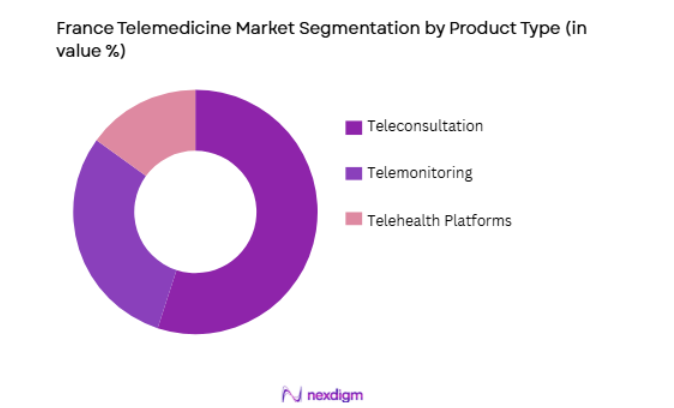
The France telemedicine market is segmented by product type into teleconsultation, telemonitoring, and telehealth platforms. Teleconsultation services currently dominate the market due to the rising need for remote consultations across various medical specialties. The convenience and cost-effectiveness of teleconsultation, especially for patients in rural areas or with mobility issues, drive its widespread adoption. The French healthcare system has fully integrated teleconsultation services into public health insurance, which further supports its market dominance. Additionally, improved internet infrastructure and patient acceptance are fueling the growth of teleconsultation in the country.
By Application
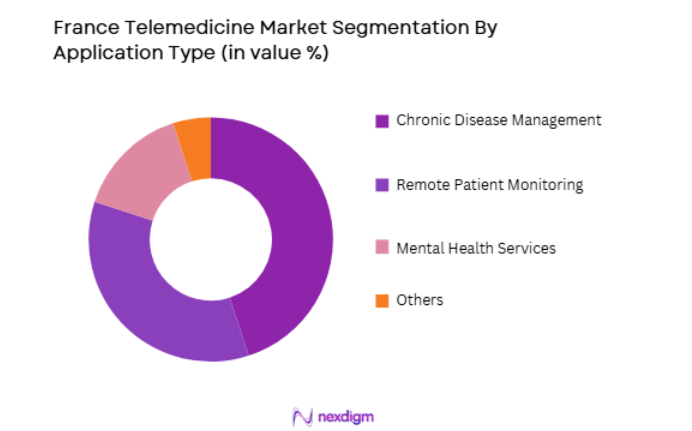
The France telemedicine market is segmented by application into chronic disease management, remote patient monitoring, mental health services, and others. Chronic disease management has the largest market share due to the high prevalence of chronic diseases like diabetes, hypertension, and cardiovascular conditions in France. Telemedicine technologies enable patients to monitor and manage their conditions remotely, improving treatment outcomes and reducing hospital visits. The convenience and effectiveness of remote disease management for both patients and healthcare providers contribute to the dominance of this sub-segment in the market.
Competitive Landscape
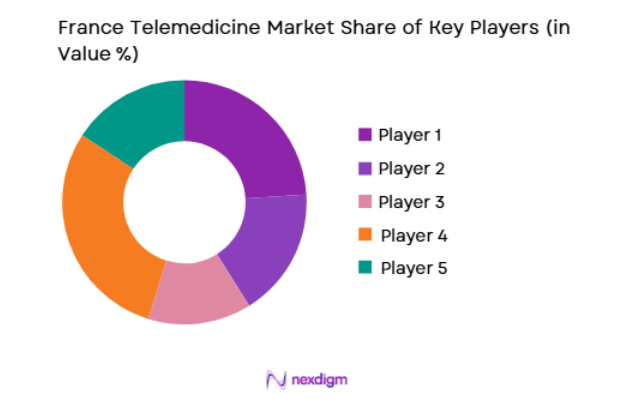
The France telemedicine market is highly competitive, with both established healthcare companies and emerging startups driving innovation. The market is characterized by rapid technological advancements in teleconsultation, telemonitoring, and telehealth platforms. Consolidation is occurring as major players acquire smaller tech firms to expand their telemedicine offerings. French telemedicine companies are also collaborating with healthcare providers to enhance service delivery and create seamless integration with healthcare systems. Government policies supporting telemedicine reimbursement and regulatory frameworks further encourage market participation and growth.
| Company Name | Establishment Year | Headquarters | Technology Focus | Market Reach | Key Products | Revenue | Additional Parameter |
| Doctolib | 2013 | Paris, France | ~ | ~ | ~ | ~ | ~ |
| Telemedicine France | 2017 | Lyon, France | ~ | ~ | ~ | ~ | ~ |
| Healthonnect | 2015 | Paris, France | ~ | ~ | ~ | ~ | ~ |
| MediScreen | 2011 | Marseille, France | ~ | ~ | ~ | ~ | ~ |
| Livi | 2015 | Paris, France | ~ | ~ | ~ | ~ | ~ |
France Telemedicine Market Analysis
Growth Drivers
Government Initiatives and Policy Support
A key growth driver for the France telemedicine market is the strong support from the French government through policies and funding for digital health solutions. The government’s “Ma Santé 2022” plan, which includes significant investments in digital health infrastructure, has accelerated the adoption of telemedicine across the country. France’s national health insurance system (Sécurité Sociale) has also included teleconsultation services in its reimbursement framework, making telemedicine more accessible and financially viable for both patients and healthcare providers. This government-backed support creates a favorable environment for telemedicine adoption, contributing to its growth in the market. Furthermore, the regulatory environment in France encourages the use of telemedicine to reduce pressure on hospitals and improve healthcare access in rural areas. These policy-driven initiatives are expected to continue boosting the adoption of telemedicine in France.
Technological Advancements and Increasing Adoption of Remote Monitoring
Another major growth driver for the French telemedicine market is the technological advancements in remote patient monitoring and telehealth platforms. With the rise of wearable devices, mobile health apps, and connected diagnostic tools, patients can now monitor their health conditions remotely, leading to improved disease management and personalized care. The increasing adoption of remote monitoring devices for chronic diseases such as diabetes and hypertension has driven the demand for telemedicine services. The integration of AI, machine learning, and data analytics in telehealth platforms further enhances patient outcomes by providing real-time insights and predictive analytics. As technology continues to evolve, the effectiveness and convenience of telemedicine solutions will drive their wider adoption across the country, contributing to market growth. Additionally, the widespread availability of high-speed internet and mobile networks in urban and rural areas of France enables greater access to telemedicine services, further accelerating market growth.
Market Challenges
Data Security and Privacy Concerns
A significant challenge for the France telemedicine market is ensuring the security and privacy of sensitive patient data. As telemedicine involves the transmission of personal health information over the internet, ensuring that this data is protected from breaches and cyber-attacks is a major concern. France has strict data protection regulations, including the General Data Protection Regulation (GDPR), which requires healthcare providers and telemedicine companies to implement strong security measures to protect patient data. However, as the adoption of telemedicine grows, so does the risk of data breaches and unauthorized access to medical records. Healthcare providers and telemedicine companies must invest in robust cybersecurity infrastructure to comply with these regulations and maintain patient trust. The complexity of managing patient data across multiple platforms and devices further complicates data security efforts, creating an obstacle for market expansion.
Healthcare System Integration and Standardization Issues
Another challenge facing the France telemedicine market is the difficulty of integrating telemedicine solutions into the existing healthcare system. The French healthcare system is complex, with numerous hospitals, clinics, and healthcare providers using different systems and platforms. This lack of standardization creates challenges for the seamless integration of telemedicine services into the healthcare system. Healthcare providers need to ensure that telemedicine platforms are compatible with existing Electronic Health Records (EHR) systems and other healthcare technologies. The fragmented nature of the healthcare system also makes it difficult to implement consistent telemedicine practices across the country. Additionally, some healthcare professionals remain reluctant to adopt telemedicine due to concerns about usability, training, and workflow disruption. Addressing these integration and standardization issues is critical for the widespread adoption of telemedicine in France.
Opportunities
Expansion of Telemedicine in Chronic Disease Management
One of the key opportunities in the France telemedicine market is the expansion of telemedicine services for chronic disease management. With an aging population and a high prevalence of chronic conditions such as diabetes, hypertension, and cardiovascular diseases, there is a growing demand for effective remote healthcare solutions. Telemedicine allows patients to manage their conditions from the comfort of their homes, reducing hospital visits and improving treatment adherence. Remote monitoring devices and mobile health apps enable healthcare providers to track patients’ vital signs and adjust treatment plans in real-time. The French healthcare system’s focus on preventive care and cost-effective disease management presents a significant opportunity for telemedicine providers. As the demand for chronic disease management solutions increases, telemedicine will play an increasingly important role in improving healthcare outcomes and reducing healthcare costs in France.
Growth of Mental Health Telemedicine Services
Another opportunity in the France telemedicine market is the growth of mental health telemedicine services. The demand for mental health services has been rising due to increased awareness of mental health issues and the strain on the healthcare system caused by the COVID-19 pandemic. Telemedicine provides a convenient and accessible way for patients to receive mental health support, particularly for those in rural areas or with limited access to mental health professionals. Mental health telemedicine services, such as online therapy sessions, counseling, and psychiatric consultations, are gaining traction in France. The French government has recognized the need for digital mental health services and is supporting the development of telemedicine solutions to address the mental health crisis. With the growing acceptance of telemedicine for mental health, this segment presents a significant opportunity for growth in the market.
Future Outlook
The future outlook for the France telemedicine market is highly positive, with continued growth expected over the next five years. Technological advancements in telemedicine, remote monitoring, and AI-powered healthcare solutions will drive the expansion of the market. The French government’s ongoing support for digital health initiatives and the widespread acceptance of telemedicine by healthcare providers and patients will contribute to this growth. As telemedicine continues to integrate into the French healthcare system, it will improve healthcare access, reduce costs, and enhance patient outcomes. The market is also expected to benefit from the increasing adoption of mental health telemedicine services and the growing need for chronic disease management solutions.
Major Players
- Doctolib
- Healthonnect
- MedecinDirect
- Livi
- Teladoc Health
- Telemedicine France
- MyDoc
- QoC Health
- OneDoc
- DoctorLine
- WeDoctor
- Kalliste
- Chronolife
- LifeQ
- Elios Health
Key Target Audience
- Investments and venture capitalist firms
- Government and regulatory bodies
- Healthcare providers
- Telemedicine technology companies
- Hospitals and clinics
- Medical insurance companies
- Telemedicine platform developers
Research Methodology
Step 1: Identification of Key Variables
Key variables, including telemedicine adoption rates, government policies, and technological advancements, are identified to drive the market analysis.
Step 2: Market Analysis and Construction
Data is gathered from various sources, including market reports and government publications, and used to construct market projections for the French telemedicine market.
Step 3: Hypothesis Validation and Expert Consultation
Expert consultations are conducted to validate hypotheses regarding market growth drivers, challenges, and opportunities.
Step 4: Research Synthesis and Final Output
The final research report synthesizes the findings to provide a comprehensive analysis of the French telemedicine market, including growth trends, challenges, and opportunities.

- Executive Summary
- Research Methodology (Definitions, Scope, Industry Assumptions, Market Sizing Approach, Primary & Secondary Research Framework, Data Collection & Verification Protocol, Analytic Models & Forecast Methodology, Limitations & Research Validity Checks)

- Market Definition and Scope
- Value Chain & Stakeholder Ecosystem
- Regulatory / Certification Landscape
- Sector Dynamics Affecting Demand

- Growth Drivers
Government Support for Telemedicine Initiatives
Rising Demand for Remote Healthcare Services
Technological Advancements in Telehealth - Market Challenges
High Initial Investment in Infrastructure
Data Security and Privacy Issues
Lack of Telemedicine Regulations - Market Opportunities
Expanding Telemedicine for Mental Health
Telemedicine Adoption in Rural Areas
Growing Use of AI and Machine Learning in Telehealth - Trends
Increase in Adoption of Virtual Healthcare Services
Integration of Wearables in Telemedicine - Government Regulations
- SWOT Analysis
- Porter’s Five Forces

- By Market Value, 2020-2025
- By Installed Units, 2020-2025
- By Average System Price, 2020-2025
- By System Complexity Tier, 2020-2025

- By System Type (In Value%)
Telemedicine Platforms
Remote Patient Monitoring Systems
Teleconsultation Services
Telehealth Devices
Healthcare Analytics Solutions - By Platform Type (In Value%)
Cloud-based Platforms
Mobile Platforms
Web-based Platforms
Integrated Platforms - By Fitment Type (In Value%)
On-premise Solutions
Cloud-based Solutions
Hybrid Solutions
Integrated Solutions - By End User Segment (In Value%)
Hospitals
Clinics
Healthcare Providers
Patients

- Market Share Analysis
- Cross Comparison Parameters (System Type, Platform Type, Procurement Channel, End User Segment, Fitment Type, Service Availability, Technological Integration, Market Penetration, Regulatory Compliance, Data Security, Cost Efficiency)
- SWOT Analysis of Key Competitors
- Pricing & Procurement Analysis
- Key Players
Teladoc Health
Amwell
Doximity
Cerner Corporation
GE Healthcare
Philips Healthcare
Medtronic
HealthTap
Doctor On Demand
Lifecare
SnapMD
Vivify Health
Doctor Anywhere
Maple
Lifecare

- Hospitals Increasing Telemedicine Services
- Clinics Expanding Teleconsultation Offerings
- Healthcare Providers Adopting Virtual Health Models
- Patients Increasingly Seeking Remote Consultations

- Forecast Market Value, 2026-2035
- Forecast Installed Units, 2026-2035
- Price Forecast by System Tier, 2026-2035
- Future Demand by Platform, 2026-2035


 Request a Sample
 Ask for Customization
 Get a Quote
 Enquire Now