

 Download PDF
 Download PDF
Market Overview
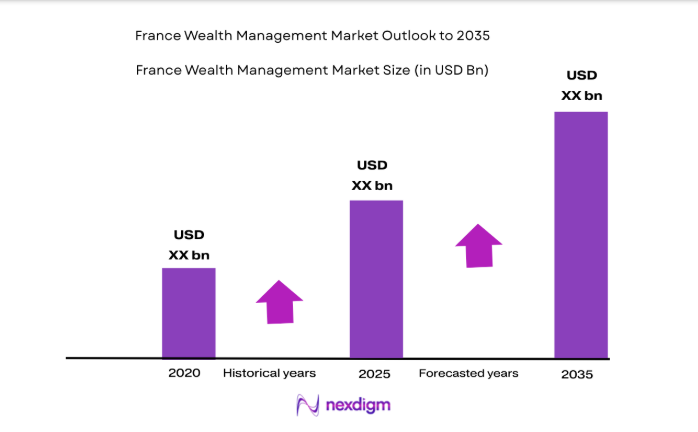
The France Wealth Management market is experiencing significant growth, driven by factors such as an increase in high-net-worth individuals (HNWIs), technological advancements, and evolving client needs. The market size is substantial, reflecting the rising wealth of individuals and families across France. According to recent data, the wealth management industry is expected to reach billions ~ USD, fueled by both traditional wealth management services and the rapid growth of digital wealth platforms, which cater to a broader demographic. As the industry matures, there is a growing preference for personalized and technology-driven solutions that meet the specific needs of affluent and high-net-worth clients.
France remains one of the dominant players in Europe for wealth management, driven by its established financial sector, regulatory environment, and high concentration of wealth in cities like Paris. These factors contribute to the market’s strong performance, supported by a deep pool of financial expertise and infrastructure. The country’s wealth management sector benefits from its position as a key financial hub, attracting global clients seeking wealth protection, growth, and diversification. Additionally, favorable government regulations and a stable economic climate play a significant role in supporting the growth of wealth management services in the region.
Market Segmentation
By Product Type
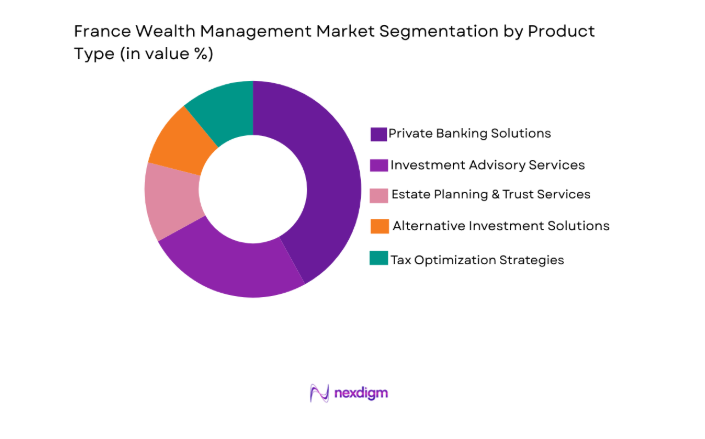
The France Wealth Management market is segmented by product type into private banking solutions, investment advisory services, estate planning & trust services, alternative investment solutions, and tax optimization strategies. Recently, private banking solutions have dominated the market share due to their longstanding reputation, personalized services, and the growing need among affluent individuals for tailored wealth management. High-net-worth clients, in particular, prefer these services because of the individualized approach to investment strategies, tax management, and estate planning. With affluent clients increasingly seeking comprehensive wealth solutions, private banking provides a level of service that addresses complex financial goals, making it a go-to choice for wealth management.
By Platform Type
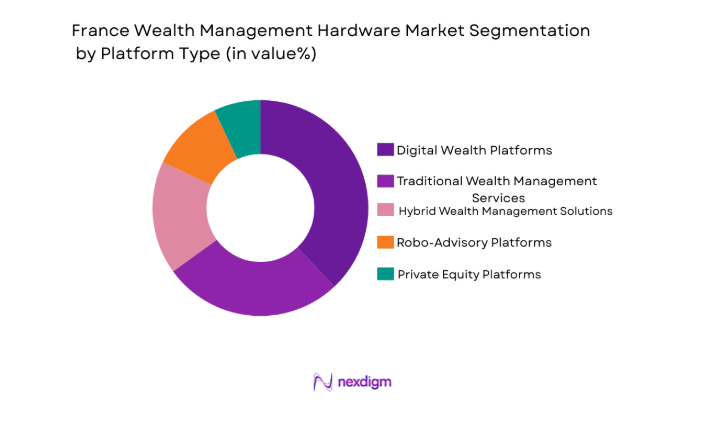
The France Wealth Management market is segmented by platform type into digital wealth platforms, traditional wealth management services, hybrid wealth management solutions, robo-advisory platforms, and private equity platforms. Digital wealth platforms have seen significant growth due to their accessibility, ease of use, and preference among younger, tech-savvy investors. These platforms offer a cost-effective, convenient, and transparent alternative to traditional wealth management, allowing clients to manage investments anytime, anywhere. The integration of AI, machine learning, and data analytics has enhanced personalization, while the rise of robo-advisors has made portfolio management more affordable. As these platforms evolve, they will continue to play a key role in the future of wealth management.
Competitive Landscape
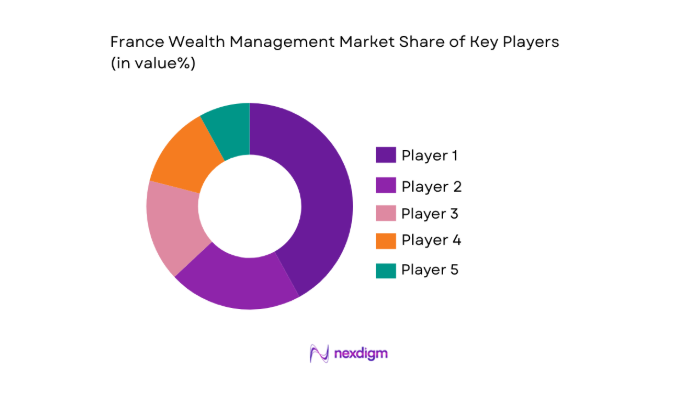
The competitive landscape of the France Wealth Management market is characterized by a mix of traditional financial institutions and digital platforms offering innovative services. Major players are consolidating their positions by acquiring or partnering with tech-driven companies to enhance service delivery and efficiency. The market is increasingly influenced by key global players, who bring in advanced technologies and a broad reach, while local institutions continue to provide personalized services that cater to high-net-worth individuals. This dynamic has led to a shift toward more integrated wealth management solutions, combining traditional methods with cutting-edge digital tools to meet evolving client needs.
| Company Name | Establishment Year | Headquarters | Technology Focus | Market Reach | Key Products | Revenue | Customer Segments |
| BNP Paribas Wealth Management | 1848 | Paris, France | ~ | ~ | ~ | ~ | ~ |
| Société Générale Private Banking | 1864 | Paris, France | ~ | ~ | ~ | ~ | ~ |
| Crédit Agricole Private Banking | 1894 | Paris, France | ~ | ~ | ~ | ~ | ~ |
| UBS Wealth Management | 1862 | Zurich, Switzerland | ~ | ~ | ~ | ~ | ~ |
| HSBC Private Banking | 1865 | London, UK | ~ | ~ | ~ | ~ | ~ |
France Wealth Management Market Analysis
Growth Drivers
Increasing Wealth Among High Net-Worth Individuals
The rise in high-net-worth individuals (HNWIs) and ultra-high-net-worth individuals (UHNWIs) is a key driver in the France Wealth Management market. This growth is attributed to France’s strong economy, robust financial sector, and the thriving real estate and stock market industries. As more individuals accumulate wealth, there is an increasing demand for sophisticated financial management services. HNWIs seek personalized investment advice, tax optimization, and portfolio diversification, fueling the market’s growth. Wealth management firms are increasingly offering tailored services to address the unique needs of these affluent clients. The trend towards bespoke solutions is evident in the shift from traditional wealth management models to more modern, tech-enabled services. Additionally, the demand for estate planning and succession planning has grown as wealthy families seek to preserve and grow their wealth across generations. As these individuals seek better returns on their investments, wealth management firms are capitalizing on the trend by offering innovative solutions, such as impact investing and ESG-focused portfolios, which are particularly appealing to a younger generation of investors who are more socially conscious. This shift towards sustainable investment solutions further boosts the demand for professional wealth management services in France, contributing to the market’s expansion. Moreover, the increasing adoption of technology in wealth management, including AI and blockchain, provides clients with more efficient and secure methods to manage their wealth, reinforcing the market’s growth. With wealth continuing to accumulate in France and Europe, the wealth management industry is poised for continued expansion.
Technological Advancements in Wealth Management
Another significant driver is the adoption of advanced technologies in wealth management services. The integration of artificial intelligence (AI), machine learning, and blockchain technologies has revolutionized how wealth management firms interact with clients and manage assets. AI-powered platforms enable wealth managers to provide more personalized and efficient advice to clients, enhancing service offerings and increasing client satisfaction. Machine learning algorithms can now analyze large sets of data to predict market trends, allowing wealth managers to make more informed investment decisions. Blockchain technology is increasingly being used to secure transactions and manage assets more transparently, which is especially important for affluent clients concerned with privacy and security. Additionally, robo-advisory services have made wealth management more accessible to a broader audience by offering automated, low-cost investment strategies. These technological advancements are reshaping the industry, allowing firms to scale their services and serve clients more effectively. As digital platforms continue to evolve, the integration of these technologies will only accelerate, offering even greater value to both clients and wealth management firms. Firms that successfully adopt these technologies will be well-positioned to attract and retain clients, particularly younger, tech-savvy investors. With technology enabling more efficient portfolio management and data analysis, clients can benefit from more sophisticated financial strategies. This technological evolution is a significant contributor to the market’s growth, enabling firms to meet the increasing demand for high-quality, cost-effective wealth management services.
Market Challenges
Regulatory Uncertainty in Wealth Management
One of the key challenges facing the France Wealth Management market is regulatory uncertainty. Changes in tax laws, investment regulations, and financial reporting requirements can have a significant impact on how wealth management firms operate. The introduction of new laws or changes to existing ones can increase compliance costs, complicate investment strategies, and potentially affect the profitability of wealth management services. As the global financial landscape evolves, wealth management firms must navigate an increasingly complex regulatory environment, particularly in light of stricter anti-money laundering (AML) and know-your-customer (KYC) requirements. The implementation of the European Union’s General Data Protection Regulation (GDPR) has also added an additional layer of complexity for firms dealing with clients’ sensitive financial data. Compliance with such regulations can be expensive and time-consuming, and failure to comply can lead to significant penalties. This regulatory burden may deter new players from entering the market and restrict the growth potential of existing firms. Furthermore, wealth management firms must be prepared for regulatory changes that could impact client investments, such as restrictions on certain asset classes or increased taxes on high-net-worth individuals. As a result, wealth management firms must continually invest in legal and compliance expertise to stay ahead of regulatory developments, making this a significant challenge for the industry.
Intense Competition in the Wealth Management Sector
The France Wealth Management market is highly competitive, with numerous local and international players vying for market share. Established financial institutions, such as banks and private equity firms, compete with newer entrants, including digital-first wealth management platforms and robo-advisory services. The growing demand for wealth management services has attracted a wide range of competitors, increasing pressure on firms to differentiate themselves. Traditional players face the challenge of adapting to digital transformation while maintaining their legacy client base. Meanwhile, newer digital platforms and robo-advisors offer lower-cost alternatives, making them appealing to a younger, tech-savvy audience. These platforms often provide automated portfolio management and financial advice, which can be more cost-effective than traditional wealth management services. As a result, wealth management firms must innovate and adopt new technologies to remain competitive. Additionally, they must find ways to deliver value beyond just managing wealth, offering services such as tax planning, estate planning, and philanthropic advice. The rise of wealth management platforms that cater to specific client needs, such as impact investing or sustainable finance, is also contributing to the competitive pressure. To stay ahead in this competitive market, firms must continuously enhance their service offerings, improve client engagement, and leverage technology to deliver more personalized and efficient solutions.
Opportunities
Expansion of Sustainable Investment Solutions
One of the most promising opportunities in the France Wealth Management market is the increasing demand for sustainable investment solutions. Investors, particularly younger generations, are placing more emphasis on environmental, social, and governance (ESG) factors when making investment decisions. Wealth management firms are responding by integrating sustainable investment strategies into their portfolios, offering clients the opportunity to align their financial goals with their values. This growing trend toward sustainability is particularly evident in the rise of impact investing, where investors seek to generate both financial returns and social or environmental benefits. The integration of ESG factors into wealth management strategies not only attracts socially conscious investors but also provides long-term growth potential, as companies that prioritize sustainability are likely to perform better in the long run. Wealth management firms that offer ESG-focused portfolios are gaining a competitive edge by catering to this rising demand. Furthermore, sustainable investments are becoming increasingly mainstream, with more institutional investors and high-net-worth individuals seeking to incorporate ESG criteria into their portfolios. This trend presents a significant growth opportunity for wealth management firms, as they can expand their offerings to include ESG products, attract new clients, and increase assets under management.
Growth of Robo-Advisory Services
Another significant opportunity in the France Wealth Management market is the expansion of robo-advisory services. These digital platforms provide automated portfolio management and financial advice at a fraction of the cost of traditional wealth management services. Robo-advisors use algorithms and data analysis to create personalized investment strategies based on individual client preferences and risk tolerance. This accessibility and affordability make robo-advisory services particularly attractive to younger, tech-savvy investors who may not have the significant wealth typically required for traditional wealth management. The growth of robo-advisors is also driven by the increasing adoption of digital technologies and the desire for more convenient and transparent investment solutions. As more investors seek low-cost, efficient ways to manage their wealth, robo-advisory services are poised for significant growth. Wealth management firms can tap into this growing market by offering robo-advisory platforms that complement their traditional services. This hybrid approach, which combines the best of both digital and personalized wealth management, can help firms expand their client base and cater to a broader range of investors. The continued development of robo-advisory technology, such as AI and machine learning, will further enhance the capabilities of these platforms, making them even more attractive to a wider audience.
Future Outlook
The future of the France Wealth Management market appears promising, with continued growth expected over the next five years. Technological advancements, particularly in AI, blockchain, and digital platforms, are expected to drive innovation and improve service delivery. As affluent clients seek more personalized, efficient, and transparent solutions, wealth management firms will continue to adapt and integrate new technologies. Additionally, the increasing demand for sustainable investment options and the growth of ESG-focused portfolios will further shape the market. Regulatory support for digital transformation and increased investment in fintech will also provide a boost to the industry. Overall, the wealth management market in France is positioned for long-term growth, driven by evolving consumer preferences, technological advancements, and a favorable regulatory environment.
Major Player
- BNP Paribas Wealth Management
- Société Générale Private Banking
- Crédit Agricole Private Banking
- UBS Wealth Management
- HSBC Private Banking
- Barclays Private Banking
- Rothschild & Co
- J.P. Morgan Private Bank
- Edmond de Rothschild Group
- Deutsche Bank Wealth Management
- Citi Private Bank
- Bank of America Merrill Lynch
- Lombard Odier
- Wells Fargo Private Bank
- Standard Chartered Private Bank
Key Target Audience
- Investments and venture capitalist firms
- Government and regulatory bodies
- Wealth management firms
- High-net-worth individuals
- Financial technology companies
- Private equity firms
- Family offices
- Affluent individuals
Research Methodology
Step 1: Identification of Key Variables
We begin by identifying the core variables that will impact the market, including demographic trends, technological adoption, and regulatory frameworks.
Step 2: Market Analysis and Construction
In-depth market analysis is conducted to understand the factors that drive growth and challenges in the wealth management industry.
Step 3: Hypothesis Validation and Expert Consultation
Expert consultations and hypothesis testing help validate assumptions about market trends and growth trajectories.
Step 4: Research Synthesis and Final Output
Final outputs are synthesized and refined to ensure accuracy, providing a comprehensive market report based on validated data.

- Executive Summary
- Research Methodology (Definitions, Scope, Industry Assumptions, Market Sizing Approach, Primary & Secondary Research Framework, Data Collection & Verification Protocol, Analytic Models & Forecast Methodology, Limitations & Research Validity Checks)

- Market Definition and Scope
- Value Chain & Stakeholder Ecosystem
- Regulatory / Certification Landscape
- Sector Dynamics Affecting Demand
- Strategic Initiatives & Infrastructure Growth

- Growth Drivers
Increasing Wealth Among Affluent Individuals
Growing Demand for Sustainable Investment Products
Rising Need for Tax Efficiency and Estate Planning
Advancements in Technology Driving Personalization
Increased Focus on Digitalization in Wealth Management - Market Challenges
Regulatory Uncertainty in Wealth Management
Low-interest Rates Impacting Investment Returns
High Costs of Compliance and Operational Efficiencies
Intense Competition Among Wealth Management Providers
Lack of Trust in Digital Wealth Platforms - Market Opportunities
Expansion of Robo-Advisory Solutions for Affluent Segments
Growth of Impact Investing and Sustainable Finance
Partnerships Between Traditional Firms and Fintech Startups - Trends
Shift Toward Sustainable and ESG Investing
Increased Adoption of AI for Portfolio Management
Rise of Digital-First Wealth Management Solutions
Integration of Blockchain for Transparent Transactions
Growing Popularity of Tax-Optimized Investment Products - Government Regulations & Defense Policy
Stricter Regulations on Cross-Border Wealth Transfers
Regulation of Digital Assets in Wealth Management
Government Initiatives for Financial Inclusion - SWOT Analysis
- Stakeholder and Ecosystem Analysis
- Porter’s Five Forces Analysis
- Competition Intensity and Ecosystem Mapping

- By Market Value, 2020-2025
- By Installed Units, 2020-2025
- By Average System Price, 2020-2025
- By System Complexity Tier, 2020-2025

- By System Type (In Value%)
Private Banking Solutions
Investment Advisory Services
Estate Planning & Trust Services
Alternative Investment Solutions
Tax Optimization Strategies - By Platform Type (In Value%)
Digital Wealth Platforms
Traditional Wealth Management Services
Hybrid Wealth Management Solutions
Robo-Advisory Platforms
Private Equity Platforms - By Fitment Type (In Value%)
Individual Wealth Management Solutions
Institutional Wealth Management Solutions
Family Office Solutions
Corporate Wealth Management Solutions
Hybrid Solutions - By End User Segment (In Value%)
High Net-Worth Individuals (HNWIs)
Ultra-High Net-Worth Individuals (UHNWIs)
Affluent Individuals
Family Offices
Institutional Investors - By Procurement Channel (In Value%)
Direct Procurement
Financial Advisors & Consultants
Online Wealth Platforms
Private Banking Networks
Institutional Investment Firms - By Material / Technology (In Value%)
AI & Machine Learning for Wealth Management
Blockchain for Secure Transactions
Cloud-based Wealth Management Platforms
Fintech Innovations in Wealth Advisory
Big Data & Analytics for Investment Strategies

- Market structure and competitive positioning
Market share snapshot of major players - Cross Comparison Parameters (System Type, Platform Type, Procurement Channel, End User Segment, Fitment Type)
- SWOT Analysis of Key Competitors
- Pricing & Procurement Analysis
- Key Players
BNP Paribas Wealth Management
Société Générale Private Banking
Crédit Agricole Private Banking
Edmond de Rothschild Group
HSBC Private Banking France
JPMorgan Private Bank
Citi Private Bank
Lombard Odier
UBS Wealth Management
Rothschild & Co
Barclays Private Banking
BNP Paribas Asset Management
Natixis Wealth Management
Standard Chartered Private Bank
Bank of America Merrill Lynch Wealth Management

- Rising Number of UHNWIs and HNWIs
- Affluent Individuals Seeking More Personalized Services
- Family Offices Demanding Complex Wealth Strategies
- Institutional Investors Increasingly Investing in Wealth Products

- Forecast Market Value, 2026-2035
- Forecast Installed Units, 2026-2035
- Price Forecast by System Tier, 2026-2035
- Future Demand by Platform, 2026-2035


 Request a Sample
 Ask for Customization
 Get a Quote
 Enquire Now