
 Download PDF
 Download PDF
Market Overview
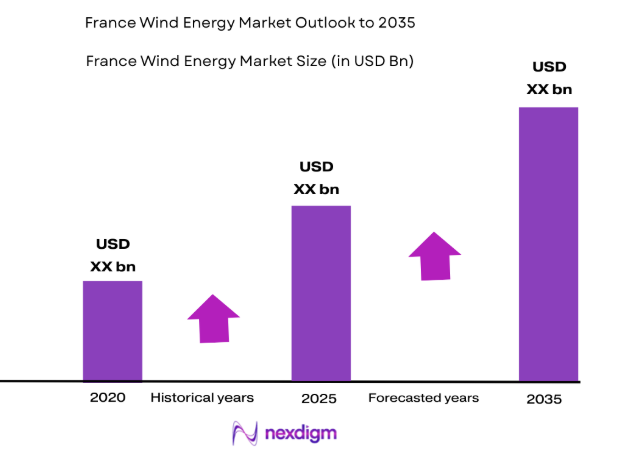
The France Wind Energy market has experienced significant growth, with the market size valued at approximately USD ~ billion based on a recent historical assessment. This growth has been primarily driven by the country’s aggressive renewable energy policies, including financial incentives such as feed-in tariffs, tax breaks, and subsidies for wind projects. With a focus on reducing carbon emissions and achieving renewable energy targets, France is investing heavily in both onshore and offshore wind energy, making wind power an increasingly viable and competitive energy solution. These factors, along with technological advancements and decreasing costs of wind energy, are driving the market’s expansion.
Dominant regions such as Brittany and Normandy are witnessing the most substantial development in wind energy due to optimal wind conditions and their proximity to major energy consumption areas. Additionally, the French government’s commitment to meeting the European Union’s renewable energy goals has led to increased investments and accelerated project development in these regions. France’s strategic focus on offshore wind farms, in particular, is positioning the country as a leader in wind energy generation in Europe. The combination of government incentives, optimal geographic conditions, and technological advancements continues to support the market’s strong growth trajectory.
Market Segmentation
By Product Type
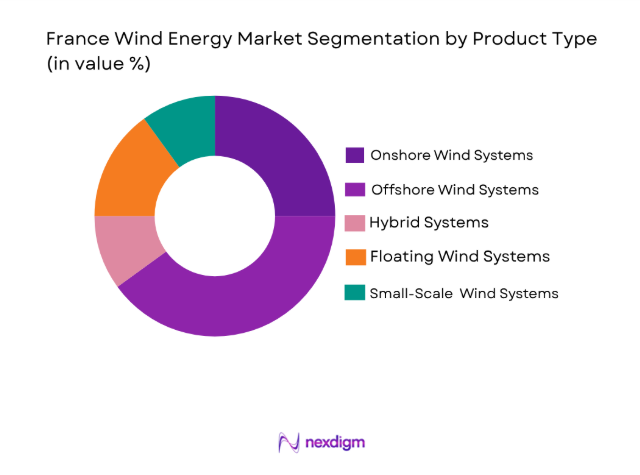
The France Wind Energy market is segmented by product type into onshore wind systems, offshore wind systems, hybrid systems, floating wind systems, and small-scale wind systems. Recently, offshore wind systems have been dominating the market share due to factors such as higher energy efficiency, large-scale project feasibility, and optimal locations along France’s coastlines. Offshore wind farms, being capable of harnessing stronger and more consistent winds, have garnered significant investment, making them the preferred choice for meeting national energy goals and aligning with EU renewable energy targets.
By Platform Type
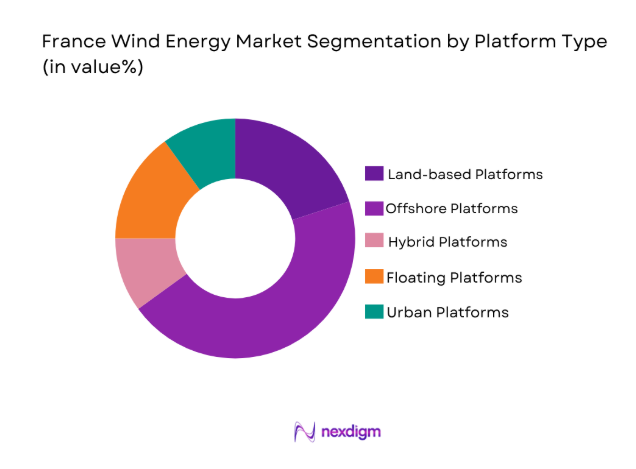
The France Wind Energy market is segmented by platform type into land-based platforms, offshore platforms, hybrid platforms, floating platforms, and urban platforms. Recently, offshore platforms have dominated the market share due to factors such as higher energy generation potential, availability of optimal wind resources, and favorable government policies supporting large-scale offshore wind projects. Offshore wind farms, especially in regions like Brittany and Normandy, offer ideal conditions for harnessing strong and consistent winds, making them the preferred choice for meeting France’s renewable energy goals and increasing its offshore wind capacity.
Competitive Landscape
The competitive landscape of the France Wind Energy market is characterized by the presence of both established global players and innovative local companies. Major players are engaging in strategic alliances, mergers, and acquisitions to strengthen their market position. These efforts, combined with substantial investments in research and development, are accelerating the growth of the wind energy sector in France. Companies are also focused on enhancing their technological capabilities to meet the evolving regulatory and market demands, resulting in an increasingly competitive market environment.
| Company Name | Establishment Year | Headquarters | Technology Focus | Market Reach | Key Products | Revenue | Innovation Focus |
| Siemens Gamesa | 1976 | Spain | ~ | ~ | ~ | ~ | ~ |
| Vestas | 1945 | Denmark | ~ | ~ | ~ | ~ | ~ |
| GE Renewable Energy | 1892 | USA | ~ | ~ | ~ | ~ | ~ |
| Nordex | 1985 | Germany | ~ | ~ | ~ | ~ | ~ |
| MHI Vestas Offshore Wind | 2014 | Denmark | ~ | ~ | ~ | ~ | ~ |
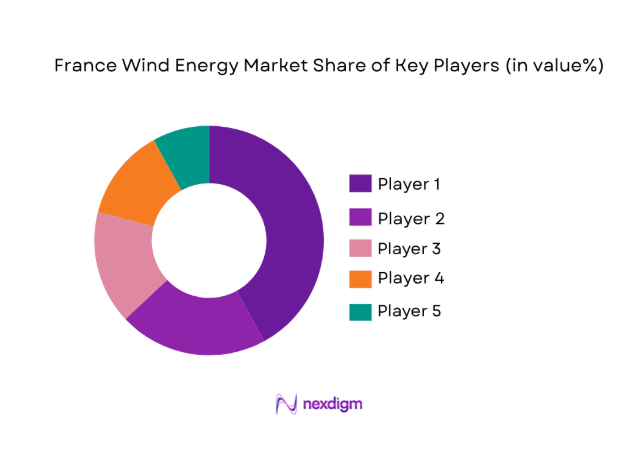
France Wind Energy Market Analysis
Growth Drivers
Government Incentives for Wind Energy
The French government’s consistent support for renewable energy, including wind power, has been pivotal in the market’s growth. This support comes in the form of financial incentives like feed-in tariffs, tax breaks, and subsidies, which lower the financial barriers for the development of both onshore and offshore wind farms. France’s regulatory environment fosters long-term planning and stability, encouraging private investment and fostering growth in wind energy infrastructure. These governmental efforts are closely aligned with national and EU renewable energy goals, ensuring that wind energy will play a central role in the country’s future energy mix. Additionally, France’s ambitious goals to reduce carbon emissions and increase renewable energy share in its energy system drive wind energy adoption. These regulatory efforts have sparked a steady pipeline of projects, contributing to an expanding market and attracting international investments in wind energy technologies. As the cost of wind energy continues to decrease, wind farms, particularly offshore installations, are becoming more attractive, further driving the market’s growth.
Technological Advancements in Wind Turbines
Technological progress in wind turbine design and efficiency has been a significant growth driver for the France Wind Energy market. Innovations such as larger turbines, higher efficiency rates, and advancements in blade design have made wind energy more cost-competitive. The development of offshore wind turbine technology has also played a key role, as these turbines can capture more consistent and stronger winds at sea, thereby producing more energy. Furthermore, improvements in energy storage technologies have addressed the intermittency issues that previously hindered the wider adoption of wind power. The reduction in the cost of wind turbines, coupled with enhanced operational efficiencies, has made wind energy a more viable solution for meeting France’s renewable energy targets. These advancements have not only reduced the levelized cost of energy (LCOE) but also enabled the efficient integration of wind energy into the national grid. With further investments in R&D and innovation, the France Wind Energy market is expected to benefit from continued technological improvements, making wind energy more reliable and sustainable.
Market Challenges
High Initial Investment for Offshore Wind Farms
One of the most significant challenges for the France Wind Energy market is the high upfront capital required for offshore wind farms. Although offshore wind power has a high energy yield, the infrastructure costs associated with developing these projects are substantial. The costs involved in turbine manufacturing, installation, subsea cable construction, and maintenance require significant financial resources. These expenses can be a major hurdle for smaller developers and investors who may struggle to secure the necessary financing. Additionally, the complexity of offshore wind farms—requiring specialized vessels, skilled labor, and advanced technologies—adds to the cost burden. While government subsidies and incentives help alleviate some of these costs, the financial barriers remain a challenge for the industry. This issue is compounded by the lengthy timelines for planning and development, which can result in delays in revenue generation. As such, the high capital investment required for offshore wind farms remains a critical challenge for expanding France’s wind energy capacity.
Regulatory Barriers and Permitting Delays
Regulatory hurdles and delays in the permitting process present significant challenges for the growth of the France Wind Energy market. Obtaining the necessary permits for both onshore and offshore wind farms can be a time-consuming and complicated process. The permitting system involves several stages, including environmental impact assessments, consultations with local communities, and compliance with national and European regulations. As the market grows and more projects are developed, the complexity of these regulatory processes increases, potentially causing delays and hindering timely project execution. The process for offshore wind farms, in particular, is more prolonged, given the need for additional maritime assessments and coordination with marine activities. Although the French government has been taking steps to streamline permitting procedures, the regulatory environment still presents a barrier that could delay the construction of key projects. Additionally, local opposition and environmental concerns can sometimes exacerbate permitting challenges, leading to legal disputes and delays that may affect market growth.
Opportunities
Expansion of Offshore Wind Energy
Offshore wind energy presents a tremendous growth opportunity for the France Wind Energy market. With its extensive coastline, France has significant untapped potential to harness offshore wind resources. The government has already identified offshore wind as a strategic component of its energy future, offering incentives to developers to encourage large-scale offshore wind farms. The development of offshore wind projects is also supported by France’s commitment to meeting its renewable energy targets as part of the European Green Deal. Offshore wind farms, particularly in areas like Brittany and Normandy, offer ideal conditions for large-scale energy generation due to favorable wind patterns and water depths. As the technology behind offshore wind turbines advances, the costs associated with offshore projects are expected to decrease, making them even more attractive. This expansion offers a lucrative opportunity for both domestic and international players, particularly in the floating wind turbine sector, which can be deployed in deeper waters where traditional turbines are not feasible. With strong government backing and advancements in technology, offshore wind will continue to be a major opportunity for growth in the French wind energy sector.
Development of Floating Wind Turbine Technology
The development of floating wind turbine technology represents another significant opportunity for the France Wind Energy market. Floating turbines offer the ability to deploy wind farms in deeper waters that were previously inaccessible to traditional fixed-bottom turbines. This technological innovation allows for the expansion of wind energy generation along more of France’s coastline, especially in areas where the seabed is too deep for conventional turbines. The floating wind turbine sector is still in its early stages, but several pilot projects have demonstrated the feasibility of this technology. The French government is actively supporting the development of floating wind farms, with projects planned for areas such as the Mediterranean Sea. These floating wind farms have the potential to produce large amounts of clean energy and can be scaled up to meet France’s renewable energy targets. As the technology matures and costs decrease, floating wind turbines are expected to become a significant contributor to the French energy mix. This represents a major opportunity for innovation, investment, and market expansion.
Future Outlook
The France Wind Energy market is expected to continue its growth trajectory over the next five years, with offshore wind energy leading the charge. Technological advancements, coupled with favorable government policies, will drive investments in both onshore and offshore wind projects. The expansion of offshore wind farms, supported by new floating turbine technologies, will provide France with an opportunity to significantly increase its renewable energy capacity. Additionally, ongoing regulatory support, coupled with increasing demand for green energy solutions, will contribute to the continued development of the wind energy sector. The market is likely to experience increased competition among major players as innovation and technological improvements continue to shape the landscape. The increasing integration of wind energy into the national energy mix will further solidify France’s position as a leader in renewable energy.
Major Players
- Siemens Gamesa
- Vestas
- GE Renewable Energy
- Nordex
- MHI Vestas Offshore Wind
- Senvion
- Goldwind
- Enel Green Power
- Iberdrola
- EDPR
- Suzlon
- Siemens
- GE Power
- Acciona
- Siemens Gamesa Renewable Energy
Key Target Audience
- Investments and venture capitalist firms
- Government and regulatory bodies
- Energy companies
- Renewable energy developers
- Wind energy project developers
- Environmental consultancy firms
- Large corporations with sustainability goals
Research Methodology
Step 1: Identification of Key Variables
The first step in the research methodology involves identifying the key variables that influence the wind energy market in France, such as government policies, technological advancements, and market trends. This is critical for establishing the scope and direction of the research.
Step 2: Market Analysis and Construction
In this step, the collected data is analyzed to construct a detailed market model, which includes the segmentation and forecasting of various market parameters such as market value, growth drivers, challenges, and opportunities.
Step 3: Hypothesis Validation and Expert Consultation
The next step involves validating the hypotheses and findings through expert consultations and interviews with industry professionals. This ensures that the data and assumptions used in the research are reliable and accurate.
Step 4: Research Synthesis and Final Output
The final step synthesizes all the findings, creating a comprehensive report that provides actionable insights and recommendations for stakeholders in the France Wind Energy market.

- Executive Summary
- Research Methodology (Definitions, Scope, Industry Assumptions, Market Sizing Approach, Primary & Secondary Research Framework, Data Collection & Verification Protocol, Analytic Models & Forecast Methodology, Limitations & Research Validity Checks)

- Market Definition and Scope
- Value Chain & Stakeholder Ecosystem
- Regulatory / Certification Landscape
- Sector Dynamics Affecting Demand
- Strategic Initiatives & Infrastructure Growth

- Growth Drivers
Government Initiatives for Renewable Energy
Technological Advancements in Turbines
Increase in Energy Demand - Market Challenges
Regulatory Barriers
High Initial Capital Investment
Environmental Concerns - Market Opportunities
Integration of Offshore Wind Farms
Advancements in Turbine Efficiency
Partnerships with Private Enterprises - Trends
Expansion of Offshore Wind Projects
Integration of Smart Grid Technologies - Government Regulations
- SWOT Analysis
- Porter’s Five Forces

- By Market Value, 2020-2025
- By Installed Units, 2020-2025
- By Average System Price, 2020-2025
- By System Complexity Tier, 2020-2025

- By System Type (In Value%)
Onshore Wind Systems
Offshore Wind Systems
Hybrid Wind Systems
Floating Wind Systems
Small-Scale Wind Systems - By Platform Type (In Value%)
Land-Based Platforms
Offshore Platforms
Hybrid Platforms
Floating Platforms
Urban Platforms - By Fitment Type (In Value%)
Onshore Installation
Offshore Installation
Hybrid Installation
Mobile Installation - By End User Segment (In Value%)
Energy Providers
Government Entities
Private Sector
Industrial Applications

- Market Share Analysis
- Cross Comparison Parameters (System Type, Platform Type, End User Segment, Fitment Type, Procurement Channel, Technology Type, Environmental Impact)
- SWOT Analysis of Key Competitors
- Pricing & Procurement Analysis
- Key Players
Siemens Gamesa
Nordex
Vestas
GE Renewable Energy
Suzlon
Siemens
GE Power
MHI Vestas Offshore Wind
Senvion
Goldwind
Nordex Acciona
Enel Green Power
Iberdrola
EDP Renewables
Vestas Wind Systems

- Energy Providers’ Growing Focus on Renewables
- Government’s Renewable Energy Targets
- Private Sector’s Shift Towards Green Solutions
- Increased Demand from Industrial Sectors

- Forecast Market Value, 2026-2035
- Forecast Installed Units, 2026-2035
- Price Forecast by System Tier, 2026-2035
- Future Demand by Platform, 2026-2035


 Request a Sample
 Ask for Customization
 Get a Quote
 Enquire Now