
 Download PDF
 Download PDF
Market Overview
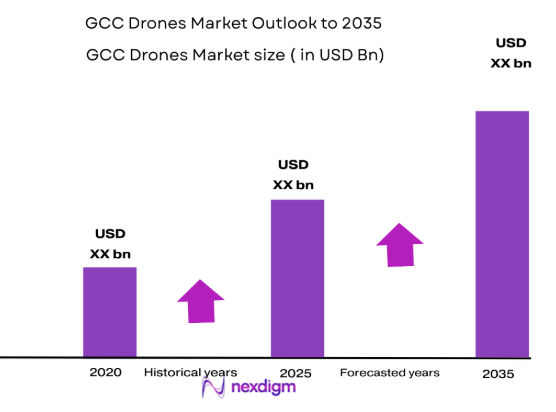
The GCC drones’ market is experiencing significant growth, driven by increasing investments in defense and security applications. The market is valued at approximately USD ~ billion, with substantial contributions from both government and commercial sectors. This surge in demand is largely fueled by the region’s push to modernize its defense capabilities, particularly in unmanned systems for surveillance, reconnaissance, and strategic operations. Technological advancements in drone capabilities, such as autonomous navigation and enhanced payloads, are key factors supporting this expansion.
Based on recent historical assessments, the demand for drones is expected to continue rising as regional tensions and security concerns lead to greater investments in advanced UAV systems. The market’s dominance is concentrated in countries like the UAE, Saudi Arabia, and Qatar, where large-scale defense budgets are allocated to unmanned aerial vehicle programs. These nations have made significant strides in localizing UAV production and enhancing their military capabilities through cutting-edge technology partnerships with global leaders. The strategic geographic location of these countries, coupled with their significant defense spending and commitment to adopting new technologies, positions them as major drivers of the market. Furthermore, the development of drone-based infrastructure for surveillance and security in urban areas further accelerates the growth of the market within these nations.
Market Segmentation
By Product Type
The GCC drones’ market is segmented by product type into fixed-wing unmanned aircraft, rotary-wing unmanned aircraft, hybrid VTOL platforms, loitering munitions, and nano and micro drones. Recently, fixed-wing unmanned aircraft has dominated the market share due to factors such as their longer range, higher endurance, and ability to carry larger payloads. The fixed-wing platforms are preferred for military surveillance and reconnaissance missions, as they can cover vast areas with high efficiency. Additionally, their versatility in both military and commercial applications, such as border surveillance and infrastructure inspection, has led to widespread adoption in the region. The robust performance and reliability of fixed-wing drones have made them a top choice for the region’s growing defense and security needs.

By Platform Type
The GCC drones market is also segmented by platform type into land-based operations, naval and maritime, air-launched systems, border and perimeter installations, and urban security networks. Recently, land-based operations have captured the largest share of the market, driven by the region’s emphasis on securing vast desert areas and national borders. Land-based drones are highly effective for surveillance and reconnaissance over long distances and in challenging terrain. Their versatility and adaptability to different environments, such as military bases and border areas, have made them particularly appealing to GCC nations. As governments continue to invest in advanced surveillance technologies for national security, land-based drone systems are expected to remain a dominant force in the market.

Competitive Landscape
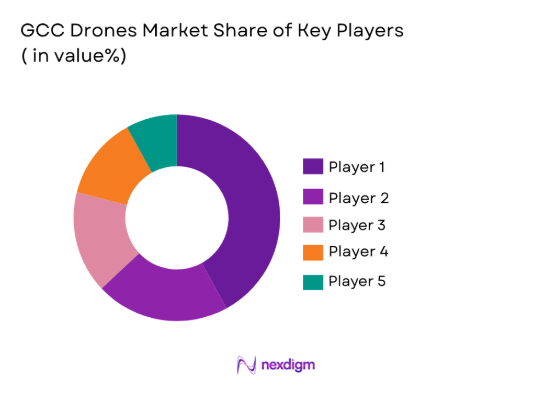
The competitive landscape of the GCC drones market is shaped by a mix of international players and regional defense firms that are heavily involved in drone manufacturing and development. Major global defense contractors and drone technology providers have consolidated their position in the region through joint ventures and local manufacturing initiatives. These players have invested in building production facilities and enhancing partnerships with local governments, enabling them to secure lucrative defense contracts. The growing demand for autonomous systems and advanced UAV technologies has also spurred competition among firms striving to meet the complex requirements of the region’s defense and security sectors.
|
Company Name |
Establishment Year | Headquarters | Technology Focus | Market Reach | Key Products | Revenue (USD) | Additional Parameter |
| EDGE Group | 2019 | Abu Dhabi | ~ | ~ | ~ | ~ | ~ |
| ADASI | 2007 | Abu Dhabi | ~ | ~ | ~ | ~ | ~ |
| Saudi Arabian Military Industries | 2017 | Riyadh | ~ | ~ | ~ | ~ | ~ |
| Israel Aerospace Industries | 1953 | Tel Aviv | ~ | ~ | ~ | ~ | ~ |
| General Atomics Aeronautical Systems | 1955 | San Diego | ~ | ~ | ~ | ~ | ~ |
Gcc Drones Market Analysis
Growth Drivers
Investment in Autonomous Defense Technologies
The rapid evolution of autonomous technologies in UAVs is a key driver of the market’s growth. As GCC countries focus on enhancing their defense capabilities, there is an increasing demand for drones with higher autonomy, enabling them to operate independently for extended periods without constant human control. This shift towards fully autonomous systems is driven by advancements in AI, machine learning, and computer vision, which allow UAVs to carry out complex missions such as surveillance, reconnaissance, and combat operations more efficiently. Moreover, the rise of unmanned teaming, where drones work alongside manned systems, is helping to revolutionize military operations in the region. These developments not only improve mission effectiveness but also reduce the risks to human personnel. Autonomous drones offer increased operational flexibility, allowing defense forces to quickly adapt to changing scenarios in combat zones and remote areas. With growing concerns about national security and border protection, GCC nations are heavily investing in such technologies, which in turn is expanding the UAV market.
Military Modernization Initiatives
Another major driver of growth in the GCC drones market is the continuous modernization of military forces across the region. Governments are investing heavily in cutting-edge technology to enhance their defense infrastructure, and drones are playing a central role in these efforts. The need for advanced surveillance, border security, and military reconnaissance is prompting defense ministries to integrate UAV systems into their operations. Drones provide a cost-effective and highly efficient way to monitor vast areas, which is particularly important in the GCC, where desert landscapes and large borders present significant challenges for traditional surveillance methods. Additionally, the integration of drones into existing military platforms, such as air-defense systems and missile-launching units, is transforming the way defense operations are conducted. The growing strategic importance of UAVs in military planning, combined with increased defense budgets, ensures that demand for drones will continue to grow in the coming years.
Market Challenges
Airspace Integration Issues
One of the key challenges hindering the growth of the GCC drones market is the difficulty in integrating UAVs into national airspaces. As the number of drones increases, there is a pressing need for robust airspace management systems to avoid collisions with manned aircraft and ensure safe operations. The GCC region has made strides in developing regulatory frameworks for drone operations, but there are still significant gaps in air traffic control systems that need to be addressed. Many drones are designed to operate at low altitudes, which overlaps with the flight paths of commercial and military aircraft. This presents a significant challenge for air traffic controllers, who must balance the safe integration of drones with other aviation traffic. Furthermore, the lack of standardized regulations and airspace infrastructure for drone operations leads to delays in the approval and licensing processes. As drone technology advances and becomes more widespread, governments in the GCC will need to develop advanced airspace management solutions to accommodate the growing use of UAVs.
Cybersecurity and Data Privacy Concerns
The reliance on drones for military, security, and commercial applications raises significant concerns about cybersecurity and data privacy. UAVs are highly dependent on communication links, which are vulnerable to hacking and interference. Drones used for sensitive operations, such as surveillance and reconnaissance, can be targeted by cyber-attacks, potentially compromising mission integrity and national security. Furthermore, drones collect vast amounts of data, including video feeds, imagery, and telemetry, which must be securely transmitted and stored. If this data falls into the wrong hands, it could pose serious threats to both national security and privacy. The GCC region is highly sensitive to security risks, and the rise of drone technologies has made it imperative to implement robust cybersecurity measures to protect against potential breaches. Governments and private entities must prioritize the development of secure communication channels and data encryption technologies to safeguard drone operations from cyber threats.
Opportunities
Expanding Commercial Drone Applications
One of the most promising opportunities for the GCC drones market lies in the expanding use of drones in commercial sectors such as logistics, agriculture, and infrastructure inspection. With the increasing demand for faster and more efficient delivery systems, drones have emerged as an ideal solution for last-mile delivery. The GCC countries, particularly the UAE and Saudi Arabia, are investing heavily in developing smart city initiatives, where drones play a critical role in urban surveillance, traffic monitoring, and even waste management. In the agriculture sector, drones are being used for crop monitoring, irrigation management, and pesticide spraying, helping to improve yields and reduce costs. Additionally, drones are becoming integral to infrastructure inspection, particularly in large-scale projects such as oil rigs, pipelines, and construction sites. These commercial applications present new avenues for growth in the drone market, as they offer cost-effective and time-saving solutions across various industries.
Localization of UAV Manufacturing
Another significant opportunity in the GCC drones market is the push for local manufacturing of UAVs. As part of the broader defense industrialization initiatives, several GCC countries are focusing on developing domestic UAV production capabilities. This move aims to reduce reliance on foreign suppliers, create jobs, and boost the regional economy. Governments are offering incentives for local manufacturers to set up production facilities and R&D centers dedicated to drone technology. This trend is particularly evident in the UAE and Saudi Arabia, where companies are already producing UAVs for both military and commercial purposes. The localization of drone manufacturing not only enhances national security but also strengthens the economic resilience of the region by fostering innovation and technology transfer. By focusing on local production, the GCC can also reduce costs and improve supply chain security, which is crucial for defense and critical infrastructure applications. This trend is expected to drive long-term growth in the UAV market.
Future Outlook
The GCC drones market is poised for continued expansion in the next five years, driven by technological innovations, increasing demand from military and commercial sectors, and government-backed initiatives. The development of autonomous and AI-powered drones will dominate the technological landscape, enhancing capabilities in surveillance, reconnaissance, and border control. Regulatory frameworks will evolve to ensure safe and efficient integration of drones into national airspaces, addressing airspace management and cybersecurity challenges. The growth of drone applications across sectors such as logistics, agriculture, and urban security will further fuel demand, while local manufacturing initiatives will reduce reliance on imports and contribute to the region’s economic growth.
Major Players
- EDGE Group
- ADASI
- Saudi Arabian Military Industries
- Intra Defense Technologies
- Israel Aerospace Industries
- Elbit Systems
- Baykar
- Turkish Aerospace Industries
- General Atomics Aeronautical Systems
- Northrop Grumman
- Boeing Insitu
- Leonardo
- Thales
- Emirates Defense Technology
- QinetiQ
Key Target Audience
- Investments and venture capitalist firms
- Government and regulatory bodies
- Defense and military procurement departments
- Aerospace and defense contractors
- UAV technology developers and manufacturers
- Defense-focused research and development firms
- Commercial drone service providers
- Emergency response and security agencies
Research Methodology
Step 1: Identification of Key Variables
This step involves determining the most critical factors impacting the market, including technological advancements, regulatory factors, and economic influences. Primary data sources such as government reports, industry publications, and expert consultations are used to define these variables.
Step 2: Market Analysis and Construction
The data collected from various sources is analyzed to construct the market’s current structure. This includes segmentation based on product type, platform type, and geographical region. Secondary research is performed to understand market trends and identify growth patterns.
Step 3: Hypothesis Validation and Expert Consultation
Market assumptions and hypotheses are validated by consulting with industry experts and key stakeholders. Interviews with professionals from both government and private sectors provide valuable insights into current market dynamics and future trends.
Step 4: Research Synthesis and Final Output
The research findings are synthesized to create a comprehensive market report. The final output includes actionable insights and forecasts, supported by data analysis and expert opinions. The report is validated for accuracy and relevance before publication.

- Executive Summary
- Research Methodology (Definitions, Scope, Industry Assumptions, Market Sizing Approach, Primary & Secondary Research Framework, Data Collection & Verification Protocol, Analytic Models & Forecast Methodology, Limitations & Research Validity Checks)

- Market Definition and Scope
- Value Chain & Stakeholder Ecosystem
- Regulatory / Certification Landscape
- Sector Dynamics Affecting Demand
- strategic Initiatives & Infrastructure Growth

- Growth Drivers
Rising border surveillance requirements across GCC states
Expansion of indigenous defense manufacturing programs
Growing demand for persistent ISR coverage
Investment in smart city security integration
Adoption of unmanned teaming doctrines - Market Challenges
Dependence on imported subsystems
Airspace integration constraints
Cybersecurity vulnerabilities
Skilled operator shortages
Export control limitations - Market Opportunities
Localization of supply chains
Dual use civil security deployment
Advanced analytics and cloud integration - Trends
Shift toward autonomous mission management
Increased procurement of loitering capabilities
Integration with manned assets
Growth of counter UAS ecosystems
Demand for longer endurance platforms - Government Regulations & Defense Policy
National defense industrialization mandates
UAS traffic management frameworks
Procurement preference for local content - SWOT Analysis
- Stakeholder and Ecosystem Analysis
- Porter’s Five Forces Analysis
- Competition Intensity and Ecosystem Mapping

- By Market Value, 2020-2025
- By Installed Units, 2020-2025
- By Average System Price, 2020-2025
- By System Complexity Tier, 2020-2025

- By System Type (In Value%)
Fixed Wing Unmanned Aircraft
Rotary Wing Unmanned Aircraft
Hybrid VTOL Platforms
Loitering Munitions
Nano and Micro Drones - By Platform Type (In Value%)
Land Based Operations
Naval and Maritime
Air Launched Systems
Border and Perimeter Installations
Urban Security Networks - By Fitment Type (In Value%)
Line Fit
Retrofit
Modular Payload Integration
Swarm Enabled Packages
Mission Specific Customization - By End User Segment (In Value%)
Armed Forces
Homeland Security Agencies
Border Guards
Critical Infrastructure Operators
Civil Aviation Authorities - By Procurement Channel (In Value%)
Direct Government Contracts
Foreign Military Sales
Public Private Partnerships
Leasing and Service Models
Local Industrial Programs - By Material / Technology (in Value %)
Composite Airframes
AI Enabled Autonomy
Satellite Communication Links
Electro Optical Payloads
Secure Data Links

- Market structure and competitive positioning
- Cross Comparison Parameters (Endurance, Payload Capacity, Range, Autonomy Level, Local Manufacturing, Transfer of Technology, Price Band, Support Network, Mission Flexibility)
- SWOT Analysis of Key Competitors
- Pricing & Procurement Analysis
- Key Players
EDGE Group
ADASI
Saudi Arabian Military Industries
Intra Defense Technologies
Israel Aerospace Industries
Elbit Systems
Baykar
Turkish Aerospace Industries
General Atomics Aeronautical Systems
Northrop Grumman
Boeing Insitu
Leonardo
Thales
Emirates Defense Technology
QinetiQ

- Military users prioritize endurance and secure communications
- Interior ministries focus on urban monitoring
- Border authorities demand rapid deployment systems
- Infrastructure operators require automated inspection capability

- Forecast Market Value, 2026-2035
- Forecast Installed Units, 2026-2035
- Price Forecast by System Tier, 2026-2035
- Future Demand by Platform, 2026-2035


 Request a Sample
 Ask for Customization
 Get a Quote
 Enquire Now