

 Download PDF
 Download PDF
Market Overview
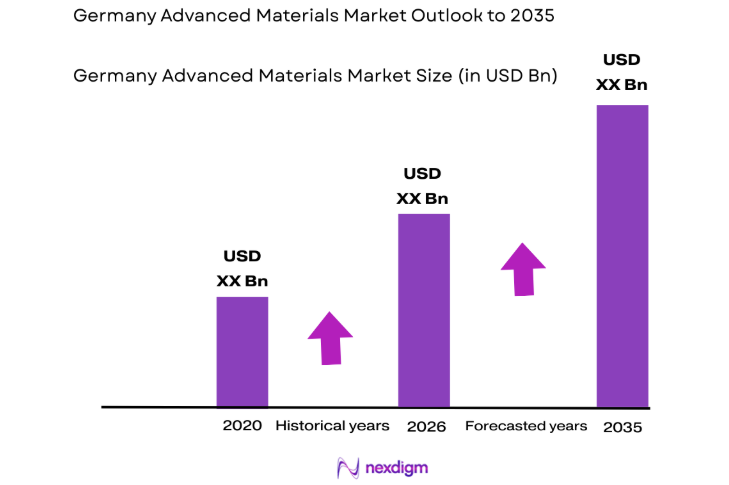
The Germany advanced materials market is experiencing robust growth, with a market size based on a recent historical assessment valued in the range of billions of USD. Factors driving the market include innovations in material science, particularly the increasing demand for high-performance composites, lightweight materials, and sustainable polymers. The growing need for advanced materials across industries such as automotive, aerospace, and electronics is a key contributor, supported by both private sector investments and government initiatives. The market is also fueled by advancements in manufacturing techniques such as 3D printing and automation, providing enhanced performance characteristics at a competitive cost.
Germany remains a dominant player in the advanced materials market due to its well-established industrial base, strong automotive and aerospace sectors, and ongoing investments in green technologies. The country is home to major global manufacturers and has a highly skilled workforce driving the development and adoption of cutting-edge materials. Key cities such as Stuttgart, Munich, and Frankfurt have established themselves as innovation hubs, hosting leading research institutions, and attracting significant investment in high-tech industries. Additionally, Germany’s regulatory environment, which supports sustainable manufacturing practices, further bolsters its leadership in this market.
Market Segmentation
By Product Type
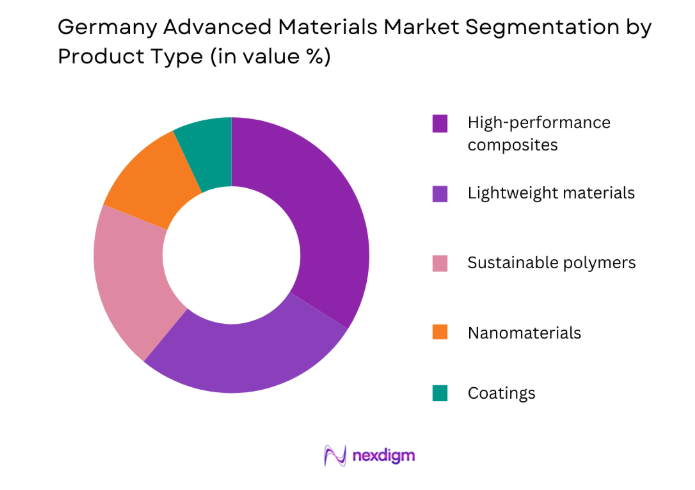
Germany’s advanced materials market is segmented by product type into high-performance composites, lightweight materials, sustainable polymers, nanomaterials, and coatings. Recently, high-performance composites have had a dominant market share due to their widespread application in industries like aerospace, automotive, and renewable energy. Their ability to deliver exceptional strength-to-weight ratios and improve energy efficiency has led to strong demand from sectors focused on reducing emissions and enhancing fuel efficiency. Additionally, advancements in manufacturing technologies, such as additive manufacturing, have enabled the production of complex, customized composite materials, further driving their market growth.
By End-Use Industry
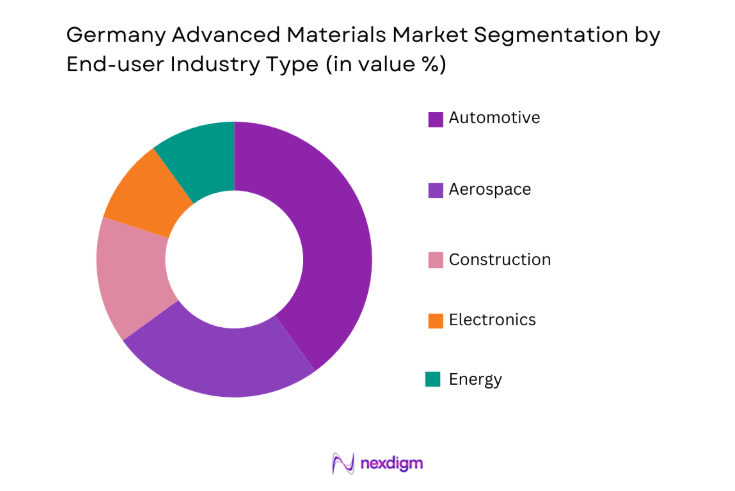
Germany’s advanced materials market is segmented by end-use industry into automotive, aerospace, construction, electronics, and energy. Recently, the automotive industry has had a dominant market share due to the growing demand for lightweight, high-strength materials that enhance fuel efficiency and reduce emissions. The shift towards electric vehicles (EVs) and the need for sustainable materials in automotive manufacturing have fueled the demand for advanced composites, polymers, and other high-performance materials. The automotive sector’s rapid transformation, driven by stringent environmental regulations and technological advancements, positions it as the leading end-use industry in the market.
Competitive Landscape
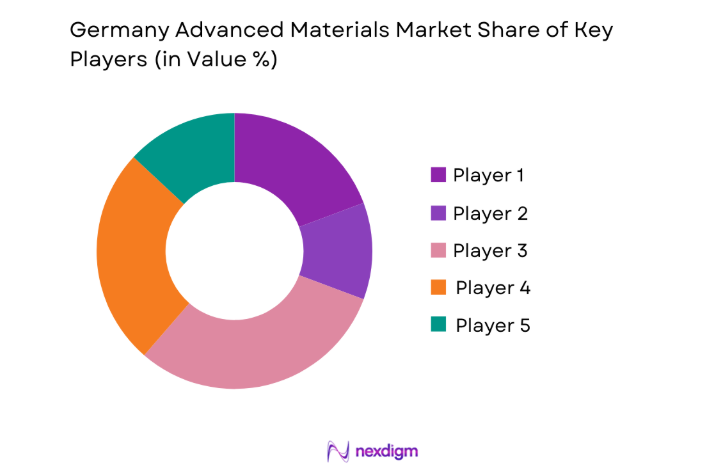
The competitive landscape in the Germany advanced materials market is marked by the presence of both large multinational corporations and specialized local players. Major companies focus on consolidating their market positions through strategic mergers, acquisitions, and continuous R&D investments to stay ahead of technological advancements. These players dominate through their expertise in material science, large-scale manufacturing capabilities, and strong distribution networks.
| Company Name | Establishment Year | Headquarters | Technology Focus | Market Reach | Key Products | Revenue | Innovation Index |
| BASF | 1865 | Ludwigshafen | ~ | ~ | ~ | ~ | ~ |
| Covestro | 2015 | Leverkusen | ~ | ~ | ~ | ~ | ~ |
| Siemens | 1847 | Munich | ~ | ~ | ~ | ~ | ~ |
| Bayer | 1863 | Leverkusen | ~ | ~ | ~ | ~ | ~ |
| Lanxess | 2004 | Cologne | ~ | ~ | ~ | ~ | ~ |
Germany Advanced Materials Market Analysis
Growth Drivers
Technological Advancements in Material Science
Technological advancements in material science are driving the growth of Germany’s advanced materials market. Innovations in high-performance composites, sustainable polymers, and nanomaterials are revolutionizing industries such as automotive, aerospace, and electronics. Germany, as a leader in industrial innovation, has seen substantial investments in research and development, particularly in creating materials with enhanced strength, flexibility, and sustainability. The integration of new manufacturing techniques like 3D printing and additive manufacturing has further accelerated material innovation, providing industries with more efficient production methods and better-performing materials. The market is witnessing an increase in demand for advanced materials that support the transition to greener, more energy-efficient products, such as lightweight composites for fuel-efficient vehicles and polymers used in renewable energy systems. As industries continue to seek solutions that improve operational efficiency and environmental sustainability, Germany’s advanced materials market is expected to benefit significantly from these ongoing advancements.
Sustainability Regulations and Green Energy Policies
Germany’s commitment to sustainability and the country’s proactive regulatory environment are key drivers for the advanced materials market. The government has long prioritized green energy solutions and eco-friendly manufacturing processes, which is pushing the demand for sustainable materials. Regulatory frameworks such as the EU Green Deal and Germany’s commitment to carbon neutrality by 2050 are creating a favorable environment for the growth of advanced materials that enable energy efficiency, recycling, and reduced carbon footprints. The adoption of environmentally friendly materials in construction, automotive, and electronics is rapidly gaining momentum, further supported by regulations aimed at reducing emissions and promoting circular economy principles. Manufacturers are under increasing pressure to comply with these regulations, driving the demand for innovative materials that meet stringent sustainability standards. Consequently, companies are increasingly investing in the development of advanced materials that align with green energy goals, making Germany a pivotal market for sustainable material solutions.
Market Challenges
High Production Costs
One significant challenge faced by Germany’s advanced materials market is the high production costs associated with manufacturing advanced materials. High-performance composites, sustainable polymers, and nanomaterials require specialized raw materials, sophisticated production processes, and advanced technology, all of which contribute to the overall expense. For smaller manufacturers, these high costs can limit access to cutting-edge materials, creating a barrier to entry for new players and limiting innovation. In addition, the increasing demand for custom-made materials and the need for specialized facilities further drive up production costs. While large multinational corporations can absorb these expenses due to their economies of scale, smaller companies in the industry may struggle to maintain profitability, particularly in a market that is highly competitive. This challenge, combined with fluctuating raw material prices and supply chain disruptions, has made it increasingly difficult for some players to remain cost-competitive, presenting a major hurdle for the continued growth of the market.
Supply Chain Constraints
Another challenge impacting the Germany advanced materials market is the ongoing supply chain constraints, which are affecting the production and delivery of key materials. Due to the complexity of the advanced materials supply chain, disruptions in raw material availability or delays in logistics can significantly affect the production timelines and cost structures of advanced materials manufacturers. This challenge has been exacerbated by the global pandemic and geopolitical tensions, which have led to a shortage of raw materials and increased transportation costs. The reliance on global suppliers for critical components and materials leaves German manufacturers vulnerable to international trade fluctuations and delays. As industries such as automotive, aerospace, and construction increase their reliance on advanced materials, supply chain issues have become more prominent, adding an element of unpredictability to the market. Companies are now under pressure to find alternative supply chain solutions or invest in local sourcing strategies, but these changes often come at a significant cost, further impacting profitability.
Opportunities
Growth in Electric Vehicle Manufacturing
One significant opportunity in the Germany advanced materials market lies in the growing demand for electric vehicles (EVs). As automakers shift toward producing more sustainable vehicles, the need for advanced materials such as lightweight composites, high-performance polymers, and sustainable batteries is increasing. Germany, home to major automotive manufacturers like Volkswagen, BMW, and Mercedes-Benz, is witnessing a significant push toward electric vehicle production. These companies are investing heavily in research and development to incorporate advanced materials into their EV models, which will help improve vehicle performance, reduce emissions, and increase energy efficiency. With the EU’s commitment to reducing greenhouse gas emissions and the growing popularity of EVs worldwide, the demand for advanced materials in this sector is set to rise, providing ample growth opportunities for companies involved in producing these materials. The push for greener alternatives in the automotive sector is also driving innovations in battery technology, another key area for advanced materials manufacturers to focus on. Germany’s position as a global leader in automotive manufacturing ensures that it will remain at the forefront of this transition, creating a strong demand for advanced materials.
Expansion of Renewable Energy Infrastructure
Another significant opportunity for Germany’s advanced materials market lies in the country’s push for renewable energy development. As part of its energy transition policy, Germany is investing heavily in solar, wind, and hydrogen energy infrastructure. The increasing demand for renewable energy solutions presents an opportunity for advanced materials companies to provide innovative materials for energy storage systems, solar panels, wind turbines, and hydrogen infrastructure. Lightweight materials, composites, and sustainable polymers are critical for improving the efficiency and sustainability of renewable energy technologies, making them ideal candidates for the rapidly growing market. With government policies supporting the transition to a low-carbon economy and substantial investments in renewable energy infrastructure, the demand for advanced materials in the energy sector is expected to grow significantly. Companies that specialize in developing materials for energy-efficient and sustainable technologies are well-positioned to capitalize on this trend, further expanding their market presence in Germany and beyond.
Future Outlook
The future outlook for Germany’s advanced materials market remains positive, driven by ongoing technological advancements and increasing demand from key sectors such as automotive, aerospace, and renewable energy. As Germany continues to prioritize sustainability and green technologies, the demand for innovative, high-performance materials is expected to rise. Investments in research and development will further accelerate the development of advanced materials, making them more efficient and cost-effective. Additionally, Germany’s strong industrial base, combined with supportive government policies, ensures that the country will remain a dominant player in this market in the coming years.
Major Players
- BASF
- Covestro
- Siemens
- Bayer
- Lanxess
- Evonik Industries
- Merck Group
- Henkel
- SGL Carbon
- Solvay
- Arkema
- Huntsman Corporation
- Saint-Gobain
- 3M
- Dow Chemical
Key Target Audience
- Investments and venture capitalist firms
- Government and regulatory bodies
- Automotive manufacturers
- Aerospace and defense companies
- Renewable energy firms
- Materials science researchers
- Industrial manufacturers
Research Methodology
Step 1: Identification of Key Variables
The key variables influencing the market, such as technological advancements, regulatory frameworks, and industry demand, were identified to shape the analysis.
Step 2: Market Analysis and Construction
A comprehensive market analysis was conducted, focusing on current market trends, drivers, and challenges. Data from trusted sources, including government reports, industry publications, and expert interviews, were compiled.
Step 3: Hypothesis Validation and Expert Consultation
Hypotheses regarding future market developments were validated through consultation with industry experts and stakeholders, ensuring the accuracy of assumptions.
Step 4: Research Synthesis and Final Output
All collected data and insights were synthesized into the final report, with a focus on providing actionable insights and strategic recommendations for market participants.

- Executive Summary
- Research Methodology (Definitions, Scope, Industry Assumptions, Market Sizing Approach, Primary & Secondary Research Framework, Data Collection & Verification Protocol, Analytic Models & Forecast Methodology, Limitations & Research Validity Checks)

- Market Definition and Scope
- Value Chain & Stakeholder Ecosystem
- Regulatory / Certification Landscape
- Sector Dynamics Affecting Demand

- Growth Drivers
Expansion of Aerospace and Automotive Manufacturing in Germany
Increasing Semiconductor and Electronics Manufacturing Activities
Growing Demand for High Performance Materials in Renewable Energy Infrastructure - Market Challenges
High Production Costs Associated with Advanced Material Processing
Limited Domestic Supply of Specialized Raw Materials
Dependence on Imported Advanced Material Manufacturing Technologies - Market Opportunities
Expansion of Electric Vehicle Supply Chains Requiring Lightweight Materials
Growing Demand for Nanomaterials in Semiconductor and Electronics Manufacturing
Development of Advanced Composite Materials for Aerospace and Aviation Applications - Trends
Increasing Integration of Nanotechnology in High Performance Industrial Materials
Growing Adoption of Advanced Composites in Automotive Lightweight Engineering - Government Regulations
- SWOT Analysis
- Porter’s Five Forces

- By Market Value, 2020-2025
- By Installed Units, 2020-2025
- By Average System Price, 2020-2025
- By System Complexity Tier, 2020-2025

- By System Type (In Value%)
Advanced Composite Materials
High Performance Polymers
Advanced Ceramics
Nanomaterials
Metal Matrix Composites - By Platform Type (In Value%)
Automotive and Electric Vehicle Platforms
Electronics and Semiconductor Platforms
Aerospace and Aviation Platforms
Energy and Power Infrastructure Platforms - By Fitment Type (In Value%)
Structural Components
Thermal Management Systems
Electronic and Semiconductor Components
Industrial Equipment Components - By End User Segment (In Value%)
Automotive and Transportation Industry
Electronics and Semiconductor Industry
Energy and Industrial Manufacturing

- Market Share Analysis
- Cross Comparison Parameters (Material Technology Portfolio, Manufacturing Capability, Application Industry Coverage, Supply Chain Integration, Pricing Structure, Innovation Capability, Regional Distribution Network)
- SWOT Analysis of Key Competitors
- Pricing & Procurement Analysis
- Key Players
Toray Industries
Hexcel Corporation
Solvay SA
Teijin Limited
SGL Carbon SE
3M Company
DuPont de Nemours
Dow Inc
BASF SE
Saint Gobain
Huntsman Corporation
Mitsubishi Chemical Group
Evonik Industries
Arkema SA
SCG Chemicals

- Automotive Manufacturers Utilizing Lightweight Materials to Improve Vehicle Efficiency
- Electronics Producers Deploying Nanomaterials for Semiconductor and Device Manufacturing
- Energy Companies Utilizing Advanced Materials in Renewable Power Infrastructure
- Industrial Equipment Manufacturers Using High Performance Materials for Durability

- Forecast Market Value, 2026-2035
- Forecast Installed Units, 2026-2035
- Price Forecast by System Tier, 2026-2035
- Future Demand by Platform, 2026-2035


 Request a Sample
 Ask for Customization
 Get a Quote
 Enquire Now