
 Download PDF
Market Overview
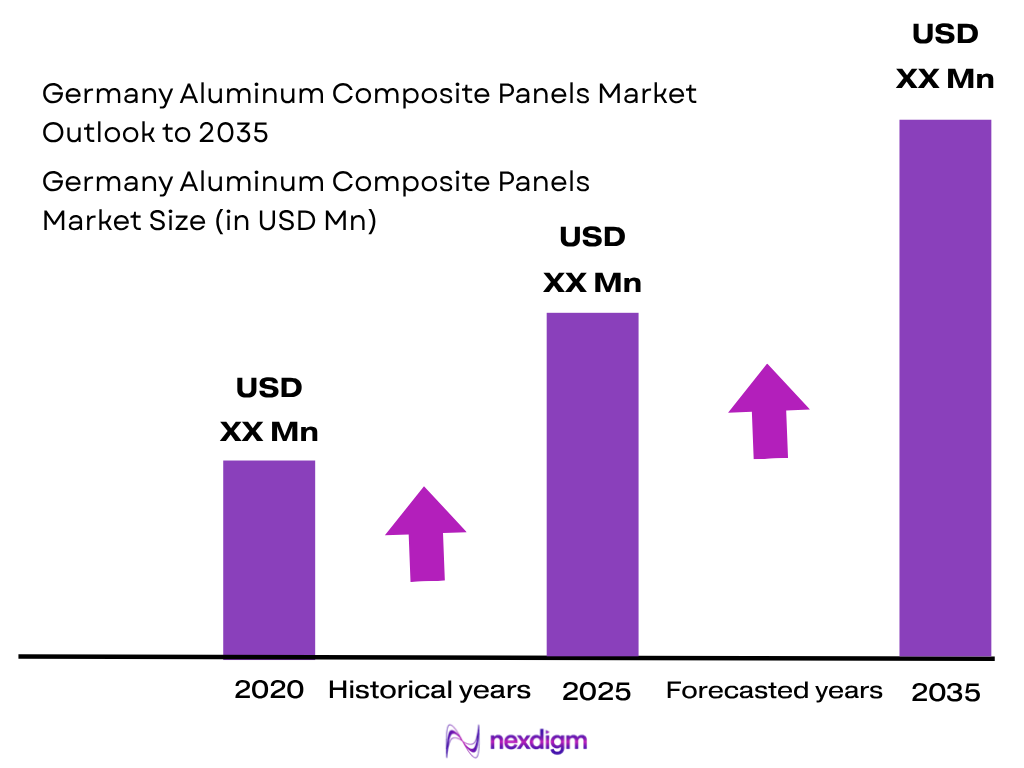
The Germany Aluminum Composite Panels Market is valued at ~USD XX million in 2024 and is projected to expand at a CAGR of ~XX% during 2026-2035. The market growth is supported by increasing adoption of lightweight facade materials, renovation of aging commercial buildings, demand for energy-efficient building envelopes, and rising preference for durable architectural cladding solutions. Aluminum composite panels are increasingly used in modern construction due to their corrosion resistance, design flexibility, low maintenance requirements, and suitability for both new developments and refurbishment projects.
Germany represents one of the major European markets for aluminum composite panels due to its advanced construction ecosystem, strong architectural sector, and emphasis on sustainable building modernization. Cities including Berlin, Munich, Frankfurt, Hamburg, and Stuttgart demonstrate strong demand due to commercial construction activities, infrastructure upgrades, corporate office development, and facade renovation programs. The presence of established facade engineering companies, strict building performance requirements, and adoption of advanced building materials further support ACP utilization across residential, commercial, industrial, and public infrastructure projects.
Market Segmentation
By Core Material Type
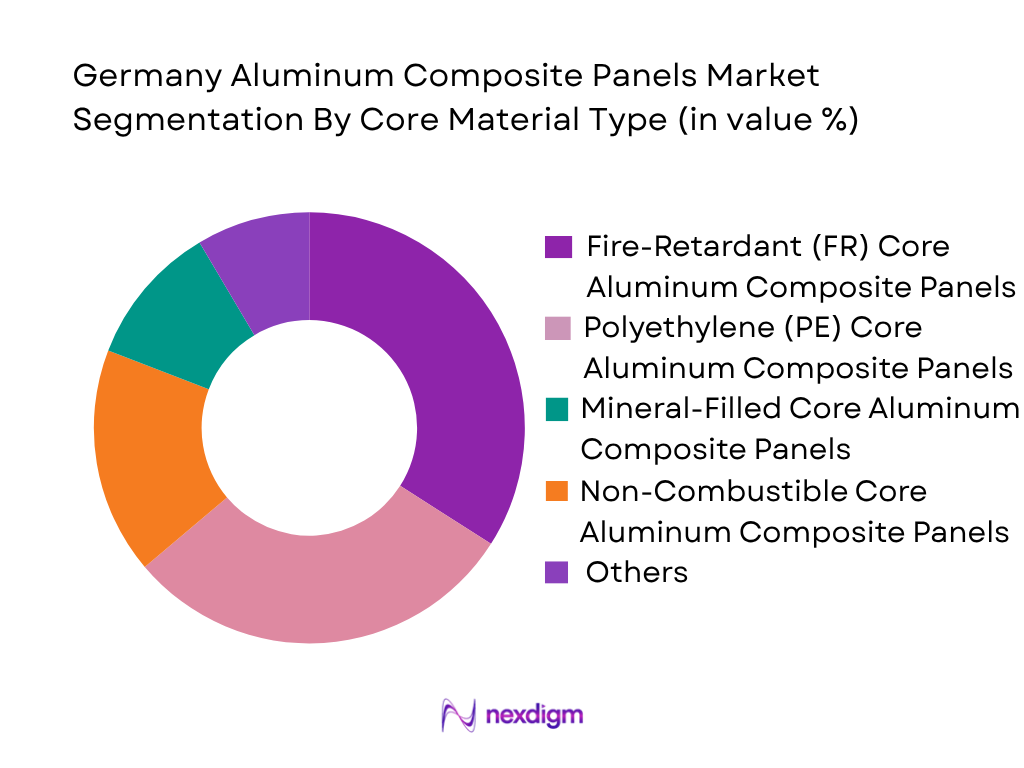
The Germany Aluminum Composite Panels Market is segmented by core material type into polyethylene (PE) core aluminum composite panels, fire-retardant (FR) core aluminum composite panels, mineral-filled core aluminum composite panels, non-combustible core aluminum composite panels, aluminum honeycomb composite panels, and hybrid core aluminum composite panels. Fire-retardant (FR) core aluminum composite panels represent the dominant segment with a market share of ~XX% in 2024 due to increasing focus on facade safety, compliance with European fire regulations, and growing adoption in commercial and high-rise construction projects. FR-core ACP systems are preferred in Germany because of their enhanced fire resistance, durability, and suitability for public buildings, transportation facilities, and premium architectural applications. Growing renovation activities and stricter facade performance requirements are encouraging replacement of conventional PE-core systems with safer alternatives. Additionally, increasing demand for sustainable and long-lasting facade solutions is strengthening adoption of advanced ACP core technologies.
By Application
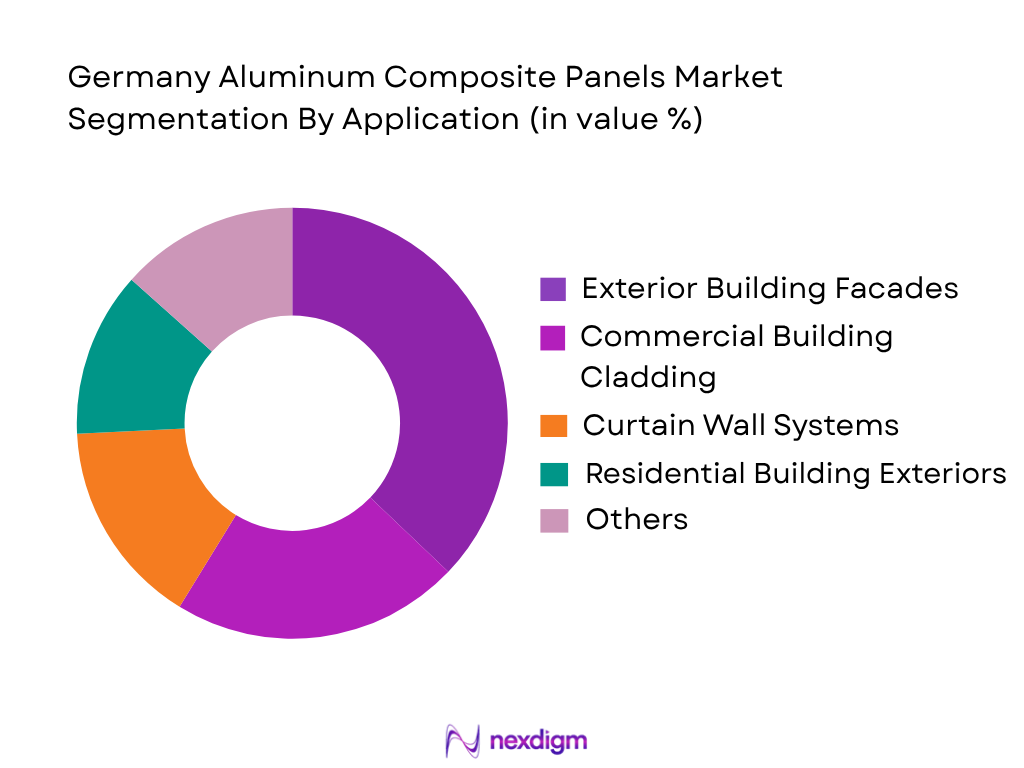
The Germany Aluminum Composite Panels Market is segmented by application into exterior building facades, curtain wall systems, ventilated facade systems, commercial building cladding, residential building exteriors, industrial cladding, transportation infrastructure, interior wall applications, and signage applications. Exterior building facade applications represent the dominant segment with a market share of ~XX% in 2024 due to extensive utilization of ACP systems in commercial offices, retail complexes, hospitality buildings, and mixed-use developments. Aluminum composite panels are widely preferred for facade applications because of their lightweight structure, weather resistance, aesthetic customization capabilities, and compatibility with modern architectural designs. Germany’s focus on energy-efficient renovation, urban redevelopment, and facade modernization projects continues to support ACP demand. Additionally, architects and developers increasingly select ACP systems for their ability to provide contemporary building appearances while reducing structural load and maintenance requirements.
Competitive Landscape
The Germany Aluminum Composite Panels Market is characterized by the presence of global manufacturers, European facade solution providers, and specialized ACP producers offering diverse product portfolios across architectural, industrial, and transportation applications. Companies compete based on fire-resistant technologies, coating performance, customization capabilities, sustainability credentials, production capacity, and distribution networks. Leading players focus on developing lightweight, durable, and recyclable ACP solutions to meet Germany’s stringent construction standards and increasing demand for sustainable building materials.
| Company | Establishment Year | Headquarters | Core Product Portfolio | ACP Manufacturing Capability | Fire-Retardant Solutions | Sustainability Initiatives | Distribution Network | Major Application Areas |
| 3A Composites GmbH | 1969 | Switzerland | ~ | ~ | ~ | ~ | ~ | ~ |
| ALUCOBOND | 1969 | Switzerland | ~ | ~ | ~ | ~ | ~ | ~ |
| Arconic Architectural Products | 1888 | United States | ~ | ~ | ~ | ~ | ~ | ~ |
| Mitsubishi Chemical Group | 1933 | Japan | ~ | ~ | ~ | ~ | ~ | ~ |
| Guangzhou Goodsense Decorative Building Materials | 1996 | China | ~ | ~ | ~ | ~ | ~ | ~ |
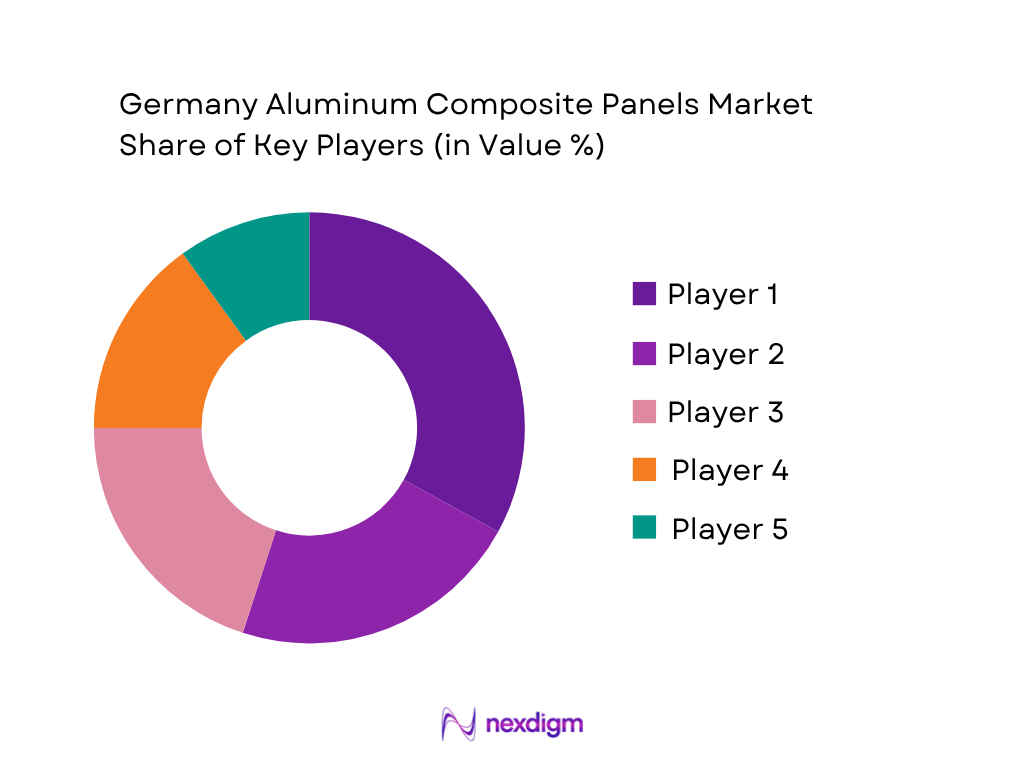
Germany Aluminum Composite Panels Market Analysis
Growth Drivers
Increasing Construction and Building Renovation Activities Supporting ACP Adoption
The Germany Aluminum Composite Panels Market is supported by continuous construction modernization, commercial redevelopment, and renovation activities across urban regions. Germany recorded a construction investment environment of approximately EUR 487 billion in gross fixed capital formation in 2024, according to the World Bank national accounts framework, reflecting continued demand for building materials and infrastructure-related products. The country’s building stock exceeds 19 million residential buildings, creating significant requirements for facade upgrades, energy improvements, and modernization solutions. Aluminum composite panels are increasingly utilized in facade renovation projects due to their lightweight properties, durability, weather resistance, and compatibility with modern insulation systems. According to Germany’s Federal Statistical Office (Destatis), building permits remained a key indicator of construction activity, with hundreds of thousands of residential units approved annually, supporting demand for exterior cladding materials. Urban centers including Berlin, Munich, Frankfurt, and Hamburg continue to generate ACP demand due to commercial development, office refurbishment, and mixed-use construction projects. The increasing replacement of outdated facade systems with modern lightweight cladding solutions is further strengthening ACP adoption. Building owners are focusing on improving exterior aesthetics, reducing maintenance requirements, and enhancing building performance through advanced facade materials. Additionally, Germany’s emphasis on urban regeneration programs and redevelopment of commercial spaces is creating sustained opportunities for ACP suppliers. Renovation of schools, healthcare facilities, transportation buildings, and public infrastructure is contributing to increased demand for durable and customizable facade materials. The combination of aging buildings, modernization requirements, and demand for visually enhanced facades continues to strengthen the adoption of aluminum composite panel solutions across Germany’s construction sector.
Growing Demand for Sustainable and Energy-Efficient Building Envelope Solutions
The Germany Aluminum Composite Panels Market benefits from increasing emphasis on sustainable construction practices, carbon reduction targets, and energy-efficient building modernization. Germany’s transition toward climate-neutral construction is supported by national initiatives requiring improved building performance and reduced environmental impact. According to the International Energy Agency (IEA), buildings account for around 30% of global energy consumption, highlighting the importance of efficient facade systems and insulation technologies. Germany has one of Europe’s largest building renovation requirements, with millions of buildings requiring energy performance improvements to meet long-term climate objectives. Aluminum composite panels contribute to modern facade systems by enabling lightweight structures, improved thermal integration, and longer service life compared with traditional exterior materials. Germany produced approximately 3.6 million tonnes of primary aluminum in 2024, according to international metals industry statistics, supporting availability of aluminum-based construction materials. Increasing use of recycled aluminum is also aligned with Germany’s circular economy objectives, as aluminum can be repeatedly recycled without significant loss of properties. The adoption of sustainable facade materials is further supported by increasing environmental requirements from commercial developers and public sector projects. Architects are increasingly considering lifecycle performance, recyclability, and material efficiency while selecting facade systems. These sustainability-focused construction trends are encouraging architects, developers, and contractors to adopt advanced ACP systems in commercial, residential, and public infrastructure projects.
Market Challenges
Strict Fire Safety Regulations and Compliance Requirements for Facade Materials
The Germany Aluminum Composite Panels Market faces challenges due to stringent fire safety regulations governing facade materials, particularly for high-rise buildings, public structures, and commercial developments. Germany follows comprehensive building safety standards under state-level building regulations and European fire classification frameworks, requiring facade products to meet strict reaction-to-fire performance criteria. The European Union construction sector has increasingly emphasized safer building materials following international facade fire incidents, increasing demand for non-combustible and fire-rated solutions. According to Eurostat, Germany maintained one of the largest construction markets in Europe, with construction output exceeding EUR 300 billion annually, increasing the importance of compliance across large-scale projects. Traditional polyethylene-core ACP systems face limitations in certain applications because of fire performance requirements, encouraging manufacturers to develop mineral-filled and fire-retardant core alternatives. These regulatory requirements increase product development complexity, certification costs, and installation standards for ACP manufacturers. Additionally, architects and contractors must consider facade system testing, anchoring methods, insulation compatibility, and overall building performance, which can extend project approval timelines and influence material selection decisions. Manufacturers are therefore required to continuously upgrade product technologies, invest in certification processes, and develop advanced ACP solutions that comply with Germany’s evolving construction safety standards.
Competition from Alternative Facade Materials and High Sustainability Expectations
The Germany Aluminum Composite Panels Market experiences competitive pressure from alternative facade materials including glass, ceramic panels, natural stone, fiber cement boards, and advanced metal cladding systems. Germany’s construction industry increasingly prioritizes materials with improved lifecycle performance, recyclability, and lower environmental impact. According to the World Bank, Germany’s economy remains highly industrialized, with manufacturing contributing approximately one-fifth of gross domestic product, creating strong competition among advanced material suppliers across construction sectors. Aluminum composite panel manufacturers must continuously improve product sustainability, recyclability, coating technologies, and durability characteristics to compete with alternative facade solutions. The European Union’s circular economy policies are also increasing expectations for recyclable construction materials and responsible material sourcing. Germany generated more than 400 million tonnes of waste annually according to European environmental statistics, making resource efficiency a significant consideration for building material selection. While ACP systems provide advantages such as lightweight installation and design flexibility, manufacturers face pressure to demonstrate environmental performance, reduce embodied carbon, and provide longer-lasting facade solutions to meet evolving customer requirements. Increasing demand for sustainable construction certifications and green building standards is further influencing purchasing decisions among developers and architects, creating additional pressure for ACP producers to innovate.
Market Opportunities
Expansion of Building Renovation and Energy Modernization Projects
The Germany Aluminum Composite Panels Market presents opportunities through extensive building renovation requirements and modernization of existing structures. Germany has one of Europe’s oldest building stocks, with a significant proportion of buildings constructed before modern energy efficiency standards were introduced. According to Germany’s Federal Ministry for Economic Affairs and Climate Action, improving building energy performance remains a major national priority under climate targets. The country’s renovation demand creates opportunities for ACP manufacturers to provide lightweight facade refurbishment solutions that improve aesthetics, durability, and integration with insulation systems. Germany recorded approximately 83 million inhabitants in 2024 according to World Bank population data, supporting continued demand for residential infrastructure improvements, urban redevelopment, and commercial modernization. Major cities including Berlin, Munich, Frankfurt, and Cologne are experiencing increasing refurbishment activities due to aging commercial buildings and demand for upgraded building envelopes. Aluminum composite panels can support these projects through faster installation, reduced structural loading, and customizable architectural designs. Growing investment in sustainable renovation programs provides opportunities for manufacturers offering recyclable ACP products, fire-rated systems, and advanced facade solutions. The increasing focus on energy-efficient refurbishment of residential complexes, offices, and public buildings is expected to create long-term demand for modern ACP-based facade systems.
Increasing Adoption of Advanced Architectural Facades and Customized Building Designs
The Germany Aluminum Composite Panels Market has growth opportunities from increasing demand for customized architectural designs, premium commercial buildings, and innovative facade systems. Germany’s strong architectural sector and advanced engineering capabilities support adoption of visually distinctive building materials for offices, retail centers, hospitality projects, and public infrastructure. According to the World Bank, Germany maintained a high urbanization level, with more than 75% of the population living in urban areas, supporting continued development of modern urban infrastructure. Growing investment in smart cities, transportation hubs, and commercial redevelopment projects is creating demand for lightweight and aesthetically flexible facade materials. ACP systems allow architects to achieve customized colors, textures, metallic finishes, and complex facade designs while maintaining structural efficiency. The increasing focus on sustainable urban development also creates opportunities for recyclable aluminum-based facade solutions. Manufacturers that provide fire-resistant panels, digital design customization, integrated facade systems, and improved coating technologies are positioned to address evolving architectural requirements. These capabilities are becoming increasingly important as developers seek differentiated building designs with improved performance characteristics. These trends support future expansion of ACP applications across premium construction and renovation projects throughout Germany.
Future Outlook
Over the next decade, the Germany Aluminum Composite Panels Market is expected to witness continued development driven by increasing facade renovation activities, demand for sustainable construction materials, and modernization of commercial and public buildings. The adoption of fire-resistant ACP systems, recyclable aluminum materials, and energy-efficient facade solutions is expected to influence future market expansion. Growing architectural innovation and increasing integration of advanced facade technologies will further support demand across multiple construction segments.
Major Players
- ALUCOBOND
- 3A Composites GmbH
- Arconic Architectural Products
- Mitsubishi Chemical Group
- Swiss Pearl
- Reynobond
- Larson FR
- Alpolic
- Viva Composite Panel
- Jyi Shyang Industrial
- Goodsense Building Materials
- Yaret Industrial Group
- Multipanel UK
- Laminators Incorporated
- Interplast Co. Ltd.
Key Target Audience
- Aluminum Composite Panel Manufacturers
- Facade System Developers
- Architectural Material Suppliers
- Construction and Real Estate Development Companies
- Commercial Building Developers
- Investments and Venture Capitalist Firms
- Government and Regulatory Bodies (Federal Ministry for Housing, Urban Development and Building, German Institute for Standardization DIN)
- Infrastructure Development Organizations
Research Methodology
Step 1: Identification of Key Variables
The initial phase involves developing an ecosystem map covering all major stakeholders operating within the Germany Aluminum Composite Panels Market. This includes assessment of ACP manufacturers, aluminum suppliers, facade contractors, architects, construction companies, distributors, and end-use industries. Secondary research is conducted to identify important market variables including material demand patterns, construction activity, facade applications, regulatory requirements, and technological developments influencing market performance.
Step 2: Market Analysis and Construction
This phase focuses on compiling and analyzing historical market information related to Germany Aluminum Composite Panels Market development. The assessment includes evaluation of demand across construction segments, product categories, application areas, and regional consumption patterns. Supply-side analysis covers manufacturing capabilities, distribution networks, import dependency, production technologies, and competitive positioning of market participants.
Step 3: Hypothesis Validation and Expert Consultation
Market assumptions and findings are validated through discussions with industry participants including manufacturers, facade specialists, construction professionals, and material suppliers. These consultations provide operational insights regarding product adoption trends, customer preferences, regulatory impact, and technological advancements. Expert inputs are used to strengthen market understanding and validate analytical conclusions.
Step 4: Research Synthesis and Final Output
The final stage integrates findings from primary and secondary research to develop a comprehensive assessment of the Germany Aluminum Composite Panels Market. Detailed evaluation of product segments, competitive landscape, demand drivers, challenges, opportunities, and future developments is conducted to provide an accurate market outlook.

- Executive Summary
- Research Methodology (Market Definition and Scope, Germany Aluminum Composite Panels Market Classification, Aluminum Composite Panel Technology Mapping, Polyethylene Core ACP Assessment, Fire-Retardant Core ACP Evaluation, Mineral-Filled Core ACP Analysis, Non-Combustible ACP Technology Assessment, Aluminum Honeycomb Composite Panel Evaluation, PVDF and FEVE Coating Assessment, Surface Finish Evaluation, Panel Thickness and Dimension Assessment, Weather Resistance Analysis, Fire Performance Assessment, Facade Application Mapping, Curtain Wall System Assessment, Ventilated Facade Application Assessment, Building Renovation Demand Assessment, Facade Modernization Assessment, Domestic Manufacturing Capability Assessment, Import Dependency Assessment, Supply-Side Assessment, Demand-Side Assessment)

- Definition and Scope
- Germany Aluminum Composite Panels Industry Evolution and Development of Aluminum Composite Facade Systems, Lightweight Building Envelope Materials, PVDF-Coated Aluminum Composite Panels, Fire-Rated ACP Systems, Non-Combustible Composite Panels, Sustainable Aluminum Facade Solutions, High-Rise Building Cladding Systems, Curtain Wall Integration, Ventilated Facade Technologies, Architectural Surface Finishes, Digital Facade Design Solutions, Recyclable Aluminum Composite Materials, Energy-Efficient Building Envelope Systems, Modular Facade Components, Advanced Coating Technologies
- Aluminum Composite Panels Value Chain Analysis
- Aluminum Composite Panels Supply Chain Analysis
- Primary Aluminum Producers, Aluminum Coil Suppliers, Polymer Core Manufacturers, Mineral Core Material Suppliers, Fire-Retardant Core Suppliers, Coating Chemical Manufacturers, ACP Panel Manufacturers, Facade Fabricators, Curtain Wall System Providers, Architectural Designers, Construction Material Distributors, Installation Contractors, Real Estate Developers, Commercial Building Owners, Infrastructure Project Developers

- Growth Drivers (Commercial Building Renovation Activity, Demand for Lightweight Facade Materials, Increasing Adoption of Fire-Rated ACP Systems, Sustainable Construction Practices, Energy-Efficient Building Envelope Development, Expansion of Architectural Facade Design, Growth of Modern Commercial Infrastructure)
- Market Challenges (Strict Fire Safety Regulations, Competition from Glass and Metal Facade Systems, Aluminum Raw Material Price Volatility, Dependence on Imported ACP Products, Complex Installation Requirements, High Certification Requirements, Limited Adoption of Conventional PE-Core Panels)
- Market Opportunities (Green Building Renovation Projects, Recyclable Aluminum Composite Solutions, Fire-Safe Facade Modernization, Sustainable Building Envelope Systems, Public Infrastructure Refurbishment, Premium Architectural Surface Finishes, Smart Facade Integration)
- Market Trends (Increasing Fire-Rated ACP Adoption, Sustainable Aluminum Usage, Digital Facade Planning, Customized Surface Finishes, Lightweight Construction Materials, Circular Construction Practices, Advanced Coating Technologies)
- Government Regulations and Standards (German Building Code Requirements, DIN 18516 Exterior Wall Cladding Standards, EN 13501 Fire Classification Requirements, European Construction Product Regulation, Energy Performance of Buildings Directive, Sustainability Requirements, Facade Safety Regulations)
- SWOT Analysis
- Porter’s Five Forces Analysis
- PESTLE Analysis
- Stakeholder Ecosystem
- Competition Ecosystem

- By Market Value (2020-2025)
- By Consumption Volume (2020-2025)
- By Installed Facade Area (2020-2025)
- By Average Selling Price per Square Meter (2020-2025)
- By Aluminum Composite Panel Import Volume (2020-2025)
- By Domestic ACP Production Volume (2020-2025)
- By Exterior Facade Application Volume (2020-2025)
- By Interior Wall Cladding Application Volume (2020-2025)
- By Curtain Wall System Application Volume (2020-2025)

- By Core Material Type (In Value %)
Polyethylene (PE) Core Aluminum Composite Panels
Fire-Retardant (FR) Core Aluminum Composite Panels
Mineral-Filled Core Aluminum Composite Panels
Non-Combustible Core Aluminum Composite Panels
Aluminum Honeycomb Composite Panels
Hybrid Core Aluminum Composite Panels - By Coating Type (In Value %)
PVDF Coated Aluminum Composite Panels
FEVE Coated Aluminum Composite Panels
Polyester Coated Aluminum Composite Panels
Anodized Aluminum Composite Panels
High-Durability Protective Coated ACP Panels
Metallic and Matte Finish ACP Panels - By Application (In Value %)
Exterior Building Facades
Curtain Wall Systems
Ventilated Facade Systems
Commercial Building Cladding
Residential Building Exteriors
Industrial Building Cladding
Transportation Infrastructure
Interior Wall Applications
Retail and Exhibition Applications
Signage and Display Applications - By End-Use Building Type (In Value %)
Commercial Office Buildings
Retail Buildings and Shopping Centers
Residential High-Rise Buildings
Hotels and Hospitality Facilities
Industrial Facilities
Transportation Buildings
Educational Institutions
Healthcare Buildings
Government and Public Buildings
Corporate Headquarters - By Construction Activity (In Value %)
New Construction
Existing Building Renovation
Facade Modernization
Energy-Efficient Building Upgrades
Commercial Building Refurbishment
Historic Building Restoration
Industrial Facility Expansion
Public Infrastructure Development - By Region (In Value %)
North Rhine-Westphalia
Bavaria
Baden-Württemberg
Berlin
Hesse
Hamburg
Lower Saxony
Saxony
Rhineland-Palatinate
Rest of Germany

- Market Share of Major Players (By Germany Revenue, ACP Product Portfolio, Fire-Rated Product Availability, Core Material Technology, Coating Technology Capability, Panel Thickness Range, Surface Finish Portfolio, Facade Application Coverage, Manufacturing Capacity, Distribution Network Presence, Project Portfolio, Architectural Specification Reach, Technical Support Capability)
- Cross Comparison Parameters (Fire Resistance Performance, Core Material Technology, PVDF and FEVE Coating Capability, Panel Thickness and Dimension Range, Aluminum Alloy Quality, Weather and UV Resistance Performance, Recycling Capability, Germany Manufacturing and Distribution Support)
- SWOT Analysis of Major Player
- Competitive Positioning Matrix
- Aluminum Composite Panel Technology and Architectural Application Benchmarking
- Exterior Weathering and Durability Capability Assessment
- Germany Distribution Network and Architectural Specification Assessment
- Major Companies
3A Composites GmbH
Alucobond (3A Composites)
Mitsubishi Chemical Group
ALPOLIC Materials
Arconic Architectural Products
Almaxco
Jyi Shyang Industrial Co., Ltd.
Yaret Industrial Group
Seven Composite
Goodsense Technology Co., Ltd.
Alstrong Enterprises India Pvt. Ltd.
Shanghai Huayuan New Composite Materials Co., Ltd.
Foshan Jixiang Building Materials Co., Ltd.
Alucoil
Multipanel UK

- Architectural Facade Material Requirement Assessment
- Commercial Building Renovation Demand Analysis
- High-Rise Residential Facade Requirement Assessment
- Fire Safety Compliance Requirement Analysis
- Sustainable Construction Material Preference Assessment
- Building Owner Procurement Decision Analysis
- Architect and Facade Consultant Specification Assessment
- Contractor Installation Capability Assessment

- By Market Value (2026-2035)
- By Consumption Volume (2026-2035)
- By Installed Facade Area (2026-2035)
- By Average Selling Price per Square Meter (2026-2035)
- By Fire-Retardant ACP Consumption Volume (2026-2035)
- By Non-Combustible ACP Consumption Volume (2026-2035)
- By Exterior Facade Application Volume (2026-2035)
- By Curtain Wall System Application Volume (2026-2035)
- By Building Renovation Application Volume (2026-2035)


 Request a Sample
 Ask for Customization
 Get a Quote
 Enquire Now