
 Download PDF
 Download PDF
Market Overview
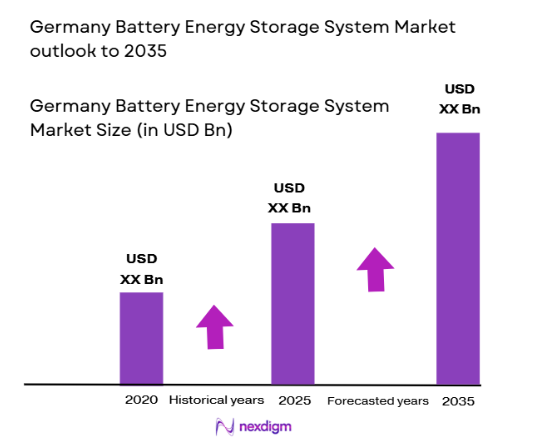
The Germany Battery Energy Storage System market is estimated to be valued at USD ~ billion based on a recent historical assessment. The market is primarily driven by the increasing adoption of renewable energy sources, government-backed incentives, and technological advancements in battery storage systems. These factors are combined with the need for efficient energy storage solutions to address grid stability and optimize energy usage across various sectors. Significant investments in the energy infrastructure by both public and private sectors further fuel the market growth.
Germany remains a leader in the European energy storage sector due to its strong commitment to energy transition, robust governmental support, and leading technological innovations. Major urban areas such as Berlin, Munich, and Hamburg play a crucial role due to their advanced energy infrastructure and the integration of renewable energy sources. Furthermore, Germany’s commitment to sustainability and energy independence positions it as the dominant force in the energy storage market in Europe.
Market Segmentation
By Product Type:
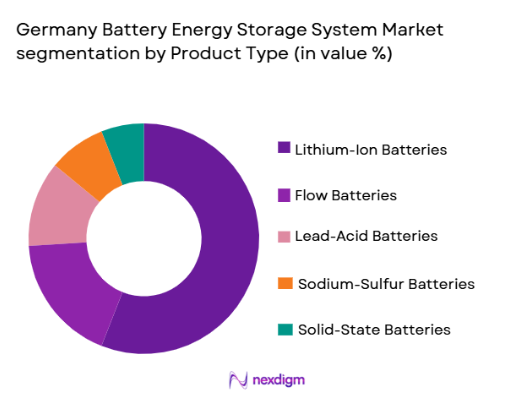
Germany Battery Energy Storage System market is segmented by product type into lithium-ion batteries, flow batteries, lead-acid batteries, sodium-sulfur batteries, and solid-state batteries. Recently, lithium-ion batteries have the dominant market share due to advancements in energy density, lower costs, and higher efficiency. They have seen rapid adoption in both residential and commercial applications, supported by their established infrastructure and superior performance in energy storage applications.
By Platform Type:
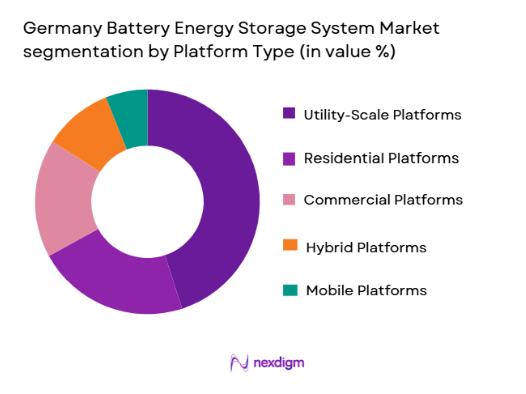
Germany Battery Energy Storage System market is segmented by platform type into residential platforms, commercial platforms, utility-scale platforms, mobile platforms, and hybrid platforms. Recently, utility-scale platforms have dominated the market share due to their large capacity to store energy and support grid stability. These platforms are ideal for large-scale renewable energy integration, offering cost-effective solutions to balance supply and demand across a country.
Competitive Landscape
The competitive landscape of the Germany Battery Energy Storage System market is characterized by significant consolidation among leading players, with major companies focusing on enhancing technological capabilities and expanding their market presence. Large players in the energy sector, alongside innovative startups, are competing to capture a larger share of the rapidly growing market. The market sees continuous advancements in battery technologies, along with increasing investments in grid infrastructure and renewable energy projects.
| Company Name | Establishment Year | Headquarters | Technology Focus | Market Reach | Key Products | Revenue (USD Billion) | Battery Efficiency Rating (%) |
| Siemens Energy | 2008 | Munich, Germany | ~ | ~ | ~ | ~ | ~ |
| VARTA AG | 1887 | Ellwangen, Germany | ~ | ~ | ~ | ~ | ~ |
| Sonnen GmbH | 1998 | Wildpoldsried, Germany | ~ | ~ | ~ | ~ | ~ |
| AES Energy Storage | 1981 | Arlington, USA | ~ | ~ | ~ | ~ | ~ |
| Fluence Energy | 2018 | Washington, D.C., USA | ~ | ~ | ~ | ~ | ~ |
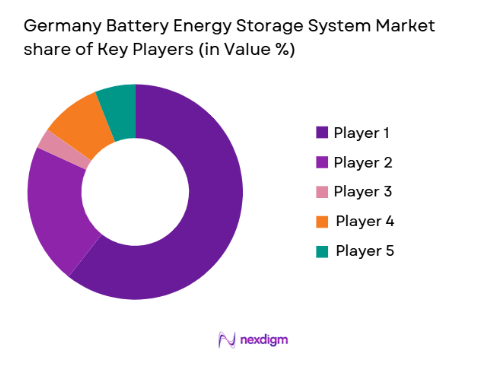
Germany Battery Energy Storage System Market Analysis
Growth Drivers
Increased adoption of renewable energy:
The shift towards renewable energy sources in Germany has been a significant driver for the energy storage market. As the country focuses on reducing its dependence on fossil fuels, renewable sources like wind and solar are increasingly being integrated into the energy mix. However, these energy sources are intermittent, and energy storage systems provide a way to store excess energy produced during peak production times for use during low production times. This integration helps in stabilizing the grid, ensuring reliable energy supply, and reducing dependency on non-renewable sources. Furthermore, with the government’s commitment to achieving carbon neutrality and energy security, it is expected that the demand for efficient and reliable energy storage systems will continue to grow, driving innovation and investment in battery technologies. As the cost of renewable energy technologies declines, storage systems will become more affordable and widely adopted, further supporting the shift towards green energy.
Government incentives and regulatory support:
Germany’s government has been a major catalyst for the growth of the battery energy storage market. The country has implemented various policies to promote renewable energy adoption, including providing subsidies for energy storage systems, as well as tax incentives for both residential and commercial installations. These regulatory measures help reduce the upfront costs for consumers and encourage the installation of energy storage solutions, contributing to market growth. Additionally, the regulatory framework is continuously evolving to address the growing needs of the energy sector. Germany’s commitment to meeting its long-term sustainability goals has also led to more favorable policies for battery energy storage, helping to boost investor confidence and provide a stable market environment for new technologies. The government has supported research and development, aiming to reduce the cost of batteries and improve energy efficiency, which will drive future adoption.
Market Challenges
High initial investment cost:
Despite the long-term benefits, the high upfront costs of battery energy storage systems remain a significant barrier to widespread adoption in Germany. For both residential and commercial customers, the initial cost of purchasing and installing energy storage systems can be prohibitive. While government incentives and tax breaks have helped offset some of these costs, the financial barrier still remains an obstacle for many potential buyers. This challenge is particularly noticeable in the residential market, where many individuals are hesitant to invest in energy storage systems due to the large capital expenditure involved. Additionally, although battery prices have decreased over the years, further reductions in cost are necessary to increase the affordability of energy storage systems, especially as the demand for high-performance batteries continues to rise. The high cost of advanced battery systems has forced developers and consumers to seek cost-effective solutions, which sometimes leads to compromises in system efficiency and performance.
Battery degradation and performance issues:
Battery degradation and limited lifespan are ongoing challenges in the battery energy storage market in Germany. Energy storage systems, particularly lithium-ion batteries, tend to lose their capacity over time, leading to decreased performance and a shorter operational lifespan. This degradation can significantly affect the return on investment, as users may need to replace batteries earlier than expected, increasing the total cost of ownership. The risk of performance loss is a significant concern for both residential and utility-scale customers, as it reduces the overall effectiveness of the energy storage system. Additionally, there are technical challenges related to optimizing the efficiency of batteries in extreme temperature conditions, which can lead to performance issues in some cases. These challenges require continuous advancements in battery technology to increase durability and reduce the impact of degradation, which is critical to making energy storage solutions more reliable and cost-effective in the long term.
Opportunities
Advancements in solid-state battery technology:
Solid-state batteries are expected to play a crucial role in the future of the Germany Battery Energy Storage System market. These next-generation batteries are designed to offer higher energy densities, faster charging times, and longer lifespans compared to traditional lithium-ion batteries. With their enhanced safety features and potential for lower environmental impact, solid-state batteries present a major opportunity for developers and consumers alike. This technological breakthrough could address many of the current limitations associated with battery energy storage systems, including the issues of battery degradation and performance loss over time. As research and development efforts continue, the commercialization of solid-state batteries will open new market opportunities in both residential and commercial sectors, offering more sustainable and efficient storage solutions. The increased efficiency of solid-state batteries will likely lead to reduced overall system costs, making them more accessible for a wider range of consumers and contributing to further adoption in the energy storage market.
Energy storage integration with smart grids:
The integration of energy storage systems with smart grids presents a promising opportunity for growth in Germany’s energy sector. As the country continues to transition to a decentralized energy system, smart grids that allow for real-time monitoring, management, and optimization of energy consumption are becoming increasingly important. Energy storage systems integrated into these grids can provide better control over energy flow, reduce energy losses, and enhance the reliability of the grid. Moreover, with the increasing demand for renewable energy, energy storage systems in smart grids can help balance supply and demand efficiently, making energy distribution more stable. The growth of smart cities and the adoption of IoT technologies will further facilitate the implementation of advanced energy storage solutions. By providing greater control and flexibility, the combination of energy storage and smart grid technologies will create significant opportunities for market growth, with potential applications across various sectors including residential, commercial, and industrial energy management.
Future Outlook
The Germany Battery Energy Storage System market is expected to witness strong growth over the next five years. Technological advancements, particularly in battery efficiency and energy density, will drive the development of more cost-effective solutions for energy storage. Alongside technological developments, the German government’s continued commitment to renewable energy and decarbonization efforts will offer a favorable regulatory environment, ensuring market stability. With increasing investments in smart grid technology, the integration of energy storage systems will provide greater energy security and operational efficiency. The demand for battery storage will continue to rise, driven by both residential and commercial sectors looking for sustainable solutions to manage their energy needs.
Major Players
- Siemens Energy
- VARTA AG
- Sonnen GmbH
- AES Energy Storage
- Fluence Energy
- E3/DC GmbH
- Tesla Inc.
- Saft Group
- LG Chem
- Samsung SDI
- BYD Company
- Panasonic Corporation
- Energy Vault
- ABB Ltd
- Schneider Electric
Key Target Audience
- Investments and venture capitalist firms
- Government and regulatory bodies
- Residential consumers
- Commercial and industrial energy managers
- Utility companies
- Renewable energy providers
- Energy infrastructure developers
- Battery technology manufacturers
Research Methodology
Step 1: Identification of Key Variables
Identification of critical factors impacting market growth and segmentation, including technology trends, regulatory support, and economic drivers.
Step 2: Market Analysis and Construction
Analysis of the historical and current market landscape, construction of key market models, and evaluation of technological developments.
Step 3: Hypothesis Validation and Expert Consultation
Consultation with industry experts to validate hypotheses and refine market models based on real-world insights.
Step 4: Research Synthesis and Final Output
Synthesis of findings into a comprehensive market report, focusing on actionable insights and forecasts for key stakeholders.

- Executive Summary
- Research Methodology (Definitions, Scope, Industry Assumptions, Market Sizing Approach, Primary & Secondary Research Framework, Data Collection & Verification Protocol, Analytic Models & Forecast Methodology, Limitations & Research Validity Checks)

- Market Definition and Scope
- Value Chain & Stakeholder Ecosystem
- Regulatory / Certification Landscape
- Sector Dynamics Affecting Demand
- Strategic Initiatives & Infrastructure Growth

- Growth Drivers
Increased demand for renewable energy integration
Government incentives for energy storage adoption
Technological advancements in battery efficiency
Declining battery costs
Rising energy storage needs for grid stabilization - Market Challenges
High initial investment cost
Battery lifespan and degradation issues
Regulatory and certification hurdles
Storage technology efficiency limitations
Integration complexity with existing infrastructure - Market Opportunities
Growth in renewable energy market integration
Partnerships between battery manufacturers and utilities
Advances in next-generation energy storage technologies - Trends
Growing adoption of hybrid energy storage systems
Increasing interest in long-duration storage solutions
Shift towards decentralized energy storage
Advancements in recycling and second-life battery usage
Increasing government-backed funding for energy storage solutions - Government Regulations & Defense Policy
Supportive policies for renewable energy integration
Subsidies and tax incentives for energy storage technologies
Energy storage policy updates at the EU level - SWOT Analysis
- Stakeholder and Ecosystem Analysis
- Porter’s Five Forces Analysis
- Competition Intensity and Ecosystem Mapping

- By Market Value, 2019-2025
- By Installed Units, 2019-2025
- By Average System Price, 2019-2025
- By System Complexity Tier, 2019-2025

- By System Type (In Value%)
Lithium-Ion Systems
Flow Batteries
Lead-Acid Batteries
Sodium-Sulfur Batteries
Solid-State Batteries - By Platform Type (In Value%)
Residential Platforms
Commercial Platforms
Utility-Scale Platforms
Mobile Platforms
Hybrid Platforms - By Fitment Type (In Value%)
On-grid Systems
Off-grid Systems
Hybrid Systems
Modular Systems
Integrated Systems - By EndUser Segment (In Value%)
Utilities
Commercial Entities
Industrial Applications
Residential Customers
Public Sector - By Procurement Channel (In Value%)
Direct Procurement
Government Contracts
Online Procurement
Third-party Distributors
Private Sector Procurement - By Material / Technology (In Value%)
Lithium-Ion Batteries
Flow Battery Technology
Lead-Acid Technology
Sodium-Based Technology
Solid-State Battery Materials

- Market structure and competitive positioning
- Market share snapshot of major players
- CrossComparison Parameters (System Type, Platform Type, Procurement Channel, EndUser Segment, Fitment Type, Technology, Market Presence, R&D Investments, Strategic Partnerships, Service Offerings)
- SWOT Analysis of Key Players
- Pricing & Procurement Analysis
- Key Players
Siemens Energy
VARTA AG
Sonnen GmbH
AES Energy Storage
Fluence Energy
E3/DC GmbH
Tesla Inc.
Saft Group
LG Chem
Samsung SDI
BYD Company
Panasonic Corporation
Energy Vault
ABB Ltd
Schneider Electric

- Utilities’ focus on grid stability through energy storage
- Industrial customers investing in self-sufficiency with storage systems
- Commercial entities adopting energy storage to reduce operational costs
- Residential users increasingly seeking energy independence

- Forecast Market Value, 2026-2030
- Forecast Installed Units, 2026-2030
- Price Forecast by System Tier, 2026-2030
- Future Demand by Platform, 2026-2030


 Request a Sample
 Ask for Customization
 Get a Quote
 Enquire Now