

 Download PDF
 Download PDF
Market Overview
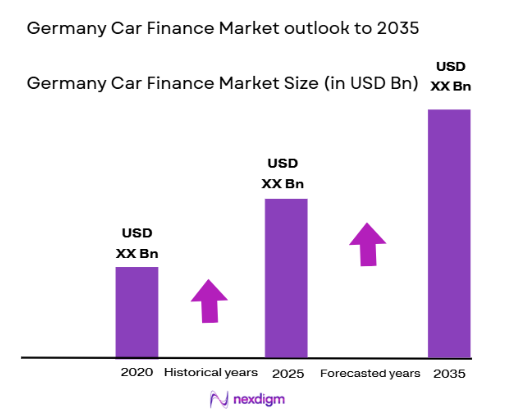
The Germany Car Finance market is valued at approximately USD ~ billion, with significant growth driven by increasing demand for consumer vehicles and greater adoption of digital financing platforms. This market is primarily influenced by the availability of low-interest rates and government incentives for electric vehicle (EV) purchases. The ongoing shift toward mobility as a service (MaaS) and the rise in demand for flexible financing options have also accelerated market growth. This segment is projected to continue expanding, benefiting from advancements in fintech solutions and increased access to credit.
Germany, as one of the leading economies in Europe, dominates the car finance landscape, primarily due to its large automotive industry and high demand for vehicles, especially EVs. Major cities like Berlin, Munich, and Frankfurt play a key role in driving this market due to their well-developed infrastructure, high purchasing power, and extensive car financing options. Furthermore, Germany’s push towards sustainability and EV adoption through government regulations also reinforces its dominance in this sector, creating a robust demand for car finance products.
Market Segmentation
By Product Type:
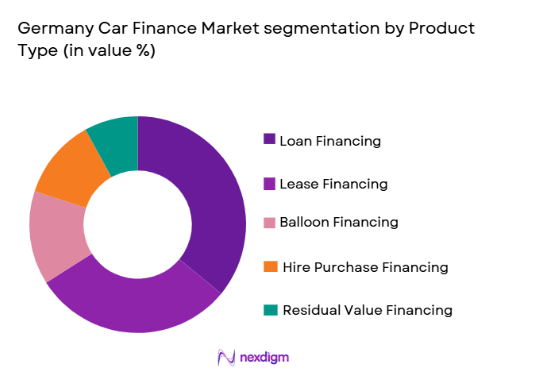
The Germany Car Finance market is segmented by product type into lease financing, loan financing, balloon financing, hire purchase financing, and residual value financing. Recently, loan financing has a dominant market share due to factors such as consumer preference for straightforward, fixed payments and flexible terms, which offer financial predictability and ownership at the end of the term. The growing popularity of EVs, along with a rise in digital banking and the increasing reliance on personal loans, further reinforces this trend. Loan financing is becoming a preferred choice for those looking to own a vehicle outright with minimal upfront payments, driven by both consumer confidence and financial institutions’ increasing willingness to offer favorable terms for vehicle loans.
By Platform Type:
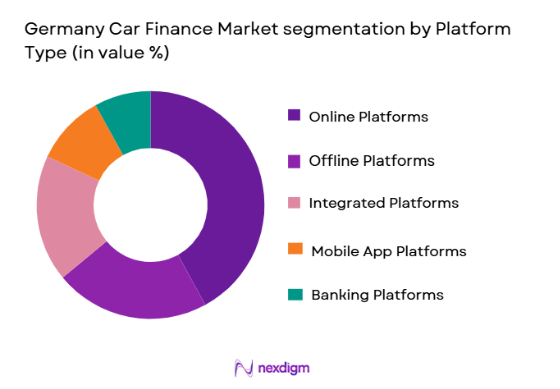
The Germany Car Finance market is segmented by platform type into online platforms, offline platforms, integrated platforms, mobile app platforms, and banking platforms. Online platforms have a dominant market share due to their convenience, accessibility, and the growing trend towards e-commerce in financial services. Consumers increasingly prefer online platforms for their ability to compare financing options, read reviews, and apply for loans or leases at their own convenience. Moreover, the growth of fintech companies offering seamless digital services and faster processing times has made online platforms highly attractive. With the integration of artificial intelligence and machine learning, these platforms are becoming more personalized, driving their market share further.
Competitive Landscape
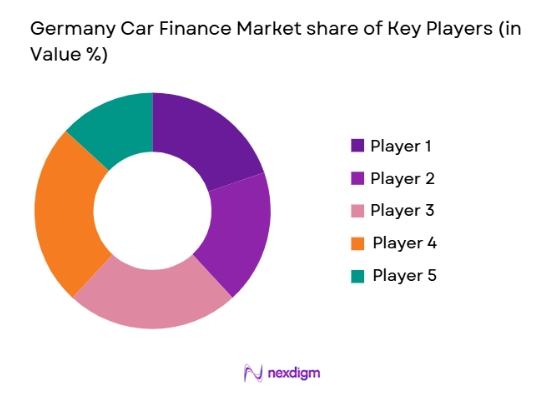
The competitive landscape of the Germany Car Finance market is characterized by significant consolidation, with a few key players controlling much of the market share. Major banks and automotive financing companies dominate the industry, with smaller fintech startups providing niche solutions. The market is heavily influenced by global players with strong brand recognition and an established customer base. The ongoing trend of digital transformation is reshaping the competitive dynamics, as new entrants leverage technology to offer more flexible and user-friendly car financing solutions.
| Company Name | Establishment Year | Headquarters | Technology Focus | Market Reach | Key Products | Revenue (USD) | Key Differentiator |
| Volkswagen Bank | 1950 | Germany | ~ | ~ | ~ | ~ | ~ |
| BMW Financial Services | 1980 | Germany | ~ | ~ | ~ | ~ | ~ |
| Daimler Mobility | 2007 | Germany | ~ | ~ | ~ | ~ | ~ |
| Santander Consumer Bank | 1989 | Germany | ~ | ~ | ~ | ~ | ~ |
| Unicredit Bank | 1997 | Germany | ~ | ~ | ~ | ~ | ~ |
Germany Car Finance Market Analysis
Growth Drivers
Government Incentives for EV Adoption:
Government incentives for electric vehicle (EV) adoption have played a critical role in the growth of the Germany car finance market. With the increasing focus on sustainability, the German government has introduced various subsidies, tax rebates, and financial incentives to encourage the purchase of EVs. These incentives help reduce the financial burden on consumers, making EVs more accessible, particularly as their prices remain higher than conventional vehicles. Furthermore, policies targeting carbon emission reductions align with the government’s long-term environmental goals, driving the shift towards EVs. As the demand for electric vehicles grows, the financing options related to EVs have seen significant growth, propelling the car finance market forward. The government’s support for EV infrastructure, including the expansion of charging stations, also contributes to boosting consumer confidence in transitioning to EVs. This government-backed push has had a direct influence on the financing models being adopted, leading to a more favorable environment for both consumers and car manufacturers to invest in electric mobility.
Technological Advancements in Digital Financing:
Another key growth driver for the Germany car finance market is the rapid evolution of digital financing solutions. As consumers increasingly turn to online platforms for convenience and transparency, car finance companies are leveraging technology to provide faster, more flexible services. Digital financing options, such as instant loan approvals, personalized payment plans, and fully online processes, have gained traction among consumers. Advances in fintech, including the use of artificial intelligence (AI) and machine learning, enable more accurate credit scoring and better risk assessment, which enhances the overall customer experience. Mobile applications and online portals have made the car loan process seamless, allowing consumers to compare financing offers and manage their loan repayments with ease. These technological advancements help streamline operations for financial institutions and provide consumers with more competitive rates, contributing to the overall growth of the market.
Market Challenges
Rising Interest Rates and Credit Risk:
The increasing interest rates pose a significant challenge to the Germany car finance market. As interest rates rise, the cost of borrowing for consumers also increases, which could lead to reduced demand for vehicle financing. Higher interest rates can discourage potential buyers from taking out loans or leases, particularly in a market where consumers are already facing higher costs for vehicles, especially electric models. Furthermore, rising interest rates also increase the financial burden on consumers, making it difficult for them to commit to long-term car loans. Financial institutions, on the other hand, face greater risks as higher rates may lead to an increase in defaults. The higher risk of defaults and delayed payments may force lenders to adopt stricter credit requirements, limiting access to car financing for certain consumer segments, thereby restricting market growth.
Regulatory Compliance and Market Fragmentation:
Regulatory compliance and market fragmentation present another challenge for the Germany car finance market. The car finance industry in Germany is subject to a variety of stringent regulations related to data protection, lending practices, and consumer rights. Compliance with these regulations can be both time-consuming and costly for financial institutions, especially smaller players in the market. In addition, the market is highly fragmented, with numerous players offering a variety of financing models. This fragmentation leads to increased competition and can sometimes result in confusion for consumers when selecting the most appropriate financing option. Financial institutions must navigate the complex regulatory environment while offering competitive products that meet consumer demands, which can strain resources and slow the pace of innovation.
Opportunities
Expansion of Electric Vehicle Financing:
The expansion of electric vehicle (EV) financing presents a significant opportunity for the Germany car finance market. With the increasing adoption of EVs, both from consumers and businesses, there is a growing demand for tailored financing options. EVs typically come with higher upfront costs, and the availability of favorable financing options is critical to encouraging mass adoption. Financial institutions can capitalize on this by offering dedicated EV loan products with favorable terms, such as lower interest rates, longer repayment periods, or reduced down payments. Additionally, government incentives for EVs further enhance the attractiveness of financing solutions. As the market for electric vehicles continues to expand, offering innovative and affordable financing options will position car finance companies as key enablers of this transition. This opportunity is expected to drive growth in both traditional car finance companies and newer fintech players who are focusing on EV-specific solutions.
Growth of Mobility as a Service (MaaS):
The rise of mobility as a service (MaaS) offers another promising opportunity for the Germany car finance market. MaaS refers to the integration of various transportation services, including cars, bikes, and public transport, into a single accessible platform. As urbanization increases and consumers shift towards flexible, on-demand mobility solutions, the demand for car-sharing and leasing models is also growing. Car finance companies can tap into this market by offering flexible leasing and subscription-based financing options that cater to the needs of MaaS operators. These offerings can include short-term leases, flexible mileage options, and customized payment plans that align with the fluctuating needs of shared mobility services. With growing interest in sustainable urban mobility solutions and the shift towards a car-free lifestyle, MaaS presents a new avenue for car finance companies to expand their service offerings and attract a wider range of customers.
Future Outlook
The future outlook of the Germany car finance market is promising, with steady growth expected over the next few years. Technological advancements, particularly in digital financing solutions, will continue to drive market expansion. The ongoing shift towards electric vehicles, bolstered by government incentives, presents substantial growth opportunities for car finance companies, particularly in the EV segment. Additionally, the adoption of flexible mobility models such as MaaS will reshape the financing landscape, requiring companies to adapt their offerings to cater to changing consumer behaviors and preferences.
Major Players
- Volkswagen Bank
- BMW Financial Services
- Daimler Mobility
- Santander Consumer Bank
- Unicredit Bank
- Ford Credit
- Mercedes-Benz Bank
- Renault Finance
- ING Group
- Commerzbank AG
- Allianz
- Bank of America
- Thales Group
- Lendico
- Credit Agricole
Key Target Audience
- Investments and venture capitalist firms
- Government and regulatory bodies
- Automotive manufacturers
- Car dealerships
- Car leasing companies
- Car rental companies
- Fintech firms specializing in automotive finance
- Banks and financial institutions
Research Methodology
Step 1: Identification of Key Variables
In this step, key market variables that influence the car finance market, such as consumer demand, loan types, and interest rates, are identified through a mix of primary and secondary data sources.
Step 2: Market Analysis and Construction
This phase involves building a comprehensive market model by analyzing the identified variables, including segmenting the market based on product types, platform types, and geographic regions.
Step 3: Hypothesis Validation and Expert Consultation
Insights from industry experts, key stakeholders, and thought leaders are used to validate hypotheses about the market dynamics, including consumer behavior trends and regulatory impacts.
Step 4: Research Synthesis and Final Output
In this final step, all research findings are synthesized into actionable insights, and a detailed report is generated, providing a strategic analysis of the market along with clear forecasts for the future.

- Executive Summary
- Research Methodology (Definitions, Scope, Industry Assumptions, Market Sizing Approach, Primary & Secondary Research Framework, Data Collection & Verification Protocol, Analytic Models & Forecast Methodology, Limitations & Research Validity Checks)

- Market Definition and Scope
- Value Chain & Stakeholder Ecosystem
- Regulatory / Certification Landscape
- Sector Dynamics Affecting Demand
- Strategic Initiatives & Infrastructure Growth

- Growth Drivers
Government Subsidies and Incentives
Increased Demand for Electric Vehicles
Growing Consumer Preference for Flexible Payment Options
Technological Advancements in Digital Financing
Rise of Shared Mobility and Fleet Financing - Market Challenges
High Interest Rates on Financing
Risk of Defaults in Consumer Loans
Regulatory Compliance for Financial Institutions
Competition with Alternative Financing Models
Rising Vehicle Costs - Market Opportunities
Growth in Electric Vehicle Financing Options
Partnerships Between Banks and Car Dealerships
Advancements in Artificial Intelligence and Data Analytics - Trends
Shift Towards Digital Financing Platforms
Growth of Subscription-Based Car Finance Models
Increased Adoption of AI in Credit Scoring
Enhanced Transparency in Car Financing Deals
Integration of Blockchain in Financing Systems - Government Regulations & Defense Policy
Emissions Regulation for Cars
Consumer Protection in Financial Contracts
Government Support for Sustainable Mobility - SWOT Analysis
- Stakeholder and Ecosystem Analysis
- Porter’s Five Forces Analysis
- Competition Intensity and Ecosystem Mapping

- By Market Value, 2020-2025
- By Installed Units, 2020-2025
- By Average System Price, 2020-2025
- By System Complexity Tier, 2020-2025

- By System Type (In Value%)
Lease Financing
Loan Financing
Balloon Financing
Hire Purchase Financing
Residual Value Financing - By Platform Type (In Value%)
Online Platforms
Offline Platforms
Integrated Platforms
Mobile App Platforms
Banking Platforms - By Fitment Type (In Value%)
Consumer Financing
Commercial Financing
Flexible Financing
Short-term Financing
Long-term Financing - By EndUser Segment (In Value%)
Private Consumers
Fleet Operators
Car Dealerships
Leasing Companies
Car Manufacturers - By Procurement Channel (In Value%)
Direct Procurement
Financial Institutions
Online Platforms
Third-party Distributors
Vehicle Dealers - By Material / Technology (in Value%)
Software Solutions
Digital Payment Systems
Blockchain Solutions
Artificial Intelligence Tools
Fintech Platforms

- Market structure and competitive positioning
- Market share snapshot of major players
- CrossComparison Parameters (System Type, Platform Type, Procurement Channel, EndUser Segment, Fitment Type, Material/Technology, Pricing Models, Financing Terms, Interest Rates, Customer Service)
- SWOT Analysis of Key Players
- Pricing & Procurement Analysis
- Key Players
Volkswagen Bank
BMW Financial Services
Daimler Mobility
Deutsche Bank
Commerzbank AG
Santander Consumer Bank
Sixt Leasing AG
Volkswagen Financial Services
Mercedes-Benz Bank
Ford Credit
Unicredit Bank
ING Group
Allianz
Bank of America
Renault Finance

- Private Consumers Seeking Flexible Payment Solutions
- Fleet Operators Opting for Cost-efficient Financing Models
- Car Dealerships Offering In-house Financing Options
- Leasing Companies Expanding Their Product Offerings

- Forecast Market Value, 2026-2035
- Forecast Installed Units, 2026-2035
- Price Forecast by System Tier, 2026-2035
- Future Demand by Platform, 2026-2035


 Request a Sample
 Ask for Customization
 Get a Quote
 Enquire Now