

 Download PDF
Market Overview
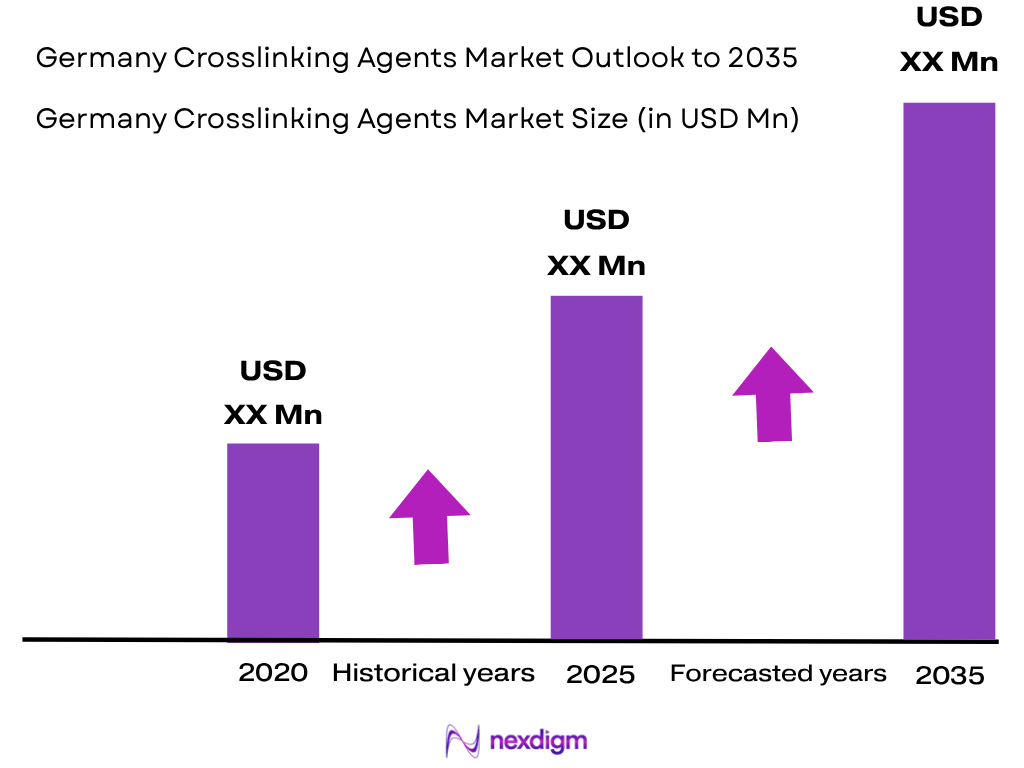
The Germany Crosslinking Agents Market is valued at ~USD XX billion in 2024 and is expected to grow at a CAGR of ~XX% during 2026-2035, supported by rising demand from automotive coatings, industrial protective coatings, adhesives, and advanced polymer applications. The market expansion is driven by Germany’s strong chemical manufacturing ecosystem, automotive production base, and increasing adoption of sustainable coating technologies. According to Germany’s chemical industry associations, the country remains one of Europe’s largest chemical producers, with specialty chemicals contributing significantly to industrial applications.
Germany’s crosslinking agents market is primarily concentrated around major industrial clusters including North Rhine-Westphalia, Bavaria, Baden-Württemberg, and Hesse due to their established chemical manufacturing infrastructure, automotive production facilities, and proximity to downstream industries. North Rhine-Westphalia dominates because of its extensive chemical production network and presence of large-scale specialty chemical manufacturers. Bavaria and Baden-Württemberg are important demand centers due to automotive OEMs, premium vehicle manufacturing, electronics industries, and engineering companies requiring high-performance coatings, adhesives, and polymer materials. These industrial ecosystems support continuous demand for crosslinking technologies.
Market Segmentation
By Chemistry Type
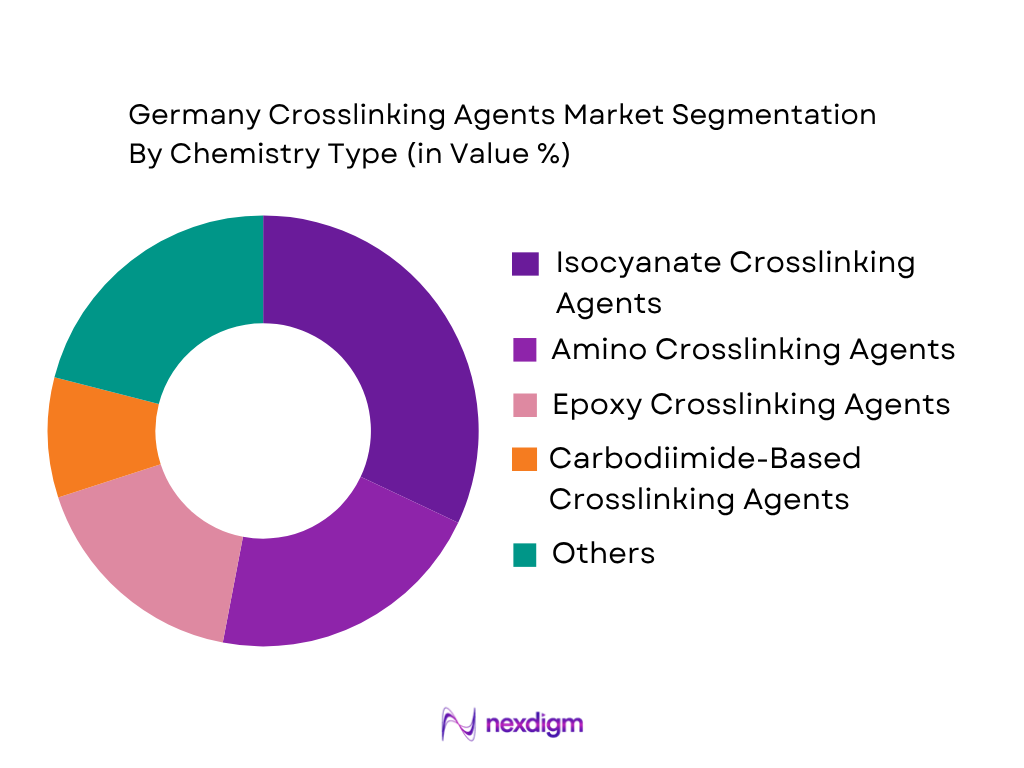
Germany Crosslinking Agents Market is segmented into isocyanate-based, amino resin-based, epoxy-based, carbodiimide-based, aziridine-based, blocked isocyanates, and other specialty systems. Isocyanate-based crosslinking agents represent the leading segment due to their extensive usage in polyurethane coatings, automotive finishes, industrial protective coatings, and adhesive applications. Germany’s automotive manufacturing ecosystem creates significant demand for polyurethane-based coating technologies requiring superior durability, chemical resistance, and weather protection. Additionally, increasing adoption of high-performance coatings in industrial equipment and infrastructure applications supports continued demand for isocyanate crosslinking systems. However, environmental regulations related to VOC emissions and hazardous chemical handling are encouraging manufacturers to develop blocked isocyanate and water-based alternatives.
By Application Industry
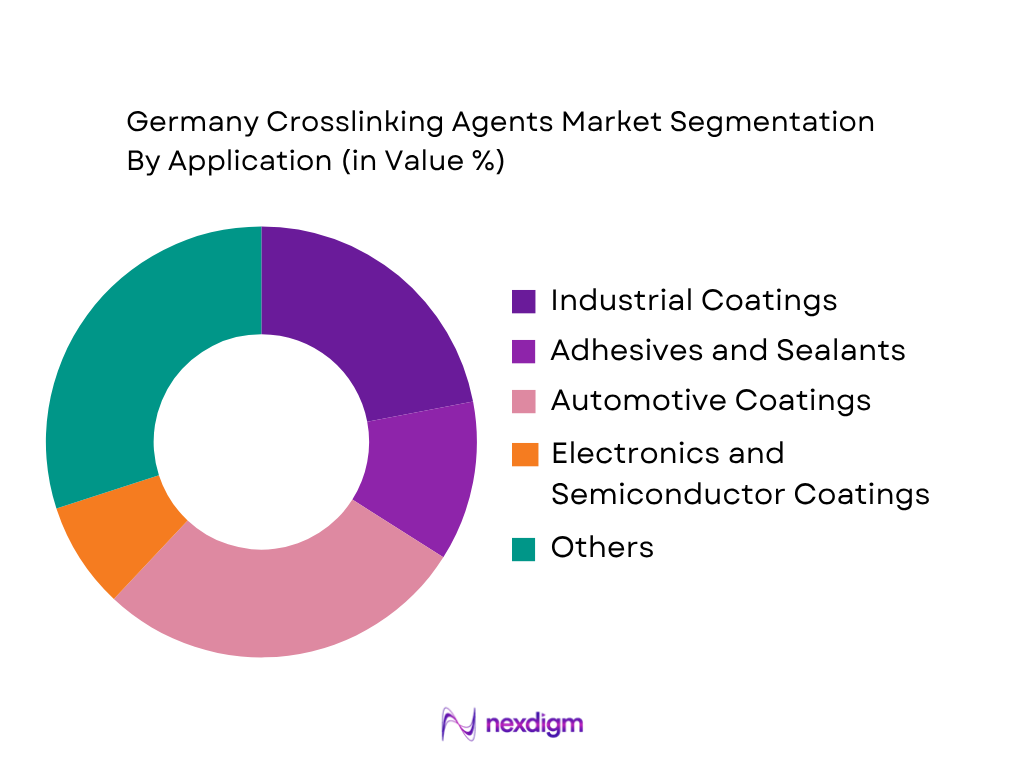
Germany Crosslinking Agents Market is segmented into automotive coatings, industrial coatings, construction coatings, adhesives, electronics coatings, aerospace coatings, marine coatings, and packaging coatings. Automotive coatings dominate this segment due to Germany’s position as a global automotive manufacturing hub with major OEMs and component suppliers. Crosslinking agents are essential for automotive basecoats, clearcoats, primers, and protective layers requiring high durability and resistance against environmental exposure. The growth of electric vehicle production is further increasing demand for advanced coating materials, battery protection systems, lightweight composites, and specialty adhesives. Industrial coatings also represent a significant application area due to Germany’s machinery manufacturing, chemical processing, and engineering sectors.
Competitive Landscape
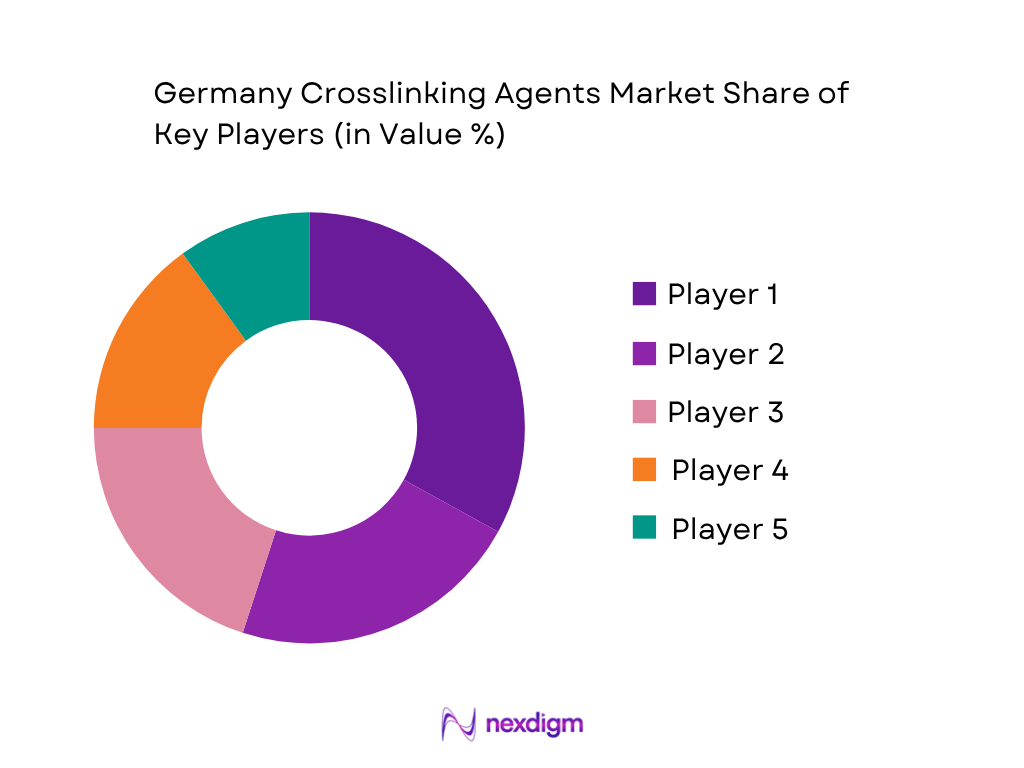
The Germany Crosslinking Agents Market is characterized by the presence of global chemical manufacturers, specialty polymer companies, and coating technology suppliers. Major players compete through advanced formulation capabilities, sustainable product development, application-specific solutions, and strong relationships with automotive and industrial customers. The competitive landscape is influenced by increasing demand for low-VOC technologies, bio-based materials, and regulatory-compliant crosslinking solutions.
| Company | Establishment Year | Headquarters | Major Product Focus | Key Application Areas | Sustainability Focus | Manufacturing Capability | R&D Strength |
| BASF | 1865 | Ludwigshafen, Germany | ~ | ~ | ~ | ~ | ~ |
| Evonik Industries | 2007 | Essen, Germany | ~ | ~ | ~ | ~ | ~ |
| Covestro | 2015 | Leverkusen, Germany | ~ | ~ | ~ | ~ | ~ |
| Wacker Chemie | 1914 | Munich, Germany | ~ | ~ | ~ | ~ | ~ |
| Lanxess | 2004 | Cologne, Germany | ~ | ~ | ~ | ~ | ~ |
Germany Crosslinking Agents Market Analysis
Growth Drivers
Expansion of Automotive Manufacturing Base and Increasing Demand for EV Coatings
The expansion of Germany’s automotive manufacturing ecosystem is supporting demand for crosslinking agents used in automotive coatings, protective finishes, adhesives, and polymer-based components. Germany remains one of Europe’s largest vehicle manufacturing hubs, with automotive production requiring advanced coating technologies for corrosion resistance, durability, chemical protection, and aesthetic performance. According to the European Automobile Manufacturers’ Association, Germany produced approximately 4.1 million passenger cars in 2024, maintaining its position as a major automotive production center in Europe. The increasing transition toward electric vehicles is further creating demand for specialized coating materials used in battery systems, lightweight composite structures, electrical insulation components, and vehicle protection layers. Germany recorded more than 570,000 new electric vehicle registrations in 2024, reflecting continued industrial transformation toward electrified mobility. Crosslinking agents are increasingly utilized in polyurethane coatings, epoxy systems, and high-performance adhesives required for automotive applications. The growth of EV manufacturing facilities, automotive component suppliers, and lightweight material adoption is encouraging manufacturers to develop advanced crosslinking solutions with improved thermal stability, chemical resistance, and environmental performance.
Growth of Industrial Protective Coatings and Adoption of Water-Based Coating Technologies
The expansion of industrial manufacturing activities and increasing demand for protective coatings are strengthening the application base for crosslinking agents in Germany. Industrial sectors including machinery manufacturing, chemical processing, renewable energy equipment, and engineering require coatings with high resistance against corrosion, chemicals, and extreme operating conditions. Germany’s manufacturing sector remains a key contributor to industrial demand, with the Federal Statistical Office reporting industrial production activity across machinery, equipment, automotive, and chemical manufacturing segments. In addition, Germany continues to invest in renewable energy infrastructure, with the Federal Network Agency reporting that renewable energy sources generated more than 50% of Germany’s electricity consumption in 2024, increasing demand for durable coatings in wind turbines, solar equipment, and energy infrastructure. Water-based coating technologies are gaining importance due to European environmental regulations targeting VOC emissions. Crosslinking agents enable these coating systems to achieve improved mechanical strength, adhesion, and durability while reducing environmental impact. Increasing industrial sustainability requirements are encouraging coating manufacturers to adopt advanced crosslinking technologies compatible with water-based and low-emission formulations.
Market Challenges
Stringent EU Chemical Regulations and Formaldehyde Emission Restrictions
Strict European chemical regulations represent a significant challenge for crosslinking agent manufacturers operating in Germany. The implementation of regulations related to chemical safety, emissions control, and hazardous substance management requires continuous product modification and compliance investment. The European Chemicals Agency manages thousands of substances under REACH regulations, requiring manufacturers to evaluate chemical risks, maintain documentation, and comply with restrictions on hazardous materials. Formaldehyde-based crosslinking systems, including certain amino resin technologies, face increasing scrutiny due to emission concerns and occupational exposure requirements. Germany’s Federal Environment Agency has emphasized reducing exposure to hazardous substances and improving indoor and industrial air quality standards. These regulatory developments are increasing demand for alternative technologies such as low-formaldehyde, blocked isocyanate, carbodiimide, and bio-based crosslinking systems. Manufacturers must invest in research and development to redesign formulations while maintaining performance characteristics such as hardness, adhesion, chemical resistance, and curing efficiency. Compliance with evolving European sustainability frameworks creates additional operational complexity for chemical producers supplying coatings, adhesives, and polymer industries.
Dependence on Specialty Chemical Imports and Raw Material Supply Volatility
Dependence on specialty chemical supply chains creates challenges for Germany’s crosslinking agents market due to exposure to international raw material availability, geopolitical risks, and fluctuations in chemical production networks. Crosslinking agent manufacturing relies on specialized intermediates including isocyanates, epoxy components, amino compounds, and other chemical derivatives that may require global sourcing. Germany’s chemical industry remains highly integrated into international trade networks, with chemical raw materials and intermediate products forming a significant component of industrial imports and exports. According to Germany’s Federal Statistical Office, chemical products remain among the country’s important industrial trade categories, reflecting the scale and complexity of chemical supply chains. Disruptions in global logistics, energy availability, or upstream chemical production can affect material availability and manufacturing schedules. Additionally, rising requirements for sustainable formulations increase research complexity, as manufacturers must replace conventional chemistries while maintaining application performance. Companies producing crosslinking agents face challenges in securing reliable raw material sources, optimizing supply chains, and developing alternative formulations to reduce dependency on volatile international markets.
Market Opportunities
Development of Bio-Based Crosslinking Agents and Expansion of Low VOC Coating Systems
The increasing focus on sustainable chemical solutions is creating opportunities for development of bio-based crosslinking agents and low-VOC coating technologies in Germany. Industries are increasingly seeking polymer solutions that reduce environmental impact while maintaining high-performance characteristics required for automotive, construction, electronics, and industrial applications. Germany’s sustainability initiatives and European climate policies are accelerating demand for environmentally responsible materials. According to the International Energy Agency, global clean energy investment exceeded USD 2 trillion in 2024, supporting demand for sustainable materials used in renewable energy equipment, transportation, and industrial infrastructure. Bio-based crosslinking technologies can support applications requiring improved recyclability, lower emissions, and reduced dependence on fossil-based raw materials. Low-VOC coating systems are gaining adoption across industrial sectors due to stricter emission standards and corporate sustainability objectives. Crosslinking agent manufacturers developing water-based, renewable-content, and environmentally compliant technologies can address increasing demand from coating producers and downstream industries. These developments provide opportunities for innovation in polyurethane alternatives, sustainable curing systems, and advanced polymer modification technologies.
Electric Vehicle Material Applications and Advanced Composite Manufacturing Growth
The expansion of electric vehicle manufacturing and advanced composite material applications is creating new opportunities for crosslinking agent suppliers in Germany. Electric vehicles require specialized coatings, adhesives, insulation materials, and composite structures that provide lightweight performance, thermal stability, and long-term durability. Germany’s automotive industry is investing heavily in electrification, battery manufacturing, and lightweight vehicle technologies. According to the German Association of the Automotive Industry, Germany remains a major center for electric mobility development, supported by investments in battery systems, vehicle platforms, and automotive component manufacturing. Advanced composites are also gaining importance in aerospace, renewable energy equipment, and high-performance industrial applications. Crosslinking agents are essential for improving mechanical strength, bonding performance, and environmental resistance in composite materials and structural adhesives. The aerospace sector continues to demand lightweight and durable materials, while renewable energy infrastructure requires coatings and polymer systems capable of operating under harsh environmental conditions. Development of high-performance adhesive technologies, sustainable polymer modification solutions, and specialty crosslinking systems provides significant opportunities for manufacturers targeting next-generation industrial applications.
Future Outlook
Over the next decade, the Germany Crosslinking Agents Market is expected to experience steady expansion driven by automotive electrification, industrial modernization, sustainability requirements, and increasing adoption of advanced polymer materials. Demand for low-VOC, water-based, and bio-based crosslinking technologies is expected to increase as industries align with European environmental regulations. Growth in electric vehicles, renewable energy equipment, aerospace materials, and advanced manufacturing applications will create additional opportunities for specialty chemical suppliers.
Major Players
- BASF SE
- Evonik Industries AG
- Covestro AG
- Wacker Chemie AG
- Lanxess AG
- Allnex Germany GmbH
- Huntsman Corporation
- Dow Inc.
- Arkema Group
- Eastman Chemical Company
- Mitsubishi Chemical Group
- DIC Corporation
- Vencorex Holding
- King Industries
- Momentive Performance Materials
Key Target Audience
- Automotive coating manufacturers and OEM suppliers
- Specialty chemical manufacturers
- Paint and coating producers
- Adhesive and sealant manufacturers
- Polymer and resin producers
- Electronics material manufacturers
- Investments and venture capitalist firms (Industrial chemicals and advanced materials investment funds)
- Government and regulatory bodies (Federal Ministry for Economic Affairs and Climate Action, German Environment Agency)
Research Methodology
Step 1: Identification of Key Variables
The initial phase involves developing an ecosystem map covering raw material suppliers, crosslinking agent manufacturers, coating producers, automotive companies, construction material suppliers, and industrial users. Extensive secondary research is conducted using industry databases, government publications, trade statistics, and chemical industry information sources to identify major market variables influencing demand and supply.
Step 2: Market Analysis and Construction
Historical market information is analyzed through assessment of production trends, application demand, industrial consumption patterns, import-export activities, and downstream industry performance. Revenue estimation is developed through a combination of supply-side production analysis and demand-side application evaluation across automotive, industrial coatings, adhesives, and electronics industries.
Step 3: Hypothesis Validation and Expert Consultation
Market assumptions are validated through discussions with industry participants including chemical manufacturers, coating producers, polymer specialists, and downstream application companies. These consultations provide insights into product adoption trends, formulation requirements, regulatory challenges, and future technology development.
Step 4: Research Synthesis and Final Output
The final stage integrates primary and secondary research findings to create a comprehensive analysis of market size, segmentation, competitive landscape, growth drivers, challenges, and opportunities. Data validation is performed through triangulation of multiple information sources to ensure accuracy and consistency.

- Executive Summary
- Research Methodology (Market Definitions and Scope, Crosslinking Agent Classification Framework, Industry Ecosystem Mapping, Market Sizing Approach, Top-Down Analysis, Bottom-Up Analysis, Demand-Side Assessment, Supply-Side Assessment, Primary Interviews with Coating Manufacturers and Chemical Producers, Data Triangulation, Forecasting Framework, Regulatory Impact Assessment, Limitations and Future Considerations)

- Definition and Scope
- Market Evolution and Development Timeline of Crosslinking Technologies
- Historical Development of Polymer Crosslinking Chemistry in Germany
- Germany Crosslinking Agents Value Chain Analysis

- Growth Drivers (Expansion of Automotive Manufacturing Base, Increasing Demand for EV Coatings, Growth of Industrial Protective Coatings, Rising Adoption of Water-Based Coating Technologies, Expansion of Aerospace Manufacturing, Increasing Demand for Durable Polymer Materials, Growth of Renewable Energy Infrastructure, Increasing Advanced Composite Material Applications)
- Market Challenges (Stringent EU Chemical Regulations, Formaldehyde Emission Restrictions, Dependence on Specialty Chemical Imports, Raw Material Supply Volatility, High R&D Requirements for Sustainable Formulations, Complex Polymer Compatibility Requirements, Increasing Compliance Costs, Competition from Alternative Polymer Technologies)
- Market Opportunities (Development of Bio-Based Crosslinking Agents, Expansion of Low VOC Coating Systems, Electric Vehicle Material Applications, Sustainable Polymer Modification Solutions, Advanced Composite Manufacturing Growth, Aerospace Material Innovation, High Performance Adhesive Development, Green Building Material Adoption)
- Market Trends (Sustainable Crosslinking Chemistry Adoption, Shift Toward Water-Based Coatings, Increasing Use of Blocked Isocyanates, Low Temperature Curing Technologies, Bio-Based Chemical Development, Circular Polymer Solutions, Smart Coating Technologies, Advanced Composite Material Integration)
- Government Regulations (REACH Chemical Compliance Requirements, European Chemicals Agency Regulations, VOC Emission Standards, German Federal Immission Control Regulations, Hazardous Substance Management Requirements, Industrial Chemical Safety Regulations, Sustainable Chemistry Initiatives)
- SWOT Analysis
- Porter’s Five Forces Analysis
- PESTLE Analysis
- Stakeholder Ecosystem Analysis
- Competitive Ecosystem Analysis

- By Market Value (2020-2025)
- By Consumption Volume (2020-2025)
- By Average Selling Price (2020-2025)
- By Production Volume (2020-2025)
- By Domestic Consumption (2020-2025)

- By Chemistry Type (In Value %)
Isocyanate-Based Crosslinking Agents
Amino Resin-Based Crosslinking Agents
Epoxy-Based Crosslinking Agents
Azirdine-Based Crosslinking Agents
Carbodiimide-Based Crosslinking Agents
Blocked Isocyanate Crosslinking Agents
Melamine Formaldehyde Crosslinking Agents
Polyurethane Crosslinking Agents
Other Specialty Crosslinking Systems - By Resin Compatibility (In Value %)
Polyurethane Systems
Acrylic Polymer Systems
Epoxy Resin Systems
Polyester Resin Systems
Alkyd Resin Systems
Silicone Polymer Systems
Fluoropolymer Systems
Hybrid Polymer Systems
- By Application Industry (In Value %)
Industrial Protective Coatings
Construction Coatings and Architectural Paints
Adhesives and Sealants
Electronics and Electrical Coatings
Marine Coating
Packaging Coatings
Textile and Leather Finishing - By End User Industry (In Value %)
Automotive OEM Manufacturers
Automotive Component Suppliers
Chemical and Coating Manufacturers
Construction Material Producers
Electronics Manufacturers
Industrial Equipment Manufacturers
Aerospace Component Manufacturers
Renewable Energy Equipment Producers - By Technology Type (In Value %)
Solvent-Based Crosslinking Systems
Water-Based Crosslinking Systems
High-Solid Coating Systems
UV-Curable Crosslinking Systems
Powder Coating Crosslinking Systems
Bio-Based Crosslinking Technologies
Low VOC Crosslinking Systems - By Region (In Value %)
Bavaria
North Rhine-Westphalia
Baden-Württemberg
Hesse
Lower Saxony
Saxony
Other German Industrial Regions

- Market Share Analysis of Major Players (By Revenue, Product Category, Chemistry Type, Application Industry, Distribution Channel)
- Cross Comparison Parameters (Product Portfolio Breadth, Crosslinking Chemistry Expertise, Production Capacity, Application-Specific Formulation Capability, Automotive Coating Industry Presence, Sustainable Product Portfolio, R&D Investment Capability, Global Distribution Network Strength)
- SWOT Analysis of Major Players
- Detailed Profiles of Major Companies
BASF
Evonik Industries
Covestro
Wacker Chemie
Lanxess
Huntsman Corporation
Allnex
Arkema
Dow
Eastman Chemical Company
Mitsubishi Chemical Group
DIC Corporation
Evonik Crosslinkers
Vencorex
King Industries

- Germany Crosslinking Agents Market Consumption Behavior Assessment
- Product Preference Analysis
- Germany Crosslinking Agents Market End-User Analysis
- Industrial Manufacturing Consumption Trends
- Germany Crosslinking Agents Market Buyer Decision-Making Process

- By Market Value (2026-2035)
- By Consumption Volume (2026-2035)
- By Average Selling Price (2026-2035)
- By Production Volume (2026-2035)
- By Domestic Consumption (2026-2035)


 Request a Sample
 Ask for Customization
 Get a Quote
 Enquire Now