
 Download PDF
 Download PDF
Market Overview
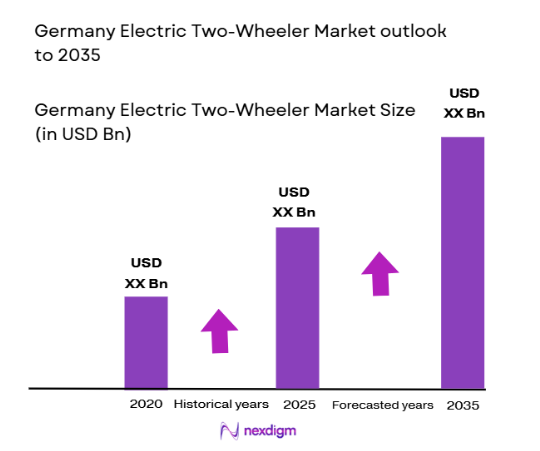
The Germany Electric Two-Wheeler Market has experienced rapid growth and is projected to continue expanding. The market size is expected to reach USD ~ billion based on a recent historical assessment, driven primarily by the increasing demand for environmentally friendly transportation solutions and government policies supporting electric mobility. The growing popularity of electric scooters and motorcycles is attributed to their cost-effectiveness and low environmental impact, coupled with favorable incentives such as tax rebates and infrastructure development investments. Key drivers include the shift towards sustainable mobility and technological advancements in battery efficiency and electric motor systems.
Germany, being one of the largest economies in Europe, plays a dominant role in the electric two-wheeler market. Cities such as Berlin, Munich, and Hamburg have witnessed rapid adoption due to favorable governmental policies, a strong urban population, and a focus on green technologies. The country’s government is highly committed to reducing carbon emissions, which further supports the growth of the electric vehicle sector, including two-wheelers. Additionally, Germany benefits from a robust infrastructure for electric vehicles, including widespread charging networks that facilitate easier adoption among consumers.
Market Segmentation
By Product Type
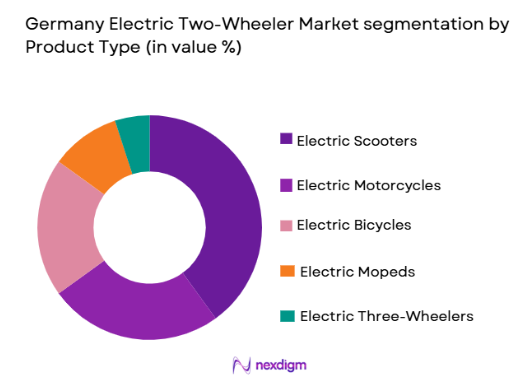
Germany Electric Two-Wheeler Market is segmented by product type into electric scooters, electric motorcycles, electric bicycles, electric mopeds, and electric three-wheelers. Recently, electric scooters have gained a dominant market share due to the growing demand for personal mobility solutions in urban areas, especially in cities with high traffic congestion. Electric scooters are affordable, energy-efficient, and highly suitable for short commutes, making them a preferred choice among consumers. The convenience of their use, along with government incentives such as subsidies for electric vehicle purchases, has further contributed to their rapid adoption. Additionally, the low operational costs and ease of charging at home add to the overall appeal of electric scooters in Germany, thus driving their market dominance.
By Platform Type
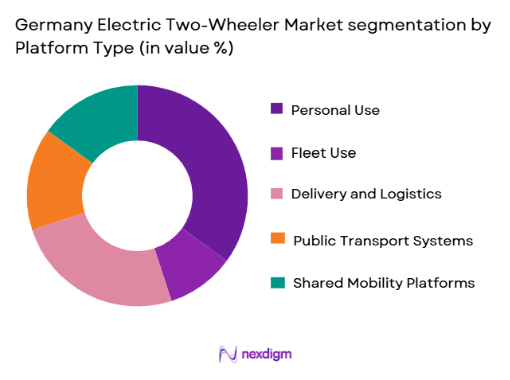
Germany Electric Two-Wheeler Market is segmented by platform type into personal use, fleet use, delivery and logistics, public transport systems, and shared mobility platforms. Recently, the shared mobility platform segment has gained the largest market share due to the increasing popularity of ride-sharing and scooter-sharing services in metropolitan areas. Shared mobility services, driven by the convenience of accessing electric two-wheelers for short trips, have been particularly successful in cities like Berlin and Munich. The integration of electric scooters and bikes into these services helps to reduce traffic congestion and promotes sustainability, aligning with the growing demand for eco-friendly urban transport solutions. Additionally, several mobility-as-a-service (MaaS) providers have expanded their fleet of electric two-wheelers, which further supports the growth of this segment.
Competitive Landscape
The competitive landscape of the Germany Electric Two-Wheeler Market is characterized by the presence of both global and local manufacturers. The market is moderately consolidated, with a few dominant players leading the innovation and adoption of electric two-wheelers. These players focus on advancements in battery technology, electric motor systems, and charging infrastructure. The growing demand for eco-friendly vehicles and the increased availability of government incentives for electric vehicle purchases have intensified the competition among manufacturers. The key players are continually working on improving the performance and affordability of their electric two-wheelers while expanding their product portfolios to cater to different segments of the market.
| Company Name | Establishment Year | Headquarters | Technology Focus | Market Reach | Key Products | Revenue (USD Billion) | Additional Market-Specific Parameter |
| BMW Motorrad | 1923 | Munich | ~ | ~ | ~ | ~ | ~ |
| NIU Technologies | 2014 | Beijing | ~ | ~ | ~ | ~ | ~ |
| Honda Motor Co. | 1948 | Tokyo | ~ | ~ | ~ | ~ | ~ |
| KTM | 1953 | Mattighofen | ~ | ~ | ~ | ~ | ~ |
| Tork Motors | 2009 | Pune | ~ | ~ | ~ | ~ | ~ |
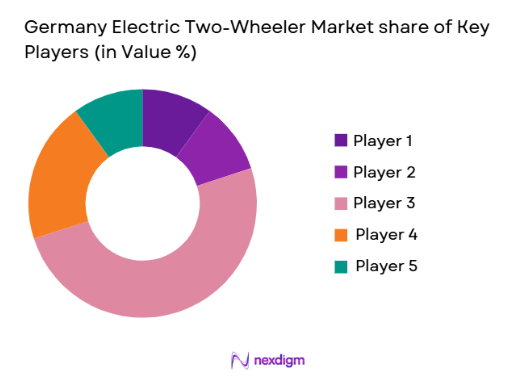
Germany Electric Two-Wheeler Market Analysis
Growth Drivers
Government Incentives for EV Adoption:
Government policies and incentives are a significant growth driver in the Germany Electric Two-Wheeler Market. The German government has implemented several measures to promote the use of electric vehicles, including tax rebates, subsidies for electric two-wheeler manufacturers, and investments in the development of charging infrastructure. This financial support lowers the upfront cost of electric two-wheelers, making them more affordable for consumers. The government’s commitment to achieving carbon neutrality by 2050 and reducing greenhouse gas emissions further fuels the growth of the electric vehicle sector. Policies such as exemptions from vehicle registration taxes and reduced road tolls for electric vehicles have further increased consumer demand. Additionally, the European Union’s focus on environmental regulations and reducing emissions from urban transport strengthens the demand for electric two-wheelers as a key solution to combat air pollution. The government’s efforts to make electric mobility a mainstream choice for transportation are expected to continue to fuel the growth of the market.
Technological Advancements in Battery and Motor Systems:
Technological advancements in battery efficiency and electric motor systems are another critical growth driver for the German electric two-wheeler market. Innovations in lithium-ion batteries, which offer improved energy density and faster charging times, have made electric two-wheelers more practical for daily use. Furthermore, advancements in electric motor systems have increased the performance and range of electric two-wheelers, allowing them to compete more effectively with traditional gasoline-powered vehicles. Battery longevity and the development of solid-state batteries also promise to enhance the consumer experience by offering longer ranges and faster charging times, addressing one of the key concerns associated with electric vehicles. As technology continues to improve, electric two-wheelers will become even more efficient, contributing to the market’s overall growth. The availability of a diverse range of charging solutions, including fast chargers and wireless charging technology, has also accelerated the adoption of electric two-wheelers, driving market demand across urban and suburban areas.
Market Challenges
High Initial Investment Costs:
One of the key challenges facing the Germany Electric Two-Wheeler Market is the high initial investment cost of electric two-wheelers compared to their traditional counterparts. Although the operational and maintenance costs of electric vehicles are lower in the long run, the upfront cost remains a barrier to widespread adoption. The relatively higher price of electric two-wheelers, primarily driven by the cost of advanced battery systems, is often perceived as a deterrent for potential buyers. Despite government subsidies, the high cost remains a significant challenge, particularly for individual consumers who may be hesitant to invest in electric vehicles without a clear return on investment. Additionally, the lack of awareness regarding the long-term savings and environmental benefits of electric two-wheelers may contribute to the slow adoption in certain segments of the market. Overcoming this challenge will require continuous advancements in battery technology and manufacturing processes to bring down costs while maintaining performance.
Limited Charging Infrastructure:
Another challenge impacting the growth of the Germany Electric Two-Wheeler Market is the limited charging infrastructure available in certain regions. While major cities like Berlin and Munich boast a high number of charging stations, other areas still face a lack of widespread charging facilities, which could deter consumers from switching to electric two-wheelers. The convenience of home charging is limited to those with access to private parking spaces, while individuals living in apartments or areas with inadequate charging infrastructure may find it challenging to adopt electric two-wheelers. Moreover, the speed at which charging stations are being installed across the country is not fast enough to meet the growing demand for electric mobility. To address this issue, the expansion of public and private charging networks is crucial to ensuring that electric two-wheeler users have easy access to charging points. As charging infrastructure improves, the adoption rate of electric two-wheelers is expected to increase significantly.
Opportunities
Expansion of Charging Infrastructure:
The expansion of charging infrastructure presents a significant opportunity for the Germany Electric Two-Wheeler Market. As the demand for electric vehicles continues to rise, the need for a robust and widespread charging network becomes even more critical. Government support for the development of charging infrastructure is already evident, with multiple initiatives aimed at installing more public and private charging stations across urban and rural areas. Additionally, the integration of fast-charging stations and wireless charging technology will further reduce the time required to charge electric two-wheelers, improving convenience for consumers. By addressing the current gaps in charging infrastructure, Germany can enhance the adoption rate of electric two-wheelers, encouraging both individual users and fleet operators to make the switch to electric mobility. This expansion is expected to be one of the key factors driving market growth in the coming years.
Integration with Urban Mobility Solutions:
The integration of electric two-wheelers with broader urban mobility solutions offers a significant opportunity for market growth. Many cities across Germany are embracing sustainable transportation solutions, and electric two-wheelers are increasingly being incorporated into shared mobility systems, such as bike-sharing and scooter-sharing services. This trend not only supports the adoption of electric vehicles but also complements public transportation networks, offering consumers a convenient and eco-friendly way to navigate urban areas. By working in tandem with other forms of public transportation, electric two-wheelers can provide a seamless mobility experience for users, especially in cities with high levels of congestion. The growing trend of mobility-as-a-service (MaaS) and the focus on sustainable urban development further contribute to the expansion of electric two-wheelers within these integrated solutions, presenting a significant opportunity for manufacturers and service providers in the market.
Future Outlook
The future outlook of the Germany Electric Two-Wheeler Market is promising, driven by technological advancements, supportive government policies, and growing consumer demand for sustainable transportation. Over the next few years, electric two-wheelers are expected to become more affordable, efficient, and widely available, with increased integration into urban mobility solutions. Technological developments in battery and motor systems will continue to enhance performance, while the expansion of charging infrastructure will eliminate one of the major barriers to adoption. As more cities adopt green transportation policies, the demand for electric two-wheelers is likely to rise, positioning the market for continued growth and innovation.
Major Players
- BMWMotorrad
- NIU Technologies
- Honda Motor Co.
- KTM
- Tork Motors
- Super Soco
- Ather Energy
- Hero Electric
- Revolt Motors
- Vespa
- Piaggio Group
- Gogoro
- Energica Motor Company
- Lightning Motorcycles
- Zero Motorcycles
Key Target Audience
- Investments and venture capitalist firms
- Government and regulatory bodies
- Electric vehicle manufacturers
- Battery manufacturers
- Charging infrastructure developers
- E-commerce and delivery service providers
- Ride-sharing and mobility platform operators
- Fleet operators
Research Methodology
Step 1: Identification of Key Variables
The key variables affecting the market are identified, focusing on technological advancements, government policies, and consumer behavior. This step involves extensive literature review and expert consultations to pinpoint the most critical factors.
Step 2: Market Analysis and Construction
Data is gathered from both primary and secondary sources to build the market model. This includes analyzing trends, regulations, and existing market dynamics, followed by constructing the market framework.
Step 3: Hypothesis Validation and Expert Consultation
Hypotheses regarding the market size, trends, and growth drivers are validated through consultations with industry experts, key players, and stakeholders to ensure the accuracy of the research.
Step 4: Research Synthesis and Final Output
After validating the hypotheses, the research findings are synthesized, with all data points and insights consolidated into the final report to provide an accurate, reliable outlook of the market.

- Executive Summary
- Research Methodology (Definitions, Scope, Industry Assumptions, Market Sizing Approach, Primary & Secondary Research Framework, Data Collection & Verification Protocol, Analytic Models & Forecast Methodology, Limitations & Research Validity Checks)

- Market Definition and Scope
- Value Chain & Stakeholder Ecosystem
- Regulatory / Certification Landscape
- Sector Dynamics Affecting Demand
- Strategic Initiatives & Infrastructure Growth

- Growth Drivers
Government Incentives for EV Adoption
Technological Advancements in Battery and Motor Systems
Increasing Environmental Awareness
Rising Fuel Prices Promoting EV Use
Growth in E-commerce and Delivery Services - Market Challenges
High Initial Investment Costs
Limited Charging Infrastructure
Battery Life and Performance Limitations
Regulatory Barriers and Compliance Issues
Competition from Conventional Two-Wheelers - Market Opportunities
Expansion of Charging Infrastructure
Integration with Urban Mobility Solutions
Growing Demand for E-commerce Delivery Fleets - Trends
Increasing Adoption of Electric Mobility in Urban Areas
Growth in Shared Mobility Models
Focus on Battery Recycling and Sustainability
Technological Innovations in Battery Management
Government Policies Supporting EVs - Government Regulations & Defense Policy
Emission Reduction Targets and Standards
Battery Recycling Regulations
Subsidies for EV Purchases and Charging Infrastructure - SWOT Analysis
- Stakeholder and Ecosystem Analysis
- Porter’s Five Forces Analysis
- Competition Intensity and Ecosystem Mapping

- By Market Value, 2020-2025
- By Installed Units, 2020-2025
- By Average System Price, 2020-2025
- By System Complexity Tier, 2020-2025

- By System Type (In Value%)
Electric Scooters
Electric Motorcycles
Electric Bicycles
Electric Mopeds
Electric Three-Wheelers - By Platform Type (In Value%)
Personal Use
Fleet Use
Delivery and Logistics
Public Transport Systems
Shared Mobility Platforms - By Fitment Type (In Value%)
Retrofit Kits
Factory Built
Modular Systems
Integrated Systems
Custom Fitments - By EndUser Segment (In Value%)
Individual Consumers
Commercial Fleets
Municipal and Government Fleets
Shared Mobility Providers
Logistics & Delivery Services - By Procurement Channel (In Value%)
Direct Procurement
Retail Sales
Online Platforms
Fleet Procurement
Government Tendering - By Material / Technology (In Value%)
Lithium-Ion Batteries
Lead-Acid Batteries
Solar Panels
Regenerative Braking Systems
Wireless Charging Technology

- Market structure and competitive positioning
- Market share snapshot of major players
- CrossComparison Parameters (System Type, Platform Type, Procurement Channel, EndUser Segment, Fitment Type, Material, Battery Technology, Motor System, Market Growth, Regulatory Compliance)
- SWOT Analysis of Key Players
- Pricing & Procurement Analysis
- Key Players
BMW Motorrad
Zero Motorcycles
NIU Technologies
Etergo
Vespa
Honda Motor Co.
KTM
Gogoro
Tork Motors
Hero Electric
Revolt Motors
Mahindra Electric
Ather Energy
Super Soco
Zapp Electric

- Growing Demand for Personal Electric Vehicles
- Commercial Fleets Transitioning to Electric Two-Wheelers
- Government Programs Driving Fleet Electrification
- Adoption of Electric Vehicles by Delivery Services

- Forecast Market Value, 2026-2035
- Forecast Installed Units, 2026-2035
- Price Forecast by System Tier, 2026-2035
- Future Demand by Platform, 2026-2035


 Request a Sample
 Ask for Customization
 Get a Quote
 Enquire Now