
 Download PDF
 Download PDF
Market Overview
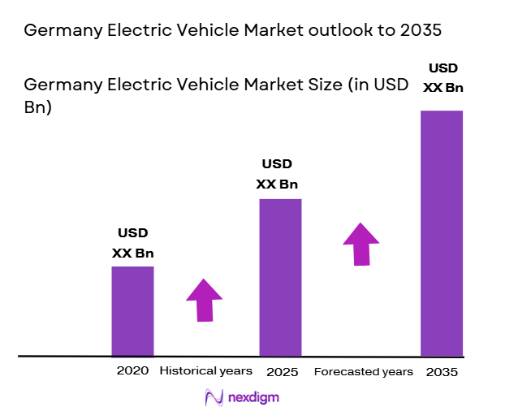
The German electric vehicle market is valued at approximately USD ~ billion based on a recent historical assessment. This market is primarily driven by robust government incentives, such as subsidies and tax rebates aimed at accelerating the transition to electric mobility. Additionally, advancements in EV battery technologies, along with the growing infrastructure for electric vehicles, are fueling adoption rates. The increasing shift toward sustainable energy sources and the rapid pace of urbanization further support the market’s growth. Strong support from both the government and private sectors ensures the continued expansion of this market.
Germany dominates the European electric vehicle market due to its strong automotive industry and extensive manufacturing capabilities. Major cities like Berlin, Munich, and Stuttgart are key hubs for EV adoption, driven by both consumer demand and a favorable policy environment. The government’s commitment to carbon neutrality and green energy initiatives fosters an ideal ecosystem for EV growth. Germany’s infrastructure, including widespread EV charging networks and incentives for both consumers and manufacturers, reinforces its position as a leader in this sector.
Market Segmentation
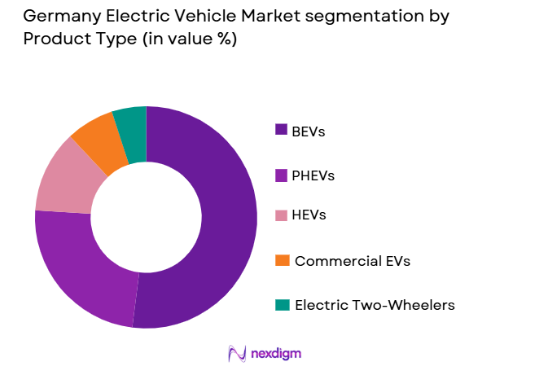
By Product Type:
The German electric vehicle market is segmented by product type into Battery Electric Vehicles (BEVs), Plug-in Hybrid Electric Vehicles (PHEVs), Hybrid Electric Vehicles (HEVs), Commercial Electric Vehicles, and Electric Two-Wheelers. Recently, BEVs have emerged as the dominant sub-segment due to their increasing consumer demand driven by environmental concerns, technological advancements, and government incentives. BEVs offer the advantage of a fully electric solution, eliminating the dependency on fossil fuels. The growing availability of charging infrastructure and the decreasing cost of batteries have made BEVs more affordable and appealing to a larger audience. With advancements in battery technology that extend driving ranges and reduce charging times, BEVs continue to dominate the market share, solidifying their position as the preferred choice for consumers in Germany.
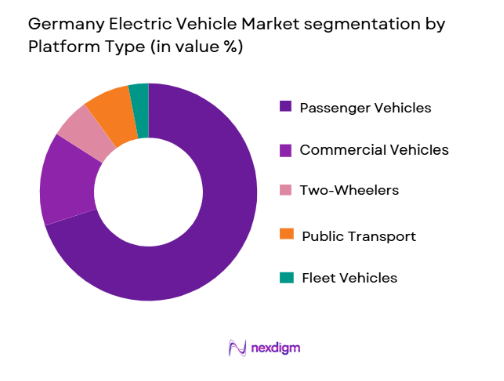
By Platform Type:
The German electric vehicle market is segmented by platform type into Passenger Vehicles, Commercial Vehicles, Two-Wheelers, Public Transport, and Fleet Vehicles. Passenger vehicles hold the dominant market share within the German market, driven by strong consumer preference, government incentives, and technological advancements. As the most common platform for EV adoption, passenger vehicles benefit from increased availability of charging infrastructure, lower operational costs, and the consumer shift toward sustainable mobility solutions. Germany’s policies supporting the purchase of electric cars further stimulate demand for passenger vehicles, making them the most significant contributor to the EV market.
Competitive Landscape
The competitive landscape of the German electric vehicle market is characterized by high levels of consolidation, with major global automotive players dominating the market. Companies like Volkswagen, BMW, and Daimler lead in terms of both market share and technological innovation, leveraging their strong brand presence and production capabilities. These players continue to expand their EV portfolios, benefiting from the growing demand for sustainable vehicles and increasing environmental regulations. The presence of startups and new entrants, particularly in the battery technology and charging infrastructure space, adds to the competitiveness of the market. Major players focus on driving innovation in battery technology, autonomous driving systems, and smart connectivity features to gain a competitive edge.
| Company Name | Establishment Year | Headquarters | Technology Focus | Market Reach | Key Products | Revenue (USD Billion) | Additional Parameter |
| Volkswagen | 1937 | Wolfsburg, Germany | ~ | ~ | ~ | ~ | ~ |
| BMW Group | 1916 | Munich, Germany | ~ | ~ | ~ | ~ | ~ |
| Daimler AG | 1926 | Stuttgart, Germany | ~ | ~ | ~ | ~ | ~ |
| Tesla | 2003 | Palo Alto, USA | ~ | ~ | ~ | ~ | ~ |
| Audi | 1909 | Ingolstadt, Germany | ~ | ~ | ~ | ~ | ~ |
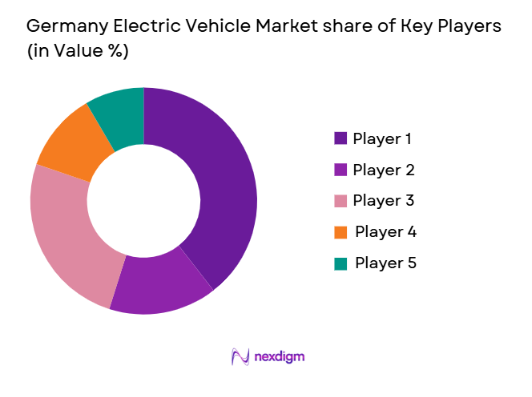
Germany Electric Vehicle Market Analysis
Growth Drivers
Government Incentives for EV Adoption:
One of the key growth drivers for the German electric vehicle market is the robust government incentives aimed at reducing the cost burden of electric vehicles for consumers. The German government has introduced several measures, including tax rebates, grants, and subsidies for electric vehicle manufacturers, all designed to accelerate the transition to zero-emission vehicles. These financial incentives not only reduce the upfront cost of EVs but also encourage the installation of charging infrastructure, making electric cars more convenient and accessible for the average consumer. In addition, stricter emissions regulations and policies targeting a reduction in greenhouse gas emissions further reinforce the adoption of electric vehicles as part of Germany’s broader environmental strategy. With plans for carbon neutrality by 2050, government incentives will continue to play a pivotal role in sustaining the market’s growth momentum.
Technological Advancements in Battery Technologies:
Another critical driver for the growth of the electric vehicle market in Germany is the rapid development of battery technologies. Advancements in lithium-ion batteries and the growing interest in solid-state batteries are helping to improve the efficiency, energy density, and lifespan of EV batteries. These innovations are addressing one of the major barriers to EV adoption, which is the range anxiety associated with limited battery life and long charging times. By increasing the energy density of batteries, automakers can manufacture EVs with longer driving ranges, making them more appealing to consumers who were previously hesitant due to concerns over range. Furthermore, reductions in the cost of manufacturing batteries and improvements in charging infrastructure are expected to drive down overall costs, further boosting the market. As a result, advancements in battery technology will continue to be a driving force in the EV market’s expansion in Germany.
Market Challenges
High Initial Purchase Price of EVs:
One of the most significant challenges facing the German electric vehicle market is the high initial purchase price of EVs compared to conventional internal combustion engine (ICE) vehicles. Despite government incentives, the upfront cost of electric cars remains a barrier for many consumers, especially when purchasing new models. While the operating costs of electric vehicles tend to be lower in the long run due to reduced fuel and maintenance expenses, the high initial cost can deter price-sensitive customers. Furthermore, premium brands dominate the EV segment in Germany, with many consumers opting for these higher-priced models due to brand loyalty and perceived quality, further increasing the overall market price. The cost challenge is compounded by the relatively high cost of EV batteries, which represents a significant portion of the total vehicle price.
Charging Infrastructure Gaps:
The availability and accessibility of charging infrastructure remain a challenge for the German electric vehicle market. While Germany has made significant strides in expanding its charging network, there are still concerns regarding the pace of development and the distribution of charging stations. Particularly in rural and less urbanized areas, the charging infrastructure remains underdeveloped, leading to range anxiety and hesitation from potential EV buyers. Consumers are less likely to invest in electric vehicles if they perceive charging as inconvenient or unreliable, making the expansion of charging infrastructure crucial for continued market growth. Moreover, the lack of universal standardization in charging stations across different vehicle manufacturers further complicates the issue. Continued investment in and development of a reliable and widespread charging network will be critical for overcoming this challenge.
Opportunities
Partnerships with Renewable Energy Providers:
One key opportunity for the German electric vehicle market lies in the increasing collaboration between electric vehicle manufacturers and renewable energy providers. As Germany seeks to meet its carbon neutrality goals, integrating electric vehicles with renewable energy sources such as solar and wind presents a significant opportunity for market expansion. Through partnerships, manufacturers can offer consumers the ability to charge their EVs with clean, renewable energy, further enhancing the environmental benefits of electric vehicles. Additionally, energy providers can play a role in the growth of smart grids and vehicle-to-grid (V2G) technology, allowing for better energy distribution and storage solutions. This integration of electric mobility and renewable energy systems will be essential for creating a more sustainable and efficient energy ecosystem, offering both economic and environmental benefits.
Emerging Demand for Autonomous EVs:
Another promising opportunity for the German electric vehicle market is the rising demand for autonomous electric vehicles. As advancements in artificial intelligence (AI) and self-driving technology progress, more consumers are expected to embrace the idea of autonomous vehicles. Germany’s automotive industry, already a leader in vehicle manufacturing, is well-positioned to capitalize on this trend. Autonomous EVs offer numerous benefits, including enhanced safety, convenience, and efficiency. Furthermore, the combination of electric powertrains and autonomous capabilities offers the potential for more sustainable transportation solutions, reducing traffic congestion and improving mobility in urban areas. The increasing demand for autonomous vehicles presents an exciting growth opportunity for the electric vehicle market, making it a significant area of focus for manufacturers and technology companies.
Future Outlook
The future outlook for the German electric vehicle market remains positive, with expected growth over the next five years driven by continuous technological innovations, regulatory support, and shifting consumer preferences. Advances in battery technologies, the increasing availability of charging infrastructure, and the gradual reduction in EV prices will support the widespread adoption of electric vehicles across the country. Germany’s commitment to carbon neutrality and its robust manufacturing sector will foster an environment conducive to further market expansion. Demand for electric vehicles, particularly in the passenger vehicle segment, will continue to increase as consumers prioritize sustainability and cost savings, while government policies continue to drive demand through incentives. Over the next five years, the German electric vehicle market is expected to maintain strong growth, benefiting from a favorable regulatory landscape and ongoing investment in research and development.
Major Players
- Volkswagen
- BMW Group
- Daimler AG
- Tesla
- Audi
- Ford Motor Company
- Renault
- Hyundai
- Porsche
- Nissan
- Rivian Automotive
- General Motors
- Toyota
- BYD
- Fisker
Key Target Audience
- Investments and venture capitalist firms
- Government and regulatory bodies
- Automotive manufacturers
- EV battery technology companies
- Charging infrastructure providers
- Renewable energy companies
- Commercial fleet operators
- Public transport authorities
Research Methodology
Step 1: Identification of Key Variables
Identification of key drivers, challenges, and opportunities in the market is the first step to frame the research structure. Variables like government incentives, technological advancements, and infrastructure gaps are prioritized.
Step 2: Market Analysis and Construction
The market is analyzed by segmenting into various categories, such as product type and platform type. Each segment is examined for growth patterns, trends, and market share to develop a comprehensive market model.
Step 3: Hypothesis Validation and Expert Consultation
Hypotheses generated through secondary research are validated through expert consultations, including industry experts, technology developers, and key stakeholders in the electric vehicle sector.
Step 4: Research Synthesis and Final Output
Data from multiple sources are synthesized to create a comprehensive report, ensuring accuracy and reliability. The final output includes market projections, key trends, and strategic insights.

- Executive Summary
- Research Methodology (Definitions, Scope, Industry Assumptions, Market Sizing Approach, Primary & Secondary Research Framework, Data Collection & Verification Protocol, Analytic Models & Forecast Methodology, Limitations & Research Validity Checks)

- Market Definition and Scope
- Value Chain & Stakeholder Ecosystem
- Regulatory / Certification Landscape
- Sector Dynamics Affecting Demand
- Strategic Initiatives & Infrastructure Growth

- Growth Drivers
Government Incentives for EV Adoption
Technological Advancements in EV Battery Technology
Rising Environmental Awareness
Increase in Urban Mobility
Growing Infrastructure Investments - Market Challenges
High Cost of EVs
Charging Infrastructure Gaps
Regulatory Barriers and Compliance Issues
Limited Range of EVs
Consumer Perception and Awareness Issues - Market Opportunities
Partnerships with Renewable Energy Companies
Expansion of Charging Networks
Development of Autonomous EVs - Trends
Growing EV Adoption in Urban Areas
Technological Advancements in EV Batteries
Focus on Sustainability in the EV Industry
Increase in Corporate Fleets Going Electric
Enhanced Consumer Experience through AI and IoT - Government Regulations & Defense Policy
Government Subsidies for EV Buyers
Carbon Emission Regulations
Renewable Energy Integration Policies - SWOT Analysis
- Stakeholder and Ecosystem Analysis
- Porter’s Five Forces Analysis
- Competition Intensity and Ecosystem Mapping

- By Market Value, 2020-2025
- By Installed Units, 2020-2025
- By Average System Price, 2020-2025
- By System Complexity Tier, 2020-2025

- By System Type (In Value%)
Battery Electric Vehicles
Plug-in Hybrid Electric Vehicles
Charging Infrastructure Systems
Energy Storage Systems
Electric Vehicle Motors - By Platform Type (In Value%)
Passenger Vehicles
Commercial Vehicles
Two-Wheelers
Public Transport
Fleet Vehicles - By Fitment Type (In Value%)
On-premise Solutions
Cloud-based Solutions
Hybrid Solutions
Modular Solutions
Integrated Solutions - By EndUser Segment (In Value%)
Private Consumers
Commercial Fleet Operators
Government Agencies
Logistics & Delivery Companies
Public Transport Operators - By Procurement Channel (In Value%)
Direct Procurement
Government Tenders
Private Sector Procurement
Online Bidding Platforms
Third-party Distributors - By Material / Technology (In Value%)
Lithium-ion Batteries
Solid-state Batteries
Supercapacitors
Electric Motors
Power Electronics

- Market structure and competitive positioning
- Market share snapshot of major players
- CrossComparison Parameters (System Type, Platform Type, Procurement Channel, EndUser Segment, Fitment Type, Material/Technology, Market Value, Installed Units, Charging Infrastructure, Government Support)
- SWOT Analysis of Key Players
- Pricing & Procurement Analysis
- Key Players
Volkswagen
BMW Group
Daimler AG
Audi
Porsche
Ford Motor Company
Tesla
BYD
Hyundai
Nissan
Rivian Automotive
Mercedes-Benz
Renault
General Motors
Toyota

- Private Consumers’ Shift Toward EV Adoption
- Government Agencies Investing in EV Fleets
- Logistics & Delivery Companies Seeking Cost-effective Solutions
- Public Transport Operators Transitioning to Electric Buses

- Forecast Market Value, 2026-2035
- Forecast Installed Units, 2026-2035
- Price Forecast by System Tier, 2026-2035
- Future Demand by Platform, 2026-2035


 Request a Sample
 Ask for Customization
 Get a Quote
 Enquire Now