

 Download PDF
 Download PDF
Market Overview
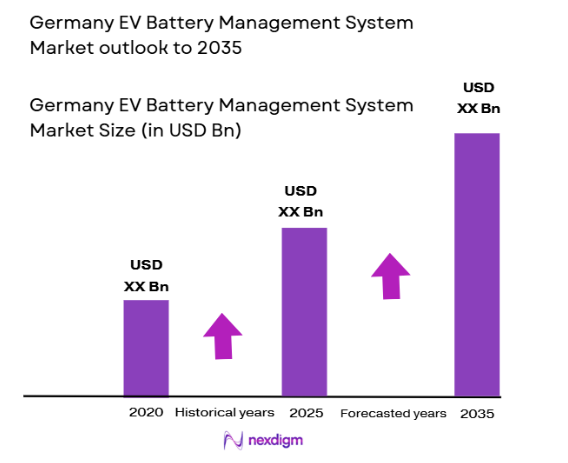
The Germany EV Battery Management System market is expected to experience significant growth driven by advancements in electric vehicle technologies and an increasing push for sustainable transport solutions. Based on recent historical assessments, the market size for 2024 is estimated at USD ~ billion, fueled by demand from the automotive sector and strong government incentives aimed at increasing the adoption of electric vehicles (EVs). This growth is primarily attributed to the growing demand for efficient battery management solutions and the rising adoption of electric vehicles across Europe.
Germany continues to dominate the EV Battery Management System market due to its strong automotive industry, technological innovations, and government support for electric mobility. The country’s established EV infrastructure, combined with its strategic role in the European Union’s transition to green energy, has made it a key player in the global EV market. Key cities like Berlin, Munich, and Stuttgart are centers of automotive development, where major automakers and suppliers push for advanced solutions in battery management systems, thereby reinforcing Germany’s leadership in the market.
Market Segmentation
By System Type:
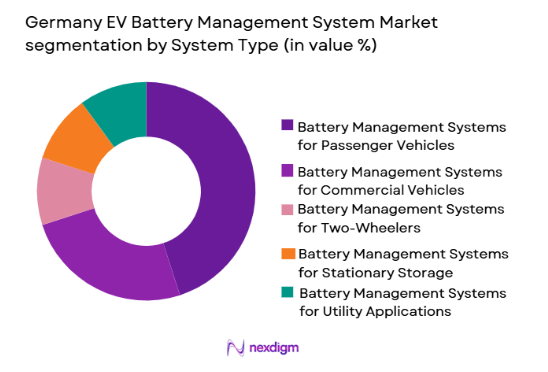
The Germany EV Battery Management System market is segmented by system type into Battery Management Systems (BMS) for passenger vehicles, commercial vehicles, two-wheelers, stationary storage, and utility applications. The dominant sub-segment in the market is BMS for passenger vehicles, driven by the high demand for electric cars and the increasing consumer preference for zero-emission vehicles. The growing production of electric vehicles from OEMs like Volkswagen, BMW, and Mercedes-Benz, combined with regulatory support for EV adoption, has created significant demand for efficient BMS in this segment.
By Platform Type:
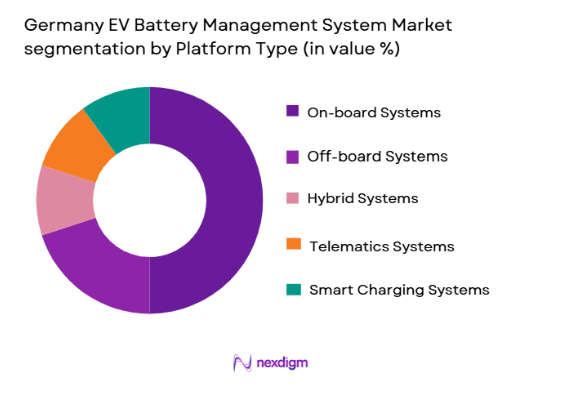
The market is also segmented by platform type into on-board systems, off-board systems, hybrid systems, telematics systems, and smart charging systems. On-board systems have the largest market share, as they are integrated directly into electric vehicles for real-time battery monitoring and management. These systems are critical for maintaining vehicle efficiency, battery life, and performance, and are essential in keeping up with the growing demand for electric vehicles.
Competitive Landscape
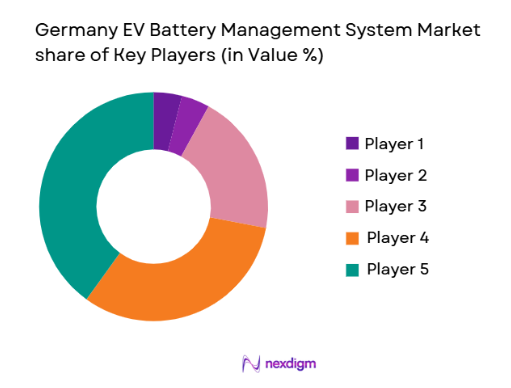
The Germany EV Battery Management System market is highly competitive, with several global players consolidating the market through technological advancements, strategic partnerships, and acquisitions. The dominance of major players in the market is crucial in driving innovation and ensuring the development of cost-effective and highly efficient battery management systems. Market consolidation is expected to increase as companies look to improve their offerings in the rapidly growing electric vehicle sector.
| Company Name | Establishment Year | Headquarters | Technology Focus | Market Reach | Key Products | Revenue (2024) | Key Subsegment |
| Robert Bosch GmbH | 1886 | Stuttgart, Germany | ~ | ~ | ~ | ~ | ~ |
| Continental AG | 1871 | Hannover, Germany | ~ | ~ | ~ | ~ | ~ |
| Samsung SDI Co., Ltd. | 1970 | Seoul, South Korea | ~ | ~ | ~ | ~ | ~ |
| LG Chem | 1947 | Seoul, South Korea | ~ | ~ | ~ | ~ | ~ |
| BYD Company Limited | 1995 | Shenzhen, China | ~ | ~ | ~ | ~ | ~ |
Germany EV Battery Management System Market Analysis
Growth Drivers
Technological Advancements in Battery Management Systems:
The growth of the Germany EV Battery Management System market is largely driven by the ongoing technological advancements in battery management systems (BMS). As electric vehicles become more mainstream, automakers and battery manufacturers are increasingly relying on advanced BMS to ensure optimal performance and lifespan of EV batteries. The integration of real-time monitoring systems, predictive analytics, and machine learning in BMS is enabling manufacturers to better manage energy consumption, improve charging times, and extend battery life. Furthermore, the shift towards solid-state batteries, which promise higher efficiency and safety, is expected to drive demand for next-generation BMS solutions. With these innovations, the efficiency, performance, and longevity of electric vehicle batteries can be maximized, which is crucial as more consumers and companies invest in EVs.
Government Support and Incentives for Electric Vehicles:
Government policies and incentives have played a major role in driving the adoption of electric vehicles in Germany. In response to the European Union’s ambitious climate targets, the German government has rolled out subsidies and tax breaks for electric vehicle manufacturers and consumers. The increasing availability of government incentives for EV purchases, as well as funding for charging infrastructure, is helping to accelerate the demand for EVs, and consequently, EV battery management systems. These incentives, combined with a clear regulatory framework, are fostering growth in the EV market, encouraging consumers to opt for electric mobility. As more automakers shift their focus toward EV production, the demand for advanced battery management systems will continue to rise, further boosting market growth.
Market Challenges
High Costs of EV Battery Management Systems:
One of the primary challenges hindering the widespread adoption of electric vehicles in Germany is the high cost of battery management systems. Although BMS technology is essential for ensuring the performance and safety of electric vehicle batteries, the complex nature of these systems results in high manufacturing costs. Additionally, the development and integration of cutting-edge technologies like real-time monitoring, predictive algorithms, and temperature regulation mechanisms further elevate costs. Despite the falling prices of EV batteries, the relatively high cost of BMS remains a significant barrier to making EVs more affordable for consumers. Automakers must balance cost-effective production with the need for high-performance battery management systems, which often leads to increased vehicle prices, affecting demand.
Regulatory Compliance and Standardization Issues:
Another challenge facing the Germany EV Battery Management System market is the lack of uniform regulations and industry standards. The market is currently experiencing fragmented regulations across different regions, which can create barriers to entry for companies attempting to develop and implement standardized BMS solutions. Discrepancies in regulatory requirements for battery safety, environmental impact, and energy efficiency can lead to difficulties in manufacturing and testing battery management systems. Furthermore, the lack of consistent standards across the European Union may hinder the development of a unified market, especially as more automakers enter the electric vehicle space. Achieving regulatory harmonization across Europe would be beneficial for both manufacturers and consumers, ensuring that all EVs meet high-quality standards for safety, performance, and environmental sustainability.
Opportunities
Expansion of EV Charging Infrastructure:
One of the most promising opportunities for the Germany EV Battery Management System market is the expansion of EV charging infrastructure. With the increasing adoption of electric vehicles, there is a growing need for more efficient and widespread charging stations. Battery management systems play a critical role in ensuring the efficient operation of charging networks, optimizing charging times, and enhancing the safety of the process. As the demand for electric vehicles continues to rise, so too will the need for a robust charging infrastructure. This presents an opportunity for BMS providers to collaborate with energy companies, government bodies, and infrastructure developers to create an ecosystem that supports the transition to electric mobility. By offering advanced charging solutions that are compatible with a wide range of EVs, BMS providers can tap into this growing market and drive significant revenue growth.
Emerging Demand for Smart and Wireless Battery Management Systems:
Another opportunity in the Germany EV Battery Management System market lies in the development of smart and wireless BMS solutions. As consumer expectations evolve and the need for more user-friendly interfaces increases, smart BMS that offer remote monitoring, control, and diagnostic capabilities are gaining traction. Wireless BMS, which can be integrated seamlessly into the vehicle’s existing infrastructure, are becoming increasingly popular due to their ease of use and installation. These advanced systems offer benefits such as reduced installation time, increased flexibility, and enhanced system performance. As more consumers adopt electric vehicles and seek smarter, more connected solutions, the demand for wireless BMS is expected to grow. BMS providers that innovate in this space have the opportunity to capture a significant share of the market by meeting the growing need for more efficient, automated, and consumer-friendly technologies.
Future Outlook
The future outlook for the Germany EV Battery Management System market is positive, with continued growth expected over the next five years. Technological advancements in battery management systems, such as real-time monitoring, wireless communication, and AI-driven analytics, are expected to further enhance system efficiency and performance. Government support for electric vehicles, including incentives and infrastructure development, will also play a key role in driving market expansion. As demand for electric vehicles rises, the need for efficient battery management solutions will continue to grow, positioning the Germany EV Battery Management System market for significant long-term growth.
Major Players
- Robert Bosch GmbH
- Continental AG
- Samsung SDI Co., Ltd.
- LG Chem
- BYD Company Limited
- VARTA AG
- Aptiv PLC
- Tesla, Inc.
- Panasonic Corporation
- Daimler AG
- General Motors
- BMW AG
- Hyundai Motor Group
- Magna International
- Valeo SA
Key Target Audience
- Investments and venture capitalist firms
- Government and regulatory bodies
- Automotive manufacturers
- Battery producers
- EV infrastructure providers
- Tier-1 suppliers
- Energy providers
- Fleet operators
Research Methodology
Step 1: Identification of Key Variables
Identify and define the key market variables influencing the EV Battery Management System market, such as technology trends, government policies, and consumer demand patterns.
Step 2: Market Analysis and Construction
Analyze historical data and trends to build a comprehensive market model. Segment the market by product type, platform type, and end-user applications.
Step 3: Hypothesis Validation and Expert Consultation
Validate market assumptions and trends through consultation with industry experts, OEMs, and technology providers to ensure accuracy and relevance.
Step 4: Research Synthesis and Final Output
Synthesize the findings into a cohesive market report, including detailed analysis, forecasts, and actionable insights for stakeholders.

- Executive Summary
- Research Methodology (Definitions, Scope, Industry Assumptions, Market Sizing Approach, Primary & Secondary Research Framework, Data Collection & Verification Protocol, Analytic Models & Forecast Methodology, Limitations & Research Validity Checks)

- Market Definition and Scope
- Value Chain & Stakeholder Ecosystem
- Regulatory / Certification Landscape
- Sector Dynamics Affecting Demand
- Strategic Initiatives & Infrastructure Growth

- Growth Drivers
Rising Demand for Electric Vehicles
Advancements in Battery Technologies
Government Incentives for EV Adoption
Increased Focus on Sustainability and Energy Efficiency
Technological Advancements in Battery Management - Market Challenges
High Capital Investment in BMS Development
Lack of Standardized Regulatory Frameworks
Battery Efficiency and Lifespan Concerns
Compatibility Issues Between EV Models and BMS
Integration of Advanced Features in Cost-effective Solutions - Market Opportunities
Emerging Demand for Smart Charging Solutions
Growth in EV Fleet Management Services
Collaboration with Utility Providers for Smart Grids - Trends
Increase in Electric Vehicle Adoption
Shift Toward More Efficient Battery Technologies
Advancements in Wireless Battery Management Systems
Integration of AI and IoT in Battery Management
Growing Focus on Recyclable and Sustainable Materials - Government Regulations & Defense Policy
EV Charging Infrastructure Regulations
Battery Recycling and Disposal Regulations
Incentives for EV Battery Manufacturing - SWOT Analysis
- Stakeholder and Ecosystem Analysis
- Porter’s Five Forces Analysis
- Competition Intensity and Ecosystem Mapping

- By Market Value, 2020-2025
- By Installed Units, 2020-2025
- By Average System Price, 2020-2025
- By System Complexity Tier, 2020-2025

- By System Type (In Value%)
Battery Management Systems (BMS) for Passenger Vehicles
Battery Management Systems (BMS) for Commercial Vehicles
Battery Management Systems (BMS) for Two-Wheelers
Battery Management Systems (BMS) for Stationary Storage
Battery Management Systems (BMS) for Utility Applications - By Platform Type (In Value%)
On-board Systems
Off-board Systems
Hybrid Systems
Telematics Systems
Smart Charging Systems - By Fitment Type (In Value%)
Integrated Systems
Modular Systems
Customizable Systems
Aftermarket Solutions
OEM Solutions - By EndUser Segment (In Value%)
OEMs (Original Equipment Manufacturers)
Tier-1 Suppliers
Fleet Operators
Energy Providers
Charging Infrastructure Providers - By Procurement Channel (In Value%)
Direct Procurement
Third-party Distributors
OEM Contracts
Government Tenders
Online Platforms - By Material / Technology (in Value%)
Lithium-ion Based BMS
Lead-Acid Based BMS
Solid-State Based BMS
Silicon-Carbide (SiC) Based BMS
Thermal Management Systems

- Market structure and competitive positioning
- Market share snapshot of major players
- CrossComparison Parameters (System Type, Platform Type, Procurement Channel, EndUser Segment, Fitment Type, Material / Technology, Region, Product Innovation, Sustainability Focus, Partnerships)
- SWOT Analysis of Key Players
- Pricing & Procurement Analysis
- Key Players
Robert Bosch GmbH
Continental AG
Samsung SDI Co., Ltd.
LG Chem
BYD Company Limited
Tesla, Inc.
Panasonic Corporation
VARTA AG
Aptiv PLC
Siemens AG
Daimler AG
Automotive Energy Supply Corporation (AESC)
BASF SE
ZF Friedrichshafen AG
Valmet Automotive

- OEMs’ Increasing Focus on Battery Safety and Efficiency
- Energy Providers’ Role in Smart Grid Integration
- Fleet Operators’ Push for Cost-effective, Long-lasting Batteries
- Tier-1 Suppliers’ Demand for High-quality BMS Components

- Forecast Market Value, 2026-2035
- Forecast Installed Units, 2026-2035
- Price Forecast by System Tier, 2026-2035
- Future Demand by Platform, 2026-2035


 Request a Sample
 Ask for Customization
 Get a Quote
 Enquire Now