
 Download PDF
 Download PDF
Market Overview
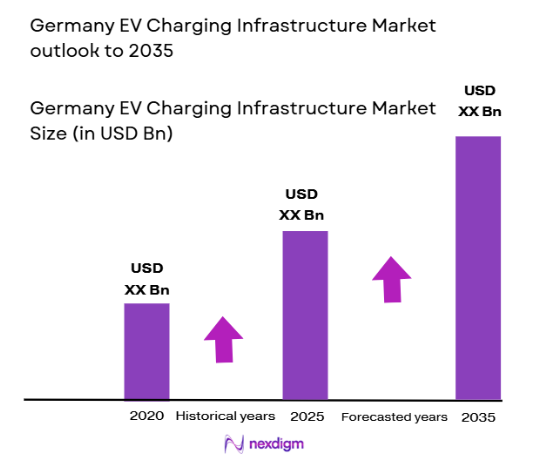
The German EV charging infrastructure market is valued at approximately USD ~ billion based on a recent historical assessment. This market is primarily driven by the increasing adoption of electric vehicles (EVs) in Germany, backed by substantial government incentives and growing consumer demand for sustainable mobility solutions. Additionally, the development of faster and more efficient charging technologies, alongside the expansion of the charging network, plays a crucial role in supporting the market’s growth. The government’s focus on reducing carbon emissions and promoting green energy also drives investments in EV infrastructure, ensuring long-term market growth.
Germany leads the European EV charging infrastructure market, with cities like Berlin, Munich, and Frankfurt at the forefront of EV adoption. The country benefits from a well-developed charging network that covers urban and rural areas, driven by both private and public sector investments. Germany’s strong automotive industry and the shift towards electric mobility further solidify its dominance in the market. With strong regulatory support, infrastructure development, and a high rate of EV adoption, Germany continues to maintain its position as a leader in the European EV infrastructure sector.
Market Segmentation
By System Type:
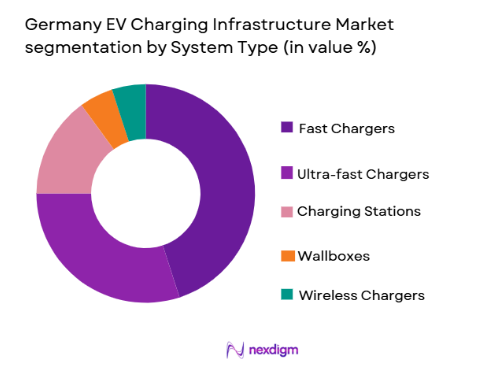
The German EV charging infrastructure market is segmented by system type into charging stations, wallboxes, fast chargers, ultra-fast chargers, and wireless chargers. Recently, fast chargers have emerged as the dominant sub-segment due to their ability to significantly reduce charging time, a key factor in improving user convenience and encouraging EV adoption. Fast chargers offer the perfect balance of speed and efficiency, making them highly attractive to both individual consumers and commercial operators. As more consumers and businesses transition to electric vehicles, the demand for fast chargers has increased, especially along highways and urban areas where quick charging solutions are essential. The growing development of ultra-fast charging infrastructure further enhances the role of fast chargers in supporting the mass adoption of electric vehicles across Germany.
By Platform Type:
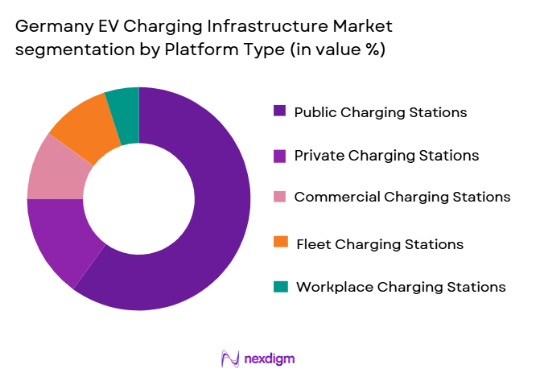
The German EV charging infrastructure market is segmented by platform type into private charging stations, public charging stations, commercial charging stations, fleet charging stations, and workplace charging stations. Public charging stations dominate the market share as they provide essential infrastructure for electric vehicle owners who do not have access to private charging at home. These stations are typically located in urban areas and high-traffic locations like shopping centers, parking garages, and highway rest stops. With the increase in the number of EVs on the road, the demand for public charging stations is rising significantly. Furthermore, the development of smart public charging stations, integrated with mobile apps for real-time availability and payment options, continues to enhance the convenience for EV owners, making public charging stations the most essential component of the infrastructure.
Competitive Landscape
The competitive landscape of the German EV charging infrastructure market is marked by the presence of both established energy companies and new startups. Large players, including Siemens, BP Chargemaster, and Tesla, have significant influence in the market, offering advanced charging solutions that cater to both private consumers and businesses. These companies benefit from strong brand recognition, extensive distribution networks, and substantial investment in technology development. The market is also seeing the rise of innovative startups providing solutions that enhance charging speeds, reduce costs, and create more user-friendly charging experiences. Consolidation is expected to continue as major players expand their networks and form partnerships to enhance infrastructure deployment across Germany.
| Company Name | Establishment Year | Headquarters | Technology Focus | Market Reach | Key Products | Revenue (USD Billion) | Additional Parameter |
| Siemens | 1847 | Munich, Germany | ~ | ~ | ~ | ~ | ~ |
| BP Chargemaster | 1992 | Milton Keynes, UK | ~ | ~ | ~ | ~ | ~ |
| Tesla | 2003 | Palo Alto, USA | ~ | ~ | ~ | ~ | ~ |
| ABB | 1988 | Zurich, Switzerland | ~ | ~ | ~ | ~ | ~ |
| Enel X | 2000 | Rome, Italy | ~ | ~ | ~ | ~ | ~ |
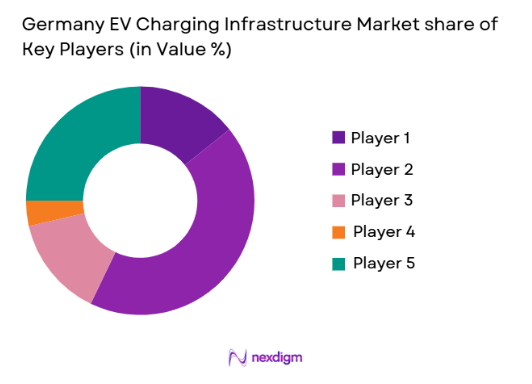
Germany EV Charging Infrastructure Market Analysis
Growth Drivers
Government Support for EV Infrastructure Development:
One of the primary drivers for the growth of the EV charging infrastructure market in Germany is the robust government support. Germany has made significant investments in EV infrastructure as part of its ambitious plan to reduce carbon emissions and promote electric mobility. Government policies, such as tax incentives, grants for infrastructure development, and subsidies for electric vehicle purchases, create an ideal environment for the expansion of charging networks. In particular, funding initiatives for public charging stations and subsidies for private charging points encourage widespread adoption of EVs and the building of necessary infrastructure. These efforts align with Germany’s goal to achieve carbon neutrality by 2050, ensuring long-term support for the EV charging infrastructure market. As the government continues to prioritize EV adoption through legislation and financial support, the demand for charging infrastructure will see consistent growth, further accelerating market expansion.
Technological Advancements in Charging Infrastructure:
Another growth driver for the market is the continuous advancements in charging infrastructure technologies. The development of ultra-fast chargers, wireless charging systems, and smart charging solutions enhances the overall user experience. Ultra-fast chargers, which can significantly reduce charging time, are particularly beneficial for long-distance travel and are being rapidly deployed along highways and busy urban locations. Additionally, the integration of smart charging solutions that provide real-time data, payment options, and energy management systems is transforming the EV charging landscape. These advancements not only improve the convenience and accessibility of charging infrastructure but also make it more efficient, helping to reduce the strain on energy grids. As the technology continues to evolve, the charging infrastructure market will continue to attract both private and public investments, contributing to further market expansion.
Market Challenges
High Installation Costs:
One of the key challenges facing the German EV charging infrastructure market is the high cost of installing charging stations. Despite government subsidies, the installation of both private and public charging stations requires significant financial investment in infrastructure, including equipment, land, electrical upgrades, and ongoing maintenance costs. For businesses, these costs can present a barrier to entry, particularly in less urbanized areas where the demand for EV charging stations may not yet justify the high initial investment. The cost factor is especially significant for fast and ultra-fast chargers, which require more advanced technology and greater electrical capacity. As the market expands, finding cost-effective ways to install charging stations without compromising on quality and accessibility will be critical to the growth of the market.
Lack of Standardization in Charging Systems:
Another challenge for the market is the lack of standardization in charging systems. Different automakers and charging infrastructure providers have developed proprietary systems that are not always compatible with each other. This lack of interoperability between different types of charging stations and vehicles can create confusion and inconvenience for consumers, potentially deterring EV adoption. Although efforts are being made to develop universal charging standards, including the adoption of the CCS (Combined Charging System) standard, the fragmented nature of the market remains a significant barrier. Standardization is crucial for ensuring seamless user experiences and optimizing the efficiency of the charging network. Until interoperability is fully achieved, the market may face continued hurdles in terms of user convenience and widespread infrastructure deployment.
Opportunities
Growth of Commercial Charging Stations:
One of the key opportunities in the German EV charging infrastructure market lies in the growth of commercial charging stations. With the rise in fleet operations and the shift to electric commercial vehicles, businesses require reliable and efficient charging infrastructure. The growing trend of electrification in logistics, transportation, and delivery services presents a significant opportunity for commercial charging solutions. Companies operating fleets of electric vehicles will require dedicated charging stations at their depots and along their routes. Furthermore, commercial charging stations, especially those equipped with fast and ultra-fast chargers, are essential for enhancing the operational efficiency of electric fleets. By tapping into the increasing demand for charging solutions for commercial vehicles, infrastructure providers can expand their market presence and revenue streams.
Integration of Renewable Energy Sources with Charging Infrastructure:
Another promising opportunity for the German EV charging infrastructure market is the integration of renewable energy sources with charging stations. As Germany continues to increase its reliance on renewable energy, the incorporation of solar and wind energy into the charging infrastructure presents a sustainable and cost-effective solution. By using renewable energy to power EV charging stations, operators can reduce their dependence on grid electricity, lower operational costs, and provide a more environmentally friendly charging option to consumers. Moreover, integrating energy storage solutions with charging infrastructure can help balance supply and demand, further supporting the growth of EV adoption. As the push for green energy continues, the combination of renewable energy and EV charging infrastructure offers a significant opportunity for market players to differentiate themselves and attract environmentally conscious consumers.
Future Outlook
The future outlook for the German EV charging infrastructure market is positive, with expected growth driven by technological advancements, regulatory support, and increasing demand for electric vehicles. Over the next five years, the deployment of fast and ultra-fast charging stations will accelerate, particularly along highways and in urban centers. The continued expansion of public charging infrastructure, combined with the rise of commercial and fleet charging stations, will cater to the growing EV adoption. Additionally, the integration of renewable energy sources into the charging infrastructure will support Germany’s carbon neutrality goals and contribute to a more sustainable EV ecosystem. With strong governmental backing and technological innovation, the market is poised to experience significant growth, ensuring widespread EV adoption across the country.
Major Players
- Siemens
- BP Chargemaster
- Tesla
- ABB
- Enel X
- ChargePoint
- Shell
- Ionity
- Fastned
- Engie
- Schneider Electric
- E.On
- Greenlots
- Blink Charging
- Volkswagen
Key Target Audience
- Investments and venture capitalist firms
- Government and regulatory bodies
- Automotive manufacturers
- EV infrastructure developers
- Energy utilities
- Commercial fleet operators
- Charging station operators
- Public transport authorities
Research Methodology
Step 1: Identification of Key Variables
Identification of market drivers, challenges, and opportunities that affect the EV charging infrastructure landscape in Germany. This includes analyzing government incentives, technological advancements, and consumer demand patterns.
Step 2: Market Analysis and Construction
Segmenting the market by system type, platform type, and end-user to build a comprehensive market model. Data on market trends and competitive forces are collected and analyzed for key insights.
Step 3: Hypothesis Validation and Expert Consultation
Validation of market hypotheses through consultations with industry experts, government agencies, and infrastructure providers to ensure the accuracy and relevance of findings.
Step 4: Research Synthesis and Final Output
Compiling research findings into a structured report, synthesizing data from primary and secondary sources. The final output will present actionable insights on the growth, challenges, and opportunities in the EV charging infrastructure market.

- Executive Summary
- Research Methodology (Definitions, Scope, Industry Assumptions, Market Sizing Approach, Primary & Secondary Research Framework, Data Collection & Verification Protocol, Analytic Models & Forecast Methodology, Limitations & Research Validity Checks)

- Market Definition and Scope
- Value Chain & Stakeholder Ecosystem
- Regulatory / Certification Landscape
- Sector Dynamics Affecting Demand
- Strategic Initiatives & Infrastructure Growth

- Growth Drivers
Rising Environmental Awareness
Increase in Urban Mobility
Growing Infrastructure Investments - Market Challenges
Charging Infrastructure Gaps
Regulatory Barriers and Compliance Issues
Consumer Perception and Awareness Issues - Market Opportunities
Partnerships with Renewable Energy Companies
Expansion of Charging Networks
Development of Autonomous EVs
- Trends
Technological Advancements in EV Batteries
Focus on Sustainability in the EV Industry
Increase in Corporate Fleets Going Electric
Enhanced Consumer Experience through AI and IoT - Government Regulations & Defense Policy
Carbon Emission Regulations
Renewable Energy Integration Policies - SWOT Analysis
- Stakeholder and Ecosystem Analysis
- Porter’s Five Forces Analysis
- Competition Intensity and Ecosystem Mapping

- By Market Value, 2020-2025
- By Installed Units, 2020-2025
- By Average System Price, 2020-2025
- By System Complexity Tier, 2020-2025

- By System Type (In Value%)
Charging Stations
Wallboxes
Fast Chargers
Ultra-fast Chargers
Wireless Chargers - By Platform Type (In Value%)
Private Charging Stations
Public Charging Stations
Commercial Charging Stations
Fleet Charging Stations
Workplace Charging Stations - By Fitment Type (In Value%)
On-premise Solutions
Cloud-based Solutions
Hybrid Solutions
Modular Solutions
Integrated Solutions - By EndUser Segment (In Value%)
Private Consumers
Fleet Operators
Government Agencies
Commercial Users
Public Transport Authorities - By Procurement Channel (In Value%)
Direct Procurement
Government Tenders
Private Sector Procurement
Online Bidding Platforms
Third-party Distributors - By Material / Technology (in Value%)
Lithium-ion Batteries
Solid-state Batteries
Power Electronics
Smart Grid Technologies
Charging Cables

- Market structure and competitive positioning
- Market share snapshot of major players
- CrossComparison Parameters (System Type, Platform Type, Procurement Channel, EndUser Segment, Fitment Type, Material/Technology, Market Value, Installed Units, Charging Infrastructure Growth, Government Support)
- SWOT Analysis of Key Players
- Pricing & Procurement Analysis
- Key Players
Volkswagen
BMW Group
Daimler AG
Tesla
ChargePoint
Enel X
Ionity
Shell
Siemens
ABB
EVgo
EDF
BP Chargemaster
Fastned
Engie

- Private Consumers’ Shift Toward EV Adoption
- Fleet Operators Seeking Efficient Charging Solutions
- Government Agencies Supporting Infrastructure Development
- Public Transport Authorities’ Focus on EV Integration

- Forecast Market Value, 2026-2035
- Forecast Installed Units, 2026-2035
- Price Forecast by System Tier, 2026-2035
- Future Demand by Platform, 2026-2035


 Request a Sample
 Ask for Customization
 Get a Quote
 Enquire Now