

 Download PDF
Market Overview
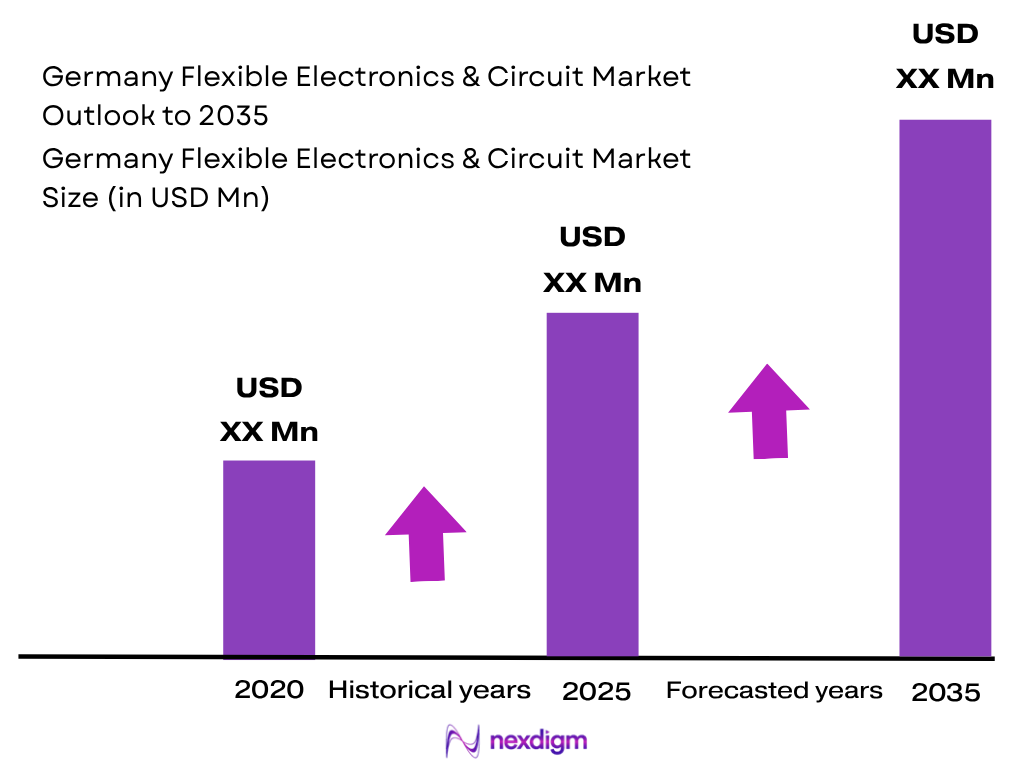
The Germany Flexible Electronics & Circuit Market is valued at approximately USD ~ billion, supported by increasing adoption of flexible printed circuits, flexible hybrid electronics, and advanced electronic components across automotive, healthcare, industrial automation, and consumer electronics applications. The market growth is driven by Germany’s strong electronics manufacturing ecosystem, high automotive production capacity, and Industry 4.0 transformation. Germany recorded industrial output of approximately EUR ~ trillion, with manufacturing contributing significantly to economic activity. The country’s focus on electric vehicles, smart factories, and semiconductor development continues to increase demand for lightweight, compact, and high-performance flexible electronic solutions.
The Germany Flexible Electronics & Circuit Market is concentrated around major industrial regions including Bavaria, Baden-Württemberg, North Rhine-Westphalia, and Saxony due to their established automotive, semiconductor, electronics manufacturing, and research ecosystems. Bavaria and Baden-Württemberg have strong automotive electronics clusters supported by vehicle manufacturers and component suppliers, while Saxony has developed into a semiconductor and microelectronics hub. Germany’s electronics and electrical engineering industry generated approximately EUR ~ billion in annual production, supported by thousands of specialized manufacturing companies, creating a strong foundation for flexible electronics adoption.
Market Segmentation
By Application Type
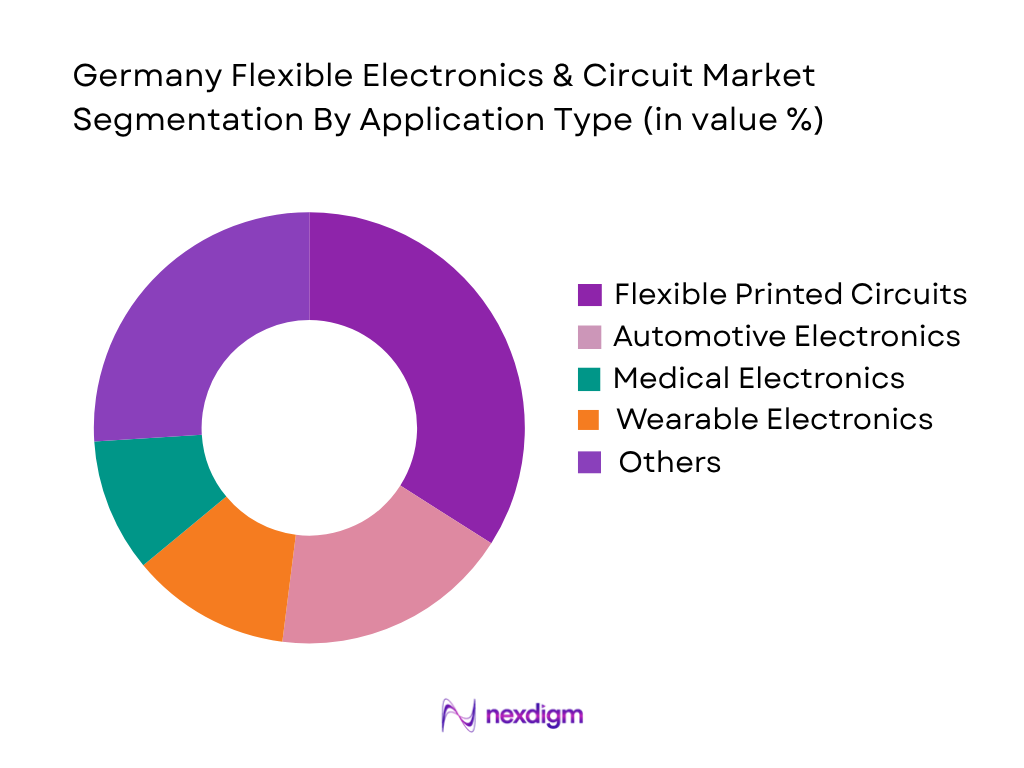
The Germany Flexible Electronics & Circuit Market is segmented by application type into flexible printed circuits, flexible displays, wearable electronics, medical electronics, automotive electronics, industrial sensors, aerospace electronics, smart packaging electronics, and consumer electronics components. Flexible printed circuits represent the dominant application segment due to their extensive integration across automotive systems, smartphones, medical devices, and industrial equipment. The demand for compact and lightweight electronic assemblies has increased as manufacturers focus on reducing component size while improving functionality. Germany’s automotive sector, which produced approximately ~ million vehicles annually, remains a major consumer of flexible circuit technologies for infotainment systems, battery management systems, sensor modules, and advanced electronic architectures. The increasing adoption of electric vehicles, autonomous driving technologies, and connected devices further supports flexible electronics integration across multiple industries.
By End-Use Industry
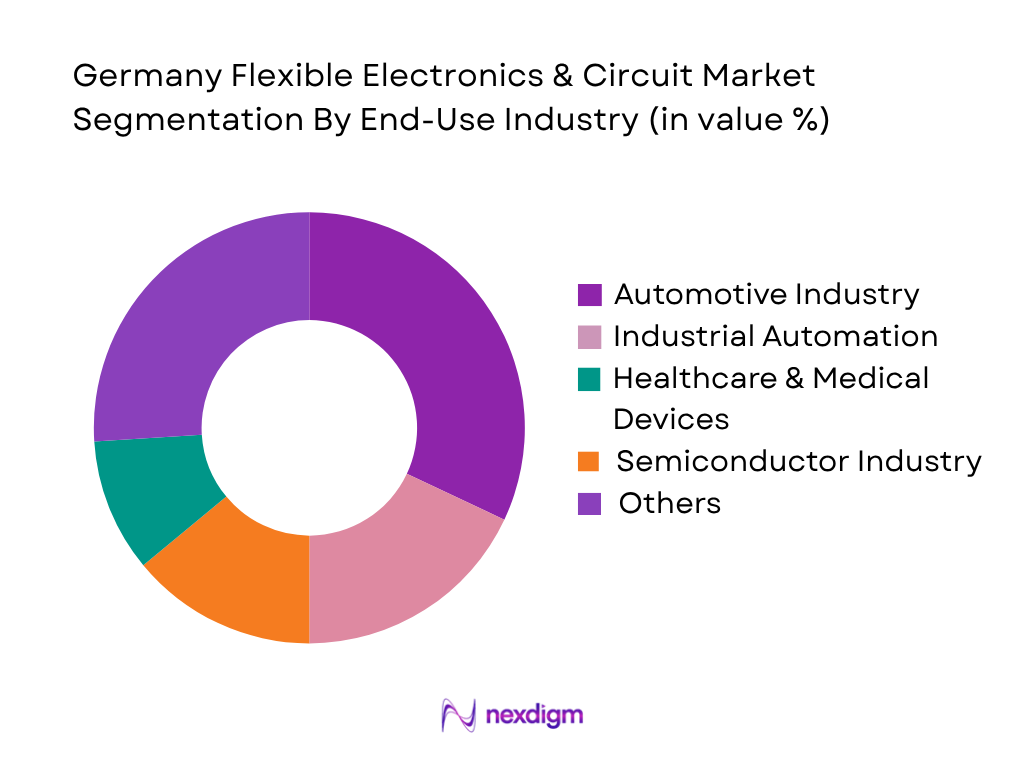
The Germany Flexible Electronics & Circuit Market is segmented by end-use industry into automotive, consumer electronics, healthcare, industrial automation, aerospace and defense, telecommunications, semiconductor manufacturing, energy systems, smart manufacturing, and packaging industries. The automotive industry represents the leading end-use segment due to Germany’s global automotive manufacturing ecosystem and increasing requirement for advanced electronic systems. Flexible circuits are widely used in vehicle control systems, lighting modules, battery monitoring systems, sensors, and infotainment applications. Germany’s automotive sector includes major vehicle manufacturers and component suppliers investing in electric mobility and autonomous vehicle technologies. Healthcare and industrial automation applications are also expanding due to increased demand for wearable monitoring devices, flexible sensors, and Industry 4.0-enabled equipment. The transition toward smart manufacturing and connected industrial systems is further increasing the adoption of flexible electronic solutions.
Competitive Landscape
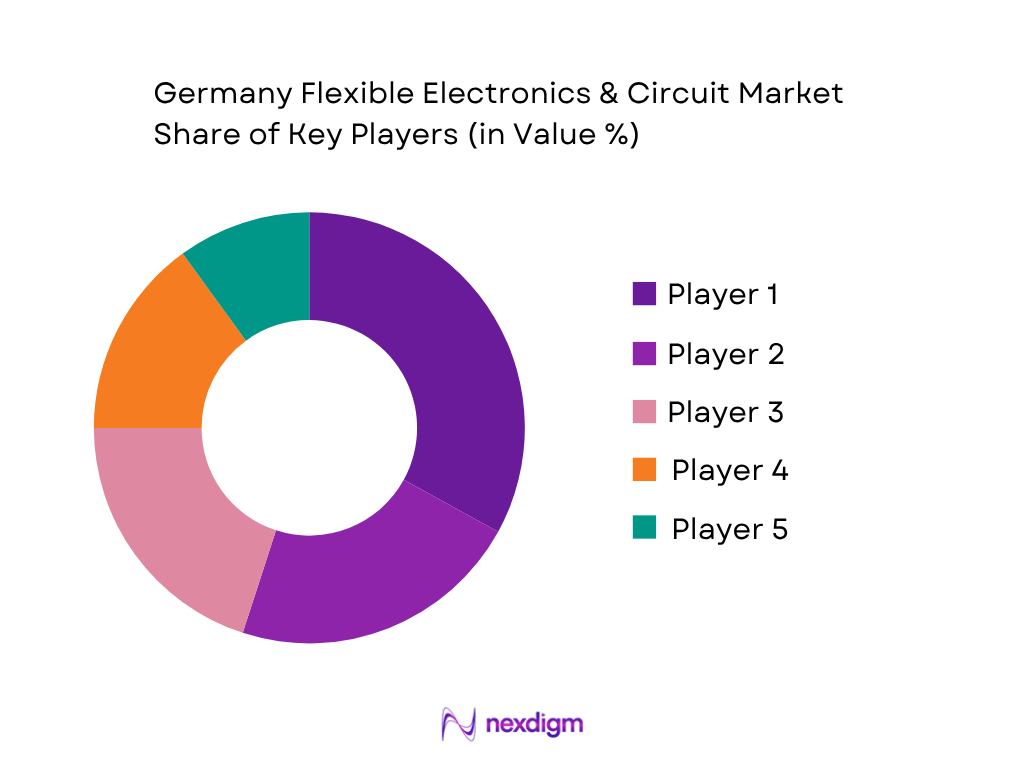
The Germany Flexible Electronics & Circuit Market consists of global electronics manufacturers, automotive component suppliers, semiconductor companies, and specialized flexible circuit providers. The competitive environment is influenced by companies focusing on flexible circuit manufacturing capabilities, advanced material development, automotive electronics integration, and semiconductor packaging solutions. Major players compete through technology innovation, manufacturing capacity expansion, partnerships with automotive OEMs, and development of application-specific flexible electronic solutions.
| Company | Establishment Year | Headquarters | Flexible Circuit Capability | Major Application Focus | Manufacturing Capability | Technology Expertise | Market Presence |
| Bosch | 1886 | Germany | ~ | ~ | ~ | ~ | ~ |
| Continental AG | 1871 | Germany | ~ | ~ | ~ | ~ | ~ |
| Infineon Technologies AG | 1999 | Germany | ~ | ~ | ~ | ~ | ~ |
| TE Connectivity | 1941 | Switzerland | ~ | ~ | ~ | ~ | ~ |
| Molex LLC | 1938 | USA | ~ | ~ | ~ | ~ | ~ |
Germany Flexible Electronics & Circuit Market Analysis
Growth Drivers
Expansion of Automotive Electronics and Electric Vehicle Integration
The Germany Flexible Electronics & Circuit Market is significantly supported by the country’s advanced automotive manufacturing ecosystem and increasing integration of lightweight electronic components in next-generation vehicles. Germany produced approximately 4.1 million passenger cars, according to the German Association of the Automotive Industry (VDA), reflecting the large-scale requirement for automotive electronic systems, sensors, control modules, and connectivity solutions. The country’s automotive sector contributed around EUR 500 billion in turnover across manufacturers and suppliers, creating strong demand for flexible printed circuits and flexible hybrid electronics. Germany registered more than 1.4 million electric vehicle registrations according to European automotive registration data, increasing the need for compact battery management systems, power electronics, sensor modules, and embedded electronic architectures. Flexible circuits enable reduced weight, improved packaging efficiency, and enhanced reliability in automotive applications where space constraints are critical. Additionally, Germany’s industrial base includes more than 45,000 automotive supplier companies, supporting the integration of advanced electronic technologies across vehicle platforms. The transition toward connected vehicles, autonomous driving systems, and electric mobility continues to strengthen demand for flexible electronics solutions used in vehicle interiors, safety systems, communication modules, and energy management applications.
Industry 4.0 Adoption and Industrial Automation Development
The Germany Flexible Electronics & Circuit Market benefits from the country’s strong industrial automation ecosystem and rapid adoption of Industry 4.0 technologies across manufacturing facilities. Germany remains one of the world’s leading industrial economies, with manufacturing contributing approximately 20% of national economic output according to World Bank economic indicators. The country operates more than 200,000 manufacturing companies, many of which are adopting smart factory technologies requiring flexible sensors, embedded electronics, and connected monitoring systems. Germany’s industrial sector has invested heavily in automation technologies, robotics, and digital manufacturing systems, increasing demand for lightweight and adaptable electronic components. Flexible electronics are increasingly integrated into industrial sensors, machine monitoring systems, human-machine interfaces, and smart production equipment due to their ability to operate in compact and complex environments. The country’s electrical and electronics industry employs more than 900,000 workers, supporting innovation in advanced electronic manufacturing. Growing deployment of industrial IoT solutions, predictive maintenance systems, and automated production lines is creating additional applications for flexible circuits, printed electronics, and sensor-based flexible components across manufacturing, logistics, and industrial infrastructure.
Market Challenges
High Manufacturing Complexity and Dependence on Specialized Technologies
The Germany Flexible Electronics & Circuit Market faces challenges associated with complex manufacturing processes, advanced material requirements, and the need for specialized production capabilities. Flexible electronics manufacturing requires precise fabrication technologies involving conductive materials, substrate processing, advanced printing methods, and semiconductor integration. Germany’s electronics industry depends significantly on imported semiconductor materials and specialized components, with semiconductor imports valued at several billion euros annually according to international trade data. Although Germany has a strong engineering ecosystem, large-scale flexible circuit manufacturing remains concentrated among specialized global suppliers due to high equipment requirements and production complexity. Flexible electronics production requires advanced facilities for photolithography, roll-to-roll processing, thin-film deposition, and precision assembly, increasing investment requirements for manufacturers. The availability of specialized materials such as polyimide films, liquid crystal polymers, and conductive inks also creates supply chain dependencies. Additionally, manufacturers must comply with strict European environmental regulations, including chemical management requirements under REACH, increasing operational complexity. These factors can limit rapid expansion of domestic flexible electronics production capacity despite strong demand from automotive, healthcare, and industrial applications.
Supply Chain Dependency and Competition from Asian Manufacturing Hubs
The Germany Flexible Electronics & Circuit Market faces competitive pressure due to the established flexible electronics manufacturing ecosystem in Asian countries and Germany’s dependence on international supply chains for specific electronic materials and components. Countries such as China, South Korea, Japan, and Taiwan account for significant global electronics manufacturing capacity, supported by large-scale production facilities and mature supplier networks. Germany imported electronic components worth more than EUR 100 billion, highlighting the country’s reliance on global electronics supply chains. Flexible circuit manufacturing requires specialized suppliers for copper foils, substrate materials, conductive inks, and semiconductor components, many of which are sourced internationally. European manufacturers also face challenges related to production costs, energy expenses, and scaling manufacturing capacity compared with Asian production centers. Germany’s industrial electricity prices and strict environmental compliance requirements can influence manufacturing competitiveness. Additionally, flexible electronics companies must maintain continuous investment in research and development to compete with global technology providers developing advanced flexible displays, sensors, and hybrid electronic solutions. These supply chain and cost pressures create challenges for domestic expansion of flexible electronics manufacturing capabilities.
Market Opportunities
Growth of Flexible Healthcare Electronics and Wearable Medical Devices
The Germany Flexible Electronics & Circuit Market has significant opportunities from the expansion of healthcare electronics, wearable monitoring systems, and flexible medical sensors. Germany operates one of Europe’s largest healthcare systems, with healthcare expenditure exceeding EUR 400 billion according to national health statistics, creating a strong environment for medical technology adoption. The country has more than 2,000 hospitals and a large medical device manufacturing ecosystem requiring advanced electronic solutions for patient monitoring, diagnostics, and digital healthcare applications. Flexible electronics enable lightweight wearable devices, continuous health monitoring systems, flexible biosensors, and compact medical equipment. Germany’s aging population, with more than 18 million residents aged above 65 according to demographic statistics, is increasing demand for remote monitoring technologies and connected healthcare solutions. Flexible sensors and wearable electronics can support applications such as cardiac monitoring, glucose measurement, rehabilitation tracking, and personalized healthcare devices. The country’s strong medical technology sector, comprising thousands of medical device manufacturers, provides opportunities for flexible electronics companies to develop specialized solutions combining sensors, wireless connectivity, and compact electronic architectures for healthcare applications.
Expansion of Semiconductor Packaging and Advanced Electronics Manufacturing
The Germany Flexible Electronics & Circuit Market presents opportunities through semiconductor packaging innovation, advanced electronics manufacturing, and development of localized electronic supply chains. Germany has strengthened its semiconductor ecosystem through investments in chip manufacturing, research facilities, and advanced packaging technologies. The country’s semiconductor industry generates billions of euros in annual revenue and supports automotive, industrial, and consumer electronics applications. Flexible electronics technologies can complement semiconductor manufacturing by enabling compact packaging solutions, flexible interconnects, sensor integration, and advanced electronic assemblies. Germany hosts major semiconductor production facilities and research organizations focused on microelectronics development, creating opportunities for collaboration between flexible electronics manufacturers and chip producers. Increasing demand for automotive semiconductors, industrial sensors, and connected devices is creating requirements for efficient packaging technologies that reduce size and improve performance. Flexible hybrid electronics can support applications where traditional rigid circuit boards face limitations, particularly in automotive, aerospace, healthcare, and industrial systems. The country’s focus on strengthening European semiconductor resilience and expanding advanced manufacturing capabilities provides opportunities for flexible electronics adoption across high-value technology applications.
Future Outlook
The Germany Flexible Electronics & Circuit Market is expected to experience continuous expansion driven by increasing adoption of electric vehicles, Industry 4.0 technologies, wearable healthcare devices, and advanced semiconductor applications. The integration of flexible electronics into automotive, industrial, and healthcare systems is expected to create new opportunities for manufacturers and technology providers. Growing investments in domestic semiconductor capabilities and advanced manufacturing technologies will further support market development.
The transition toward lightweight electronic architectures, miniaturized components, and connected systems is expected to accelerate demand for flexible circuit solutions. Companies focusing on sustainable materials, flexible sensors, and hybrid electronics technologies are expected to benefit from increasing industrial requirements.
Major Players
- Bosch Rexroth AG
- Continental AG
- Infineon Technologies AG
- Siemens AG
- Schneider Electric Germany
- TE Connectivity Germany GmbH
- Molex Deutschland GmbH
- Zollner Elektronik AG
- Fujikura Europe Ltd.
- Sumitomo Electric Industries Ltd.
- Nitto Denko Corporation
- Panasonic Industry Europe GmbH
- 3M Deutschland GmbH
- DuPont Germany
- Heraeus Electronics GmbH
Key Target Audience
- Automotive Electronics Manufacturers
- Semiconductor Manufacturing Companies
- Flexible Circuit and Electronic Component Manufacturers
- Consumer Electronics Companies
- Healthcare Device Manufacturers
- Industrial Automation Solution Providers
- Investments and Venture Capitalist Firms
- Government and Regulatory Bodies (Federal Ministry for Economic Affairs and Climate Action, Federal Ministry of Education and Research, German Electrical and Electronic Equipment Regulatory Authorities)
Research Methodology
Step 1: Identification of Key Variables
The initial phase involves developing a comprehensive ecosystem map covering flexible electronics manufacturers, material suppliers, semiconductor companies, automotive electronics providers, healthcare device manufacturers, and industrial automation companies. Extensive secondary research is conducted to identify critical market variables including technology adoption, application demand, manufacturing capabilities, supply chain structure, and regulatory factors influencing the Germany Flexible Electronics & Circuit Market.
Step 2: Market Analysis and Construction
This phase involves analyzing historical market information related to flexible circuit consumption, application penetration, manufacturing capacity, and industry demand patterns. Supply-side evaluation includes assessment of manufacturers, technology providers, production capabilities, and material suppliers, while demand-side analysis focuses on automotive, healthcare, consumer electronics, and industrial applications.
Step 3: Hypothesis Validation and Expert Consultation
Market assumptions are validated through discussions with industry participants including flexible circuit manufacturers, electronics component suppliers, automotive technology providers, and industrial automation companies. Expert consultations provide operational insights regarding technology adoption trends, production challenges, application requirements, and future development opportunities.
Step 4: Research Synthesis and Final Output
The final stage combines primary and secondary research findings to develop a comprehensive assessment of the Germany Flexible Electronics & Circuit Market. Data validation is conducted through cross-verification of industry information, technology developments, application trends, and stakeholder insights to ensure accurate market analysis.

- Executive Summary
- Research Methodology (Market Definition and Scope, Germany Flexible Electronics & Circuit Market Classification, Flexible Electronics Technology Mapping, Flexible Printed Circuit Board (FPCB) Evaluation, Flexible Printed Electronics Assessment, Flexible Hybrid Electronics Analysis, Printed Electronics Technology Assessment, Conductive Ink Technology Evaluation, Flexible Substrate Material Analysis, Polyimide Film Assessment, Liquid Crystal Polymer (LCP) Substrate Evaluation, Stretchable Electronics Assessment, Thin Film Electronics Analysis, Sensor Integration Evaluation, Wearable Electronics Technology Mapping, Automotive Flexible Electronics Assessment, Medical Flexible Electronics Evaluation, Aerospace Flexible Electronics Assessment)

- Definition and Scope
- Germany Flexible Electronics & Circuit Industry Evolution and Development of Flexible Printed Circuit Adoption, Automotive Electronics Innovation, Industrial Automation Electronics Advancement, Semiconductor Manufacturing Expansion, Smart Wearable Technology Development, Healthcare Monitoring Electronics Growth, Electric Vehicle Electronics Integration, Aerospace and Defense Electronics Applications, IoT-Based Electronic Systems, Industry 4.0 Implementation, Advanced Manufacturing Technologies and European Electronics Supply Chain Development
- Flexible Electronics & Circuit Value Chain Analysis
- Flexible Electronics & Circuit Supply Chain Analysis
- Flexible Substrate Suppliers, Conductive Material Manufacturers, Copper Foil Suppliers, Electronic Component Suppliers, Flexible Circuit Manufacturers, Printed Electronics Developers, Semiconductor Packaging Companies, Electronics Manufacturing Service Providers, Sensor Manufacturers, Display Technology Providers, Automotive Electronics Suppliers, Medical Device Manufacturers, Wearable Technology Companies, Aerospace Electronics Providers, Industrial Automation Solution Providers, Smart Device Manufacturers, Distribution Networks and End-Use Industries

- Growth Drivers (Expansion of Automotive Electronics Manufacturing, Growth of Electric Vehicle Ecosystem, Industry 4.0 Adoption, Increasing Demand for Lightweight Electronic Components, Semiconductor Industry Development, Healthcare Wearable Technology Adoption, Industrial Automation Growth, IoT Device Expansion, Aerospace Electronics Development)
- Market Challenges (Limited Large-Scale Flexible Electronics Production Capacity, High Manufacturing Technology Costs, Dependence on Imported Advanced Materials, Complex Flexible Circuit Manufacturing Processes, Requirement for Specialized Technical Expertise, High R&D Investment Requirements, Supply Chain Dependency for Electronic Materials, Production Scalability Challenges, Competition from Asian Manufacturing Hubs, Advanced Equipment Dependency)
- Market Opportunities (Growth of Automotive Flexible Electronics Applications, Expansion of Flexible Healthcare Sensors, Smart Factory Electronics Deployment, Aerospace Flexible Electronics Development, Semiconductor Packaging Innovation, Flexible Display Technologies, Industrial IoT Expansion, Sustainable Electronics Manufacturing)
- Market Trends (Adoption of Flexible Hybrid Electronics, Automotive Electronics Miniaturization, Growth of Wearable Devices, Expansion of Printed Electronics, Integration of Flexible Sensors, Industry 4.0 Electronics Deployment, Sustainable Material Adoption, Development of Flexible Displays, Smart Manufacturing Technologies, Advanced Semiconductor Packaging)
- Government Regulations and Standards (European Union Electronics Regulations, German Federal Ministry for Economic Affairs and Climate Action Electronics Initiatives, German Electrical and Electronic Equipment Act (ElektroG), Restriction of Hazardous Substances (RoHS) Compliance, REACH Chemical Regulation, CE Marking Requirements, DIN Standards for Electronic Components)
- SWOT Analysis
- Porter’s Five Forces Analysis
- PESTLE Analysis
- Stakeholder Ecosystem
- Competition Ecosystem

- By Market Value (2020-2025)
- By Volume Consumption (2020-2025)
- By Average Selling Price (2020-2025)
- By Flexible Printed Circuit Board (FPCB) Consumption Volume (2020-2025)
- By Flexible Hybrid Electronics Consumption Volume (2020-2025)
- By Printed Electronics Consumption Volume (2020-2025)
- By Flexible Sensor Application Volume (2020-2025)
- By Wearable Electronics Application Volume (2020-2025)
- By Healthcare Flexible Electronics Application Volume (2020-2025)
- By Automotive Flexible Electronics Application Volume (2020-2025)

- By Circuit Technology Type (In Value %)
Flexible Printed Circuit Boards (FPCB)
Flexible Printed Circuits (FPC)
Rigid-Flex Circuit Boards
Flexible Hybrid Electronics (FHE)
Printed Electronics Circuits
Stretchable Electronics Circuits
Thin-Film Flexible Circuits
Multilayer Flexible Circuits - By Material Type (In Value %)
Polyimide-Based Flexible Substrates
Polyester-Based Flexible Substrates
Liquid Crystal Polymer (LCP) Materials
Copper Foil Flexible Materials
Conductive Ink Materials
Silver-Based Conductive Materials
Organic Semiconductor Materials
Advanced Composite Flexible Materials - By Application Area (In Value %)
Consumer Electronics
Wearable Electronics and Smart Devices
Healthcare and Medical Electronics
Automotive Electronics
Electric Vehicle Electronics
Aerospace and Defense Electronics
Industrial Automation Electronics
Internet of Things (IoT) Devices
Smart Packaging Electronics
Telecommunication Equipment
Energy Storage and Battery Management Systems - By Manufacturing Technology (In Value %)
Photolithography-Based Manufacturing
Screen Printing Technology
Inkjet Printing Technology
Roll-to-Roll Manufacturing
Laser Processing Technology
Additive Electronics Manufacturing
Hybrid Manufacturing Processes
Surface Mount Technology Integration - By End-Use Industry (In Value %)
Consumer Electronics Industry
Automotive Industry
Healthcare Technology Industry
Aerospace and Defense Industry
Telecommunication Industry
Industrial Manufacturing Industry
Energy and Battery Industry
Smart Packaging Industry
Semiconductor Industry
Research and Development Applications - By Region (In Value %)
Bavaria
Baden-Württemberg
North Rhine-Westphalia
Hesse
Lower Saxony
Saxony
Berlin-Brandenburg
Other German Regions

- Market Share of Major Players (By Germany Revenue, Flexible Circuit Product Portfolio, FPCB Manufacturing Capability, Flexible Electronics Technology Coverage, Flexible Material Technology Portfolio, Application Industry Coverage, Semiconductor Integration Capability, Production Capacity, Research and Development Capability, Customer Base, Regional Presence, Manufacturing Partnerships, Innovation Pipeline, Export Capability, Supply Chain Integration)
- Cross Comparison Parameters (Flexible Circuit Product Portfolio Breadth, FPCB Manufacturing Capability, Flexible Hybrid Electronics Expertise, Flexible Substrate Technology Coverage, Roll-to-Roll Manufacturing Capability, Sensor Integration Capability, Automotive Electronics Application Capability, Healthcare Flexible Electronics Development Capability)
- SWOT Analysis of Major Players
- Competitive Positioning Matrix
- Flexible Circuit Technology and Application Benchmarking
- Detailed Profiles of Major Companies
Bosch Rexroth AG
Continental AG
Infineon Technologies AG
Schneider Electric Germany
TE Connectivity Germany GmbH
Molex Deutschland GmbH
Zollner Elektronik AG
Fujikura Europe Ltd.
Sumitomo Electric Industries Ltd.
Nitto Denko Corporation
Panasonic Industry Europe GmbH
3M Deutschland GmbH
DuPont Germany
Siemens AG
Heraeus Electronics GmbH

- Automotive Electronics Manufacturer Requirement Assessment
- Electric Vehicle Component Manufacturer Demand Analysis
- Consumer Electronics Manufacturer Requirement Assessment
- Wearable Technology Manufacturer Demand Analysis
- Healthcare Device Electronics Requirement Assessment
- Medical Monitoring Device Manufacturer Evaluation
- Industrial Automation Electronics Requirement Analysis
- Semiconductor Manufacturing Requirement Assessment
- Aerospace and Defense Electronics Procurement Assessment
- IoT Device Manufacturer Application Assessment
- Smart Packaging Solution Provider Demand Analysis
- Telecommunication Equipment Manufacturer Requirement Analysis
- Energy Storage System Electronics Requirement Assessment
- Flexible Circuit Component Procurement Preference Assessment

- By Market Value (2026-2035)
- By Volume Consumption (2026-2035)
- By Average Selling Price (2026-2035)
- By Flexible Printed Circuit Board (FPCB) Consumption Volume (2026-2035)
- By Flexible Hybrid Electronics Consumption Volume (2026-2035)
- By Printed Electronics Consumption Volume (2026-2035)
- By Flexible Sensor Application Volume (2026-2035)
- By Wearable Electronics Application Volume (2026-2035)
- By Healthcare Flexible Electronics Application Volume (2026-2035)
- By Automotive Flexible Electronics Application Volume (2026-2035)


 Request a Sample
 Ask for Customization
 Get a Quote
 Enquire Now