
 Download PDF
Market Overview
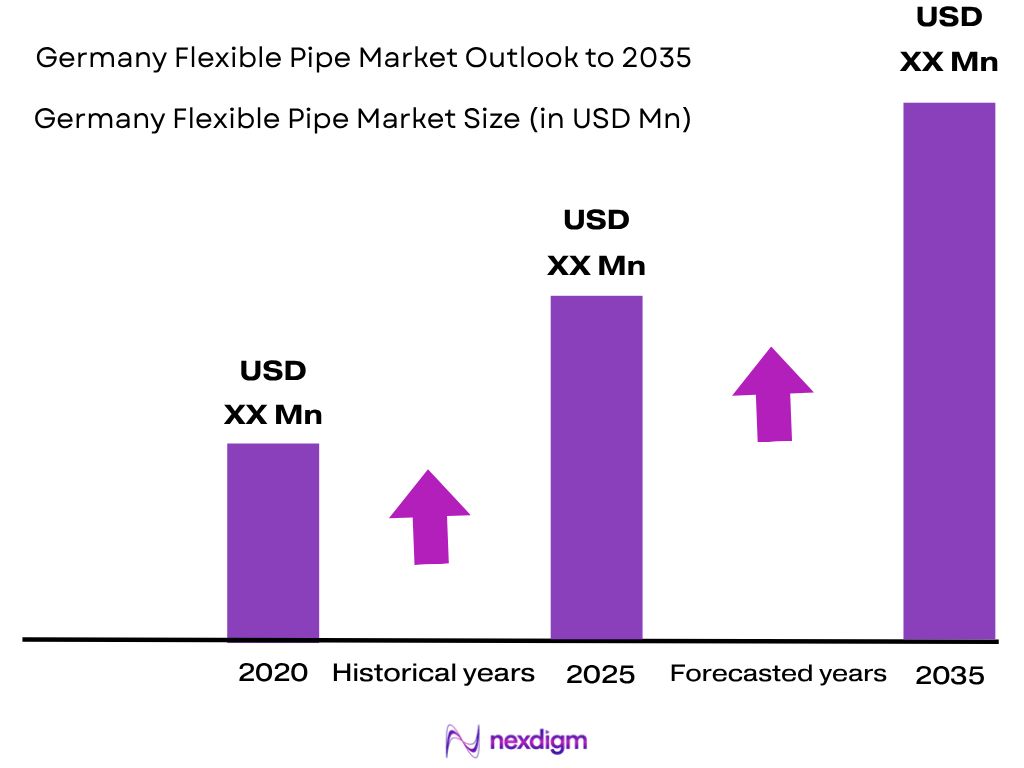
The Germany flexible pipe market is driven by demand from offshore energy infrastructure, industrial fluid transportation, chemical processing, and marine engineering applications. The market includes flexible pipeline solutions manufactured from advanced polymers, thermoplastics, and composite materials used where corrosion resistance, weight reduction, and installation flexibility are required. Germany’s industrial base, offshore wind expansion, and energy transition projects support adoption. Existing market assessments classify Germany’s flexible pipe demand across applications such as oil and gas transport, water utilities, chemical transport, and gas transmission.
Northern Germany represents the primary demand region due to its concentration of offshore wind activities, maritime infrastructure, ports, shipbuilding capabilities, and energy projects in the North Sea and Baltic Sea regions. Cities including Hamburg, Bremen, Bremerhaven, Kiel, and Rostock support marine engineering, offshore servicing, and industrial pipeline applications. Germany’s chemical and manufacturing clusters in regions such as North Rhine-Westphalia and Bavaria also contribute demand through industrial fluid transfer and process applications. Flexible pipe applications are increasingly linked with offshore pipeline systems, renewable infrastructure, and industrial modernization activities.
Market Segmentation
By Application Type
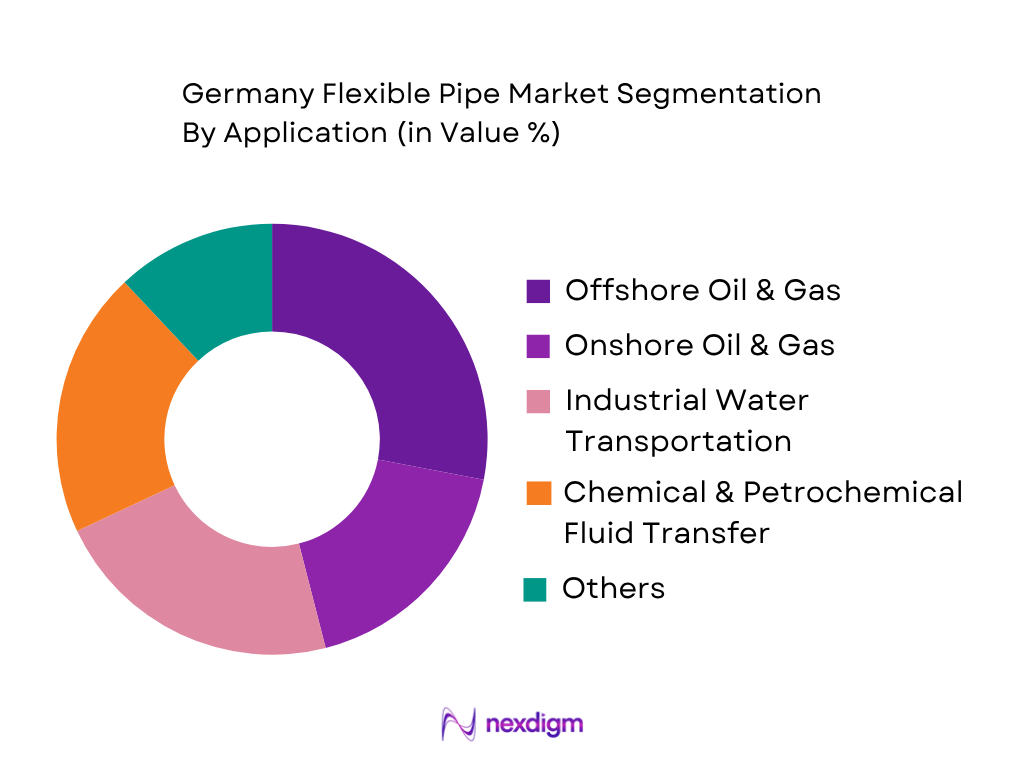
Germany flexible pipe market is segmented into offshore oil and gas, onshore oil and gas, industrial water transportation, chemical and petrochemical fluid transfer, and renewable energy infrastructure. Offshore oil and gas applications represent the leading segment due to Germany’s marine engineering expertise, offshore service ecosystem, and requirement for specialized flexible pipeline systems in subsea and marine environments. Although Germany has limited domestic hydrocarbon production compared with major producing countries, offshore pipeline technologies remain relevant through engineering services, maintenance activities, and European energy infrastructure projects. Industrial water transportation and chemical fluid transfer also contribute significantly because Germany has one of the largest chemical manufacturing bases globally, requiring corrosion-resistant and durable piping solutions. Renewable energy infrastructure is emerging as a growth application due to offshore wind development, where flexible protection systems and advanced polymer solutions support underwater cable and fluid management requirements.
By Material Type
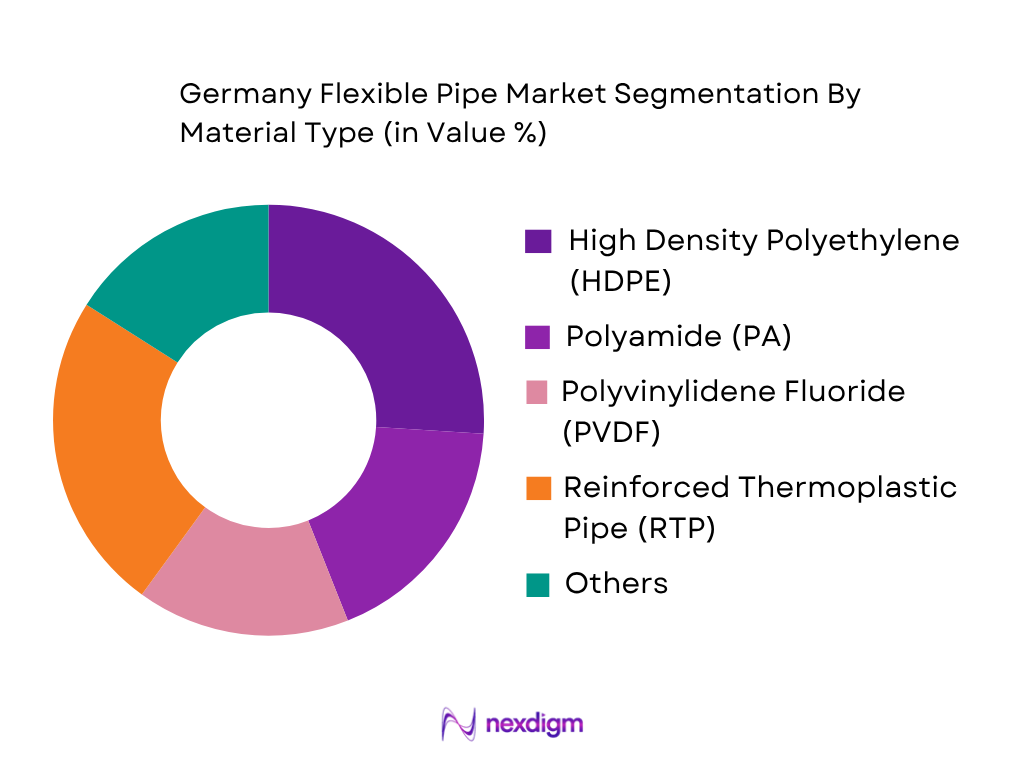
Germany flexible pipe market is segmented by HDPE, polyamide, PVDF, reinforced thermoplastic pipe (RTP), and composite flexible pipe. HDPE holds a leading position due to its extensive usage in water transportation, industrial pipelines, and chemical handling applications because of its chemical resistance, durability, and suitability for underground infrastructure. Reinforced thermoplastic pipes are gaining importance in advanced industrial and energy applications because they combine lightweight characteristics with pressure resistance and corrosion protection. Polyamide and PVDF materials are preferred for specialized applications requiring high temperature and chemical resistance, particularly in chemical processing and offshore environments. Composite flexible pipes are increasingly relevant for renewable energy and marine infrastructure due to their reduced weight and adaptability compared with traditional metallic systems. Germany’s engineering sector supports adoption of high-performance materials as industries move toward longer-life and lower-maintenance pipeline solutions.
Competitive Landscape
The Germany flexible pipe market consists of global flexible pipeline manufacturers, polymer technology providers, and industrial pipeline solution companies. Competition is influenced by technical capabilities, material innovation, offshore qualification expertise, manufacturing capacity, and ability to supply customized solutions for energy, marine, and industrial applications. Major participants compete through advanced composite materials, reinforced thermoplastic technologies, and specialized offshore pipeline systems. (6Wresearch)
| Company | Establishment Year | Headquarters | Core Flexible Pipe Offering | Key Application Areas | Material Expertise | Offshore Capability | Germany Market Presence | Innovation Focus |
| TechnipFMC plc | 2017 (formed through merger) | London, UK / Houston, USA | ~ | ~ | ~ | ~ | ~ | ~ |
| Baker Hughes Company | 2017 (as Baker Hughes Company) | Houston, USA | ~ | ~ | ~ | ~ | ~ | ~ |
| National Oilwell Varco (NOV) | 1862 | Houston, USA | ~ | ~ | ~ | ~ | ~ | ~ |
| Aker Solutions ASA | 2020 (current corporate structure) | Fornebu, Norway | ~ | ~ | ~ | ~ | ~ | ~ |
| Prysmian Group | 1879 | Milan, Italy | ~ | ~ | ~ | ~ | ~ | ~ |
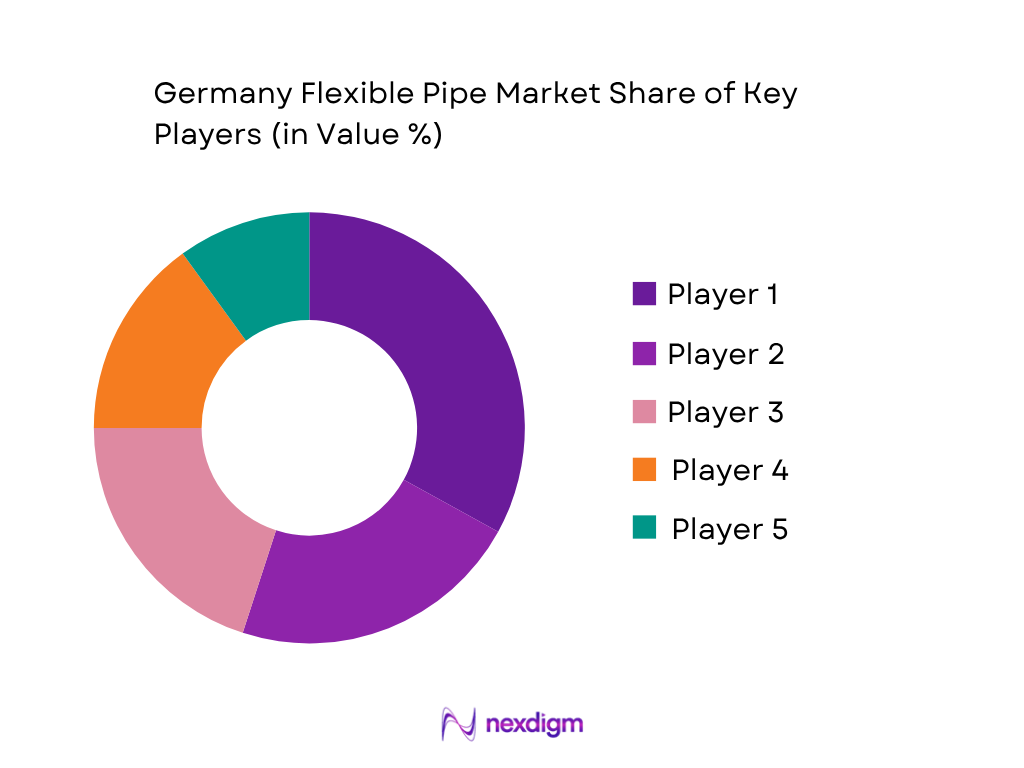
Germany Flexible Pipe Market Analysis
Growth Drivers
Expansion of Offshore Wind Infrastructure
The expansion of offshore wind infrastructure is a major driver for the Germany Flexible Pipe Market as flexible pipeline solutions are increasingly required for subsea cable protection, fluid transfer systems, and offshore support infrastructure. Germany continues to strengthen offshore renewable energy development under its energy transition strategy. The country’s installed offshore wind capacity reached approximately 8.5 GW in 2024, supported by projects in the North Sea and Baltic Sea regions, creating demand for durable marine-grade flexible systems. Germany generated more than 400 TWh of electricity from renewable sources in 2024, highlighting the increasing requirement for offshore infrastructure integration. Flexible pipes provide advantages including corrosion resistance, reduced installation complexity, and adaptability in challenging seabed conditions. The German Maritime and Hydrographic Agency continues approving offshore wind projects requiring advanced subsea engineering solutions. Additionally, Germany’s offshore wind expansion targets require increased deployment of marine infrastructure components capable of operating under harsh environmental conditions. Flexible pipe technologies support these requirements through lightweight designs, improved installation efficiency, and extended operational life compared with conventional metallic systems, making them relevant for future offshore renewable energy developments.
Increasing Hydrogen Pipeline Requirements
The development of hydrogen infrastructure is creating new opportunities for flexible pipe adoption in Germany due to the country’s focus on hydrogen as a key component of industrial decarbonization. Germany’s National Hydrogen Strategy aims to establish large-scale hydrogen production, import, storage, and transportation infrastructure. The country’s hydrogen network planning includes approximately 9,700 km of dedicated hydrogen pipelines by 2032, increasing demand for advanced pipeline materials capable of handling new energy carriers. Germany’s industrial sector consumed more than 2,300 TWh of energy in 2024, with chemical, steel, and heavy manufacturing industries representing significant potential hydrogen users. Flexible pipe solutions can support hydrogen-related applications through corrosion resistance, installation flexibility, and suitability for complex industrial environments. The European Union’s hydrogen infrastructure development plans further support cross-border hydrogen transportation requirements involving Germany. Flexible pipeline technologies are expected to become increasingly important for connecting hydrogen production facilities, storage systems, offshore energy projects, and industrial clusters where conventional rigid pipelines may face installation limitations.
Market Challenges
High Dependence on Imported Advanced Flexible Pipe Technologies
Germany’s flexible pipe market faces challenges due to dependence on specialized international suppliers for advanced offshore-grade flexible pipe technologies. Manufacturing high-performance flexible pipes requires advanced polymer formulations, reinforcement technologies, subsea qualification capabilities, and specialized production facilities that remain concentrated among global technology providers. Germany has strong industrial manufacturing capabilities but limited domestic production capacity for large-scale offshore flexible riser and flowline systems. The country imported industrial machinery and specialized energy equipment worth more than USD 200 billion in 2024, reflecting continued reliance on global supply chains for advanced industrial technologies. Offshore applications require extensive certification, including pressure testing, fatigue analysis, and long-term durability validation, increasing entry barriers for domestic manufacturers. The requirement for specialized materials such as high-performance thermoplastics and composite reinforcement layers further increases dependency on international material suppliers. This dependence can create supply chain risks, longer procurement cycles, and technology access challenges for German companies seeking flexible pipe solutions for offshore wind, hydrogen, marine infrastructure, and industrial applications.
Stringent Offshore Certification and High Technical Testing Requirements
Stringent offshore certification standards represent another challenge for the Germany Flexible Pipe Market due to the complex operating conditions associated with marine applications. Flexible pipes used in offshore environments must undergo extensive testing for pressure resistance, mechanical performance, fatigue life, chemical compatibility, and environmental durability. Germany’s offshore wind sector operates primarily in the North Sea and Baltic Sea, where marine infrastructure faces strong wave loading, corrosion exposure, and challenging installation conditions. The German offshore wind sector had more than 1,500 turbines installed in marine environments by 2024, requiring continuous compliance with strict engineering standards. Certification processes involve multiple regulatory and technical assessments, increasing development timelines for new flexible pipe technologies. Additionally, hydrogen and carbon capture applications require additional validation because of material compatibility requirements. The complexity of testing and qualification creates barriers for smaller manufacturers and increases reliance on established technology providers with existing certification capabilities. Companies entering the market must invest significantly in engineering expertise, testing infrastructure, and compliance procedures to meet Germany’s industrial and offshore requirements.
Market Opportunities
Offshore Wind Farm Expansion
Offshore wind expansion presents significant opportunities for flexible pipe applications in Germany as new marine energy projects require advanced subsea infrastructure solutions. Germany continues increasing offshore renewable capacity as part of its transition toward a low-carbon energy system. Offshore wind installations reached approximately 8.5 GW in 2024, with additional projects planned in the North Sea and Baltic Sea regions. The government has identified offshore wind as a major component of future electricity generation, requiring extensive marine infrastructure including subsea systems, protection solutions, and flexible components. Flexible pipes can support offshore wind applications through their ability to withstand dynamic marine conditions, accommodate movement, and reduce installation complexity. The growth of floating offshore renewable technologies also creates additional demand for flexible connection systems capable of handling movement between floating structures and seabed infrastructure. Germany’s renewable electricity generation exceeded 400 TWh in 2024, demonstrating the increasing scale of energy infrastructure requiring reliable offshore components. Flexible pipe manufacturers can benefit from opportunities linked to offshore wind expansion, subsea engineering, and marine infrastructure modernization.
Hydrogen Transportation Network Development
Hydrogen transportation infrastructure development provides a major opportunity for flexible pipe technologies as Germany accelerates industrial energy transition initiatives. Germany’s hydrogen strategy includes the development of dedicated hydrogen networks connecting production facilities, import terminals, storage locations, and industrial demand centers. The planned hydrogen pipeline network is expected to cover approximately 9,700 km, creating requirements for advanced transportation solutions. Flexible pipe systems can support hydrogen applications in areas where installation flexibility, corrosion resistance, and reduced maintenance requirements are important. Germany’s chemical, steel, and industrial manufacturing sectors represent significant hydrogen demand centers, with industrial energy consumption exceeding 2,300 TWh in 2024. Offshore hydrogen production linked with renewable energy projects may also require flexible subsea transportation solutions. Carbon-neutral energy infrastructure development across Europe is increasing demand for innovative pipeline materials capable of supporting new fuels. Flexible pipe manufacturers can capture opportunities by developing hydrogen-compatible materials, reinforced thermoplastic systems, and specialized solutions for industrial and offshore hydrogen transportation applications.
Future Outlook
The Germany flexible pipe market is expected to benefit from increasing offshore renewable infrastructure, industrial modernization, hydrogen infrastructure development, and demand for corrosion-resistant pipeline systems. The transition toward lightweight and durable pipeline technologies is supporting adoption across energy and industrial sectors. Offshore wind expansion, carbon reduction initiatives, and replacement of aging infrastructure are expected to create additional opportunities for flexible pipe suppliers. Germany’s focus on energy security and industrial decarbonization will continue influencing demand for advanced pipeline solutions.
Major Players
- TechnipFMC
- Baker Hughes
- Prysmian Group
- Strohm
- Vallourec
- NOV Inc.
- Schlumberger
- Saipem
- Subsea 7
- Parker Hannifin
- Trelleborg
- ContiTech
- Uponor
- GF Piping Systems
- Wienerberger
Key Target Audience
- Oil and Gas Operators
- Offshore Engineering and EPC Companies
- Renewable Energy Infrastructure Developers
- Chemical and Petrochemical Companies
- Industrial Water Infrastructure Operators
- Investments and Venture Capitalist Firms (Energy Infrastructure Investment Funds, Industrial Technology Investors)
- Government and Regulatory Bodies (Federal Ministry for Economic Affairs and Climate Action, Federal Maritime and Hydrographic Agency, German Environment Agency)
- Pipeline Manufacturing and Advanced Material Companies
Research Methodology
Step 1: Identification of Key Variables
The initial phase involves defining the Germany Flexible Pipe Market ecosystem by mapping key stakeholders including flexible pipe manufacturers, offshore engineering companies, industrial users, renewable energy developers, chemical processing companies, and pipeline service providers. Extensive secondary research is conducted to identify market variables such as application segments, material categories, end-user industries, regulatory requirements, and technology adoption patterns influencing demand.
Step 2: Market Analysis and Construction
This stage focuses on developing the market framework through evaluation of historical demand patterns, industry applications, supply chain structures, and technology adoption trends. The analysis covers flexible pipe utilization across offshore energy, industrial water management, chemical transportation, marine infrastructure, and renewable energy applications. Bottom-up and top-down approaches are applied to validate market estimates and segment performance.
Step 3: Hypothesis Validation and Expert Consultation
Market assumptions are validated through discussions with industry participants including flexible pipe manufacturers, offshore engineering specialists, pipeline contractors, material suppliers, and industrial end users. These consultations provide insights into product specifications, qualification standards, installation challenges, procurement behavior, and future technology requirements affecting the Germany flexible pipe market.
Step 4: Research Synthesis and Final Output
The final stage integrates collected information from primary and secondary sources to develop a comprehensive market assessment. Data validation is performed through triangulation of supply-side analysis, demand-side assessment, industry regulations, infrastructure developments, and technological advancements. The final report presents market segmentation, competitive landscape, growth drivers, challenges, opportunities, and strategic recommendations.

- Executive Summary
- Research Methodology (Market Definition and Scope, Flexible Pipe Ecosystem Mapping, Market Sizing Framework, Revenue Estimation Approach, Top-Down Market Assessment, Bottom-Up Market Assessment, Demand-Side Analysis, Supply-Side Analysis, Primary Interviews, Secondary Data Validation, Market Forecasting Model, Data Triangulation, Research Limitations)

- Definition and Scope of Germany Flexible Pipe Market
- Flexible Pipe Industry Evolution and Technology Development Timeline
- Key Market Developments in Offshore, Industrial and Energy Applications
- Germany Flexible Pipe Value Chain Analysis

- Growth Drivers (Expansion of Offshore Wind Infrastructure, Increasing Hydrogen Pipeline Requirements, Offshore Energy Transition Projects, Aging Industrial Pipeline Replacement Demand, Rising Adoption of Corrosion Resistant Pipeline Solutions, Marine Infrastructure Modernization, Chemical Industry Expansion, Demand for Lightweight Pipeline Systems)
- Market Challenges (High Dependence on Imported Advanced Flexible Pipe Technologies, Limited Domestic Flexible Pipe Manufacturing Capacity, Stringent Offshore Certification Requirements, High Technical Testing Requirements, Complex Installation Conditions, Competition from Rigid Pipeline Systems, High Material Technology Dependency, Limited Large-Scale Flexible Pipe Production Facilities)
- Market Opportunities (Offshore Wind Farm Expansion, Hydrogen Transportation Network Development, Carbon Capture and Storage Infrastructure, Reinforced Thermoplastic Pipe Adoption, Industrial Pipeline Modernization, Offshore Renewable Energy Infrastructure, Marine Pipeline Rehabilitation, Local Flexible Pipe Technology Development)
- Market Trends (Hydrogen-Compatible Flexible Pipeline Systems, Sustainable Composite Materials, Offshore Wind Subsea Infrastructure Growth, Lightweight Pipeline Technology Adoption, Digital Monitoring of Pipeline Systems, Advanced Polymer Development, Circular Economy Materials Adoption)
Germany Flexible Pipe Regulatory and Standards Landscape - SWOT Analysis
- Porter’s Five Forces Analysis
- PESTLE Analysis
- Stakeholder Ecosystem

- By Market Value (2020-2025)
- By Volume Consumption (2020-2025)
- By Application Revenue Contribution (2020-2025)
- By Material Consumption Volume (2020-2025)
- By End User Procurement Value (2020-2025)
- By Domestic Production and Import Dependency (2020-2025)

- By Application Type (In Value %)
Offshore Oil & Gas Infrastructure
Offshore Wind Cable Protection and Marine Infrastructure
Industrial Fluid Transportation
Chemical and Petrochemical Fluid Transfer
Hydrogen Transportation Infrastructure
Carbon Capture and Storage Pipeline Applications
Water and Wastewater Transportation - By Material Type (In Value %)
High Density Polyethylene (HDPE)
Polyamide (PA)
Polyvinylidene Fluoride (PVDF)
Reinforced Thermoplastic Pipe (RTP)
Composite Flexible Pipe
Metal Reinforced Flexible Pipe - By Product Type (In Value %)
Flexible Risers
Flexible Flowlines
Jumpers and Subsea Connections
Flexible Hose Systems
Thermoplastic Composite Pipes - By End User Industry (In Value %)
Oil and Gas Operators
Offshore Wind Developers
Chemical and Petrochemical Companies
Industrial Manufacturing Companies
Water Infrastructure Operators
Hydrogen Infrastructure Developers - By Deployment Environment (In Value %)
Offshore Applications
Nearshore Applications
Onshore Industrial Applications
Marine Infrastructure Applications
Subsea Applications

- Market Structure Assessment (Global Manufacturers, Regional Suppliers, Technology Providers, EPC Contractors)
- Market Positioning Analysis (By Product Portfolio, Technology Capability, Application Coverage, Geographic Presence)
- Cross Comparison Parameters (Product Portfolio Breadth, Flexible Pipe Technology Capability, RTP Manufacturing Capability, Offshore Application Expertise, Polymer Material Technology, Subsea Installation Support, Certification Capability, Research and Development Strength)
- SWOT Analysis of Major Players
- Pricing and Product Specification Analysis
- Detailed Profiles of Major Companies
Major Flexible Pipe Manufacturers
TechnipFMC
Baker Hughes
Nexans
Prysmian Group
Schlumberger
NOV Inc.
Parker Hannifin
Trelleborg
ContiTech
Eaton
Vallourec
Solvay
Covestro
Habasit
Brugg Group

- End User Demand Assessment
- Procurement Decision Factors
- Application Preference Analysis
- Technology Adoption Assessment
- Infrastructure Investment Analysis
- Offshore Wind Investment Activity
- Industrial Modernization Projects
- Marine Infrastructure Expansion

- By Market Value (2026-2035)
- By Volume Consumption (2026-2035)
- By Application Revenue Contribution (2026-2035)
- By Material Consumption Volume (2026-2035)
- By End User Procurement Value (2026-2035)
- By Domestic Production and Import Dependency (2026-2035)


 Request a Sample
 Ask for Customization
 Get a Quote
 Enquire Now