

 Download PDF
Market Overview
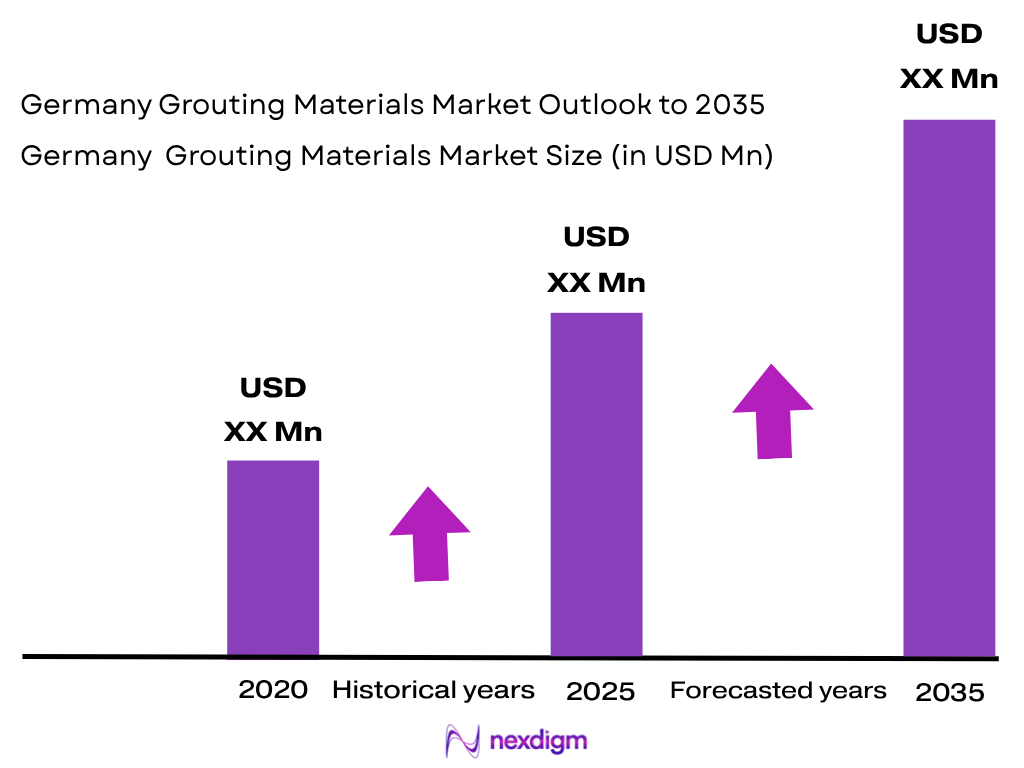
The Germany Grouting Materials Market is valued at approximately ~USD XX million, supported by civil engineering, rail modernization, machinery installation and structural rehabilitation. Construction investment moved from EUR453.01 billion in the preceding period to EUR450.66 billion in the latest period, while non-residential construction increased from EUR175.48 billion to EUR180.18 billion. Growing infrastructure expenditure supports high-performance cementitious, precision, bearing, rail and injection grouts.
North Rhine-Westphalia, Bavaria, Baden-Württemberg and Lower Saxony are major Germany Grouting Materials demand centres because they combine industrial production, machinery manufacturing, transport infrastructure and wind-energy assets. Deutsche Bahn’s gross investment increased from EUR15.92 billion to EUR18.25 billion, while approximately EUR16.9 billion was deployed on rail infrastructure in the latest period, including work on 40,000 m² of bridge area and modernization of 870 stations.
Market Segmentation
By Product Type
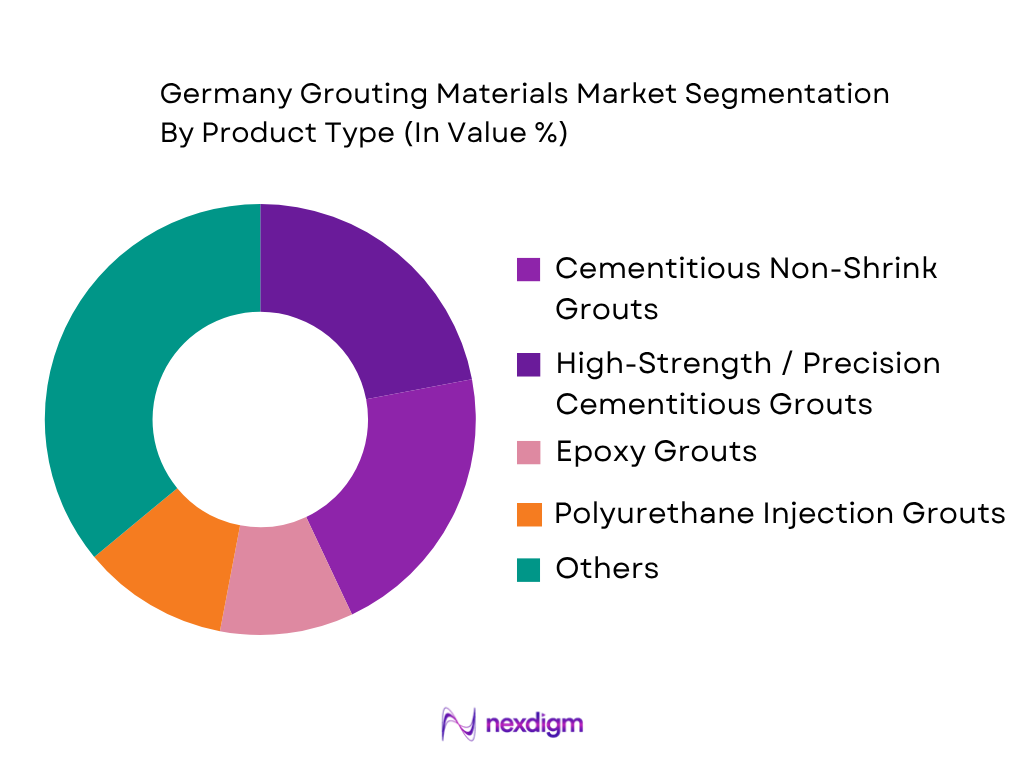
The Germany Grouting Materials Market is segmented into universal cementitious grouts, high-performance and high-strength cementitious grouts, fast-setting grouts, precision epoxy grouts, injection grouts, precast connection grouts, bridge and rail grouts, and wind-turbine foundation grouts. High-performance cementitious grouts hold the dominant position because Germany has a large installed base of industrial machinery, rail infrastructure, bridges and precast structures requiring structural load transfer and reliable dimensional stability. German manufacturers offer dedicated grout categories covering standard, rapid, high-strength and wind-energy applications, indicating a mature specification-driven market. Infrastructure demand is reinforced by Deutsche Bahn’s approximately EUR16.9 billion infrastructure expenditure and renewal of 1,850 switches, alongside work on 40,000 m² of bridge area. High-performance hydraulic grouts are particularly suitable for machinery bases, bridge bearings and structural steel interfaces because they combine high flowability with early and final strength.
By Application
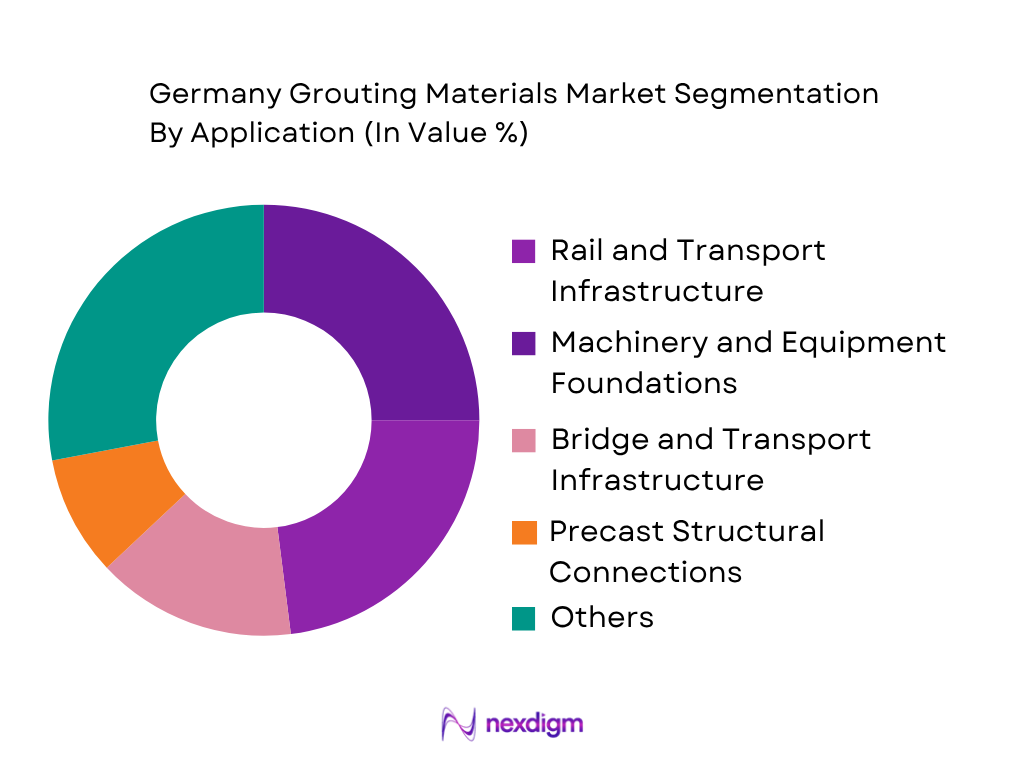
The Germany Grouting Materials Market is segmented into rail and transport infrastructure, machinery and equipment foundations, bridge and civil engineering, wind-energy foundations, precast structural connections, tunnel and underground works, and industrial rehabilitation. Rail and transport infrastructure represents the dominant application because Germany is undertaking extensive modernization of its railway network. Deutsche Bahn invested approximately EUR16.9 billion in infrastructure, renewed 1,850 switches, modernized 870 stations, replaced 3,740 signalling units and carried out work across 40,000 m² of bridge area. The Riedbahn general refurbishment also represents the first of 40 planned corridor refurbishments, supporting recurring demand for bearing, track, mast, rapid-setting and structural-interface grouts. Machinery foundations remain a substantial secondary application because Germany recorded EUR267.10 billion of machinery and equipment capital formation in the latest period. Wind energy adds a technically demanding niche requiring ultra-high-strength and fatigue-resistant grout systems.
Competitive Landscape
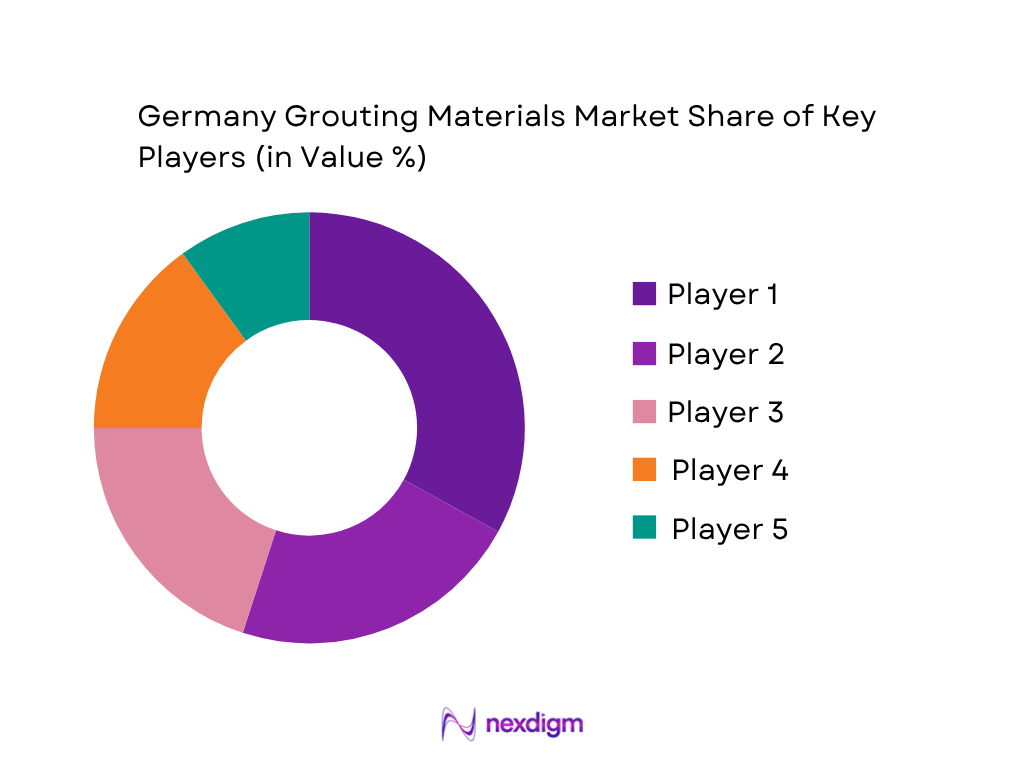
The Germany Grouting Materials Market is highly technical and specification-driven, with established domestic construction-chemical manufacturers competing alongside multinational suppliers. Competition centres on DAfStb-compliant cementitious grouts, rapid early-strength development, high-flow placement, wind-energy foundation capability, frost and de-icing salt resistance, low-creep epoxy systems and specialized rail and infrastructure applications. Domestic suppliers such as MC-Bauchemie and PAGEL maintain especially broad engineering-grout portfolios and strong familiarity with German technical requirements.
| Major Player | Establishment Year | Headquarters | High-Performance Cementitious Grouts | Epoxy / Precision Grouts | Rail & Bridge Capability | Wind-Energy Grouts | German Manufacturing | Technical / Specification Support |
| MC-Bauchemie | 1961 | Bottrop, Germany | ~ | ~ | ~ | ~ | ~ | ~ |
| PAGEL Spezial-Beton | 1955 | Essen, Germany | ~ | ~ | ~ | ~ | ~ | ~ |
| Sika | 1910 | Baar, Switzerland | ~ | ~ | ~ | ~ | ~ | ~ |
| MAPEI | 1937 | Milan, Italy | ~ | ~ | ~ | ~ | ~ | ~ |
| Master Builders Solutions | 1909 heritage | Mannheim, Germany | ~ | ~ | ~ | ~ | ~ | ~ |
Germany Grouting Materials Market Analysis
Growth Drivers
Rail and Bridge Modernization Is Expanding Demand for High-Performance Infrastructure Grouts
Germany’s Grouting Materials Market is strongly supported by the ongoing modernization of railway tracks, bridges, stations and associated civil infrastructure, where bearing grouts, rapid-setting products, mast-foundation grouts and structural injection systems are required. Deutsche Bahn reported that DB InfraGO deployed approximately EUR16.9 billion in 2024 across the rail network, renewing 1,851 switches, constructing or renewing approximately 1,940 km of track, replacing 3,741 signalling units, working on approximately 40,000 m² of railway bridge area and undertaking construction at around 870 stations. Investment accelerated further in 2025, when more than EUR19 billion was deployed across roughly 26,000 construction sites, with 2,065 switches, 2,173 km of track and approximately 40,000 m² of bridge area completed or renewed. The network modernization program creates repeated applications for high-flow bearing grout, rapid early-strength rail products and void-filling systems, particularly where closure windows are restricted. World Bank data record Germany’s 2024 nominal GDP at USD4,685.6 billion and GDP per capita at USD56,103.7, providing a substantial macroeconomic base for long-cycle infrastructure rehabilitation and engineered grouting demand.
Wind Energy and Industrial Equipment Investment Sustain Specialized Foundation Grouting
Wind-energy development and Germany’s large machinery base provide another major growth driver for the Germany Grouting Materials Market because turbine foundations, machine tools, compressors, production lines and structural equipment require precise load transfer and dimensional stability. The Federal Network Agency recorded 63.5 GW of installed onshore wind capacity at the end of 2024, while permits were issued for nearly 15 GW of additional onshore wind projects during the year. Offshore additions included 73 newly commissioned turbines providing approximately 0.7 GW of capacity. These projects create demand for ultra-high-strength, pumpable and fatigue-resistant tower-base grouts capable of accommodating substantial cyclic loading. Germany also recorded EUR267.10 billion of machinery and equipment capital formation in 2024, followed by EUR266.10 billion in 2025, reflecting the continuing scale of the country’s installed industrial-equipment base even under weaker manufacturing conditions. Replacement, realignment and automation of equipment generate precision cementitious and low-creep epoxy grouting applications. World Bank data put Germany’s 2024 nominal GDP at USD4,685.6 billion and GDP per capita at USD56,103.7, supporting continued demand for technically specified foundation and machinery grouts.
Market Challenges
Weak Building Construction and Industrial Production Reduce Demand From Some Traditional Grouting Applications
The Germany Grouting Materials Market faces pressure from subdued building activity and weaker industrial production, which can delay new machinery foundations, structural-base installations and conventional construction grouting. Federal Statistical Office data show that building permits declined from 163,906 buildings or construction measures in 2023 to 145,010 in 2024, while permitted dwellings decreased from 259,639 to 215,289. Construction costs represented by approved projects moved from EUR112.99 billion to EUR104.06 billion, indicating a smaller pipeline of permitted building works. Industrial conditions also weakened: machinery and equipment capital formation amounted to EUR267.10 billion in 2024, down from EUR277.41 billion in the preceding period. Germany nevertheless maintained EUR450.66 billion of total construction capital formation, including EUR180.18 billion for non-residential and other construction, allowing infrastructure-oriented grouting demand to remain more resilient than residential applications. For suppliers, the challenge is therefore a shift in end-market mix rather than a uniform reduction in demand. World Bank data record Germany’s 2024 nominal GDP at USD4,685.6 billion and GDP per capita at USD56,103.7, highlighting the scale of the economy despite cyclical construction and manufacturing headwinds.
Complex Technical Requirements and Large Infrastructure Workloads Increase Application-Control Demands
Germany’s Grouting Materials Market is technically demanding because rail, bridge, machinery and wind-energy projects require controlled strength development, complete filling, dimensional stability and consistent application under tight operating windows. Deutsche Bahn evaluated more than 380,000 infrastructure assets in its 2024 condition assessment, covering bridges, tunnels, tracks, switches, signalling equipment, overhead lines and station infrastructure. During 2025, DB InfraGO worked across approximately 26,000 construction sites, modernized around 950 stations, renewed 2,065 switches, completed 2,173 km of track work and commissioned 60 new signal boxes. This scale of simultaneous construction increases requirements for specialist grouting teams capable of precise water dosing, substrate preparation, pumping, formwork sealing and quality verification. Failure to fill bearing plates or machine bases completely can compromise load transfer, while excessive water addition can alter flow and strength. Cold-season work and frost-exposed bridge applications add further performance demands. World Bank data show Germany’s 2024 nominal GDP at USD4,685.6 billion and GDP per capita at USD56,103.7. The opportunity base is therefore large, but suppliers must support certified products, skilled installation and project-specific technical documentation to compete effectively.
Market Opportunities
Ultra-High-Strength Wind Turbine Grouts Can Benefit From Germany’s Expanding Renewable Asset Base
Wind-energy foundations represent a high-value future opportunity for Germany’s Grouting Materials Market because current capacity additions and repowering activity require specialized grouts with high compressive strength, pumpability and fatigue resistance. The Federal Network Agency recorded 63.5 GW of installed onshore wind capacity in 2024. During the same year, approvals were issued for nearly 15 GW of additional onshore wind capacity, compared with 8 GW in the preceding period, while 73 offshore turbines entered service and approximately 0.7 GW of new offshore capacity was commissioned. Around 0.7 GW of older onshore capacity was also permanently decommissioned, reflecting continued repowering of established sites with larger turbines. Repowering is particularly relevant for grouting suppliers because larger towers and foundation interfaces increase requirements for high-performance load-transfer materials. Germany’s existing manufacturing capability also supports domestic production of specialized turbine grouts and automated pumping systems. World Bank data record Germany’s 2024 nominal GDP at USD4,685.6 billion and GDP per capita at USD56,103.7. These current wind-energy volumes provide a strong platform for future demand for ultra-high-strength, fatigue-resistant and lower-carbon cementitious grouting technologies.
Rail Rehabilitation and Infrastructure Renewal Create Scope for Fast-Setting and Pumpable Grouting Systems
Germany’s intensive rail-renewal program creates a significant future opportunity for fast-setting rail grouts, bridge-bearing products, tunnel injection materials and pumpable large-volume systems. DB InfraGO deployed approximately EUR16.9 billion in 2024, and available funding increased to more than EUR19 billion in 2025. During 2025, railway works covered approximately 26,000 construction sites, 2,173 km of track, 2,065 switches, 950 stations, 60 new signal boxes and approximately 40,000 m² of bridge area. The modernization of the 278 km Hamburg–Berlin corridor also commenced in 2025, creating a concentrated requirement for rapid installation technologies during planned closures. In addition, the federal government implemented a EUR4.24 billion equity tranche for Deutsche Bahn in March 2025 as part of infrastructure-focused capital increases, reinforcing the scale of network renewal. Such projects favour grouts capable of early loading, reliable flow beneath bearing plates and durable performance under vibration and weather exposure. World Bank data record Germany’s 2024 nominal GDP at USD4,685.6 billion and GDP per capita at USD56,103.7, providing the economic foundation for continued infrastructure rehabilitation and higher-value engineered grout adoption.
Future Outlook
The Germany Grouting Materials Market is expected to expand at approximately ~X.X% CAGR during 2026–2035, supported by rail modernization, bridge rehabilitation, wind-energy investment and continued industrial-equipment renewal. Growth is expected to be weighted toward technically demanding applications rather than conventional building construction. Rail infrastructure represents one of the clearest demand channels. Deutsche Bahn’s gross investments rose to EUR18.25 billion, from EUR15.92 billion previously, with higher spending directed toward improving rail infrastructure quality and availability. DB InfraGO alone deployed around EUR16.9 billion and completed significant bridge, switch, station and signalling works.
Major Players
- MC-Bauchemie Müller GmbH & Co. KG
- PAGEL Spezial-Beton GmbH & Co. KG
- Sika Deutschland GmbH
- MAPEI GmbH
- Master Builders Solutions Deutschland GmbH
- Remmers GmbH
- PCI Augsburg GmbH
- StoCretec GmbH
- SCHOMBURG GmbH & Co. KG
- SAKRET Trockenbaustoffe Europa GmbH & Co. KG
- quick-mix / Sievert SE
- Botament GmbH
- ARDEX GmbH
- KÖSTER BAUCHEMIE AG
- Hahne Bautenschutz GmbH
Key Target Audience
- Grouting Material and Construction Chemical Manufacturers
- Rail, Bridge and Transport Infrastructure Contractors
- Machinery and Industrial Equipment Installation Contractors
- Wind-Energy Foundation and Renewable Infrastructure Contractors
- Precast Concrete Manufacturers and Structural Contractors
- Investments and Venture Capitalist Firms
- Government and Regulatory Bodies (Federal Ministry for Digital and Transport, Federal Railway Authority, Federal Highway Authority, German Institute for Building Technology, Federal Network Agency)
- Construction Chemical Distributors and Specialist Grouting Contractors
Research Methodology
Step 1: Identification of Key Variables
The initial phase involves constructing an ecosystem map covering grout manufacturers, cement and resin suppliers, infrastructure contractors, machinery installers, wind-energy contractors, precast manufacturers and technical specifiers. Secondary and proprietary research identifies the key technical variables influencing demand. These include compressive strength, early loading time, flowability, layer thickness, fatigue resistance, frost durability, creep and installation method.
Step 2: Market Analysis and Construction
Historical market demand is assessed using construction investment, rail expenditure, industrial-equipment capital formation, bridge modernization and wind-energy installation data. Top-down analysis estimates addressable consumption from major end-use sectors, while bottom-up analysis evaluates manufacturer sales, distributor throughput and grout usage per installation. Estimates are reconciled across standard cementitious, high-performance, epoxy, injection, rail and wind-energy grouts.
Step 3: Hypothesis Validation and Expert Consultation
Market hypotheses are validated through computer-assisted telephone interviews with grouting manufacturers, machinery installers, rail contractors, bridge contractors, wind-energy foundation specialists, precast companies and distributors. Interviews assess grout thickness, strength requirements, dynamic loads, low-temperature installation, project approvals and procurement practices. These consultations refine market segmentation and help distinguish commodity grouting from high-value engineering applications.
Step 4: Research Synthesis and Final Output
The final phase triangulates Destatis investment data, Deutsche Bahn infrastructure statistics, Bundesnetzagentur wind-energy information, technical certification requirements and primary research. Demand is validated by product type, application, customer and region. Forecasting incorporates rail and bridge renewal, wind repowering, industrial modernization, underground construction, low-carbon materials and adoption of high-performance certified grouting systems.

- Executive Summary
- Research Methodology (Market Definitions and Assumptions, Germany Grouting Materials Market Classification, Cementitious Grout Assessment, High-Performance Grout Assessment, Precision Grout Assessment, Fast-Setting Grout Assessment, Epoxy Grout Assessment, Injection Grout Assessment, Microfine Cement Grout Assessment, Precast Joint Grout Assessment, Bridge Bearing Grout Assessment, Rail and Track Grout Assessment, Wind Turbine Grout Assessment, Machine Foundation Grout Assessment, Anchor Grout Assessment, Post-Tension Grout Assessment, Flowability Assessment, Early and Final Strength Assessment, Shrinkage Compensation Assessment, Fatigue and Dynamic Load Assessment, Frost-Thaw and De-Icing Salt Resistance Assessment, DIN EN 1504-6 Assessment, DAfStb Grouting Mortar Requirements, EN 447 Prestressing Grout Assessment, ZTV-ING Infrastructure Specification Assessment, Top-Down Market Sizing, Bottom-Up Market Sizing, Contractor Interviews, Industrial Customer Interviews, Distributor Mapping, Project Pipeline Mapping, Data Triangulation, Forecasting Framework)

- Definition and Scope
- Germany Grouting Materials Industry Evolution and Development of Conventional Cementitious Grouting, Factory-Formulated Non-Shrink Grouts, Hydraulic High-Performance Grouts, Fast-Setting Grouts, Precision Machinery Grouts, Epoxy Resin Grouts, Microfine Cement Injection, PU Injection, Precast Connection Grouts, Bridge Bearing Grouts, Rail and Track Grouts, Wind Turbine Foundation Grouts, Crane Rail Grouts, Cable Duct Grouts, Anchor Grouts and Low-Carbon Grouting Systems
- Grouting Materials Value Chain Analysis
- Grouting Materials Supply Chain Analysis
- Cement Producers, Specialty Binder Producers, Graded Aggregate Suppliers, Microsilica Suppliers, Mineral Filler Suppliers, Expansive Additive Suppliers, Superplasticizer Suppliers, Epoxy Resin Suppliers, Polyurethane Suppliers, Microfine Cement Suppliers, Dry-Mix Grout Manufacturers, Industrial Construction Chemical Producers, Distributors, EPC Contractors, Machinery Installation Contractors, Precast Contractors, Rail Contractors, Bridge Contractors, Wind-Energy Contractors, Tunnel Contractors, Structural Engineers and Infrastructure Asset Owners

- Growth Drivers (Rail Infrastructure Modernization, Bridge Rehabilitation, Wind Energy Expansion, Industrial Machinery Installation, Automotive Plant Modernization, Factory Automation, Civil Engineering Investment, Precast Construction, Tunnel Rehabilitation, Grid Infrastructure Expansion, Equipment Replacement, Asset-Life Extension)
- Market Challenges (Weak Residential Construction Activity, Industrial Production Pressure, Energy-Intensive Manufacturing Constraints, Skilled Applicator Availability, Winter Application Conditions, Frost and De-Icing Salt Exposure, Incorrect Water Addition, Grout Segregation, Incomplete Baseplate Filling, Injection Equipment Requirements, Technical Approval Complexity, Specification Compliance, Product Substitution, Project Closure Constraints)
- Market Opportunities (High-Performance Hydraulic Grouts, Ultra-High-Strength Wind Turbine Grouts, Fast-Setting Rail Grouts, Bridge Bearing Grouts, Low-Creep Epoxy Machinery Grouts, Precast Connection Grouts, Microfine Injection Grouts, Tunnel Backfill Grouts, Low-Temperature Application Grouts, Low-Carbon Cementitious Grouts, Pumpable Large-Volume Grouts, Infrastructure Rehabilitation Grouting)
- Market Trends (Factory-Prepacked Engineering Grouts, Ultra-High-Strength Cementitious Systems, Wind Turbine-Specific Grouts, Rapid-Setting Rail Products, Mechanized Pump Placement, Microfine Injection Technology, EN 1504-Compliant Anchoring Systems, DAfStb-Compliant Grouting Materials, Frost-Resistant Formulations, Low-Clinker Binder Systems, EPD-Backed Product Selection, Automated Mixing and Placement)
- Government Regulations and Standards (DIN EN 1504-6 Anchoring Requirements, DAfStb Grouting Concrete and Grouting Mortar Requirements, EN 447 Prestressing Grout Requirements, ZTV-ING Infrastructure Requirements, DIN and EN Concrete Specifications, Federal Railway Authority Requirements, Deutsche Bahn Technical Specifications, Federal Highway Infrastructure Requirements, Construction Products Regulation, REACH Chemical Requirements, Occupational Safety Requirements, DGNB Sustainability Criteria)
- SWOT Analysis
- Porter’s Five Forces Analysis
- PESTLE Analysis
- Stakeholder Ecosystem

- By Market Value (2020-2025)
- By Grouting Material Consumption Volume (2020-2025)
- By Cementitious Grout Consumption (2020-2025)
- By High-Performance Grout Consumption (2020-2025)
- By Precision Grout Consumption (2020-2025)
- By Fast-Setting Grout Consumption (2020-2025)

- By Material Chemistry (In Value %)
Hydraulic Cementitious Grouts
Polymer-Modified Cementitious Grouts
Ultra-High-Performance Cementitious Grouts
Epoxy Resin Grouts
Polyurethane Injection Grouts
Acrylic and Specialty Chemical Grouts
Hybrid Grouting Systems - By Product Type (In Value %)
Universal Non-Shrink Grouts
High-Performance Grouts
Fast-Setting Grouts
Precision Machinery Grouts
Wind Turbine Grouts
Bridge Bearing Grouts
Precast Connection Grouts
Anchor and Fixing Grouts
Epoxy Machinery Grouts
Injection Grouts
Post-Tension Cable Grouts
Void-Filling Grouts - By Application (In Value %)
Machine Foundations
Equipment Baseplates
Steel Structure Baseplates
Bridge Bearings
Rail and Track Systems
Overhead-Line Mast Foundations
Wind Turbine Foundations
Anchor Bolts
Structural Voids
Tunnel Injection
Rock and Soil Injection
Cable Duct Grouting
Structural Rehabilitation - By Performance Requirement (In Value %)
High Early Strength
High Final Strength
Shrinkage Compensation
High Flowability
Fast Load-Bearing Capability
Low Creep
Fatigue Resistance
Dynamic Load Resistance
Frost-Thaw Resistance
Chloride-Free Formulation
Chemical Resistance
Low Permeability
Pumpability
Low-Temperature Workability - By End-Use Industry (In Value %)
Rail Infrastructure
Road and Bridge Infrastructure
Wind Energy
Machinery and Equipment Manufacturing
Automotive Manufacturing
Chemical and Process Industries
Steel and Metal Processing
Power Generation
Warehouses and Logistics Facilities
Commercial Construction
Precast Concrete Construction
Water and Wastewater Infrastructure
Tunnel and Underground Construction - By Installation Method (In Value %)
Gravity Pouring
Pump Grouting
Dry-Packing
Flowable Placement
Pressure Injection
Low-Pressure Injection
High-Pressure Injection
Precast Sleeve Grouting
Cable Duct Injection
Form-and-Pour Grouting - By Project Type (In Value %)
Machinery Installation
Railway Rehabilitation
Bridge Rehabilitation
Wind Farm Construction
Precast Assembly
Structural Rehabilitation
Tunnel Construction
Ground Stabilization
Plant Maintenance and Re-Grouting

- Market Share of Major Players (By Germany Revenue, Cementitious Grout Volume, High-Performance Grout Portfolio, Epoxy Grout Portfolio, Injection Grout Portfolio, Wind-Energy Exposure, Rail Exposure, Bridge Exposure, Industrial Machinery Exposure, Precast Exposure, German Manufacturing Capacity, Warehouse Presence, Distribution Network, Engineering Specification Support, Contractor Training)
- Cross Comparison Parameters (DAfStb DIN EN 1504-6 High-Performance Cementitious Grout Portfolio Breadth, Precision Epoxy Low-Creep and Dynamic-Load Machinery Grouting Capability, Wind Turbine Ultra-High-Strength and Fatigue-Resistant Grouting Capability, Rail Bridge Bearing Precast and Infrastructure Grouting Capability, Microfine Cement PU Tunnel and Ground-Injection Technology Capability, Germany Manufacturing Warehousing and Technical Distribution Network Reach, Frost-Thaw De-Icing Salt Low-Temperature Early-Strength and Durability Performance, Structural Engineer Contractor Training Field Testing and Technical Site-Support Capability)
- SWOT Analysis of Major Players
- Major Companies
MC-Bauchemie Müller GmbH & Co. KG
PAGEL Spezial-Beton GmbH & Co. KG
Sika Deutschland GmbH
MAPEI GmbH
Master Builders Solutions Deutschland GmbH
Remmers GmbH
PCI Augsburg GmbH
StoCretec GmbH
SCHOMBURG GmbH & Co. KG
SAKRET Trockenbaustoffe Europa GmbH & Co. KG
quick-mix / Sievert SE
ARDEX GmbH
Hahne Bautenschutz GmbH

- Industrial Grouting Contractor Requirement Assessment
- Machinery Installation Contractor Requirement Assessment
- Rail Contractor Requirement Assessment
- Bridge Contractor Requirement Assessment
- Wind-Energy Contractor Requirement Assessment
- Precast Contractor Requirement Assessment
- Tunnel Contractor Requirement Assessment
- Geotechnical Contractor Requirement Assessment

- By Market Value (2026-2035)
- By Grouting Material Consumption Volume (2026-2035)
- By Cementitious Grout Consumption (2026-2035)
- By High-Performance Grout Consumption (2026-2035)
- By Precision Grout Consumption (2026-2035)
- By Fast-Setting Grout Consumption (2026-2035)


 Request a Sample
 Ask for Customization
 Get a Quote
 Enquire Now
