

 Download PDF
 Download PDF
Market Overview
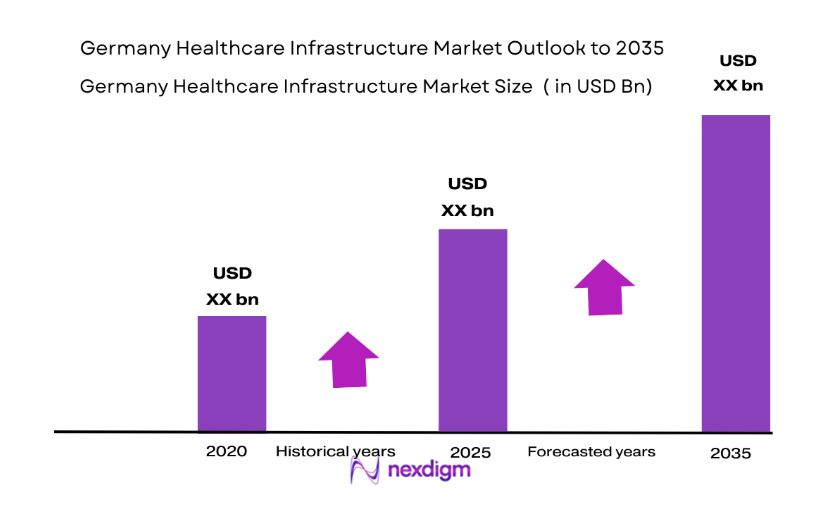
The healthcare infrastructure market is driven by the increasing demand for modern and efficient healthcare facilities, fueled by rising populations, aging demographics, and advancements in medical technology. The market size for healthcare infrastructure in the country is valued at approximately USD ~ billion, supported by extensive public and private sector investments. Key factors such as rising healthcare spending, particularly in emerging economies, are expected to drive continuous growth. With a focus on building state-of-the-art healthcare systems, the market is likely to experience a strong growth trajectory, primarily driven by investments in hospital facilities, medical equipment, and healthcare IT systems.
Dominant players in the healthcare infrastructure market include major countries like the United States, Germany, and the United Kingdom, known for their robust healthcare systems and substantial investments in infrastructure. These regions remain dominant due to factors such as well-established healthcare systems, government-driven funding, and the high demand for advanced medical services. In Europe, Germany stands out with its highly developed healthcare infrastructure, providing sophisticated treatment options and medical technology integration. The region’s dominance is supported by government policies focused on enhancing healthcare access and quality.
Market Segmentation
By Product Type
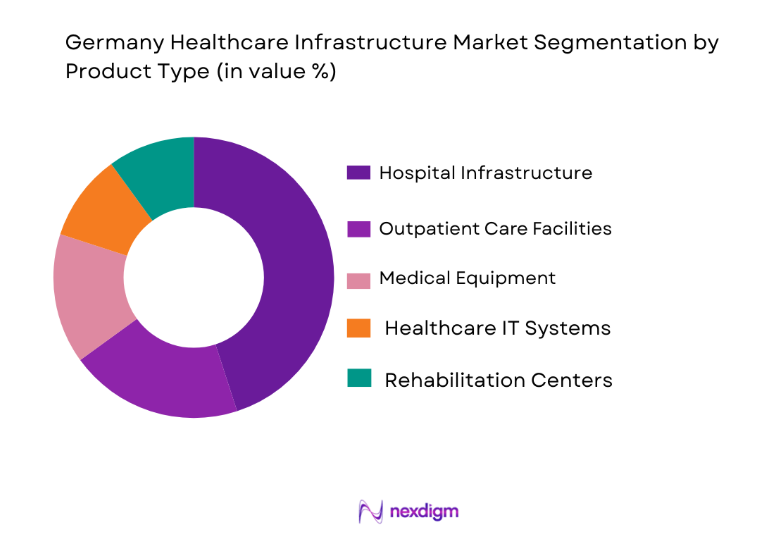
The healthcare infrastructure market is segmented by product type into hospital infrastructure, outpatient care facilities, medical equipment, healthcare IT systems, and rehabilitation centers. Recently, hospital infrastructure has had a dominant market share due to its vital role in providing comprehensive medical services. Increasing investments in upgrading hospitals with advanced medical equipment, patient management systems, and new healthcare technologies have driven this dominance. The growing need for modern healthcare facilities with a wide range of treatment.
By Technology Type
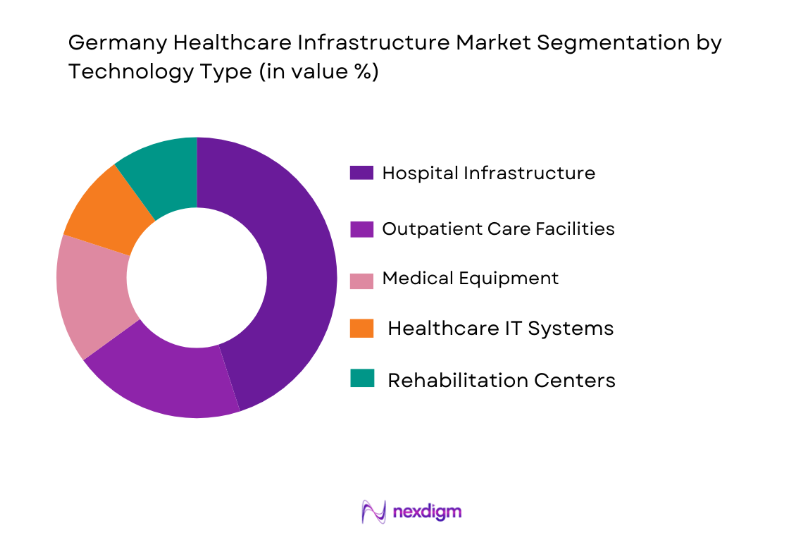
The healthcare infrastructure market is segmented by technology type into traditional medical devices, telemedicine systems, AI-powered healthcare technologies, robotics, and digital health platforms. AI-powered healthcare technologies have emerged as the dominant sub-segment, owing to their ability to enhance diagnostic accuracy, optimize treatment protocols, and streamline healthcare operations. The increasing integration of artificial intelligence in imaging systems, predictive analytics, and automated patient management systems is helping this sub-segment maintain its leadership position in the market.
Competitive Landscape
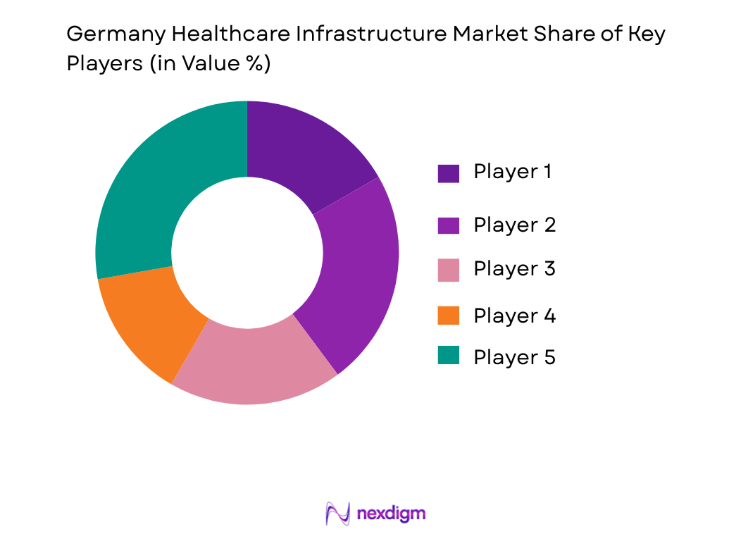
The competitive landscape of the healthcare infrastructure market is dynamic, characterized by consolidation through mergers and acquisitions and the rising influence of major players. These companies lead the way in developing cutting-edge medical equipment, integrating digital health technologies, and enhancing patient care services. A key trend in the market is the expansion of partnerships between traditional healthcare providers and tech companies. These collaborations are shaping the future of healthcare infrastructure, with a particular focus on improving operational efficiency and patient experience.
| Company Name | Establishment Year | Headquarters | Technology Focus | Market Reach | Key Products | Revenue | Additional Parameter |
| Siemens Healthineers | 1847 | Germany | ~ | ~
|
~
|
~
|
~
|
| Philips Healthcare | 1891 | Netherlands | ~
|
~
|
~
|
~
|
~
|
| GE Healthcare | 1892 | United States | ~
|
~
|
~
|
~
|
~
|
| Medtronic | 1949 | Ireland | ~
|
~
|
~
|
||
| Cerner Corporation | 1979 | United States | ~
|
~
|
~
|
~
|
~
|
Germany Healthcare Infrastructure Market Analysis
Growth Drivers
Government Investments
The ongoing government investments in healthcare infrastructure are one of the main growth drivers of the healthcare infrastructure market. Governments around the world, particularly in developed economies, are increasing their expenditure on healthcare systems to meet the growing demand for healthcare services. This includes investing in modern hospital infrastructure, upgrading medical equipment, and incorporating digital healthcare technologies. These investments aim to improve the quality of care, enhance patient outcomes, and reduce the burden on healthcare systems by making them more efficient and accessible. By investing in state-of-the-art facilities, governments are directly contributing to the expansion of the healthcare infrastructure market. The growing focus on expanding healthcare services in emerging markets further strengthens this growth driver, as governments in countries such as India, China, and Brazil continue to prioritize healthcare investments.
Technological Advancements
Another key growth driver is the rapid pace of technological advancements in the healthcare infrastructure market. The integration of advanced technologies such as AI, robotics, telemedicine, and electronic health records (EHR) systems into healthcare infrastructure is revolutionizing how healthcare is delivered. These technologies enable healthcare providers to offer more accurate diagnoses, improve patient care, and optimize operational efficiency. The increasing adoption of AI-powered healthcare solutions, for instance, allows for predictive analytics and better decision-making, leading to enhanced patient outcomes. Additionally, the rise of telemedicine systems is making healthcare more accessible to underserved populations, further expanding the market. As technology continues to evolve, it is expected to play an even greater role in shaping the future of healthcare infrastructure.
Market Challenges
Regulatory Hurdles
One of the major challenges in the healthcare infrastructure market is navigating the complex regulatory environment. Regulations regarding the approval of new medical equipment, healthcare IT systems, and hospital certifications can significantly delay the market entry of new technologies. The healthcare sector is subject to stringent rules that govern patient privacy, data security, and the efficacy of medical devices. Companies must meet these regulatory requirements to ensure that their products are compliant with industry standards. This can result in higher costs, longer timeframes, and increased operational complexity, hindering the growth of the market. The complexity of these regulations also varies across countries, making it more difficult for companies to expand globally.
High Capital Expenditure
Another challenge faced by healthcare infrastructure providers is the high capital expenditure (CapEx) associated with establishing or upgrading healthcare facilities. Hospitals and healthcare systems require significant investments in medical equipment, construction, and technology infrastructure. Additionally, the integration of advanced healthcare technologies, such as AI-driven diagnostics and robotics, often comes at a premium cost. Smaller hospitals or healthcare providers with limited budgets may find it difficult to keep up with these investments, hindering their ability to adopt state-of-the-art systems and remain competitive. Furthermore, the high upfront costs of healthcare infrastructure can result in delayed returns on investment, discouraging new entrants and limiting expansion.
Opportunities
Demand for Telemedicine Solutions
The increasing demand for telemedicine solutions presents a significant opportunity for the healthcare infrastructure market. Telemedicine, which includes remote consultations, virtual healthcare platforms, and telehealth technologies, is revolutionizing the way healthcare services are delivered. With the rise of digital health platforms and increased reliance on virtual consultations, the demand for telemedicine infrastructure is on the rise. Healthcare providers are investing in telemedicine solutions to expand their reach and improve access to care for underserved populations. Governments in both developed and emerging markets are also promoting telemedicine as part of their healthcare initiatives, making this a high-growth segment. The COVID-19 pandemic has further accelerated the adoption of telemedicine solutions, making it a long-term opportunity in the healthcare infrastructure space.
AI Integration in Healthcare
Artificial intelligence (AI) presents a tremendous opportunity for the healthcare infrastructure market, especially in areas such as diagnostics, patient management, and treatment planning. AI technologies have the potential to transform healthcare delivery by enhancing diagnostic accuracy, optimizing treatment protocols, and improving operational efficiency. The integration of AI-powered solutions into hospital systems can help healthcare providers streamline workflows, reduce costs, and improve patient outcomes. As AI technology continues to advance, its application in healthcare infrastructure is expected to grow significantly, creating substantial opportunities for companies that specialize in AI-driven solutions. This opportunity is particularly prominent in regions where there is a strong push towards technological innovation in healthcare, such as North America and Europe.
Future Outlook
The future outlook of the healthcare infrastructure market looks promising, with continued growth driven by technological advancements, government investments, and increasing demand for healthcare services. Over the next five years, the market is expected to benefit from the rapid integration of digital health technologies, AI, and robotics, which will enhance patient care and operational efficiency. Additionally, healthcare infrastructure will continue to evolve with a focus on sustainability, as providers seek to implement green building practices and energy-efficient systems. Regulatory support and favorable government policies are likely to facilitate growth, while demand-side factors, including an aging population and a rising prevalence of chronic diseases, will drive the expansion of healthcare facilities.
Major Players
- Siemens Healthineers
- GE Healthcare
- Philips Healthcare
- Medtronic
- Cerner Corporation
- Abbott Laboratories
- B. Braun Melsungen
- Stryker Corporation
- Fujifilm Holdings
- Toshiba Medical Systems
- Johnson & Johnson
- Cardinal Health
- Intuitive Surgical
- ResMed
- Baxter International
Key Target Audience
- Investments and venture capitalist firms
- Government and regulatory bodies
- Hospitals and healthcare providers
- Medical device manufacturers
- Healthcare infrastructure developers
- Insurance companies
- Technology providers for healthcare
- Pharmaceutical companies
Research Methodology
Step 1: Identification of Key Variables
This step involves identifying key variables such as market drivers, restraints, and key industry trends that will influence the healthcare infrastructure market.
Step 2: Market Analysis and Construction
A comprehensive analysis is conducted to assess the current market trends, challenges, and growth drivers. The market segmentation and competitive landscape are also evaluated.
Step 3: Hypothesis Validation and Expert Consultation
Expert consultations and validation are performed with industry experts to ensure the accuracy of the assumptions and forecasts made in the research.
Step 4: Research Synthesis and Final Output
The final output is synthesized based on the research findings, expert insights, and market analysis to provide actionable insights and recommendations.

- Executive Summary
- Research Methodology (Definitions, Scope, Industry Assumptions, Market Sizing Approach, Primary & Secondary Research Framework, Data Collection & Verification Protocol, Analytic Models & Forecast Methodology, Limitations & Research Validity Checks)

- Market Definition and Scope
- Value Chain & Stakeholder Ecosystem
- Regulatory / Certification Landscape
- Sector Dynamics Affecting Demand
- Strategic Initiatives & Infrastructure Growth

- Growth Drivers
Rising Healthcare Expenditure
Technological Advancements in Healthcare
Government Support for Infrastructure Development - Market Challenges
Regulatory and Compliance Barriers
High Capital Investment Requirements
Integration and Interoperability Issues - Market Opportunities
Expansion of Digital Health Solutions
Growing Demand for Telemedicine
Private Sector Investments in Healthcare Infrastructure - Trends
Increased Adoption of AI in Healthcare
Shift Towards Preventive Healthcare
Rise in Smart Hospital Solutions - Government Regulations

- By Market Value, 2020-2025
- By Installed Units, 2020-2025
- By Average System Price, 2020-2025
- By System Complexity Tier, 2020-2025

- By System Type (In Value%)
Hospital Infrastructure
Outpatient Care Facilities
Medical Equipment
Healthcare IT Systems
Rehabilitation Centers - By Platform Type (In Value%)
Cloud-based Platforms
On-premise Solutions
Integrated Platforms
Mobile Health Solutions
Telemedicine Platforms - By Fitment Type (In Value%)
New Installations
Upgrades and Retrofit Solutions
Modular Solutions
Outsourced Solutions
Integrated Solutions - By End User Segment (In Value%)
Government Healthcare Facilities
Private Hospitals
Outpatient Clinics
Rehabilitation Centers
Specialized Healthcare Providers - By Procurement Channel (In Value%)
Direct Procurement
Government Tenders
Private Sector Procurement
Online Bidding Platforms

- Market Share Analysis
- Cross Comparison Parameters (System Type, Platform Type, Procurement Channel, End User Segment, Fitment Type)
SWOT Analysis of Key Competitors
Pricing & Procurement Analysis
Porter’s Five Forces - Key Players
Siemens Healthineers
GE Healthcare
Philips Healthcare
B. Braun Melsungen
Abbott Laboratories
Medtronic
Stryker Corporation
Fujifilm Holdings
Roche Diagnostics
Johnson & Johnson
Cardinal Health
Toshiba Medical Systems
MedeAnalytics
Cerner Corporation
Allscripts Healthcare Solutions

- Government Healthcare Facilities’ Focus on Modernization
- Private Hospitals Investing in State-of-the-Art Technology
- Outpatient Clinics’ Demand for Cost-effective Solutions
- Rehabilitation Centers’ Adoption of Integrated Platforms

- Forecast Market Value, 2026-2035
- Forecast Installed Units, 2026-2035
- Price Forecast by System Tier, 2026-2035
- Future Demand by Platform, 2026-2035


 Request a Sample
 Ask for Customization
 Get a Quote
 Enquire Now