
 Download PDF
Market Overview
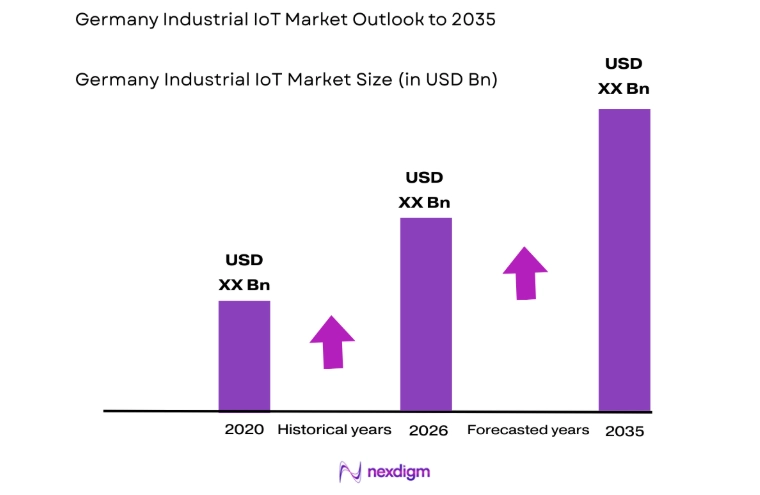
The Germany Industrial IoT market size is projected to reach USD ~ billion, driven by technological advancements, increasing automation, and the push for smart manufacturing. The demand for real-time data analysis, predictive maintenance, and enhanced operational efficiency across industries such as manufacturing, energy, and logistics is propelling this growth. As industries increasingly adopt connected devices and sensors, Germany’s industrial sector is at the forefront of IoT integration, paving the way for a more connected and automated future.
Germany is a global leader in industrial automation, with cities such as Munich, Berlin, and Stuttgart driving the adoption of IoT technologies. The strong manufacturing base, especially in automotive and industrial sectors, along with a well-developed infrastructure, makes Germany a prime market for industrial IoT. The country’s commitment to innovation, coupled with substantial government support for Industry 4.0 initiatives, enables continued growth. Germany’s role as a manufacturing powerhouse, combined with its technological advancements, further solidifies its position in the global IoT market.
Market Segmentation
By Product Type
The Germany Industrial IoT market is segmented by product type into sensors, devices, software, and services. Recently, sensors have dominated the market share due to their critical role in data collection, monitoring, and automation across various industries. The increasing demand for real-time data for predictive maintenance, asset management, and efficiency optimization has led to a strong preference for sensor-based solutions. Advancements in sensor technology, such as the development of more accurate and reliable devices, further contribute to their market leadership.

By End-user Industry
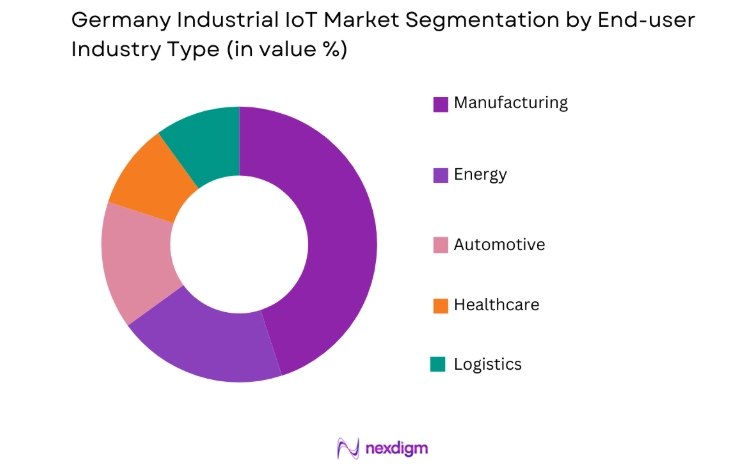
The market is segmented by end-user industries, including manufacturing, energy, automotive, healthcare, and logistics. The manufacturing sector has consistently held the dominant market share due to the high adoption of IoT technologies aimed at enhancing operational efficiency, reducing downtime, and optimizing production processes. Manufacturing industries, especially automotive, have integrated IoT systems to streamline operations and ensure real-time tracking and analysis of production lines, further driving the demand for industrial IoT solutions.
Competitive Landscape
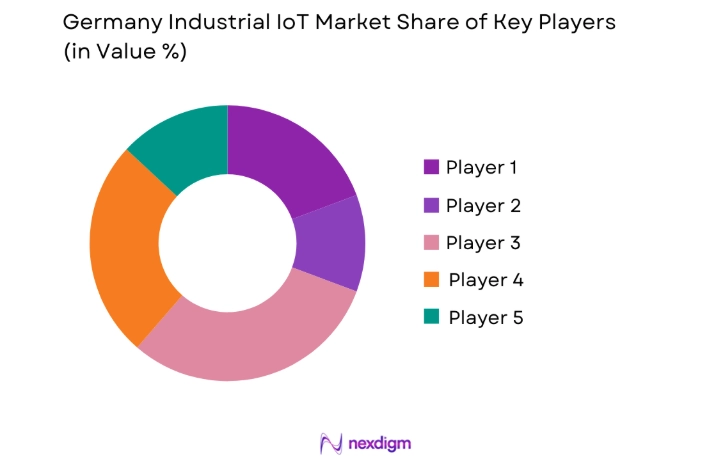
The Germany Industrial IoT market is highly competitive, characterized by the presence of both established players and emerging startups. The consolidation trend is evident as major players seek to acquire new technologies and expand their market reach. Leading companies dominate the landscape with a strong focus on innovation, leveraging partnerships with other industry leaders and academic institutions. The competition is also driven by the increasing need for businesses to embrace digital transformation and automation to remain competitive in the market.
| Company Name | Establishment Year | Headquarters | Technology Focus | Market Reach | Key Products | Revenue (USD) | IoT Applications |
| Siemens | 1847 | Munich, Germany | ~ | ~ | ~ | ~ | ~ |
| Bosch | 1886 | Stuttgart, Germany | ~ | ~ | ~ | ~ | ~ |
| SAP | 1972 | Walldorf, Germany | ~ | ~ | ~ | ~ | ~ |
| Honeywell | 1906 | Morris Plains, US | ~ | ~ | ~ | ~ | ~ |
| IBM | 1911 | Armonk, US | ~ | ~ | ~ | ~ | ~ |
Germany Industrial IoT Market Analysis
Growth Drivers
Government Support for Digital Transformation
Government initiatives promoting digital transformation in industries are a significant growth driver for the Industrial IoT market in Germany. Programs such as Industry 4.0 have encouraged businesses to adopt smart manufacturing and automation solutions to increase efficiency and competitiveness. These government-backed initiatives focus on creating an ecosystem for IoT adoption, providing financial incentives, tax breaks, and subsidies to companies investing in connected technologies. The push for smart factories, coupled with funding for R&D, accelerates the deployment of IoT solutions across various sectors, positioning Germany as a global leader in industrial IoT. Furthermore, the government’s commitment to enhancing Germany’s digital infrastructure fosters a favorable environment for IoT technology companies to thrive. By leveraging these policies, businesses are motivated to integrate IoT solutions to enhance productivity, reduce operational costs, and innovate their processes, leading to significant market growth.
Technological Advancements in Automation and IoT Integration
Technological advancements in automation and IoT integration are critical drivers for the growth of the Industrial IoT market in Germany. As automation systems become more sophisticated, the integration of IoT technologies enables industries to gather and analyze real-time data to optimize processes. The convergence of IoT and automation allows for predictive maintenance, real-time monitoring, and improved resource management, driving operational efficiency. In sectors such as automotive manufacturing, aerospace, and logistics, the demand for IoT-enabled automation systems is growing rapidly as companies seek to reduce costs, improve safety, and increase production rates. The continuous development of advanced sensors, wireless connectivity, and cloud computing technology further enhances the capabilities of IoT devices, making them more accessible and effective for industries. As these technologies continue to evolve, the potential for innovation in the industrial IoT space is vast, supporting sustained market growth.
Market Challenges
Cybersecurity Concerns in Industrial IoT Systems
One of the key challenges for the Germany Industrial IoT market is the growing concern over cybersecurity. As more devices and systems become interconnected, the risk of cyberattacks increases, potentially exposing critical infrastructure and sensitive data. With industrial IoT systems handling large volumes of operational data, a breach could result in significant financial losses, operational disruptions, and damage to a company’s reputation. Despite advancements in cybersecurity solutions, industrial IoT systems remain vulnerable to cyber threats due to the complexity and scale of interconnected devices. The lack of standardized security protocols for IoT devices in industries such as manufacturing and energy adds to the challenge, as companies face difficulties in implementing robust cybersecurity measures. The need to continuously monitor and secure IoT systems adds significant costs to organizations, further hindering widespread IoT adoption. Addressing cybersecurity risks will be vital for businesses to gain trust and ensure the long-term success of IoT systems in industrial applications.
High Implementation and Maintenance Costs
Another significant challenge in the Industrial IoT market is the high costs associated with implementing and maintaining IoT systems. The initial capital investment required to deploy IoT solutions, such as sensors, communication infrastructure, and cloud computing platforms, can be substantial. For many small and medium-sized enterprises (SMEs), the high upfront costs can be a barrier to entry. Additionally, the ongoing maintenance and operational costs of IoT systems, including software updates, data management, and personnel training, contribute to the overall expense. While the long-term benefits of IoT, such as increased efficiency, reduced downtime, and cost savings, are well-documented, many companies struggle to justify the high initial investments. This challenge is compounded by the need for skilled workers who can manage and optimize IoT systems, further increasing operational costs. As the market matures and technology becomes more affordable, the cost barrier is expected to decrease, but it remains a key challenge for widespread adoption in the short term.
Opportunities
Growth in Smart Manufacturing and Automation
The growth of smart manufacturing and automation presents a significant opportunity for the Germany Industrial IoT market. As companies increasingly focus on digitizing their operations, there is a growing need for IoT solutions that can enhance efficiency, improve quality control, and reduce costs. The adoption of IoT technologies in manufacturing processes enables companies to monitor production lines in real-time, identify potential issues before they occur, and optimize resource usage. The continued push for Industry 4.0, which integrates IoT, big data, and automation, is expected to drive demand for IoT solutions. Furthermore, the expansion of the Internet of Things in supply chain management, logistics, and inventory control presents additional growth avenues for the market. As businesses seek to improve operational agility and stay competitive in a globalized market, the adoption of IoT solutions is expected to accelerate. The increasing need for interconnected, intelligent systems in manufacturing offers vast opportunities for IoT technology providers to cater to a broad range of industrial applications.
Integration of AI and Big Data in IoT Solutions
The integration of artificial intelligence (AI) and big data analytics with industrial IoT solutions represents a major opportunity for market growth. AI and machine learning technologies allow IoT systems to process vast amounts of data and make intelligent decisions in real-time, enabling predictive maintenance, process optimization, and enhanced production capabilities. In sectors like automotive, energy, and healthcare, the combination of IoT and AI is helping businesses gain actionable insights from their data, leading to better decision-making and improved operational outcomes. The use of AI-powered IoT platforms enhances the scalability and flexibility of industrial systems, making them more adaptable to changing business needs. As AI technologies continue to advance, the integration of these capabilities into industrial IoT systems will create new opportunities for innovation and growth. The ability to leverage big data to gain valuable insights into operations and improve system efficiency will drive demand for IoT solutions across industries.
Future Outlook
The future of the Germany Industrial IoT market over the next five years is marked by significant growth, with continued advancements in automation, connectivity, and data analytics. Emerging technologies such as AI, machine learning, and 5G networks will further enhance the capabilities of IoT systems, enabling real-time decision-making and predictive maintenance. As government support for digital transformation initiatives continues, more industries will embrace IoT solutions to streamline operations and improve efficiency. The increasing demand for smart factories, smart grids, and connected devices will drive market expansion.
Major Players
- Siemens
- Bosch
- SAP
- Honeywell
- IBM
- Microsoft
- Cisco Systems
- Schneider Electric
- Rockwell Automation
- GE Digital
- Huawei Technologies
- PTC
- Oracle
- ABB
- Intel
Key Target Audience
- Investments and venture capitalist firms
- Government and regulatory bodies
- Manufacturing companies
- Energy providers
- Logistics companies
- Technology providers
- System integrators
Research Methodology
Step 1: Identification of Key Variables
Defining the key drivers, challenges, and market opportunities in the Industrial IoT space.
Step 2: Market Analysis and Construction
Constructing the market model based on primary and secondary research, incorporating expert insights and industry data.
Step 3: Hypothesis Validation and Expert Consultation
Validating the research hypotheses through expert consultations and market surveys.
Step 4: Research Synthesis and Final Output
Synthesizing the research findings into a comprehensive market report, with detailed insights into trends, competition, and forecasts.

- Executive Summary
- Research Methodology (Definitions, Scope, Industry Assumptions, Market Sizing Approach, Primary & Secondary Research Framework, Data Collection & Verification Protocol, Analytic Models & Forecast Methodology, Limitations & Research Validity Checks)

- Market Definition and Scope
- Value Chain & Stakeholder Ecosystem
- Regulatory / Certification Landscape
- Sector Dynamics Affecting Demand

- Growth Drivers
Growth in Smart Manufacturing and Industry 4.0 Adoption Across Germany
Increasing Need for Real-Time Monitoring and Predictive Maintenance in Manufacturing
Government Initiatives Promoting Digital Transformation and IoT Integration in Industrial Sectors - Market Challenges
High Capital Expenditure for Implementing Industrial IoT Solutions
Cybersecurity Concerns with Connected Industrial Systems
Complex Integration of Legacy Systems with New IoT Technologies - Market Opportunities
Development of Smart Industrial Hubs in Manufacturing Regions
Rising Demand for IoT Solutions in Energy Management and Industrial Automation
Expansion of Industrial IoT Data Analytics Platforms for Predictive Insights - Trends
Growing Use of Edge Computing for Real-Time IoT Data Processing
Increasing Integration of Artificial Intelligence and Machine Learning in Industrial IoT Platforms - Government Regulations
- SWOT Analysis
- Porter’s Five Forces

- By Market Value, 2020-2025
- By Installed Units, 2020-2025
- By Average System Price, 2020-2025
- By System Complexity Tier, 2020-2025

- By System Type (In Value%)
Industrial IoT Sensors and Devices
Industrial IoT Connectivity Platforms
Industrial IoT Data Analytics Platforms
Industrial IoT Edge Computing Systems
Industrial IoT Cybersecurity Solutions - By Platform Type (In Value%)
Automotive Industry Automation Platforms
Manufacturing and Smart Factory Platforms
Energy and Utilities Monitoring Platforms
Logistics and Supply Chain Platforms - By Fitment Type (In Value%)
New Industrial IoT Installations
Retrofit IoT Integrations for Existing Facilities
Cloud-Based Industrial IoT Platforms
Hybrid Edge Cloud IoT Systems - By End User Segment (In Value%)
Manufacturing and Industrial Enterprises
Automotive and Transportation Industry
Energy and Utilities Sector

- Market Share Analysis
- Cross Comparison Parameters (Platform Compatibility, IoT Connectivity Capabilities, Integration Flexibility, Pricing Strategy, R&D Investment, System Security, Industry Application Coverage)
- SWOT Analysis of Key Competitors
- Pricing & Procurement Analysis
- Key Players
Siemens AG
Cisco Systems
IBM Corporation
Schneider Electric
Microsoft Corporation
ABB Ltd
Honeywell International
Emerson Electric
Rockwell Automation
Hitachi Ltd
Bosch IoT Solutions
PTC Inc
Oracle Corporation
General Electric Digital
Huawei Technologies

- Automotive Manufacturers Integrating IoT for Smart Production Systems
- Industrial and Manufacturing Companies Leveraging IoT for Operational Efficiency
- Energy and Utilities Providers Adopting IoT for Grid and Infrastructure Monitoring
- Logistics Providers Deploying IoT for Supply Chain Optimization and Warehouse Management

- Forecast Market Value, 2026-2035
- Forecast Installed Units, 2026-2035
- Price Forecast by System Tier, 2026-2035
- Future Demand by Platform, 2026-2035


 Request a Sample
 Ask for Customization
 Get a Quote
 Enquire Now