

 Download PDF
Market Overview
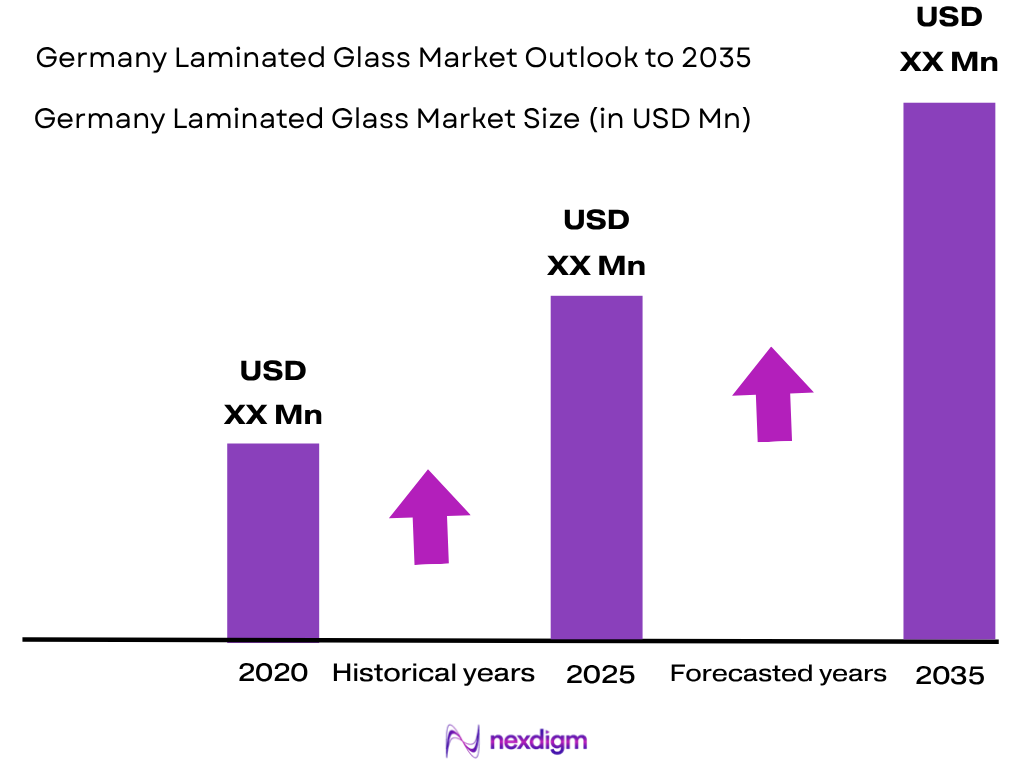
The Germany laminated glass market is valued at approximately USD ~2.1 billion, supported by strong demand from automotive glazing, architectural safety applications, and advanced building envelope solutions. The market expansion is driven by Germany’s position as a leading automotive manufacturing hub, with laminated glass being extensively used in windshields, panoramic roofs, and premium vehicle glazing systems. The construction sector further supports demand through energy-efficient buildings, renovation projects, and stringent safety glazing requirements.
Germany’s laminated glass industry is concentrated around major industrial and construction centers including Bavaria, Baden-Württemberg, North Rhine-Westphalia, Lower Saxony, and Berlin due to their automotive manufacturing clusters, commercial construction activity, and advanced glass processing capabilities. Cities such as Munich, Stuttgart, Wolfsburg, Frankfurt, and Berlin benefit from strong automotive OEM presence, premium real estate development, and infrastructure modernization programs. Germany’s established glass manufacturing ecosystem, including companies involved in architectural glazing and automotive glass supply chains, strengthens domestic demand and technical innovation.
Market Segmentation
By Application Type
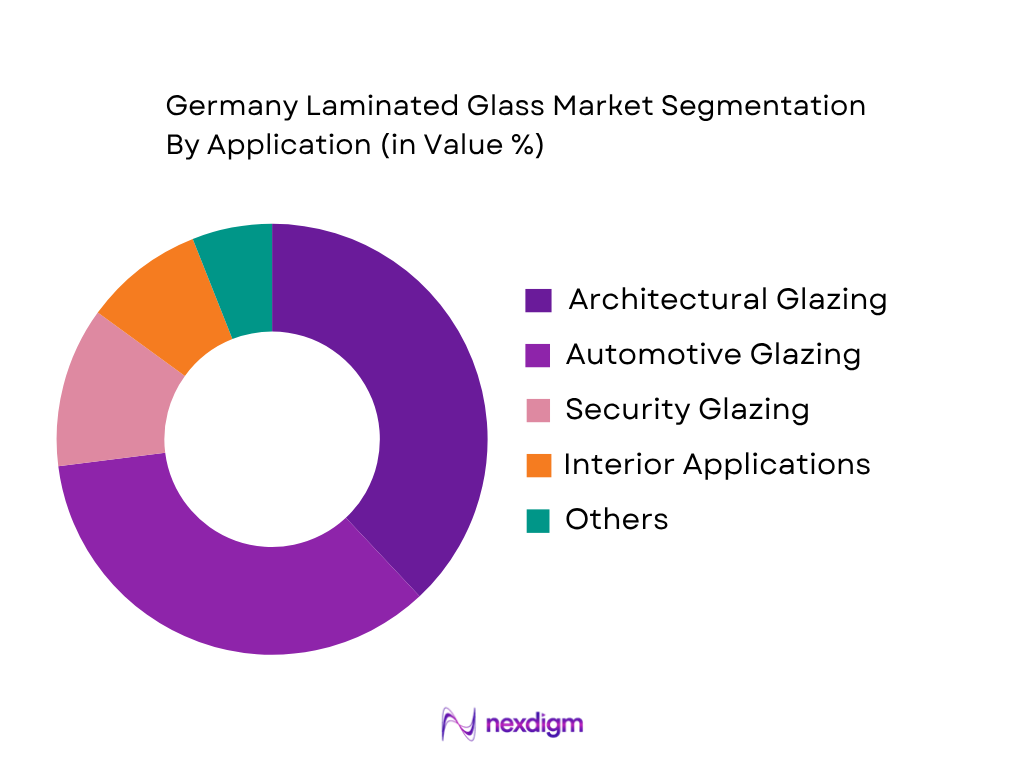
Germany laminated glass market is segmented into architectural glazing, automotive glazing, security glazing, interior applications, and specialty applications. Architectural glazing represents the dominant segment due to extensive adoption in commercial buildings, residential projects, facade systems, and renovation activities. Germany’s strict building safety regulations, increasing demand for energy-efficient glazing, and growth of sustainable construction practices support the use of laminated glass in windows, curtain walls, skylights, and facade structures. Automotive glazing remains another significant application due to Germany’s strong vehicle manufacturing ecosystem, where laminated glass is widely integrated into windshields, acoustic glazing systems, and premium vehicle designs.
By Interlayer Type
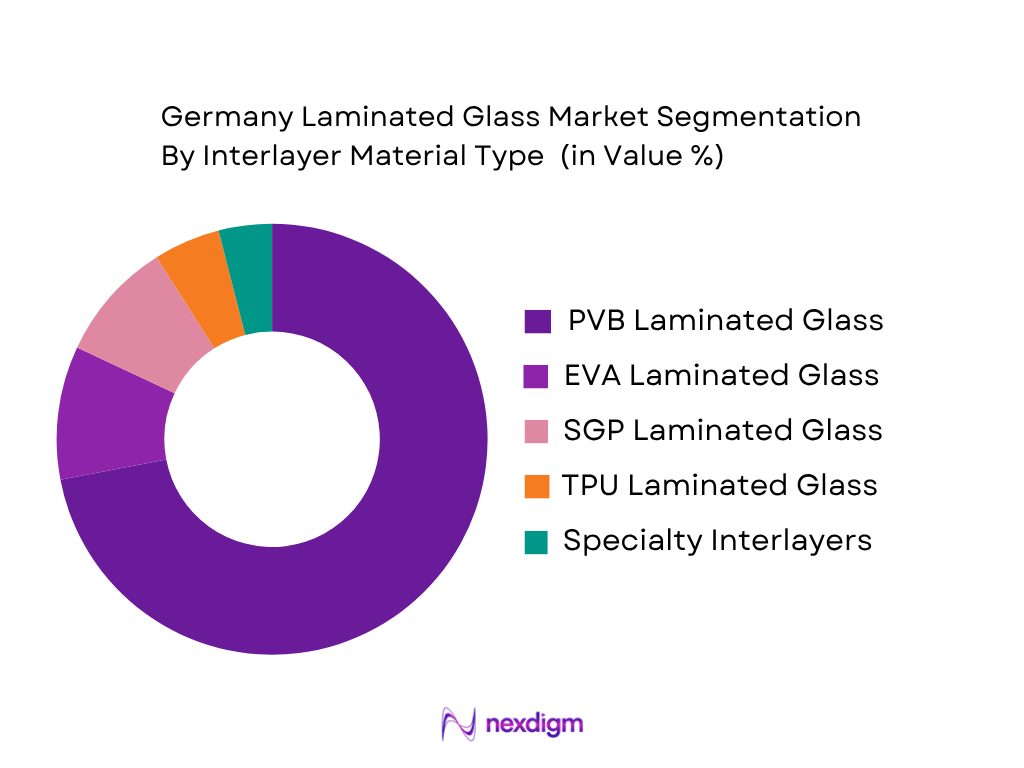
Germany laminated glass market is segmented into PVB laminated glass, EVA laminated glass, SGP laminated glass, TPU laminated glass, and specialty interlayers. PVB laminated glass dominates due to its long-standing use in automotive windshields, safety glazing, acoustic applications, and compliance with European safety standards. PVB interlayers provide high adhesion, impact resistance, noise reduction, and UV protection, making them suitable for both automotive and architectural applications. The increasing demand for premium acoustic glazing, security glass, and solar-control solutions is also supporting adoption of advanced interlayer technologies such as SGP and specialty acoustic films.
Competitive Landscape
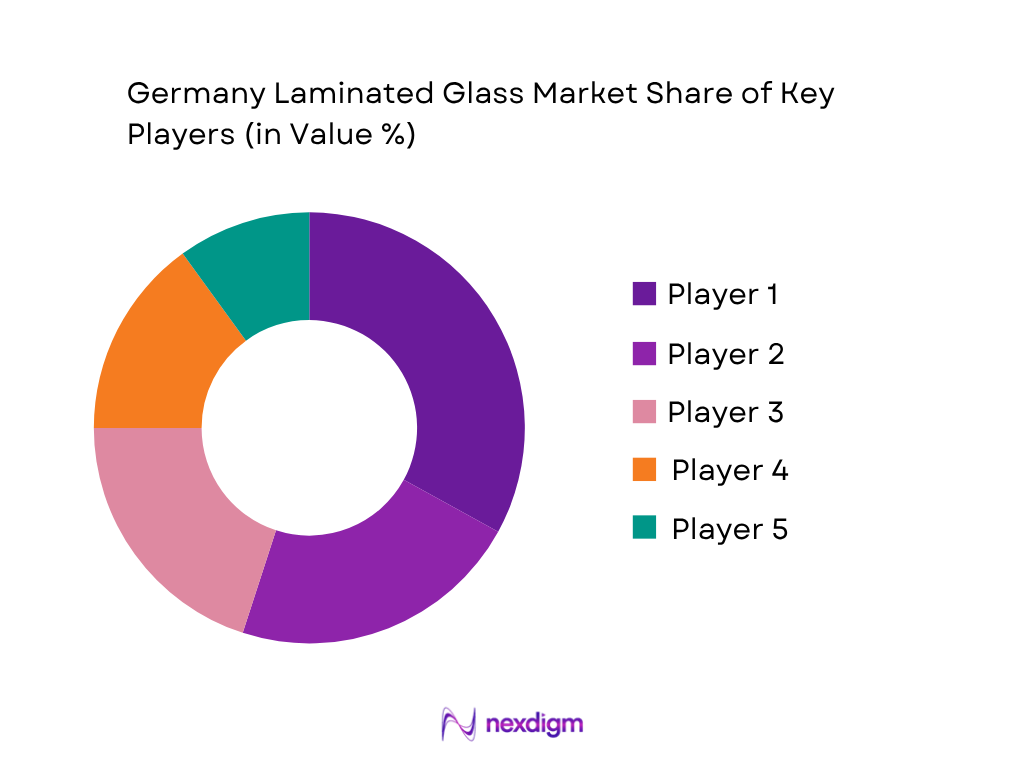
The Germany laminated glass market is highly competitive and includes global glass manufacturers, European architectural glass suppliers, and specialized automotive glazing producers. The competitive environment is shaped by companies with strong manufacturing capabilities, advanced lamination technologies, extensive automotive OEM relationships, and established distribution networks. Major players such as Saint-Gobain, AGC Interpane, Guardian Glass, NSG Group, and SCHOTT maintain strong positions due to their broad product portfolios across construction, automotive, security, and specialty glass applications.
| Company | Establishment Year | Headquarters | Laminated Glass Portfolio | Key End-Use Industries | Manufacturing & Processing Capability | Interlayer Technology Capability | Automotive Glass Expertise |
| Saint-Gobain Glass Germany | 1665 | Courbevoie, France | ~ | ~ | ~ | ~ | ~ |
| AGC Interpane | 1971 | Lauenförde, Germany | ~ | ~ | ~ | ~ | ~ |
| Guardian Glass | 1932 | Auburn Hills, USA | ~ | ~ | ~ | ~ | ~ |
| NSG Group / Pilkington | 1918 | Tokyo, Japan | ~ | ~ | ~ | ~ | ~ |
| SCHOTT | 1884 | Mainz, Germany | ~ | ~ | ~ | ~ | ~ |
Germany Laminated Glass Market Analysis
Growth Drivers
Energy-Efficient Building Regulations and Sustainable Construction Development
Germany laminated glass demand is strongly supported by stringent energy-efficiency requirements for buildings, renovation programs, and the transition toward sustainable construction. The German building sector remains a major energy consumer, with the Federal Ministry for Economic Affairs and Climate Action reporting that buildings account for approximately 30% of Germany’s final energy consumption, increasing the need for advanced glazing systems that improve insulation, solar control, and thermal performance. Laminated glass is increasingly integrated into high-performance facades, triple glazing units, and energy-efficient windows due to its ability to enhance safety while supporting reduced heating and cooling requirements. Germany recorded approximately 84.7 million inhabitants in 2024, creating continued demand for residential modernization and urban development projects. The European Union’s revised Energy Performance of Buildings Directive is also accelerating renovation activities by encouraging member states to improve building efficiency standards. Commercial properties, offices, and residential buildings are increasingly adopting laminated glass solutions to meet sustainability certifications such as DGNB and EU green building requirements. The expansion of renovation activity, combined with demand for low-energy buildings and improved occupant comfort, continues to strengthen laminated glass adoption across Germany’s construction sector.
Automotive Premium Vehicle Production Growth and Increasing Safety Glazing Adoption
Germany’s automotive manufacturing ecosystem remains a significant driver for laminated glass demand due to increasing integration of advanced glazing technologies in premium vehicles, electric vehicles, and luxury automotive segments. Germany produced approximately 4.1 million passenger cars in 2024, according to automotive industry data, maintaining its position as one of Europe’s largest vehicle production locations. Laminated glass is extensively used in windshields, acoustic glazing systems, panoramic roofs, and lightweight vehicle designs due to its impact resistance, noise reduction capability, and safety performance. German automotive manufacturers are increasingly incorporating advanced glass solutions to improve vehicle comfort, reduce cabin noise, and support electric vehicle efficiency. The country also maintained a vehicle fleet exceeding 49 million registered passenger cars in 2024, creating demand for replacement automotive glazing and aftermarket safety glass solutions. Growing electric vehicle adoption, autonomous driving technologies, and premium vehicle production are encouraging manufacturers to use multifunctional laminated glass with enhanced acoustic, solar-control, and display integration capabilities. Automotive OEM supply chains concentrated in Bavaria, Baden-Württemberg, and Lower Saxony continue to support domestic laminated glass demand.
Market Challenges
High Energy Consumption During Glass Processing and Manufacturing Operations
Germany laminated glass manufacturers face challenges from the energy-intensive nature of glass production, processing, and lamination operations. Glass manufacturing requires high-temperature melting furnaces, coating processes, and controlled heating systems, making energy availability and efficiency critical operational factors. Germany experienced significant industrial energy pressure following fluctuations in European energy markets, influencing manufacturing-intensive industries including glass production. The Federal Statistical Office reported that Germany’s industrial sector consumed more than 2,000 petajoules of energy in 2024, highlighting the scale of industrial energy requirements. Laminated glass production requires additional processing stages such as cutting, cleaning, interlayer application, and autoclave treatment, increasing operational complexity compared with conventional glass products. Manufacturers are therefore investing in furnace modernization, renewable energy integration, and process automation to improve efficiency. However, smaller glass processors may face difficulties adopting advanced technologies due to capital requirements. Rising emphasis on carbon reduction under European climate policies also creates pressure for manufacturers to reduce emissions while maintaining product quality, particularly for high-performance architectural and automotive laminated glass products.
Dependence on Imported Specialty Interlayers and Raw Material Supply Chain Constraints
Germany laminated glass producers remain dependent on specialized raw materials including PVB, EVA, SGP, and specialty acoustic interlayers, creating supply chain vulnerabilities. While Germany has advanced glass processing capabilities, several specialty interlayer materials are supplied through international chemical and polymer value chains. The country imported industrial chemical products worth hundreds of billions of euros annually, reflecting the importance of global supply networks for manufacturing industries. Laminated glass production requires consistent availability of high-quality interlayers to achieve safety, optical clarity, acoustic performance, and durability standards. Disruptions in global logistics, chemical feedstock availability, or international trade conditions can affect procurement timelines for manufacturers and processors. Additionally, advanced applications such as security glazing, acoustic glazing, and automotive lightweight glass require specialized interlayer technologies with limited supplier availability. European regulations related to chemical safety, product certification, and building performance further increase compliance requirements for imported materials. German manufacturers must therefore maintain diversified supplier networks, improve inventory management, and develop alternative material strategies to reduce dependency risks.
Market Opportunities
Expansion of Energy-Efficient Facade Solutions and Green Renovation Projects
Germany’s transition toward energy-efficient buildings creates significant opportunities for laminated glass manufacturers through advanced facade systems, renovation projects, and sustainable construction applications. The country has more than 19 million residential buildings, according to German housing statistics, representing a large opportunity for modernization of outdated windows and glazing systems. Laminated glass solutions with solar-control coatings, acoustic properties, and improved insulation performance are increasingly used in building upgrades to enhance energy efficiency and occupant comfort. Government-supported renovation initiatives and European climate objectives are encouraging property owners to improve building performance through advanced materials. Commercial buildings, offices, and public infrastructure projects are increasingly adopting high-performance facade systems incorporating laminated glass due to safety, durability, and design flexibility. Germany also has more than 1.5 million commercial buildings, creating demand for premium architectural glazing solutions. The growing adoption of green building certifications, including DGNB and sustainable construction standards, supports the integration of advanced laminated glass technologies. Manufacturers focusing on multifunctional glazing solutions, low-carbon production methods, and high-performance facade applications are positioned to benefit from increasing demand.
Growth of Smart Glass Integration and Advanced Automotive Laminated Glass Applications
The development of smart glass technologies, electric vehicles, and advanced mobility solutions provides new opportunities for Germany laminated glass manufacturers. Germany registered more than 1.4 million electric vehicles and plug-in hybrid vehicles by 2024, according to transport registration data, increasing demand for lightweight and multifunctional automotive glazing solutions. Laminated glass is becoming increasingly important in electric vehicles due to requirements for weight reduction, acoustic insulation, heat management, and integration of advanced technologies such as head-up displays and sensor systems. In the building sector, smart laminated glass technologies incorporating switchable functions, solar-control capabilities, and digital integration are gaining attention in premium offices, luxury residential projects, and intelligent buildings. Germany’s data center and technology infrastructure expansion is also creating demand for high-performance building materials with thermal and acoustic benefits. The country added significant investment into digital infrastructure during the period, increasing requirements for modern facilities with advanced glazing solutions. Companies developing smart laminated glass, specialty interlayers, and digitally integrated glazing systems can capture opportunities across automotive, commercial, and infrastructure applications.
Future Outlook
Over the forecast period, the Germany laminated glass market is expected to witness steady expansion driven by increasing adoption of safety glazing, energy-efficient building solutions, and advanced automotive glass technologies. The transition toward sustainable buildings, renovation of existing infrastructure, and growing demand for premium facade systems will support architectural applications. Automotive innovation, including electric vehicles, autonomous driving systems, and acoustic comfort solutions, will further increase demand for advanced laminated glass products.
Major Players
- Saint-Gobain Glass Germany
- Saint-Gobain Sekurit
- AGC Interpane
- Guardian Glass
- NSG Group / Pilkington
- SCHOTT
- Glas Trösch
- Semco Glas
- Flachglas Wernberg
- LamiGlass Deutschland
- Döring Glas
- Hunsrücker Glasveredelung
- Heroal
- Hegla
- Bystronic Glass
Key Target Audience
- Architectural Glass Manufacturers
- Automotive Glass Manufacturers and OEM Suppliers
- Construction and Facade System Developers
- Commercial Real Estate Developers
- Automotive OEM Companies
- Investments and Venture Capitalist Firms (Industrial Technology Investment Funds, Construction Material Investment Funds, Advanced Manufacturing Investors)
- Government and Regulatory Bodies (Federal Ministry for Housing, Urban Development and Building, German Institute for Standardization, Federal Ministry for Digital and Transport)
- Glass Processing Equipment Manufacturers
Research Methodology
Step 1: Identification of Key Variables
The initial phase involves developing a Germany laminated glass ecosystem map covering manufacturers, raw material suppliers, automotive OEMs, construction companies, facade contractors, and regulatory bodies. Extensive secondary research is conducted to identify demand drivers, application segments, production capabilities, interlayer technologies, and industry-specific variables influencing market development.
Step 2: Market Analysis and Construction
Historical market information is analyzed through assessment of laminated glass production volumes, application demand, automotive consumption patterns, architectural project requirements, and import-export dynamics. The analysis evaluates supply chain structures, manufacturing capacity, product categories, and end-use industry contribution to determine market development patterns.
Step 3: Hypothesis Validation and Expert Consultation
Market assumptions are validated through discussions with glass manufacturers, processors, automotive suppliers, construction stakeholders, and industry professionals. These consultations provide operational insights regarding product adoption, technological advancement, customer requirements, and competitive positioning within the Germany laminated glass ecosystem.
Step 4: Research Synthesis and Final Output
The final stage integrates primary and secondary research findings to create a comprehensive assessment of market size, segmentation, competitive landscape, future opportunities, and industry trends. Data triangulation ensures consistency between supply-side analysis, demand-side assessment, and stakeholder insights.

- Executive Summary
- Research Methodology (Market Definition and Scope, Germany Laminated Glass Market Classification, Architectural Laminated Glass Demand Assessment, Automotive Laminated Glass Consumption Mapping, Safety and Security Glass Application Assessment, Building Renovation and Replacement Glass Demand Analysis, Domestic Glass Processing Capacity Assessment, Float Glass and Interlayer Import Dependency Analysis, PVB EVA SGP TPU and Specialty Interlayer Material Assessment, Glass Lamination Technology Mapping, Tempering and Heat Treatment Capability Assessment, Facade and Curtain Wall Integration Analysis, Automotive OEM Supply Chain Assessment, Installed Building Glass Base Evaluation, Regulatory Compliance Assessment, Primary Industry Interviews, Bottom-Up Market Sizing, Top-Down Market Validation, Data Triangulation, Forecasting Framework)

- Definition and Scope
- Germany Laminated Glass Industry Evolution
- Laminated Glass Value Chain Analysis
- Germany Laminated Glass Supply Chain Analysis

- Growth Drivers (Energy-Efficient Building Regulations, Expansion of Commercial Real Estate Renovation, Automotive Premium Vehicle Production Growth, Increasing Safety Glazing Adoption, Sustainable Building Development, Growth of Curtain Wall Systems, Infrastructure Modernization Programs, Demand for Acoustic Urban Solutions, Green Building Certification Requirements, Replacement of Conventional Glass with Advanced Safety Glass)
- Market Challenges (High Energy Consumption During Glass Processing, Dependence on Imported Specialty Interlayers, High Capital Investment for Lamination Facilities, Raw Material Cost Volatility, Complex European Building Standards, Competition from Tempered Glass Solutions, Limited Availability of Skilled Glass Processing Workforce, Transportation Constraints for Large Glass Panels, Certification Requirements for Security Glass, Fragmented Fabrication and Installation Ecosystem)
- Market Opportunities (Expansion of Energy-Efficient Facade Solutions, Growth of Triple and Multi-Layer Laminated Glass Systems, Increasing Demand for Acoustic Laminated Glass, Automotive Lightweight Glass Development, Smart Glass Integration in Buildings, Security Glass Adoption in Critical Infrastructure, Sustainable Glass Processing Technologies, Digital Glass Manufacturing, Green Renovation Projects, Advanced Solar Control Laminated Glass Applications)
- Market Trends (Low-Carbon Glass Manufacturing, Smart Laminated Glass Adoption, Acoustic Interlayer Development, Thin Lightweight Laminated Glass, Energy-Efficient Building Envelope Solutions, Digital Manufacturing and Automation, Premium Architectural Glass Design, Automotive HUD-Compatible Windshields, Recycling of Glass Materials, High-Performance Safety Glazing)
- Regulatory and Standards Landscape (German Building Code Requirements, European Construction Product Regulation, DIN Glass Standards, EN 14449 Laminated Glass Requirements, EN 12600 Impact Resistance Standards, Automotive UNECE Glass Regulations, Energy Saving Ordinance Requirements, Passive House Building Standards, Sustainability Certification Requirements)
- SWOT Analysis
- Porter’s Five Forces Analysis
- PESTLE Analysis
- Stakeholder Ecosystem
- Competition Ecosystem

- By Market Value (2020-2025)
- By Laminated Glass Production Volume (2020-2025)
- By Architectural Laminated Glass Consumption Volume (2020-2025)
- By Automotive Laminated Glass Consumption Volume (2020-2025)
- By Security Laminated Glass Consumption Volume (2020-2025)

- By Application Type (In Value %)
Architectural Glazing
Automotive Glazing
Security and Bullet Resistant Glazing
Interior Laminated Glass Applications
Acoustic Noise Reduction Glass Applications
Solar Control Laminated Glass
Fire Resistant Laminated Glass
Marine and Specialty Applications - By Interlayer Type (In Value %)
PVB Laminated Glass
EVA Laminated Glass
SGP Laminated Glass
TPU Laminated Glass
Ionoplast Interlayers
Specialty Acoustic Interlayers
Colored and Decorative Interlayers - By Glass Thickness Type (In Value %)
Thin Laminated Glass
Standard Laminated Glass
Thick Safety Laminated Glass
Multi-Layer Security Laminated Glass
Structural Laminated Glass - By End-Use Industry (In Value %)
Commercial Buildings
Residential Buildings
Automotive Manufacturing
Transportation Infrastructure
Government and Public Infrastructure
Hospitality and Tourism Facilities
Industrial Buildings
Renewable Energy Infrastructure - By Manufacturing Process (In Value %)
Autoclave Laminated Glass
Vacuum Laminated Glass
Resin Laminated Glass
Custom Fabricated Laminated Glass

- Market Share of Major Players (By Germany Revenue, Laminated Glass Sales Volume, Architectural Glass Sales Volume, Automotive Glass Sales Volume, Interlayer Technology, Product Category, End-Use Industry Exposure, Manufacturing and Processing Footprint, Distribution Network, Technical Service Capability)
- Cross Comparison Parameters (Laminated Glass Product Portfolio Breadth, Architectural and Automotive Glass Processing Capability, PVB and Specialty Interlayer Technology Capability, High-Safety and Security Glass Manufacturing Expertise, Energy-Efficient Glazing Solution Portfolio, German and European Certification Coverage, Glass Processing Capacity and Production Technology, Facade and OEM Customer Network Strength)
- SWOT Analysis of Major Players
- Competitive Positioning Matrix
- Detailed Profiles of Major Companies
Saint-Gobain Germany
AGC Glass Germany
Guardian Glass Germany
SCHOTT
NSG Group / Pilkington Germany
Interpane Glass
Glas Trösch Germany
LamiGlass Deutschland
Döring Glas
Semco Glas
Flachglas Wernberg
Hunsrücker Glasveredelung
Heroal
Hegla
Bystronic Glass

- Commercial Real Estate Developer Laminated Glass Requirement Assessment
- Residential Construction Sector Safety Glazing Demand Analysis
- Automotive OEM Windshield and Laminated Glass Procurement Assessment
- Luxury Vehicle Manufacturer Glass Integration Analysis
- Facade Contractor Laminated Glass Specification Assessment
- Airport and Railway Infrastructure Glass Requirement Analysis
- Government Building Security Glass Procurement Assessment

- By Market Value (2026-2035)
- By Laminated Glass Production Volume (2026-2035)
- By Architectural Laminated Glass Consumption Volume (2026-2035)
- By Automotive Laminated Glass Consumption Volume (2026-2035)
- By Security Laminated Glass Consumption Volume (2026-2035)


 Request a Sample
 Ask for Customization
 Get a Quote
 Enquire Now
