

 Download PDF
 Download PDF
Market Overview
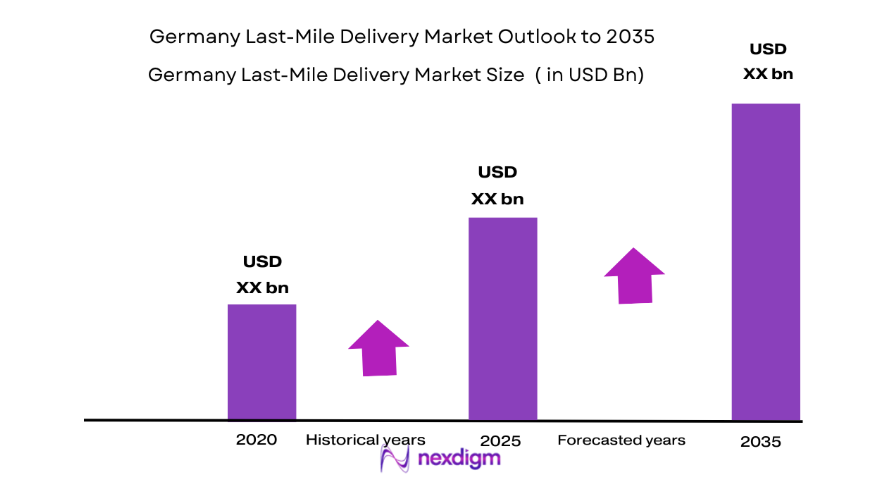
Based on a recent historical assessment, the Germany Last-Mile Delivery Market recorded a value of approximately USD ~ supported by strong demand from e-commerce retail logistics, food delivery networks, parcel distribution systems, and omnichannel retail supply chains. Parcel logistics volumes continue expanding as online retail platforms, consumer electronics retailers, grocery chains, and pharmaceutical distributors increasingly depend on rapid doorstep delivery networks supported by advanced distribution hubs and automated parcel sorting infrastructure across national logistics corridors.
Based on a recent historical assessment, major urban logistics hubs such as Berlin, Hamburg, Munich, Frankfurt, and Cologne dominate last-mile delivery operations due to their dense consumer populations, high e-commerce activity, and advanced urban distribution infrastructure. These cities host major fulfillment centers, automated parcel hubs, micro-fulfillment facilities, and technology-enabled delivery fleets operated by global logistics providers and domestic courier companies supporting nationwide parcel distribution across Germany’s retail and industrial supply networks.
Market Segmentation
By Service Type
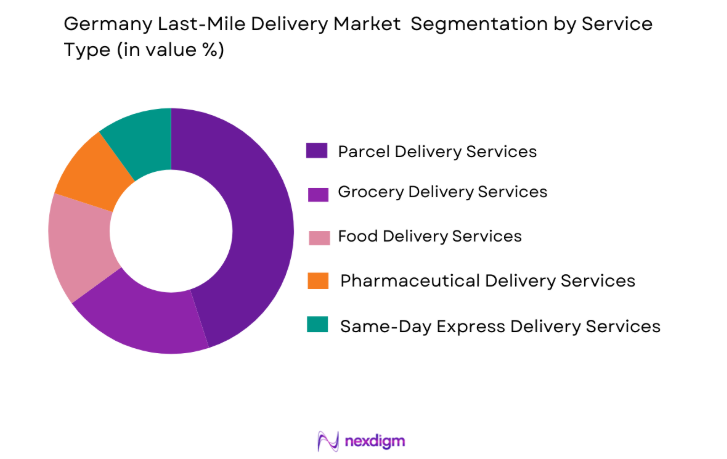
Germany Last-Mile Delivery Market is segmented by service type into parcel delivery services, grocery delivery services, food delivery services, pharmaceutical delivery services, and same-day express delivery services. Recently, parcel delivery services have a dominant market share due to factors such as rapid e-commerce growth, expansion of omnichannel retail networks, rising online consumer purchasing behavior, and large parcel volumes generated by digital marketplaces and cross-border online retail platforms operating within Germany’s logistics ecosystem.
By Vehicle Type
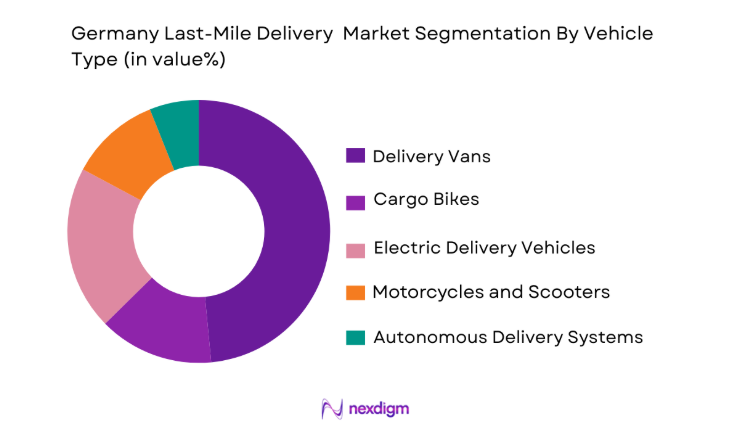
Germany Last-Mile Delivery Market is segmented by vehicle type into delivery vans, cargo bikes, electric delivery vehicles, motorcycles and scooters, and autonomous delivery systems. Recently, delivery vans have a dominant market share due to factors such as large parcel shipment volumes, established logistics fleet infrastructure, long-distance urban delivery requirements, and the ability to transport bulk shipments between fulfillment hubs and residential delivery zones.
Competitive Landscape
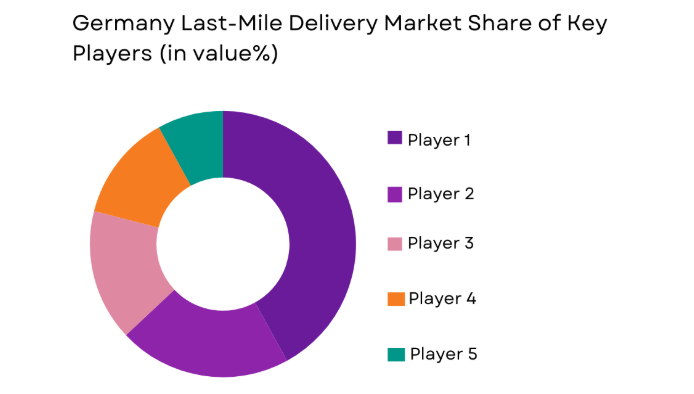
The Germany Last-Mile Delivery Market is moderately consolidated with a mix of global logistics corporations, regional courier operators, and technology-driven delivery startups competing across urban and cross-border logistics networks. Large players benefit from extensive distribution hubs, automated parcel sorting infrastructure, and advanced route optimization technologies, while smaller firms compete through specialized services such as rapid grocery delivery and micro-fulfillment networks serving dense metropolitan regions.
| Company Name | Establishment Year | Headquarters | Technology Focus | Market Reach | Key Products | Revenue | Fleet Capacity |
| DHL Group | 1969 | Bonn, Germany | ~ | ~ | ~ | ~ | ~ |
| Hermes Germany | 1972 | Hamburg, Germany | ~ | ~ | ~ | ~ | ~ |
| DPD Deutschland | 1977 | Aschaffenburg, Germany | ~ | ~ | ~ | ~ | ~ |
| GLS Germany | 1999 | Neuenstein, Germany | ~ | ~ | ~ | ~ | ~ |
| UPS Germany | 1907 | Atlanta, USA | ~ | ~ | ~ | ~ | ~ |
Germany Last-Mile Delivery Market Analysis
Growth Drivers
Expansion of E-Commerce Retail Platforms and Digital Consumer Purchasing Behavior
Germany’s digital retail ecosystem generates significant demand for last-mile delivery logistics capable of transporting massive volumes of parcels between fulfillment centers and residential consumers across metropolitan and suburban areas. Online marketplaces including Amazon, Zalando, and Otto operate large distribution infrastructures that require continuous parcel transportation networks capable of supporting rapid order fulfillment and home delivery operations throughout Germany. Consumers increasingly rely on digital retail platforms to purchase electronics apparel groceries household goods and pharmaceuticals which directly increases parcel shipment volumes handled by courier and logistics providers. Retail companies deploy omnichannel distribution models that integrate physical retail outlets with digital commerce platforms requiring synchronized inventory management systems and rapid last-mile delivery services capable of transporting products from warehouses to consumers efficiently. Logistics companies therefore invest heavily in automated parcel sorting facilities high capacity distribution hubs and advanced warehouse management systems designed to process millions of daily shipments across Germany’s national logistics network. Delivery companies also deploy real time parcel tracking technologies and AI powered route optimization platforms that improve delivery efficiency while reducing transportation costs across dense urban environments. Germany’s high internet penetration and widespread digital payment infrastructure further stimulate online purchasing behavior among consumers which directly increases the demand for reliable parcel delivery services across cities and regional markets. The continuous expansion of e-commerce marketplaces combined with rapid digital consumer adoption ensures that parcel logistics remain a fundamental infrastructure layer supporting Germany’s retail distribution ecosystem. Retailers compete heavily on delivery speed which further increases demand for same day and next day logistics services across urban consumer markets. These structural developments collectively position last-mile delivery networks as an essential logistics layer supporting Germany’s expanding digital retail economy.
Urban Logistics Infrastructure Expansion and Advanced Distribution Network Development
Germany’s advanced transportation infrastructure and urban logistics networks play a critical role in supporting large scale last-mile delivery operations across metropolitan consumer markets. Major logistics companies operate extensive parcel sorting hubs distribution centers and micro-fulfillment facilities located strategically near urban population clusters enabling faster parcel dispatch and reduced delivery times. Infrastructure investments by logistics operators include automated distribution facilities robotic parcel sorting equipment and digital warehouse management platforms capable of processing extremely high shipment volumes efficiently. Delivery companies also deploy advanced fleet management technologies route optimization software and predictive logistics analytics that improve delivery performance and reduce operational inefficiencies across dense urban transportation corridors. Municipal governments across Germany support urban logistics development through infrastructure planning initiatives including dedicated freight corridors urban consolidation centers and designated delivery zones designed to improve logistics efficiency in city environments. Large courier operators further expand their urban distribution networks by deploying electric delivery vans cargo bicycles and micro mobility solutions designed to navigate congested city streets and low emission zones effectively. Logistics companies increasingly collaborate with e-commerce platforms retailers and technology companies to integrate advanced delivery technologies including automated parcel lockers digital tracking systems and real time order visibility platforms improving the overall delivery experience for consumers. Urban population density combined with high purchasing power ensures sustained demand for rapid doorstep delivery services across Germany’s largest cities. Logistics providers therefore continue expanding regional distribution hubs automated sorting facilities and delivery fleets capable of managing rising parcel shipment volumes across national logistics networks.
Market Challenges
Urban Traffic Congestion and Operational Complexity in Dense City Environments
Germany’s major metropolitan areas experience significant traffic congestion particularly during peak commercial delivery hours which directly affects the operational efficiency of last-mile delivery logistics networks. Delivery vehicles frequently encounter delays while navigating congested city centers narrow urban streets and restricted vehicle zones which slows delivery schedules and increases operational costs for logistics providers. Urban delivery routes often require complex route planning to avoid traffic bottlenecks and regulatory restrictions imposed by municipal governments seeking to manage city congestion and environmental pollution levels. Logistics operators therefore must invest heavily in route optimization technologies and fleet coordination platforms designed to reduce travel time and maintain delivery schedules despite complex traffic patterns across dense metropolitan regions. High parcel shipment volumes generated by e-commerce platforms further intensify delivery congestion particularly during peak retail seasons when logistics providers must handle extremely large numbers of daily shipments across limited urban transportation corridors. Companies increasingly rely on micro fulfillment centers and decentralized distribution hubs located closer to residential areas in order to shorten delivery distances and mitigate traffic related operational challenges. However establishing these distribution facilities requires substantial infrastructure investment and regulatory approvals within urban real estate markets where logistics space availability remains limited. Delivery workforce management also becomes more complex when drivers must operate under strict time constraints while navigating unpredictable urban traffic conditions that disrupt route planning. These operational difficulties create significant cost pressures for logistics companies while also affecting delivery reliability and service performance across competitive urban logistics markets.
Rising Operational Costs and Labor Shortages Across Logistics Networks
Germany’s last-mile delivery industry faces increasing operational costs driven by labor shortages fuel price fluctuations vehicle maintenance expenses and rising logistics infrastructure investments required to support expanding parcel volumes. Courier companies must hire and retain large numbers of delivery drivers warehouse operators and logistics coordinators in order to maintain efficient parcel distribution networks capable of meeting consumer expectations for rapid delivery services. However logistics companies face persistent workforce shortages as demand for delivery personnel grows faster than available labor supply across transportation and logistics industries. Wage pressures increase significantly as companies compete to recruit qualified delivery drivers capable of operating commercial delivery fleets across urban and regional logistics routes. Rising energy costs and fuel expenses further increase transportation costs particularly for delivery fleets operating long distribution routes between regional logistics hubs and urban delivery areas. Logistics providers therefore invest heavily in electric delivery vehicles automated sorting technologies and advanced route planning systems designed to reduce operational costs and improve delivery efficiency. Infrastructure investments required for new distribution centers automated parcel hubs and digital logistics management systems also increase capital expenditure requirements for logistics operators seeking to expand delivery capacity. These combined operational challenges create significant financial pressure on logistics companies while also forcing industry participants to continuously invest in technology and workforce development in order to maintain service performance and delivery reliability.
Opportunities
Expansion of Electric Delivery Fleets and Sustainable Urban Logistics Solutions
Germany’s strong environmental policies and urban emission regulations create significant opportunities for logistics companies to deploy sustainable delivery fleets powered by electric vehicles and low emission mobility solutions. Municipal governments increasingly introduce low emission zones within major cities which restrict conventional combustion engine vehicles and encourage the adoption of environmentally sustainable transportation technologies for urban logistics operations. Delivery companies therefore expand electric vehicle fleets including electric vans cargo bicycles and micro mobility solutions capable of operating efficiently within restricted urban environments while complying with environmental regulations. Electric vehicles significantly reduce fuel costs and operational emissions while also improving energy efficiency for logistics companies operating high frequency delivery routes across urban areas. Governments support sustainable logistics adoption through financial incentives infrastructure investments and policy frameworks encouraging transportation electrification within commercial delivery fleets. Charging infrastructure expansion across German cities further supports large scale deployment of electric delivery vehicles enabling logistics operators to transition their fleets toward environmentally sustainable transportation technologies. Technology companies also develop advanced fleet management systems capable of monitoring vehicle energy consumption route efficiency and operational performance enabling delivery companies to optimize electric vehicle utilization. Growing consumer awareness regarding environmental sustainability further encourages retailers and logistics companies to adopt green delivery practices within urban distribution networks. These developments collectively position sustainable logistics solutions as a major opportunity for last-mile delivery companies operating across Germany’s evolving urban transportation ecosystem.
Integration of Automated Delivery Technologies and Smart Logistics Platforms
Rapid technological innovation within logistics automation and artificial intelligence creates major opportunities for last-mile delivery providers to deploy advanced technologies capable of improving operational efficiency and service reliability across complex delivery networks. Logistics companies increasingly adopt AI driven route optimization platforms predictive logistics analytics automated parcel sorting systems and digital delivery management platforms designed to streamline distribution operations. Automated parcel lockers deployed across urban neighborhoods allow consumers to collect packages at convenient locations which reduces failed delivery attempts and improves parcel distribution efficiency. Robotics and warehouse automation technologies further increase processing capacity within distribution centers enabling logistics companies to manage large shipment volumes with greater speed and accuracy. Technology companies also develop autonomous delivery systems including delivery robots and drone logistics platforms designed to transport small packages across short distances within urban environments. Digital logistics platforms enable real time tracking order management and customer communication systems improving delivery transparency and service reliability for both retailers and consumers. Logistics operators increasingly collaborate with technology startups and software providers to integrate advanced digital solutions within their distribution networks enhancing overall logistics performance. As automation technologies continue evolving they offer significant potential for reducing operational costs improving delivery speed and strengthening the overall efficiency of Germany’s last-mile logistics infrastructure.
Future Outlook
Germany’s last-mile delivery industry is expected to experience sustained expansion driven by continuous growth in e-commerce transactions digital retail platforms and omnichannel logistics networks. Logistics companies will continue investing in electric delivery fleets automated parcel sorting facilities and micro-fulfillment centers located near urban consumer markets. Technology integration including artificial intelligence route optimization automated parcel lockers and digital tracking systems will further strengthen logistics efficiency. Strong regulatory support for sustainable urban logistics combined with rising consumer demand for rapid delivery services will continue shaping the long-term growth trajectory of Germany’s parcel distribution ecosystem.
Major Players
- DHL Group
- Hermes Germany
- DPD Deutschland
- GLS Germany
- UPS Germany
- FedEx Germany
- Amazon Logistics
- Deutsche Post
- GO Express & Logistics
- Trans-o-flex
- Liefery
- Seven Senders
- Bringg
- Flink Logistics
- Gorillas Technologies
Key Target Audience
- Logistics and courier service providers
- E-commerce platform operators
- Retail distribution companies
- Transportation infrastructure companies
- Investments and venture capitalist firms
- Government and regulatory bodies
- Parcel locker technology providers
- Urban mobility and fleet management companies
Research Methodology
Step 1: Identification of Key Variables
Key market variables including parcel shipment volumes e-commerce transaction growth urban delivery infrastructure logistics fleet capacity and technology adoption were identified to establish the analytical framework for evaluating Germany’s last-mile delivery ecosystem.
Step 2: Market Analysis and Construction
Primary logistics industry data transportation infrastructure information and financial disclosures from logistics companies were analyzed to construct a comprehensive market model evaluating operational capacity distribution networks and parcel delivery demand across Germany.
Step 3: Hypothesis Validation and Expert Consultation
Industry experts logistics executives technology vendors and supply chain specialists were consulted to validate analytical assumptions regarding delivery demand technology integration logistics infrastructure development and urban transportation policies influencing last-mile delivery operations.
Step 4: Research Synthesis and Final Output
All validated datasets industry insights and logistics performance indicators were synthesized into a structured analytical framework providing detailed market evaluation segmentation analysis competitive assessment and long term logistics infrastructure outlook.

- Executive Summary
- Research Methodology (Definitions, Scope, Industry Assumptions, Market Sizing Approach, Primary & Secondary Research Framework, Data Collection & Verification Protocol, Analytic Models & Forecast Methodology, Limitations & Research Validity Checks)

- Market Definition and Scope
- Value Chain & Stakeholder Ecosystem
- Regulatory / Certification Landscape
- Sector Dynamics Affecting Demand

- Growth Drivers
Expansion of E-commerce Retail Platforms
Increasing Consumer Demand for Same Day Deliveries
Growth of Omnichannel Retail Distribution Networks - Market Challenges
Urban Traffic Congestion Affecting Delivery Efficiency
High Operational Costs for Urban Logistics
Labor Shortages in Delivery Workforce - Market Opportunities
Expansion of Electric Delivery Vehicle Fleets
Growth of Micro Fulfillment Centers in Urban Areas
Integration of AI Based Route Optimization Systems - Trends
Adoption of Electric Vans and Sustainable Delivery Fleets
Growth of Automated Parcel Lockers
Integration of Real Time Tracking Technologies - Government Regulations
- Pricing & Procurement Analysis

- By Market Value, 2020-2025
- By Installed Units, 2020-2025
- By Average System Price, 2020-2025
- By System Complexity Tier, 2020-2025

- By System Type (In Value%)
Parcel Delivery Services
Same Day Delivery Services
Next Day Delivery Services
Crowdsourced Delivery Services
Scheduled Time Slot Delivery Services - By Platform Type (In Value%)
E-commerce Fulfillment Platforms
Retail Omnichannel Platforms
Third Party Logistics Platforms
Marketplace Logistics Platforms
Direct to Consumer Delivery Platforms - By Fitment Type (In Value%)
Urban Delivery Networks
Suburban Distribution Networks
Rural Delivery Networks
Micro Fulfillment Delivery Networks
Cross Border Last Mile Networks - By EndUser Segment (In Value%)
E-commerce Retailers
Consumer Electronics Retailers
Grocery and Food Retailers

- Market Share Analysis
- CrossComparison Parameters (Delivery Network Coverage, Fleet Size, Technology Integration, Average Delivery Time, Sustainability Initiatives)
- SWOT Analysis of Key Competitors
- Pricing & Procurement Analysis
- Porter’s Five Forces
- Key Players
DHL Group
Hermes Germany
DPD Deutschland
GLS Germany
UPS Germany
FedEx Germany
Amazon Logistics
Deutsche Post
GO Express & Logistics
Trans-o-flex
Liefery
Seven Senders
Bringg
Flink Logistics
Gorillas Technologies

- E-commerce Companies Seeking Faster Delivery Options
- Retailers Increasing Focus on Delivery Efficiency
- Logistics Providers Expanding Services to Meet Demand
- Third-Party Delivery Networks Integrating Technology for Efficiency

- Forecast Market Value, 2026-2035
- Forecast Installed Units, 2026-2035
- Price Forecast by System Tier, 2026-2035
- Future Demand by Platform, 2026-2035


 Request a Sample
 Ask for Customization
 Get a Quote
 Enquire Now