

 Download PDF
 Download PDF
Market Overview
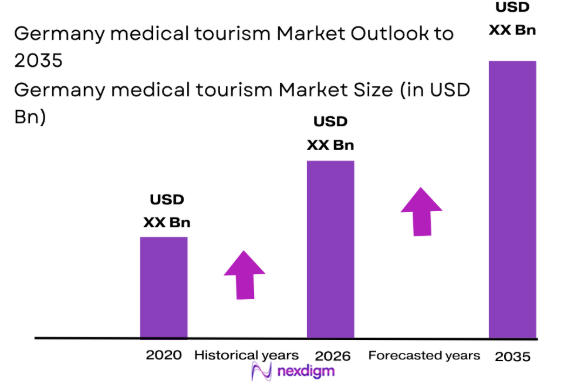
The Germany medical tourism market is valued at approximately USD ~ billion, driven by growing demand for high-quality healthcare services and cost-effective medical procedures. This market is fueled by the increasing preference for medical procedures that are more affordable outside patients’ home countries, while still offering the highest standards of care. The influx of international patients seeking specialized treatments in Germany, known for its world-class healthcare system, continues to bolster the market size.
Germany dominates the medical tourism industry due to its advanced healthcare infrastructure, highly skilled medical professionals, and reputation for excellence in treatment. Major cities such as Berlin, Munich, and Hamburg have established themselves as hubs for medical tourism, attracting patients primarily from the European Union, the Middle East, and North America. The country’s strong healthcare regulatory environment and seamless integration of medical and tourism services contribute to its leadership in the global medical tourism landscape.
Market Segmentation
By Treatment Type
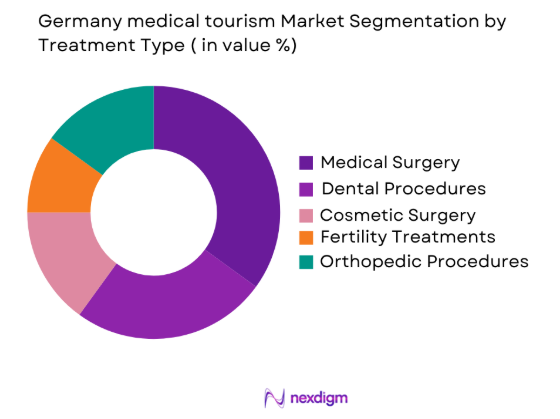
The medical tourism market in Germany is segmented by treatment type into medical surgery, dental procedures, cosmetic surgery, fertility treatments, and orthopedic procedures. Recently, medical surgery has gained a dominant market share, driven by the growing demand for high-quality, cost-effective surgeries in areas such as cardiology and neurology. Germany’s reputation for successful complex surgeries and advanced post-operative care makes it a preferred destination for medical tourists seeking treatment for serious health conditions.
By Patient Origin
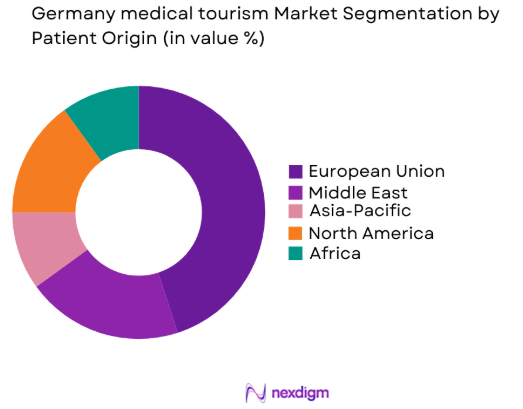
The Germany medical tourism market is segmented by patient origin into the European Union, Middle East, Asia-Pacific, North America, and Africa. The European Union has recently dominated the market share due to the proximity, ease of travel, and similarities in healthcare standards. Germany’s status as a hub for high-quality yet affordable healthcare services makes it an attractive option for patients seeking specialized treatments, especially from neighboring countries with higher healthcare costs.
Competitive Landscape
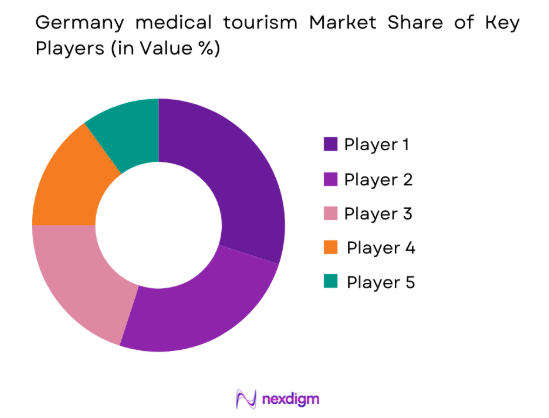
The Germany medical tourism market is competitive, with consolidation occurring through partnerships between healthcare providers, tourism companies, and insurance firms. The influence of major players in the market has significantly shaped service offerings and patient experiences, with a focus on enhancing customer satisfaction and improving accessibility to medical services. The market is dominated by a mix of private hospitals, specialized clinics, and medical tourism agencies that cater to both local and international patients.
| Company Name | Establishment Year | Headquarters | Technology Focus | Market Reach | Key Products | Revenue (USD) | Market-Specific Parameter |
| Asklepios Kliniken GmbH | 1984 | Hamburg | ~ | ~ | ~ | ~ | ~ |
| Charité University | 1710 | Berlin | ~ | ~ | ~ | ~ | ~ |
| Fertility Center Berlin | 2005 | Berlin | ~ | ~ | ~ | ~ | ~ |
| Helios Kliniken GmbH | 2001 | Berlin | ~ | ~ | ~ | ~ | ~ |
| Medicover AB | 1995 | Gothenburg | ~ | ~ | ~ | ~ | ~ |
Germany medical tourism Market Analysis
Growth Drivers
Technological Advancements
Germany’s medical tourism market has experienced rapid growth driven by technological advancements in the healthcare sector. Innovations such as minimally invasive surgeries, robotic-assisted surgeries, and advanced diagnostic tools have greatly improved patient outcomes and reduced recovery times. These cutting-edge technologies, along with Germany’s reputation for high-quality healthcare, have positioned the country as a top destination for medical tourists seeking the latest treatments. Moreover, the expansion of telemedicine and digital health tools has made pre- and post-treatment care more accessible, further enhancing the attractiveness of Germany’s medical tourism services. These advancements not only improve patient experiences but also increase the country’s appeal to international patients seeking effective and efficient care.
Economic Affordability and Cost Advantage
Another critical growth driver for Germany’s medical tourism market is the cost advantage it offers compared to countries with more expensive healthcare systems. Despite having one of the most advanced healthcare infrastructures in the world, Germany’s pricing for treatments such as surgeries and fertility treatments is often more affordable than in North America or the United Kingdom. This affordability, coupled with the availability of high-quality medical care, attracts patients from various regions, especially from the European Union, where healthcare costs are relatively high. As cost-effective options for high-quality healthcare become increasingly valuable in the global medical tourism market, Germany’s positioning as an affordable destination becomes more significant.
Market Challenges
Regulatory and Compliance Barriers
Germany’s medical tourism market faces significant regulatory challenges due to the country’s complex healthcare regulations. Healthcare providers must comply with strict national and international certifications and protocols to ensure high-quality care. For medical tourists, understanding and navigating these regulations can be difficult, particularly in relation to patient rights, data protection laws, and insurance requirements. These regulatory complexities create barriers for international patients seeking treatment in Germany. Additionally, the fragmented regulatory landscape across various European countries makes it harder to standardize medical tourism policies, further complicating the process. This lack of uniformity in regulations could discourage some patients from choosing Germany as their preferred destination, limiting the market’s potential to attract a broader international patient base.
Cultural and Language Differences
Cultural and language differences present challenges for Germany’s medical tourism market. While many healthcare providers in Germany are known for their high standards, patients may struggle with language barriers, particularly in regions outside of major tourist areas. Although many medical professionals speak English, a lack of local language proficiency can affect patient comfort and trust. Additionally, Germany’s healthcare system, with its complex procedures and paperwork, may be unfamiliar to international patients, leading to confusion and delays. These factors can hinder the overall experience and may impede the growth of the market, as potential patients could be deterred by these complications in navigating the system.
Opportunities
Expansion of Specialized Treatment Centers
A significant opportunity for the Germany medical tourism market lies in expanding specialized treatment centers, especially in areas like cosmetic surgery, fertility treatments, and neurosurgery. Germany’s strong reputation for success in complex medical procedures makes it an attractive destination for international patients. By developing centers dedicated to specific treatments, Germany can cater to the growing demand for specialized care. Additionally, the continued evolution of personalized medical care and customized tourism packages offers further potential. Tailoring services to individual needs can strengthen Germany’s appeal as a leading global medical tourism hub, positioning it as a preferred choice for patients seeking specialized and high-quality treatments.
Increase in Cross-Border Healthcare Collaboration
An important opportunity for the Germany medical tourism market lies in strengthening collaborations with foreign insurance companies, medical tourism agencies, and international healthcare networks. By establishing strategic partnerships, Germany can enhance its position as a top destination for cross-border treatments. Additionally, the growing integration of telemedicine services and digital health platforms provides an opportunity to reach underserved regions, particularly in emerging markets with limited access to healthcare. These technological advancements enable remote consultations, follow-up care, and better patient management, thereby attracting more international patients seeking accessible and high-quality medical services. This expansion into global markets enhances Germany’s role in the medical tourism sector.
Future Outlook
Looking ahead, the Germany medical tourism market is expected to continue expanding, driven by further advancements in healthcare technology and increasing demand for affordable, high-quality treatments. Regulatory frameworks are likely to evolve to facilitate more seamless international patient care, which will enhance Germany’s attractiveness as a medical tourism destination. Growing consumer preference for specialized treatments and the expansion of personalized healthcare options will also drive the market’s growth over the next few years. The government’s increasing support for health tourism, coupled with infrastructure improvements, is expected to strengthen Germany’s position as a top choice for medical tourists worldwide.
Major Players
- AsklepiosKlinikenGmbH
- Charité University
- FertilityCenterBerlin
- HeliosKlinikenGmbH
- MedicoverAB
- Munich Medical International
- ProMedica
- RehaZentrenGmbH
- SanaKlinikenAG
- Siemens Healthineers
- Medi-tour
- Cure Medical Tourism
- UKE Hamburg
- Evang.Kliniken
- Klinik amSüdring
Key Target Audience
- Investments and venture capitalist firms
- Government and regulatory bodies
- Private healthcare providers
- Insurance companies
- Medical tourism facilitators
- Healthcare professionals
- Pharmaceutical companies
- Technology providers
Research Methodology
Step 1: Identification of Key Variables
This step involves identifying key factors driving the medical tourism market, including demand patterns, treatment types, patient origins, and market trends.
Step 2: Market Analysis and Construction
The market structure and growth dynamics are analyzed based on historical data, market trends, and industry developments, including a review of technological innovations and regulations.
Step 3: Hypothesis Validation and Expert Consultation
We validate our findings through consultations with healthcare professionals, market experts, and major players in the medical tourism space, ensuring the accuracy of data.
Step 4: Research Synthesis and Final Output
After gathering and analyzing data, a final report is produced synthesizing all insights to deliver actionable conclusions for stakeholders in the medical tourism market.

- Executive Summary
- Research Methodology (Definitions, Scope, Industry Assumptions, Market Sizing Approach, Primary & Secondary Research Framework, Data Collection & Verification Protocol, Analytic Models & Forecast Methodology, Limitations & Research Validity Checks)

- Market Definition and Scope
- Value Chain & Stakeholder Ecosystem
- Regulatory / Certification Landscape
- Sector Dynamics Affecting Demand
- Strategic Initiatives & Infrastructure Growth

- Growth Drivers
Increasing Healthcare Quality Standards
Government Support for Health Tourism
Rising Medical Cost in Developed Countries - Market Challenges
Regulatory Barriers to International Patients
Lack of Global Standardization in Medical Tourism
Challenges in Patient Data Security and Privacy - Market Opportunities
Expansion of Specialized Treatment Centers
Growing Demand for Cross-Border Fertility Treatments
Advancement in Telemedicine for Pre- and Post-Treatment Care - Trends
Increase in Wellness Tourism Integration
Technological Innovations in Healthcare Delivery
Shift towards Personalized Healthcare Solutions - Government Regulations
- SWOT Analysis of Key Competitors
- Porter’s Five Forces

- By Market Value, 2020-2025
- By Installed Units, 2020-2025
- By Average System Price, 2020-2025
- By System Complexity Tier, 2020-2025

- By Treatment Type (In Value%)
Medical Surgery
Dental Procedures
Cosmetic Surgery
Fertility Treatments
Orthopedic Procedures - By Patient Origin (In Value%)
European Union
Middle East
Asia-Pacific
North America
Africa - By Healthcare Provider Type (In Value%)
Private Healthcare Providers
Public Healthcare Providers
Specialized Medical Tourism Agencies
Insurance Provider Network Hospitals
Medical Tourism Facilitators - By Service Type (In Value%)
Surgical Services
Post-Surgery Recovery Services
Wellness & Preventative Care
Rehabilitation Services
Cosmetic Services - By Payment Method (In Value%)
Self-Pay
Insurance
Employer-Sponsored Coverage
Government-Sponsored Programs
Hybrid Payment Systems

- Market Share Analysis
- Cross Comparison Parameters (Patient Origin, Healthcare Provider Type, Service Type, Payment Method, Treatment Type, Healthcare Infrastructure, Insurance Coverage, Market Maturity, Patient Demographics, Technology Integration)
- SWOT Analysis of Key Competitors
- Pricing & Procurement Analysis
- Key Players
Asklepios Kliniken GmbH
Charité University Medicine
Fertility Center Berlin
Bertelsmann SE & Co. KGaA
Munich Medical International
Helios Kliniken GmbH
Medicover AB
Krankenhaus Hannover
ProMedica
HealthTravel Germany
Sana Kliniken AG
Siemens Healthineers
Medi-tour
RehaZentren GmbH
Cure Medical Tourism

- Healthcare Providers Expanding Medical Tourism Offerings
- Insurance Companies Engaging in Medical Tourism Policies
- Tourism Agencies Offering Medical Tourism Packages
- Government Bodies Promoting Healthcare Export

- Forecast Market Value, 2026-2035
- Forecast Installed Units, 2026-2035
- Price Forecast by System Tier, 2026-2035
- Future Demand by Platform, 2026-2035


 Request a Sample
 Ask for Customization
 Get a Quote
 Enquire Now