
 Download PDF
Market Overview
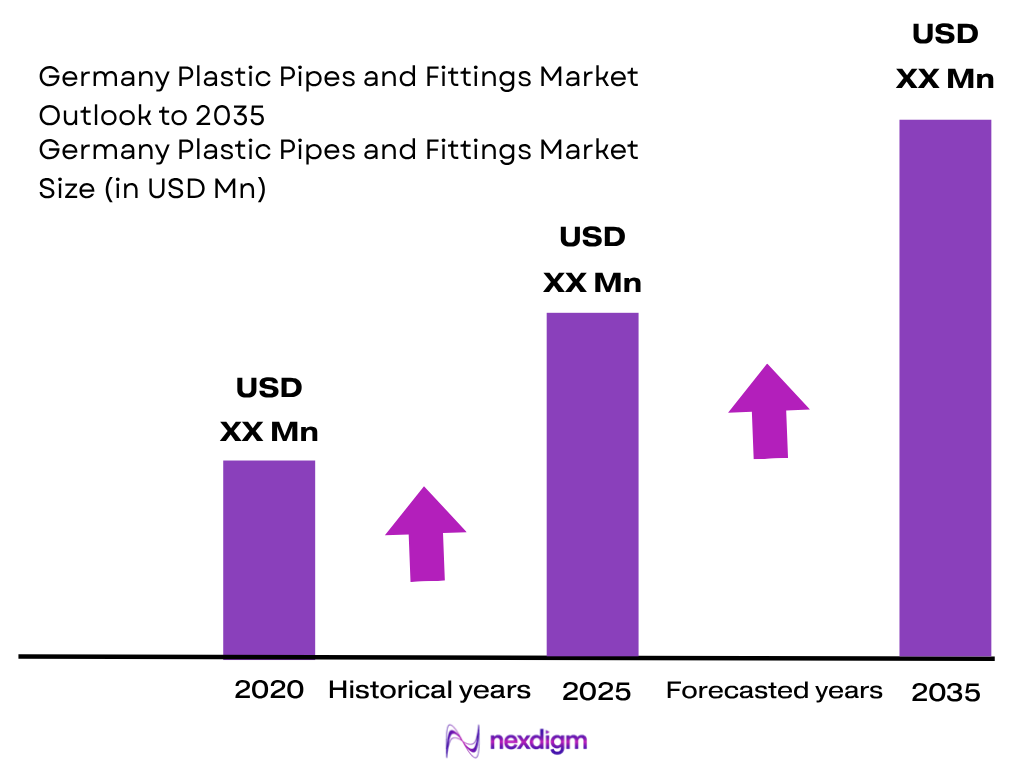
The Germany Plastic Pipes and Fittings Market is valued at USD ~XX billion in 2024 and has expanded due to increasing replacement of aging water infrastructure, renovation of residential buildings, and demand from industrial piping applications. The market is supported by rising adoption of PVC, HDPE, PEX, and PPR systems across municipal water networks, wastewater management, building plumbing, and energy-efficient construction projects. Germany’s focus on sustainable infrastructure development, resource-efficient buildings, and modernization of utility networks continues to support demand for advanced plastic piping solutions.
Germany represents one of the leading European markets for plastic pipes and fittings, with major demand concentrated across industrial and urban regions including North Rhine-Westphalia, Bavaria, Baden-Württemberg, Berlin, Hamburg, and Hesse. These regions dominate due to their large construction bases, dense municipal infrastructure networks, industrial manufacturing presence, and extensive renovation activities. Cities such as Berlin, Munich, Hamburg, Frankfurt, and Cologne generate significant demand due to continuous urban development, wastewater infrastructure upgrades, residential refurbishment projects, and adoption of modern plumbing systems in commercial and industrial facilities.
Market Segmentation
By Material Type
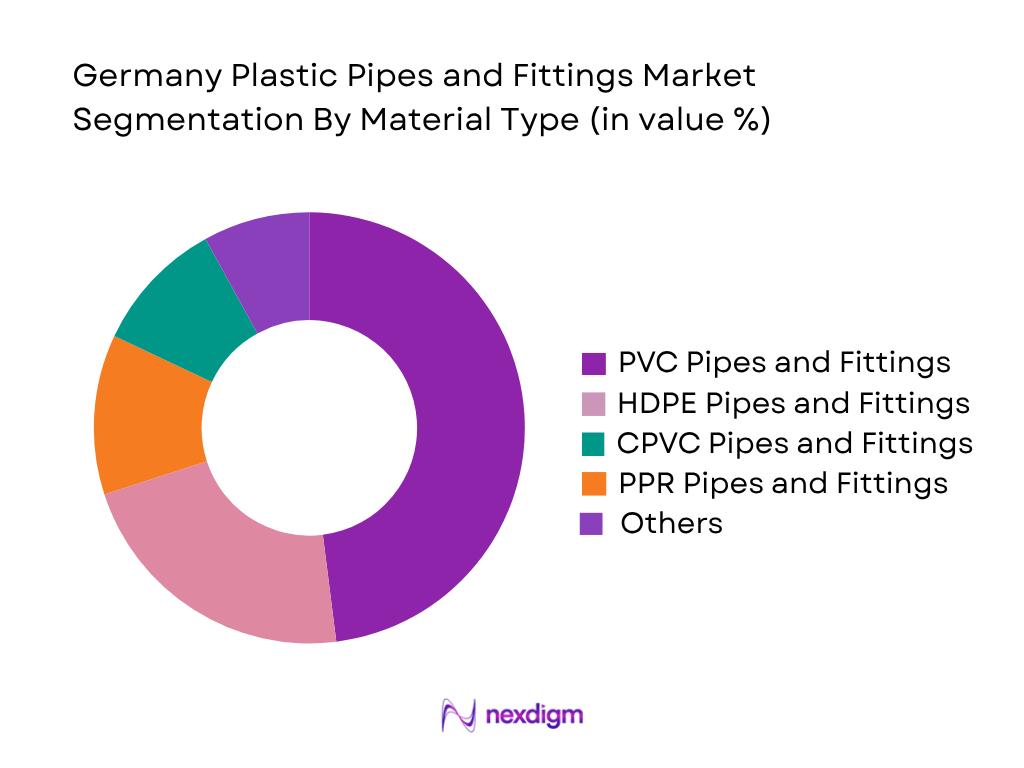
Germany Plastic Pipes and Fittings Market is segmented by material type into PVC pipes and fittings, HDPE pipes and fittings, PEX pipes and fittings, PPR pipes and fittings, PP pipes and fittings, PE pipes and fittings, multilayer composite pipes, and specialty thermoplastic pipes. Among these, PVC pipes and fittings hold the dominant market position due to their extensive application in drainage systems, wastewater networks, underground infrastructure, and residential plumbing installations. PVC systems are widely preferred because of their durability, chemical resistance, lightweight characteristics, and established compatibility with German construction standards. The availability of standardized PVC solutions across municipal and building applications has strengthened their adoption among contractors, utilities, and construction companies.
By Application Type
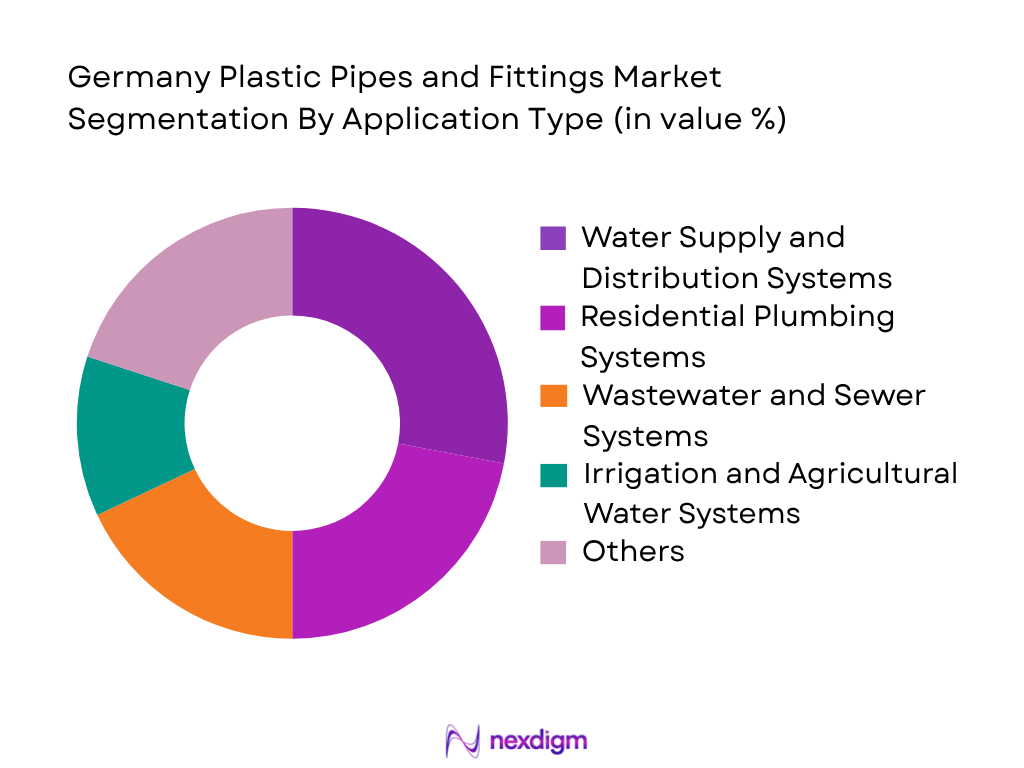
Germany Plastic Pipes and Fittings Market is segmented by application type into municipal water distribution systems, wastewater and sewer systems, residential plumbing systems, commercial plumbing systems, industrial process piping systems, district heating networks, gas distribution systems, agricultural irrigation systems, electrical conduit systems, and telecommunication duct systems. Municipal water distribution and wastewater systems represent the leading application segment due to continuous infrastructure modernization requirements, replacement of aging pipelines, and increasing focus on efficient water management. German municipalities are investing in rehabilitation of underground utility networks, creating demand for corrosion-resistant and long-life plastic piping systems. The suitability of HDPE and PVC pipes for underground applications has further increased their use across water supply, drainage, and sewer infrastructure projects.
Competitive Landscape
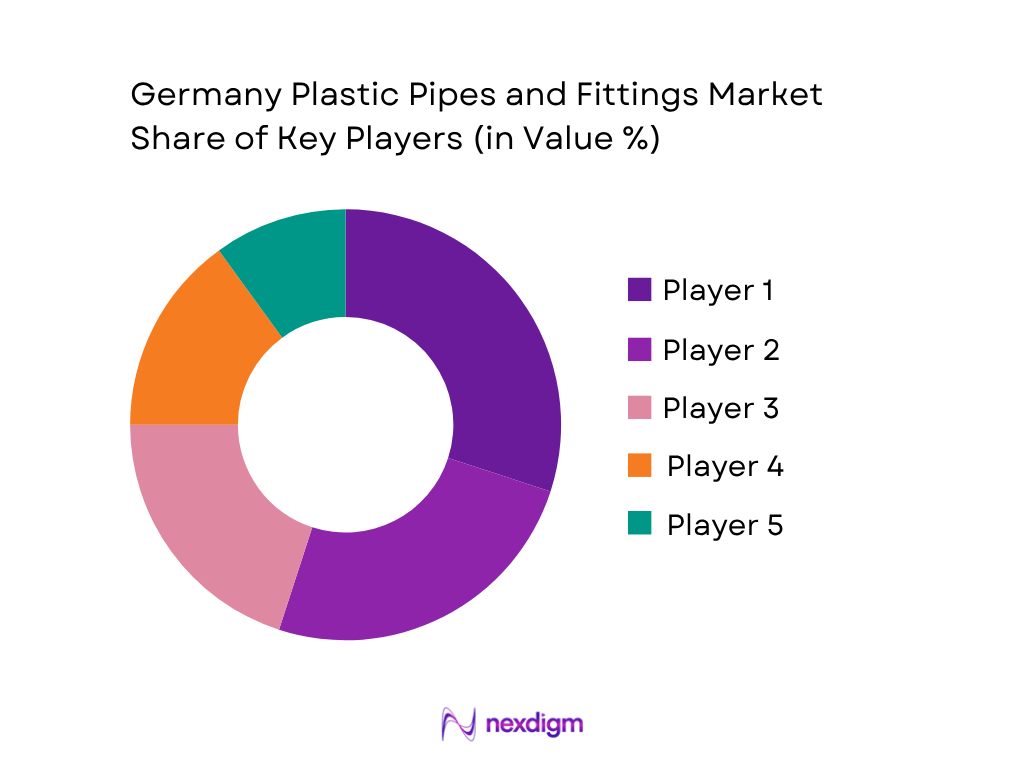
The Germany Plastic Pipes and Fittings Market is characterized by the presence of established European manufacturers and specialized piping solution providers, including Rehau, Uponor, GF Piping Systems, Wavin Germany, Geberit, and Pipelife Germany. These companies compete through broad material portfolios, advanced manufacturing capabilities, certified piping solutions, and strong relationships with construction contractors, utilities, and distributors. The competitive environment is influenced by product innovation, sustainable material adoption, regional manufacturing capabilities, and compliance with German and European piping standards.
| Company | Establishment Year | Headquarters | Key Product Portfolio | Material Expertise | Manufacturing Capability | Application Focus | Distribution Network | Certification Coverage |
| Rehau | 1948 | Germany | ~ | ~ | ~ | ~ | ~ | ~ |
| Uponor | 1918 | Finland | ~ | ~ | ~ | ~ | ~ | ~ |
| GF Piping Systems | 1802 | Switzerland | ~ | ~ | ~ | ~ | ~ | ~ |
| Wavin Germany | 1955 | Netherlands | ~ | ~ | ~ | ~ | ~ | ~ |
| Geberit | 1874 | Switzerland | ~ | ~ | ~ | ~ | ~ | ~ |
Germany Plastic Pipes and Fittings Market Analysis
Growth Drivers
Expansion of Water Infrastructure Development and Urban Utility Networks
The Philippines Plastic Pipes and Fittings Market is supported by continuous investment in water supply, sanitation, and urban infrastructure projects across residential, commercial, and municipal applications. The country’s infrastructure development activities remain a key demand contributor, supported by government initiatives focused on improving water accessibility and wastewater management. The World Bank reported that the Philippines’ urban population reached more than 56 million people, increasing pressure on local water distribution networks and requiring expansion of durable piping systems. The Philippine Statistics Authority recorded a population of approximately 115 million, creating higher demand for housing, public utilities, and water management infrastructure. The Department of Public Works and Highways continues to implement flood control, drainage, and water-related infrastructure projects, supporting the adoption of plastic pipes due to their corrosion resistance, lightweight characteristics, and suitability for underground applications. Rising construction activity, expansion of residential developments in Metro Manila, Cebu, and Davao, and increasing requirements for efficient water transportation systems are strengthening demand for PVC, HDPE, and other thermoplastic piping solutions across multiple applications.
Rising Adoption of Plastic Piping in Residential Construction and Replacement Activities
The Philippines Plastic Pipes and Fittings Market is driven by increasing adoption of plastic piping solutions in residential buildings, commercial facilities, and renovation projects due to advantages over traditional metal piping systems. The construction sector remains an important contributor to demand, supported by household formation, urban migration, and government housing programs. According to the Philippine Statistics Authority, the country recorded continued growth in approved construction projects, with residential structures representing a significant portion of construction activity. The Bangko Sentral ng Pilipinas reported sustained economic expansion, with domestic demand supported by household consumption and infrastructure development. Plastic pipes such as PVC and PPR are increasingly preferred for plumbing applications because they offer lower maintenance requirements, resistance to corrosion, and longer service life. Expansion of residential communities in urban centers including Manila, Quezon City, Cebu City, and Davao City is increasing the requirement for reliable plumbing networks. Replacement of aging metal pipelines in existing buildings and increasing awareness regarding efficient water distribution systems are further supporting market penetration of plastic pipes and fittings.
Market Challenges
Dependence on Imported Raw Materials and Resin Price Volatility
The Philippines Plastic Pipes and Fittings Market faces challenges due to dependence on imported polymer raw materials, particularly PVC resin, polyethylene, and polypropylene, which exposes manufacturers to fluctuations in international supply conditions and foreign exchange movements. The Philippines imports a considerable portion of its petrochemical feedstocks and plastic raw materials due to limited domestic production capacity. The Philippine Statistics Authority reported that the country’s import activities remain highly dependent on industrial inputs, including chemical and manufacturing-related materials. Changes in crude oil prices, global petrochemical availability, and currency fluctuations can influence production costs for pipe manufacturers. The International Monetary Fund highlighted the importance of external trade conditions for the Philippine economy, with import costs affecting industrial sectors. Manufacturers operating in the plastic pipe industry must manage raw material procurement risks while maintaining competitive pricing. Additionally, increasing focus on sustainable construction practices and plastic waste management requirements is encouraging companies to invest in recycling capabilities and environmentally responsible production processes, creating additional operational considerations for market participants.
Infrastructure Implementation Delays and Regulatory Compliance Requirements
The Philippines Plastic Pipes and Fittings Market experiences challenges related to project execution delays, fragmented infrastructure development, and compliance requirements across different application sectors. Large-scale water, drainage, and sanitation projects often require coordination among government agencies, utilities, contractors, and local authorities, which can affect implementation timelines. The Department of Public Works and Highways continues to prioritize infrastructure modernization, including flood management and public utility improvements, but project execution can be influenced by permitting procedures, procurement processes, and regional development differences. The World Bank highlighted infrastructure gaps as a continuing development concern in emerging economies, including requirements for improved urban services and climate-resilient infrastructure. Plastic pipe manufacturers must comply with technical standards related to pressure ratings, material quality, and application suitability to supply municipal and industrial projects. Differences in technical specifications among end users and competition from alternative materials such as steel, concrete, and ductile iron also create challenges for wider adoption in certain infrastructure applications.
Market Opportunities
Expansion of Sustainable Water Management and Wastewater Infrastructure Projects
The Philippines Plastic Pipes and Fittings Market presents opportunities through increasing focus on sustainable water management, wastewater treatment, and sanitation infrastructure development. Growing urbanization and environmental concerns are encouraging investments in efficient water distribution and drainage systems. The Philippine Statistics Authority recorded continued population concentration in urban regions, increasing the requirement for improved municipal water networks and wastewater management solutions. The Department of Environment and Natural Resources has emphasized improved environmental protection and water quality management, creating demand for modern piping infrastructure. Plastic pipes, particularly HDPE and PVC systems, offer opportunities due to their durability, leak resistance, and suitability for water conservation projects. Expansion of sewerage systems, drainage networks, and water supply projects in rapidly developing cities provides opportunities for manufacturers and suppliers. Increasing adoption of climate-resilient infrastructure solutions, including systems designed for flood management and efficient water transportation, is expected to support future demand for advanced plastic piping technologies across municipal, residential, and industrial applications.
Growth Potential from Industrial, Agricultural, and Infrastructure Applications
The Philippines Plastic Pipes and Fittings Market has growth opportunities from expanding industrial facilities, agricultural irrigation requirements, and infrastructure modernization programs. Agriculture remains an important sector of the Philippine economy, with the Philippine Statistics Authority reporting millions of hectares of agricultural land requiring efficient irrigation and water management systems. Plastic pipes, particularly HDPE solutions, are increasingly suitable for irrigation applications due to flexibility, durability, and resistance to environmental conditions. Industrial development in manufacturing zones and economic corridors is also increasing demand for specialized piping systems for fluid transportation, processing facilities, and utility networks. The World Bank reported continued emphasis on economic development and infrastructure improvement in the Philippines, supporting investment across productive sectors. Expansion of industrial parks, food processing facilities, and commercial developments creates additional opportunities for plastic pipe manufacturers. Furthermore, increasing requirements for reliable electrical and telecommunication infrastructure are supporting demand for plastic conduit and ducting solutions, expanding the application scope beyond traditional plumbing and water distribution uses.
Future Outlook
Over the next decade, the Germany Plastic Pipes and Fittings Market is expected to demonstrate steady development driven by infrastructure modernization, sustainable construction practices, and increasing replacement demand for aging pipeline networks. Growing emphasis on water conservation, energy-efficient buildings, and circular economy initiatives is expected to encourage adoption of advanced plastic piping technologies. Demand for HDPE, PEX, multilayer systems, and recycled-material-based pipes is likely to increase across residential, commercial, municipal, and industrial applications.
Major Players
- Rehau
- Uponor
- Wavin Germany
- GF Piping Systems
- Pipelife Germany
- Geberit
- Viega
- Sanha
- Ostendorf Kunststoffe
- Funke Kunststoffe
- Poloplast
- Kessel
- HakaGerodur
- Friatec
- Ravago Building Solutions
Key Target Audience
- Plastic Pipe Manufacturers and Fittings Producers
- Construction and Building Material Companies
- Water Utilities and Wastewater Management Operators
- Industrial Manufacturing Companies
- Renewable Energy and District Heating Infrastructure Developers
- Investments and Venture Capitalist Firms
- Government and Regulatory Bodies (German Federal Ministry for Housing, Urban Development and Building, Federal Environment Agency, German Water Association DVGW)
- Plumbing, Engineering, and Infrastructure Contractors
Research Methodology
Step 1: Identification of Key Variables
The initial phase involves developing a comprehensive ecosystem map covering manufacturers, suppliers, distributors, utilities, contractors, and end-use industries operating within the Germany Plastic Pipes and Fittings Market. Extensive secondary research is conducted using industry databases, regulatory publications, infrastructure reports, and company disclosures to identify critical market variables including material demand, application trends, production capacity, and consumption patterns.
Step 2: Market Analysis and Construction
In this phase, historical market information is analyzed through demand-side and supply-side assessment approaches. The study evaluates plastic pipe consumption across municipal infrastructure, residential construction, industrial applications, wastewater networks, and energy infrastructure. Market sizing is developed by assessing production volumes, distribution channels, application demand, and manufacturer-level operating insights.
Step 3: Hypothesis Validation and Expert Consultation
Market assumptions are validated through discussions with industry participants including manufacturers, distributors, contractors, and infrastructure stakeholders. These consultations provide operational insights regarding material preferences, installation practices, competitive dynamics, and emerging technology adoption within the German plastic piping ecosystem.
Step 4: Research Synthesis and Final Output
The final stage integrates primary and secondary findings to develop a comprehensive market assessment. Data points related to material segmentation, application analysis, competitive positioning, and future demand patterns are evaluated to ensure a structured and reliable understanding of the Germany Plastic Pipes and Fittings Market.

- Executive Summary
- Research Methodology (Market Definition and Scope, Germany Plastic Pipes and Fittings Market Classification, Thermoplastic Pipe Demand Assessment, Plastic Pipe Shipment Volume Analysis, Plastic Fittings Consumption Mapping, PVC Pipe Demand Assessment, HDPE Pipe Consumption Analysis, PEX Plumbing System Adoption Assessment, PPR and PP Pipe Demand Evaluation, Municipal Water and Wastewater Infrastructure Pipe Requirement Analysis, Residential Plumbing Pipe Consumption Mapping, Commercial Construction Plumbing Demand Assessment, Industrial Process Piping Demand Analysis, District Heating Network Pipe Demand Assessment, Electrical Conduit and Telecom Duct Demand Assessment)

- Definition and Scope
- Germany Plastic Pipes and Fittings Industry Evolution and Development of Thermoplastic Piping Infrastructure
- PVC Pressure Pipes, PVC Drainage Pipes, HDPE Pipes, PEX Pipes, PPR Pipes, PP Pipes, PE Pipes, Multilayer Composite Pipes, Specialty Thermoplastic Pipes
- Germany Plastic Pipes and Fittings Value Chain Analysis
- Germany Plastic Pipes and Fittings Supply Chain Analysis
- Polymer Resin Supplier, Compound Manufacturer, Pipe Extruder, Fittings Manufacturer, Distributor, Contractor, Utility Operator
- Plastic Pipe Integration Across Municipal Water Networks, Residential Plumbing Systems, Commercial Buildings, Industrial Facilities, District Heating Networks, Renewable Energy Infrastructure, Electrical and Telecom Networks

- Growth Drivers (Aging Water Infrastructure Replacement, Municipal Pipeline Rehabilitation, Building Renovation Activities, District Heating Network Expansion, Renewable Energy Infrastructure Development, Residential Modernization Projects, Industrial Manufacturing Expansion, Sustainable Building Requirements, Replacement of Metal Piping Systems, Smart Water Infrastructure Development)
- Market Challenges (Plastic Resin Price Volatility, Dependence on Imported Polymer Feedstocks, Strict Environmental Regulations, Competition from Metal Pipe Systems, Construction Sector Fluctuations, Skilled Installation Labor Shortage, Recycling Compliance Requirements, Energy Cost Pressure on Manufacturers)
- Market Opportunities (Water Infrastructure Modernization, Circular Economy Plastic Pipe Solutions, Sustainable Construction Development, District Heating Expansion, Renewable Energy Pipeline Applications, Smart Water Networks, Industrial Process Piping Demand, Recycled Polymer Adoption, Digital Infrastructure Development)
- Market Trends (Low Carbon Plastic Pipe Manufacturing, Recycled Material Integration, Trenchless Pipe Installation, BIM-Based Pipeline Design, Smart Water Infrastructure, Prefabricated Plumbing Systems, Energy Efficient Building Systems, Advanced Fusion Technology, Sustainable Infrastructure Development)
- Regulatory and Standards Landscape (DIN Plastic Pipe Standards, EN Plastic Pipe Standards, DVGW Regulations, German Drinking Water Ordinance Requirements, Building Energy Act Compliance, European Circular Economy Regulations, Product Certification Standards, Environmental Compliance Requirements)
- SWOT Analysis
- Porter’s Five Forces Analysis
- PESTLE Analysis
- Stakeholder Ecosystem
- Competition Ecosystem

- By Market Value (2020-2025)
- By Plastic Pipe Consumption Volume (2020-2025)
- By Plastic Fittings Consumption Volume (2020-2025)
- By PVC Pipe Consumption Volume (2020-2025)
- By HDPE Pipe Consumption Volume (2020-2025)
- By PEX Pipe Consumption Volume (2020-2025)
- By PPR Pipe Consumption Volume (2020-2025)

- By Material Type (In Value %)
PVC Pipes and Fittings
HDPE Pipes and Fittings
PEX Pipes and Fittings
PPR Pipes and Fittings
PP Pipes and Fittings
PE Pipes and Fittings
Multilayer Composite Pipes
PVDF and Specialty Thermoplastic Pipes - By Product Type (In Value %)
Pressure Pipes
Non-Pressure Pipes
Drainage Pipes
Sewer Pipes
Corrugated Pipes
Solid Wall Pipes
Flexible Pipes and Tubing
Cable Protection Pipes
Injection Molded Fittings
Fabricated Fittings
Electrofusion Fittings
Mechanical Connection Fittings
Press Connection Fittings - By Application Type (In Value %)
Municipal Water Distribution Systems
Wastewater and Sewer Systems
Residential Plumbing Systems
Commercial Plumbing Systems
Industrial Process Piping Systems
District Heating Networks
Natural Gas Distribution Systems
Agricultural Irrigation Systems
Electrical Conduit Systems
Telecommunication and Fiber Optic Duct Systems
Renewable Energy Infrastructure
Fire Protection Systems - By End-Use Industry (In Value %)
Municipal Water Utilities
Wastewater Utilities
Residential Construction
Commercial Construction
Industrial Manufacturing Facilities
Chemical Industry
Energy Utilities
Renewable Energy Sector
Agriculture Sector
Electrical Utilities
Telecommunication Infrastructure
Government Infrastructure Projects - By Pipe Diameter (In Value %)
Below 50 mm
50–110 mm
Above 110–200 mm
Above 200–315 mm
Above 315–500 mm
Above 500–900 mm
Above 900 mm - By Region (In Value %)
North Germany
South Germany
West Germany
East Germany

- Market Share of Major Players (By Germany Revenue, Plastic Pipe Sales Volume, Plastic Fittings Sales Volume, PVC Pipe Sales Volume, HDPE Pipe Sales Volume, PEX Pipe Sales Volume, Municipal Infrastructure Exposure, Residential Construction Exposure, Industrial Application Exposure, Manufacturing Footprint, Distribution Network Coverage, Product Portfolio Breadth, Certification Coverage)
- Cross Comparison Parameters (Germany Plastic Pipe and Fittings Revenue, Material Portfolio Breadth Across PVC-HDPE-PEX-PPR, Pipe Extrusion and Fittings Manufacturing Capacity, Sustainable and Recycled Material Capability, Municipal Water Infrastructure Project Exposure, District Heating Pipe Capability, Distribution Network and Installer Reach, DIN-EN-DVGW Certification Coverage)
- SWOT Analysis of Major Players
- Competitive Positioning Matrix
- Major Companies
Rehau
Uponor
Wavin Germany
GF Piping Systems
Pipelife Germany
Geberit
Viega
Sanha
Ostendorf Kunststoffe
Funke Kunststoffe
Poloplast
Kessel
HakaGerodur
Friatec
Ravago Building Solutions

- Municipal Water Utility Plastic Pipe Procurement Assessment
- Wastewater Utility Sewer Pipeline Replacement Requirement Analysis
- Residential Developer Plumbing System Material Selection Assessment
- Commercial Building Plumbing Specification Analysis
- Industrial Facility Process Piping Requirement Analysis
- Chemical Industry Plastic Pipeline Procurement Analysis
- Energy Utility Pipeline Requirement Assessment
- Renewable Energy Infrastructure Pipe Requirement Analysis
- Construction Contractor Material Preference Assessment
- Electrical Contractor Conduit Procurement Assessment
- Telecommunication Fiber Duct Installation Requirement Analysis
- Architect and Engineering Consultant Plastic Pipe Specification Analysis
- Distributor Inventory and Procurement Assessment

- By Market Value (2026-2035)
- By Plastic Pipe Consumption Volume (2026-2035)
- By Plastic Fittings Consumption Volume (2026-2035)
- By PVC Pipe Consumption Volume (2026-2035)
- By HDPE Pipe Consumption Volume (2026-2035)
- By PEX Pipe Consumption Volume (2026-2035)
- By PPR Pipe Consumption Volume (2026-2035)


 Request a Sample
 Ask for Customization
 Get a Quote
 Enquire Now