

 Download PDF
 Download PDF
Market Overview
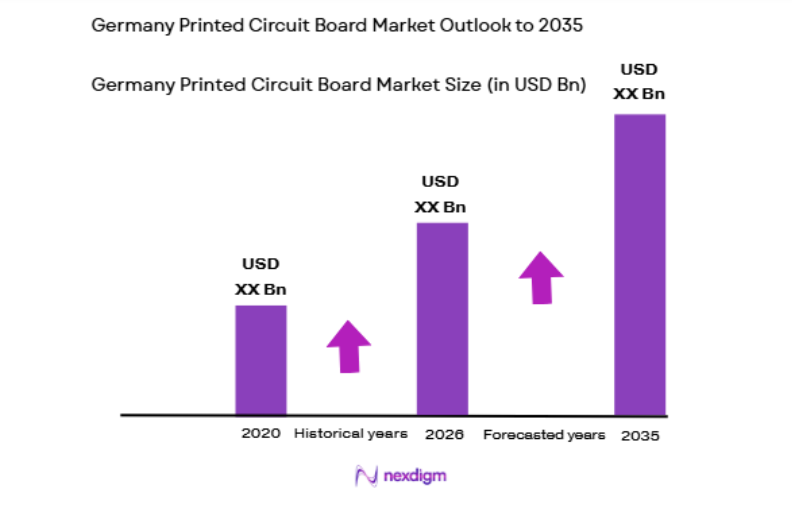
The Germany printed circuit board (PCB) market is projected to experience significant growth based on a recent historical assessment. The market size is estimated to reach USD ~ billion, driven by the expanding demand for PCBs across various sectors such as automotive, telecommunications, and consumer electronics. The rapid advancement in electronic devices, combined with the rise in automation, is further fueling the market’s growth trajectory. This expansion is closely linked to technological advancements, especially in the miniaturization of components and the increasing integration of PCBs in next-generation devices.
Germany is recognized as one of the dominant players in the European PCB market due to its advanced manufacturing capabilities, strong industrial base, and technological innovations. Major cities like Berlin, Munich, and Frankfurt serve as hubs for electronics manufacturing and R&D, contributing to the dominance of Germany in the European market. These cities are well-equipped with state-of-the-art infrastructure, fostering a conducive environment for the development and production of high-quality PCBs.
Market Segmentation
By Product Type
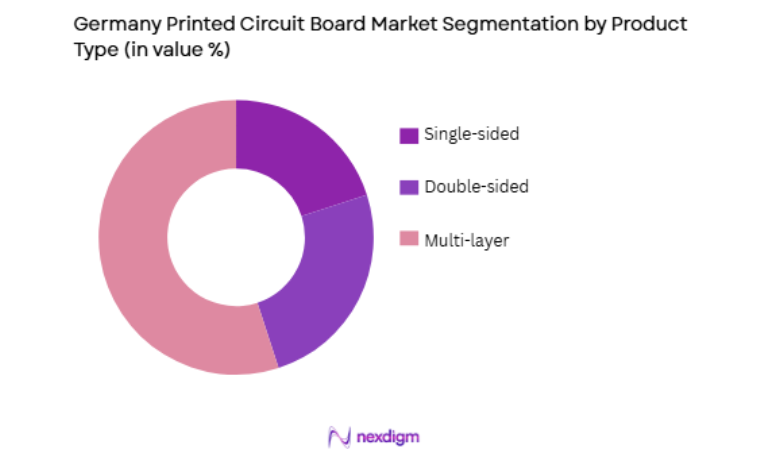
The Germany printed circuit board market is segmented by product type into single-sided, double-sided, and multi-layer PCBs. The multi-layer PCB sub-segment holds a dominant market share due to its critical role in high-performance applications such as smartphones, computers, and automotive systems. The increasing complexity of modern electronic devices and the demand for compact, high-functioning PCBs have made multi-layer PCBs essential. With the rise of advanced technologies, including 5G, automotive electronics, and wearable devices, multi-layer PCBs are integral in meeting the performance and size requirements of these applications.
By End-user Industry
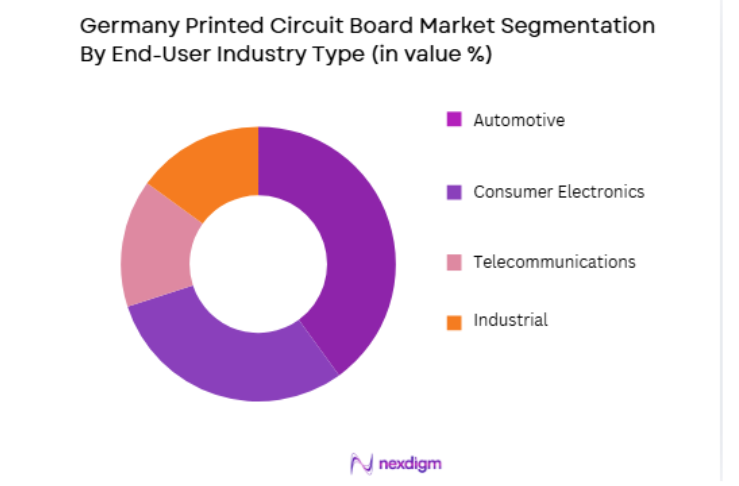
The market is segmented by end-user industry into automotive, consumer electronics, telecommunications, and industrial applications. The automotive industry dominates the market share due to the growing demand for advanced driver-assistance systems (ADAS), electric vehicles (EVs), and autonomous driving technology, all of which require sophisticated PCB solutions. The push for smart vehicles and the integration of sensors, cameras, and infotainment systems in automobiles is driving the adoption of PCBs with enhanced capabilities. Additionally, Germany’s well-established automotive manufacturing sector further propels the demand for high-quality PCBs.
Competitive Landscape
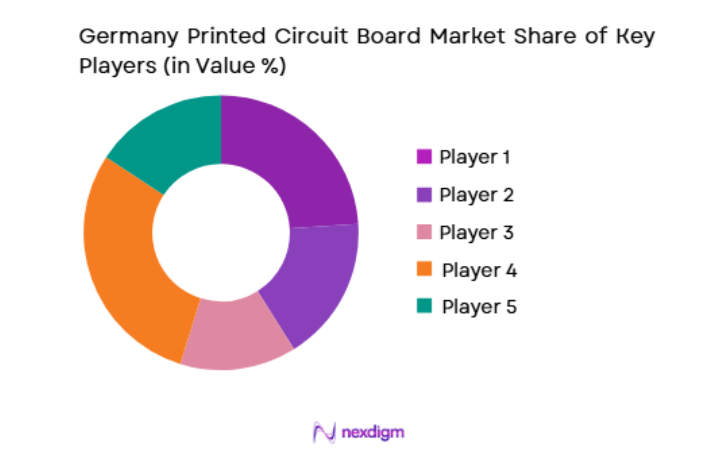
The competitive landscape of the Germany printed circuit board market is shaped by a few large global players and several regional companies. Major players dominate the production, technology, and innovation in the sector, with a focus on offering high-quality, custom-made solutions for specific industries. Strategic mergers, acquisitions, and technological advancements have led to market consolidation, where large corporations control significant portions of the market. This consolidation enhances their competitive advantage by expanding product portfolios and increasing production efficiency.
| Company Name | Establishment Year | Headquarters | Technology Focus | Market Reach | Key Products | Revenue | Additional Parameter |
| AT&S | 1987 | Leoben, Austria | ~ | ~ | ~ | ~ | ~ |
| Würth Elektronik | 1978 | Niedernhall, Germany | ~ | ~ | ~ | ~ | ~ |
| Meiko Electronics | 1975 | Nanjing, China | ~ | ~ | ~ | ~ | ~ |
| TTM Technologies | 1978 | Costa Mesa, USA | ~ | ~ | ~ | ~ | ~ |
| Schwegmann GmbH | 1970 | Germany | ~ | ~ | ~ | ~ | ~ |
Germany Printed Circuit Board Market Analysis
Growth Drivers
Technological Advancements in PCB Manufacturing
The technological advancement in PCB manufacturing is a major growth driver for the Germany PCB market. Recent innovations in PCB design and manufacturing techniques have led to the development of high-density interconnect (HDI) PCBs, which are increasingly used in electronic devices like smartphones, medical devices, and automotive applications. These advancements have not only enhanced the performance of PCBs but also reduced their size and weight, meeting the evolving demands of modern electronic devices. The integration of automation, AI, and machine learning in PCB production further accelerates production processes, reducing lead times and ensuring high precision, which drives the adoption of advanced PCBs in various sectors. Additionally, the rise of the Internet of Things (IoT) and the growing need for smart technologies have further increased the demand for sophisticated PCB solutions, particularly in automotive, consumer electronics, and industrial applications.
Increasing Demand from Automotive Industry
The automotive industry is witnessing a significant transformation, with a major shift towards electric vehicles (EVs) and autonomous driving technology. This transformation is fueling the demand for high-quality, complex PCBs that are essential for the functioning of ADAS, infotainment systems, power management units, and battery management systems. Germany, being a global automotive manufacturing hub, is experiencing an increased demand for specialized PCBs to support these advancements. The adoption of electronic systems in vehicles, driven by consumer demand for safety, convenience, and eco-friendly transportation, is pushing the growth of the PCB market in the automotive sector. Furthermore, the growing trend of smart cars and electric vehicles, which rely heavily on integrated electronics, continues to drive innovation and demand for advanced PCB solutions.
Market Challenges
Material and Component Supply Chain Disruptions
One of the significant challenges faced by the Germany printed circuit board market is the disruption in the material and component supply chain. The COVID-19 pandemic and subsequent global supply chain disruptions have highlighted vulnerabilities in sourcing critical raw materials, such as copper, aluminum, and specialized laminates, which are essential for PCB manufacturing. These disruptions lead to delays in production, increased costs, and potential shortages in the availability of PCBs, especially for industries with high demand, such as automotive and consumer electronics. With supply chain bottlenecks affecting global trade, manufacturers are compelled to explore alternative sourcing strategies, such as local supply chains and diversified suppliers, to mitigate risks. However, these adjustments often come at a cost, which can impact the overall market growth and profitability of PCB manufacturers.
Intense Price Pressure and Competition
Price competition is another significant challenge in the Germany PCB market. The increasing demand for PCBs across various sectors has led to intense competition among manufacturers, resulting in price pressures. The rise in raw material costs, labor expenses, and the need for investment in advanced technologies to meet the evolving demands of industries like automotive and telecommunications further exacerbates price pressures. Small and medium-sized PCB manufacturers, in particular, face difficulties in competing with large-scale producers who benefit from economies of scale and advanced manufacturing capabilities. This price sensitivity can erode profit margins for manufacturers and impact their ability to invest in innovation, ultimately affecting their long-term sustainability in the competitive market.
Opportunities
Rise of 5G and IoT Technologies
The advent of 5G and the proliferation of Internet of Things (IoT) devices present significant opportunities for the Germany PCB market. As 5G networks are deployed globally, there is an increasing demand for high-performance, high-frequency PCBs to support the advanced communication systems required for 5G infrastructure and devices. The growth of IoT technologies, including connected devices, smart homes, and industrial automation, further accelerates the need for compact, high-quality PCBs that can support the growing volume of data traffic. PCB manufacturers can capitalize on these opportunities by developing innovative solutions that cater to the specific needs of 5G and IoT applications, such as low-latency, high-density interconnects, and enhanced signal integrity. As these technologies continue to expand, the demand for specialized PCBs will drive growth in the market, offering a lucrative opportunity for manufacturers and suppliers.
Growing Demand for Eco-friendly and Sustainable PCBs
The increasing awareness of environmental sustainability and the growing focus on reducing the environmental footprint of electronic products present a promising opportunity for the Germany PCB market. The demand for eco-friendly PCBs, made from recyclable materials and produced using energy-efficient manufacturing processes, is on the rise. This shift is being driven by stricter environmental regulations and consumer preferences for greener electronics. Manufacturers that invest in sustainable PCB technologies, such as lead-free and halogen-free PCBs, are likely to gain a competitive edge in the market. Additionally, the push for energy-efficient, recyclable, and biodegradable PCBs in industries like automotive, consumer electronics, and telecommunications opens up new market avenues for innovation and growth.
Future Outlook
The future outlook for the Germany printed circuit board market is optimistic, with steady growth anticipated over the next five years. Key drivers such as the increasing demand from the automotive and consumer electronics industries, technological advancements in PCB manufacturing, and the rise of 5G and IoT applications are expected to fuel the market’s growth. Additionally, Germany’s position as a hub for high-tech industries will continue to support the demand for advanced PCBs. The market will also see further innovation in eco-friendly and sustainable PCBs as environmental regulations become stricter. These trends indicate a robust and expanding market with significant growth potential.
Major Players
- AT&S
- Würth Elektronik
- Meiko Electronics
- TTM Technologies
- Schwegmann GmbH
- Flex Ltd
- Samsung Electro-Mechanics
- LGInnotek
- Unimicron Technology Corporation
- Zhen Ding Technology Holding Limited
- Nippon Mektron
- Young Poong Electronics
- DAP Corporation
- Sumitomo Electric Industries
- PCB Technologies Ltd
Key Target Audience
- Investments and venture capitalist firms
- Government and regulatory bodies
- PCB manufacturers
- Automotive companies
- Telecommunications firms
- Consumer electronics companies
- IoT solution providers
- OEMs and ODMs
Research Methodology
Step 1: Identification of Key Variables
The key variables impacting the printed circuit board market in Germany are identified based on industry reports, market surveys, and expert consultations.
Step 2: Market Analysis and Construction
Data is collected from a combination of primary and secondary research, including financial reports, interviews, and market analysis from trusted sources.
Step 3: Hypothesis Validation and Expert Consultation
The collected data is analyzed and hypotheses are validated through consultations with industry experts, ensuring the accuracy of the market insights.
Step 4: Research Synthesis and Final Output
The final research report synthesizes the validated findings and presents them in a structured format, ensuring that key insights are easily accessible for decision-makers.

- Executive Summary
- Research Methodology (Definitions, Scope, Industry Assumptions, Market Sizing Approach, Primary & Secondary Research Framework, Data Collection & Verification Protocol, Analytic Models & Forecast Methodology, Limitations & Research Validity Checks)

- Market Definition and Scope
- Value Chain & Stakeholder Ecosystem
- Regulatory / Certification Landscape
- Sector Dynamics Affecting Demand

- Growth Drivers
Increasing demand for consumer electronics
Growth in automotive and electric vehicle applications
Technological advancements in PCB manufacturing processes - Market Challenges
Supply chain disruptions in PCB materials
High manufacturing costs of advanced PCBs
Environmental and sustainability regulations - Market Opportunities
Expansion in 5G and IoT technologies
Rising demand for electric vehicles
Adoption of PCBs in renewable energy sectors - Trends
Miniaturization of PCBs for compact electronics
Advancements in flexible and wearable electronics
Increased use of AI and automation in PCB design and manufacturing - Government regulations
Regulations on electronic waste disposal
Environmental compliance standards for PCB materials
Electromagnetic compatibility (EMC) regulations for PCBs - SWOT analysis
- Porters 5 forces

- By Market Value, 2020-2025
- By Installed Units, 2020-2025
- By Average System Price, 2020-2025
- By System Complexity Tier, 2020-2025

- By System Type (In Value%)
Rigid PCBs
Flexible PCBs
Rigid-Flexible PCBs
High-Frequency PCBs
Multilayer PCBs - By Platform Type (In Value%)
Consumer Electronics
Automotive
Industrial
Telecommunications
Medical Devices - By Fitment Type (In Value%)
Surface Mount Technology (SMT)
Through-Hole Technology (THT)
Hybrid Technology
Embedded Components
Flex-Rigid Integration - By End User Segment (In Value%)
Automotive Industry
Consumer Electronics Manufacturers
Telecommunications Companies

- Market Share Analysis
- Cross Comparison Parameters (System Type, Platform Type, Procurement Channel, EndUser Segment, Fitment Type, Production Scale, Material Type, Manufacturing Process, Technology Complexity, Supply Chain Reliability, Cost Efficiency, Environmental Compliance, Geographic Reach, Customization Capability, Lead Time, Service Flexibility)
- SWOT Analysis of Key Competitors
- Pricing & Procurement Analysis
- Key Players
Advanced Circuits
Unimicron Technology
TTM Technologies
Nippon Mektron
Zhen Ding Technology
AT&S
Shenzhen Kinwong Electronics
CMK Corporation
Multek
Shenzhen Fastprint
Suntak Technology
Viasystems Group
Eltek Ltd
PCBWay
Young Poong Electronics

- High demand from the automotive and electric vehicle sectors
- Increased adoption of PCBs in medical devices
- Consumer electronics driving innovation in PCB design
- Telecommunications growth driving the need for high-frequency PCBs

- Forecast Market Value, 2026-2035
- Forecast Installed Units,2026-2035
- Price Forecast by System Tier, 2026-2035
- Future Demand by Platform, 2026-2035


 Request a Sample
 Ask for Customization
 Get a Quote
 Enquire Now