
 Download PDF
Market Overview
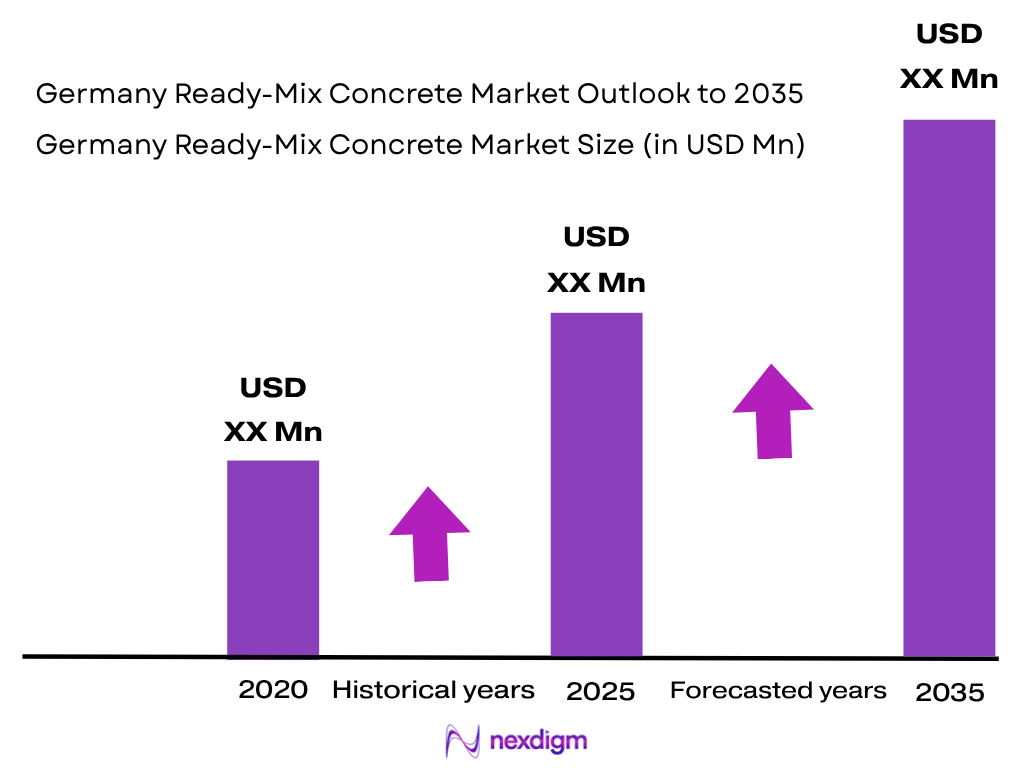
The Germany Ready-Mix Concrete Market is valued at approximately USD ~15.6 billion in 2024, supported by continuous demand from infrastructure development, commercial construction, industrial facilities, and renovation activities. The market recorded revenue of around USD 14.7 billion in 2023, reflecting the importance of ready-mix concrete in Germany’s construction ecosystem. Infrastructure projects, urban redevelopment, and adoption of sustainable concrete technologies are supporting market expansion. Infrastructure applications remain a major demand contributor due to transportation modernization and public construction activities.
Germany’s ready-mix concrete demand is concentrated in major construction hubs including Berlin, Munich, Frankfurt, Hamburg, Stuttgart, and North Rhine-Westphalia, where commercial developments, transportation projects, industrial facilities, and urban redevelopment activities generate significant concrete consumption. Berlin benefits from public infrastructure and residential development requirements, while Bavaria and Baden-Württemberg are supported by industrial construction and manufacturing investments. North Rhine-Westphalia remains important due to its dense urban network and infrastructure requirements. The regional construction ecosystem is supported by established ready-mix producers, concrete plants, and logistics networks.
Market Segmentation
By Concrete Type
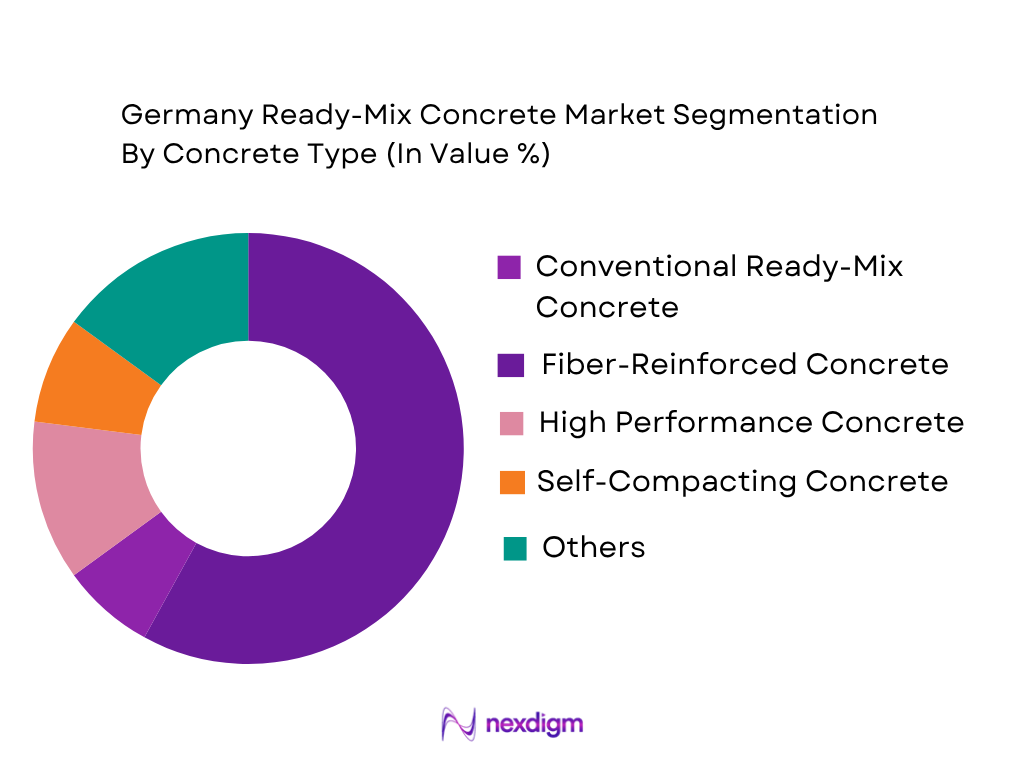
The Germany Ready-Mix Concrete Market is segmented by concrete type into conventional ready-mix concrete, high-performance concrete, self-compacting concrete, fiber-reinforced concrete, ultra-high-performance concrete, lightweight concrete, recycled aggregate concrete, and low-carbon ready-mix concrete. Conventional ready-mix concrete represents the dominant segment with a market share of ~XX% in 2024 due to its extensive usage across residential buildings, commercial structures, infrastructure projects, and industrial facilities. The segment benefits from established production networks, standardized construction practices, and widespread contractor familiarity. Conventional ready-mix concrete continues to be preferred for large-volume applications because of its reliability, availability, and compatibility with existing construction methods. However, demand for low-carbon and specialized concrete solutions is increasing as Germany’s construction industry focuses on sustainability, carbon reduction, and improved building performance.
By Application
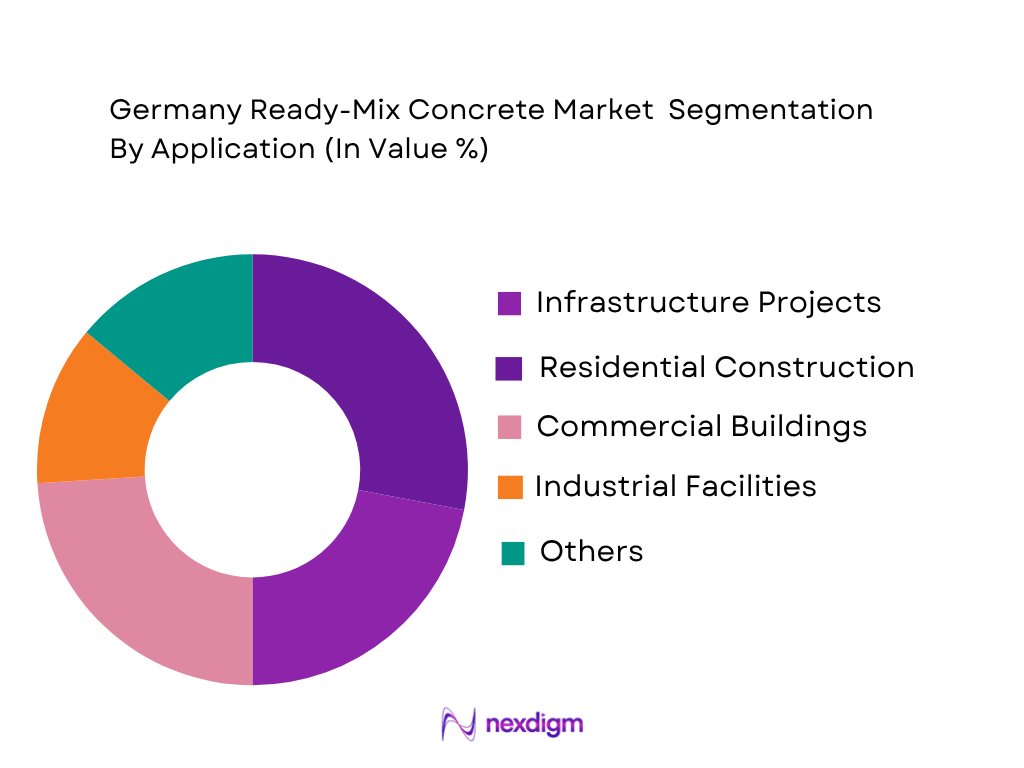
The Germany Ready-Mix Concrete Market is segmented by application into residential construction, commercial construction, industrial construction, road construction, bridge and highway infrastructure, railway infrastructure, airport construction, energy infrastructure, public infrastructure projects, and renovation applications. Infrastructure construction represents the dominant application segment with a market share of ~XX% in 2024 due to Germany’s requirement for transportation modernization, bridge rehabilitation, railway upgrades, and public infrastructure improvements. Ready-mix concrete is widely used in infrastructure projects because of its consistent quality, controlled production process, and suitability for large-scale construction activities. Government investment in transportation networks and modernization of aging infrastructure continues to support demand. Additionally, increasing adoption of durable and sustainable concrete mixes is strengthening ready-mix usage in infrastructure projects.
Competitive Landscape
The Germany Ready-Mix Concrete Market is characterized by the presence of global construction material companies and regional ready-mix producers. Major players compete through production capacity expansion, sustainable concrete solutions, regional plant networks, digital logistics systems, and infrastructure project participation. The market includes companies such as Heidelberg Materials, Holcim, Cemex, Dyckerhoff, and regional concrete suppliers that serve commercial, residential, and infrastructure customers.
| Company | Establishment Year | Headquarters | Ready-Mix Plant Network | Low-Carbon Concrete Capability | Infrastructure Project Presence | Product Portfolio | Digital Concrete Solutions |
| Heidelberg Materials AG | 1874 | Heidelberg, Germany | ~ | ~ | ~ | ~ | ~ |
| Holcim Deutschland GmbH | 1912 | Zug, Switzerland | ~ | ~ | ~ | ~ | ~ |
| Cemex Deutschland AG | 1906 | Monterrey, Mexico | ~ | ~ | ~ | ~ | ~ |
| Dyckerhoff GmbH | 1864 | Wiesbaden, Germany | ~ | ~ | ~ | ~ | ~ |
| SCHWENK Zement GmbH & Co. KG | 1847 | Ulm, Germany | ~ | ~ | ~ | ~ | ~ |
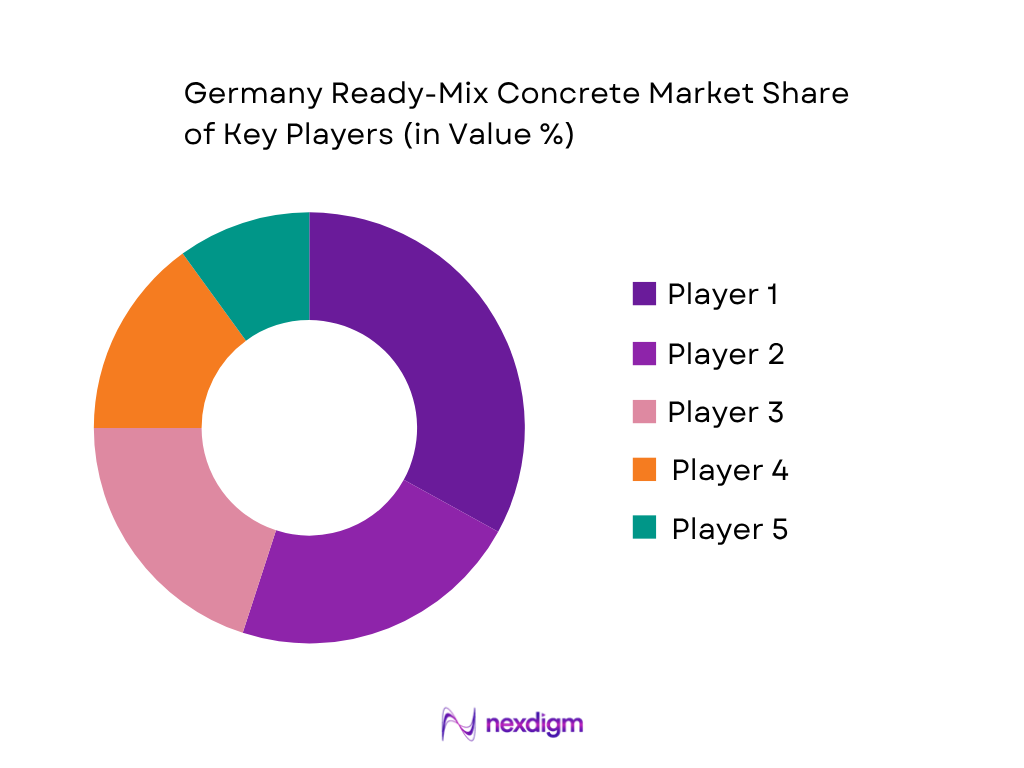
Germany Ready-Mix Concrete Market Analysis
Growth Drivers
Infrastructure Modernization Programs
Germany’s infrastructure modernization activities are supporting demand for ready-mix concrete through transportation upgrades, bridge rehabilitation, railway expansion, and public construction projects. The country has more than 13,000 km of federal motorways and approximately 38,000 km of federal highways, creating continuous requirements for durable concrete structures and repair activities. The Federal Ministry for Digital and Transport has allocated significant resources toward improving transport infrastructure, including railway modernization and road maintenance programs. Germany’s infrastructure investment requirements are further supported by the country’s construction sector contribution of approximately 5.9% of GDP, according to World Bank economic structure indicators. Ready-mix concrete suppliers benefit from these projects due to the material’s suitability for large-volume applications, consistent quality, and compatibility with automated construction processes. Increasing focus on resilient infrastructure, climate adaptation measures, and replacement of aging structures is encouraging the use of high-performance and sustainable concrete mixes. Additionally, infrastructure projects related to renewable energy expansion, including wind turbine foundations and grid infrastructure, are creating additional demand for specialized ready-mix concrete solutions.
Sustainable Concrete Adoption and Low-Carbon Construction Requirements
The transition toward sustainable construction practices is increasing adoption of low-carbon ready-mix concrete solutions in Germany. The construction sector is under pressure to reduce emissions because cement production contributes significantly to industrial carbon emissions. Germany recorded approximately 746 million tonnes of greenhouse gas emissions in 2023, according to the German Environment Agency, creating regulatory pressure across carbon-intensive industries including construction materials. The country’s Climate Protection Act targets climate neutrality by 2045, encouraging construction companies and material suppliers to adopt environmentally efficient solutions. Ready-mix concrete producers are responding through increased use of supplementary cementitious materials, recycled aggregates, and optimized concrete formulations. Germany’s recycling infrastructure processes more than 200 million tonnes of construction and demolition waste annually, supporting circular construction practices and recycled concrete applications. Demand for Environmental Product Declarations, green building certifications, and sustainable procurement standards is encouraging developers to select concrete suppliers with lower-carbon production capabilities. This shift is supporting innovation in low-emission concrete mixes, digital batching systems, and resource-efficient ready-mix production technologies.
Market Challenges
Weak Residential Construction Activity
Reduced residential construction activity is creating challenges for Germany’s ready-mix concrete market due to declining housing investments, higher financing costs, and slower project approvals. Germany experienced a decline in construction activity as interest rates increased and residential developers postponed projects because of elevated borrowing costs. According to national construction statistics, residential building permits declined significantly compared with previous years, affecting demand for concrete used in apartment buildings, housing developments, and private construction projects. Germany’s population reached approximately 84.7 million people in 2024, according to World Bank demographic data, creating long-term housing demand; however, short-term affordability pressures have slowed new residential development. Rising construction costs, stricter energy efficiency requirements, and limited availability of construction labor have further affected project execution timelines. Ready-mix concrete suppliers dependent on residential construction volumes face pressure from lower order frequency and increased competition among producers. The challenge is particularly relevant for smaller regional concrete companies with limited exposure to infrastructure and industrial projects. Market participants are increasingly diversifying toward infrastructure, renovation, and sustainable construction applications to reduce dependency on residential building activity.
Carbon Emission Reduction Requirements and Production Constraints
Increasing carbon reduction requirements are creating operational challenges for ready-mix concrete manufacturers because concrete production relies heavily on cement, one of the most emission-intensive construction materials. Germany’s industrial sector continues to face regulatory pressure under European Union climate policies, including requirements to reduce greenhouse gas emissions and improve resource efficiency. The European Union has committed to reducing net greenhouse gas emissions by at least 55% by 2030 compared with 1990 levels, influencing construction material production standards. German manufacturers are required to invest in lower-emission production methods, alternative binders, recycled materials, and energy-efficient batching operations. Cement production remains a significant challenge because clinker manufacturing requires high-temperature processing and substantial energy consumption. Additionally, Germany consumed approximately 11.8 million tonnes of cement in 2023, reflecting the scale of material usage requiring decarbonization efforts. Ready-mix concrete companies face challenges related to maintaining performance standards while reducing emissions. Transitioning toward low-carbon concrete also requires investment in technology, supply chain adjustments, and customer education regarding alternative concrete formulations.
Market Opportunities
Low-Carbon Ready-Mix Concrete Solutions and Sustainable Building Certifications
The increasing adoption of sustainable construction standards is creating opportunities for low-carbon ready-mix concrete solutions across Germany’s building sector. Developers, infrastructure authorities, and contractors are increasingly prioritizing materials that support environmental compliance and green building certifications. Germany has more than 2,000 certified sustainable buildings under established green building assessment systems, reflecting growing demand for environmentally responsible construction practices. Ready-mix concrete manufacturers can capitalize on this trend by developing concrete mixes using recycled aggregates, reduced clinker content, alternative binders, and carbon-reduction technologies. Government initiatives supporting climate-neutral construction are encouraging the use of sustainable materials in public and private projects. Germany’s circular economy framework processes large volumes of construction waste, with construction and demolition waste accounting for more than 50% of total waste generation by mass, creating opportunities for recycled concrete applications. Sustainable ready-mix products can support infrastructure renovation, commercial redevelopment, and energy-efficient building projects. Companies investing in low-emission production capabilities, digital material tracking, and environmental certification processes are positioned to address evolving procurement requirements from developers and public authorities.
Digital Concrete Monitoring Systems and Smart Batching Plant Technologies
Digitalization of ready-mix concrete production presents opportunities for improving operational efficiency, quality control, and logistics management in Germany. Construction companies are increasingly adopting digital technologies to monitor concrete performance, optimize delivery schedules, and reduce material waste. Germany’s manufacturing and industrial ecosystem has a strong foundation for digital transformation, with the country investing heavily in Industry 4.0 technologies across industrial sectors. The German economy allocated significant resources toward digital infrastructure development, with broadband coverage reaching more than 90% of households with access to high-speed internet services, supporting adoption of connected construction technologies. Smart batching plants equipped with automated monitoring systems can improve consistency in concrete production by tracking moisture levels, material composition, and mixing parameters in real time. Ready-mix suppliers can also use digital fleet management systems to optimize transportation routes and reduce delivery delays. Increasing complexity of infrastructure projects and demand for quality assurance are encouraging contractors to collaborate with digitally enabled concrete suppliers. These technologies provide opportunities for manufacturers to differentiate through improved reliability, reduced operational losses, and enhanced customer service capabilities.
Future Outlook
Over the next decade, the Germany Ready-Mix Concrete Market is expected to experience steady transformation driven by infrastructure modernization, sustainable construction requirements, and increasing adoption of low-carbon concrete technologies. Demand will be influenced by railway upgrades, bridge rehabilitation programs, renewable energy infrastructure, and commercial redevelopment activities. Manufacturers are expected to focus on carbon-efficient production, recycled materials, and digital monitoring systems to improve operational efficiency. The transition toward sustainable construction practices will create opportunities for advanced ready-mix concrete solutions.
Major Players
- Heidelberg Materials AG
- Holcim Deutschland GmbH
- Cemex Deutschland AG
- Dyckerhoff GmbH
- SCHWENK Zement GmbH & Co. KG
- Thomas Beton GmbH
- Berger Beton GmbH
- Max Bögl Group
- TBG Transportbeton GmbH
- Spenner GmbH & Co. KG
- Beton Kemmler GmbH
- Elbek Beton GmbH & Co. KG
- Godelmann GmbH & Co. KG
- Basalt-Actien-Gesellschaft
- STRABAG SE
Key Target Audience
- Ready-Mix Concrete Manufacturers
- Cement and Aggregate Producers
- Construction Contractors and Engineering Companies
- Real Estate Developers and Property Companies
- Infrastructure Development Companies
- Investments and Venture Capitalist Firms
- Government and Regulatory Bodies (Federal Ministry for Housing, Urban Development and Building, Federal Ministry for Digital and Transport)
- Building Material Suppliers and Distribution Companies
Research Methodology
Step 1: Identification of Key Variables
The initial phase involves developing a comprehensive ecosystem map covering raw material suppliers, ready-mix producers, construction companies, infrastructure developers, and regulatory stakeholders within the Germany Ready-Mix Concrete Market. Secondary research is conducted to identify important market variables including production capacity, concrete consumption patterns, application demand, sustainability adoption, and regional construction activity.
Step 2: Market Analysis and Construction
This phase focuses on collecting and analyzing historical market information related to ready-mix concrete production, application demand, plant capacity, and construction sector performance. Supply-side and demand-side assessments are conducted to evaluate concrete consumption across residential, commercial, industrial, and infrastructure segments.
Step 3: Hypothesis Validation and Expert Consultation
Market assumptions are validated through discussions with industry professionals including concrete manufacturers, construction companies, material suppliers, and project stakeholders. These consultations provide operational insights related to production processes, technology adoption, customer requirements, and competitive positioning.
Step 4: Research Synthesis and Final Output
The final stage integrates collected information from industry participants, market databases, and construction ecosystem analysis. Data is triangulated to create a comprehensive assessment of market size, segmentation, competitive landscape, future opportunities, and strategic developments within the Germany Ready-Mix Concrete Market.

- Executive Summary
- Research Methodology (Market Definitions and Assumptions, Germany Ready-Mix Concrete Market Classification, Market Sizing Approach, Top-Down Analysis, Bottom-Up Analysis, Demand-Side Assessment, Supply-Side Assessment, Ready-Mix Concrete Production Assessment, Concrete Plant Capacity Analysis, Raw Material Consumption Assessment, Cement and Aggregate Supply Mapping, Construction Activity Assessment, Infrastructure Project Pipeline Analysis, Primary Industry Interviews, Data Triangulation, Forecasting Framework, Limitations and Future Conclusions)

- Definition and Scope
- Germany Ready-Mix Concrete Industry Evolution
- Ready-Mix Concrete Value Chain Analysis
- Ready-Mix Concrete Supply Chain Analysis

- Growth Drivers (Infrastructure Modernization Programs, Renewable Energy Infrastructure Expansion, Residential Construction Demand, Commercial Building Development, Sustainable Concrete Adoption, Low-Carbon Construction Requirements, Urban Redevelopment Activities, Railway Infrastructure Investments, Digitalization of Concrete Production, Growth of Precast Construction)
- Market Challenges (Weak Residential Construction Activity, High Cement Energy Costs, Carbon Emission Reduction Requirements, Raw Material Availability Constraints, Skilled Labor Shortages, Rising Transportation Costs, Strict Environmental Regulations, Construction Permit Delays, Volatility in Aggregate Prices, Competition from Alternative Construction Materials)
- Market Opportunities (Low-Carbon Ready-Mix Concrete Solutions, Carbon Capture Concrete Technologies, Recycled Aggregate Integration, Infrastructure Renovation Projects, Sustainable Building Certifications, Digital Concrete Monitoring Systems, Smart Batching Plant Technologies, Renewable Energy Construction Projects, Modular Construction Growth, Circular Concrete Economy Development)
- Market Trends (Green Concrete Adoption, Electrification of Concrete Plants, Automated Batching Systems, Digital Fleet Management, Carbon-Neutral Concrete Development, Increased Use of Recycled Aggregates, Self-Healing Concrete Technologies, Smart Construction Monitoring, Lightweight Concrete Innovation, Ready-Mix Supply Chain Optimization)
- Government Regulations and Standards (DIN EN 206 Concrete Requirements, DIN 1045 Structural Concrete Standards, European Construction Product Regulation, German Climate Protection Requirements, Environmental Product Declaration Requirements, Recycling Construction Material Regulations, Building Energy Efficiency Requirements, Infrastructure Quality Standards, CO₂ Reduction Targets, Circular Economy Regulations)
- SWOT Analysis
- Porter’s Five Forces Analysis
- PESTLE Analysis
- Stakeholder Ecosystem
- Competition Ecosystem

- By Market Value (2020-2025)
- By Ready-Mix Concrete Production Volume (2020-2025)
- By Concrete Delivery Volume (2020-2025)
- By Cubic Meter Consumption (2020-2025)
- By Average Selling Price per Cubic Meter (2020-2025)
- By Commercial Construction Concrete Consumption (2020-2025)

- By Concrete Type (In Value %)
Conventional Ready-Mix Concrete
High-Performance Concrete
Self-Compacting Concrete
Fiber-Reinforced Concrete
Ultra-High-Performance Concrete
Lightweight Concrete
Recycled Aggregate Concrete
Low-Carbon Ready-Mix Concrete
Sustainable Concrete Mixes - By Application (In Value %)
Residential Building Construction
Commercial Building Construction
Industrial Construction
Road Construction
Bridge and Highway Infrastructure
Railway Infrastructure
Airport Construction
Energy Infrastructure
Public Infrastructure Projects
Renovation and Repair Applications - By End-Use Sector (In Value %)
Residential Real Estate
Commercial Offices
Retail and Hospitality Buildings
Industrial Facilities
Manufacturing Plants
Transportation Infrastructure
Energy and Utility Projects
Government and Public Buildings
Healthcare Facilities
Educational Institutions - By Construction Method (In Value %)
Cast-in-Place Concrete
Precast Concrete Applications
Modular Construction
Tunnel Construction
Large Infrastructure Projects
High-Rise Building Construction
Underground Construction
Repair and Rehabilitation Projects - By Delivery Mode (In Value %)
Central Mixing Plants
Transit Mixed Concrete Plants
Mobile Concrete Plants
On-Site Concrete Production
Concrete Pumping Services
Direct Construction Site Delivery - By Region (In Value %)
North Rhine-Westphalia
Bavaria
Baden-Württemberg
Lower Saxony
Hesse
Berlin
Hamburg
Saxony
Rhineland-Palatinate
Rest of Germany

- Market Share of Major Players (By Germany Revenue, Ready-Mix Production Capacity, Concrete Plant Network, Regional Presence, Product Portfolio, Low-Carbon Concrete Capability, Infrastructure Project Portfolio, Customer Base, Digital Concrete Solutions, Logistics Capability, Technical Support Capability)
- Cross Comparison Parameters (Concrete Production Capacity, Number of Ready-Mix Plants, Geographic Distribution Network, Low-Carbon Concrete Portfolio, Recycled Aggregate Usage Capability, High-Performance Concrete Expertise, Digital Batching and Logistics Systems, Infrastructure Project Experience)
- SWOT Analysis of Major Players
- Detailed Profiles of Major Companies
Heidelberg Materials AG
Dyckerhoff GmbH
Cemex Deutschland AG
Holcim Deutschland GmbH
STRABAG SE
HOCHTIEF AG
Buzzi Unicem Deutschland GmbH
Thomas Beton GmbH
Elbek Beton GmbH & Co. KG
Kieserling Baustoffe GmbH
Basalt-Actien-Gesellschaft (BAG)
Godelmann GmbH & Co. KG
Beton Kemmler GmbH
TBG Transportbeton GmbH
Spenner GmbH & Co. KG

- Construction Contractor Requirement Assessment
- Residential Developer Demand Analysis
- Commercial Real Estate Concrete Requirement Analysis
- Infrastructure Project Concrete Consumption Analysis
- Industrial Construction Application Assessment
- Renewable Energy Infrastructure Requirement Analysis
- Railway and Transportation Infrastructure Assessment
- Public Construction Project Demand Analysis

- By Market Value (2026-2035)
- By Ready-Mix Concrete Production Volume (2026-2035)
- By Concrete Delivery Volume (2026-2035)
- By Cubic Meter Consumption (2026-2035)
- By Average Selling Price per Cubic Meter (2026-2035)
- By Commercial Construction Concrete Consumption (2026-2035)


 Request a Sample
 Ask for Customization
 Get a Quote
 Enquire Now