
 Download PDF
Market Overview
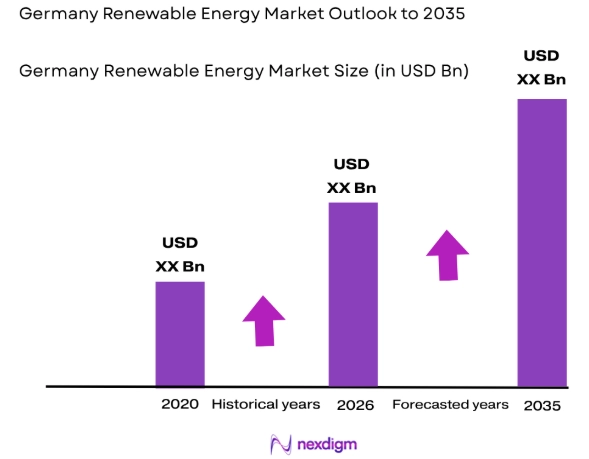
The Germany Renewable Energy market is expected to reach approximately USD ~ billion based on a recent historical assessment, driven by the country’s energy transition policy, known as Energiewende. Germany has committed to reducing carbon emissions and increasing the share of renewable energy in its overall energy mix. The market growth is propelled by governmental incentives for clean energy production, technological advancements in renewable energy technologies, and the rising demand for sustainable energy solutions across industries and residential sectors.
Germany’s dominant regions for renewable energy development include Bavaria, Brandenburg, and Lower Saxony, all of which are known for their favorable natural conditions for wind and solar energy generation. These regions benefit from strong infrastructure, government support, and a skilled workforce, making them central to Germany’s renewable energy push. With increased investments and the expansion of both wind and solar farms, these areas are key drivers of Germany’s renewable energy success.
Market Segmentation
By Energy Source
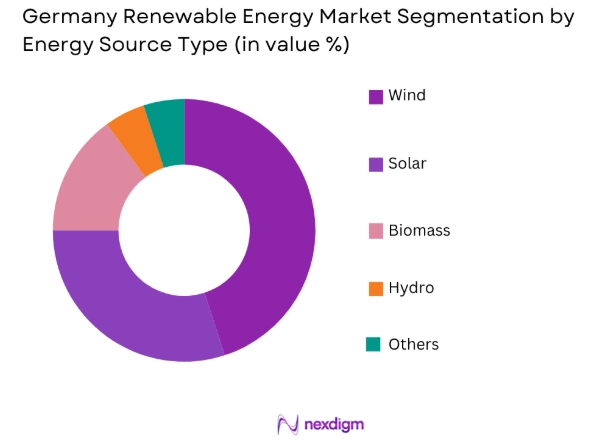
The Germany Renewable Energy market is segmented by energy source into wind, solar, biomass, hydro, and others. Recently, wind energy has dominated the market due to its high capacity factor and the country’s large investments in offshore wind farms. Germany’s geographical location provides optimal conditions for wind energy generation, especially in coastal areas such as the North Sea. Offshore wind projects, in particular, benefit from favorable policies, which include subsidies and guaranteed feed-in tariffs. This has helped wind energy emerge as a dominant player in the country’s renewable energy sector, with significant expansion projected in the coming years.
By End-User
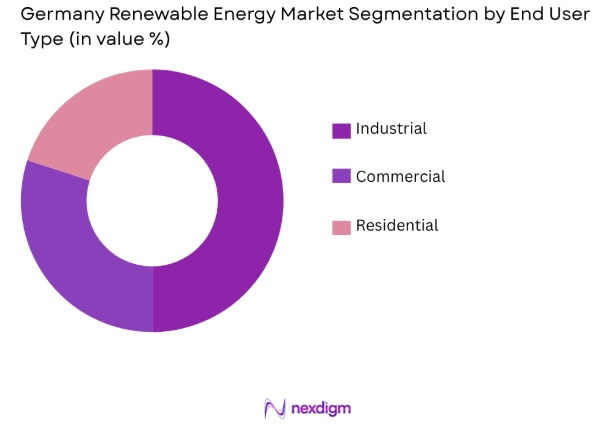
The Germany Renewable Energy market is segmented by end-user into residential, commercial, and industrial sectors. Recently, the industrial sector has been the dominant sub-segment, driven by the increasing need for energy security, cost reduction, and alignment with sustainability goals. As Germany works toward carbon neutrality, industrial players have been at the forefront of adopting renewable energy solutions, including solar and wind. The adoption of renewable energy solutions in manufacturing, data centers, and heavy industries is being encouraged by government incentives and tax benefits, helping the industrial sector lead in terms of market share.
Competitive Landscape
The competitive landscape of the Germany Renewable Energy market is characterized by both large international players and local companies, all vying for market share in a rapidly growing sector. The market has seen increasing consolidation, with major players acquiring smaller companies to expand their portfolios and increase market reach. Technological innovations in solar and wind energy, along with strategic government support, continue to drive competition. These companies are working to reduce costs, increase efficiency, and maximize the integration of renewable energy into Germany’s power grid.
| Company Name | Establishment Year | Headquarters | Technology Focus | Market Reach | Key Products | Revenue (USD Billion) | Market-Specific Parameter |
| Siemens Gamesa | 1976 | Zamudio, Spain | ~ | ~ | ~ | ~ | ~ |
| Vestas | 1945 | Aarhus, Denmark | ~ | ~ | ~ | ~ | ~ |
| Enel Green Power | 2008 | Rome, Italy | ~ | ~ | ~ | ~ | ~ |
| First Solar | 1999 | Tempe, USA | ~ | ~ | ~ | ~ | ~ |
| RWE | 1898 | Essen, Germany | ~ | ~ | ~ | ~ | ~ |
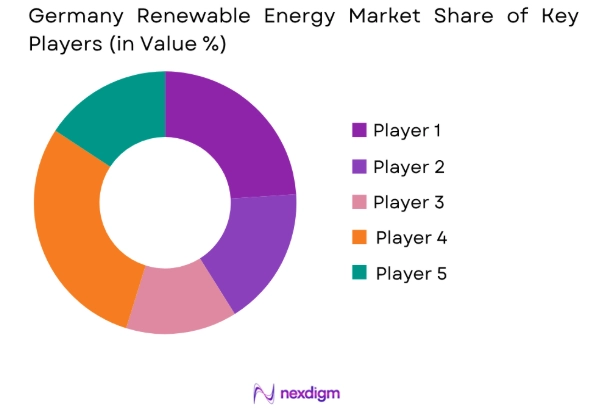
Germany Renewable Energy Market Analysis
Growth Drivers
Government Support for Renewable Energy
The strong government support for renewable energy adoption in Germany is a key growth driver. The Energiewende policy, which aims to reduce Germany’s carbon emissions by 80-95% by 2050 and achieve 80% of electricity from renewable sources by 2050, provides a solid foundation for renewable energy development. This policy has been backed by substantial subsidies, tax incentives, and feed-in tariffs for wind, solar, and other renewable technologies. These incentives make it more attractive for developers and investors to initiate renewable energy projects, fostering market growth. In addition, Germany’s commitment to the European Green Deal and the decarbonization of its energy sector has accelerated the development of renewables, further driving investments in wind, solar, and biomass energy.
Technological Advancements
Technological advancements in energy production and storage technologies are another key driver of the Germany Renewable Energy market. The continuous improvement of wind turbine efficiency, solar panel technology, and energy storage solutions has made renewable energy more affordable and reliable. Innovations in solar photovoltaic cells, including bifacial panels, and improvements in offshore wind turbine design have increased the overall capacity of renewable energy installations. Furthermore, advancements in battery storage technology are addressing the intermittency issues of renewable energy, allowing for more stable and reliable grid operations. These advancements reduce the levelized cost of energy (LCOE) and enable renewables to be more competitive with traditional energy sources, driving further adoption across Germany.
Market Challenges
Regulatory and Permitting Barriers
Despite the government’s strong support, regulatory and permitting challenges continue to hinder the growth of renewable energy projects in Germany. The approval process for large-scale renewable energy projects can be lengthy and complicated. Local zoning regulations, environmental assessments, and grid connection permits often delay the development of wind and solar projects. These delays create uncertainty for developers and increase costs, which can undermine the financial viability of projects. Additionally, inconsistencies in regional policies and regulations further complicate the permitting process, making it difficult for developers to navigate the regulatory landscape and achieve timely approvals.
Grid Integration Challenges
The integration of renewable energy into Germany’s power grid presents another significant challenge. The intermittency of renewable energy sources like wind and solar requires a flexible and modernized grid capable of balancing supply and demand in real-time. Despite significant investments in grid infrastructure, the integration of large-scale renewable energy production still faces obstacles, such as grid congestion and limited storage capacity. Energy storage solutions, such as batteries and pumped hydro storage, are essential to overcoming these challenges, but further investment is needed to scale up these technologies. Without efficient grid integration, the full potential of renewable energy cannot be realized, hindering the growth of the sector.
Opportunities
Offshore Wind Expansion
The expansion of offshore wind energy represents a significant opportunity for growth in Germany’s renewable energy sector. Germany’s North Sea and Baltic Sea regions offer some of the best conditions for offshore wind energy production, with high wind speeds and proximity to existing infrastructure. The German government has set ambitious targets for offshore wind energy, aiming for 20 GW of offshore wind capacity by 2030. This presents significant opportunities for offshore wind developers, EPC contractors, and technology providers. As technology improves and costs decline, offshore wind projects will become even more competitive, driving growth in this sector and making it a key contributor to Germany’s renewable energy future.
Solar Power Integration with Storage
The growing demand for solar power, combined with energy storage solutions, offers substantial opportunities in the Germany Renewable Energy market. Energy storage systems are crucial for overcoming the intermittency challenges of solar energy, ensuring a stable and reliable power supply. Germany’s push for a carbon-neutral economy by 2050 includes a focus on increasing the share of solar energy in its power mix. As solar panel costs continue to decrease and storage technologies improve, the integration of solar energy with storage solutions will become more widespread, creating new opportunities for solar EPC contractors and energy storage developers. This opportunity is particularly significant in residential and commercial sectors where energy independence and lower electricity costs are highly attractive.
Future Outlook
The future of Germany’s renewable energy market looks highly promising, with strong growth expected in both wind and solar energy sectors. The continued decline in technology costs, coupled with supportive government policies, will drive the expansion of renewable energy projects across the country. Additionally, the development of energy storage solutions and improved grid integration will address the challenges of intermittency, ensuring that renewable energy can play a major role in Germany’s energy future. The next five years will see an increased focus on offshore wind energy and solar-storage hybrid systems, further advancing Germany’s renewable energy goals.
Major Players
- Siemens Gamesa
- Vestas
- Enel Green Power
- First Solar
- RWE
- Nordex
- Iberdrola
- Ørsted
- Acciona
- GE Renewable Energy
- JinkoSolar
- Trina Solar
- SunPower Corporation
- BayWa r.e.
- E.ON
Key Target Audience
- Investments and venture capitalist firms
- Government and regulatory bodies
- Energy producers and developers
- Large-scale energy consumers
- Independent power producers
- Renewable energy equipment manufacturers
- Solar EPC solution providers
Research Methodology
Step 1: Identification of Key Variables
Identification of key market drivers, challenges, and opportunities affecting the Germany Renewable Energy market. This includes regulatory policies, technological innovations, and economic trends.
Step 2: Market Analysis and Construction
Detailed market analysis, including segmentation by energy source, end-user, and technology, is conducted to understand the dynamics of the renewable energy market in Germany.
Step 3: Hypothesis Validation and Expert Consultation
Consultation with industry experts, developers, and government bodies ensures the validity of market assumptions. Primary and secondary research are conducted to gather insights into the market.
Step 4: Research Synthesis and Final Output
The findings from the research process are synthesized into a comprehensive report, offering in-depth insights into the Germany Renewable Energy market and strategic opportunities.

- Executive Summary
- Research Methodology (Definitions, Scope, Industry Assumptions, Market Sizing Approach, Primary & Secondary Research Framework, Data Collection & Verification Protocol, Analytic Models & Forecast Methodology, Limitations & Research Validity Checks)

- Market Definition and Scope
- Value Chain & Stakeholder Ecosystem
- Regulatory / Certification Landscape
- Sector Dynamics Affecting Demand

- Growth Drivers
Government Support and Incentives for Renewable Energy
Technological Advancements in Energy Generation
Rising Demand for Clean Energy Solutions - Market Challenges
Intermittency and Storage Challenges for Renewable Energy
High Capital Investment for Infrastructure
Regulatory and Permitting Delays - Market Opportunities
Expansion of Offshore Wind Energy
Development of Energy Storage Solutions
Growth in Residential Solar Installations - Trends
Increasing Adoption of Energy Storage Technologies
Integration of Renewable Energy with Smart Grids - Government Regulations
- SWOT Analysis
- Porter’s Five Forces

- By Market Value, 2020-2025
- By Installed Units, 2020-2025
- By Average System Price, 2020-2025
- By System Complexity Tier, 2020-2025

- By System Type (In Value%)
Solar Energy Systems
Wind Energy Systems
Biomass Energy Systems
Hydropower Systems
Geothermal Energy Systems - By Platform Type (In Value%)
Onshore Platforms
Offshore Platforms
Ground-mounted Platforms
Rooftop Platforms - By Fitment Type (In Value%)
Fixed Solutions
Tracking Solutions
Hybrid Solutions
Modular Solutions - By End User Segment (In Value%)
Private Sector
Government Agencies
Energy Utilities

- Market Share Analysis
- Cross Comparison Parameters (System Type, Platform Type, Procurement Channel, End User Segment, Fitment Type, Technological Integration, Installation Scale)
- SWOT Analysis of Key Competitors
- Pricing & Procurement Analysis
- Key Players
Siemens Gamesa
Nordex
Vestas
Enel Green Power
RWE
SMA Solar Technology
First Solar
Trina Solar
JinkoSolar
E.ON
Vattenfall
BayWa r.e.
Sungrow Power
Suzlon Energy
Senvion

- Government’s Role in Renewable Energy Policies
- Rising Private Sector Investment in Renewable Projects
- Increasing Adoption in Energy Utilities
- Renewable Energy for Decentralized Power Systems

- Forecast Market Value, 2026-2035
- Forecast Installed Units, 2026-2035
- Price Forecast by System Tier, 2026-2035
- Future Demand by Platform, 2026-2035


 Request a Sample
 Ask for Customization
 Get a Quote
 Enquire Now