
 Download PDF
 Download PDF
Market Overview
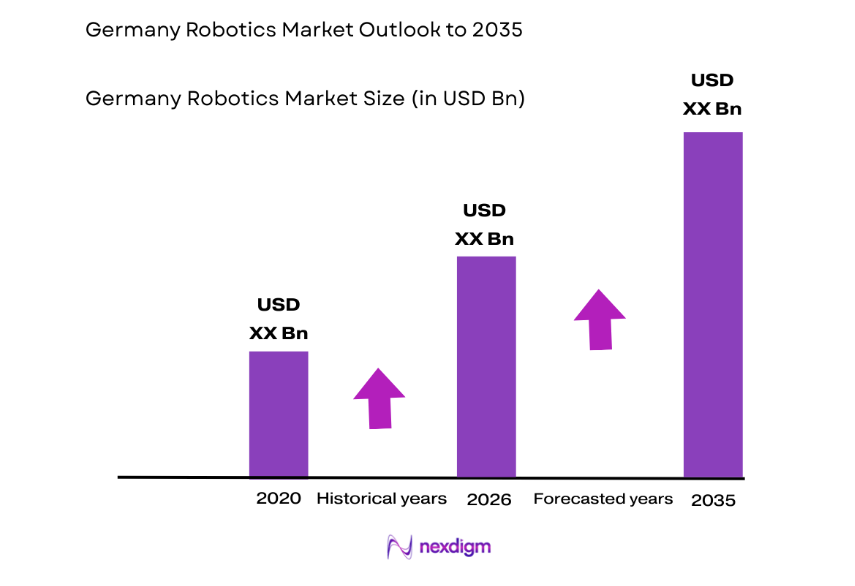
The robotics market in Germany is experiencing substantial growth, with its market size based on recent historical assessments projected to reach USD ~ billion. This expansion is largely driven by the increasing adoption of automation across various industries such as automotive, healthcare, and logistics. The demand for advanced robotic systems is fueled by technological advancements, a shift towards Industry 4.0, and the need for increased operational efficiency, precision, and cost savings across sectors. In addition, Germany’s strong industrial base and high-tech manufacturing sector further contribute to the growing robotics market.
Germany, as Europe’s largest economy, is home to key players and a well-established manufacturing infrastructure. Major cities like Stuttgart, Munich, and Frankfurt have become hubs for robotics development, driven by strong industrial and research institutions. The country’s dominance in automotive manufacturing, coupled with advancements in industrial automation, positions it as a global leader in robotics adoption. Strategic investments from both the government and private sectors have ensured Germany’s position as a frontrunner in robotic technologies, fostering growth within the robotics market.
Market Segmentation
By Product Type
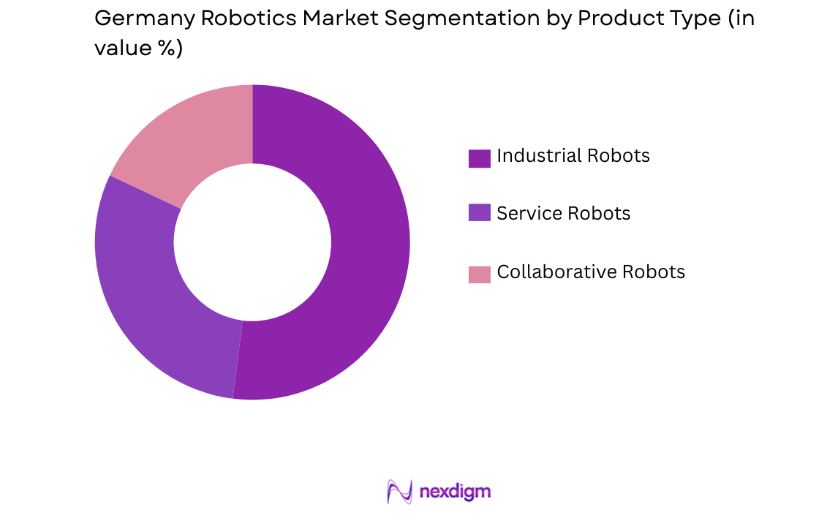
The Germany robotics market is segmented by product type into industrial robots, service robots, and collaborative robots (cobots). Recently, industrial robots have held a dominant market share due to the ongoing need for automation in sectors such as automotive, electronics, and manufacturing. The high demand for precision and the need to reduce operational costs in production lines have driven the growth of industrial robots. Moreover, the continuous advancements in AI and machine learning have made industrial robots even more efficient and adaptable, strengthening their position in the market.
By Platform Type
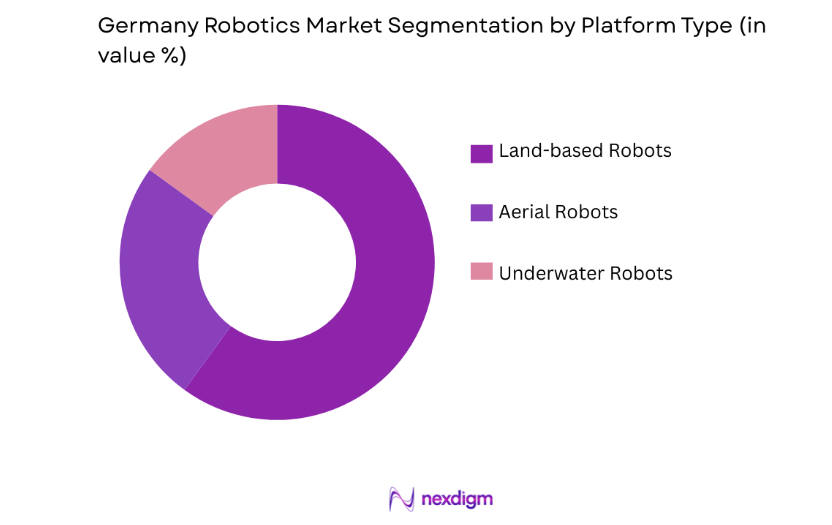
The robotics market in Germany is segmented by platform type into land-based, aerial, and underwater robots. Among these, land-based robots dominate the market share, driven by their applications in industrial settings, such as manufacturing, warehouse automation, and logistics. The continued growth of e-commerce and the push for smart manufacturing solutions have led to an increasing reliance on land-based robots for material handling, assembly, and precision tasks, cementing their leadership in the market.
Competitive Landscape
The robotics market in Germany is highly competitive, with a significant level of consolidation among leading players. These companies are at the forefront of technological innovation and hold substantial influence over the market’s direction. Major players in the market are continuously involved in research and development to create cutting-edge robotics solutions for various industries, with a focus on automation, artificial intelligence, and machine learning. The competitive landscape is characterized by strategic partnerships, mergers, and acquisitions, enabling companies to expand their technological capabilities and market reach.
| Company Name | Establishment Year | Headquarters | Technology Focus | Market Reach | Key Products | Revenue (USD) | Robotics Applications |
| KUKA | 1898 | Augsburg, Germany | ~ | ~ | ~ | ~ | ~ |
| FANUC | 1956 | Neuhausen, Germany | ~ | ~ | ~ | ~ | ~ |
| ABB Robotics | 1988 | Zurich, Switzerland | ~ | ~ | ~ | ~ | ~ |
| Universal Robots | 2005 | Odense, Denmark | ~ | ~ | ~ | ~ | ~ |
| Yaskawa Electric | 1915 | Kitakyushu, Japan | ~ | ~ | ~ | ~ | ~ |
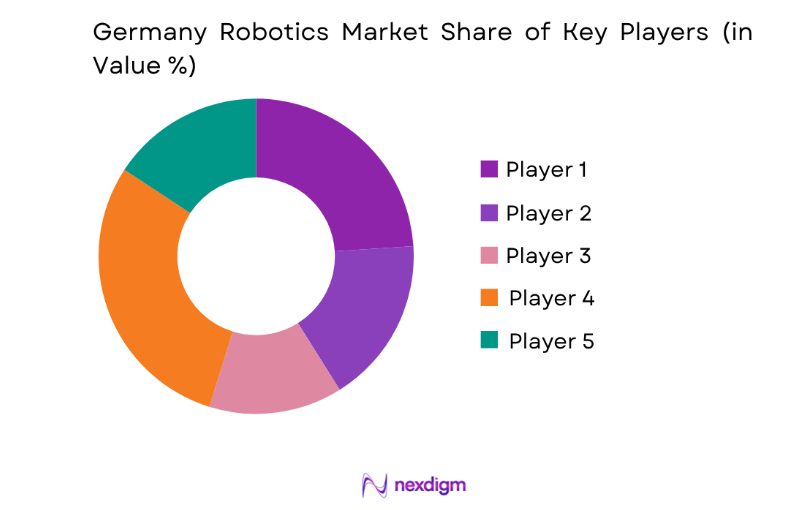
Germany Robotics Market Analysis
Growth Drivers
Technological Advancements in Automation
Technological advancements in automation are a major driver of growth in the robotics market in Germany. Automation technologies, including artificial intelligence, machine learning, and advanced sensors, have greatly enhanced the efficiency and precision of robotic systems. These technologies enable robots to perform more complex tasks, adapt to various environments, and reduce human labor. As industries increasingly adopt Industry 4.0, the demand for robots that can operate autonomously and provide real-time data is rising. Furthermore, the integration of AI with robotics allows for predictive maintenance, reducing downtime and improving operational efficiency across sectors like automotive, electronics, and logistics. The rapid pace of innovation, along with decreasing costs of advanced robotics, makes them more accessible to small and medium-sized enterprises (SMEs), which further contributes to the expansion of the market. The continued development of collaborative robots (cobots) and improved automation systems will drive the robotics market forward, offering better solutions to industries focused on cost reduction, productivity, and competitiveness.
Government Support for Industry Modernization
Government policies and initiatives to modernize industries in Germany are another significant driver of the robotics market. The German government’s focus on smart manufacturing and industrial automation through initiatives such as “Industrie 4.0” and various digitalization programs has encouraged investments in robotic solutions across various sectors. Financial support, tax incentives, and grants have made it easier for companies to implement robotics systems to enhance their productivity and reduce operational costs. The government’s commitment to fostering innovation and the adoption of cutting-edge technologies in manufacturing and other sectors has made Germany a leader in the global robotics market. Furthermore, the emphasis on sustainability and energy efficiency in German manufacturing processes has led to the integration of eco-friendly robotics systems that contribute to long-term environmental and economic sustainability. The continued growth of these government-backed programs will further fuel the adoption of robotics in Germany, especially in industries seeking to enhance their automation capabilities.
Market Challenges
High Initial Investment Costs
One of the key challenges facing the German robotics market is the high initial investment required to acquire and implement robotic systems. While the long-term benefits of robotics, such as cost savings, enhanced productivity, and reduced labor costs, are clear, the upfront costs can be prohibitively expensive for some businesses, especially small and medium-sized enterprises (SMEs). The integration of advanced robotics systems involves substantial expenditures on equipment, infrastructure, and skilled labor to operate the systems effectively. Despite the financial support from the government, the high capital cost remains a barrier for many companies looking to adopt robotics. As the technology continues to evolve and become more cost-effective, this challenge is expected to diminish, but for the time being, the financial burden of implementing robotic systems can hinder market growth. Additionally, the complexity of deploying these systems and the need for regular maintenance and upgrades contribute to the high overall cost of ownership.
Skill Shortages and Labor Challenges
Another significant challenge facing the robotics market in Germany is the shortage of skilled labor capable of designing, implementing, and maintaining advanced robotic systems. While Germany has a strong engineering and technical workforce, the rapidly evolving nature of robotics technology requires continuous education and upskilling to keep up with new developments. Companies in the robotics sector are facing difficulties in recruiting and retaining talent with expertise in AI, machine learning, and robotic system integration. This skill gap poses a risk to the growth of the market, as the demand for highly skilled engineers, software developers, and robotics technicians continues to outstrip the supply. As the robotics market continues to expand, the lack of skilled labor may slow down the pace of innovation and hinder the ability of companies to fully capitalize on the potential of automation. Industry stakeholders must address this issue through training programs, partnerships with educational institutions, and a focus on attracting and retaining talent to ensure the long-term success of the robotics market in Germany.
Opportunities
Advancements in Collaborative Robots (Cobots)
The rise of collaborative robots (cobots) presents a significant opportunity for growth in the robotics market in Germany. Cobots, designed to work alongside human operators in a shared workspace, have gained popularity due to their flexibility, ease of use, and cost-effectiveness. The adoption of cobots in sectors such as manufacturing, logistics, and healthcare is expected to drive market growth in the coming years. These robots are particularly valuable in small and medium-sized enterprises (SMEs) that may not have the resources to deploy traditional industrial robots. Cobots can help these businesses automate tasks such as material handling, assembly, and packaging, increasing productivity without the need for major infrastructure changes. As the technology continues to improve, cobots are becoming more affordable and versatile, with the potential to transform a wide range of industries by enabling businesses to enhance efficiency and competitiveness. The expansion of cobots into new sectors, such as agriculture and construction, will further propel market growth in Germany.
Integration of Artificial Intelligence in Robotics
The integration of artificial intelligence (AI) into robotics systems is another key opportunity for the German robotics market. AI-powered robots can perform tasks with a level of intelligence and adaptability previously unattainable, making them more valuable in complex environments. The application of AI in robotics allows for real-time data processing, predictive maintenance, and decision-making, enabling robots to operate autonomously in dynamic settings. This technology is particularly beneficial in industries such as automotive, logistics, and healthcare, where robots can manage tasks such as assembly, inspection, and diagnostics more efficiently than humans. The continuous development of AI algorithms and machine learning models will drive the adoption of advanced robotics systems in Germany, particularly in industries focused on precision, reliability, and efficiency. As the cost of AI technology decreases, the widespread adoption of AI-integrated robots will create significant opportunities for businesses across various sectors, further expanding the robotics market.
Future Outlook
Over the next five years, the robotics market in Germany is expected to continue its upward trajectory, driven by advancements in automation technologies, AI, and collaborative robots. Technological developments will enhance the efficiency and capabilities of robots, while government support for digitalization and Industry 4.0 initiatives will foster a favorable environment for growth. As more businesses across sectors such as automotive, logistics, and healthcare embrace robotics, the demand for intelligent, flexible, and cost-effective robotic solutions will increase, further propelling market expansion.
Major Players
- KUKA
- FANUC
- ABB Robotics
- Universal Robots
- Yaskawa Electric
- Bosch Rexroth
- Epson Robots
- Mitsubishi Electric
- Kawasaki Robotics
- Comau
- Stäubli Robotics
- Rockwell Automation
- Omron Automation
- Denso Robotics
- Yamaha Robotics
Key Target Audience
- Investments and venture capitalist firms
- Government and regulatory bodies
- Robotics manufacturers
- Industrial automation companies
- Logistics service providers
- Automotive manufacturers
- Healthcare service providers
Research Methodology
Step 1: Identification of Key Variables
Identification of key market drivers, challenges, and technological advancements to focus on during the research phase.
Step 2: Market Analysis and Construction
Building a comprehensive market model using primary and secondary data, including input from industry experts and relevant companies.
Step 3: Hypothesis Validation and Expert Consultation
Validating hypotheses through expert interviews, market surveys, and industry consultations to ensure accuracy.
Step 4: Research Synthesis and Final Output
Synthesizing all research findings into a final market report, analyzing trends, competitive landscape, and market dynamics.

- Executive Summary
- Research Methodology (Definitions, Scope, Industry Assumptions, Market Sizing Approach, Primary & Secondary Research Framework, Data Collection & Verification Protocol, Analytic Models & Forecast Methodology, Limitations & Research Validity Checks)

- Market Definition and Scope
- Value Chain & Stakeholder Ecosystem
- Regulatory / Certification Landscape
- Sector Dynamics Affecting Demand

- Growth Drivers
Expansion of Smart Manufacturing and Industrial Automation
Rising Demand for Robotics in Logistics and Warehousing
Increasing Adoption of Robotics in Healthcare and Medical Applications - Market Challenges
High Initial Capital Investment for Robotics Systems
Limited Availability of Skilled Robotics Technicians and Engineers
Complex Integration with Existing Industrial Systems - Market Opportunities
Growth of Autonomous Mobile Robots in Warehousing and Logistics
Rising Demand for Service Robots in Healthcare and Elderly Care
Development of Collaborative Robots for Small and Medium Enterprises - Trends
Increased Use of Artificial Intelligence and Machine Learning in Robotics
Growing Deployment of Autonomous Robots for Retail and Customer Service - Government Regulations
- SWOT Analysis
- Porter’s Five Forces

- By Market Value, 2020-2025
- By Installed Units, 2020-2025
- By Average System Price, 2020-2025
- By System Complexity Tier, 2020-2025

- By System Type (In Value%)
Industrial Robots
Collaborative Robots
Autonomous Mobile Robots
Service Robots
Humanoid Robots - By Platform Type (In Value%)
Manufacturing Automation Platforms
Logistics and Warehouse Automation Platforms
Healthcare and Medical Robotics Platforms
Security and Surveillance Robotics Platforms - By Fitment Type (In Value%)
New Robotics System Installations
Retrofit Robotics Integration
Fully Autonomous Robotic Systems
Human-Robot Collaborative Systems - By End User Segment (In Value%)
Manufacturing and Industrial Enterprises
Healthcare and Medical Institutions
Logistics and Infrastructure Operators

- Market Share Analysis
- Cross Comparison Parameters (Robot Technology Portfolio, Application Coverage, Integration Capability, Innovation Rate, Market Reach, After-Sales Service, Pricing Strategy)
- SWOT Analysis of Key Competitors
- Pricing & Procurement Analysis
- Key Players
ABB Robotics
KUKA AG
Fanuc Corporation
Yaskawa Electric Corporation
Omron Corporation
Universal Robots
Boston Dynamics
SoftBank Robotics
iRobot Corporation
Teradyne Robotics Group
Nachi Fujikoshi Corporation
Kawasaki Robotics
Mitsubishi Electric Robotics
Delta Electronics Robotics
Hanson Robotics

- Manufacturing Companies Increasingly Adopting Robotics for Efficiency
- Healthcare Providers Utilizing Robotics for Surgery and Assistance
- Logistics Companies Expanding with Robotic Process Automation
- Retailers Deploying Robots for Customer Service and Inventory Management

- Forecast Market Value, 2026-2035
- Forecast Installed Units, 2026-2035
- Price Forecast by System Tier, 2026-2035
- Future Demand by Platform, 2026-2035


 Request a Sample
 Ask for Customization
 Get a Quote
 Enquire Now