
 Download PDF
Market Overview
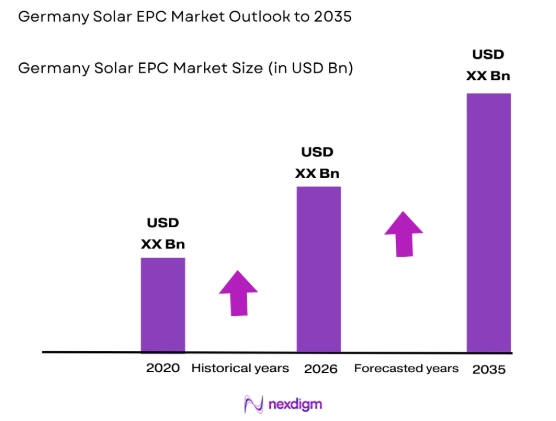
The Germany Solar EPC market is expected to reach approximately USD ~ billion based on a recent historical assessment, driven by Germany’s transition toward renewable energy and decarbonization targets. Solar power has become a key component of Germany’s energy strategy, with large-scale solar installations gaining momentum in response to favorable policies, declining installation costs, and technological advancements in photovoltaic systems. The expansion of solar projects, supported by both governmental incentives and private investments, is fueling the demand for engineering, procurement, and construction (EPC) services in the solar energy sector.
Key regions such as Bavaria, Brandenburg, and North Rhine-Westphalia are the dominant hubs for solar energy development in Germany. These areas are known for their strong infrastructure, ample available land, and excellent solar irradiation conditions, making them ideal locations for large-scale solar projects. Government incentives, particularly those under Germany’s Energiewende initiative, continue to drive solar growth in these regions, attracting significant investment from both local and international developers. With increasing demand for clean energy solutions, these regions will remain central to the country’s solar energy future.
Market Segmentation
By System Type
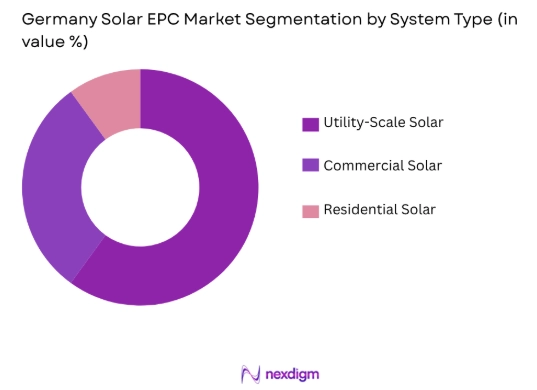
The Germany Solar EPC market is segmented by system type into utility-scale solar systems, commercial solar systems, and residential solar systems. Recently, utility-scale solar systems have dominated the market due to large-scale government incentives, particularly as Germany works towards ambitious renewable energy targets. These projects benefit from economies of scale and secure long-term returns through power purchase agreements (PPAs). The growing adoption of solar farms, coupled with technological advances that reduce the cost of installation, has made utility-scale solar projects a primary driver for the EPC market in Germany.
By End-User Segment
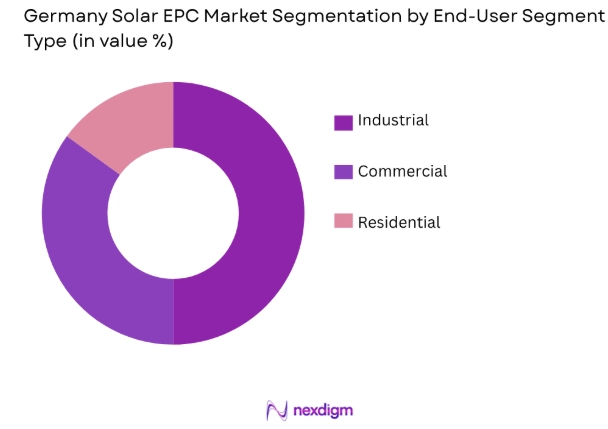
The Germany Solar EPC market is segmented by end-user into industrial, residential, and commercial sectors. The industrial segment has seen the most growth, particularly in large-scale commercial and solar farm installations. Industrial users are increasingly adopting solar energy to meet sustainability goals and reduce energy costs. The rise in corporate power purchase agreements (PPAs) and solar installations across industrial facilities is contributing to this sub-segment’s dominance. Additionally, industrial clients benefit from government incentives and favorable financing options that make large-scale installations more accessible.
Competitive Landscape
The competitive landscape of the Germany Solar EPC market is marked by the presence of both established players and new entrants competing for market share. Market consolidation is taking place, as larger EPC companies are acquiring smaller ones or forming partnerships to enhance their service offerings and expand their geographical reach. The increasing competition among players, coupled with technological advancements in solar energy systems, is leading to lower installation costs and improved efficiency in solar projects. This intense competition ensures that innovation and high-quality service remain a key focus in the sector.
| Company Name | Establishment Year | Headquarters | Technology Focus | Market Reach | Key Products | Revenue (USD Billion) | Market-Specific Parameter |
| First Solar | 1999 | Tempe, USA | ~ | ~ | ~ | ~ | ~ |
| SMA Solar Technology | 1981 | Niestetal, Germany | ~ | ~ | ~ | ~ | ~ |
| Enel Green Power | 2008 | Rome, Italy | ~ | ~ | ~ | ~ | ~ |
| BayWa r.e. | 2009 | Munich, Germany | ~ | ~ | ~ | ~ | ~ |
| JinkoSolar | 2006 | Shanghai, China | ~ | ~ | ~ | ~ | ~ |
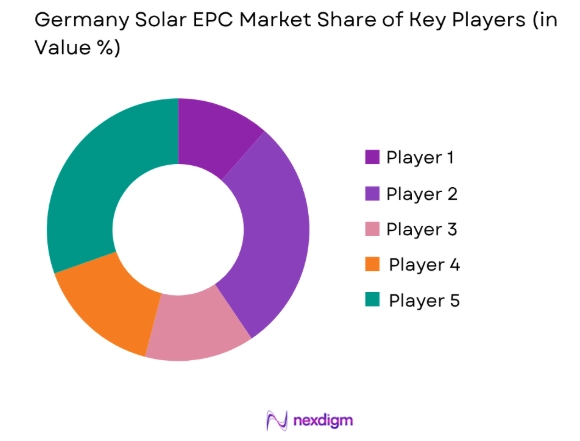
Germany Solar EPC Market Analysis
Growth Drivers
Government Incentives for Renewable Energy
Government incentives for renewable energy projects are a primary growth driver for the Germany Solar EPC market. Germany’s Energiewende (Energy Transition) policy, aimed at decarbonizing the country’s energy sector, provides a strong regulatory framework for solar energy. Subsidies, tax benefits, and feed-in tariffs for solar energy production make solar installations financially attractive for developers and investors. Additionally, the implementation of renewable energy targets, including a commitment to increasing the share of solar energy in the national grid, further drives the demand for solar EPC services. The financial support provided by the government reduces the initial investment burden and accelerates the adoption of solar technology in both residential and commercial markets.
Declining Solar Technology Costs
Technological advancements and declining costs in solar panel production are contributing significantly to the market’s growth. The continued reduction in the cost of solar panels, inverters, and other components has made solar energy increasingly affordable for both large-scale utility and smaller commercial projects. Innovations in photovoltaic technology, such as bifacial solar panels and improved inverter systems, have enhanced energy output while reducing costs. Additionally, advancements in solar installation techniques and materials have shortened project timelines, reducing the overall cost of installation. The reduction in technology costs has spurred greater adoption of solar energy, driving demand for EPC services to implement these systems across various sectors.
Market Challenges
Supply Chain Disruptions
Supply chain disruptions in the solar energy industry present a significant challenge for the Germany Solar EPC market. The ongoing global supply chain issues, exacerbated by the COVID-19 pandemic and geopolitical tensions, have led to delays in the delivery of essential components like solar panels and inverters. These disruptions have caused delays in project timelines, which in turn affects the profitability and efficiency of solar EPC firms. Additionally, increased material costs, such as those for semiconductors and raw materials used in solar panel manufacturing, have added financial pressures to both developers and EPC contractors. Overcoming these supply chain challenges is crucial to maintaining the momentum of solar energy adoption in Germany.
Regulatory Hurdles
Regulatory challenges, particularly those related to permitting and environmental assessments, are slowing down the deployment of solar energy projects. Despite Germany’s strong policy support for renewable energy, the permitting process for large-scale solar installations remains slow and complicated. Local regulations, environmental assessments, and grid connection requirements often delay the approval of projects, hindering the overall growth of the solar EPC market. These regulatory delays can create uncertainty for developers, especially those seeking to meet ambitious renewable energy targets. Streamlining regulatory processes and expediting permits would be vital in accelerating the deployment of solar projects and increasing the market’s growth rate.
Opportunities
Integration with Energy Storage Systems
The integration of solar energy with energy storage systems presents a significant opportunity for the Germany Solar EPC market. Energy storage solutions, such as batteries, complement solar power by storing excess energy generated during the day for use at night or during periods of low generation. This integration is especially beneficial for residential and commercial installations, where grid connectivity may be limited or unreliable. Additionally, the ability to store solar energy reduces reliance on fossil fuels and enhances grid stability. As the cost of energy storage continues to decline, the demand for solar-storage hybrid systems will increase, presenting a substantial opportunity for EPC contractors to expand their offerings and capitalize on the growing need for energy resilience.
Rise of Solar Farms and Utility-Scale Projects
The growing demand for solar farms and utility-scale solar projects offers significant opportunities in the Germany Solar EPC market. As Germany works toward meeting its renewable energy targets, the demand for large-scale solar farms is increasing. These utility-scale projects, often located in rural areas with vast open land, require complex engineering, procurement, and construction services. With the government’s strong support for large-scale solar initiatives, including favorable financing options and long-term power purchase agreements, EPC contractors have an opportunity to secure major contracts for these high-value projects. The ongoing transition to solar energy will continue to drive investments in solar farms, contributing to market growth.
Future Outlook
The future outlook for the Germany Solar EPC market is promising, with continued growth expected in both residential and commercial sectors. The government’s commitment to renewable energy, coupled with technological advancements in solar power generation and storage, will contribute to the expansion of the market. The growing adoption of solar farms, energy storage integration, and the ongoing push toward carbon neutrality will drive the demand for solar EPC services in the coming years. Additionally, regulatory changes aimed at simplifying permitting and enhancing grid integration will further accelerate the growth of the solar EPC market.
Step 1: Identification of Key Variables
Key market variables related to solar energy adoption, technology advancements, and regulatory frameworks specific to the Germany Solar EPC market are identified. This includes demand for renewable energy, technological developments, and the energy transition targets of Germany.
Step 2: Market Analysis and Construction
Market analysis is conducted through the segmentation of the solar EPC market, including a detailed study of product types, end-user sectors, and technological trends. This step includes data collection from historical sources and industry forecasts.
Step 3: Hypothesis Validation and Expert Consultation
Expert consultation with industry leaders, EPC contractors, and government officials is carried out to validate market assumptions and ensure the accuracy of forecasts. This helps refine the initial hypotheses and gather actionable insights.
Step 4: Research Synthesis and Final Output
The findings from various sources are synthesized into a comprehensive market report, offering insights into market dynamics, growth trends, and strategic opportunities for stakeholders in the Germany Solar EPC market.

- Executive Summary
- Research Methodology (Definitions, Scope, Industry Assumptions, Market Sizing Approach, Primary & Secondary Research Framework, Data Collection & Verification Protocol, Analytic Models & Forecast Methodology, Limitations & Research Validity Checks)

- Market Definition and Scope
- Value Chain & Stakeholder Ecosystem
- Regulatory / Certification Landscape
- Sector Dynamics Affecting Demand

- Growth Drivers
Government Incentives for Solar Energy
Technological Advancements in Solar Panel Efficiency
Increasing Demand for Renewable Energy - Market Challenges
High Initial Capital Investment
Regulatory Hurdles and Permitting Issues
Intermittency of Solar Power - Market Opportunities
Expansion in Residential Solar Installations
Integration of Energy Storage Systems
Development of Floating Solar Projects - Trends
Growing Adoption of Solar in Commercial Sectors
Integration of Solar with Smart Grids - Government Regulations
- SWOT Analysis
- Porter’s Five Forces

- By Market Value, 2020-2025
- By Installed Units, 2020-2025
- By Average System Price, 2020-2025
- By System Complexity Tier, 2020-2025

- By System Type (In Value%)
Utility-scale Solar Systems
Commercial Solar Systems
Residential Solar Systems
Hybrid Solar Systems
Floating Solar Systems - By Platform Type (In Value%)
Ground-mounted Platforms
Rooftop Platforms
Integrated Platforms
Floating Platforms - By Fitment Type (In Value%)
Fixed Solutions
Tracking Solutions
Hybrid Solutions
Modular Solutions - By End User Segment (In Value%)
Private Sector
Government Agencies
Industrial Sector

- Market Share Analysis
- Cross Comparison Parameters (System Type, Platform Type, Procurement Channel, End User Segment, Fitment Type, Energy Storage Integration, Installation Scale)
- SWOT Analysis of Key Competitors
- Pricing & Procurement Analysis
- Key Players
SMA Solar Technology
First Solar
Trina Solar
Canadian Solar
JinkoSolar
SunPower
Enel Green Power
RWE
Vattenfall
BayWa r.e.
Conergy
BayWa Solar
Sungrow Power
LONGi Solar
PvP Group

- Rising Adoption in the Private Sector
- Government’s Role in Promoting Solar Projects
- Commercial Sector’s Increased Investment
- Industrial Sector’s Growing Solar Demand

- Forecast Market Value, 2026-2035
- Forecast Installed Units, 2026-2035
- Price Forecast by System Tier, 2026-2035
- Future Demand by Platform, 2026-2035


 Request a Sample
 Ask for Customization
 Get a Quote
 Enquire Now