
 Download PDF
Market Overview
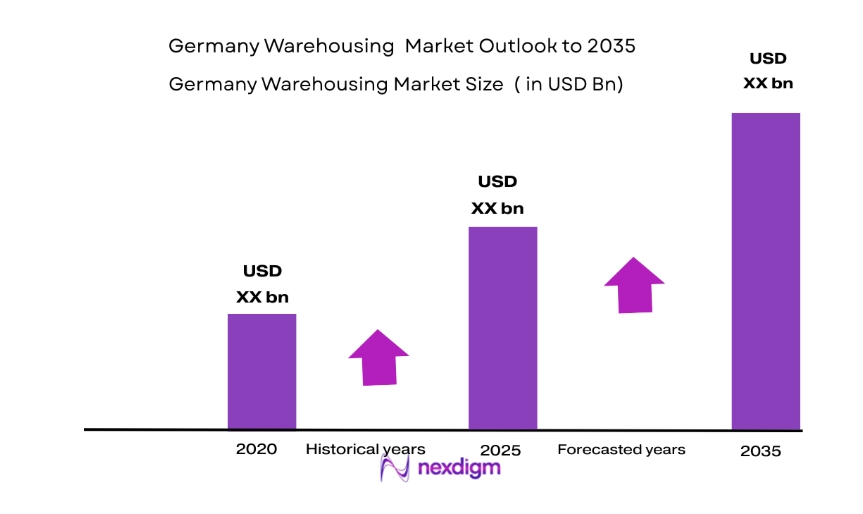
Based on a recent historical assessment, the Germany Warehousing Market recorded a market size of approximately USD ~ Billion supported by rapid growth in e commerce logistics, industrial manufacturing supply chains, and third party logistics service providers requiring large scale storage and distribution infrastructure. Rising online retail transactions, expanding cross border trade flows, and increasing inventory storage requirements across manufacturing industries significantly drive warehouse capacity expansion throughout Germany’s logistics ecosystem supported by automated distribution hubs and integrated logistics parks.
Based on a recent historical assessment, major logistics hubs such as Berlin, Hamburg, Frankfurt, Munich, and Cologne dominate warehouse infrastructure due to their advanced transportation connectivity, strong industrial clusters, and proximity to major consumer markets. These cities host extensive logistics parks, automated fulfillment centers, and international distribution hubs operated by global logistics companies supporting national and cross border cargo distribution across Germany’s supply chain and retail networks while benefiting from strong rail, highway, and port connectivity.
Market Segmentation
By Warehouse Type
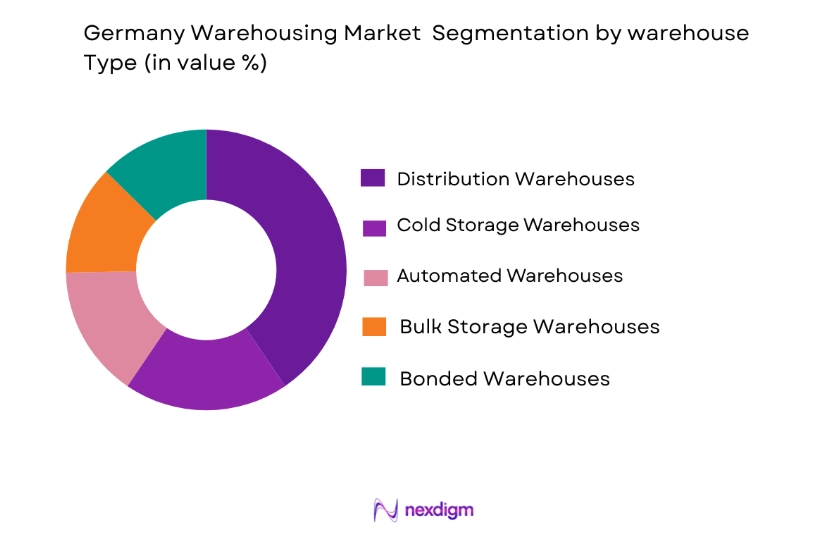
Germany Warehousing Market is segmented by warehouse type into distribution warehouses, cold storage warehouses, automated warehouses, bulk storage warehouses, and bonded warehouses. Recently, distribution warehouses has a dominant market share due to factors such as strong demand from e commerce retailers, retail distribution networks, and industrial supply chains requiring rapid inventory storage and order fulfillment infrastructure. Distribution warehouses operate as central logistics hubs connecting manufacturers, retailers, and logistics service providers through integrated transportation networks capable of managing high volumes of goods movement. Rapid expansion of e commerce platforms significantly increases demand for distribution warehouses capable of supporting large scale inventory storage and quick order dispatch. Retail supply chains increasingly rely on strategically located distribution warehouses to ensure efficient product movement between manufacturers and end consumers across Germany’s logistics network. Advanced warehouse automation technologies including robotic sorting systems and digital inventory management platforms also strengthen the operational efficiency of distribution warehouse facilities.
By End User Industry
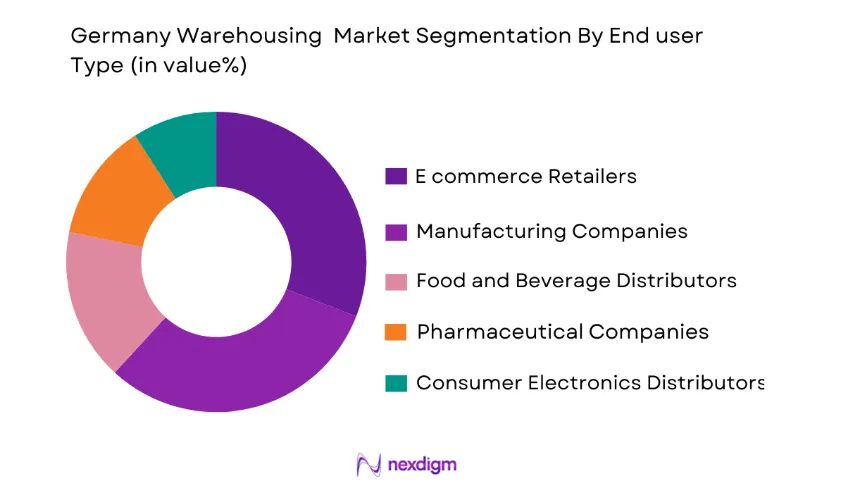
Germany Warehousing Market is segmented by end user industry into e commerce retailers, manufacturing companies, food and beverage distributors, pharmaceutical companies, and consumer electronics distributors. Recently, e commerce retailers has a dominant market share due to factors such as rapid digital retail expansion, rising parcel shipment volumes, and increasing consumer demand for fast delivery services across online marketplaces. E commerce companies operate large fulfillment centers and regional distribution warehouses to manage high inventory turnover and support same day and next day delivery services across urban consumer markets. Online retailers depend heavily on strategically located warehouses to reduce delivery times and improve supply chain efficiency throughout Germany’s logistics ecosystem. Advanced warehouse technologies including automated picking systems, robotics, and artificial intelligence powered inventory management platforms further improve operational efficiency within e commerce warehouse facilities.
Competitive Landscape
The Germany Warehousing Market demonstrates a moderately consolidated competitive structure dominated by large global logistics corporations and specialized warehouse infrastructure developers operating extensive distribution networks across the country. Major players benefit from strong logistics infrastructure, automated warehouse technologies, and integrated supply chain management platforms enabling them to serve manufacturing companies, retail supply chains, and international trade logistics operations. Competition focuses heavily on warehouse automation, storage capacity expansion, and advanced logistics technology adoption.
| Company Name | Establishment Year | Headquarters | Technology Focus | Market Reach | Key Products | Revenue | Warehouse Capacity |
| DHL Supply Chain | 1969 | Bonn, Germany | ~ | ~ | ~ | ~ | ~ |
| DB Schenker | 1872 | Essen, Germany | ~ | ~ | ~ | ~ | ~ |
| Kuehne + Nagel | 1890 | Schindellegi, Switzerland | ~ | ~ | ~ | ~ | ~ |
| Rhenus Logistics | 1912 | Holzwickede, Germany | ~ | ~ | ~ | ~ | ~ |
| Fiege Logistics | 1873 | Greven, Germany | ~ | ~ | ~ | ~ | ~ |
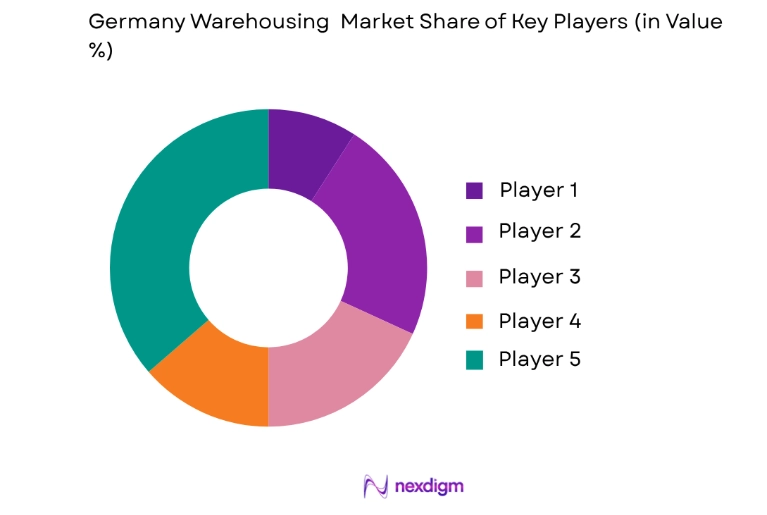
Germany Warehousing Market Analysis
Growth Drivers
Expansion of E Commerce Logistics and Fulfillment Infrastructure
Germany’s rapidly expanding digital retail ecosystem significantly increases demand for warehousing infrastructure capable of supporting high volume inventory storage and rapid product distribution across national logistics networks. E commerce retailers operate large scale fulfillment centers and distribution warehouses designed to manage massive product inventories and process millions of daily orders across online retail platforms. Consumers increasingly rely on digital retail platforms to purchase electronics apparel household goods groceries and pharmaceutical products which significantly increases inventory storage requirements across logistics networks. Retail companies therefore invest heavily in warehouse infrastructure capable of managing fast moving consumer goods and supporting rapid order fulfillment operations.
Industrial Manufacturing Supply Chain Expansion and Inventory Storage Demand
Germany’s strong industrial manufacturing base significantly drives demand for warehouse infrastructure required to store raw materials industrial components and finished products across manufacturing supply chains. Automotive manufacturing machinery production chemical processing and electronics manufacturing industries rely heavily on large scale warehouse facilities to manage inventory and coordinate supply chain operations. Manufacturing companies store raw materials and intermediate components within warehouse facilities before transferring them to production plants where industrial processing takes place. Finished products are also stored within distribution warehouses before being shipped to domestic and international markets. Germany’s strong export oriented industrial economy generates large cargo volumes moving through logistics hubs distribution centers and international transportation corridors. Industrial companies therefore depend on advanced warehouse management systems capable of coordinating inventory flows between manufacturing facilities and global supply networks. Logistics providers operate specialized industrial warehouses equipped with automated storage systems temperature controlled storage and advanced security infrastructure supporting industrial supply chains. Supply chain integration technologies including digital inventory tracking predictive logistics analytics and warehouse robotics further improve operational efficiency within industrial warehouse facilities. These structural factors collectively ensure sustained demand for warehousing infrastructure across Germany’s manufacturing and industrial logistics ecosystem.
Market Challenges
Rising Industrial Real Estate Costs and Limited Logistics Land Availability
Germany’s warehousing sector faces increasing challenges related to the high cost of industrial land and limited availability of logistics real estate across major economic hubs. Warehousing facilities require large land areas for storage buildings loading docks truck yards and distribution infrastructure which becomes increasingly expensive within major urban logistics corridors. Rapid growth in e commerce logistics industrial distribution and transportation infrastructure creates intense competition for industrial land located near major transportation networks. Logistics companies therefore experience increasing capital expenditure requirements when developing new warehouse facilities across major logistics clusters. High real estate prices particularly within metropolitan regions significantly increase the cost of constructing and operating warehousing infrastructure. Warehouse developers must also navigate complex zoning regulations environmental policies and construction approvals which extend project timelines and increase development costs. Limited availability of industrial land within high demand logistics corridors forces companies to locate warehouses further away from urban consumer markets which may increase transportation costs.
Labor Shortages and Workforce Constraints in Logistics Operations
Germany’s warehousing industry experiences persistent workforce shortages across warehouse operations inventory management logistics coordination and transportation services which creates operational challenges for supply chain companies. Warehouse facilities require large numbers of employees responsible for order picking packing inventory management equipment operation and logistics coordination across complex distribution networks. Rising e commerce parcel volumes significantly increase demand for warehouse workers capable of managing high throughput order processing operations within distribution facilities. However logistics companies increasingly face difficulties recruiting qualified labor due to demographic changes workforce shortages and increasing competition from other industries requiring logistics skills. Wage pressures increase significantly as warehouse operators compete to attract and retain skilled logistics personnel across distribution networks. Labor shortages also reduce operational efficiency within warehouses because insufficient staffing levels slow inventory processing and shipment dispatch operations.
Opportunities
Adoption of Smart Warehousing and Automation Technologies
Rapid technological innovation within warehouse automation and digital supply chain systems creates major opportunities for logistics companies to deploy smart warehousing infrastructure capable of improving operational efficiency across distribution networks. Automated storage and retrieval systems robotic picking systems artificial intelligence inventory management platforms and autonomous warehouse vehicles significantly improve warehouse productivity and order processing speed. Logistics companies increasingly invest in digital warehouse management platforms capable of tracking inventory levels coordinating shipment flows and optimizing storage allocation across warehouse facilities. Automation technologies reduce operational errors improve product handling efficiency and increase throughput capacity within high volume distribution centers. Large logistics operators collaborate with technology companies to integrate robotics systems machine vision technologies and predictive analytics platforms within modern warehouse facilities.
Expansion of Cold Chain Logistics Infrastructure for Food and Pharmaceutical Distribution
Increasing demand for temperature controlled logistics services across food beverage and pharmaceutical industries creates strong opportunities for the development of specialized cold storage warehouse infrastructure. Pharmaceutical companies require advanced temperature controlled storage facilities capable of preserving vaccines biologic medicines and medical products throughout the supply chain. Food and beverage distribution networks also depend heavily on refrigerated warehouses to store perishable goods including dairy products frozen foods meat seafood and fresh produce. Germany’s advanced healthcare system and large food distribution industry therefore generate significant demand for cold chain warehousing infrastructure across logistics networks. Logistics companies increasingly invest in energy efficient refrigeration systems temperature monitoring technologies and automated cold storage facilities designed to maintain strict product safety standards. Advanced cold storage warehouses incorporate digital monitoring systems capable of maintaining precise temperature conditions required for pharmaceutical and food storage operations.
Future Outlook
The Germany Warehousing Market is expected to experience sustained growth over the next several years supported by increasing e commerce logistics activity expanding industrial supply chains and growing international trade flows. Warehouse automation technologies robotics systems and digital inventory management platforms will continue improving logistics efficiency across distribution networks. Government infrastructure initiatives supporting logistics parks and transportation connectivity will strengthen warehouse development. Rising demand for cold chain storage and smart logistics infrastructure will further accelerate warehousing capacity expansion across Germany.
Major Players
- DHL Supply Chain
- DB Schenker
- Kuehne + Nagel
- Rhenus Logistics
- Fiege Logistics
- CEVA Logistics
- DSV Logistics
- Hellmann Worldwide Logistics
- Panattoni Europe
- Goodman Group
- Prologis Europe
- Garbe Industrial Real Estate
- Segro Logistics
- BLG Logistics Group
- Arvato Supply Chain Solutions
Key Target Audience
- Logistics and warehouse operators
- E commerce platform companies
- Manufacturing and industrial companies
- Food and beverage distribution companies
- Pharmaceutical supply chain companies
- Investments and venture capitalist firms
- Government and regulatory bodies
- Transportation infrastructure companies
Research Methodology
Step 1: Identification of Key Variables
Key market variables including warehouse capacity logistics demand e commerce shipment volumes supply chain infrastructure and technology adoption were identified to establish the analytical framework for evaluating Germany’s warehousing ecosystem.
Step 2: Market Analysis and Construction
Primary logistics industry data transportation infrastructure information and company financial disclosures were analyzed to construct a comprehensive market model evaluating warehouse capacity distribution networks and logistics demand.
Step 3: Hypothesis Validation and Expert Consultation
Industry experts logistics executives warehouse operators and supply chain specialists were consulted to validate analytical assumptions regarding logistics infrastructure demand warehouse automation adoption and distribution network expansion.
Step 4: Research Synthesis and Final Output
All validated datasets logistics performance indicators and industry insights were synthesized into a structured analytical framework providing detailed market evaluation segmentation analysis competitive landscape and long term logistics infrastructure outlook.

- Executive Summary
- Research Methodology (Definitions, Scope, Industry Assumptions, Market Sizing Approach, Primary & Secondary Research Framework, Data Collection & Verification Protocol, Analytic Models & Forecast Methodology, Limitations & Research Validity Checks)

- Market Definition and Scope
- Value Chain & Stakeholder Ecosystem
- Regulatory / Certification Landscape
- Sector Dynamics Affecting Demand

- Growth Drivers
Expansion of E-commerce Fulfillment Infrastructure
Growth of Third Party Logistics and Supply Chain Services
Increasing Demand for Automated Warehouse Technologies - Market Challenges
High Industrial Real Estate Costs in Major Logistics Hubs
Complex Regulatory Compliance for Storage Infrastructure
Rising Operational Costs in Warehouse Management - Market Opportunities
Development of Smart Warehousing and Automation Technologies
Expansion of Cold Chain Logistics Infrastructure
Growth of Cross Border Logistics Distribution Networks - Trends
Adoption of Robotics and Warehouse Automation Systems
Growth of Micro Fulfillment Centers in Urban Areas
Integration of AI Based Warehouse Management Platforms - Government Regulations
- SWOT Analysis of Key Competitors
- Pricing & Procurement Analysis

- By Market Value 2020-2025
- By Installed Units 2020-2025
- By Average System Price 2020-2025
- By System Complexity Tier 2020-2025

- By System Type (In Value%)
Automated Storage and Retrieval Systems
Cold Storage Warehousing Systems
Distribution Warehousing Systems
Bulk Storage Warehousing Systems
Smart Warehouse Management Systems - By Platform Type (In Value%)
E-commerce Fulfillment Warehouses
Retail Distribution Warehouses
Industrial Manufacturing Warehouses
Third Party Logistics Warehouses
Cross Border Logistics Warehouses - By Fitment Type (In Value%)
Urban Fulfillment Warehouses
Suburban Distribution Warehouses
Regional Logistics Warehouses
Micro Fulfillment Warehouses
Integrated Logistics Parks - By EndUser Segment (In Value%)
E-commerce Retail Companies
Manufacturing and Industrial Companies
Food and Beverage Distributors

- Market Share Analysis
- CrossComparison Parameters (Warehouse Capacity, Automation Technology Adoption, Logistics Network Coverage, Storage Specialization, Fulfillment Efficiency)
- SWOT Analysis of Key Competitors
- Pricing & Procurement Analysis
- Porter’s Five Forces
- Key Players
DHL Supply Chain
DB Schenker Logistics
Kuehne + Nagel
Rhenus Logistics
Hellmann Worldwide Logistics
Arvato Supply Chain Solutions
Fiege Logistics
BLG Logistics Group
CEVA Logistics
DSV Logistics
Garbe Industrial Real Estate
Prologis Europe
Goodman Group
Panattoni Europe
Segro Logistics

- Growing Demand for E-commerce Fulfillment Warehouses
- Manufacturing Sector Dependence on Industrial Storage Infrastructure
- Pharmaceutical Industry Demand for Temperature Controlled Warehouses
- Retail Distribution Expansion Driving Regional Warehousing Demand

- Forecast Market Value, 2026-2035
- Forecast Installed Units, 2026-2035
- Price Forecast by System Tier, 2026-2035
- Future Demand by Platform, 2026-2035


 Request a Sample
 Ask for Customization
 Get a Quote
 Enquire Now