
 Download PDF
 Download PDF
Market Overview
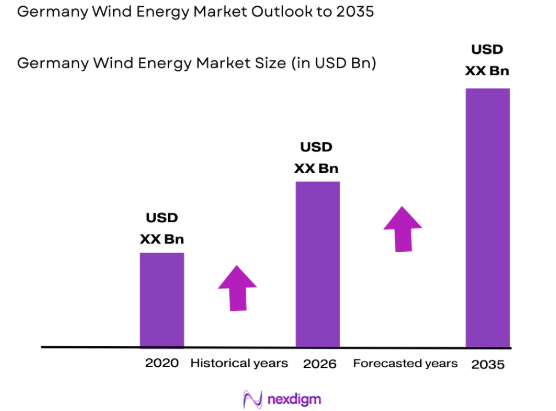
The Germany Wind Energy market is expected to grow significantly, driven by a strong push toward renewable energy solutions. The market size is anticipated to reach approximately USD ~ billion based on a recent historical assessment. This growth is largely fueled by Germany’s ongoing commitment to increasing the share of renewables in its energy mix. The German government has set ambitious targets for 2030, with specific emphasis on expanding offshore and onshore wind energy. Investments in both established and emerging technologies, alongside governmental policies promoting green energy, are major factors contributing to the market’s expansion.
The dominant regions within Germany for wind energy development include Lower Saxony, Brandenburg, and Schleswig-Holstein, where favorable wind conditions and supportive local governments have fostered a conducive environment for development. These regions benefit from robust infrastructure, established supply chains, and a long history of wind energy adoption. As the country continues to prioritize wind energy to meet its climate goals, the investment in these regions is expected to increase, consolidating their dominance in the wind energy sector.
Market Segmentation
By Product Type
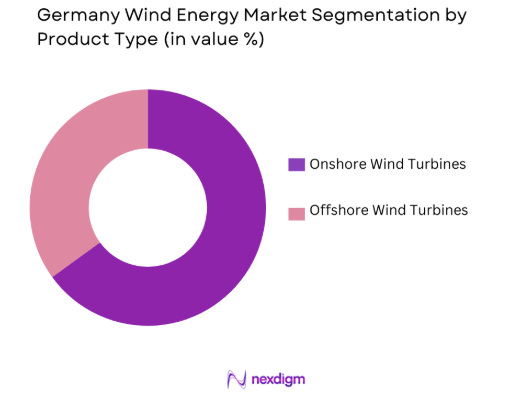
The Germany Wind Energy market is segmented by product type into onshore wind turbines and offshore wind turbines. Recently, onshore wind turbines have dominated the market due to factors such as cost-effectiveness, established infrastructure, and a wide array of locations suitable for development. Onshore wind energy continues to be the main contributor to Germany’s wind energy capacity, aided by its relatively lower installation costs and shorter lead times compared to offshore systems. Furthermore, the demand for onshore wind turbines remains high in the northern and central regions of Germany, where wind speeds are optimal for energy generation.
By Region
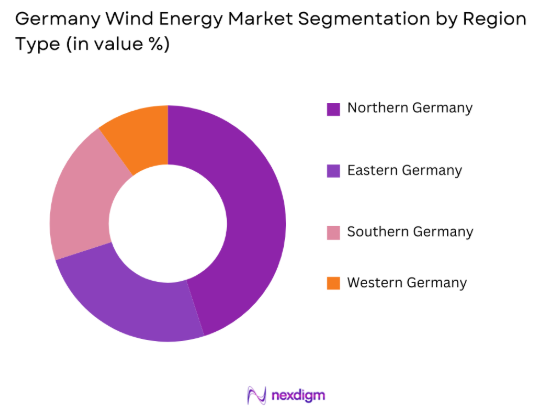
Germany’s wind energy market is segmented into regional sub-segments, with notable dominance in the North and East of the country. These regions have access to optimal wind resources, which makes them ideal for wind energy generation. Additionally, the North Sea and the Baltic Sea play critical roles in expanding offshore wind energy. The East German region benefits from substantial government incentives aimed at accelerating renewable energy infrastructure. The continued investment in these areas is expected to solidify their position as the leading contributors to Germany’s wind energy capacity.
Competitive Landscape
Germany’s wind energy market is highly competitive with a mix of domestic and international players operating in both the onshore and offshore segments. The market is seeing increasing consolidation as larger players expand their portfolios through acquisitions and partnerships. These key players have been leveraging advanced turbine technology and strategic partnerships to maintain their competitive edge. The influence of global firms with strong technological expertise and local firms with established regulatory knowledge is shaping the competitive environment, ensuring both innovation and adherence to Germany’s stringent renewable energy policies.
| Company Name | Establishment Year | Headquarters | Technology Focus | Market Reach | Key Products | Revenue (USD Billion) | Market-Specific Parameter |
| Siemens Gamesa | 1976 | Zamudio, Spain | ~ | ~ | ~ | ~ | ~ |
| Nordex | 1985 | Hamburg, Germany | ~ | ~ | ~ | ~ | ~ |
| Vestas | 1945 | Aarhus, Denmark | ~ | ~ | ~ | ~ | ~ |
| General Electric | 1892 | Boston, USA | ~ | ~ | ~ | ~ | ~ |
| EnBW | 1997 | Karlsruhe, Germany | ~ | ~ | ~ | ~ | ~ |
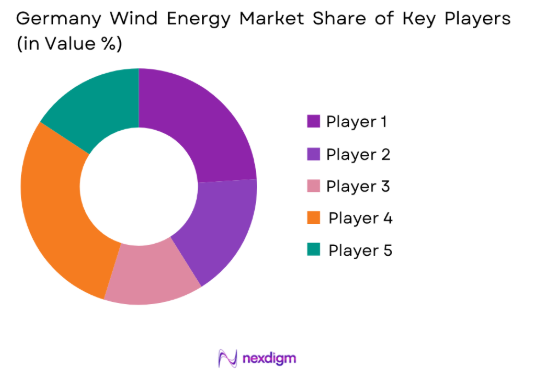
Germany Wind Energy Market Analysis
Growth Drivers
Government Support for Renewable Energy
The German government’s commitment to achieving ambitious renewable energy targets is a key driver of the wind energy market. With the Energiewende (Energy Transition) policy, the German government aims to reduce its greenhouse gas emissions and increase the share of renewable energy in total power generation. This policy offers long-term visibility for wind energy projects, encouraging both domestic and international investment. Moreover, government incentives, including subsidies for renewable energy production and favorable policies, make wind energy an attractive option for developers. The support for onshore and offshore wind projects has been particularly strong, with offshore wind farms in the North Sea gaining traction. Regulatory changes that encourage the continued development of wind energy will maintain a robust growth trajectory for the market in the coming years.
Technological Advancements in Wind Turbine Design
Technological innovations in turbine design have spurred significant growth in Germany’s wind energy market. The development of larger and more efficient turbines has enhanced the efficiency of wind farms, particularly in offshore locations where wind speeds are higher. With the development of turbines that can operate in lower wind conditions, offshore wind projects have become more economically viable. Innovations in turbine materials, blade design, and energy storage systems further contribute to improving energy efficiency and decreasing the overall cost of energy production. These advancements are especially important as the demand for clean energy rises, and Germany continues to push toward becoming a leading renewable energy provider in Europe.
Market Challenges
Regulatory and Bureaucratic Barriers
One of the major challenges faced by the German wind energy market is the regulatory and bureaucratic hurdles. While the government is highly supportive of renewable energy, the process for obtaining permits and approvals for wind farms can be slow and complex. Local opposition, environmental assessments, and lengthy approval processes often delay the development of new wind energy projects. These regulatory issues can discourage investment and slow the pace of renewable energy growth. Despite strong government incentives, the bureaucratic challenges have made it difficult for developers to quickly bring new projects online. As the market grows, addressing these regulatory challenges will be key to meeting Germany’s renewable energy targets.
Integration with the National Grid
Integrating large-scale wind energy projects into Germany’s national grid infrastructure presents another challenge. The intermittent nature of wind energy generation creates challenges in balancing the supply and demand for electricity. Despite improvements in grid capacity, the need for additional energy storage solutions and grid upgrades remains critical for the continued success of wind energy projects. Additionally, the transport of electricity from remote wind farms, particularly in offshore areas, to urban centers requires significant investment in infrastructure. As Germany continues to expand its wind energy capacity, ensuring the stability and flexibility of the national grid will be essential to maximizing the potential of wind energy.
Opportunities
Offshore Wind Energy Expansion
Offshore wind energy presents a major opportunity for growth in the German wind energy market. The North and Baltic Seas offer some of the best conditions for wind energy production in Europe, with high and consistent wind speeds. Germany’s commitment to expanding its offshore wind farms will be a major driver of market growth, as technological advancements make it more cost-effective to develop offshore projects. Germany’s geographical location and access to abundant marine wind resources make it an ideal location for the growth of offshore wind farms. The continued development of this sector will not only provide significant energy capacity but also position Germany as a leader in offshore wind energy generation.
Development of Hybrid Energy Systems
Hybrid energy systems that integrate wind energy with other renewable sources, such as solar power and energy storage, offer a significant opportunity for the German market. These systems can provide a more consistent and reliable energy supply by combining the strengths of different energy sources. As Germany seeks to improve grid stability and reduce dependence on fossil fuels, hybrid systems are expected to become an essential part of the energy mix. The development of such integrated systems can also help address the intermittency issues associated with renewable energy production, making wind energy a more viable option for meeting Germany’s future energy needs.
Future Outlook
The future of Germany’s wind energy market looks highly promising, with strong growth expected in both onshore and offshore segments. Technological innovations will continue to enhance the efficiency and viability of wind energy projects, particularly offshore, which will see expanded investments. Regulatory support, coupled with demand for renewable energy, will drive growth over the next five years. As the country moves closer to its renewable energy targets, the wind energy sector is expected to play a pivotal role in achieving these goals, while also contributing to the broader European energy transition.
Major Players
- Siemens Gamesa
- Nordex
- Vestas
- General Electric
- EnBW
- Senvion
- Nordex Acciona
- Siemens Energy
- RWE
- Iberdrola
- Ørsted
- E.ON
- GE Renewable Energy
- First Solar
- Acciona
Key Target Audience
- Investments and venture capitalist firms
- Government and regulatory bodies
- Energy producers and developers
- Large-scale energy consumers
- Independent power producers
- Renewable energy equipment manufacturers
- Wind turbine technology providers
Research Methodology
Step 1: Identification of Key Variables
Identification of critical market dynamics, growth drivers, and constraints specific to the German wind energy market is undertaken. This includes regulatory factors, technological developments, and economic indicators.
Step 2: Market Analysis and Construction
Detailed market segmentation and quantitative analysis are performed to construct an accurate representation of the wind energy landscape in Germany. Historical trends, current market conditions, and forecasts are included.
Step 3: Hypothesis Validation and Expert Consultation
Consultation with industry experts and stakeholders ensures the validity of market assumptions and forecasts. This step includes primary and secondary research to confirm data reliability.
Step 4: Research Synthesis and Final Output
The data collected through research is synthesized to develop a comprehensive market report. This step focuses on presenting insights into the market’s current and future dynamics based on thorough analysis.

- Executive Summary
- Research Methodology (Definitions, Scope, Industry Assumptions, Market Sizing Approach, Primary & Secondary Research Framework, Data Collection & Verification Protocol, Analytic Models & Forecast Methodology, Limitations & Research Validity Checks)

- Market Definition and Scope
- Value Chain & Stakeholder Ecosystem
- Regulatory / Certification Landscape
- Sector Dynamics Affecting Demand

- Growth Drivers
Rising Demand for Renewable Energy
Government Incentives for Wind Energy
Technological Advancements in Wind Turbines - Market Challenges
Regulatory Barriers and Permitting Issues
Intermittency of Wind Energy
High Capital Investment for Offshore Wind - Market Opportunities
Development of Floating Wind Farms
Technological Advancements in Storage Integration
Expansion in Offshore Wind Energy Projects - Trends
Increasing Investment in Offshore Wind
Adoption of Advanced Turbine Technologies - Government Regulations
- SWOT Analysis
- Porter’s Five Forces

- By Market Value, 2020-2025
- By Installed Units, 2020-2025
- By Average System Price, 2020-2025
- By System Complexity Tier, 2020-2025

- By System Type (In Value%)
Onshore Wind Systems
Offshore Wind Systems
Hybrid Wind Systems
Small-scale Wind Systems
Large-scale Wind Systems - By Platform Type (In Value%)
Onshore Platforms
Offshore Platforms
Floating Platforms
Integrated Platforms - By Fitment Type (In Value%)
Fixed Solutions
Floating Solutions
Modular Solutions
Hybrid Solutions - By End User Segment (In Value%)
Private Sector
Government Agencies
Energy Utilities

- Market Share Analysis
- Cross Comparison Parameters (System Type, Platform Type, Procurement Channel, End User Segment, Fitment Type, Technological Integration, Installation Scale)
- SWOT Analysis of Key Competitors
- Pricing & Procurement Analysis
- Key Players
Siemens Gamesa
Nordex
Vestas
GE Renewable Energy
Suzlon
Nordex
Siemens Energy
Senvion
GE Wind Energy
Envision Energy
MHI Vestas Offshore Wind
China Ming Yang Wind Power
Suzlon Energy Limited
Acciona Energy
Dong Energy

- Growing Role of Private Sector in Wind Energy
- Energy Utilities Increasing Investments
- Government’s Active Role in Project Approvals
- The Shift Towards Decentralized Energy Systems

- Forecast Market Value, 2026-2035
- Forecast Installed Units, 2026-2035
- Price Forecast by System Tier, 2026-2035
- Future Demand by Platform, 2026-2035


 Request a Sample
 Ask for Customization
 Get a Quote
 Enquire Now