

 Download PDF
Market Overview
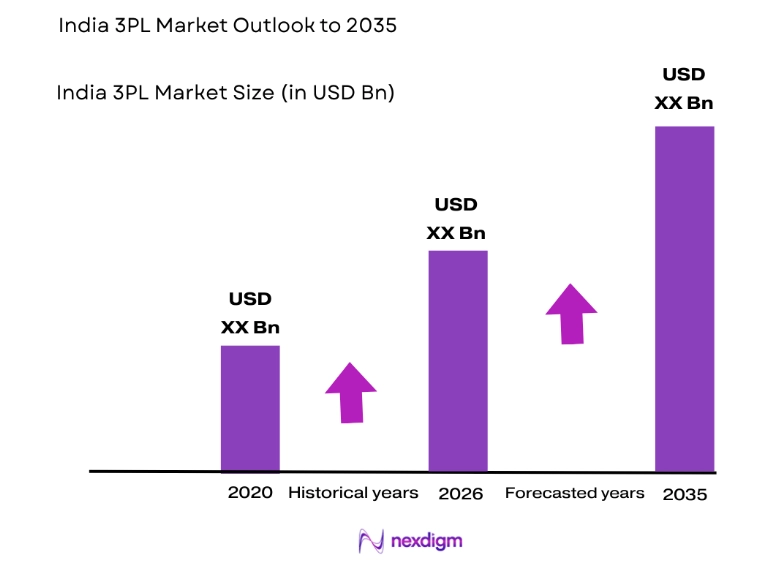
India’s third-party logistics industry has expanded rapidly as businesses increasingly outsource transportation, warehousing, and supply chain management to specialized providers. Based on a recent historical assessment, the India 3PL market is valued at approximately USD ~ billion according to logistics sector estimates referenced by the Ministry of Commerce and Industry and the National Logistics Policy framework. Growth is driven by e-commerce expansion, manufacturing sector growth, improved highway connectivity, and rising demand for integrated logistics services across retail, automotive, pharmaceutical, and industrial supply chains.
Major logistics activity is concentrated in industrial and trade corridors including Mumbai, Delhi-NCR, Bengaluru, Chennai, and Hyderabad. These cities host large manufacturing clusters, seaports, airports, and dedicated freight corridors that support large-scale logistics operations. Warehousing parks, logistics hubs, and multimodal transport infrastructure attract major 3PL operators in these regions. Strong industrial output, large consumer markets, and connectivity to international trade routes reinforce their dominance within the country’s logistics ecosystem.
Market Segmentation
By Service Type
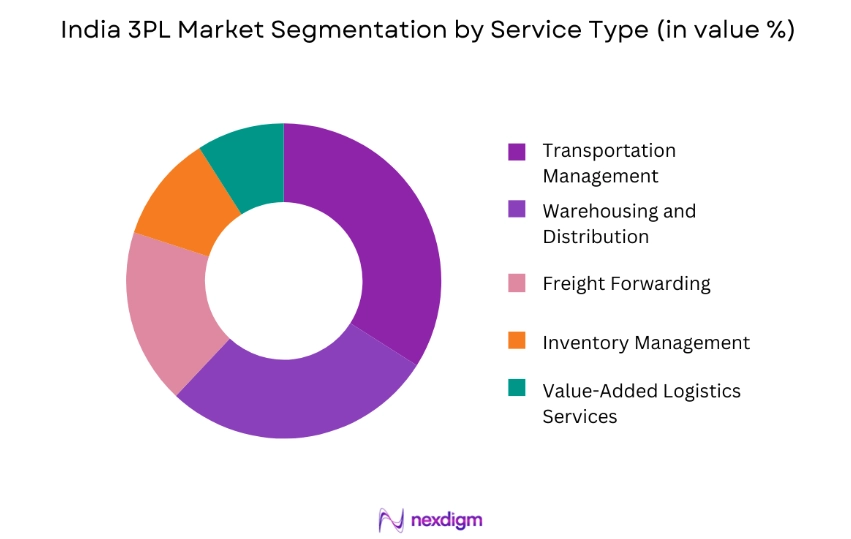
India 3PL market is segmented by Service type into transportation management, warehousing and distribution, freight forwarding, inventory management, and value-added logistics services. Recently, transportation management has a dominant market share due to factors such as rising demand for efficient freight movement, strong road transport networks, and the need for integrated supply chain solutions across industries. Companies increasingly outsource transportation operations to optimize route planning, reduce operational costs, and improve delivery reliability. E-commerce growth and rapid expansion of intercity trade flows also increase the volume of goods transported across logistics corridors. Additionally, government initiatives aimed at improving national highway networks and freight corridors strengthen transportation capacity. Large logistics providers invest in fleet management systems and digital tracking platforms that enhance operational efficiency and visibility across supply chains.
By End-Use Industry
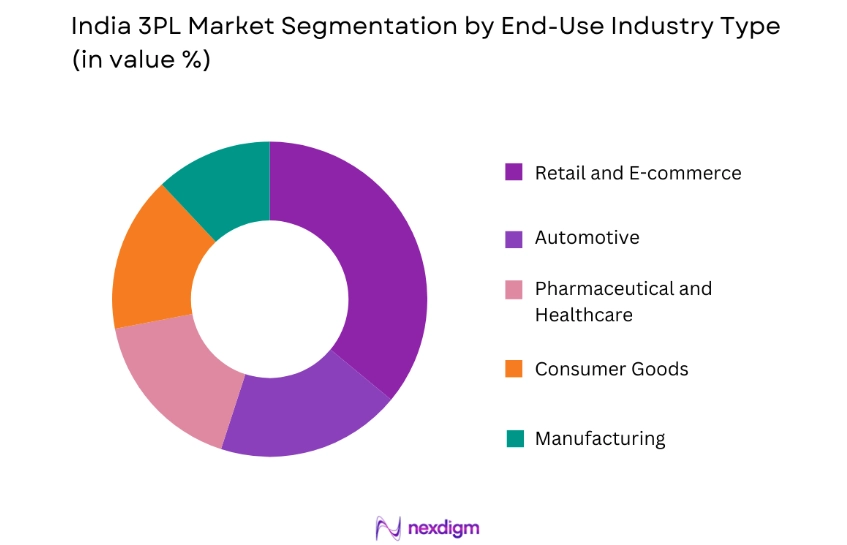
India 3PL market is segmented by end-use industry into retail and e-commerce, automotive, pharmaceutical and healthcare, consumer goods, and manufacturing. Recently, retail and e-commerce has a dominant market share due to factors such as rapid online retail expansion, increasing consumer demand for fast deliveries, and the need for nationwide distribution networks. E-commerce companies rely heavily on third-party logistics providers to manage warehousing, last-mile delivery, and inventory distribution across multiple cities. The growth of digital marketplaces and omnichannel retail models has significantly increased logistics service demand. Logistics providers also deploy automated warehouses and digital tracking technologies to manage large order volumes efficiently. Rising consumer expectations for faster deliveries further strengthens the role of 3PL providers in retail supply chain operations.
Competitive Landscape
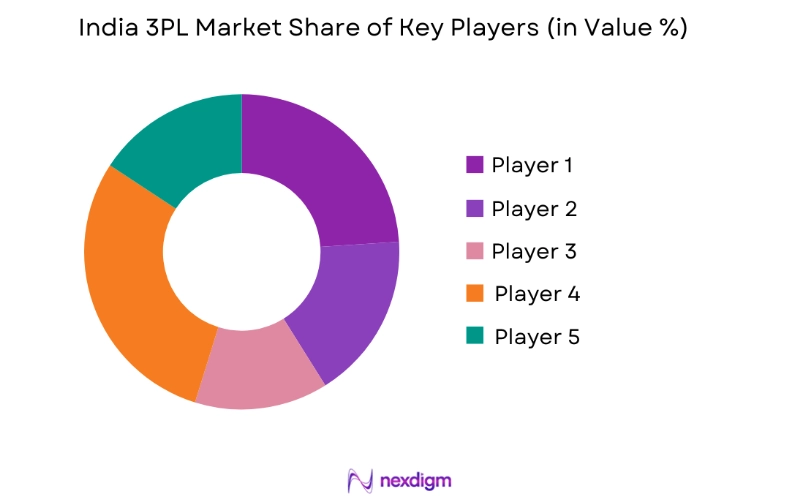
The India 3PL market features a combination of global logistics corporations and large domestic supply chain companies operating extensive transportation and warehousing networks. Market competition centers on service integration, digital logistics platforms, and nationwide distribution capabilities. Leading companies expand their presence through warehouse investments, fleet expansion, and technology-enabled logistics solutions. Consolidation is increasing as larger logistics providers acquire regional companies to strengthen national coverage and operational scale.
| Company Name | Establishment Year | Headquarters | Technology Focus | Market Reach | Key Products | Revenue | Warehouse Network |
| Blue Dart Express | 1983 | Mumbai, India | ~ | ~ | ~ | ~ | ~ |
| Mahindra Logistics | 2007 | Mumbai, India | ~ | ~ | ~ | ~ | ~ |
| Delhivery | 2011 | Gurugram, India | ~ | ~ | ~ | ~ | ~ |
| TCI Supply Chain Solutions | 1995 | Gurugram, India | ~ | ~ | ~ | ~ | ~ |
| Allcargo Logistics | 1993 | Mumbai, India | ~ | ~ | ~ | ~ | ~ |
India 3PL Market Analysis
Growth Drivers
Expansion of E-commerce and Omnichannel Retail Supply Chains
The rapid expansion of digital commerce and omnichannel retail networks has become a major growth driver for the India 3PL market. Online retail platforms require sophisticated logistics infrastructure capable of handling large order volumes, inventory management, and fast last-mile delivery services. Third-party logistics providers support these operations by managing warehouses, transportation networks, and distribution centers across multiple regions. Retailers increasingly depend on 3PL companies to scale logistics capacity during peak demand periods and optimize supply chain efficiency. Growth in smartphone usage and internet penetration has also increased the number of online consumers purchasing goods through e-commerce platforms. These developments create strong demand for reliable delivery services and advanced warehouse operations. Logistics providers invest in automated warehouses, route optimization technologies, and real-time shipment tracking systems to improve operational performance. Integration of logistics platforms with digital retail systems further enhances supply chain coordination. As e-commerce companies continue expanding their product categories and delivery coverage, third-party logistics providers play an increasingly essential role in supporting nationwide distribution networks and meeting consumer expectations for faster delivery.
Government Infrastructure Development and National Logistics Policy Implementation
Government investment in logistics infrastructure and policy reforms has significantly accelerated the development of the India 3PL market. Initiatives such as the National Logistics Policy and the development of dedicated freight corridors aim to improve the efficiency of goods transportation across the country. Infrastructure projects including highway expansions, multimodal logistics parks, and port modernization enhance connectivity between manufacturing centers and consumer markets. These developments reduce transportation time and operational costs for logistics providers. The introduction of the Goods and Services Tax system has also simplified interstate trade and improved supply chain integration across states. Logistics companies benefit from a more unified national market that supports large-scale distribution networks. Government support for logistics digitalization and supply chain modernization further encourages investment in advanced technologies such as warehouse automation and digital freight management systems. As infrastructure continues to improve and regulatory reforms strengthen logistics efficiency, third-party logistics providers are positioned to expand their operations and offer integrated supply chain solutions across multiple industries.
Market Challenges
Fragmented Logistics Industry Structure and Operational Inefficiencies
One of the primary challenges facing the India 3PL market is the fragmented structure of the logistics industry. The market includes a large number of small transportation operators and regional logistics providers with varying service capabilities. This fragmentation often leads to operational inefficiencies, inconsistent service quality, and limited coordination across supply chains. Smaller logistics companies may lack the resources to invest in advanced logistics technologies such as automated warehouses, digital tracking systems, and integrated supply chain platforms. As a result, logistics operations can experience delays, inefficient routing, and limited visibility of goods movement. The absence of standardized logistics infrastructure across regions further complicates supply chain management. Large 3PL providers must coordinate with multiple smaller operators to complete deliveries across the country, increasing complexity and operational risk. While consolidation is gradually improving industry structure, fragmentation remains a key challenge that affects logistics efficiency and scalability.
Rising Logistics Costs and Infrastructure Bottlenecks in Certain Regions
Logistics providers in India face increasing operational costs related to transportation, warehousing, and infrastructure limitations in certain regions. Rising fuel prices, toll charges, and vehicle maintenance expenses significantly increase freight transportation costs. Warehousing costs also continue to rise in major industrial corridors due to land scarcity and infrastructure development expenses. Additionally, congestion in major urban centers and delays at transport checkpoints can increase delivery time and operational costs for logistics companies. In some regions, limited rail connectivity and inadequate multimodal infrastructure restrict efficient cargo movement. Logistics providers must invest heavily in fleet upgrades, warehouse infrastructure, and technology platforms to maintain operational efficiency. These cost pressures can reduce profitability and affect pricing competitiveness in the market.
Opportunities
Growth of Multimodal Logistics Parks and Integrated Supply Chain Infrastructure
The development of multimodal logistics parks presents a major opportunity for the India 3PL market. These facilities integrate road, rail, air, and port connectivity within centralized logistics hubs, allowing efficient movement of goods across transportation modes. Multimodal parks enable logistics companies to reduce transportation time, lower operational costs, and optimize supply chain coordination. The government and private investors are increasingly collaborating to develop large logistics parks near industrial corridors and freight routes. These hubs provide modern warehouses, container terminals, and distribution facilities that support high-volume cargo handling. As multimodal infrastructure expands, logistics companies will be able to provide faster and more efficient distribution services across the country. Integrated logistics hubs also encourage the adoption of advanced supply chain technologies such as automated storage systems and digital freight management platforms.
Adoption of Digital Logistics Platforms and Automation Technologies
The integration of digital technologies into logistics operations offers significant opportunities for the India 3PL market. Logistics providers are increasingly deploying digital platforms that enable real-time shipment tracking, automated route optimization, and predictive supply chain analytics. These technologies improve operational efficiency and enhance transparency in goods movement across supply chains. Warehouse automation technologies such as robotic sorting systems and automated storage solutions allow logistics providers to handle larger volumes of inventory with greater accuracy. Digital logistics platforms also enable seamless communication between manufacturers, retailers, and logistics providers. As businesses prioritize supply chain resilience and operational efficiency, technology-driven logistics solutions will become essential for competitive advantage in the 3PL market.
Future Outlook
The India 3PL market is expected to expand steadily as logistics infrastructure improves and businesses increasingly outsource supply chain operations. Continued growth in e-commerce, manufacturing, and retail distribution will sustain demand for third-party logistics services. Technological advancements in automation, artificial intelligence, and digital freight platforms will improve operational efficiency. Government initiatives supporting logistics modernization and multimodal transport development will further strengthen supply chain connectivity. These factors collectively position India as one of the fastest-growing logistics markets globally.
Major Players
- Blue Dart Express
- Mahindra Logistics
- Delhivery
- TCI Supply Chain Solutions
- Allcargo Logistics
- Safexpress
- DHL Supply Chain India
- FedEx India
- Gati Limited
- TVS Supply Chain Solutions
- Shadowfax
- Ecom Express
- XpressBees
- Kerry Logistics India
- DB Schenker India
Key Target Audience
- Logistics service providers
- E-commerce companies
- Retail supply chain operators
- Manufacturing companies
- Pharmaceutical distribution companies
- Investments and venture capitalist firms
- Government and regulatory bodies
Research Methodology
Step 1: Identification of Key Variables
The research process begins with identifying major factors influencing the India 3PL market including logistics infrastructure, transportation networks, warehousing capacity, and supply chain demand from major industries. These variables define the analytical framework for evaluating market structure and growth dynamics.
Step 2: Market Analysis and Construction
Primary logistics industry data and secondary trade statistics are analyzed to construct the overall market structure. Transportation volumes, warehousing development, and logistics service utilization patterns are examined to estimate market composition.
Step 3: Hypothesis Validation and Expert Consultation
Industry assumptions are validated through consultations with logistics executives, supply chain managers, and infrastructure specialists. These expert insights help refine market projections and ensure realistic representation of logistics demand.
Step 4: Research Synthesis and Final Output
Validated insights are integrated into a structured analytical framework that combines market segmentation, competitive dynamics, and infrastructure development analysis to produce the final market research report.

- Executive Summary
- Research Methodology (Definitions, Scope, Industry Assumptions, Market Sizing Approach, Primary & Secondary Research Framework, Data Collection & Verification Protocol, Analytic Models & Forecast Methodology, Limitations & Research Validity Checks)

- Market Definition and Scope
- Value Chain & Stakeholder Ecosystem
- Regulatory / Certification Landscape
- Sector Dynamics Affecting Demand

- Growth Drivers
Rapid Expansion of E-commerce and Omnichannel Retail
Government Infrastructure Investments in Logistics Corridors
Increasing Outsourcing of Supply Chain Operations by Enterprises - Market Challenges
Fragmented Logistics Industry with Numerous Small Operators
Infrastructure Bottlenecks in Transportation and Warehousing
Rising Fuel Costs and Transportation Expenses - Market Opportunities
Development of Integrated Multimodal Logistics Parks
Adoption of Digital Supply Chain and Logistics Platforms
Expansion of Cold Chain Logistics for Pharmaceuticals and Food - Trends
Growing Adoption of Warehouse Automation and Robotics
Increasing Use of Data Analytics and IoT in Logistics Operations - Government Regulations
- SWOT Analysis
- Porter’s Five Forces

- By Market Value, 2020-2025
- By Installed Units, 2020-2025
- By Average System Price, 2020-2025
- By System Complexity Tier, 2020-2025

- By System Type (In Value%)
Transportation Management Services
Warehousing and Distribution Services
Freight Forwarding Services
Inventory Management Services
Value-Added Logistics Services - By Platform Type (In Value%)
Road Logistics Platforms
Rail Logistics Platforms
Air Freight Logistics Platforms
Multimodal Logistics Platforms - By Fitment Type (In Value%)
Dedicated Contract Logistics
Integrated End-to-End Logistics Solutions
On-Demand Logistics Services
Asset-Light Logistics Models - By End User Segment (In Value%)
Manufacturing and Industrial Companies
Retail and E-commerce Companies
Pharmaceutical and Healthcare Companies

- Market Share Analysis
- Cross Comparison Parameters (Service Portfolio Breadth, Warehousing Capacity, Transportation Network Strength, Technology Integration Level, Pricing Competitiveness, Geographic Coverage, Value-Added Logistics Services)
- SWOT Analysis of Key Competitors
- Pricing & Procurement Analysis
- Key Players
DHL Supply Chain India
DB Schenker India
Mahindra Logistics
TCI Supply Chain Solutions
Allcargo Logistics
Blue Dart Express
Delhivery
Ecom Express
Gati Limited
Safexpress
TVS Supply Chain Solutions
FedEx Logistics
XPO Logistics
Kuehne + Nagel India
CJ Darcl Logistics

- Forecast Market Value, 2026-2035
- Forecast Installed Units, 2026-2035
- Price Forecast by System Tier, 2026-2035
- Future Demand by Platform, 2026-2035


 Request a Sample
 Ask for Customization
 Get a Quote
 Enquire Now