
 Download PDF
Market Overview
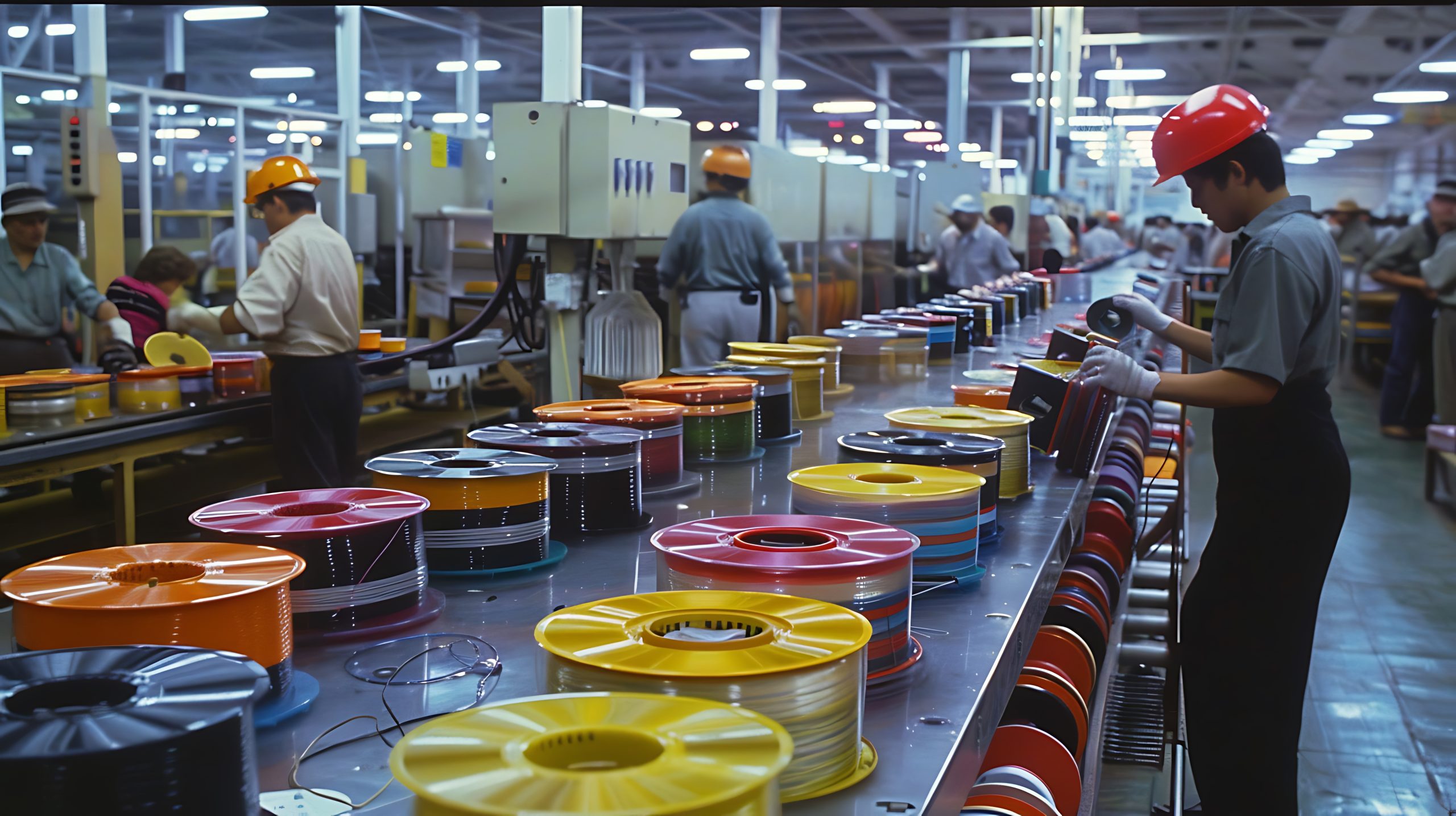
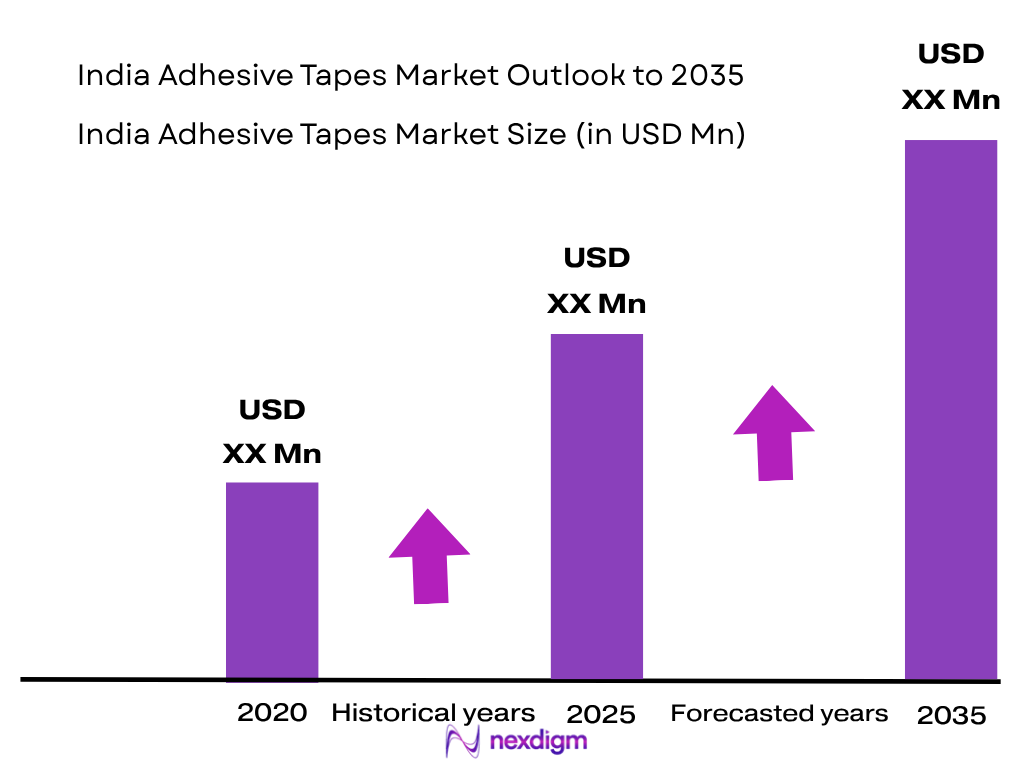
The India Adhesive Tapes Market is valued at approximately USD ~X billion, based on a five-year historical assessment of pressure-sensitive, packaging, masking, electrical, medical and specialty industrial tapes. Public benchmarks place the immediately preceding annual market at USD 2.21 billion and the latest historical market at about USD 2.38 billion, although published estimates vary with product scope. Growth is supported by packaging, automotive, electronics, construction, healthcare and industrial bonding demand.
Western and Southern India represent the principal adhesive-tape manufacturing and consumption clusters, particularly Mumbai-Pune, Ahmedabad-Sanand, Chennai-Chengalpattu, Bengaluru and Hyderabad, while Delhi NCR-Manesar is important in northern India. Their dominance comes from concentration of automotive OEMs, electronics plants, packaging converters, industrial distributors and component suppliers. 3M operates manufacturing facilities in Bengaluru, Pune and Ahmedabad, while tesa operates an approximately 2,300-square-metre converting center near Chennai serving electronics, automotive and renewable-energy customers.
Market Segmentation
By Product Type
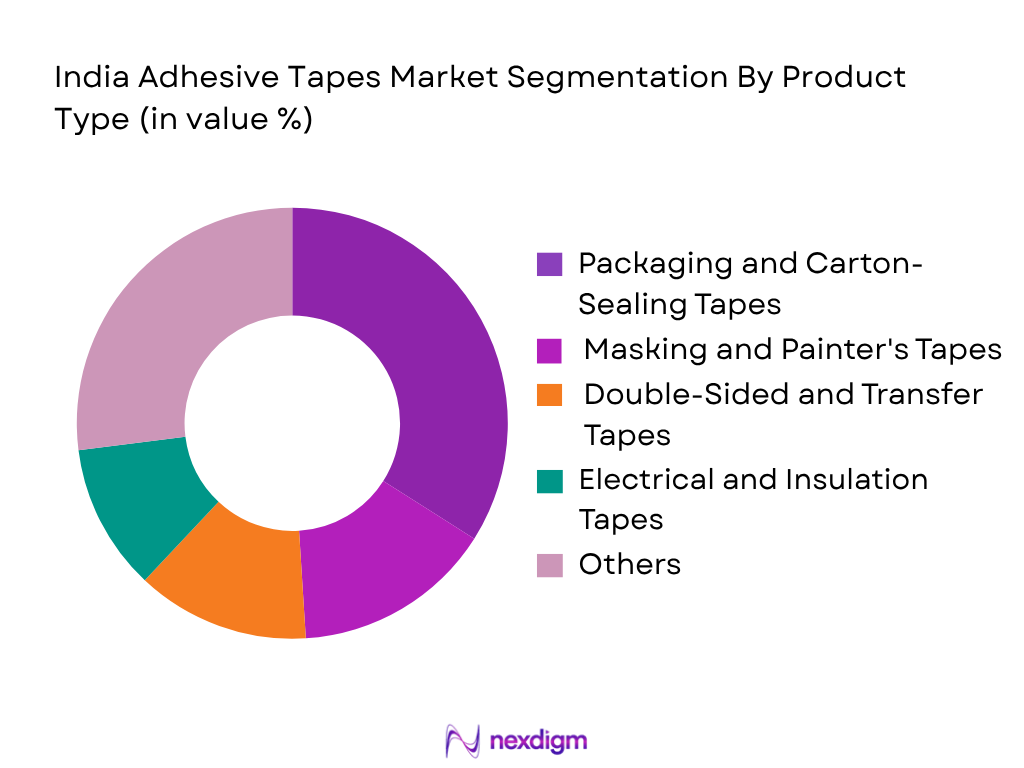
The India Adhesive Tapes Market is segmented by product type into packaging and carton-sealing tapes, masking tapes, double-sided tapes, electrical and insulation tapes, medical tapes, foam and high-bond tapes, surface-protection tapes and other specialty industrial tapes. Packaging and carton-sealing tapes dominate this segmentation, supported by India’s large corrugated-box ecosystem, FMCG distribution, organized retail, warehousing, parcel logistics and e-commerce fulfilment volumes. BOPP carton-sealing tapes offer a favorable balance between tensile strength, moisture resistance, machine compatibility and unit cost, making them suitable for high-volume applications. Packaging users also purchase tapes repeatedly rather than only during equipment installation cycles, generating considerable recurring demand. At the same time, double-sided, foam, electrical and specialty tapes command substantially higher realizations per square metre because they require advanced adhesive chemistries, engineered substrates and application-specific performance. Market sources consistently identify packaging as a key demand engine for the Indian adhesive-tape industry.
By Backing Material
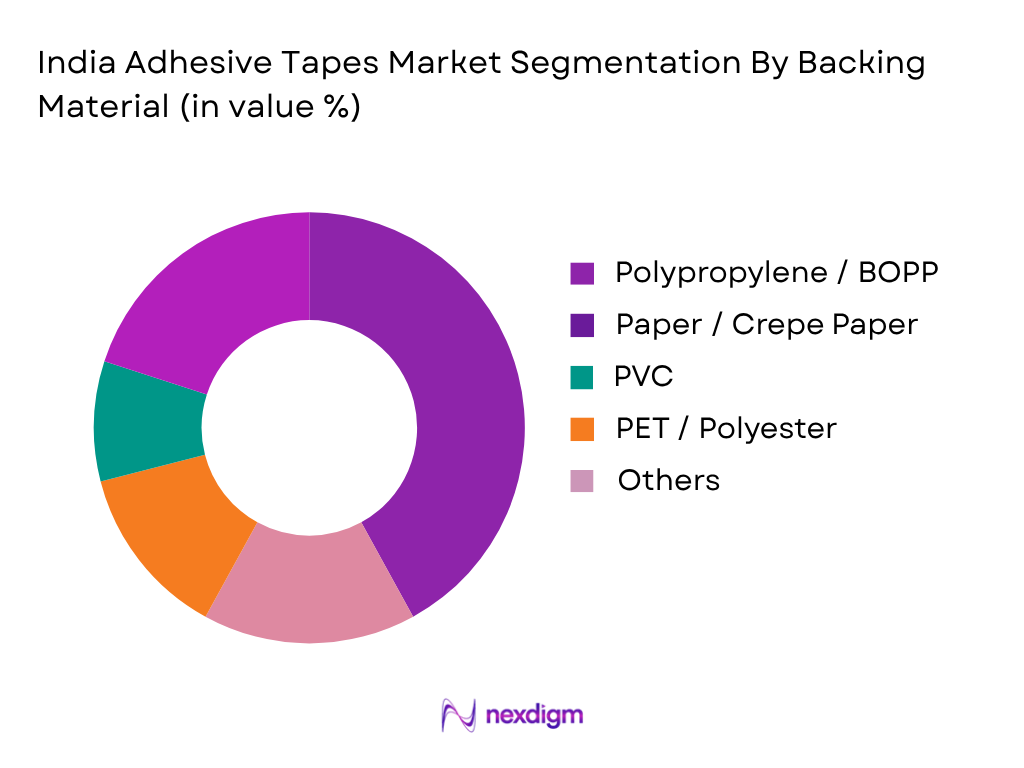
The India Adhesive Tapes Market is segmented by backing material into polypropylene, paper, PVC, PET/polyester, foam, cloth/fabric, foil and other engineered carriers. Polypropylene is the dominant backing material, primarily because BOPP tapes are extensively used for corrugated-carton sealing, bundling, packaging and logistics applications. Polypropylene provides good dimensional stability, moisture resistance, tensile performance and high-speed converting characteristics while remaining economical for large-volume production. India’s expanding parcel-distribution network and packaging requirements therefore translate directly into BOPP tape consumption. 6Wresearch also identifies polypropylene as the backing material witnessing the highest demand in India, citing its strength, moisture resistance, affordability and suitability for packaging and labelling. Higher-value industries, however, increasingly require PET, foam, tissue, foil and other engineered backings where thermal resistance, conformability, cushioning, electrical properties or structural bonding performance are more important than material cost.
Competitive Landscape
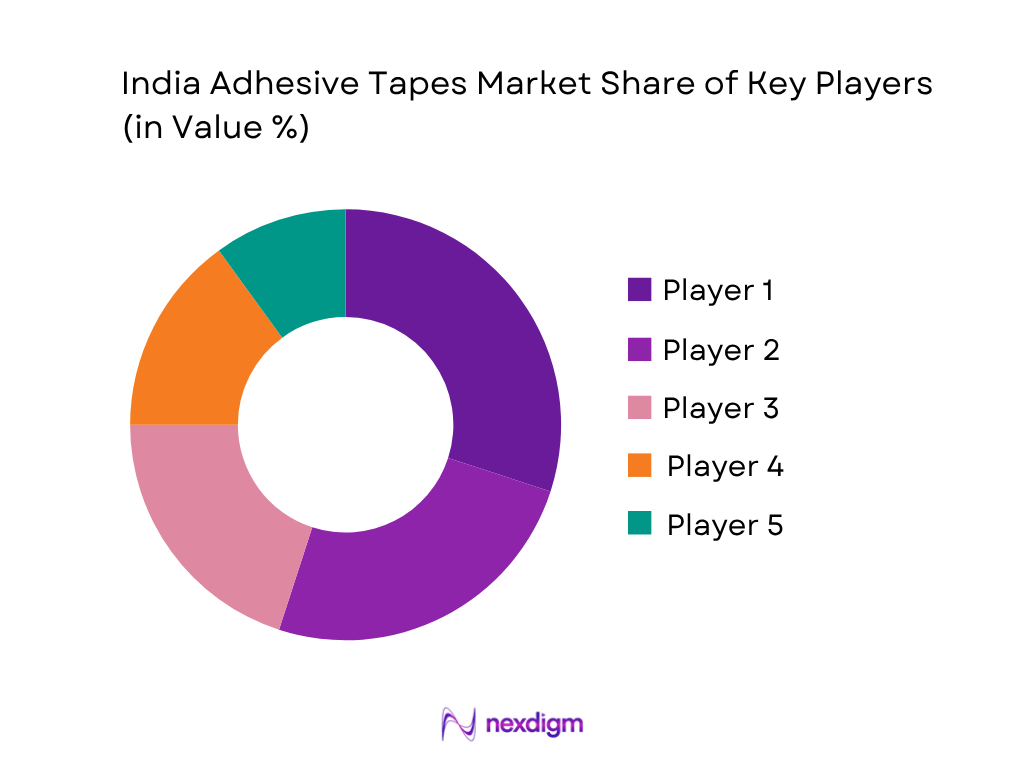
The India Adhesive Tapes Market combines multinational technology leaders with established domestic coaters, converters and packaging-tape manufacturers. Companies such as 3M, tesa, Nitto, Avery Dennison and Lohmann compete primarily on adhesive chemistry, substrate engineering, OEM qualification, product reliability and application engineering, while Indian manufacturers compete strongly in BOPP, masking, electrical, foam and converted industrial tapes. Competitive advantage is increasingly shifting from simple roll production toward precision converting, die-cut components and application-specific bonding solutions.
| Company | Establishment Year | Headquarters | Key Tape Portfolio | Adhesive Technology Capability | Major End-Use Exposure | India Manufacturing / Converting Presence | Specialty Tape Capability | Application Engineering / Customization |
| 3M India Limited | 1987 | Bengaluru, India | ~ | ~ | ~ | ~ | ~ | ~ |
| tesa Tapes (India) Pvt. Ltd. | 1996 | Navi Mumbai, India | ~ | ~ | ~ | ~ | ~ | ~ |
| Nitto Denko India Pvt. Ltd. | 2009 | Manesar, Haryana, India | ~ | ~ | ~ | ~ | ~ | ~ |
| Avery Dennison India | 1997* | Gurugram, India | ~ | ~ | ~ | ~ | ~ | ~ |
| Lohmann Adhesive Tapes | 1851 | Neuwied, Germany | ~ | ~ | ~ | ~ | ~ | ~ |
India Adhesive Tapes Market Analysis
Growth Drivers
Expanding Automotive Production is Increasing Demand for High-Performance Adhesive Tapes
India’s expanding automotive manufacturing base is creating sustained demand for masking tapes, wire-harness tapes, double-sided tapes, foam tapes, surface-protection tapes, electrical-insulation tapes and high-bond acrylic tapes. The Society of Indian Automobile Manufacturers reported total vehicle production of 31,036,476 units during FY 2024-25, including 5,061,164 passenger vehicles, 1,034,947 commercial vehicles, 1,050,020 three-wheelers and 23,883,857 two-wheelers. Production scale remained substantial in calendar 2025, when manufacturers produced 33,191,967 vehicles, demonstrating the depth of India’s automotive manufacturing ecosystem. Each vehicle requires multiple pressure-sensitive adhesive solutions for interior attachment, wiring management, trim bonding, paint masking, vibration control, insulation and temporary surface protection. Passenger-vehicle manufacturing is particularly relevant for acrylic foam and double-sided specialty tapes because OEMs increasingly require lightweight joining methods that can replace clips, screws and mechanical fasteners in selected applications. Two-wheelers and three-wheelers create additional volume demand for electrical tapes, harness tapes, masking products and general-purpose industrial tapes. The broader economic environment reinforces this industrial demand: World Bank data place India’s 2024 GDP at USD 3,909.89 billion and manufacturing value added at approximately USD 492,981.23 million, indicating a large manufacturing economy capable of supporting significant tape consumption across OEM and component-supplier networks. The adhesive-tape opportunity extends beyond final assembly because Tier-I and Tier-II suppliers use tapes during fabrication of dashboards, wiring systems, seats, mirrors, trims, electronics and painted components. Continued localization of automotive production therefore raises demand not only for commodity adhesive tapes but also for engineered products with controlled peel strength, shear resistance, temperature performance, low-VOC characteristics and OEM-specific qualification. Sources: World Bank and Society of Indian Automobile Manufacturers.
Electronics Manufacturing and High Goods Movement are Supporting Packaging and Specialty Tape Consumption
India’s electronics-production ecosystem is becoming an increasingly important demand base for double-sided tapes, PET tapes, protective films, thermal-management tapes, electrical-insulation tapes, precision die-cut components and ultra-thin pressure-sensitive constructions. The Ministry of Electronics and Information Technology reported domestic electronic-goods production of ₹9,52,000 crore in FY 2023-24, a reporting period ending in 2024. Within this total, mobile-phone production reached ₹4,22,000 crore, consumer electronics accounted for ₹1,07,627 crore, industrial electronics for ₹1,03,487 crore, electronic components for ₹86,929 crore, auto electronics for ₹66,378 crore, and wearables and hearables for ₹20,697 crore. Electronics exports were ₹2,41,157 crore, while imports reached ₹7,27,664 crore, demonstrating the scale of component handling, assembly and international shipment activity associated with this industry. Adhesive tapes are integral to display fixation, battery mounting, insulation, cable management, component protection, thermal interfaces and temporary process applications in electronics assembly. Packaging demand is reinforced by India’s enormous goods-movement ecosystem. GST system statistics show 1,112,005,630 e-way bills were generated between April 2023 and March 2024, followed by another 199,816,354 e-way bills in April and May 2024 alone. These movements encompass manufactured goods, consumer products, industrial inputs and commercial consignments requiring cartons, pallets, protective packaging and sealing materials. BOPP carton-sealing tapes benefit directly from this logistics intensity, while specialty tapes gain from increasing manufacturing complexity. World Bank data further report India’s 2024 GDP at USD 3,909.89 billion and GDP per capita at USD 2,694.7, supporting a broad domestic consumption and industrial base. Together, electronics assembly and goods movement create a dual demand mechanism: high-volume packaging tapes are needed to move products through supply chains, while value-added pressure-sensitive tapes are consumed inside increasingly sophisticated electronic products. Sources: Ministry of Electronics and Information Technology, GST Network and World Bank.
Market Challenges
Dependence on Petroleum-Derived Feedstocks and Imported Energy Inputs Creates Raw-Material Supply Risk
Adhesive-tape production depends heavily on petrochemical-derived materials, including BOPP, polypropylene, polyethylene, PET, PVC, acrylic monomers, synthetic rubber, tackifier systems, solvents and foam substrates. This linkage exposes Indian tape manufacturers to the availability of crude-derived feedstocks and international supply-chain conditions even when coating, slitting and converting are performed domestically. Petroleum Planning & Analysis Cell data show that domestic crude-oil production was only 14.4 million metric tonnes during April-September FY 2024-25, while consumption of petroleum products reached 117.7 million metric tonnes during the same six-month period. The Ministry of Petroleum and Natural Gas subsequently reported that India imported around 300 million metric tonnes of crude oil and petroleum products during FY 2024-25, illustrating the scale at which the country’s industrial feedstock and energy ecosystem remains connected to external supply. For adhesive-tape manufacturers, this matters because BOPP packaging tape, PE foam tape, PET tape, PVC electrical tape and many PSA chemistries ultimately originate from petrochemical value chains. Disruptions in crude supply, refinery operations, polymer availability, international freight or chemical intermediates can therefore affect raw-material procurement schedules and production planning even without a direct shortage of finished tape. The issue is particularly important for smaller coaters and converters that maintain lower raw-material inventories than multinational or vertically integrated suppliers. World Bank data place India’s manufacturing value added at approximately USD 492,981.23 million in 2024, demonstrating that adhesive-tape producers compete with a very large domestic industrial base for films, polymers, chemicals and related inputs. Manufacturers seeking to reduce exposure must diversify resin and film suppliers, qualify multiple backing specifications, strengthen domestic adhesive formulation capabilities and maintain greater flexibility between acrylic, rubber and hot-melt systems. Feedstock security is therefore a market-specific operational challenge for both commodity BOPP producers and specialty PSA manufacturers. Sources: Petroleum Planning & Analysis Cell, Ministry of Petroleum and Natural Gas and World Bank.
Plastic-Waste Compliance is Raising the Technical Bar for Packaging Tape and Backing-Material Design
Sustainability requirements are becoming a concrete product-development challenge for India’s adhesive-tape industry because major volume categories use BOPP, PVC, PET, PE and foam backings that enter industrial and packaging waste streams. The Ministry of Environment, Forest and Climate Change reported that 50,131 producers, importers and brand owners were registered on the centralized Extended Producer Responsibility portal, alongside 2,840 plastic-waste processors, while 103 lakh tonnes of plastic waste had been processed through the portal by December 2024. The ministry’s Annual Report also recorded 104.64 lakh tonnes of EPR certificates generated by registered plastic-waste processors and 86.96 lakh tonnes transferred to registered producers, importers and brand owners. The Plastic Waste Management Amendment Rules notified in March 2024 also expanded digital reporting requirements and brought manufacturers and importers of plastic raw materials further into the compliance ecosystem. These developments are relevant to adhesive tapes because packaging customers increasingly evaluate whether carton-sealing tapes interfere with fibre recovery, whether plastic-backed products can be separated efficiently, and how liners, cores and film waste are managed across converting operations. Tape suppliers serving FMCG, e-commerce, logistics and corrugated-box customers consequently face pressure to develop thinner constructions, paper-backed alternatives, linerless designs, recyclable-compatible adhesive systems and more efficient coating technologies. Compliance complexity is also greater for multi-material constructions combining film, foam, release liners and pressure-sensitive adhesive layers, because recycling pathways differ from those for mono-material packaging. World Bank data show India’s 2024 GDP at USD 3,909.89 billion, indicating the enormous scale of the consumption and manufacturing system to which these waste-management requirements apply. For adhesive-tape companies, sustainability is therefore no longer limited to corporate reporting; it increasingly influences substrate selection, product engineering, customer qualification and converter waste-management practices. Sources: Ministry of Environment, Forest and Climate Change and World Bank.
Market Opportunities
Electric-Vehicle Manufacturing Creates a High-Value Opportunity for Battery, Electrical and Lightweight Bonding Tapes
India’s electric-mobility ecosystem provides one of the clearest future expansion routes for specialty adhesive-tape suppliers because EV platforms require substantially more electrical insulation, battery protection, wire management, thermal-interface materials, cushioning and lightweight attachment solutions than conventional low-complexity tape applications. Ministry of Heavy Industries data sourced from the Vahan portal show 1,950,490 electric vehicles were registered during calendar 2024, while total vehicle registrations reached 26,207,453 units. For FY 2024-25, registered EVs reached 19.68 lakh units. By January 27, 2026, the PM E-DRIVE programme had supported sales of 22.12 lakh electric vehicles, including 19.19 lakh electric two-wheelers and 2.93 lakh electric three-wheelers. The programme also provides for deployment of 14,028 electric buses, broadening the addressable application base for electrical, insulation and high-performance attachment materials. These current installed-base and registration figures justify future adhesive-tape opportunity without relying on forecast volumes. EV battery packs require products for cell insulation, module fixation, busbar protection, flame management, gap filling, cushioning, thermal management and pack sealing. Electric two-wheelers generate demand for battery-pack insulation, cable routing, protective films and electrical tapes, while electric buses and passenger vehicles can consume broader portfolios of acrylic foam, double-sided, NVH and wire-harness tapes. World Bank data report India’s 2024 manufacturing value added at approximately USD 492,981.23 million, demonstrating the industrial capacity available to localize these materials. For tape manufacturers, the strategic opportunity lies in moving beyond conventional PVC electrical and foam tapes toward flame-retardant PET constructions, high-temperature acrylic systems, dielectric films, thermal solutions and custom die-cut parts that can be integrated directly into battery and electronics assembly lines. Suppliers with local converting, testing and OEM qualification capabilities are positioned to capture greater value from this transition. Sources: Ministry of Heavy Industries, Vahan and World Bank.
Expansion of Solar and Renewable-Energy Installations Creates New Applications for Weather-Resistant Specialty Tapes
India’s rapidly expanding renewable-energy infrastructure creates an addressable opportunity for adhesive tapes engineered for solar-module manufacturing, mounting, electrical insulation, junction-box attachment, edge protection, cable management, sealing and temporary surface protection. The Ministry of New and Renewable Energy reported 97.86 GW of installed solar capacity at the end of 2024, after 24.54 GW of solar capacity was added during the year. Total renewable-energy installed capacity reached 209.44 GW, while wind capacity stood at 48.16 GW. The scale expanded further during 2025, with solar capacity reaching 135.81 GW, wind capacity reaching 54.51 GW, and total non-fossil capacity reaching 266.78 GW. These are current installed-capacity indicators rather than forecasts, and they demonstrate a significantly enlarged equipment base requiring production, installation and maintenance materials. Adhesive-tape suppliers can address this ecosystem through high-temperature PET tapes, double-sided attachment tapes, UV-resistant foam tapes, aluminum-foil tapes, electrical-insulation products, protective films and specialty products designed for prolonged exposure to heat, moisture and outdoor conditions. Solar-module manufacturing is particularly attractive because tape requirements arise at multiple stages—from temporary process masking and glass protection to component fixation and electrical insulation—while installation creates separate demand for cable management, HVAC-linked applications, sealing and maintenance products. The broader industrial context is also substantial: World Bank data record India’s 2024 GDP at USD 3,909.89 billion and manufacturing value added at approximately USD 492,981.23 million. For domestic tape producers, renewable energy offers a route to diversify away from highly commoditized carton-sealing products and enter applications where weatherability, dielectric properties, dimensional stability and long service life are more important. Localization of these specialty constructions can also shorten qualification and delivery cycles for Indian solar-module and electrical-equipment manufacturers. Sources: Ministry of New and Renewable Energy and World Bank.
Future Outlook
The India Adhesive Tapes Market is projected to expand at a forecast CAGR of approximately ~X% during 2026-2035. Growth is expected to shift progressively toward higher-value specialty tapes as Indian manufacturers increase automation, vehicle platforms incorporate more electronics, electric-vehicle battery production expands and electronics manufacturing becomes increasingly localized. Packaging will continue providing the industry’s volume base, while automotive, medical, electronics, renewable energy and industrial assembly are expected to generate stronger value-added opportunities.
Specialty pressure-sensitive solutions are likely to gain importance as manufacturers substitute screws, clips, rivets and liquid adhesives with tapes that reduce weight, distribute stress, simplify assembly and provide sealing or insulation simultaneously. This is particularly relevant in EV battery packs, automotive interiors, electronic displays, appliances and building-envelope applications. Public forecasts differ materially depending on scope: Grand View Research identifies India as a rapidly growing Asia-Pacific adhesive-tape market, while MarketsandMarkets links Indian expansion with industrialization, e-commerce, manufacturing investment and infrastructure development.
Major Players
- 3M India Limited
- tesa Tapes (India) Private Limited
- Nitto Denko India Private Limited
- Avery Dennison India
- Lohmann Adhesive Tapes India Private Limited
- Saint-Gobain Tape Solutions India
- Ajit Industries Private Limited
- Wonder Polymers Private Limited
- Mexim Adhesive Tapes Private Limited
- Adhesive Specialities
- Gripking Tapes India Private Limited
- Prateek Tapes
- Paragon Tapes
- Pidilite Industries Limited
- Scapa / Mativ
Key Target Audience
- Adhesive Tape Manufacturers and Pressure-Sensitive Adhesive Coaters
- Automotive, Electric Vehicle and Auto-Component Manufacturers
- Electronics, Electrical Equipment and Consumer-Durable Manufacturers
- Packaging, Corrugated Box, E-Commerce and Logistics Companies
- Adhesive Tape Converters, Die-Cutters, Distributors and Industrial Suppliers
- Raw Material Manufacturers (BOPP/PET Films, Acrylic Resins, Rubber, Tackifiers, Release Liners and Foam)
- Investments and Venture Capitalist Firms
- Government and Regulatory Bodies (Bureau of Indian Standards, Ministry of Commerce and Industry, Department for Promotion of Industry and Internal Trade, Ministry of Environment, Forest and Climate Change, Central Pollution Control Board, Ministry of Heavy Industries)
Research Methodology
Step 1: Identification of Key Variables
The initial phase involves constructing a complete ecosystem map for the India Adhesive Tapes Market, covering resin suppliers, film and paper manufacturers, adhesive formulators, coaters, jumbo-roll manufacturers, converters, distributors and end users. Extensive desk research is used to identify market-defining variables such as coated area, tape volume, adhesive chemistry, backing material, selling price, imports, local production and end-use consumption patterns.
Step 2: Market Analysis and Construction
Historical market information is compiled through both top-down and bottom-up approaches. The bottom-up model evaluates domestic production, coating and converting activity, imports, exports and company revenues, while the top-down model examines packaging output, automotive production, electronics manufacturing, healthcare usage and industrial activity. Product-level pricing and consumption assumptions are reconciled to develop market value and volume estimates across commodity and specialty tapes.
Step 3: Hypothesis Validation and Expert Consultation
Initial market hypotheses are validated through computer-assisted telephone interviews and structured discussions with adhesive-tape manufacturers, converters, distributors, raw-material suppliers, packaging users, automotive suppliers and electronics manufacturers. These interviews examine coating utilization, average selling prices, distributor margins, product substitution, imported specialty-tape dependence and customer qualification requirements. The findings are used to adjust assumptions and identify discrepancies between reported supply and observed end-market consumption.
Step 4: Research Synthesis and Final Output
The final stage triangulates primary research with company disclosures, trade information, industry publications, regulatory documents and secondary market databases. Market values are reconciled across tape type, backing material, adhesive chemistry, technology and end-use sector. Forecast assumptions incorporate industrial production, packaging intensity, EV and electronics localization, specialty-tape penetration and sustainability trends, resulting in a validated outlook for the India Adhesive Tapes Market.

- Executive Summary
- Research Methodology (Market Definition and Scope, India Adhesive Tapes Taxonomy, Pressure-Sensitive Adhesive Tape Classification, Commodity and Specialty Tape Classification, Adhesive Chemistry Mapping, Backing Material Assessment, Tape Construction Framework, Adhesive Coating Technology Assessment, Application Mapping, Raw Material Assessment, Sustainable Tape Technology Evaluation, Market Sizing Framework)

- Definition and Scope
- India Adhesive Tapes Industry Evolution and Pressure-Sensitive Adhesive Technology Development
- Adhesive Tape Manufacturing and Coating Process
- Adhesive Tape Value Chain Analysis
- India Adhesive Tapes Supply Chain Analysis
- Adhesive Resin, Backing Material and Release-Liner Ecosystem Analysis
- India Adhesive Tapes Import Dependency and Localization Assessment
- OEM Adhesive Tape Application Architecture and Specialty Tape Solution Framework

- Growth Drivers (Expansion of E-Commerce and Corrugated Packaging Volumes, Growth of Automotive and Auto Component Manufacturing, Increasing EV Battery Assembly, Expansion of Electronics Manufacturing and Localization, Rising Construction and Infrastructure Activity, Mechanical Fastener Replacement, Growth of Organized Industrial Manufacturing, Increasing Adoption of High-Performance Pressure-Sensitive Adhesive Tapes)
- Market Challenges (BOPP Film and Polymer Price Volatility, Acrylic Monomer and Tackifier Price Fluctuations, Dependence on Imported Specialty Tapes, Fragmented Converter Ecosystem, Commodity Tape Price Competition, Long OEM Qualification Cycles, Solvent and VOC Management Requirements, Quality Inconsistency Across Unorganized Manufacturers)
- Market Opportunities (EV Battery Insulation and Assembly Tapes, Electronics Die-Cut Adhesive Components, High-Bond Acrylic Foam Tapes, Recyclable Packaging Tapes, Low-VOC and Water-Based Adhesive Systems, Medical-Grade Adhesive Tapes, Solar Module Bonding Solutions, Import Substitution of High-Performance Specialty Tapes)
- Market Trends (Shift from Commodity to Specialty Adhesive Tapes, Increasing Acrylic PSA Adoption, Solvent-Free and Water-Based Coating Technologies, Precision Die-Cut Adhesive Components, Paper-Based Packaging Tapes, High-Bond Structural Tapes, Thermal Management and Electrical Insulation Tapes, Localization of Automotive and Electronics Tape Solutions)
- Regulatory and Standards Landscape (BIS Adhesive Tape Standards, Electrical Insulation and Flame-Retardancy Requirements, Automotive OEM Qualification Standards, Medical Device and Skin-Contact Adhesive Requirements, Plastic Waste Management Rules, Extended Producer Responsibility Requirements, Packaging and Labeling Regulations, Environmental and Solvent-Handling Compliance Requirements)
- SWOT Analysis
- Porter’s Five Forces Analysis
- PESTLE Analysis
- Stakeholder Ecosystem
- Competition Ecosystem

- By Market Value (2020-2025)
- By Adhesive Tape Consumption Volume (2020-2025)
- By Coated Surface Area (2020-2025)
- By Domestic Production Volume (2020-2025)
- By Import Volume (2020-2025)
- By Export Volume (2020-2025)
- By Average Selling Price (2020-2025)
- By Commodity Adhesive Tape Consumption (2020-2025)
- By Specialty Adhesive Tape Consumption (2020-2025)

- By Product Type (In Value %)
BOPP Packaging and Carton Sealing Tapes
Masking and Painter’s Tapes
Double-Sided Tissue Tapes
Double-Sided Foam Tapes
Acrylic Foam and High-Bond Tapes
Electrical and Insulation Tapes
Duct and Cloth Tapes
Filament and Strapping Tapes
Surface Protection Tapes
Aluminum Foil and HVAC Tapes
Polyester and PET Tapes
Transfer Tapes
Medical and Surgical Tapes
Automotive Adhesive Tapes
Specialty High-Performance Industrial Tapes - By Adhesive Chemistry (In Value %)
Water-Based Acrylic Adhesives
Solvent-Based Acrylic Adhesives
Natural Rubber Adhesives
Synthetic Rubber Adhesives
Hot-Melt Rubber Adhesives
Silicone Adhesives
Modified and Hybrid Acrylic Adhesive Systems - By Backing Material (In Value %)
BOPP and Polypropylene Film
Polyethylene Film
Polyvinyl Chloride Film
Polyethylene Terephthalate Film
Crepe Paper and Kraft Paper
Cloth and Fabric
Aluminum Foil
Tissue and Nonwoven Materials
Polyethylene Foam
Acrylic Foam
Glass Cloth
PTFE and Fluoropolymer Film
Unsupported and Carrier-Free Constructions - By End-Use Industry (In Value %)
Packaging and Corrugated Boxes
E-Commerce and Logistics
Automotive and Auto Components
Electric Vehicles and Battery Systems
Electrical Equipment
Electronics and Consumer Durables
Building and Construction
HVAC and Insulation
Medical and Healthcare
Printing and Graphic Arts
Signs and Advertising
White Goods and Appliances
Renewable Energy and Solar Modules
Railways and Transportation
General Industrial Manufacturing - By Distribution Channel (In Value %)
Direct Manufacturer-to-OEM Sales
Authorized Industrial Distributors
Adhesive Tape Converters
Packaging Material Distributors
Electrical and Electronics Distributors
Automotive Tier Supplier Channels
Construction and Hardware Distributors
Medical Material Converters and Distributors
Regional Dealers and Stockists
Online B2B Platforms - By Region (In Value %)
North India
Delhi NCR
Haryana
Uttar Pradesh
Punjab
Rajasthan
West India
Maharashtra
Gujarat
Goa
South India
Tamil Nadu
Karnataka
Telangana
Andhra Pradesh
Kerala
East India
West Bengal
Odisha
Jharkhand
Central India
Madhya Pradesh
Chhattisgarh

- Market Share of Major Players (By Revenue, Volume, Product Type, Adhesive Chemistry, Backing Material, End-Use Industry, Market Type, Distribution Channel)
- Cross Comparison Parameters (Adhesive Chemistry Breadth, Backing and Carrier Technology Breadth, India Coating and Converting Footprint, High-Performance Specialty Tape Capability, OEM Application Engineering and Qualification Support, Precision Die-Cutting and Custom Converting Capability, Sustainable and Low-VOC Tape Portfolio, End-Use Industry Coverage)
- SWOT Analysis of Major Players
- Competitive Positioning Matrix
- Pricing and Distribution Network Benchmarking
- Detailed Profiles of Major Companies
3M India Limited
tesa Tapes (India) Private Limited
Nitto Denko India Private Limited
Avery Dennison India
Lohmann Adhesive Tapes India Private Limited
Saint-Gobain Tape Solutions India
Ajit Industries Private Limited
Wonder Polymers Private Limited
Mexim Adhesive Tapes Private Limited
Adhesive Specialities
Gripking Tapes India Private Limited
Prateek Tapes
Paragon Tapes
Pidilite Industries Limited
Scapa / Mativ

- Buyer Segmentation
- OEM Procurement Behaviour
- Supplier Selection Criteria
- Buyer Pain Points
- Technology Adoption Assessment
- Replacement and Repurchase Behaviour

- By Market Value (2026-2035)
- By Adhesive Tape Consumption Volume (2026-2035)
- By Coated Surface Area (2026-2035)
- By Domestic Production Volume (2026-2035)
- By Import Volume (2026-2035)
- By Export Volume (2026-2035)
- By Average Selling Price (2026-2035)
- By Commodity Adhesive Tape Consumption (2026-2035)
- By Specialty Adhesive Tape Consumption (2026-2035)


 Request a Sample
 Ask for Customization
 Get a Quote
 Enquire Now