

 Download PDF
Market Overview
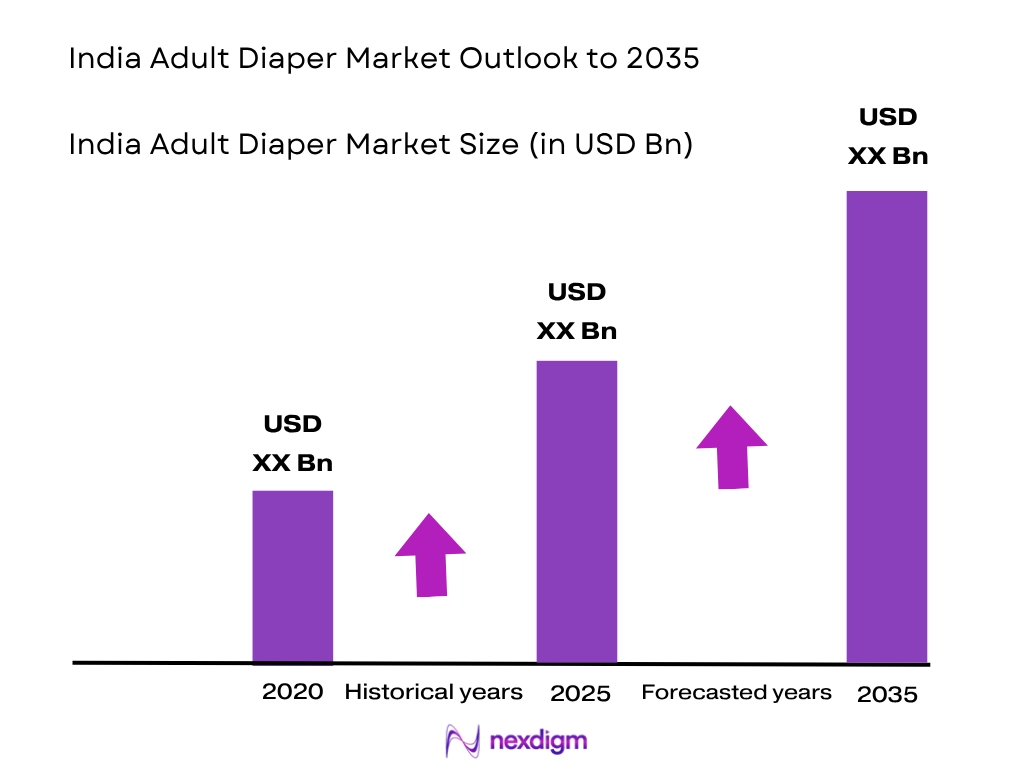
The India Adult Diaper has been valued at USD ~ billion in 2025, driven by the rising awareness of incontinence issues and the increasing demand for adult hygiene products. The market has seen consistent growth due to the increasing aging population, healthcare awareness, and a growing shift towards hygienic solutions As India continues to urbanize, product accessibility and consumer education are contributing to further market expansion. The demand is also being propelled by the growing acceptance of adult diapers in various segments, such as hospitals, old age homes, and homecare.
India’s adult diaper market is primarily dominated by urban cities, including Delhi, Mumbai, Bangalore, and Chennai, due to their large population, healthcare infrastructure, and higher disposable incomes. These metropolitan areas are witnessing a surge in demand due to the aging population and increasing awareness regarding healthcare. Urbanization and rapid development of retail and e-commerce platforms are driving the market’s expansion in these regions. Additionally, Southern states like Tamil Nadu and Kerala, with their higher literacy rates and healthcare facilities, have seen higher adoption rates of adult diapers compared to rural regions.
Market Segmentation
By Product Type
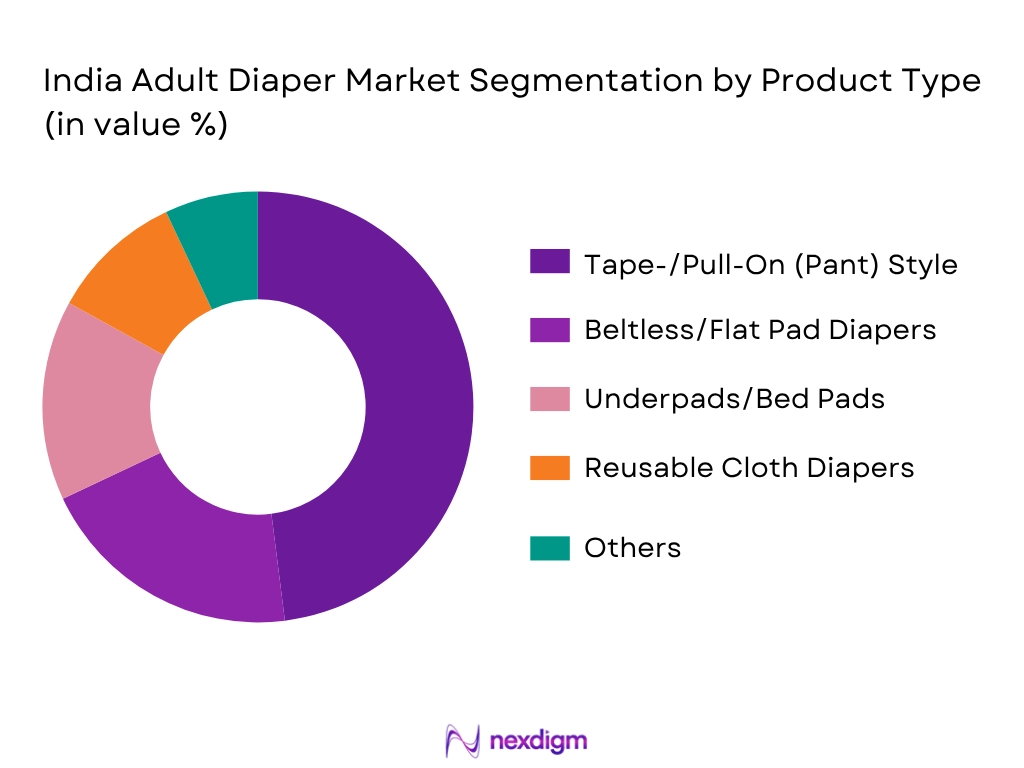
India’s adult diaper market is segmented into various product types, including tape-/pull-on (pant) style diapers, beltless/flat pad diapers, underpads/bed pads, reusable cloth diapers, and others such as inserts and liners. Among these, the tape-/pull-on style diapers dominate the market due to their superior convenience, comfort, and better fit. These diapers are widely preferred due to their ease of use and suitability for both individuals and caregivers. Their market dominance is driven by the growing demand for disposable, easy-to-wear products for elderly and bedridden patients.
The dominance of tape-/pull-on style diapers is attributed to their advanced technology, such as better absorbency, and the increasing preference for comfortable, user-friendly products. This segment is seeing robust growth due to the growing demand from urban consumers, who are more inclined toward high-quality disposable diapers for elderly and incontinence patients.
By End-User/Application
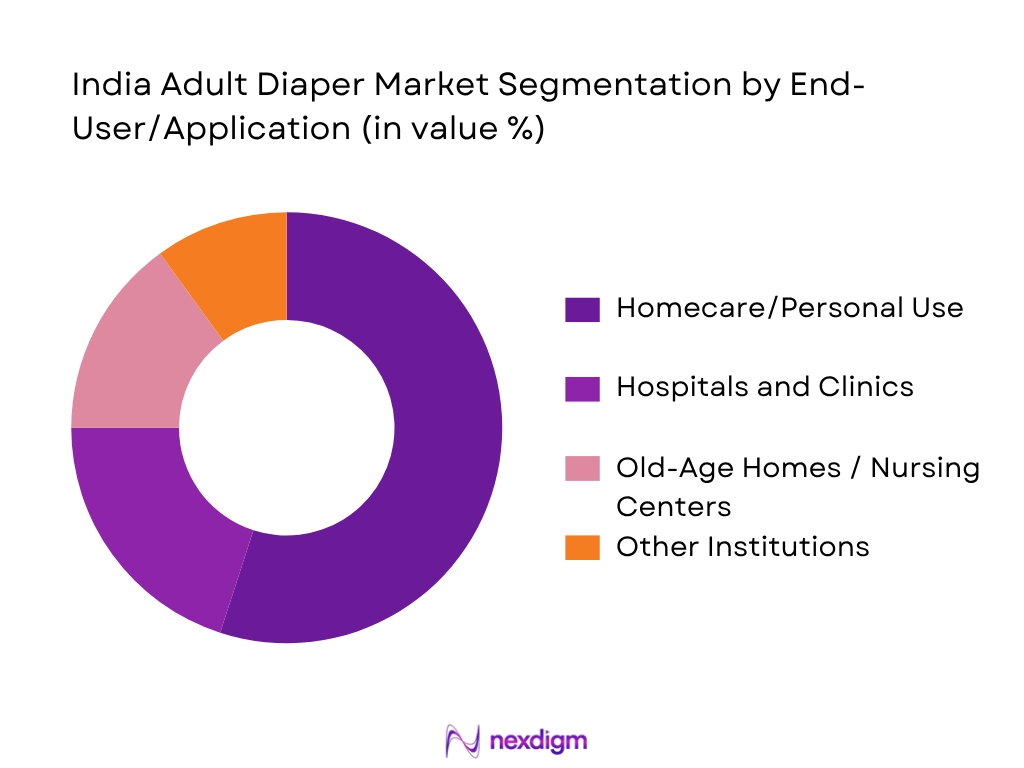
The market is segmented by end-user/application into homecare/personal use, hospitals and clinics, old-age homes/nursing centers, and other institutions such as travel and long-term care. The homecare/personal use segment holds the largest share in the market. This is primarily due to the growing awareness among elderly individuals and caregivers, coupled with an increase in disposable income, which has allowed people to purchase adult diapers for personal use. As India’s population ages, more families are opting for adult diapers for convenience and hygiene purposes.The homecare/personal use segment remains dominant due to the increased focus on individual health management, particularly in urban areas. As awareness around incontinence grows and products become more accessible, this segment is likely to continue to grow.
Competitive Landscape
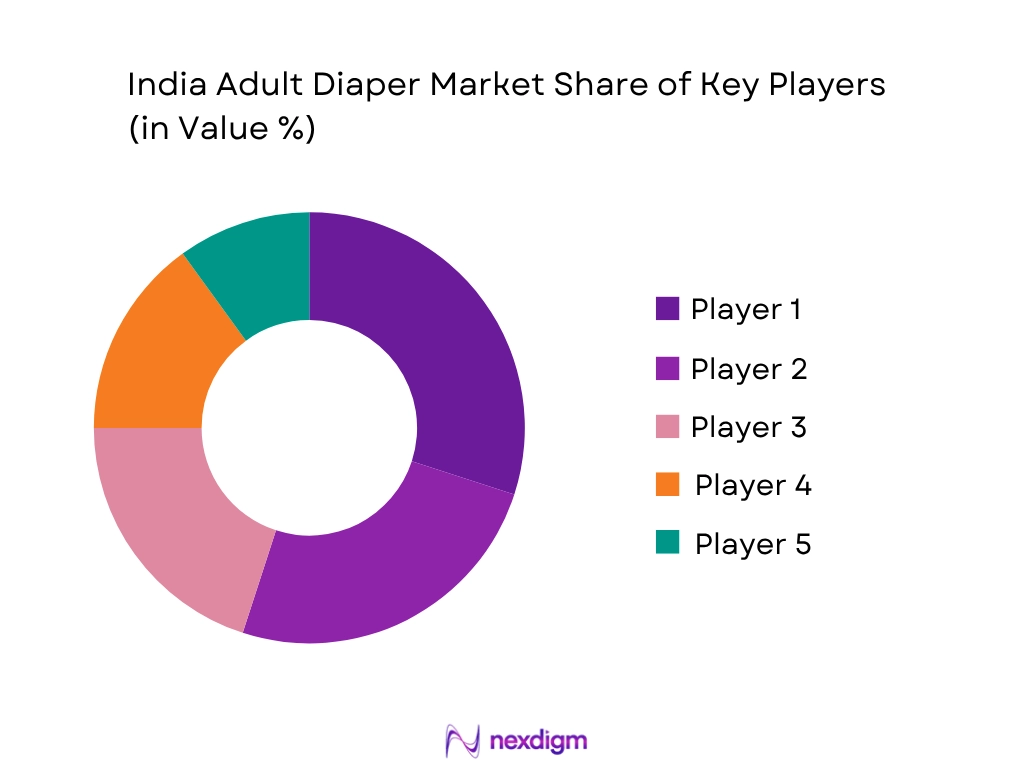
The India adult diaper market is dominated by several major players, including both multinational and local brands. Companies like Nobel Hygiene Ltd, Kimberly-Clark India Pvt. Ltd., and Unicharm India Pvt. Ltd. have a significant presence due to their extensive distribution networks, strong brand recognition, and continuous product innovations. These companies offer a wide range of products catering to different needs, such as comfort, absorbency, and skin sensitivity, which positions them as the key market players.
The market is consolidated among a few major players, with multinational corporations like Kimberly-Clark and Unicharm India holding significant shares. These companies dominate because of their established brand presence and the ability to innovate continuously. Additionally, local players like Nobel Hygiene Ltd also maintain a strong market position by offering affordable products that cater to regional needs, particularly in the homecare and institutional segments.
| Company Name | Establishment Year | Headquarters | Product Portfolio | Production Capacity | Distribution Network | Revenue (Latest Year) | Key Partnerships | Innovation Focus |
| Nobel Hygiene Ltd | 2000 | Mumbai, India | ~ | ~ | ~ | ~ | ~ | ~ |
| RGI Meditech Pvt. Ltd. | 2005 | Delhi, India | ~ | ~ | ~ | ~ | ~ | ~ |
| Unicharm India Pvt. Ltd. | 2000 | Mumbai, India | ~ | ~ | ~ | ~ | ~ | ~ |
| Kimberly-Clark India Pvt. Ltd. | 1995 | Mumbai, India | ~ | ~ | ~ | ~ | ~ | ~ |
| Paramount Surgimed Ltd. | 1995 | Mumbai, India | ~ | ~ | ~ | ~ | ~ | ~ |
India Adult Diaper Market Analysis
Growth Drivers
Demographic Shifts
India’s aging population is one of the key drivers behind the demand for adult diapers. According to the World Bank, the proportion of people aged 60 and above in India is projected to grow from 9.6% in 2023 to over 12% by 2030. This demographic shift is expected to significantly influence the demand for products tailored to elderly care, including adult diapers. In 2024, India will have a senior population of approximately 150 million, creating a substantial demand for products that address incontinence, a common issue among the elderly. Moreover, with longer life expectancy rates increasing (estimated to reach 70.5 years in 2024), the need for adult hygiene products is expected to increase as older individuals often face chronic health conditions, including incontinence. Additionally, the rapid urbanization in India is contributing to the expansion of healthcare infrastructure, which is leading to greater availability of products like adult diapers. This trend is reinforced by government policies such as the National Policy on Older Persons, which aims to improve the quality of life for the elderly population. With rising urbanization, urban centers such as Delhi, Mumbai, and Chennai are witnessing a higher penetration of adult diapers due to better healthcare services and greater disposable income among families with elderly members.
Rising Healthcare Awareness and Destigmatization of Incontinence
India has witnessed a rise in healthcare awareness over the last decade, driven by increased access to information, government health campaigns, and rising disposable incomes. In 2024, the Indian government allocated INR 94,000 crores (USD 11.5 billion) for the health sector, indicating a strong commitment to improving healthcare services. This allocation supports greater awareness and accessibility to products for elderly care and incontinence. Awareness campaigns around incontinence, especially through platforms like social media and NGOs, have started to break the long-standing stigma associated with adult diapers. Public health initiatives, such as the National Health Mission (NHM), have been instrumental in promoting health education, especially in urban areas. In rural areas, despite limited awareness, more than 65% of hospitals are now offering specialized geriatric care, helping to normalize discussions around incontinence. The destigmatization of these issues has played a pivotal role in encouraging consumers to seek incontinence products like adult diapers. Moreover, the increasing acceptance of such products in various social settings, such as healthcare facilities and family homes, reflects a shift in consumer attitudes, supporting further market growth.
Market Challenges
High Product Cost and Price Sensitivity
India is a price-sensitive market, and adult diapers, being a relatively high-cost product, pose a challenge to widespread adoption. The production of adult diapers involves costly raw materials such as superabsorbent polymers (SAP) and fluff pulp, which are imported, thus raising the price point. As per the Reserve Bank of India, inflation in the cost of raw materials for hygienic products has risen by approximately 8.2% in the past two years, directly impacting the end price for consumers. This makes adult diapers relatively unaffordable for a significant portion of the population, especially in rural areas where average incomes are lower. In fact, over 65% of India’s population lives in rural areas, where the per capita income is considerably lower than in urban regions. As of 2024, the average annual per capita income in rural India is approximately INR 15,000 (USD 200), which limits their ability to afford premium hygiene products. This economic disparity leads to price sensitivity, where consumers often opt for cheaper alternatives or substitute products, hindering the overall growth of the adult diaper market in the country.
Cultural Stigma and Limited Awareness in Rural Areas
Despite the rising healthcare awareness in urban regions, cultural stigma regarding incontinence and the use of adult diapers remains prevalent in rural parts of India. In 2024, over 69% of the population still resides in rural areas, and health-related taboos often prevent individuals from seeking help for incontinence. The stigma is compounded by a lack of awareness about adult diapers as a viable solution. As a result, many elderly individuals suffering from incontinence avoid seeking medical treatment or purchasing necessary products. Furthermore, rural India faces limited access to healthcare infrastructure, and the lack of educational campaigns on incontinence means that consumers often remain unaware of the existence of such products. The government’s limited focus on healthcare in these regions further exacerbates the challenge. To overcome this barrier, the Indian government would need to increase investment in healthcare outreach programs that focus on destigmatizing incontinence and encouraging product use in rural areas.
Market Opportunities
Institutional Demand (Hospitals, Old Age Homes)
The demand for adult diapers in institutional settings such as hospitals, old age homes, and nursing centers presents a significant growth opportunity for the market. India’s healthcare system is expanding rapidly, with a projected rise in the number of elderly individuals requiring long-term care. As of 2024, India has around 1,500 old age homes across the country, with many more under construction due to the increasing elderly population. Government healthcare policies, such as the National Health Policy, emphasize improved eldercare, contributing to higher demand for incontinence products. Hospitals also require a steady supply of adult diapers for patients recovering from surgery or suffering from chronic diseases. In fact, approximately 70% of hospitals in India are now offering specialized geriatric care, further boosting the need for these products. With a growing awareness of the importance of quality elderly care, these institutions are turning to high-quality adult diapers to ensure patient comfort, hygiene, and dignity. Additionally, private and government-run hospitals are increasingly adopting disposable hygiene products to meet growing healthcare demands. As a result, institutional demand will continue to be a key driver for the market’s expansion.
Government Healthcare Initiatives for Seniors
The Indian government is actively promoting healthcare programs aimed at improving the lives of the elderly, creating an opportunity for the adult diaper market. In 2024, the Indian government introduced several initiatives such as the Rashtriya Vayoshri Yojana, which is focused on providing senior citizens with aids and assistive devices, including adult diapers. This program has allocated INR 200 crore (USD 24 million) for the year to assist elderly individuals in need of healthcare products, which directly benefits the adult diaper market. Furthermore, the government’s increased funding towards healthcare infrastructure, including geriatric care facilities, provides a platform for greater adoption of adult diapers. The Senior Citizens Welfare Fund, launched by the government, is expected to facilitate further penetration of hygiene products in the eldercare segment. These initiatives, coupled with rising healthcare awareness and improved healthcare infrastructure, provide a solid foundation for increased government-backed consumption of adult diapers in both institutional and homecare settings.
Future Outlook
The India adult diaper market is expected to show significant growth over the next decade. This growth will be driven by a growing aging population, increased healthcare awareness, and government initiatives for elderly care. With advancements in product technology, such as eco-friendly and biodegradable diapers, the market is also seeing innovations that cater to evolving consumer preferences for comfort, absorbency, and sustainability. Additionally, the expanding retail and e-commerce channels are likely to further boost market accessibility. Over the next 5 years, the adult diaper market will be significantly influenced by the increasing awareness and acceptance of adult hygiene products, backed by urbanization, healthcare infrastructure development, and the rise of online retail. This growth will be coupled with rising demand from institutional markets such as hospitals and old-age homes.
Major Players
- Nobel Hygiene Ltd
- RGI Meditech Pvt. Ltd.
- Kangaroo Health Care Pvt. Ltd.
- Kamal Health Care Pvt. Ltd.
- Unicharm India Pvt. Ltd.
- Kimberly-Clark India Pvt. Ltd.
- Paramount Surgimed Ltd.
- Romsons Prime Pvt. Ltd.
- Tataria Hygiene Pvt. Ltd.
- Swara Baby Products Pvt. Ltd.
- PAN Healthcare Pvt. Ltd.
- Walmark Meditech Pvt. Ltd.
- Millennium BabyCares Pvt. Ltd.
- Kare-In (TMI India)
- Ascent Meditech Ltd.
Key Target Audience
- Investments and Venture Capitalist Firms
- Government and Regulatory Bodies (Ministry of Health & Family Welfare, National Medical Commission)
- E-commerce Retailers
- Hospitals and Healthcare Providers
- Old-Age Homes and Nursing Centers
- Retail Chains and Supermarkets
- Consumer Goods Manufacturers
- Private Equity Firms
Research Methodology
Step 1: Identification of Key Variables
The initial phase involves constructing an ecosystem map to identify key stakeholders within the India adult diaper market. This includes manufacturers, suppliers, retailers, and healthcare institutions. Desk research is utilized to gather data from secondary sources, such as industry reports and government publications.
Step 2: Market Analysis and Construction
Historical data and trends from previous years are analyzed to estimate the current market value and assess growth patterns. This involves evaluating the penetration of adult diapers in various end-user sectors, including homecare and institutional use.
Step 3: Hypothesis Validation and Expert Consultation
Expert consultations through structured interviews and surveys will be conducted with industry professionals to validate market assumptions. These experts will provide insights into product preferences, consumer behavior, and market forecasts.
Step 4: Research Synthesis and Final Output
The final phase includes synthesizing the data and engaging with stakeholders to ensure the market analysis is accurate. This will involve discussions with manufacturers and distributors to verify sales performance and growth strategies.

- Executive Summary
- Research Methodology (Market Definitions and Assumptions, Abbreviations and Data Sources, Market Sizing Approach (Value and Volume), Research Approach (Primary and Secondary, Interviews), Forecasting Methodology, Limitations and Assumptions)

- Definition and Scope
- Market Genesis and Evolution
- Timeline of Key Players and Events
- Value Chain and Supply Chain Analysis
- Industry Standards and Regulatory Framework
- Demand Ecosystem Across Retail, Homecare, and Institutional Care
- Product Technology Evolution Across Thin-Core, Odor-Control, Leak-Guard, and Breathable Materials

- Growth Drivers (Demographic Shifts, Rising Healthcare Awareness & Destigmatization of Incontinence, Expansion of Retail and E-commerce Channels, Product Innovation)
- Market Challenges (High Product Cost & Price Sensitivity, Cultural Stigma and Limited Awareness in Rural Areas, Dependence on Imported Raw Materials (Fluff Pulp, SAP), Regulatory and Quality Compliance)
- Opportunities (Institutional Demand (Hospitals, Old Age Homes), Government Healthcare Initiatives for Seniors, Premium/Eco-friendly Product Segments, Subscription Models & Direct-to-Consumer Sales)
- Trends (Premiumization (Ultra-thin, Breathable, Gender-specific designs), Digitalization (Online sales growth, telehealth prescriptions), Sustainability, Innovation in Fabric and Fit)
- Regulatory and Compliance (Healthcare Regulations and Sanitary Standards (ISO 9001), Import/Export Duties on Hygiene Products, Government Support for Elderly Care Products)
- SWOT Analysis (Market)
- Stakeholders & Ecosystem (Manufacturers, Suppliers, Retailers, Caregivers)
- Porter’s Five Forces (Competitive Rivalry, Buyer Power, etc.)
- Technology & Innovation Landscape (R&D in Materials, Smart Diapers)

- By Value (2020-2025)
- By Volume (22020-2025)
- By Average Selling Price (2020-2025)
- By Price per Unit (2020-2025)
- By Retail vs Institutional Sales Contribution (2020-2025)

- By Product Type (In Value %)
Tape-/Pull-On (Pant) Style Diapers
Beltless/Flat Pad Diapers
Underpads/Bed Pads
Reusable Cloth Diapers
Inserts
Liners - By End-User / Application (In Value %)
Homecare/Personal Use
Hospitals and Clinics
Old-Age Homes
Nursing Centers
Long-term Care - By Distribution Channel (In Value %)
Pharmacies / Drugstores
Supermarkets / Hypermarkets
E-commerce / Online Retail
Institutional/Medical Supply Distributors
General Stores - By Packaging Type (In Value %)
Carton Boxes
Polybag Packs (Retail Packs)
Bulk/Institutional Packs
Shrink-wrap - By Region (In Value %)
North India
South India|
East India
West India
Central India

- Market Share of Major Players (By Value/Volume, By Latest Year, By Product Type (Disposable vs. Reusable), By Segment)
- Cross-Comparison Parameters (Company Overview, Product Portfolio, Production Capacity, Distribution Network, Revenues and Revenue Mix, Key Partnerships, Innovations, Strategic Positioning, Private Label Exposure, Online Subscription Capability, Skin-Health & Odor-Control Claims)
- SWOT Analysis of Major Players (Dependence on Retail Channels, Institutional Strength, Brand Recall, Premium Innovation, Private Label Risk)
- SKU-Level Pricing Analysis
- Detailed Profiles of Major Companies
Nobel Hygiene Ltd
RGI Meditech Pvt. Ltd.
Kangaroo Health Care Pvt. Ltd.
Kamal Health Care Pvt. Ltd
Unicharm India Pvt. Ltd.
Kimberly-Clark India Pvt. Ltd.
Paramount Surgimed Ltd.
Romsons Prime Pvt. Ltd.
Tataria Hygiene Pvt. Ltd.
Swara Baby Products Pvt. Ltd.
PAN Healthcare Pvt. Ltd.
Walmark Meditech Pvt. Ltd.
Millennium BabyCares Pvt. Ltd.
Kare-In (TMI India)
Ascent Meditech Ltd.

- Demand & Utilization (Penetration Rates, Usage Patterns: Daily Unit Usage, Nighttime Usage, Change Frequency, Absorbency Need, Care Setting)
- Purchasing Power and Affordability (Out-of-Pocket Spend, Insurance Support, Medicaid Coverage, Bulk Buying, Subscription Savings)
- Reimbursement/Insurance Policies (if any) and Budget Constraints
- Consumer Needs and Pain Points (Comfort, Discretion, Ease of Use, Skin Comfort, Leakage Protection, Mobility Support, Caregiver Convenience)
- Decision-Making Process (Role of Caregivers, Medical Advice, Facility Procurement, DME Authorization)
- Product Selection Criteria (Absorbency, Waist Size, Gender Fit, Breathability, Wetness Indicator, Refastenable Tabs, Price per Unit)
- Customer Cohort Analysis (Active Seniors, High-Dependency Elderly, Women with Bladder Leakage, Men with Leakage, Institutional Residents, Post-Acute Patients)

- By Value (2026-2035)
- By Volume (2026-2035)
- By ASP (2026-2035)
- By Price per Unit (2026-2035)
- By Retail vs Institutional Sales Contribution (2026-2035)


 Request a Sample
 Ask for Customization
 Get a Quote
 Enquire Now